We’re talking a hot button issue within VR development this week - user interfaces. Do you need one? If so what's in it, how's it look, how physical are the interactions?
Hell there are a lot of questions around the topic, and no solid answers. Why? Well virtual reality is still such a new medium, even if it was done almost 30 years ago only to resurface last decade. At the same time user interfaces have become more important over the past twenty years, so it's not like we're starting from scratch. And to some degree the entirety of VR is the user interface, but that’s not what we want to talk about today.
A Giant Problem inherits all the issues of user interfaces in VR. Namely that they can't be pushed to the edges as they are in other video games. Poor eyesight on the edges means a player won't get all the information they may need or want. Take the standard first person shooter, what do you have to know - player health, ammo, or energy mini-map, weapon status, and maybe something else. Imagine cramming that in the center of the screen.
The fact we're making a fantasy game also affects the constraints we've put on ourselves for the UI design. Namely in that we're trying not to have any UI, well in-game UI also known as a HUD or Heads-Up Display. So there won't be ammo counts, or health bars, or other standard indicators filling your screen. We could magic our way around this, but have felt it unnecessary. Instead we have something special to help you in that regard. We just can't talk about that yet.
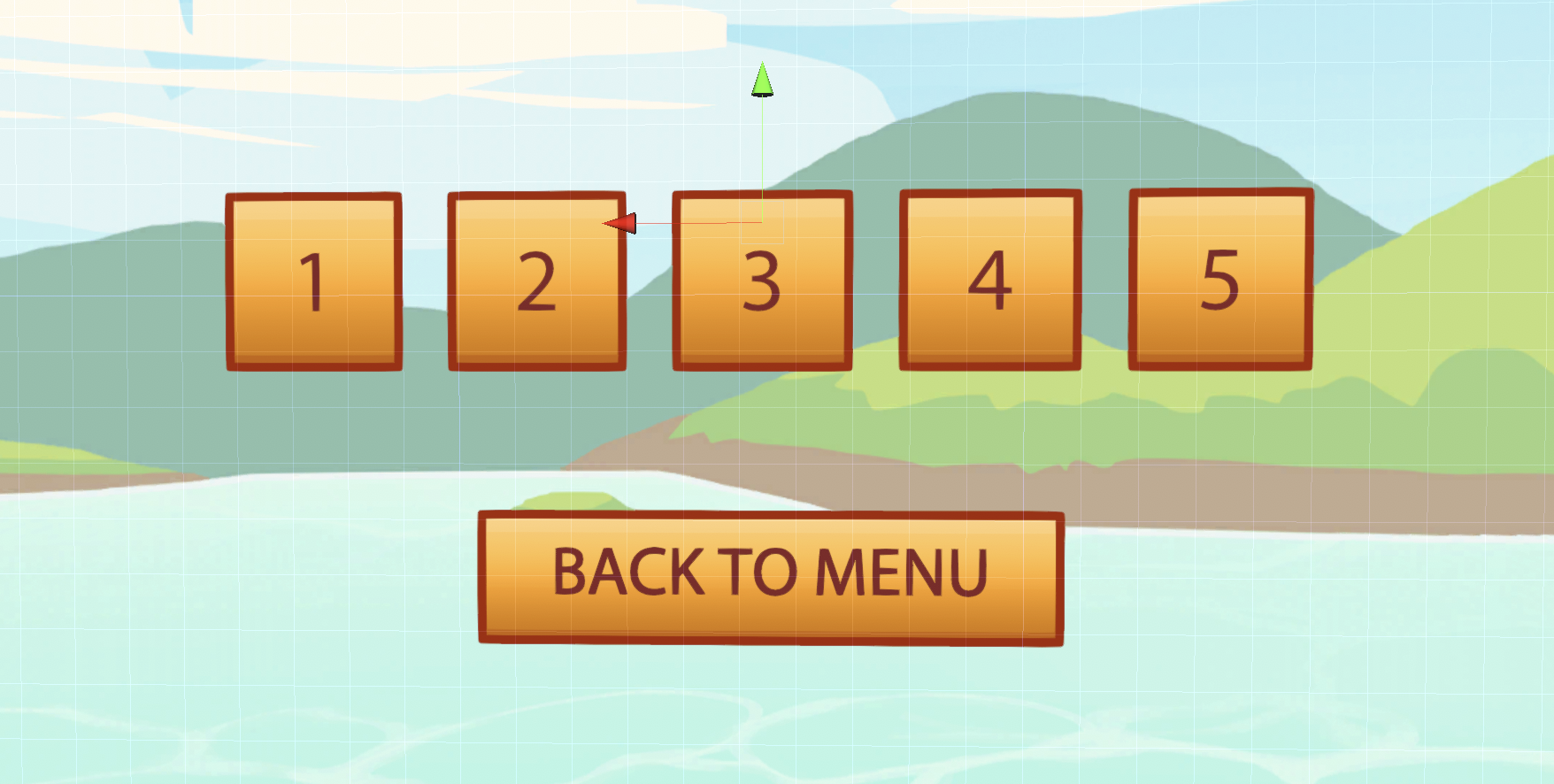
Where we do have UI is in the actual menus of the game. Rather than having a scene that you interact with, similar to SUPERHOT VR, we've opted for good ol' fashioned menus. The why is simple - they get you into the game faster, and more players understand what to do.
For new players every type of interaction requires teaching. Even simple things like where to look, how to move, how to grab or activate something take time to comprehend. But most people are use to point and click interfaces. So a simple, well-laid out menu is key. And we’d rather you spend your time playing the game, then trying to figure out what you need to do to play the game.
That’s not to say there won’t be a place in the game where you can go try out all the toys we’ve built for you. It just isn’t going to be the main menu. The menus instead are being designed with flow, ease and purpose in mind. So we’ve looked at the what works in other games, both VR and console, as well as mobile apps. They’re great sources of inspirations, not just because of the years of work and research spent on them, but also because they lack the hotkeys that menus often have on computers.
As awesome as Persona 5’s UI is we’re not going to that extreme. In part because we’re trying to minimize the amount of UI you experience during play. Nor are we aiming for the complexity of something like the Witcher 3 or Destiny 2. The lack of an inventory immediately makes that easier. But having two different buttons for calling up different parts of the UI is a bit much. So we’ve simplified. There’s only one. That doesn’t count any Oculus or Steam menus you can call up.
All that and yet we still can’t show you anything. Maybe that’s a good thing. After all we are trying to keep our UI to a minimum. There’ll be plenty more to see soon. So if you haven’t already, be sure to wishlist A Giant Problem on Steam now!
Damage Control
We’re not leaving things to chance with A Giant Problem. Everything’s on you. Not on you on you, but it is based on your skills.
Or lack thereof.
Chance and skill are intimately tied together in games. Even more so when it comes to an action game like we’re making with A Giant Problem. Which has resulted in certain design decisions. More on that in a minute, first let’s explore the differences between chance and skill and even how luck can factor in.
Skill in action games is tied to your abilities as a player, not those of a character. This is especially true in a VR game like A Giant Problem, where it’s your skill at throwing that impacts the game and your success in it. So as long as you throw an object, you’re always going to throw it.
In many games, particularly tactics games like XCOM 2, your attacks have a chance to hit. This is determined by a dice roll, as designers like to say, given the design is inheriting a lot from table top roleplaying and war games like Dungeons and Dragons. Chance is a way of abstracting skill when reflexes aren’t required to a determine success.
Chance can occur at multiple times. So in terms of Dungeons and Dragons, the first chance you experience is with your attack roll. The second is with the damage roll. Even if the first is successful the second is guaranteed to be. Which results in low damage. That’s fine for a game of DnD or XCOM 2, but not A Giant Problem.
Being a giant comes with a few benefits, beyond being able to reach anything on the top shelf. It means when you hit something, you hit all of it. That’s why we haven’t implemented any weak spots in our enemies. If you’re big when you aim you just hitting something small is a skill.
It’s why we don’t have weak spots on enemies, damage drop off, or glancing blows. Being accurate is the true test of A Giant Problem, especially as numbers mount and the odds are against you. It also embraces the arcade-y nature of the game and makes it fun for all. If we were to have a more specific damage model then things could quickly turn to become like DnD where players have a session where their hits just aren’t hard enough.
And that’s not what being a giant is about. It’s about smashing stuff - fully, completely, wholly. That’s not to say there aren’t other aspects to the game that affect the damage model. But we’ve designed the game so that when you hit something, you really hit it. You’ve gotta have that wallop. You’ve gotta have fun.
We want to have a welcoming, fun and safe community. And that means we’re going to be quite strict in terms of our moderation. Our rules will continue to grow and evolve as our community does, but something we will always stand firm on is NO BIGOTRY.
Edgelord humor, testing the line with what’s appropriate, and pushing to get a reaction from people is not part of the Critical Charm ethos. Nor is it something we want to encourage within our community. It’s why we have these rules. And why we enforce them.
All of that said, if you think there can be improvements to how we moderate the server or our rules, then please let us know. We’re building this community with you. So let’s have some fun!
Oh and because we’re in Helsinki, Finland we’re in an awkward time zone for most other people. So don’t take it personally if we don’t respond immediately. And remember, we’re hard at work on the game. The very game you can wishlist on Steam if you haven’t already!
Our Vision For The Future Is 2020
And it’s a technically charming one! All because we welcome our new CTO Zachary Laster!
2020 is starting strong, our team has grown with the additional of our new Chief Technical Officer, Zachary Laster. Some of you may know him from his popular Minecraft mod, Mystcraft. He’s also worked at Mindfield Games on the VR game Pollen, and more recently at Frozenbyte.
It’s an exciting time to have Zach join us and a boost to the team. Not just in programming strength, but moral as it always is when someone new joins the team. Zach’s experience is a welcome addition for all, because you can never have too much of a good thing. And programming know-how is always needed when making a game.
And we are making a game.
We started talking about making A Giant Problem a year ago. And we’re not just saying that cause now it’s 2020, but because we announced the game in January 2019. In our initial post we said the game would be out in a few months. And oh boy were we wrong.
But such is the naivety or perhaps over enthusiasm of a new team. What we can do, a year on, is say with confidence the game will come out this year. We’re not giving a more firm date than that at the moment. Though with our strengthened team and a solid plan we know we’ll get the game out. And we know we’ll have more information for you on what that date is soon.
We’ll be announcing more in the coming weeks and months, as we can confirm things. But stay tuned, cause we’re also hoping to get the game into your hands at series of conventions. As ever, some of these things are up in the air but we’re working hard to show you the best of A Giant Problem.
It’s not everyday a government publication takes the time to write about you. But they did take the time to write about A Giant Problem and Critical Charm!
Finland’s a small country, but it’s hitting well above its weight when it comes to video games. Granted most of the press goes to studios like Remedy, Colossal Order, Supercell, Housemarque, Frozenbyte, and Rovio - with good reason. So it’s nice to see a government publication taking the time to highlight some of the up-and-comers, in this case us!
Marjo, our CEO, spoke with them about our journey as a team, our plans for the game, and why we chose to work in VR. It’s all in Finnish, but Google Translate has come a long ways, so be sure to give it a read. You can find the article over on the Finnish Ministry of Foreign Affairs publication Kauppapolitiikka.
This following on the heels of the Yle article from the other week is good for us here at home. It’s a small pond, but our eyes are set on the international market. They have to be when working in VR. So if we build some traction here, hopefully the hipness of the Nordics will work in our favor.
If you’re a journalist, regardless of location, and interested in writing about Critical Charm or A Giant Problem then don’t hesitate to get in touch. And don’t forget to wishlist A Giant Problem on Steam right now!
Finger Clickin' Good
We’ve got new screenshots up! Are they enticing? Do they make you want to wishlist A Giant Problem? They’d better!
Screenshots in VR are not an easy thing to take, for a whole host of reasons. It’s meant that up till now we haven’t had the best screenshots. This has both let us down and you. Who wants to wishlist a game that looks like crap, or that doesn’t present a clear idea of what’s happening.
But all that’s changed! We’ve uploaded a slew of new screenshots to Steam, the website and everywhere else we’re sharing details about our game! All it’s taken is some very dedicated development on our camera system, and the team spending a lot of time trying to get that perfect shot.
When you go into indie game development you often don’t think about all the time and energy marketing a game requires. It’s not just the posting a video or livestream. Or writing a blog post. Often times it’s about developing tools that enable you to do just that. And it’s all the more so when it comes to VR game development.
VR poses a number of issues when capturing screenshots. The first of which is the laborious nature of just taking them on a PC. There’s keys to press, screen areas to select, paint programs to open and save in. And if you’re alone you’re having to do all of that either from within a headset or stop and take it all off.
The fact someone is wearing the camera and controllers is another factor that affects screenshots in VR. The field of view is so narrow that to make sure the controllers or hands are visible is difficult, because they’re then having to be held at a height that’s uncomfortable and unsustainable for long periods. There’s also a lot of shaking and quick movements that occur. It makes taking those beautiful action shots a lot harder. And pausing a game doesn’t always result in the best work.
[previewyoutube="ptxi4auMxFY;full"]
So our solution has been one that has benefits beyond just enabling us to take screenshots and make our game more enticing on Steam. Our brilliant programmers have created a camera system that makes the game more streamable and watchable. How? - We hear you ask. What magic is this? - We hear you say. Why it’s the beauty of computer programming that’s added in five additional cameras to the game!
Each camera can be controlled independently, and set up to capture what you desire. They all start parented to the player, which has a beautiful head now to really help sell the idea of being a giant. Four of the cameras are third person so you can capture all the action from a far and take in the whole scene. You can become quite the director composing your shots with these cameras. External cameras like these are perfect for anyone with an audience cause they can watch without getting motion sick, and have a better idea of what’s happening.
Sometimes you just want to show all the action you as a player see. That’s why we’ve included a new first person camera. What makes this one different is that it’s not based on what you see within the headset. Rather, it’s its own camera set slightly beneath the player’s head so it that it readily captures the player’s hands. This setup, along with some motion smoothing, gives viewers a much better feel of what it’s like to be in VR when not wearing a headset of their own. It also helps provide context for the player’s actions and prevents motion sickness created by fast movements.
It should be noted that we didn’t originate many of these ideas. We specifically looked at what other developers were doing. The team behind Fantastic Contraption had a great video about their own camera system which was a big help in developing our own.
All this was done so that we could take better screenshots, but what it also means is you’ll be able to do the same! A Giant Problem is going to be more streamable, more shareable because of the time we’ve taken to give you the tools to show off all the goblin smashing you get up to. So if you want to show off to your friends, family and fans then be sure to wishlist A Giant Problem on Steam now!
Sharing Space
Crafting a whole new world isn’t so much a giant problem. It’s just lots of little things to think about and priorities that have to share the same digital space.
We’re heads down in production here at Critical Charm. And that means crafting a whole new world, we are creating a fantasy epic here and that’s just par for the course. A Giant Problem does pose some unique challenges when it comes to designing the world, not in terms of lore, but rather the physical (well digital) representation of it.
No, this isn’t the scope post we’ve promised. But we do touch on that a bit. To craft this world we need to consider the following: mission design, narrative design, usability, reusability, and aesthetics.
Mission Design
A Giant Problem is a combination of action and tower defense. That creates some unique challenges when it comes to mission design. Namely, how do you keep players from becoming bored by just having them stand around all the time and defending a single spot. Or conversely, how do you add in tower defense elements when the player’s on the move.
The level design has a lot to do with that. How the space is structured will help determine what’s possible, when it’s possible, and obviously where it’s possible.
We could have designed a world similar to that in Angry Birds VR, where it’s just the encounter put in front of the player that changes. That doesn’t work for this type of game though. It’s great for a puzzle game like Angry Birds, but when the challenge is as much about the environment as it is what enemies you’re facing then the maps need to be more varied.
Narrative Design
Repetition gets boring. It also makes for poor storytelling. That’s why change is important. In this case it means making sure the player isn’t experiencing the same space all the time. It also affects the mission design, as repeating similar mission structures too often can result in the same issues. This is really important for campaigns, less so for arcade style modes where the point is to face increasing challenges.
But A Giant Problem is going to have a campaign. Part of a campaign is making the world feel real. Not in the gritty and grim Game of Thrones manner. Instead we want it to be a place that a player can learn and move about in, without it being the massive open world maps of Ubisoft. And that means designing maps with all of that in mind.
Usability
Which brings us to usability - how well does the map serve our purposes as developers, but also how well does it play for players. This means taking into account additional things like sight-lines, distances, scale constraints, movement issues, and even processing power.
We’re a small team. That means we can only do so much. So if we can make our creations do more for us and players, all the better. In this case, it means maps that can be used for more than a single mission type or game mode. It’s why we’re going with this semi-open world structure, similar to games like Dragon Age: Inquisition.
There will be different maps, each with their own environ, effects and of course layouts. But each will be designed for use in both the campaign and other game modes we have in the works. And different areas of the maps will support different mission designs.
Aesthetics
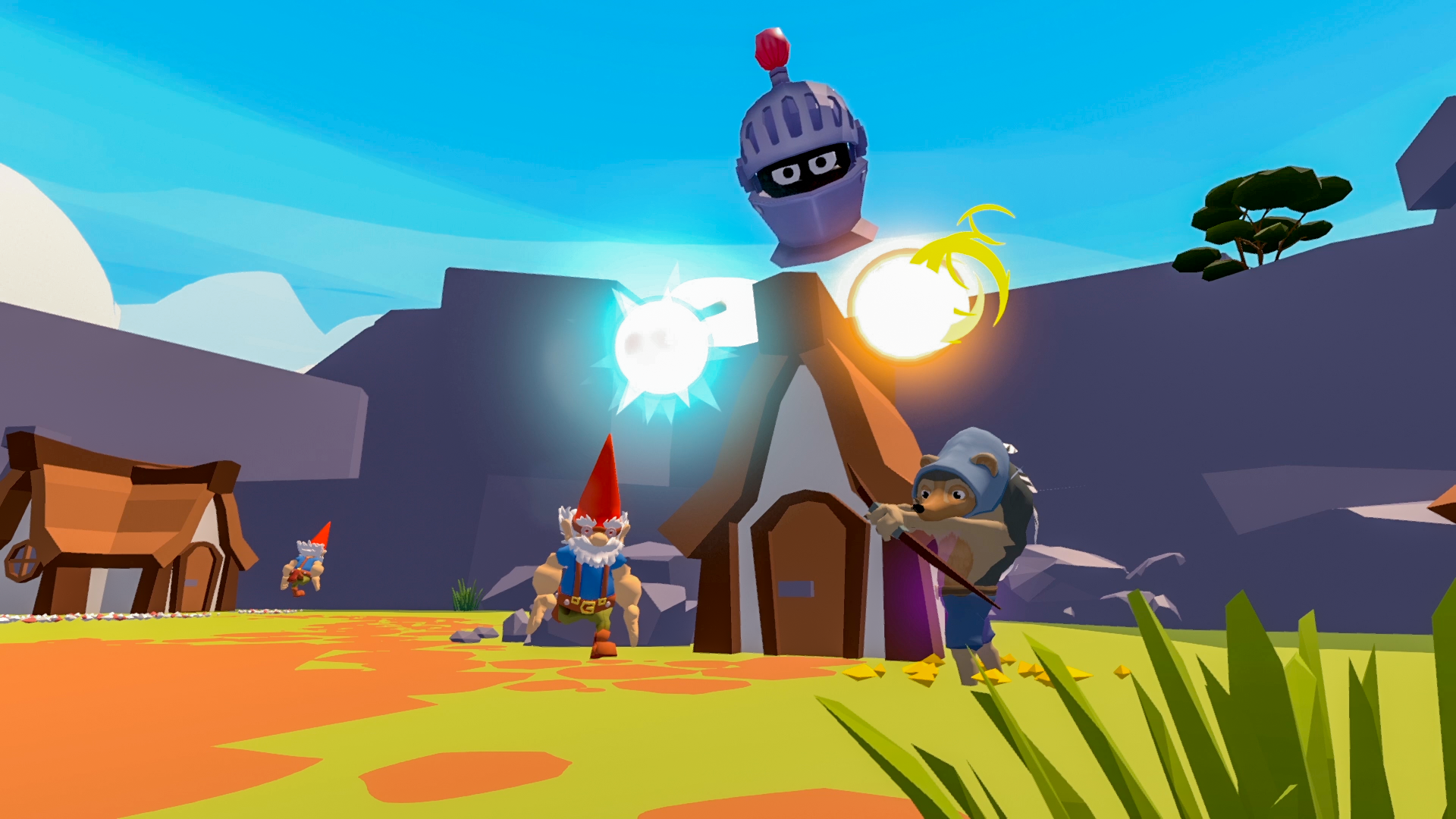
This is VR and it better damn well look good. That doesn’t mean we’re going for hyperrealism. Rather we have a solid low-poly cartoon-inspired art style our Art Director Minna has created. And that’s got to be reflected in the world as much as it is in the characters. This in turn reflects upon the narrative design and the usability. It’s also a matter of for reusability, because if our maps are too costly in terms of time it means we’d have to make fewer.
Ultimately, we’re going to be judged first on how the game looks so it’s vital we nail the aesthetics before a person even plays the game. The aesthetics also reinforce the gameplay. Just look at the differences between the early builds and the later ones when we’ve added particle effects.
Where To Begin
So with all that in mind, how do we go about constructing a new map?
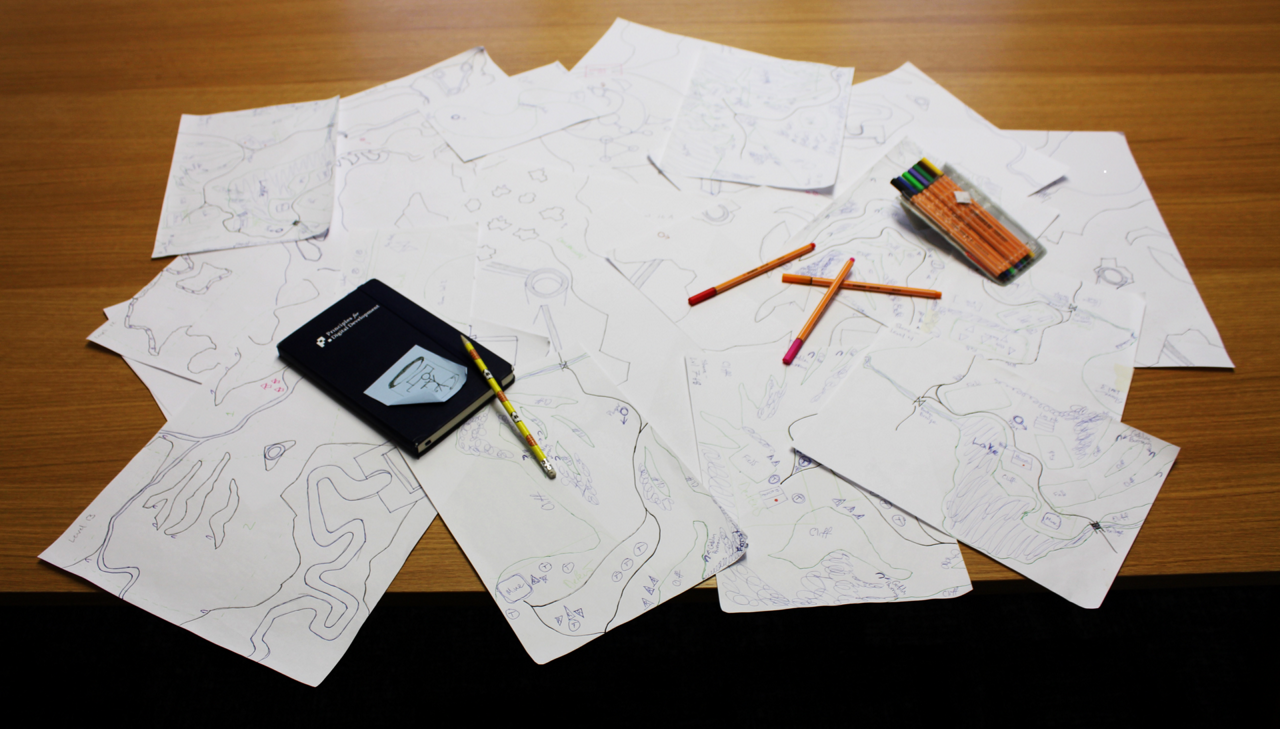
Just like we did when we were kids - with pens and pencils and big pieces of paper!
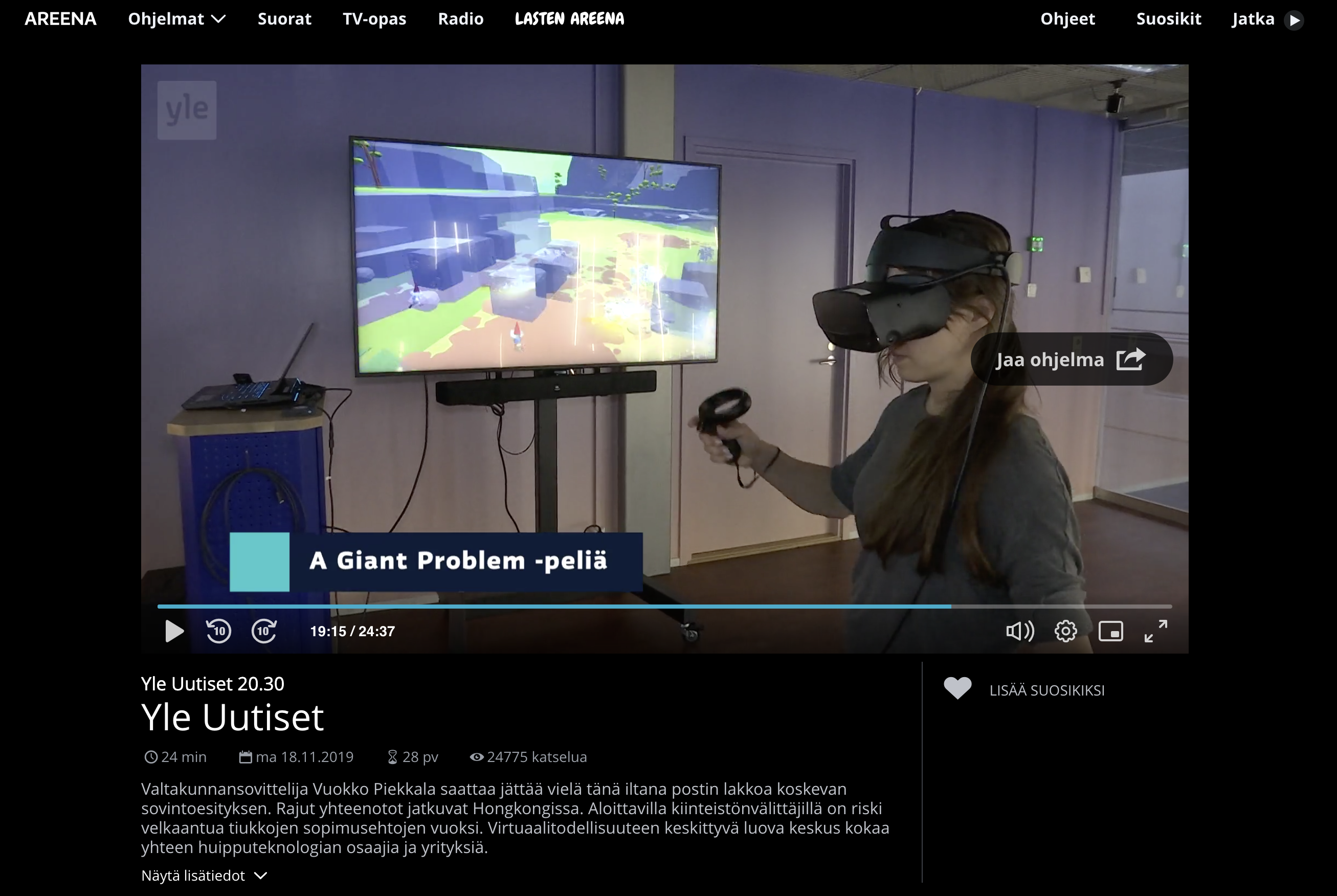
Yle, the Finnish state broadcaster, recently visited the Helsinki XR Center to do a news segment and web article. Which means they also got a look at our game, and to talk with Marjo!
There’s plenty of action going on in the news segment where you get to see Marjo playing A Giant Problem, and some of our friends from around the center. If you want to read more the article has it, even some choice quotes from our CEO.
Now Finland may only be a country of 5 million or so people. But for us it’s a big thing to be shown like this. It helps in a number of ways, some that can’t go into right now but hope to in the future. Recognition like this goes a long way in a small community. And for a small team we appreciate every time someone writes about or talks about us.
So if you’re a streamer and interested in playing A Giant Problem be sure to get in touch. And if you haven’t already be sure to wishlisht A Giant Problem on Steam now!
All A Board!
We promised players they’d get their hands dirty. They’d get into the nitty gritty of defending their village, and not just from the combat perspective. But that they’d have a say over how their defenses work, and where they are.
So that’s why we’re proud to share with you the new build phase!
This isn’t Fortnite, so there’s no building on the fly. Instead we’ve gone for a more focused approach, with a brief build phase before the beginning of a level. This allows you to place just about everything - except the village and naturally occurring elements. You can place allies, defenses and magic.
Want your Hedgehogs sitting up high to snipe at the oncoming hordes - you can place them on a ridge. Want the Gnomes guarding the treasures - you can set them right in front. Want some currently unannounced allies helping to funnel the enemies into a bottleneck - you can do that too.
The build phase is still a work-in-progress, as is much of the game, but we’re pretty confident in this feature for what it lets you do. And what that is, is control. Building on this board, in this manner gives you a level of control and ease that isn’t possible during the combat phase. It also allows you to be strategic in your placement of defenses and allies.
Yes you can still change things once you’re in combat. Just about every object in the game, and that includes defenses, traps and allies, can be picked up. Hell, they can even be used as a last ditch weapon if you need it. Combat is for tactical decisions after all.
Building in this way means we get to add depth to what you can build, and the allies you have available. Right now all we’ve shown are the basics. But we do have some other building types coming. To learn about them and stay up-to-date on all that’s happening with A Giant Problem be sure to wishlist the game on Steam!
Come On Everybody Do The Locomotion!
Movement in VR is something special. It’s not an easy problem to solve. As each method of moving so far developed has its own issues. They run the gamut from being unintuitive, especially for players new to VR, to causing motion sickness in a significant portion of players. Some methods also increase the chances of someone becoming motion sick when changing direction or height.
Meaning, there really is no single answer. It’s not like on console gaming where dual-thumbsticks has become the de-facto control scheme for first person and even third person games. Or PC gaming where the standard is WASD and mouse-look, unless of course you’re playing Tribes. For A Giant Problem we had to deal with some team members being very prone to motion sickness, and what it means to move as a giant.
Ultimately we hit upon a solution that best fits what players have come to expect. And that’s choice! Choice is important because of how quickly you can become uncomfortable in VR. And if you’re uncomfortable, then you’re not going to play. And that’s A Giant Problem.
So we’ve got three methods of movement - teleportation, smooth locomotion, and local movement. We’ve also added snap turning!
Teleportation
If you’ve watched the livestreams, which you can do over on our Twitch channel or YouTube where we archive them, then you’ve seen us jump around the map quite quickly. That’s teleportation. It’s great for a number of reasons, namely very few people get motion sick from it.
If they do we can always give players the ability to adjust how quick the transition is when they teleport. That’s done by having the screen go black and then fade in. You can see it in games like Vader Immortal.
Smooth Locomotion
Sometimes you want a more traditional method of getting around. And that doesn’t mean riding a horse. We wouldn’t be able to provide the player with one bigger enough, given they are a giant. Rather we’ve added smooth locomotion, which is your basic FPS controls. Only look isn’t controlled by one thumbtack, as you are wearing a VR headset.
Local Movement
If you have 360º tracking then A Giant Problem works for you, whatever the play space you’ve created. Of course most games in VR are meant to work this way, but if you’ve only got 180º tracking then there’s a limit to how much you can move around and have it reflected in the game. But local movement has always been an important method for us in developing A Giant Problem, as it’s one of the easiest ways to feel like a giant as you stomp up on a horde of goblins roaring, “Fee Fi Fo Fum, I smell the blood of a goblum!”
Snap Turning
Added to every form of movement is snap turning! With just a flick of the thumbstick you can rotate around as the player to face the oncoming hordes. It’s a small thing and not every player is going to or want to use it. And they don’t have to! But it makes life easier, especially if you’ve only got 180º tracking.
It also means you can -
Play Sitting, Standing or with a 3rd Party Peripheral!
No longer are you confined by gravity! No longer do you need legs! A Giant Problem is for everyone! And that’s what we here at Critical Charm want. We want our game to be as accessible to as many people as possible. Though we recognize the nature of VR and our mechanics mean it may not be possible for everyone, that doesn’t mean we won’t try.