Don’t hesitate!

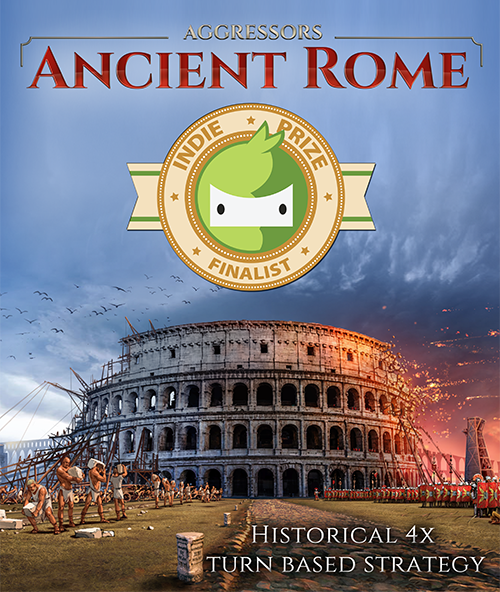
Aggressors: Ancient Rome is a great indie game in the 4X genre and it really deserves a go if you like turn-based strategy.
This is 4X gaming perfection. Everything is polished to a point, no mechanic is wasted, and everything comes together beautifully instead of being lost in needless complexity.
This game is deep and controlled and considered. Every element has been chosen for a reason and implemented with care.
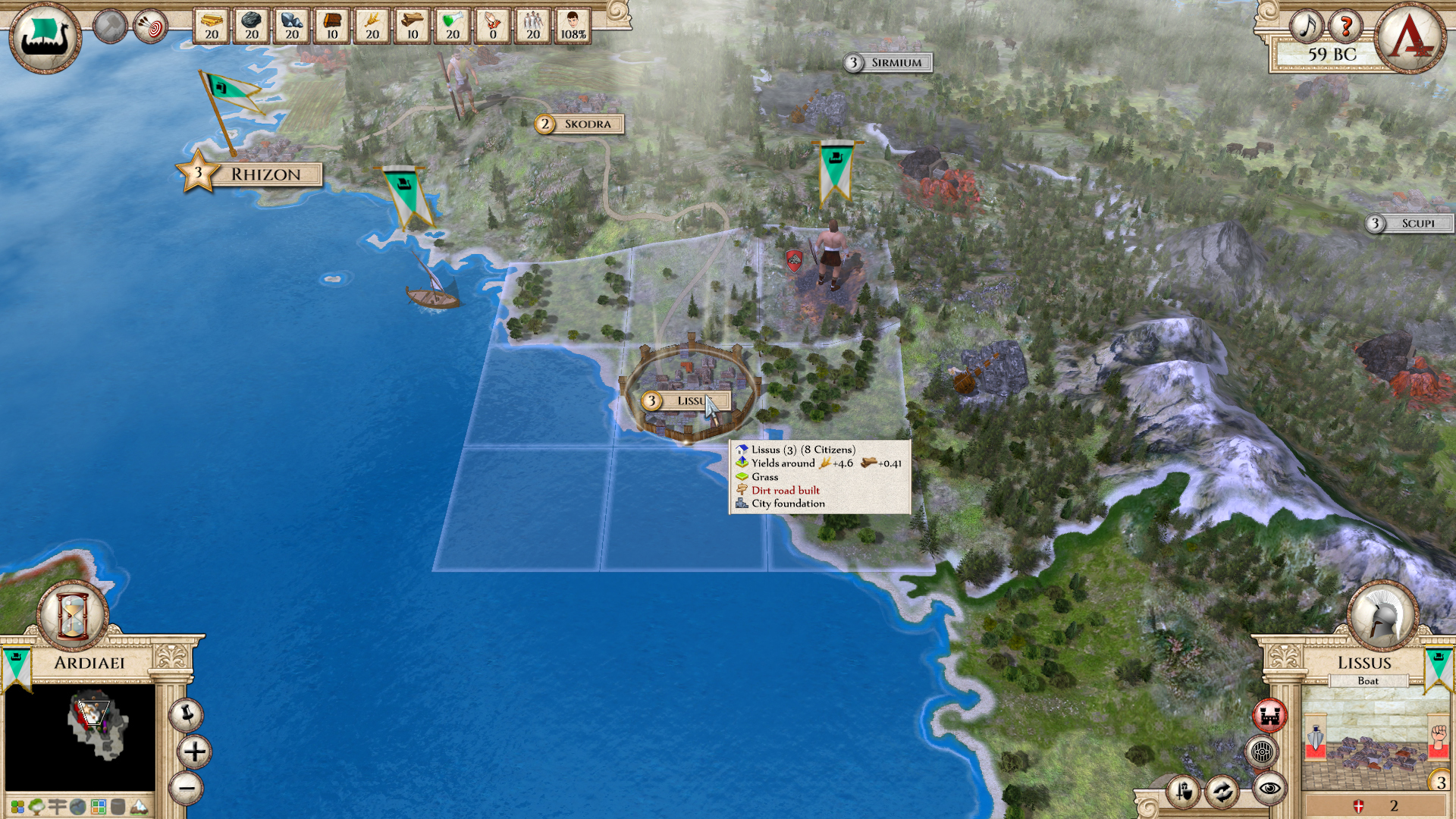
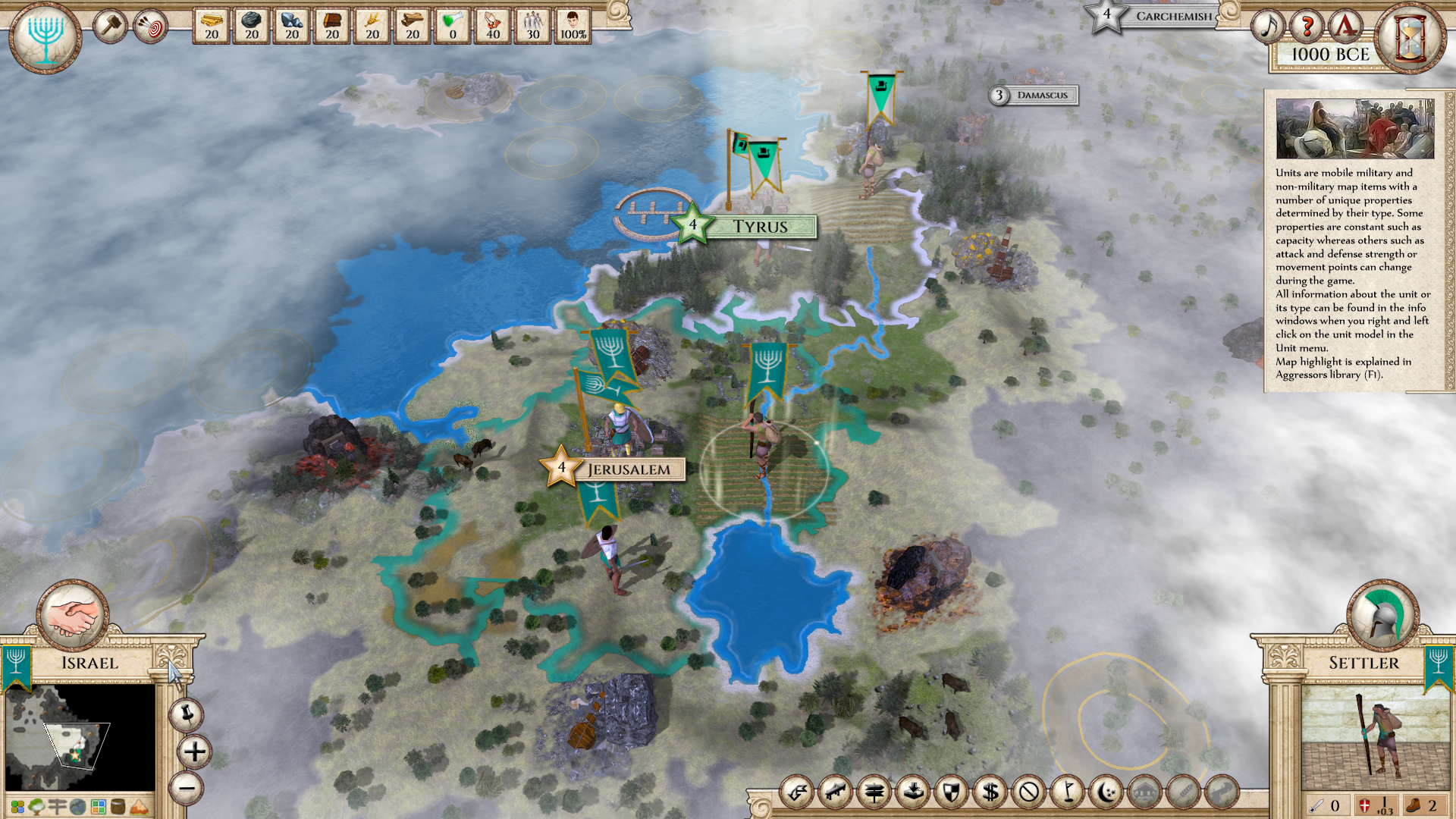


When the Map builder tool for Aggressors came out, I made several maps. While playing with this new toy, I decided to make a new scenario with these maps. Eventually I selected two scenario candidates: one was a scenario about the Sengoku period of Japan, the other about medieval Europe, but I decided to make the former because as a native Japanese, I could more easily gather necessary materials such as flags and faction pictures for the diplomacy screen; also I wanted to make a scenario about completely new circumstances and factions.

Europe was already represented in the Mediterranean main scenario and several user-created scenarios. Finally I thought the Sengoku period was more suitable for the game engine, because eventually during the Sengoku period, Japan was united by Oda/Toyotomi clan like Roman Republic did with the Mediterranean coasts. On the other hand, medieval Europe was never united by one powerful faction; consequently that scenario must be an alternative history one (to be honest I don't much care about historical persuasiveness though). For these reasons, I decided to make the Sengoku one.
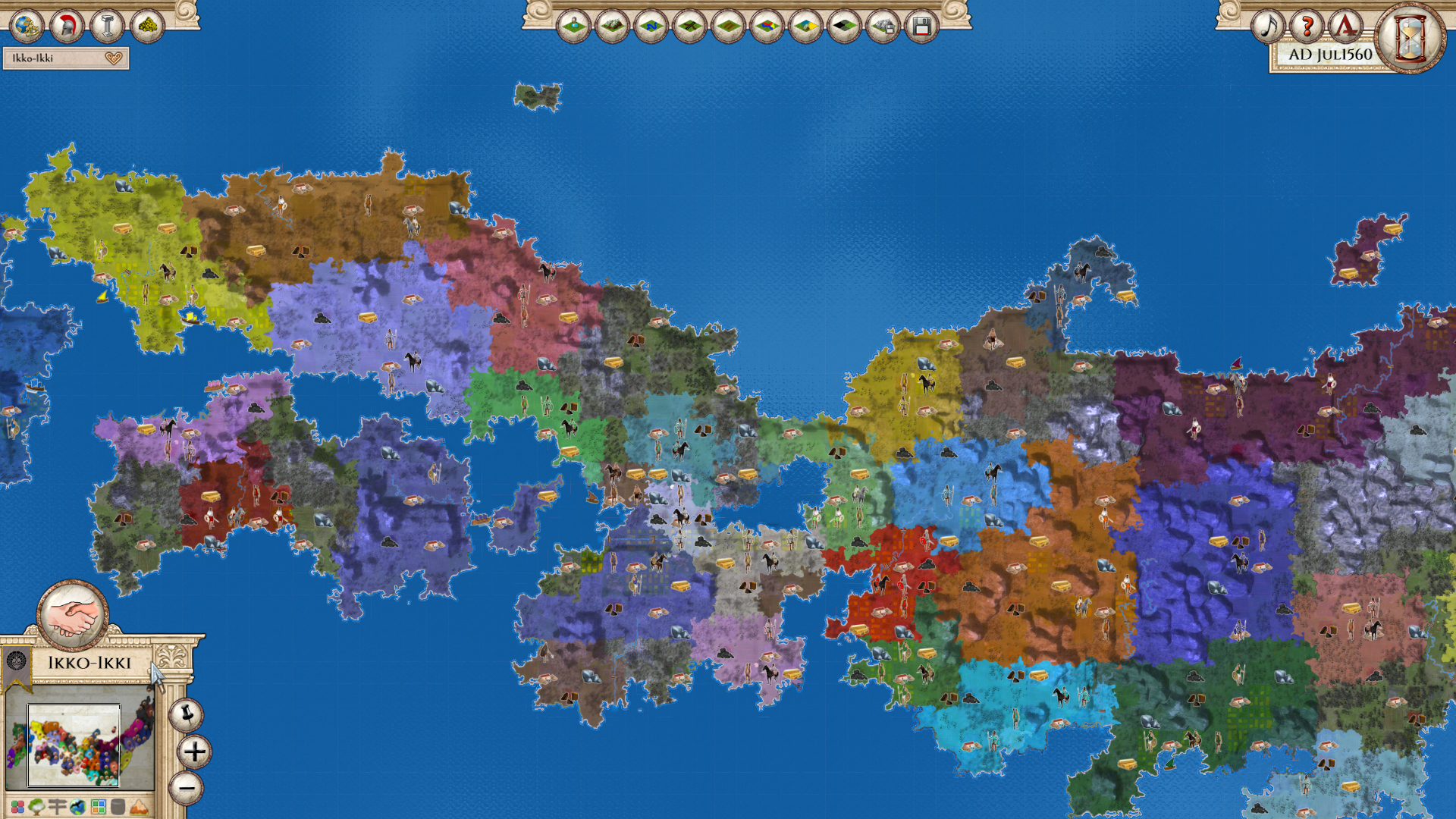
One of the challenges I've meet in developing the scenario/mod was gathering suitable pictures for event graphics. I chose these pictures from Ukiyoe, traditional Japanese art and several pictures of Sengoku period, but too many event graphics were required. Also testing game balance was a never-ending task. I myself am not a good strategy gamer; I usually play the game at the Noob difficulty. But the Sengoku scenario was even more difficult than the Mediterranean main scenario, so testing the scenario was (and is) very challenging.

Seems like users have enjoyed my scenario/map, and send a lot of opinions, which helps further development of the scenario/mod. Also I want to make more Objectives. But all in all I've been satisfied with the current version of the scenario/mod. Perhaps I'll make a Medieval Europa version and other periods of history too. I realized while making the Sengoku scenario that this engine, especially the AIs, are excellent for these scenarios.
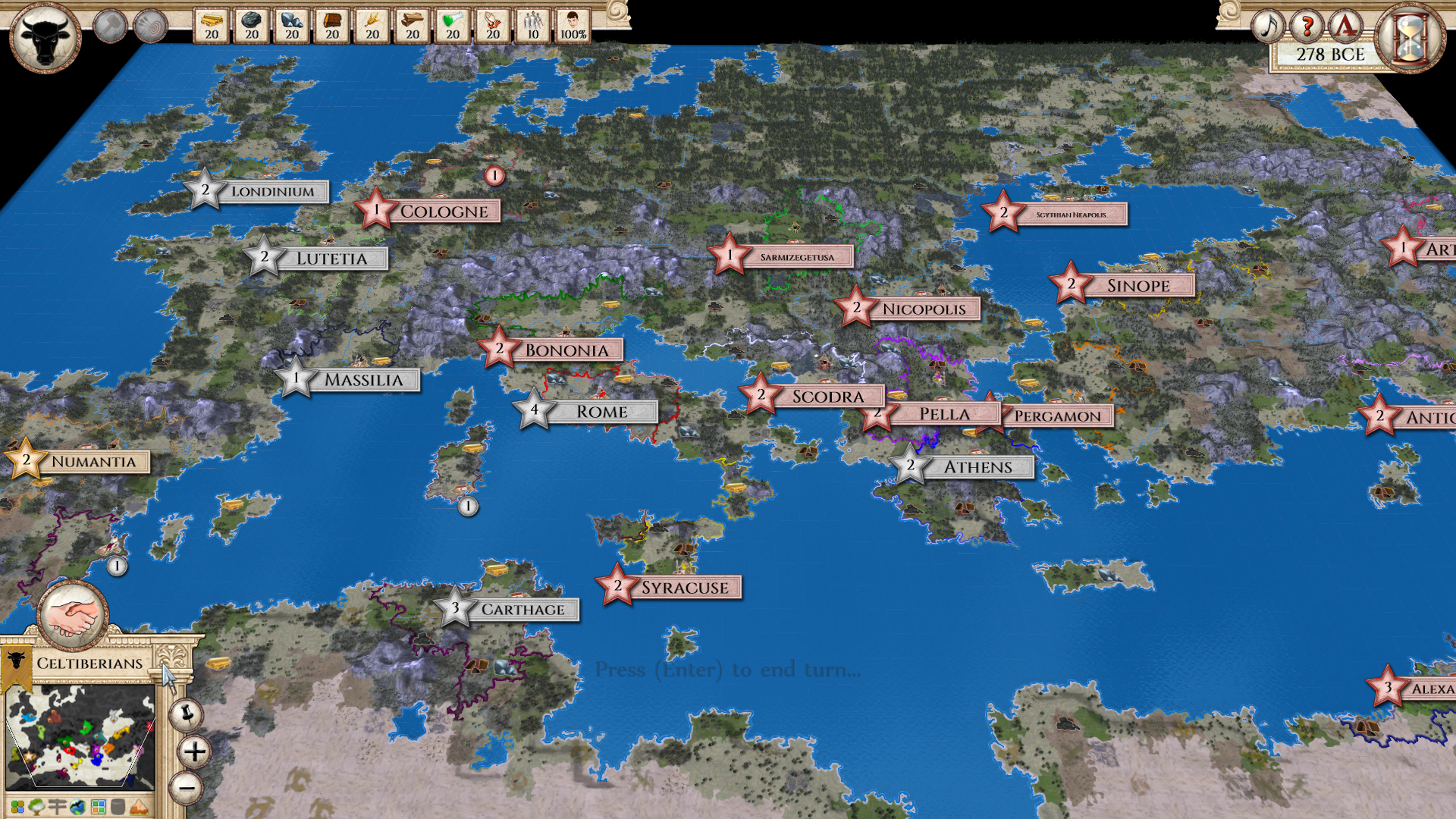
I’ll keep it simple, as I don’t want this text to be too boring. I was looking for a game set in the Ancient Era and Aggressors: Ancient Rome attracted me with its simplicity and resemblance to the Civilization series. I bought a game and finished the tutorial, the Simple one. I loved the game, the feel and settings. Graphics are also very nice – neat and clean. Not overloaded with useless 3D fireworks – every serious strategy gamer should appreciate this. But I didn’t like the map to be limited to Mediterranean: where is Gallia? Or Britannia? A quick decision was made to go straight into modding to fix this.

I wanted a bigger map, and there is a very nice Map builder attached to the game. I took me 5 minutes to figure out how it works (without watching or reading any dedicated manuals). What map should be used if the whole European theater needs to be covered? Luckily I’m a great fan of classic Centurion, and remembered that this game had a perfect map which covered all most interesting regions from the Roman Era. I found a gameplay of this game on Youtube, made a screenshot of the map and converted it into an Aggressors map using the Map Builder.

The result was much better than expected, but required some polishing. I placed some forest here and there, mountains and rivers… of course everything had to be historical and of strategic importance (did you know there are reports on the internet on historical forestation of Europe?). Alps had to be difficult to cross, rivers had to be natural borders, and some wild, less populous areas [during those] times covered by thick forest. Fertile Crescent? It needs to be fertile, so more rivers and grassland should do the job. The “Change Map Pattern” option of the editor was really useful in making the map look more realistic. You can make straits or shores look more natural. I used it a lot to form better looking Bosporus and islands.

But what about resources? That’s tricky. Remember, the game needs to be balanced, so the numbers and placement of the resources had to be decided with care. But you know, Aggressors’s main scenario has been balanced so well by its developer. Why not rely on tested solutions? I counted the number of resources in some randomly generated games and main scenario and came with 25 as a number of mines of each type on the map. I aimed to place them evenly on the map but also considered the strategical importance of some regions in that Era. So islands got some resources to make the invading effort worthwhile. Also historically, some regions like Egypt, Italia, or Asia Minor were richer than others. That’s why excess of gold was placed there.

Ahh and civilizations…
Of course, the main scenario has 20 factions – this is the number to stick to if I want to keep my game balanced. More factions would need more resources… that’s too difficult for the time being, so let’s keep 20 factions. I located the civs around the map so that every civ has some room to expand. Unfortunately, I had to delete Epirus (as the Balkans were too crowded) but added Boii instead (as the Romans didn’t have a natural enemy to the North and it would be too easy for them to expand). Adding factions is difficult at first as it requires delving in the code. But if you are familiar with languages that use tags (like html or xml) it should be much easier. Besides, Pavel, the developer and the community are very helpful and accessible and can explain everything. In fact, Googling for and then adjusting appropriate graphics (flags, leaders, coats-of-arms) was the most time-consuming part of the adding and modifying factions phase.

The last phase of preparing the scenario was the calibration. I wanted the scenario to well balanced. It was difficult to achieve because starting nations, by design, were not perfectly balanced. I wanted to see strong Rome, strong Carthage but weak Britons and Armenia. That’s why Rome starts with bigger capital and tons of resources nearby and Carthage starts with cities on two continents. So in order to ensure that the scenario will be highly replayable but with few historically strong civilizations to provide the challenge, I had to allow the AI to play it alone with no interference from my side. A few such games helped me to assess the game’s balance, and after few tweaks to starting positions of civilizations and resources locations I finally achieved satisfactory results.

My mod/scenario met with very positive reception. Players praise the dynamic of the scenario – factions need to trade extensively to expand and this had impact on relationships. They do tend to form then leave Federations very often, so diplomacy is of more importance. It was something that I aimed for so I’m happy with the results. However, I still see a lot of room for improvement in this scenario. For example, I’d like to balance starting positions even better or add more factions. But for now overhauling the graphic side by adding more terrain types or improving images would be the next step.
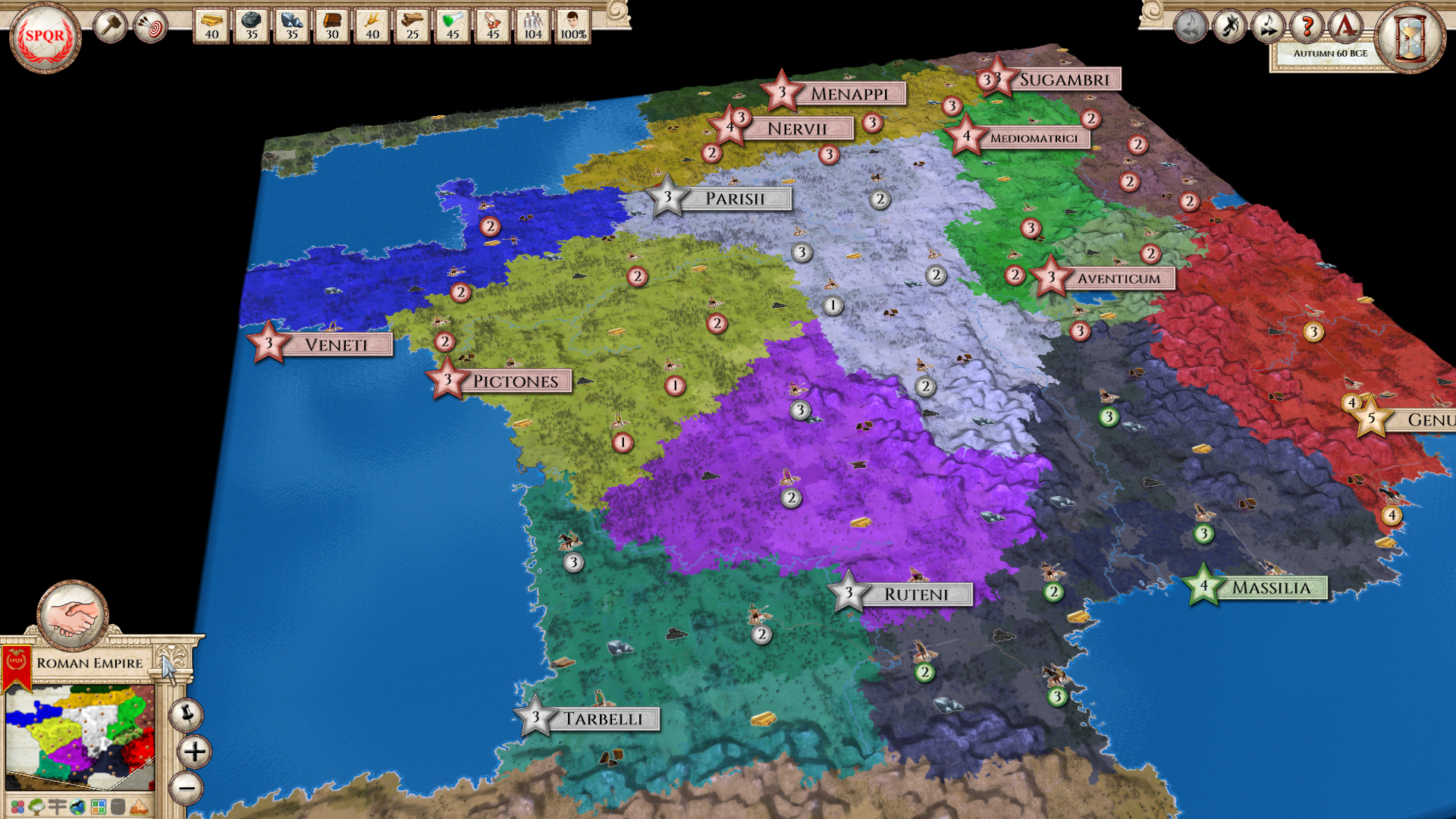
One year ago, I came across the old game History [Channel] Great Empires: Rome and its original PC counterpart, Legion Gold. I decided to play another round, and enjoyed it, even with the lack of graphic, AI and diplomacy possibilities. My favorite map was “The Gallic Wars” with all its historical tribes. The historical feeling was good; you could see how your empire gets bigger with each city you conquer.
Then, around a half year later, I discovered Aggressors: Ancient Rome. I played various games in different scenarios, loved all the possibilities you get in this game, and started to create my own scenarios. I loved the Ancient Mediterranean map in Aggressors; however, I missed the upper part of Europe; I especially would have loved to meet the Gauls as in the old games mentioned before. There were a lot of scenarios, covering the battles over the River Rhenus, the British Isles, but the Gauls were missing. So, I decided to close this gap. My next idea coming to mind was to play “The Gallic Wars” from Legions Gold, but with all the advantages from Aggressors: Ancient Rome (A:AR). I just imagined my beloved scenario with the powerful AI from A:AR, all the new diplomacy possibilities such as Defense Pact, Confederation, trading, and so on. I was sure, if I can shift this map to A:AR, I will be able to play it in a much more historically accurate setting and get a way deeper, more narrative experience.

So, I started working on my second, bigger scenario and decided to publish it as soon as it was ready. Then I read of the new possibility to generate in-game maps based on images of real maps with the built-in map generator of A:AR. This was exactly what I needed: I took a map of France and a little bit of its environment around where you could see the different terrain types as well as heights, and generated the first version of the map. The great thing about it was that the map I generated this way had original proportions. I think this is essential for a good historical feeling. How often have I played on maps, or even created own maps, with unrealistic lengths between different places that just makes everything look odd!
After this, I further edited the generated map. I added more details, like rivers, swamps and mountain passes. The next steps were to set all the cities and to create the factions with the borders as they were in the original game. I opened the original game, compared the maps and added these things. I had to compare the distances and to figure out what would make sense for the units in A:AR. Rarely I needed to change some distances for gameplay reasons. This all was a pretty fast and straightforward process.
To finish my scenario, I had to set up the initial relationships between the factions. I was able to rely on the original game there as well. Changing the available units for the different factions, adding custom flags, setting up the start resources, naming territories and adding the difficulties were parts of the final work as well.
Once this was done, I played a first game and loved it. Meanwhile I discovered custom Objectives, which you could add for every nation. Possibilities for Objectives are almost endless. And the good thing is, it would also impact the behavior of the AI. Hence, I thought this could even make the scenario more historically accurate. I started experimenting with the Objectives and added some of them. It was very fun to work with Objectives. I figured out how to add my own descriptions for them and for the countries. This is great, as it offers you the possibility to tell your own – or, as was my goal, a more or less historical – story. I wanted to add realistic objectives that fit to the possible goals of the ancient tribes/factions. Therefore, I had to do some research work. This was another part I really loved. I learnt a lot about the factions/tribes while searching for information. And I like to have this historical knowledge!

But this was also – and it still is – the most time-consuming process for me: Adding Objectives and gathering historical information.
I am happy with the scenario I created in its current state. There are still things I could improve. This is maybe the negative side, because you get so many possibilities. You could always improve, add or change something. ;-)
As mentioned before, I would like to add custom, historically accurate Objectives for more nations that are fun to pursue. While researching, I also discovered some inaccuracies I should fix. In the original scenario, most of the cities were not ancient cities, but more different Gallic tribes. To solve this, I would need to change all the city names to real city names and not the names of its owning tribes who lived in these locations. This brings me to a next point: I could also set up city names for the regions and the possible unit names for each faction. I think these are smaller steps, with a lot of time required to do so. But these possibilities are differences to the original game and what it makes better – aside from all the great new mechanics and the AI you get anyway, for sure. :-)