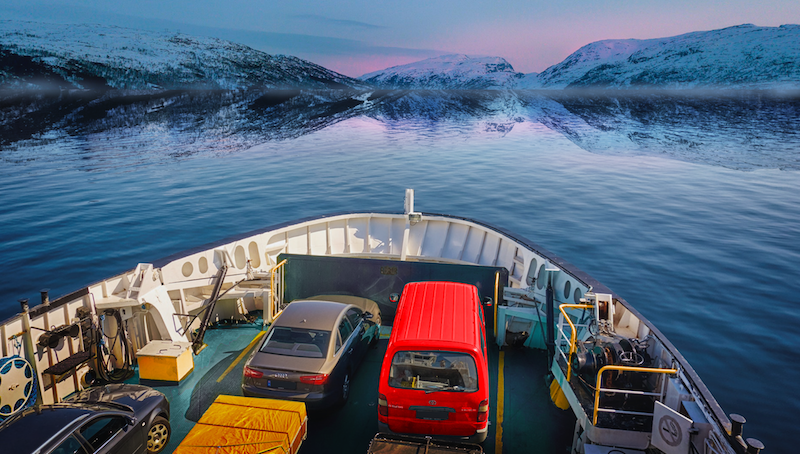
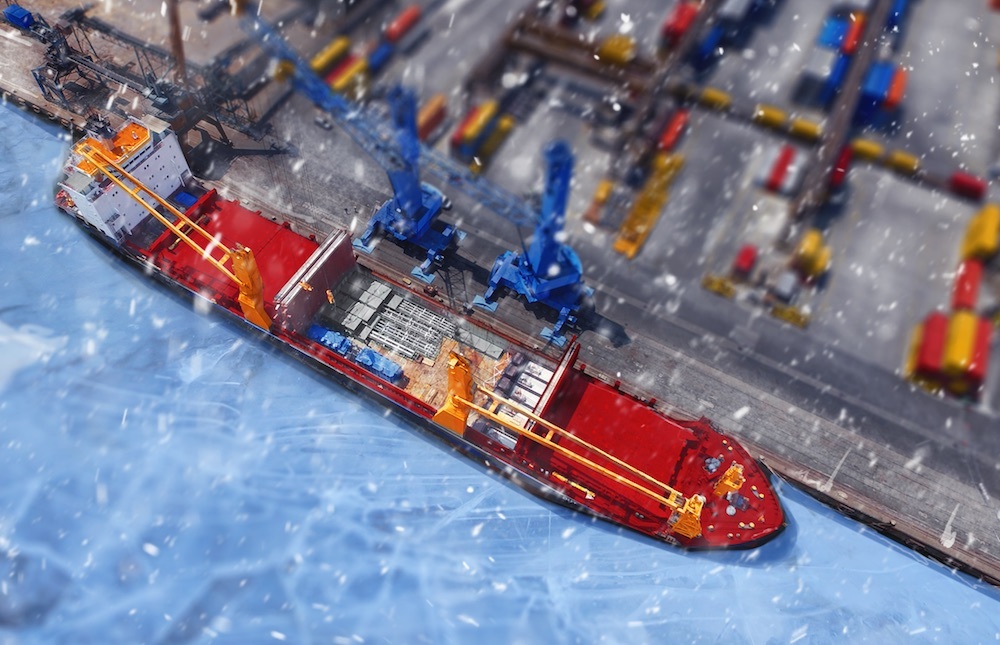
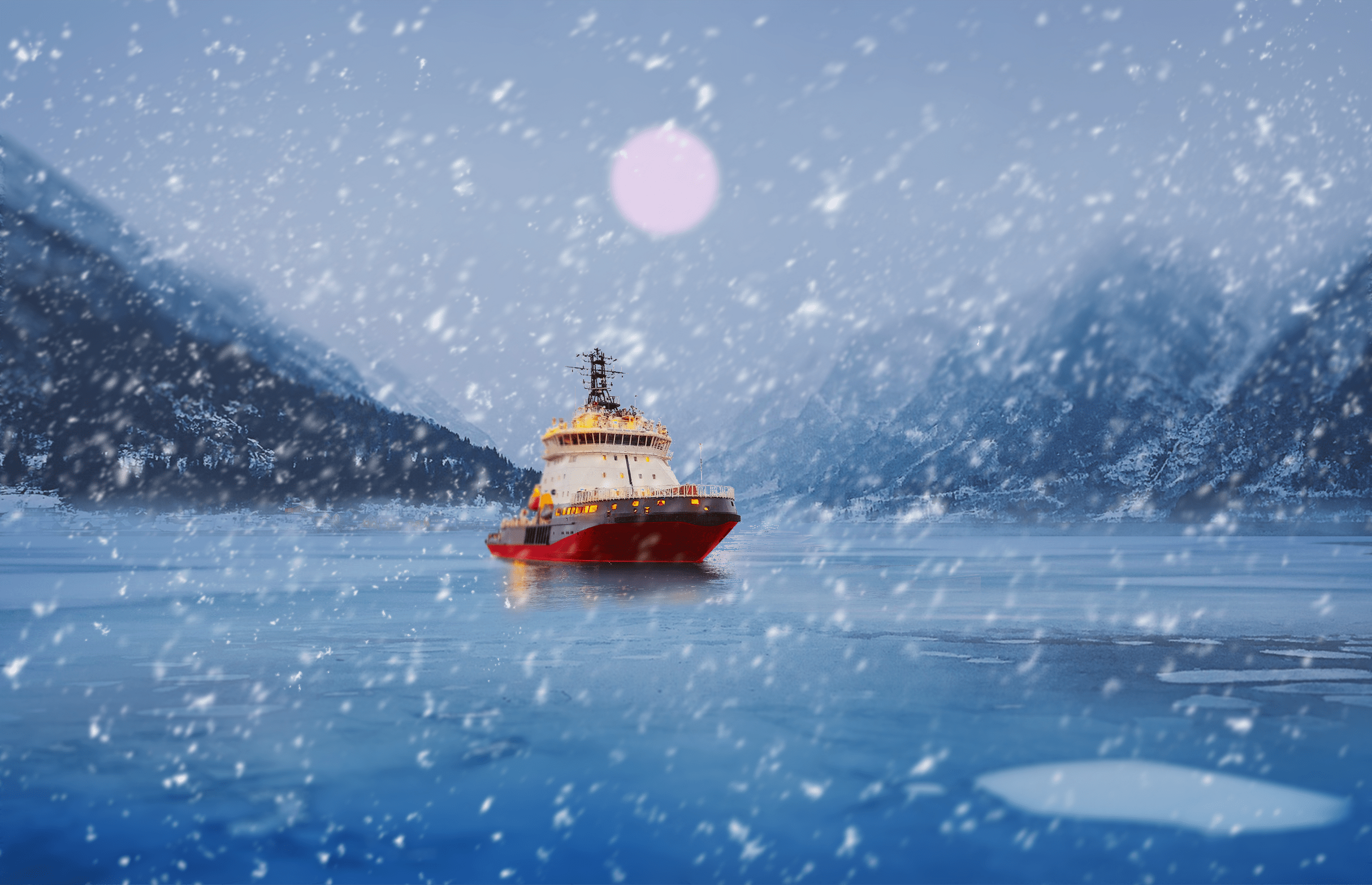
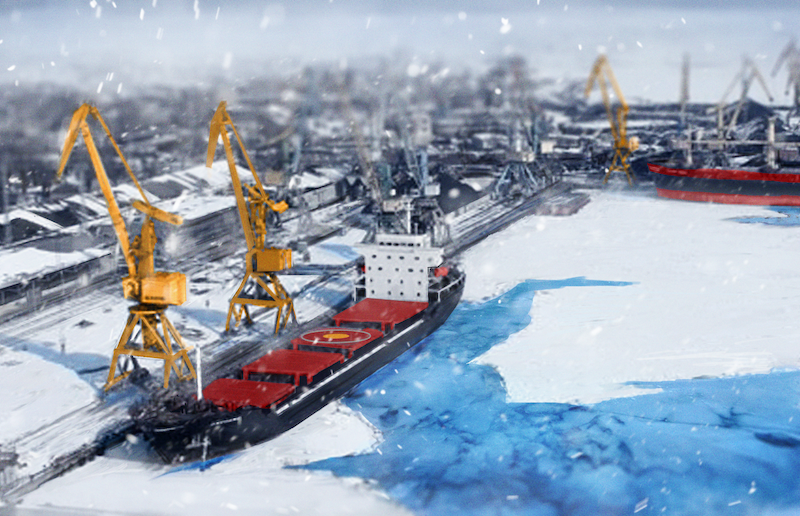
Roll-on/Roll-off ship (Ro-Ro) - a watercraft for the carriage of goods on a wheelbase: cars, trucks, railway wagons.The principal difference of this type of ships is the horizontal loading and out-loading with the help of the reclining bow or (as a rule) the stern; such a construction is called “appareil” or “ramp”.
Types of roll-on/roll-off ships:
“ro-ro” type - only horizontal method of loading: rolling technique, loads on euro-pallets;
“lo-ro” type - mixed type of loading: horizontal and vertical (using a crane).
The importance of international maritime transport and the unification of general cargoes themselves led to the need for new transportation technologies and, correspondingly, the creation of new ships for these purposes: ro-ro ships with a horizontal ro-ro loading method. They are intended for the transportation of cars, other wheeled vehicles, roll trailers, containers on semi-trailers or platforms, as well as cargo on pallets or euro-pallets, which are delivered to the cargo decks of the ro-ro ships with forklifts.
According to design features, targets, waterways and the types of cargo, the ro-ro ships can be divided into the following types of watercraft:
cargo ro-ro ship;
automobile-passenger and railway ferries transporting ship;
car carriers;
combined and multipurpose ships.
Developer's diary #9. Four Poles
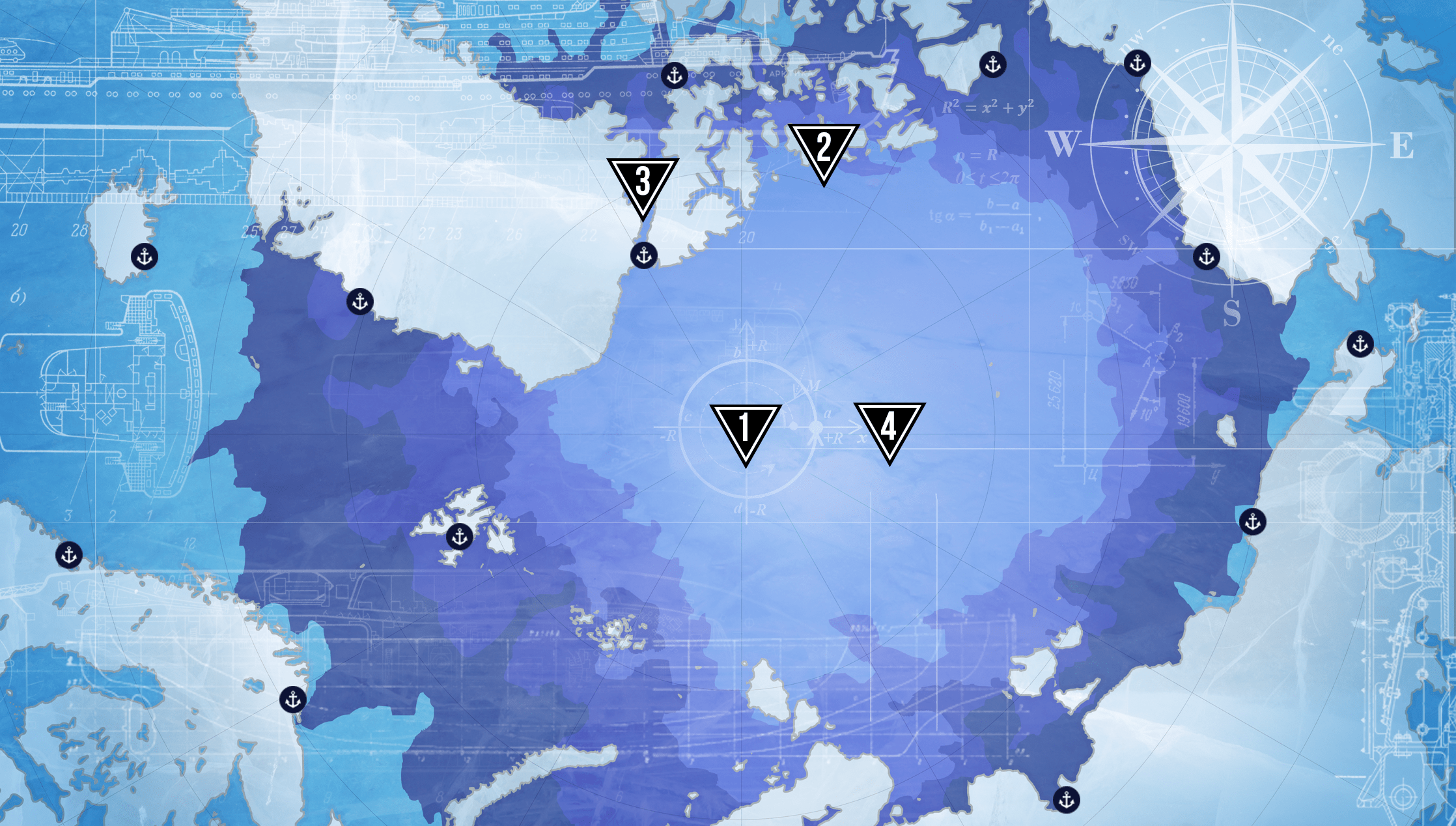
The North pole, or geographic North pole - the point of intersection of the axis of rotation of the Earth with its surface in the Northern Hemisphere. It is located in the central part of the Arctic Ocean. The North pole should not be confused with the North magnetic pole. The average air temperature at the North pole in winter is around -40 ° C, in summer it is mostly around 0 ° C.
The North magnetic pole is a conditional point in the north polar region of the earth’s surface, in which the earth’s magnetic field is directed straight down (at an angle of 90 ° to the surface). The location of the North magnetic pole does not coincide with the geographic North pole. Around the beginning of the 17th century, the pole was located under pack ice within the borders of the present Canadian Arctic. The North magnetic pole of our planet moves from the Arctic coast of Canada towards the Russian archipelago Severnaya Zemlya (Northern Earth): from the Resolute port to the Dickson port.
The North geomagnetic pole
Geomagnetic poles are the points where the axis of the magnetic dipole (which is the main component of the decomposition of the magnetic field of the Earth in multi-fields) intersects the surface of the Earth. Since the magnetic dipole is only an approximate model of the Earth’s magnetic field, the geomagnetic poles differ in their location from the true magnetic poles, in which the magnetic inclination is 90 °. The movement of the geomagnetic pole can be observed from the shores of the Canadian Arctic to the northern shores of Russia: from the port Alert to the port Nordvik.
The Pole of Inaccessibility is the point that is most difficult to reach because of its distance from convenient transport routes. Often this refers to the most distant point from the coastline.The continental and oceanic poles of inaccessibility have approximately the same radius: the Eurasian pole (2645 km) is only 43 km closer to the ocean than the Pacific pole (2688 km) to land. The term describes a geographical point, not a physical phenomenon, and presents more interest to researchers and travelers.
Developer's diary #8. Gaz Carrier
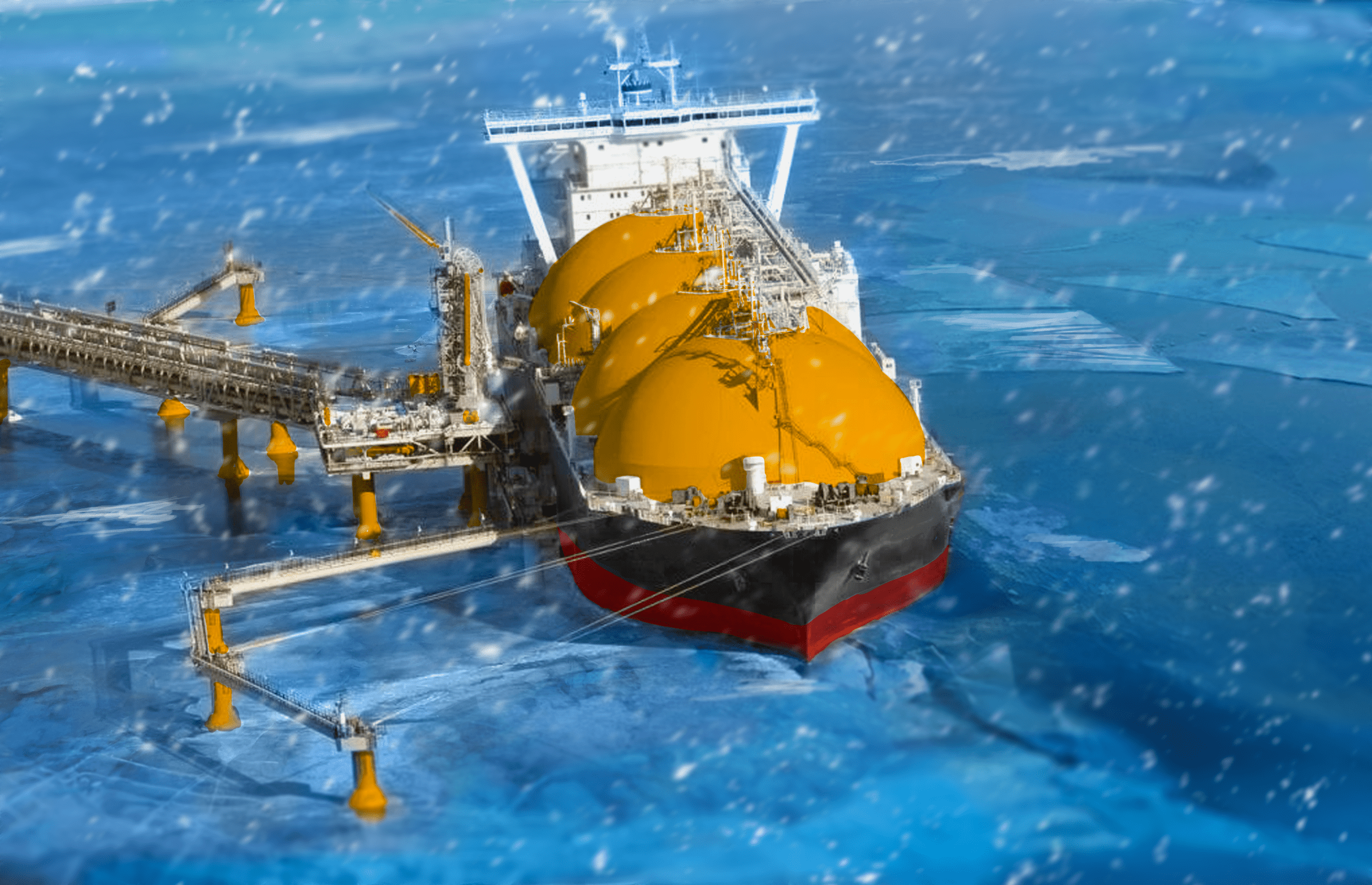
GAZ CARRIER - a watercraft for the transportation of liquefied gases (liquids with an absolute vapour pressure of more than 274.7 kPa at the temperature about 37.8 ° C). Gas carriers are distinguished by purpose, method of transportation of liquefied gas, as well as by design of the watercraft and its cargo (gas) tanks.
By destination, gas carriers are divided into two main groups: for liquefied petroleum gases (LPG) - propylene, propane, butane, etc.; for natural gas (LNG) - mainly methane. Watercrafts of the first group transport also liquefied gases, which are close to LPG in their physicochemical properties, with a boiling point not lower than -50 ° C (for example, ammonia, butadiene, vinyl chloride). Transportation of LPG and similar gases is carried out: under pressure (up to 1.8 MPa) in a cooled state (-48-50 ° С); combined method at a low temperature (about 10-20 ° C) and a pressure not less than 750 kPa. The latter is used mainly on watercrafts with a carrying capacity of up to 8 thousand tons. LNG is transported exclusively in a cooled state (at the temperature about -162 ° C). The design of the gas carrier and its cargo tanks is engineered according to the type of transported liquefied gas, its degree of danger to the crew and the environment, and the method of transportation. Tanks are divided into built-in, membrane, semi-membrane and supplementary ones.
Developer's diary #7. Arctic Tourism
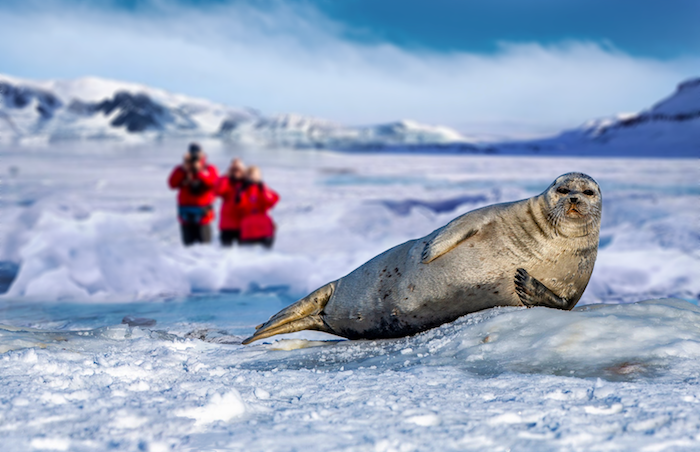
Far from being the most popular travel destination, the Arctic nevertheless has been attracting more and more people who wish to experience its fantastic wildlife, beautiful landscapes and local cultures, as well as those who like extreme sports.
Denmark and Norway actively embrace the endless snowfields of Greenland and Svalbard as ones of their tourist attractions. Here you can view glacial fjords and large icebergs, one of the most amazing landscapes on the Earth. In Canada visitors enjoy the reserves of the Canadian Arctic Archipelago. Iceland, among other attractions, offers skiing, kayaking, cruise ship tourism, as well as ski, snow sleigh or helicopter expeditions. In Finland you can enjoy fishing in the Arctic Ocean and mountain biking. And the most fearless tourists can do to Russia to experience dog sledding trips along 900 miles route, which runs from Yakutia to the New Siberian Islands crossing the ice-covered Laptev Sea.
Developer's diary #6. Alert
Alert
82°30′6″N 62°20′53″W
Alert, in the Qikiqtaaluk Region, Nunavut, Canada, is the northernmost permanently inhabited place in the world. As of the 2016 census the population was reported as 62. Alert has many temporary inhabitants as it hosts a military signals intelligence radio receiving facility at Canadian Forces Station Alert (CFS Alert), as well as a co-located Environment Canada weather station, a Global Atmosphere Watch (GAW) atmosphere monitoring observatory, and the Alert Airport.
Developer's diary #5. Arkhangelsk
Arkhangelsk
64°32′N 40°32′E
A city and the administrative center of Arkhangelsk Oblast, in the north of European Russia. It lies on both banks of the Northern Dvina River near its exit into the White Sea. Arkhangelsk was the chief seaport of medieval and early modern Russia until 1703.
Developer's diary #4. Resolute
Resolute
74°41′51″N 094°49′56″W
An Inuit hamlet on Cornwallis Island in Nunavut, Canada. It is situated at the northern end of Resolute Bay and the Northwest Passage and is part of the Qikiqtaaluk Region. Resolute is one of Canada's northernmost communities. It is also one of the coldest inhabited places in the world, with an average yearly temperature of −15.7 °C (3.7 °F). As of the 2016 census the population was 198.
Developer's diary #3. Container ship
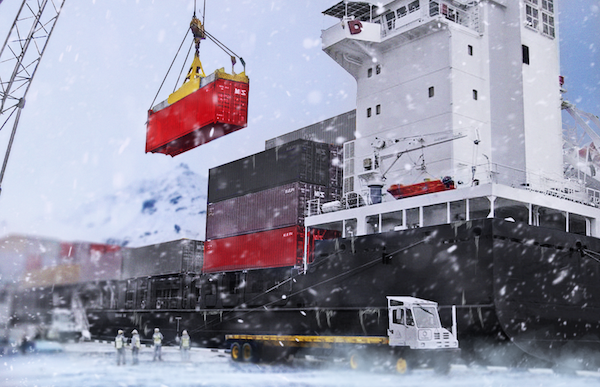
Container ships are cargo ships that carry all of their load in truck-size intermodal containers, in a technique called containerization. Container ship capacity is measured in twenty-foot equivalent units (TEU). Typical loads are a mix of 20-foot and 40-foot (2-TEU) ISO-standard containers, with the latter predominant.
There are two main types of dry cargo: bulk cargo and break bulk cargo. Bulk cargoes, like grain or coal, are transported unpackaged in the hull of the ship, generally in large volume. Break-bulk cargoes, on the other hand, are transported in packages, and are generally manufactured goods.
Container ships are a common means of commercial intermodal freight transport and now carry most seagoing non-bulk cargo. Today, about 90% of non-bulk cargo worldwide is transported by container ships. Containerization has lowered shipping expense and decreased shipping time, and this has in turn helped the growth of international trade.
Developer's diary #2. Trondheim
Trondheim
63°25′47″N 10°23′36″E
A city and municipality in Trøndelag county, Norway. Trondheim lies on the south shore of Trondheim Fjord at the mouth of the River Nidelva. The settlement was founded in 997 as a trading post, and it served as the capital of Norway during the Viking Age until 1217. It is the third largest city in the country.
Developer's diary #1. Dikson
Dikson is a Russian Arctic seaport on the coast of the Kara Sea on a headland at the mouth of the Yenisei Gulf. It is located in territory of an urban-type settlement of Dikson in Krasnoyarsk Krai. The port is used for life support of the settlement, military facilities, Arctic expeditions and polar stations, as well as for hydrometeorological and hydrographic service of The Northeast Passage route.
The period of summer navigation in the port lasts from June till September (October). An icebreaker escort can make year-round navigation possible.