It's been 1.5 years since I posted the last dev update here. And only a couple of dev updates since I pledged to try and post one update every couple of months ːarchduckː I guess we now know that might have been a bit overambitious commitment to make on my part.
Let me bring you up to speed with what happened during that time. And boy, did stuff happen!
We have been tackling the project from three angles: art, tech, and design. What makes this especially tricky is that these three are interlocked, so there are plenty of unknowns with each decision. This leads to uncertainty and this took a toll on the team. After the exceptionally tough years during the pandemic lockdown, we had more than one team member burnout.
And by burnout, I meant not the "I can't connect to my muse" state but rather the "dark bottomless pit with no escape" kind of affair. It's much better now, thank you. We have found the mindset that allows us to move forward. Remember everyone: self-care is important and should come first.
This is one of the reasons for the radio silence - even though work was progressing everyone felt like we were not moving ahead despite the great deal of work we put in. The expectation to deliver news was crushing at times.
This is also why we have decided to be much more open about the development (as you can see from this rather personal post) and plan around the unknowns. We believe that most of that expectation was ultimately in our heads since the community was nothing if not understanding all this time. You are awesome, by the way.
So, after that heavy and long intro, let's get to the stuff we worked on during the project so far!
Art
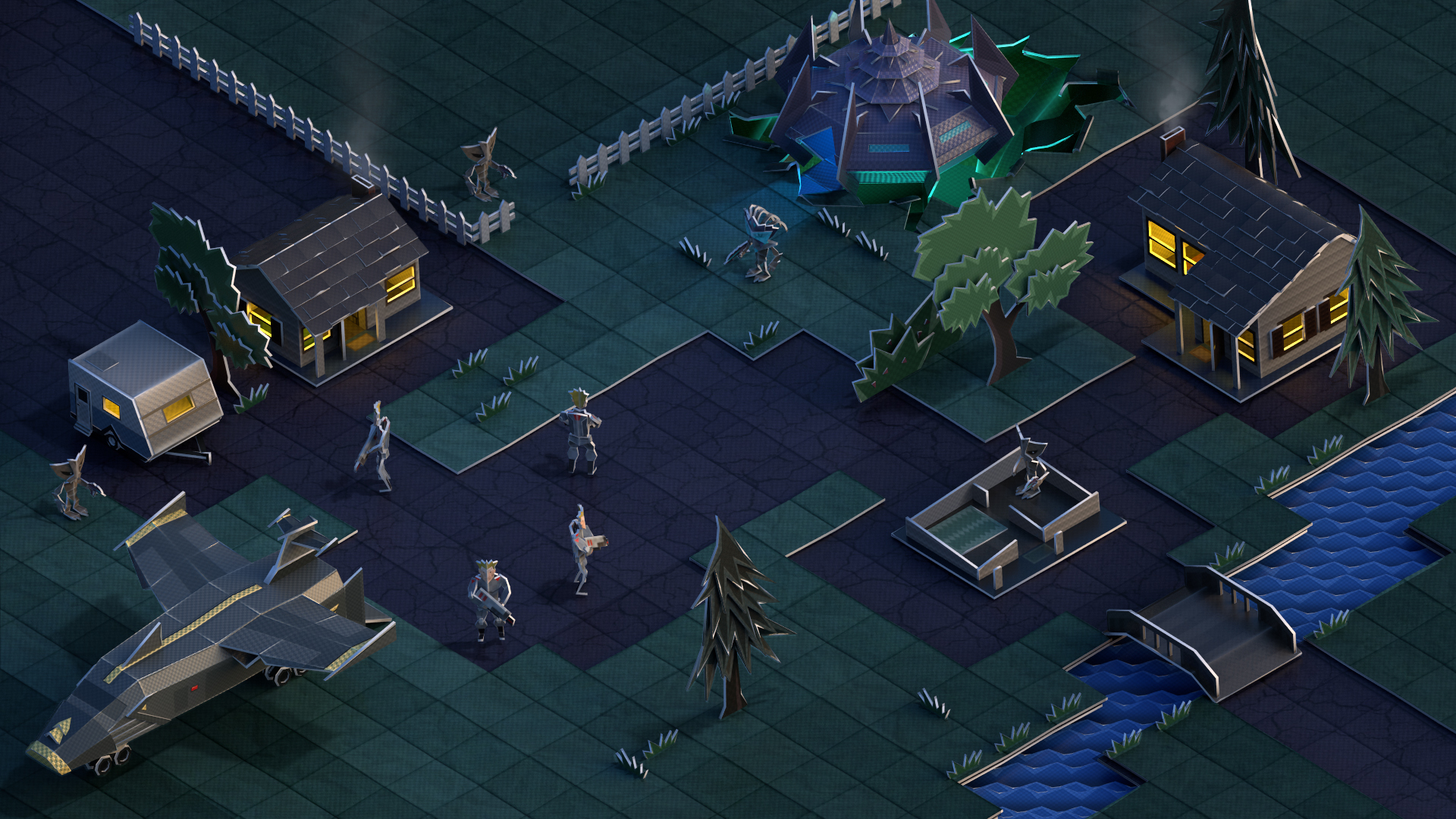
As I mentioned all three aspects are interconnected. Art is directly linked to the engine. Our engine, CUG, is primarily 2D. As we worked on Book of Aliens prototypes and Hellcard we came to a decision that our games could benefit from a switch to 3D. Our current art asset production pipelines already included 3D models that were rendered onto 2D sprites and manually imported to the engine. And they put into pseudo 3D hierarchies that imitated 3D. Not the most efficient way to do it, but it did have some benefits. If you are interested in how it worked I did an Imgur post on it here.
The initial artstyle you all know was designed for a 2D rendering with no dynamic lights, free 3D camera, or effects like fog.
Models from the above picture have many jagged edges and, in some cases, are flat since they were designed for a fixed camera.
We had to reinvent the textures, how the paper meshes are built, and everything else for it to work in 3D.
This process is still ongoing, but I would like to show you one of our mockup maps in 3D: As you can see the scale is smaller, and the map is being unfolded as it is being explored. That's one visual effect area we are planning to explore and a topic for a whole other post.
Please don't be reading too much into how dark/lighthearted it looks. This can be easily modified with shaders and texture design. Since then we have been preparing assets to be used in the prototypes and the final game.
And a short peek of an in-engine tile visual exploration state representation (which I like a lot): As you can see above this test was done in-engine but with the older design of a tile. A much larger one.
Tech
We have decided that ditching our old, trusty engine is the best way forward. This would allow us to free manpower for doing actual games not taking care of what's underhood. Also shifting to 3D would be an insane amount of work, unfeasible for our team.
It took the team almost a year of careful consideration and research. Such decisions are not taken lightly since we had to adapt our whole tech stack to the new tech. The wrong choice here would cost us dearly in the future.
Eventually, we decided to move to Unity. Yeah. This was around 2021. It seemed a better choice being indie-friendly with a huge community. Not without issues, of course. But the good stuff outweighed the bad. We worked out pipelines and started churning out assets even as the mechanical design was still undergoing. The team was learning the intricacies of the engine, new prototypes were made in the new engine as well.
And then the whole Unity meltdown happened. For those of you who don't know Unity suddenly decided to change monetization models from a subscription to per-install pay. This in itself wasn't a huge problem, we were pretty confident they would have to backtrack and rework this into something feasible. However, this meant Unity just can't be trusted with long-term development and support. Not to mention Unity kept sacking engineers and hiring marketing people instead. Which didn't bode well for the future of the engine.
I won't go into the details but we have decided to switch to Unreal Engine as a result. We didn't post a piece of dramatic news at the time, since the decision wasn't emotional. It's a cold calculation. We can't be left with a dead or unusable engine in 3 or 7 years. Or worse yet, one that forces a monetization model on us and our community. We intend to make a series of games here - and at the end of this journey we want all of them to keep working and be available to the players ːarchduckː
This shift to yet another engine comes with a steep price tag - we have to redo much of what we have already created. The team has to learn the new engine all over again (not that we are complaining here, learning new stuff is exciting but it does slow you down). This will take time as we will be creating smaller test projects for GFX (like the one with the rotating tile above). We are also considering making a smaller and easier project on the new engine before moving full throttle ahead with writing the code for Book of Aliens. The more dry runs we make first the better and less buggy game will come out of it.
It has an upside though - we got an opportunity to revisit the assets and designs and improve on them. With Unreal we are also confident that we can make the game perform better and make it look better. And, who knows, maybe one of these smaller games will turn out to be fun enough to share with the world ːarchduckː
Mechanics
Here is where it gets really interesting. We have come up with several completely different designs for the core mechanic. Including a sudoku-based one. Yes, you read that right! That one didn't make it into the final selection though.
Some prototypes were very basic in the visual layer, focusing only on the raw mechanics, like this one: As you can see both soldiers and actions are cards in this one and there are no tiles (blasphemy!).
Others utilized actual art and were playable from start to end with a whole campaign implemented (we often overdo stuff, I know).
Over time we concluded that we expect two things from tactical shooters and UFO games that are difficult to mix: opportunity to plan our game and a bit of chaos to spice things up.
That's why our designs explored mechanics that mixed these two ingredients in various proportions. As a result, we ended up with not one but two games. We want to finish prototyping the second one and then we will decide which one is going into preproduction. And the other one may also get made at a later date. That's a huge benefit of all that time we have spent on art style. We can adapt it to new ideas quickly and without changes to base assets.
This also is a topic for a whole other post though.
Conclusion
This is where we are right now. A better place, and excited about the stuff we are working on. The team is small, and the task is huge but I hope the glimpses I have shown you here give you an idea of how much work went into the project already. And what it can become.
I will be posting new stuff as it comes. For the foreseeable future, though, we will be learning Unreal and adapting our workflows. This isn't a particularly interesting topic to write about, certainly doesn't come with a lot of cool screenshots. So maybe the next post will be more about art and challenges we faced when adapting our 2D style to a 3rd dimension? Let me know in the comments if that sounds like something you would like to read about.
Stay safe on paper tiles, Konstanty
BOOK OF ALIENS AUGUST ’22 DEV UPDATE
In the last few updates, we have been talking about influences and, most recently, logos. Today let’s get back to the meat of it, namely the guns.
Weapons have always been an important aspect of UFO games. On the surface it’s pretty obvious - it’s the guns that kill the invading aliens, of course they are important!
But they did more than that. Weapons progression was an important narrative device. We started the game with the best humanity could throw at the alien threat. Best rifles, over-the-top portable canons. All high caliber. All futuristic, bulky, and looking ridiculously powerful. Who didn’t think “this will blow these aliens out of the water” when looking at his arsenal for the first time?
And it all was not enough! This highlighted how hopelessly outmatched we were in that war. The juxtaposition between our agent futile firing his bulky rifle at a diminutive grey alien hiding in wheat only to be critically wounded by a blast from said alien’s tiny plasma pistol contributed to the overall feeling of dread and despair. Which we all loved.
We aim at recapturing all these experiences in some ways. Getting guns right is important. When designing their cardboard counterpart we tried to preserve the bulkiness. Which isn’t as simple as it sounds when the guns are made of cardboard and paper! As you can see in the progression animation below, we focused on two aspects when designing kinetic starting weapons.
Bulkiness to convey the power of the guns. This is especially visible on the pistol. Pistols are not very imposing or impressive by themselves, so we struggled here a bit. Eventually, someone came up with a brilliant idea to add a sound suppressor to it. This made the pistol look much more deadly, and impressive, and made it easier to recognize by the outline on the battlefield.
Making the guns themselves more interesting visually than simple flat cutouts. This resulted in more parts being tilted with respect to the core bulk of the gun, like the beforementioned suppressor or magazines.
Other News
Book of Aliens team is also part-time helping the Hellcard team this and the next few months. Hellcard is gearing up toward a closed beta and since we are a rather small company they do need a hand as the work gets more intense. This impacts the pace at which we work on the game, but in a few months, the situation should reverse with the Hellcard team giving us a hand.
Meanwhile, you can pass time helping us and considering participating in Hellcard Demo Closed Beta! You can sign up for keys and get more info on the game itself in this news:
As always, take care and never hunt aliens in wheat by night! Konstanty
BOOK OF ALIENS JUNE ’22 DEV UPDATE
In the last few updates we’ve been covering some important design influences and decisions, but today I’d like to change the subject a bit and for a moment return to the visual side of things. It is something of a tradition for us to start projects with a logo design. While we already had a black and white early draft the time has come to polish it up. After all, the logo is the first thing the player sees.
The logo is not yet final, as we haven’t decided yet on the final color palette for the game. Even though there are plenty of options to choose from, the cherry red and cyan combo is the current frontrunner. We feel that this combination nicely conveys both the cold technological threat of an alien invasion and the urgency and high stakes of the situation.
The logo that you know from the Steam store page (shown below on the right) is just a placeholder. At some point, we will update it to the final version.
You can tell how much of a leap we made from the early black-and-white draft, through the current placeholder to the final quality. Of course, as with Book of Demons, the black and white silhouette logo will be sticking around for use where simplicity and readability will be paramount.
Also, with this logo iteration, we’re trying to do better than we did with the Book of Demons logo. The BoD logo was too dark and not sharp/clear enough. It often needed boosted contrast and brightness when placed on busy backgrounds. At times we even had to add a black vignette under it like in Steam library tile.
This time we hope none of that will be required. Here you can compare both Book of Demons and Book of Aliens logos:
Take care and stay safe! Maciek
BOOK OF ALIENS APRIL '22 DEV UPDATE
Continuing the theme started with the previous update, today I’d like to share more games that inspired us when designing Book of Aliens. Last time I talked about thematic influences and the X-Com games. Today I’d like to name a title that helped us engineer and shape the goals for the top-level gameplay mechanics in Book of Aliens.
Before we start, a quick disclaimer - Book of Aliens will not be a “clone” of any of the games listed as influences and it will feature unique game mechanics all over the place. In fact, it will have more unique features than Book of Demons. In our experience, however, when you introduce elements that are novel, you have to balance them with a dose of elements that are familiar to the players. If you fail to do so, you might end up with a game that is too weird and alienating. That is why we like to analyze other games that do things well and use the philosophy behind their solution to our own ends.
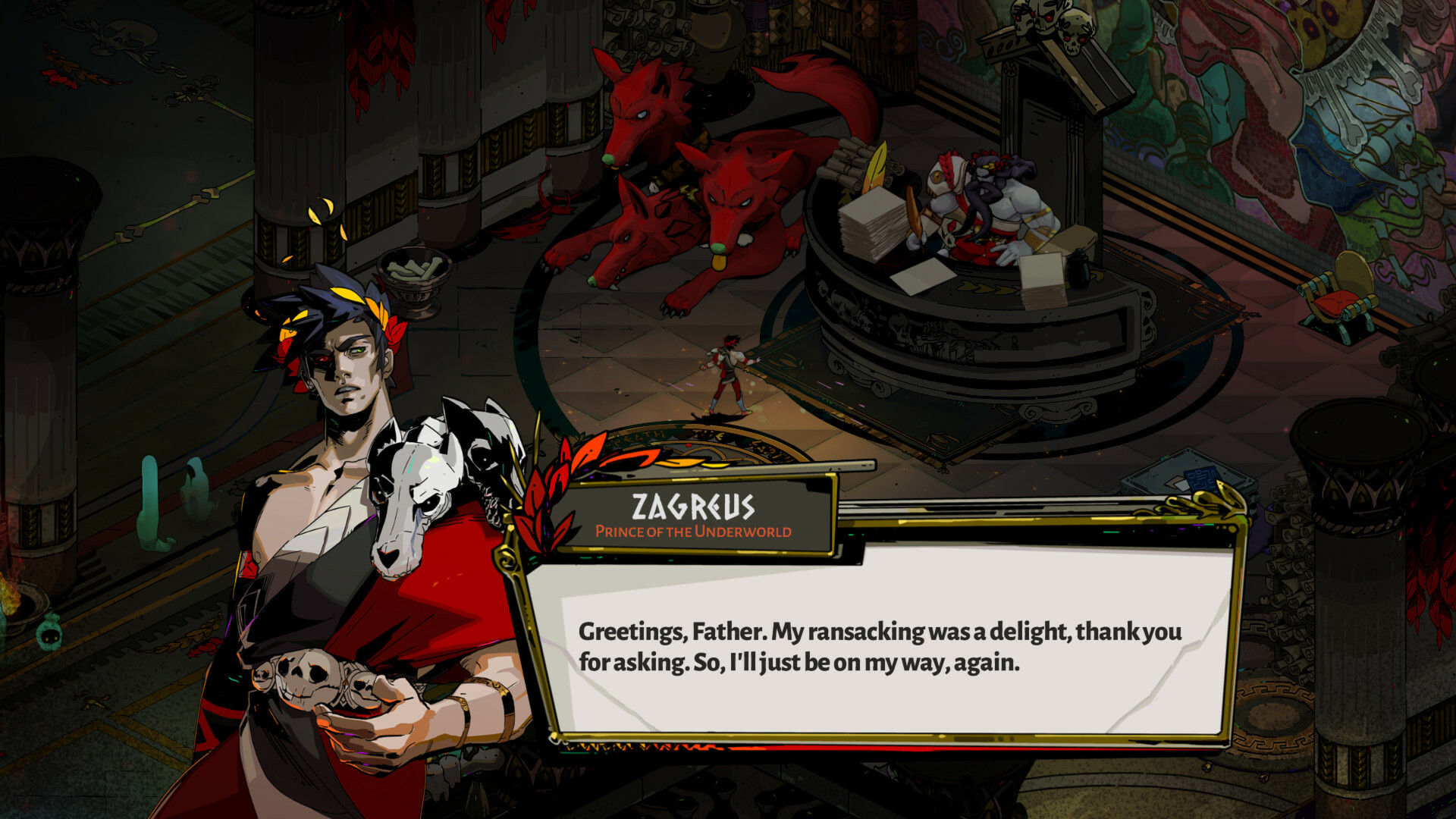
Influence #2 - Hades
At first glance, Hades might seem like an odd choice for a mechanics influence. After all, Book of Aliens will be a sci-fi tactical turn-based strategy while Hades is a story-rich real-time roguelike dungeon crawler. What could the two so different games have in common?
Well, for one thing, Book of Aliens will also be a roguelike. Yes, I know what you might be thinking: “Not another roguelike!”. But bear with me for a while, because this is where the Hades influence matters. You see, Hades is one of those roguelikes that even roguelike-haters tend to love, and this is our objective as well.
So how are we going to do that? Just like in Hades, all of the runs (missions in Book of Aliens) allow you to make progress in the bigger story (campaign in Book of Aliens) and vice-versa, the advances in the story make you better in the runs.
This is simple yet effective, but also very difficult to get right. Hades certainly nailed it and we’re also aiming at a similar progression vibe, even if we’ll be using different tools. Book of Aliens will not be as story-rich as Hades (at least in terms of the number of dialogue lines), so we need other mechanisms to keep the players excited for more after they complete a run. In fact, this is something we’re trying to push to the next level and we’re bringing in more classical progression mechanics to avoid all of the restart-from-the-beginning-each-time roguelike feel.
Basically, we’re trying to have the cake and eat it, too. We want all of the pros of roguelike games such as high replayability and the excitingly unpredictable nature due to high levels of randomization. At the same time, we want none of its drawbacks like having to start from the beginning every time. Will we succeed? We hope we’re on the right track!
Take care and stay safe! Maciek
BOOK OF ALIENS MARCH ’22 DEV UPDATE
In this update, I’d like to take a break from showcasing the efforts of our art team, and pivot to the design side. In particular, over the next few updates, I’d like to talk about third-party games that had a big influence on our designs.
When designing the details of a game, we usually first sketch a basic idea in something that’s often called a vision document. This document serves as the foundation for all subsequent work - it not only sets the scope, mood and feature-set, but it also lists all the relations to any other games out there. Our approach is that intimate knowledge of all the similar games already on the market is crucial. You have to understand their strengths and weaknesses. You also need to know who is your target audience, what games do they like to play, and what they expect from a next-gen title in their favorite genre.
Designing unique games is only viable for very small titles (think super-simple puzzle games). The bigger and more complex a game gets, the more you have to rely on design patterns that repeat between titles in the genre. This approach makes the game more accessible and lowers the risk for big titles. Even if your unique game is great, it won’t matter if too few people will have the patience to learn and understand it. On the other hand, making a game that brings nothing new to the table won’t get anyone excited. So, the biggest difficulty lies in striking the right balance between the old and the new.
Influence #1 - X-COM Games
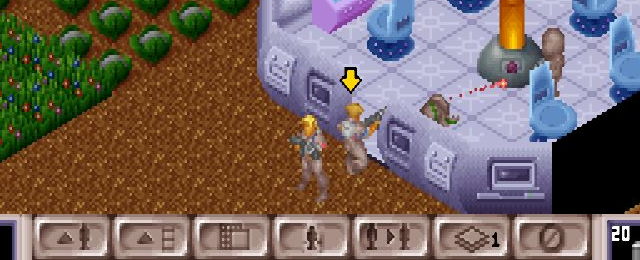
It’s no secret that Return 2 Games is a tribute series, and Book of Aliens’ greatest single influence is 1994 X-COM: UFO Defense (also known as UFO: Enemy Unknown in Europe). The game, and to some extent its sequels, made a huge impact on us when we played it as kids. It was never a question if a UFO tribute would be a part of R2G, it was a matter of when :) And now we are working hard on it.
The similarities between Book of Aliens and X-COM games will be limited though. Both games will be in the same genre - a blend of global strategy and turn-based tactics - and both games depict a story of the world’s desperate attempts to respond to a global alien invasion. In particular, we want to have a similar feel of doom and gloom in the face of an unknown enemy and a global struggle that starts in the style of the cold war but quickly escalates into an all-out conflict. In this regard, Book of Aliens will have a unique narrative with many secrets and surprises to uncover along the way.
However, when it comes to game mechanics this will be where both games really diverge. If you look at the more modern games in the same X-COM series and genre, there is a trend to simplify game mechanics, make everything more streamlined and fast-paced. Some of these efforts are more successful than others, but often simplifying things has the downside of taking some depth away. This is something we are not fans of and we are actively working on other solutions.
After all, we are making a series of midcore games. We want Book of Aliens to be easier to pick up and have shorter gameplay sessions but we also want it to be deeper in terms of strategies and tactics available to the players. If this sounds like a difficult task, that’s because it is. And it’s one of the reasons why developing the game takes so long.