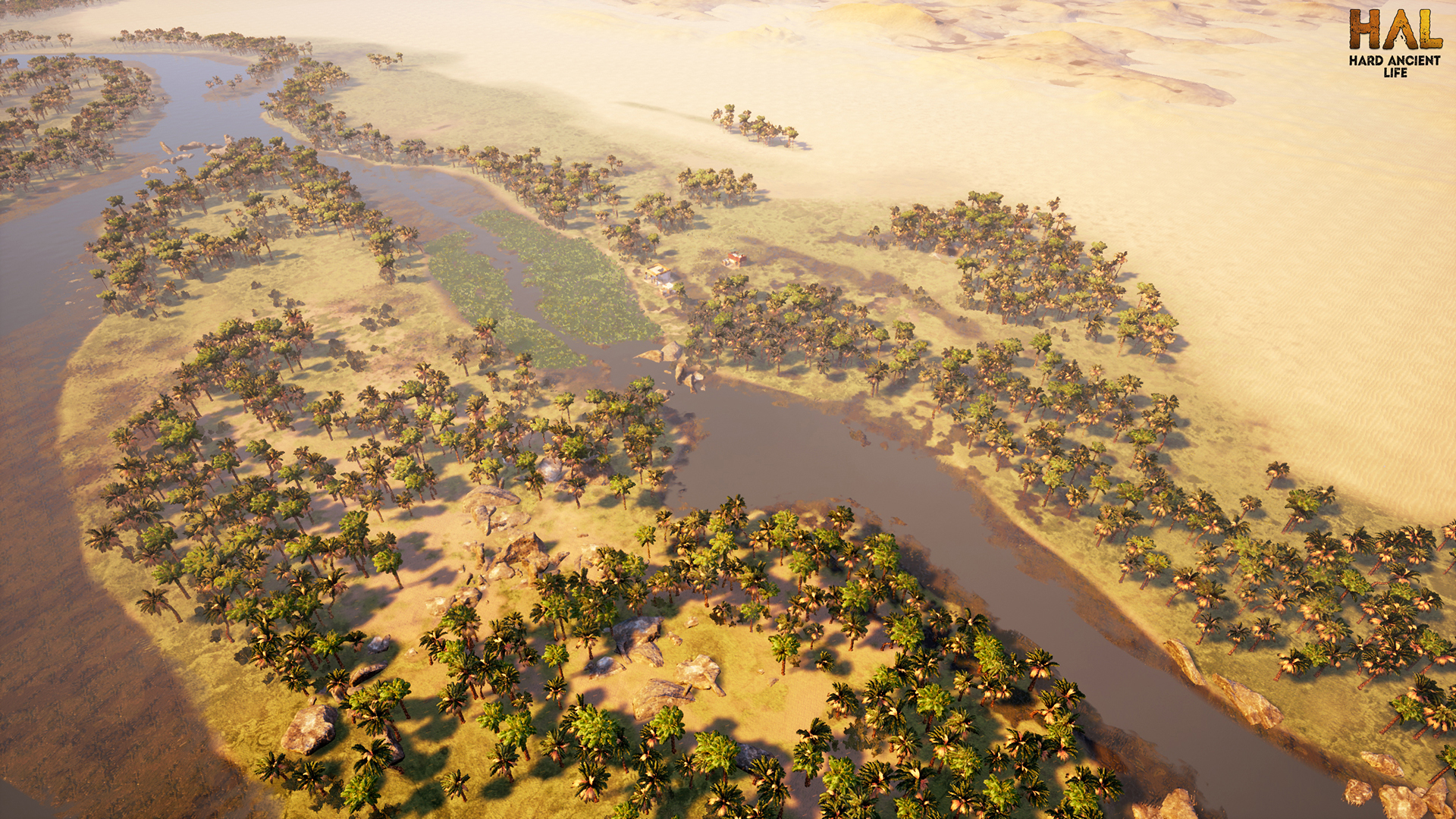
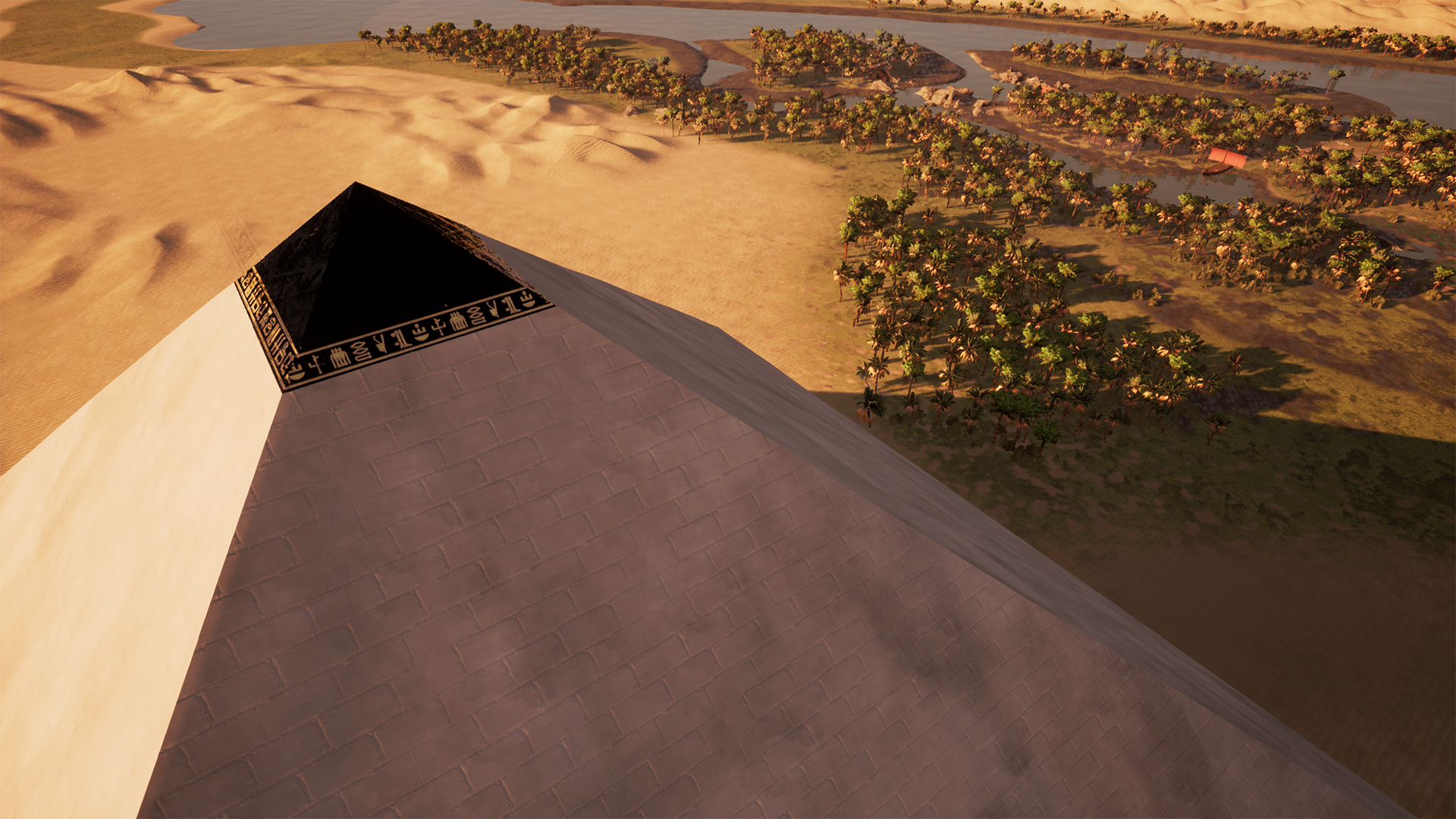
Information about the release, early access version and planned demo.
As some of you noticed, according to the deadline written on Steam, there should be specific information about the release date of the game. We can say straightforwardly that the game will not appear this year and although it sounds like bad news, in practice it is completely different. Why? You will find out more about that in the next part of the news.
Despite the fact that this is not the end of the year yet, we would still like to summarize all the events that have taken place so far. The game has been developing for more than two years as a side project developed by one person after work hours in the free time. The most important part of programming was created over this long time, a specific graphic style was developed, the whole game design document was described and a working prototype was created.
Usually indie games are rather small productions, especially those made by one person, but in this case it was supposed to be different, which results from the simple assumption that we want to present Egyptian history in a fresh and contemporary way, maybe also in some sense innovative, and this means a huge amount of work, which we are not afraid of.
It wouldn't be possible if we didn't finally find a publisher who would support the whole project, and thus help transform a small one-person project into a large, fully-fledged game that will have to face the demands of the market and all the fans who actively support the development of the game all the time.
At what stage is Hard Ancient Life at the moment?
The game is still prealpha, playable and basically playable at the moment, but there is not quite enough of it to release it on the market with a clear conscience, even in the early access version.
That's why we decided not to release the game yet. The appearance of the publisher means that with such support we can now focus exclusively on the production of Hard Ancient Life, as well as enriching the game with elements that due to the high costs we hadn't planned at all before and are now within our reach. This is a big chance for the game to become something even better than it was originally intended, and we don't waste such opportunities. We promise that it will be worth waiting a bit longer.
Then what can you expect in the near future?
First of all, from December a lot of new information will start to appear, we promise to inform more often about the progress of work, there will be a real video gameplay and at the end of Q1 2019 there should be a long-awaited early access version as soon as we solve all legal problems. By then, we will certainly be able to expand this early access to such an extent that most things will work right away and the gameplay will be at least a bit enjoyable.
We hope that the reasons for postponing the release are understandable for you, we look forward to your comments, thoughts, hints and expectations regarding the game on the Steam forum and in the comments below!
Devblog #05
Hey
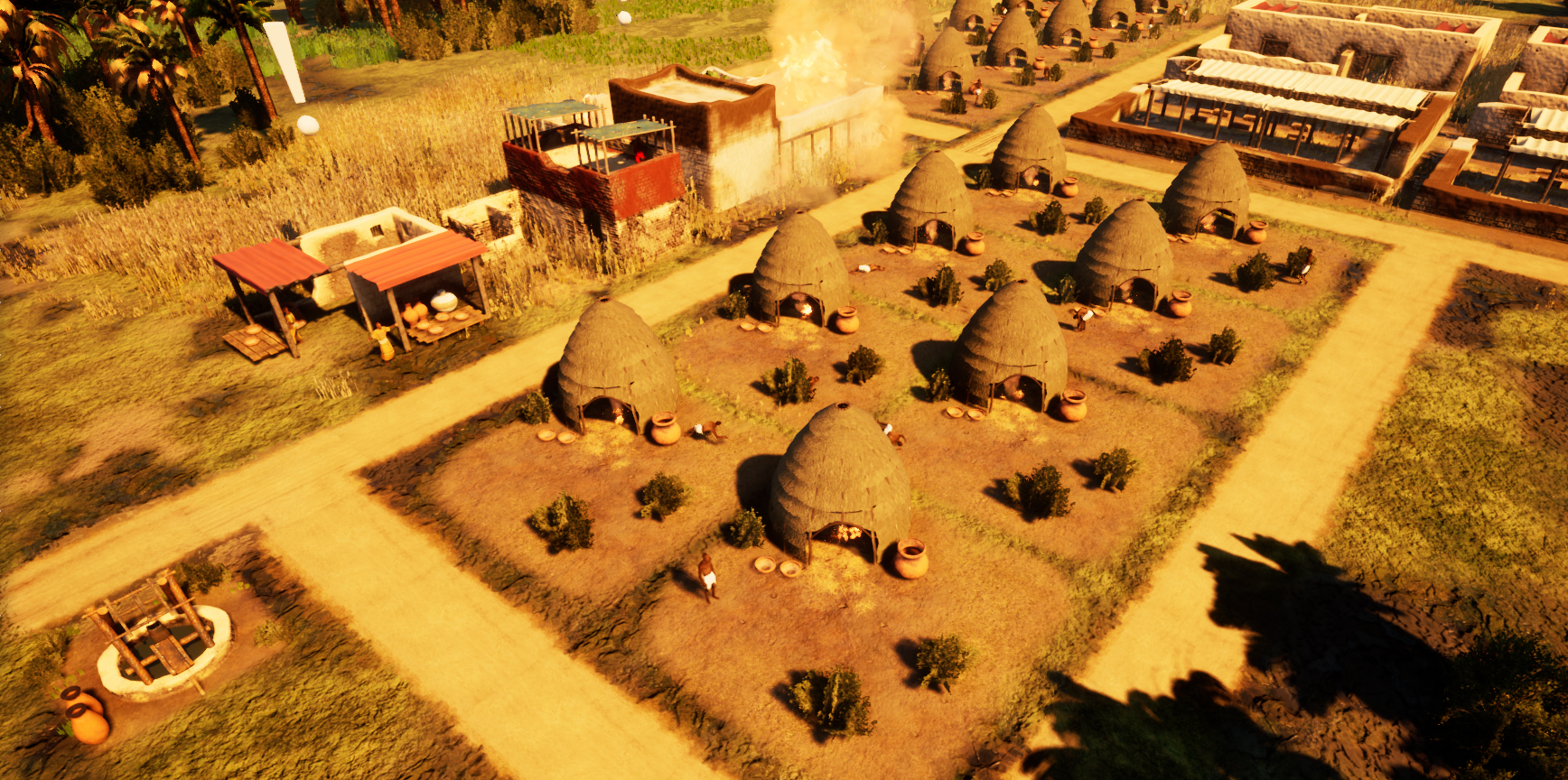
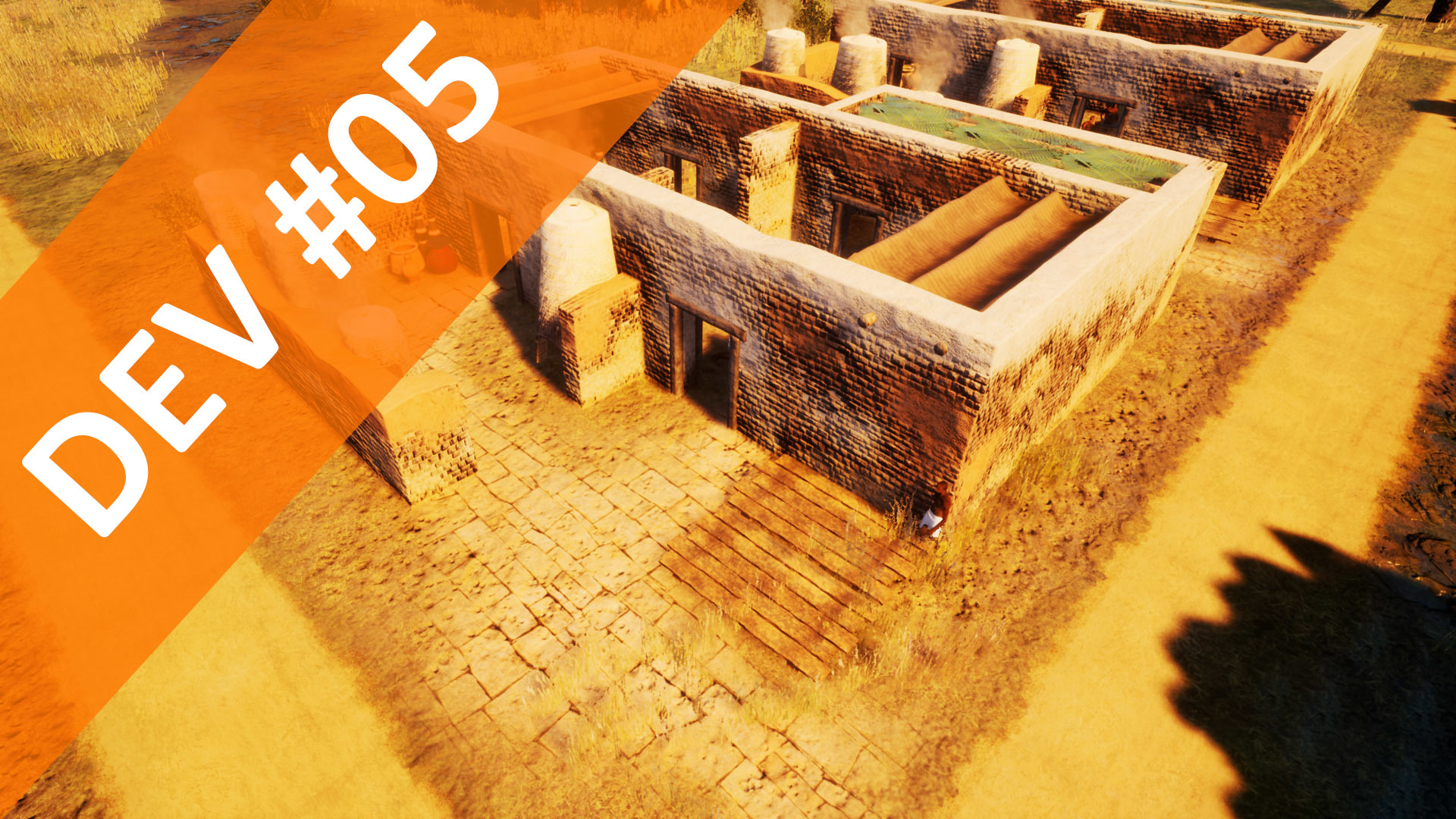
In this episode we will show you as always a quick preview of the production cycle - this time the pottery maker and additional effects when constructing the building!
As everyone is surely aware,
the release should soon follow the deadline set on the Steam. We will write a message about it soon, as well as what to expect in the near future and what the work on the game will look like.
We hope that we will also be able to boast of great news, but we ask you to keep your thumbs up for a while!
https://youtu.be/8AVMCKruado
Devblog #04
Hey!
We're coming back now with more frequent sharing of shorter game materials - short videos look better from games such as city buildings. In today's video you'll see the production cycle of bricks - the full sequence is not shown here (we won't show all of them to leave you something to explore), but you can definitely see what it's all about.
https://youtu.be/GOLv91tyt2Q
Devblog #03
☥☥☥
For a long time there were no updates about Hard Ancient Life, it's time to say what's going on!
Recently a full documentation (game design document) has been created, in which all elements of the game have been described. The document was created quite a long time, because the game is not a small, simple game, but quite a complex project. We hope that it will allow us to establish cooperation with the publisher in the near future.
Besides, the work on the game itself focused on the struggle against optimization and general preparation for the game release in early access, but about this there will be another separate information, in which the whole publishing plan will be described.
☥☥☥
The attached graphic shows how the various events that the player will encounter during the game will be illustrated.
Devblog #02
Quick preview from everyday life of the lowest social class in the game.
Inhabitants have their own needs, such as access to a cultural centre or entertainment.
There are 17 additional levels of residential buildings. This means a completely new model, the behaviour of the inhabitants and other needs to advance further. Satisfying these needs results in a progression to the next class and expanding the needs for new ones.
https://youtu.be/-GW5nvCqsxM
Monuments #02
Temples
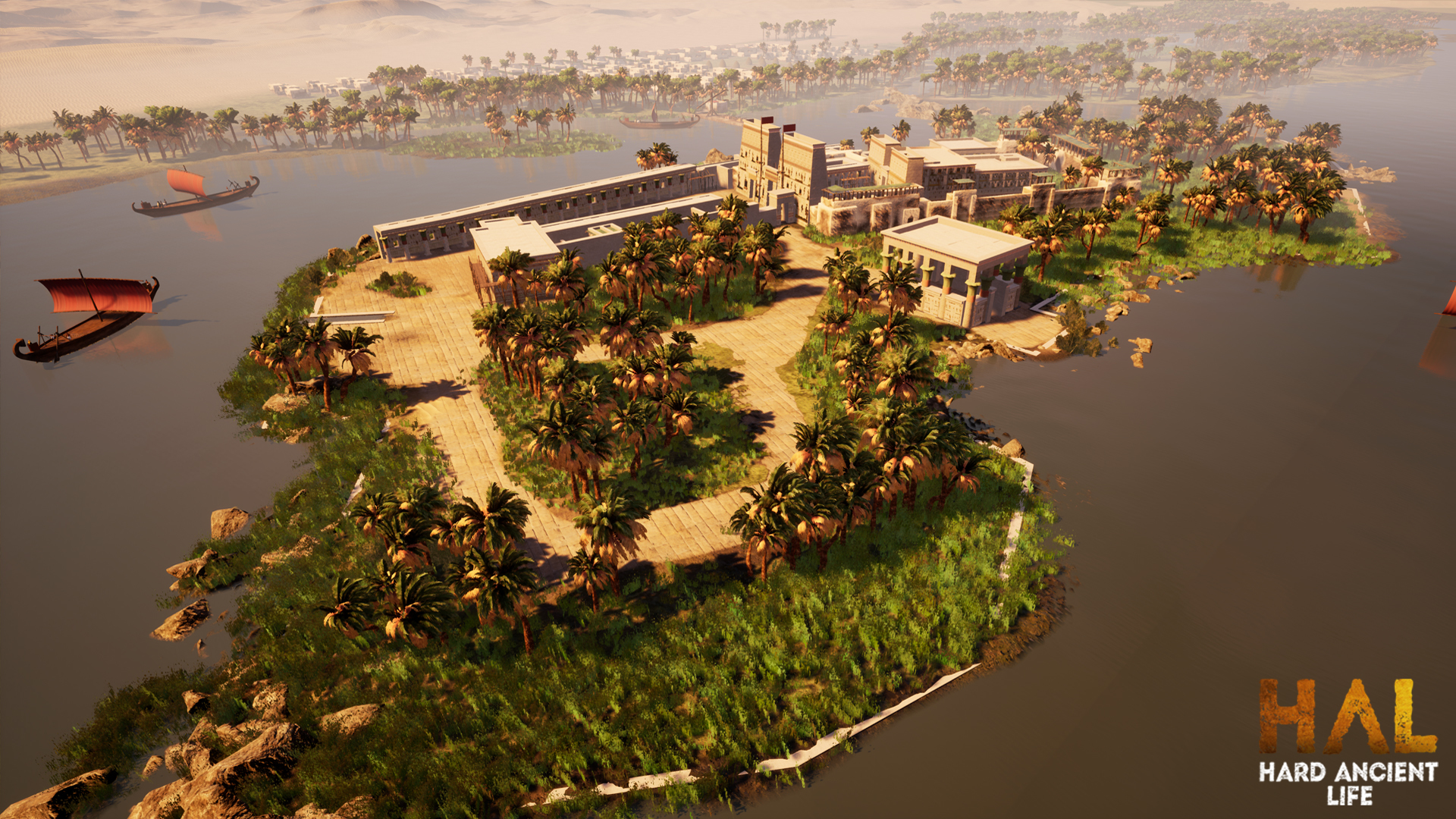
We have discussed the pyramids so far, so in this post, we will present another type of monument - Isis temple of Philae from one of the final missions of the late period campaign, last such large monument built before the fall of Egypt.
As with the pyramids, temples will need to be built step by step. The player will witness the construction to which he will need to deliver huge amounts of stone, wood, paint and lamps, and will also need to employ a huge number of workers.
The island of Phile was located at the height of the first cataract on the Nile, which was a sacred place of Egypt. According to ancient Egyptians, the island was the first piece of land to emerge from the waters of Chaos. In ancient times on the island of Philae was built a temple of Isis during the reign of Nectanebo I, king of the XXX dynasty. During the Greek and Roman rule, the temple was extended by the Trajan kiosk, the portico of Octavian and Tiberius.
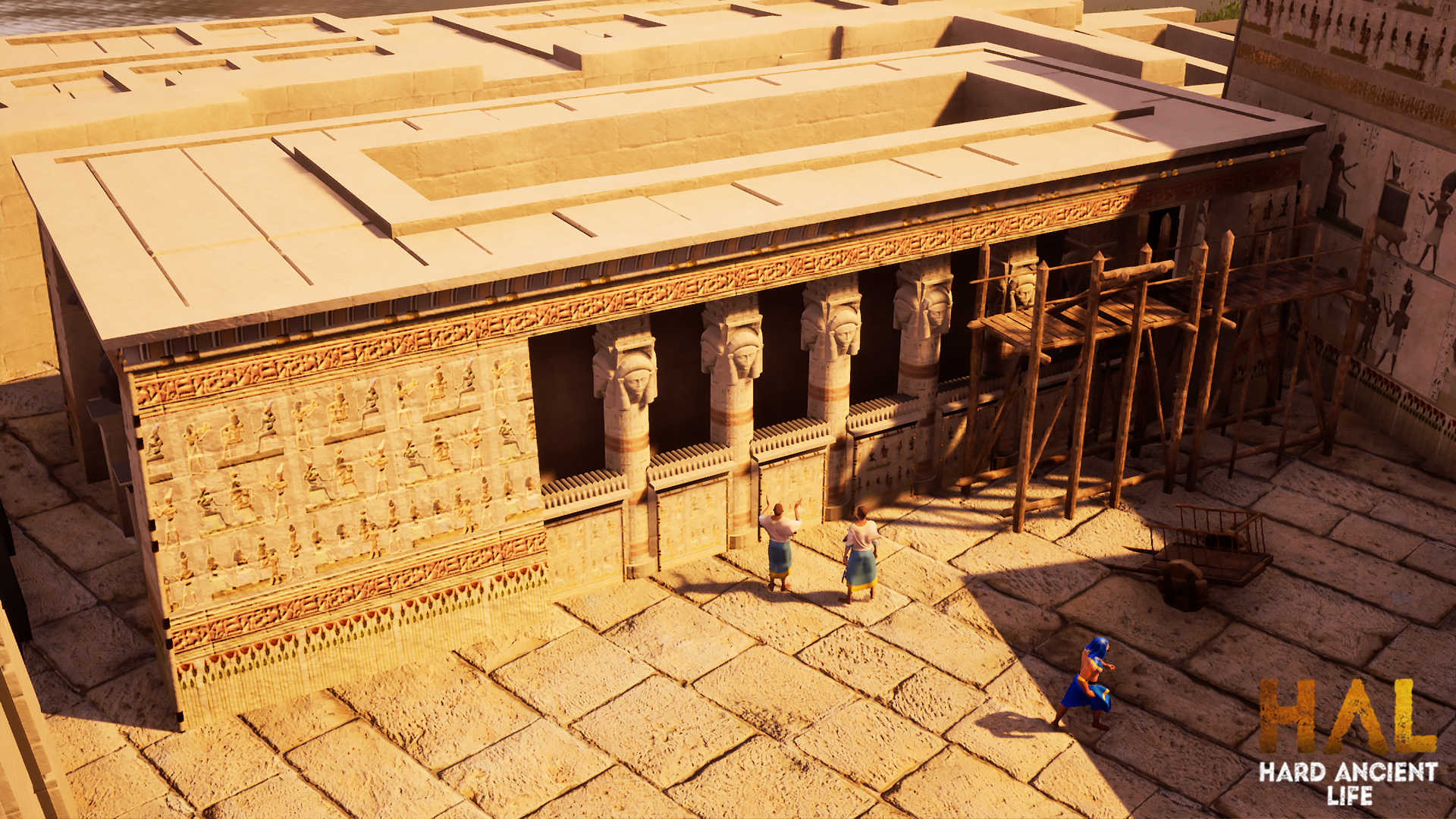
A very interesting feature of this temple is a square closed on both sides with a colonnade, which on one side begins with the temple and on the other side with a small kiosk as a place of rest during cult ceremonies.
The passage between the two 22.0 m high pylons leads to the interior of the temple. The pylons are decorated with reliefs showing King Ptolemy XII killing his enemies.
In the courtyard, on its western side, there is mammisi – small chapel - from the times of Ptolemy Euergestes II and Ptolemy XII. Behind the courtyard, after passing through the second 18.0 m high pylon, the main passage leads to the hypostyl hall. Inside the sanctuary there is a cryptic nave surrounded by several rooms.
Devblog #01
Hey!
We will regularly post slightly larger update notes on the progress of Hard Ancient Life production. Exceptionally, we will start with short introducing at what stage production is now. The basic mechanics of the game like building, trading, production and early social interaction are implemented and works, it has a few serious bugs that make it difficult to record a gameplay because mechanics sometimes block at different moments but we will be able to deal with it in a very short time.
We are struggling with the user interface and basically the whole 2d graphics, here are the biggest gaps. We want to reflect this fantastic and unique character of Egypt in order to achieve the greatest possible immersion of the player. The scenery lighting was designed from the very beginning, resulting in much better details and readability from a high height. Quite a lot of changes took place in the vegetation. On the first trailer available on the Internet, the grass was exceptionally bad - it was completely replaced as shown below.
We are currently trying to replace all asset holders and prepare a stable preview. At the same time, we also try to improve the overall graphics, and this is where we need your help. Please write your computer configurations in the discussion forum here If possible, please provide a detailed description of your pc including: CPU, frame memory, graphics card, motherboard, Windows, etc.
FAQ #01
Thank you for your great interest in the game! You send us a lot of questions, which thanks to RIMPAC_Edition we organize below:
1. After publication, the first question the readers had was "Is this the continuation of the famous game Children of the Nile" or the developer was inspired by this project, if not, what games or books were the beginning of the development of the project? What inspired the developer, creating the project.
I've been a fan of Pharaoh for many years and it's this game that is my constant inspiration. I've always come back to it to feel this unique atmosphere. However, the inspiration to start the work was my university studies, where I understood the architecture of Egypt as a whole. Later, I accidentally found excellent, detailed drawings from several international archaeological missions and started to create the first models on their basis, I started looking for more information, more drawings and descriptions. Meanwhile I read Barry Kemp's great book 'Ancient Egypt: Anatomy of a Civilisation', which was the first of many books, and that's how it all started. It was less than three years ago!
2. Will there be a mod in the game to create your own improvements in the game? For example, apartment buildings.
There will be mod support, it will be added after the initial release of the game. You mention, in the question, about residential buildings - their will be 17 levels, from an ordinary cottage to a large residence.
3. How deep is the system of influence of goods on the development of the settlement?
Without the provision of certain goods, it will not be possible to further develop the houses, for example, if the bazaar does not provide a second type of food, the building will remain on the third level.
4. Will the city's disease and epidemic be in the game? How does this system stimulate the development of the city?
The player will have to provide appropriate medical care. In areas with higher humidity it will be much harder to deal with infectious diseases like malaria, which will lead to epidemics and death of the inhabitants.
5. The article says that the game represents the monumental structures of ancient Egypt, and will there be burials for ordinary residents?
Generally yes. Burial in ancient Egypt was very expensive, it was affordable for the higher classes and here comes the part that we use in the game. For their needs the player will have to build a cemetery., which will require financial aid.
6. Is it possible in the game to hold festivals and build squares for these purposes?
Yes, the game will feature the Opeth festival, for example. The player will also be able to organize his own festivals in order to raise public mood.
7. Will there be luxuries in the game?
Yes, luxuries will be needed to develop homes (see question 3), to earn Pharaoh's favour and to organize funerals.
8. Will there be in-game animal attacks on settlements, tigers, lions, leopards, and other wild animals and will need to hire settlers in protection units from wild animals?
Yes, of course. Order will be watched over by the police and the army, which the player will be able to control.
9. Will there be a system of plunder of barbarians or other tribes that would plunder settlements?
Yes, if there are not enough guards, the city can be plundered and the treasury robbed.
10. Military companies will reflect the historicity and will there be structures that will employ the population in wars?
The player will need to train the army in advance for defense and attack purposes. Only this army will be able to fight actively, gain experience and replenish losses.
11. Will production be divided into raw materials, manufactory? How difficult will the production chain be?
From a minimum of one to four production steps. Some goods like chariots will require other finished products like copper, wood, ropes and oils.
12. The game about ancient Egypt, and you can send expeditions in the game to other regions and there will be a global map?
It will be possible to contact all the regions of the world known at that time.
13. How much detailed will the animation of construction in the game be or arcade simplified?
Typical buildings will be placed right away. The construction of the monuments will be divided into several or more stages, you can read about it here: http://steamcommunity.com/games/818520/announcements/detail/1654384241433679861
14. Will there be a system of road construction at oblique angles in the game?
The game is designed for a rectangular grid of roads like Pharaoh and other similar games.
15. Whether there will be a system of construction of fields as an area or it will be as construction of a certain rectangle with cultivation of cultures of different type in this rectangle.
Currently they are as rectangles, but we plan to develop this idea further in the direction of free shaping (in a grid of rectangles of course )
16. Will there be a tree of technology development in the game, since ancient Egypt is a developed country both technologically and in other industries?
Over the centuries, technology in ancient Egypt has not developed so strongly as to have a significant impact on anything, but by building schools, for example, it will be possible to improve the agricultural system, the resilience of buildings or the technology of ceramics production.
17. Is it possible to create irrigation canals in the game and will it be possible to work with the relief?
Irrigation was the basis of agriculture in ancient Egypt and it is obligatory to appear in the game.
18. Will the game be livestock, breeding camels, horses, bulls, cows, goats?
Yes, most animals that have been known to exist in ancient Egypt. For example, horses will not be available from the beginning, they were imported to Egypt later.
19. How and how will the resources be extracted in the game, will it be possible to renew the resource, for example, plant trees?
In general, raw materials will not end. Over-exploitation will be possible and the player will have to wait for the renewal.
20. Is it possible to organize sea expeditions in the game?
Yes, it will open up new trade routes or lead to troubles for the city.
21. Is it possible to organize several settlements on the same map in the game?
No, during mission it will be possible to build one city.
22. Will there be multiplayer in the game?
No, the game is focused on a single player.
23. Can I plant plantations of dates and other trees in the game?
Yes, dates were important in the diet of an Egyptian.
24. Will there be natural disasters in the game?
Yes, there will be various random events such as flooding, a swarm of locusts or immigration of strange people (it sounds strange but there were also such problems).
25. Will there be fires of cities and services in the game to extinguish them?
Fire will be able to burn the whole city and it will appear quite often. In order to prevent this, the player will have to build fire stations.
Monuments #01
Pyramids
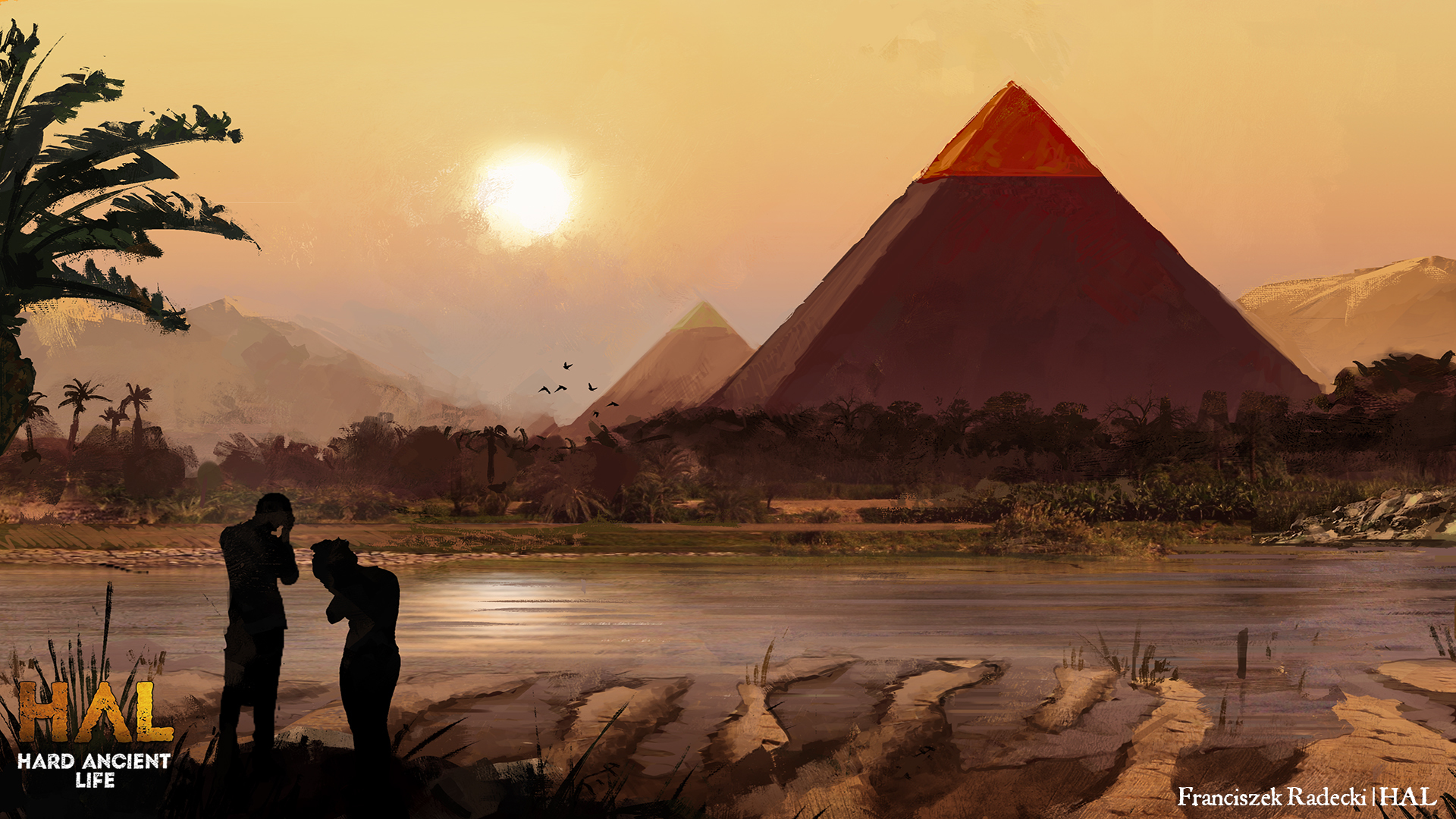
In the nearest future we will want to introduce you to all the in-game features. The most spectacular, of course, are the monuments, the construction of which will usually end the mission, but there will be cases that you will need to do something more.
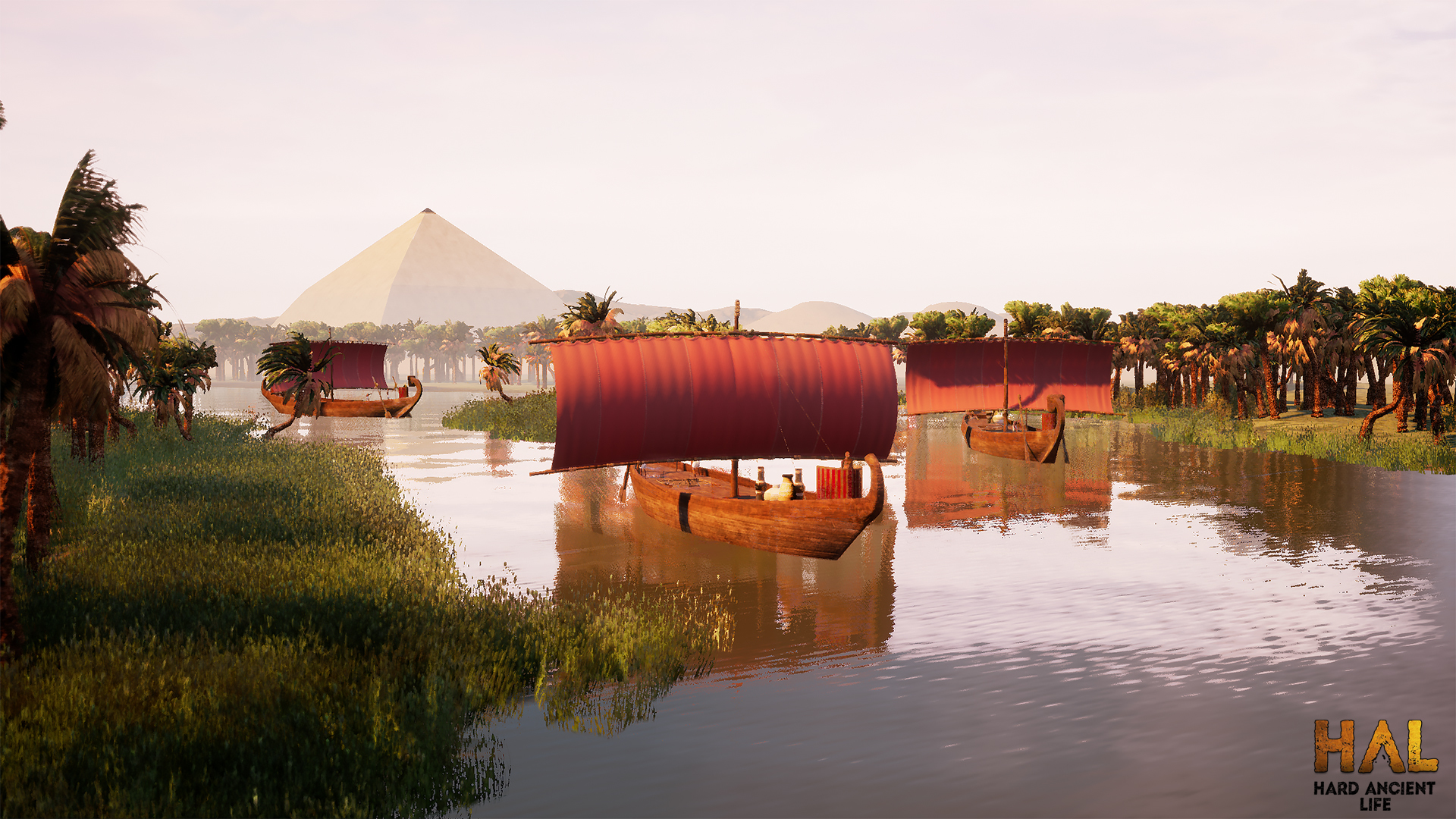
Bent Pyramid
The construction process itself will be a multi-phase process, the cost of which will be very significant for the city economy. First of all, a workers' camp will have to be built, independent of the city, which will require food and various other goods.
Transporting bricks to the construction site
The player will then be required to continuously supply the necessary goods such as stone, wood, copper, oil and paint. Equally important is the provision of adequate labour, which in the absence of proper planning may be lacking for basic functions in the main city.
Building of the foundation by intentional flooding of the area.
All these efforts will be rewarded with a magnificent building, which Pharaoh will certainly appreciate. As already mentioned, in some cases completion of a structure is not enough. An annual Opet festival, for example, will still have to be organised, but we will discuss this on another occasion.


 ☥☥☥
☥☥☥