THE DEV DIARIES #8 - A dream, a studio and the birth of a video game
A dream, a studio and the birth of a video game
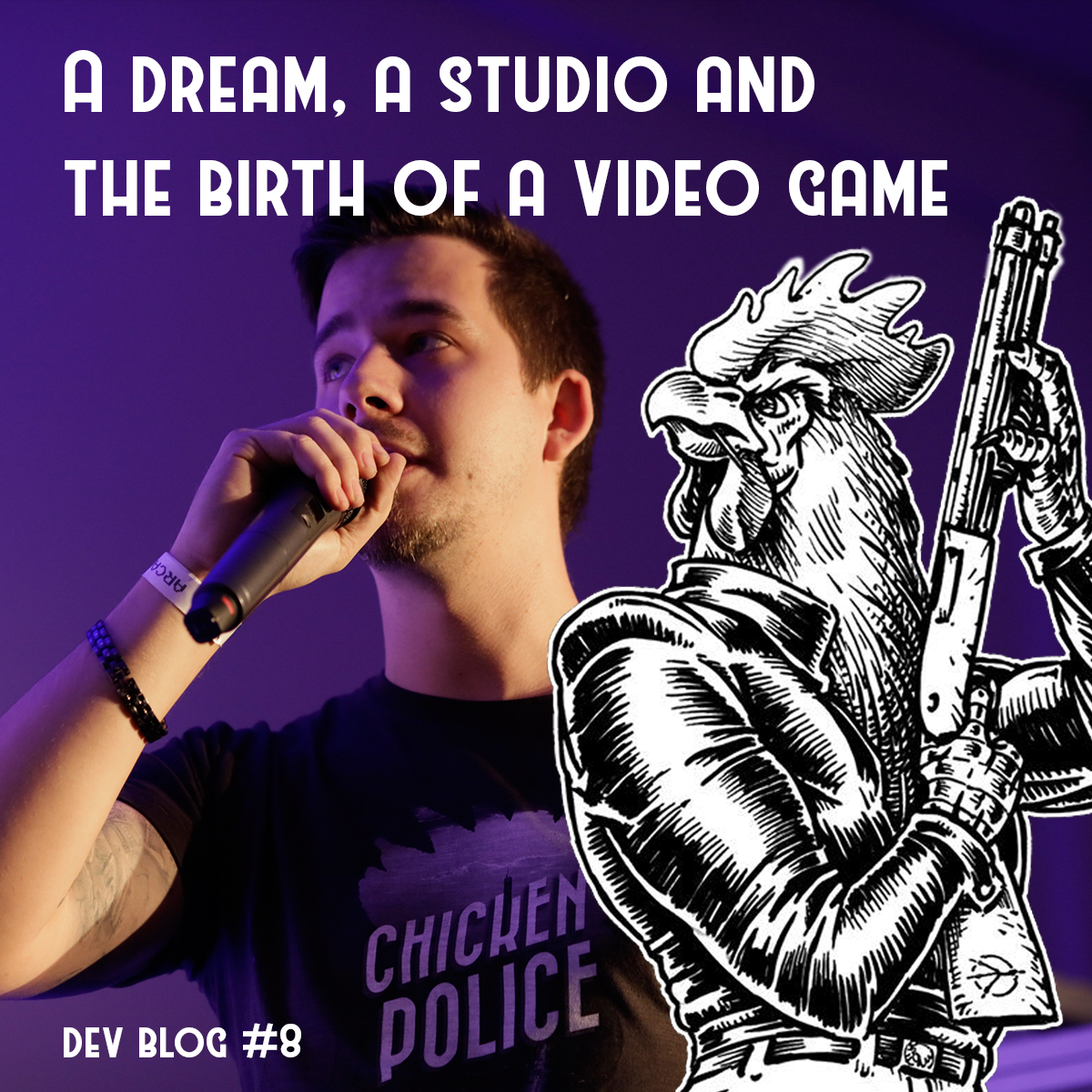
Or how a YouTube video became an idea, how that idea became a dream, and I (Bánk – writer/designer) became a game developer in the end (what is also the beginning, of course)...
There's a video on YouTube titled "Chicken Police", where two chickens beat a rabbit. (Check it out!) It's an authentic country video of someone's yard, where it seems chickens are the absolute rulers.
When I first thought about creating Chicken Police, it was meant to be a short, 5-10-minute animation. A snappy, simple, funny but also raw satire only showing traces of film noir characteristics. It was meant to be black and white, with an insufferable alcoholic as the hero, but that was all. It was more of an animal parody of the 80’s and 90’s buddy cop movies, rather than a hard-boiled detective story.
The story spread its roots in my brain early on. I began to create motivations and backstories for the characters. Not only the main heroes, but also those who appear only for a short time or are just mentioned. Simply because it was a lot of fun. This time, I had no real objective with all of this. Then somehow, as the characters were coming to life, it began to interest me more...
"HOW CAN A WORLD LIKE THIS WORK?"
How can predator and prey live together? What would such a place be like? What about its social structure, political relations, its culture? What kind of place is Clawville?
The story began in 2011, when I started writing the base of Chicken Police. It was a slow process because I had no plans with it. Animation? Graphic novel? Novel? I planned all of those, until one time (in 2014) I got the idea: why not turn it into a video game? I loved video games ever since I was a little kid, I grew up playing them, and somewhere deep in my brain a small voice was always shouting at me, demanding to become a game developer... "You are destined to do this!"
So, let's make it a game. Ok. An adventure game. Yes, of course! But... how?
By this time Chicken Police has clearly become a hard-boiled noir story. Rock-hard fists and easy chicks, corrupt, drunkard cops, and two ruthless roosters in a world ruled by predators. The story of Sonny Featherland and Marty MacChicken became whole and enhanced. I didn't even know which one of the many ideas in my head to work on.
Then came...
THE BIG FALL
The movie Zootopia was announced in 2016, and while watching the first trailer I broke out in cold sweat. It floored me. The base of the story was so similar to my idea (an isolated city with predator and prey animals seemingly living together in peace, but under the surface it’s the exact opposite...), that the world started to spin. That's it? For a day or two I was sure I'll scrap the whole idea that I've been working on for years. Goodbye Chicken Police...
But then I watched the actual movie and all my fears were gone. While Zootopia's base is similar, in the end the movie put emphasis on a totally different matter, not to mention how far it was from the dark and hopeless setting of Chicken Police.
THE BIG BOOM
Meanwhile life of course goes on. A million things happen in one's life. There's no time for doubts. I myself am a writer, and besides RPG Maker, I have no idea about game programming. (So, I didn't know a thing about it!) I could have tried visual novel creator programs, but Chicken Police was too ambitious from the start for those. For a while, the game was put on ice, while my life went on. My son, Ábel, was born. I don't have to say how much the world turned with me again.
I met Lina, a talented and ambitious girl at my workplace, where I worked as a cameraman and editor, and she simply and honestly told me I was stupid when I showed her this old idea of mine. To be precise, she told me I was stupid if I let it go to waste... (By the way, Lina's helping us with the project in the social and networking fields.) And she was right! I've put time and effort in it for years, why would I let it go?
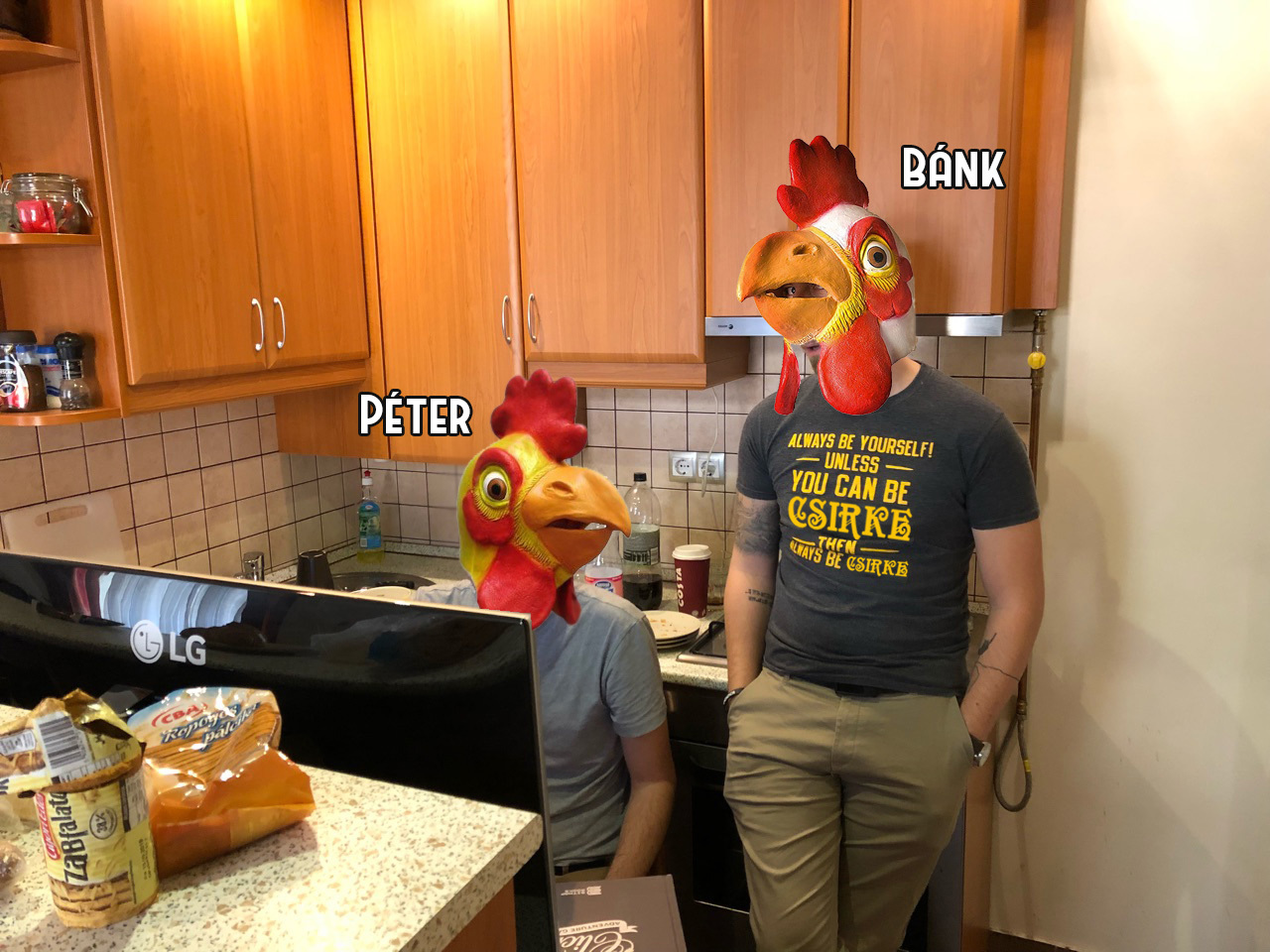
That's when I started (still all by myself) designing the actual video game. My goal was to create a Kickstarter campaign. I was working on the title for months, then I scrapped all earlier designs and started everything from scratch. I reached the point where I had the entire story and the main gameplay laid out. Péter, our current programmer, had been and old friend of mine by then. We worked together on another game’s design earlier, which turned out to be too big for us as our first game, so we put that aside. Péter then introduced me to Tamás (who's the heart and soul of our project), whom I've shown the pitch document of the game just for feedback. Could I send it in its current state to sponsors and publishers? His answer was I could, sure, but I shouldn't. Instead, let's gather a team with the help of his experience and connections, and let's do this together...
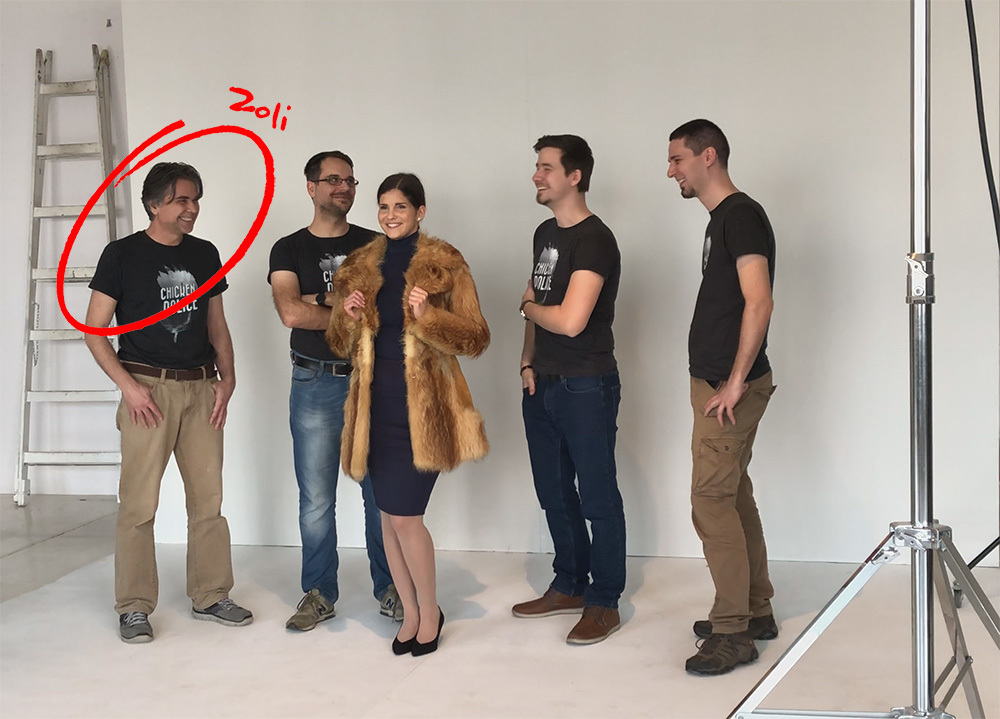
Besides the birth of my son, I'm sure this was the other big turning point of my life. Soon I quit my job and became a full-time writer/designer/game developer alongside Tamás, Péter, and Zoli, our current graphic designer. This was in 2018. The wild Gentlemen was born, and from then on, I can say that my job is literally my dream come true.
AFTER THE SHOCK - THE REAL WORK BEGINS
Of course, after the initial shock and enthusiasm comes reality. Human and technical limitations, finance, and of course being faced with imperfections of the game's concept. I have no reason to complain, I work with an extremely creative and committed team, all of whom consider the game a labor of love instead of just a job.
After a few sleepless nights we met our first real challenge in the form of a small Hungarian gamer event, PixelCon.
This was the event that would reveal whether the game would appeal not only to the few who had already grown to love it, but to a larger audience seeing it for the first time.
IAN LIVINGSTONE AND CHICKEN POLICE!
It's kind of a pretentious subtitle, for sure, but we really did show Mr. Ian Livingstone our game (he's the father of GamesWorkshop, Warhammer and Fighting Fantasy, and one of the "midwives" of Lara Croft). He liked what he saw very much. And not only him, but simply everybody who sat down to try it! The stream of positive feedback was truly humbling. From that point on we knew we're on the right track. So, the road's laid out before us, we just have to walk it...
REBOOT 2019
Because we have already written a separate dev.blog on Reboot, I'll be brief here. It was extremely inspirational for us that the demo we took to this event caused quite a stir and helped us connect with publishers and opened gates that are still wide open before us. It was a fantastic experience, and this time we received a ton of useful advices and observations beside all the overwhelmingly positive feedback.
AND BEHOLD, HERE WE ARE NOW...
We'll be making a huge announcement soon, but I can't disclose any specifics yet. What I can tell you is that we're working on the game night and day, and on a new demo which will be public this time. The premiere of the demo will be on GamesCom, a month from now, if everything goes according to plan.
Meanwhile the voice acting of the game is in the works by a world-renowned studio, responsible for the sounds of titles like The Wolf Among Us and Horizon Zero Dawn.
It's an incredibly tiresome but also inspiring phase we're in now, and although I know it'll be harder every day until the release of the game, I also know the fruit of our labor will be sweet and no matter the reception, we know we've created something truly unique.
Because we put everything that we are into it, and because... we have no other choice. :)
All of you who read my retrospection, thank you very much for your attention.
I hope it wasn't too cheesy.
Hello and welcome to a tour into the world of audio. Please let me be your guide today and show you the (one possible) way of creating a video game's main theme song.
Music plays an important role of setting the mood of a movie or video game. A sad melody makes you cry, a playful instrument cheers you up. It's that easy, right? Well, the answer is both yes and no.
It's easy, because the classic noir has a specific instrumentation, we can call it signature sounds as well. So it's basically easy to pick the right instruments and create a music with them.
However, it does matter what kind of musical notes those instrument do play. A main instrument has to play a remarkable melody to catch your ears and make you whistle. It shouldn't be silly or happy because the game's theme is dark and moody, it's a detective story with crime involved. The melody should also reflect on the main characer(s) personality, where the cop is an alcoholic bloke and he is way beyond of his best days.
Bánk's knowledge about Noir is priceless. He helped me a lot with example songs, detailed description and more. The guy knows literally everything about that era of film making. Really! We had numerous talks about the direction to take and decided to go with one I would call: "simple yet effective".
The instrumentation is a classic jazzy-swingy stuff: Drummer uses brushes and sweeps the snare monotonously-ryhtmically. Maybe he is bored with it but his face doesn't show anything.
Bassist smokes a cigarette and has a slightly deformed body due to the fact he lies on his upright bass all the time. The pianist seen better days as well, his glass is empty and is desperate to have another drink but he has to finish the song first.
And then, there is the broken hearted saxophone guy. He gives his best and plays with all of his heart. His instrument cries out a simple yet powerful melody. This was the very first image I pictured in my mind about the main theme.
We wanted the main melody be played with saxophone and base the whole track on it. This also serves as a homage to the genre, we want to show respect to the musicians of that era. People often ask me "how do you come up with a nice melody?". The answer is:
Research, inspiration, experiment, trial and error.
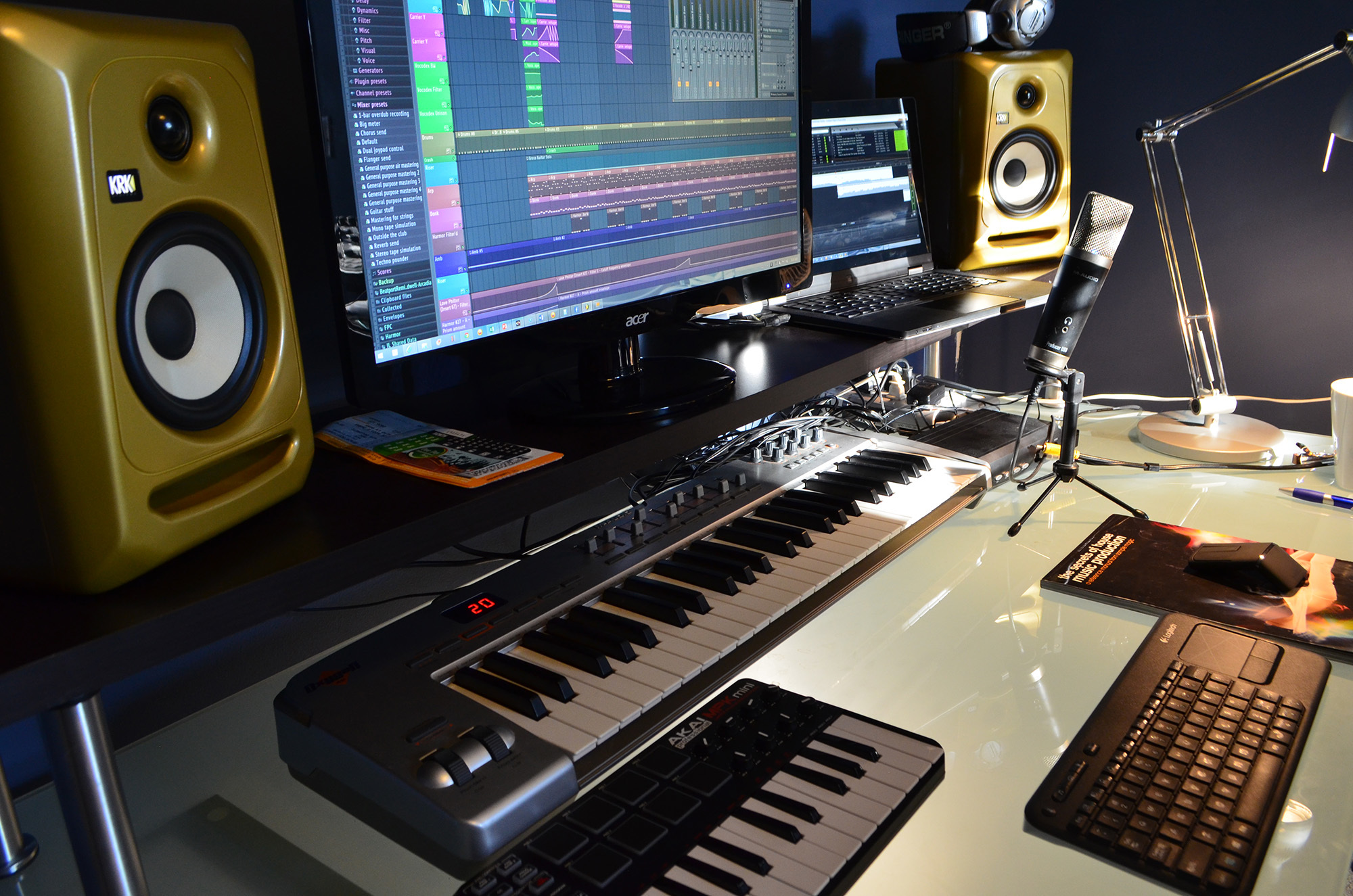
Research is critical here, I wanted to know about the musical style and instrument as much I possibly can. Again, Bánk's suggestions and examples helped a lot to find the right direction and mood. Then, I jammed on the keys a lot, spent time with finding good sounding chord progression and melodies. I wanted the saxophone to play just a few notes without overcomplicating or overplaying it. Paper, pen and writing notes in a classic composer's way is not a method I use.
I like to record everything I play and later I listen to them a few times because there might be some useful parts that come handy. It's also easier and simpler to revert to a previous idea in case a new one fails.
How do you know when a music is good enough? Short answer is that music is a very sensitive material and is it good or bad depends on the listener's personal taste. Slightly longer answer is that you never know. From a composer's point of view it's never good enough. There's always something that could be changed and would make it better but at one point you have to stop.
At this point the composer needs feedback from people, see their reaction when they listen to the music. Feedback is very important, it helps developing the music further. I had a few iterations on my hdd and showed the version I thought is the best to the guys. Based on their feedback modifications were made, however, I'm proud of the fact that the version I showed them was already good and they are satisfied with it.
This means we are on the same page and the direction is just right.
I have to mention Bánk's idea of adding (female) voice to the end of the main theme. It gives me goosebumps all the time I listen to this music, hope you will feel the same.
As closing words, I would like to present you the latest iteration of Chicken Police's main theme. Enjoy! - Laszlo 'vincenzo' Vincze /StrayBoom Music
CHICKEN POLICE MAIN THEME
https://www.youtube.com/watch?v=h4gGhlLZ2Bg
(Disclaimer: main theme is not final and might change in the release version of the game.)
Thanks for your attention, folks!
Stay tuned and don't forget to spread the word:
Once the development of Chicken Police ramped up, we soon discussed our options for trade shows and conferences for 2019. Based in Budapest as an indie team this meant that our focus was mainly on Europe. Browsing through the calendar Reboot Develop Blue (in Croatia) caught our eyes.
It’s close (8-9 hr drive), it’s small but growing (ideal for a first introduction of the game), it’s industry only (not exactly open to the general public) which meant that we can show our game to other developers in a well contained space. Also some publishers are present and we could even participate at the Indie Awards there.
Last but not least pricing was very friendly, getting an indie exhibition desk and tickets (including accommodation and meals) Is affordable for even the smallest teams. So we got really excited and started to prepare for the first appearance of The Wild Gentlemen and of course the main course: Chicken Police.
“….but how should we make a fully playable trade show demo of an adventure game which heavily relies on long conversations?”
Since assets for a new location just got complete (The Czar Club) we knew we wanted to build the demo around it. Okay, but how should we make a trade show demo of an adventure game which heavily relies on long conversations? Obviously attendees won’t have hours to play through the demo, nor will we be able to present to more than 8-10 people a day (bear in mind we only got a small desk space with enough room for one machine).
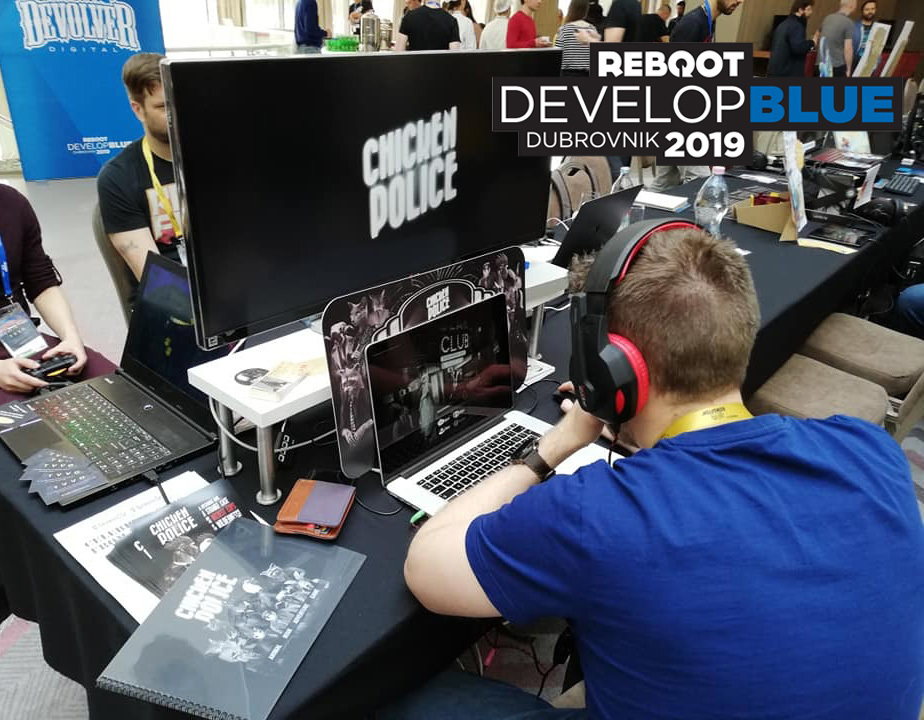
Our small but decorative space at Reboot Develop Blue 2019
The plan was to build a demo that cuts to the chase, present the player at around 30% of the game, puts them in action. A lot of conversation, dialogues and features were removed or disabled in order to ensure that the actual gameplay wouldn’t last over 20 minutes. Yet, still shows enough in terms of visuals, music and - of course - gameplay.
At this point Reboot was probably only weeks away, so we had a lot of work ahead of us, but it set a great goal. Also somewhere around this time we had to apply for the Indie Awards. Unfortunately we had to apply with a really old, single-room, boring demo as this shiny new one wasn’t ready yet. We believe this is probably one of the reasons we didn’t win any awards, but more on that later.
So, with weeks left the stress was building up (though the good one, which pushes you further to step over your boundaries and succeed in the end). The whole team was really working as one machine, everyone was really efficient and basically we were all surprised how nicely it is all coming together. In the meantime we were juggling with a lot of other things, too. Some still had (have) their daytime jobs, the main development also needed to progress, also our appearance (shirts, dressing our desk, stickers, posters, business cards, etc, etc.) had to be dealt with. It’s a lot of overhead for a small indie team but vital for a games conference.
As days were passing by and we were getting closer and closer to the ‘final’ build of the Reboot Demo we tried to focus on the trip also. It was decided that we’d take my SUV as it’s the most spacious vehicle in the team. The ‘core team’, Bánk, Péter, Zoli and myself plus the car fully loaded with luggage and stuff for the show.
Come 10th of April I picked up Péter and Zoli at 4:30 AM in Budapest and the journey began to Dubrovnik. Along the route we picked up Bánk. The weather was rubbish, once we left Hungary it was raining heavily almost until we arrived at the venue. For some reason Waze detoured us from the highway so we had the chance to drive through some flooded areas. It really added to the adventure feel.
While the weather wasn’t great, the scenery was truly amazing!
“We haven’t even started our demo machine when we already had interest and that was just the beginning.”
Between 3 and 4PM we pulled up at Sheraton Hotel where the event took place. We unpacked, picked our spot (it turned out to be perfect for visibility) and went back to our hotel for some rest. I believe we still did some small bug fixes and a new build - well, when the team is together there’s always things to improve on.
Bánk, Péter and myself (Tamás) still tweaking in the hotel room
The next morning we arrived and set up our little desk area and were quite proud about it. It stood out as most teams only bought a laptop and nothing else. We haven’t even started our demo machine when we already had interest and that was just the beginning.
We all love the concept and realisation of Chicken Police but it was eye watering to experience that complete strangers also like your work. In many cases passers-by had the ‘What the F did I just saw?” on their faces but sooner or later they came back and either had a conversation about the game or - in most cases - they played the demo. And they liked it! Even those who don’t like adventure games told us that they still love the style and story and how it comes together in a neat package... It was very emotional for us in many ways.
Truly emotional
The second day brought more and more visitors, even some who had already visited the day before, but this time they’ve brought a friend or colleague so they can also check it out. There was networking also going on, some people came from publishers, or even speakers (thank you Kate Edwards once again) played through our demo and gave us a little on-site feedback. It was truly amazing, and still is, we cherish those moments. The day passed by, we were quite tired - but still wanted to sort out an issue in the evening. This night we also went to a really expensive restaurant and spent a small fortune there on seafood. It wasn’t really our plan but places were either crowded or closed, so we had no choice. It was a great, but expensive evening.
"It’s going to be amazing!”
On the third day we were a bit more relaxed - or too tired. It went by in a similar fashion as the first two, however, we had a bit more experience on how to handle anyone who’s interested. What to tell them, what to show them and how to aid them if they needed help during the demo. It is worth to mention that due to our surprise most of the players played the demo until the end. And most of them played it without using the cheat card we prepared which had some clues on how to progress in the demo.
Also the indie awards ceremony was on this final day and we were excited to see if the - may we call it - ‘hype’ over Chicken Police translated into any awards or not. As we sat down in the main hall and the ceremony began our excitement slowly washed off. We soon realised that probably the awards was primarily based on the video footage sent during application - which in our case was our very first internal demo with very basic functionality from six months before Reboot. But it was also a relief for us. It meant that we are heading in the right direction and we knew - and still know - that Chicken Police only gets better.
We still have a long road ahead of ourselves in terms of features and content and a lot of polish which should give the looks and feel another boost. It’s going to be amazing!
Closing ceremony
Another important aspect of the whole Reboot experience was meeting fellow Hungarian indie teams (check out their games below!). It was great to help and comfort each other. Huge thanks for Vargus and Moss Destruction teams!
Also a very big thanks goes out to Attila Szantner. I bumped into Attila on the first day and we instantly had a good chat. From there on it really felt like He was part of our team at Reboot. He visits many trade shows, conferences and - by being a speaker himself - knows many of the speakers and conference organisers. This also helped to raise some attention to Chicken Police and steer some of the prominent people at Reboot to our desk. Attila - by the way - brings science to MMO games, so if you like MMOs then check out his project as it’s really interesting: http://mmos.ch/
So, was it worth it to visit Reboot Develop Blue? ABSOLUTELY!
I recommend it to any indie developer, it’s a great event for first timers also.
What’s next ? Gamescom, baby! Yes, it’s a huge one compared to Reboot but we are gearing up for the challenge. Expect an even bigger, even shinier demo and many surprises at The Wild Gentlemen booth and check out Chicken Police for yourself.
We thoroughly enjoyed the whole event.
- Tamás
Check out thiese amazing games of our fellow Hungarians:
This time Péter, our programmer, talks about the birth of the project, the first steps and the overall beauty of his work.
Péter - I like to be around the birth of something - or someone. It’s a very special moment that can’t be repeated and rarely happens during a lifetime. I had the luck to be around the birth of this project, and I’m very grateful for this opportunity.
Every newborn project starts with careful planning. Ours is no different - we had to pick the right tools and the right people for the project to meet both our time and budget constraints. For every little challenge we had to opt for the most efficient solution that brings us closest to our goal. Surely, down the road, it’s inevitable to make compromises, but if we choose our tools and methods wisely -in the most creative way-, we can spare a lot of time and budget that can be spent on anything else, in favor for the game to give more to the player. As we’re a small team, we not only had to search for the best and most affordable tools, but match the tool to fit each members skills / abilities, and most importantly to reduce or kill repetitive manual tasks from our pipeline.
Lazy programmers tend to automate the smallest tasks that are repeating more than a few times, and that laziness proves to be the best time saver every time. Building up and optimizing the best workflow for each problem was and is the most challenging part of development. Work amounting weeks can depend on a single decision, and that applies to every aspect, from deciding on how to take our photos to how to edit localized texts.
At the beginning, we didn’t even think too much about the game engine, because it was obvious that Unity would be the perfect fit. It enables us to work parallel even on early prototypes and blockouts leaving time for the artists to work out the details. This way, every asset can be replaced any time later. This helps us a lot with not just planning and iterations, but testing out game mechanics and killing bugs in the earliest stages. Everyone on the team feels comfortable with the engine so we’re definitely sticking with it.
We started development by defining the core entities and their relationships. We knew there would be a lot of scenery that would include characters that could have items, dialogs, etc. so it was clear that we had to visualize their relationships in order to bring order to chaos. Once we sketched the hierarchy, the world we were trying to create started to make sense programmatically. Unity makes it easy to create and test different scenes, but we had to build a system around them, that manages the scenes and the things we want to keep persistent, so we designed all the managers for each requirement. Once those worked, we finalized the principles on how we’d edit, store and load all the game data. Then we came up with an idea about how the interrogation should work, but didn’t know yet, how we’ll store all the data. Until then, it seemed like a regular transactional database would do the trick, but managing hierarchical data needs more. So we searched for alternatives, and quickly ended up with a graph database that would match our needs best.
OrientDB provided a lot of client libraries, and we managed to work out an easy way to sync all the data to our Unity project with a single cick in the editor.
At the earliest stage it’s always important to avoid reinventing the wheel as todays development skills are much more about the ability to solve problems by binding existing tools together to match the criteria, than to sit down and spend weeks for implementing something that already exists. The assembling process is similar to playing a game, so we’re already amusing ourselves during the making. Actually it is a lot of fun, and not just that: we’re collaborating in a very democrative way with the team, and that helps us to harness the creativity of each member that somehow always pushes us forward. The tools we’re using to collaborate also make our lives much easier. The list ranges from the obvious Google product stack, Slack, cloud data drive, issue tracking and our own editor, which is built around the graph database. We also have a custom made build server, that creates daily builds in the background and notifies every member upon build completion. This allows us to follow up about the latest developments without any hassle.
Most of us work remotely -we’re more comfortable to manage our time this way- and as we’re also spread across the country (even multiple countries), we use a broad range of collaboration tools, so we can deliver and even crunch occasionally like regular teams do, working under the same roof. There are times though, when it’s best to come together, as sometimes it’s more efficient to sort out creative problems in person.
- Péter
Thanks for your attention, folks!
Stay tuned and don't forget to spread the word:
As you probably know, Chicken Police is a Noir adventure game. Our newest favorite, home-made genre definition for it is "Orwellesque Buddycop Noir Advenutre", in which the NOIR plays the most important role.
So in this diary we will talk about the genre of film-noir and the effect it has on the game.
We all know what a noir is. As soon as we hear the word, the dark alley, the never ending rain, the stripes that the moonlight paints in the dusty office and, of course, the burned-out investigators and the dangerous, beautiful women will jump on us.
Well, all of this is of course present in Chicken Police, but we dug a little deeper when we discovered the peculiarities of style, and we were digging so deep that our writer Bánk had lost his relationship with reality for a little while...
"During the creation of the story, I watched about 70 noir films. 74, to be accurate. Somehow each of them had an effect on me, although I should rather say the style and its elements, archetypes, different writing techniques and other catches burned into my skin and my mind. Before, I would watch noir superficially... I considered it a loose, cool style that I like, but I quickly realized that it was an extremely complex and deep genre, waiting to have its secrets fully discovered.
My undisputed favorites are The Big Sleep, Gilda, Detour, In a Lonley Place, The Killing, Double Indemnity, and Murder, My Sweet, but It would take me forever if I wanted to list all the movies that added something to the game in the end. It soon became clear that noir is not jut the above-mentioned pale outlines...
https://www.youtube.com/watch?v=eWIuKcyuesg
The all-pervading scent of sin, the hopelessness and immorality, the tensions and relationships between the characters are what make this genre so unique to me.
Crime is never the centerpiece!
Noir is about those whose lives have been stamped by sin. The protagonists and characters always get the main focus instead of the action. From this point of view, the film-noir is much more a drama and a psycho-thriller than a crime movie.
And it is more philosophical than some loose moral doctrine.
But not only the black and white film-noirs influenced me in writing the story and the characters.
Chicken Police is a buddy cop-noir, with two main protagonists, Sonny Featherland and Marty McChicken. The strange chemistry between the protagonists is one of the most important elements of the story and character development.
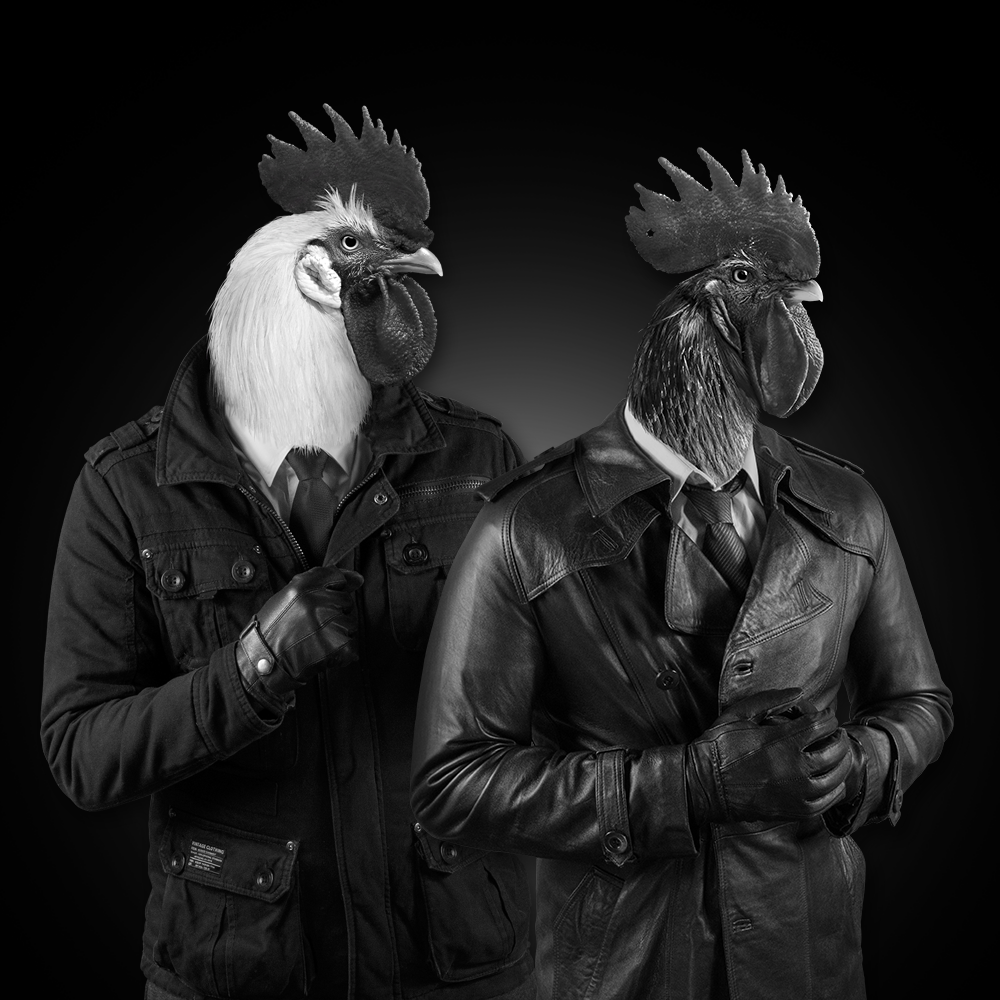
Sonny is an old, tired, burnt-out rooster while Marty still feels at the top. Once they were some kind of celebrity-cops, who were mockingly called Chicken Police. But with time, the nickname quickly gained a new meaning and the public almost worshiped them (even a series of books were written about them), and Clawville's criminals even winced at the name: Chicken Police.
But it was almost ten years ago and Sonny is counting the days until his retirement when a strange lady visits his office with an even stranger case.
Everything starts here, and Sonny soon realizes that Chicken Police has to come back together!
Though the relationship between Sonny and Marty is continuous chafing on the surface, the many hardships, adventures and horrors that they have previously experienced has forged their relationship almost to a brotherly one, and inseparable.
Their "love-hate" relationship will be one of the player's most significant entry points into the characters and the world of the Wilderness.
During the writing of the game, the most exciting part was always the development of their dialogues because of their special, deep and humorous relationship.
Meanwhile, the infinitely dark and unprecedented mood of Noir stretches over the story as a great contrast and background.
I've never had the opportunity to work with such exciting and versatile materials before, so it is not surprising that while I was working on the first game, I could outline the story of four possible sequels and several spin-off games.
But that's the future...
There is a game we have to finish first! ;) "
- Bánk
In our next diary enty, we will dive deep into the mysteries of coding and programming.
So stay tuned, folks and have a beautiful weekend!
You've already seen how we create our characters in our previous dev blog so, this time we'd like to tell you about how they are came to life and set in motion.
Our 2D animator, Alex told us how he does it.
Say hello to Dr. Reginald B. Bubo:
https://youtu.be/V7NoI71ttV8
“Animation, in my opinion, is somewhere between the artistic and technical sides of game development. Your aim as an animator is to create appealing movement, but at the same time, you have to make sure that you are using the right tools. All of our characters are animated in-engine, which can be somewhat limiting at times, but it’s restrictions that really push your problem-solving skills.”
The first step towards a moving a character is the separation of its body parts. The amount of time required to complete a character’s texture sheet depends on the number and nature of poses involved.
Watch a sped up recording of Dr. Bubo’s “dissection:”
https://youtu.be/Bs2QZyWi3hw
“Does a sharp edge work here, or should it be blurry? Where’s the pivot point of this specific part? After some practice, your brain adjusts to see where and how you have to cut to enable motion that doesn’t reveal that you are basically rotating sheets of paper on top of one another.”
- Alex
Painting is an essential skill for this task, as parts that were covered before the separation must be filled in to be viewable on their own - otherwise, you’d see double in some areas during the animation!
The whole process showcased above has to be repeated for each different pose, with little exception. Since we work with two views per character, heads only have to be taken apart twice. In some cases, we can get away with using parts from a previous pose as well, reducing the texture space required. It’s a game of finding the right balance between aesthetics and optimization.
“Following the disassembly, the character is reassembled in-engine, and it’s ready to be animated! Being a ‘middleman’ between artist and programmer, I try to do a bit of everything: finding ways to enrich the visuals, writing tools to speed up processes wherever possible, experimenting with new techniques to help enhance the performance of the game etc.”
- Alex
Alex uses Photoshop to prepare our characters for animation in Unity3D, a Wacom Intuos 5 Pro L (Touch) tablet to paint, and a vertical mouse to avoid wrist pain.
Thank you for reading our post. Every week, we will arrive with new, exciting blog posts from the making of Chicken Police, so it's worth following us.
See you next time, folks! And don't forget to Wishlist Chicken Police. ;)
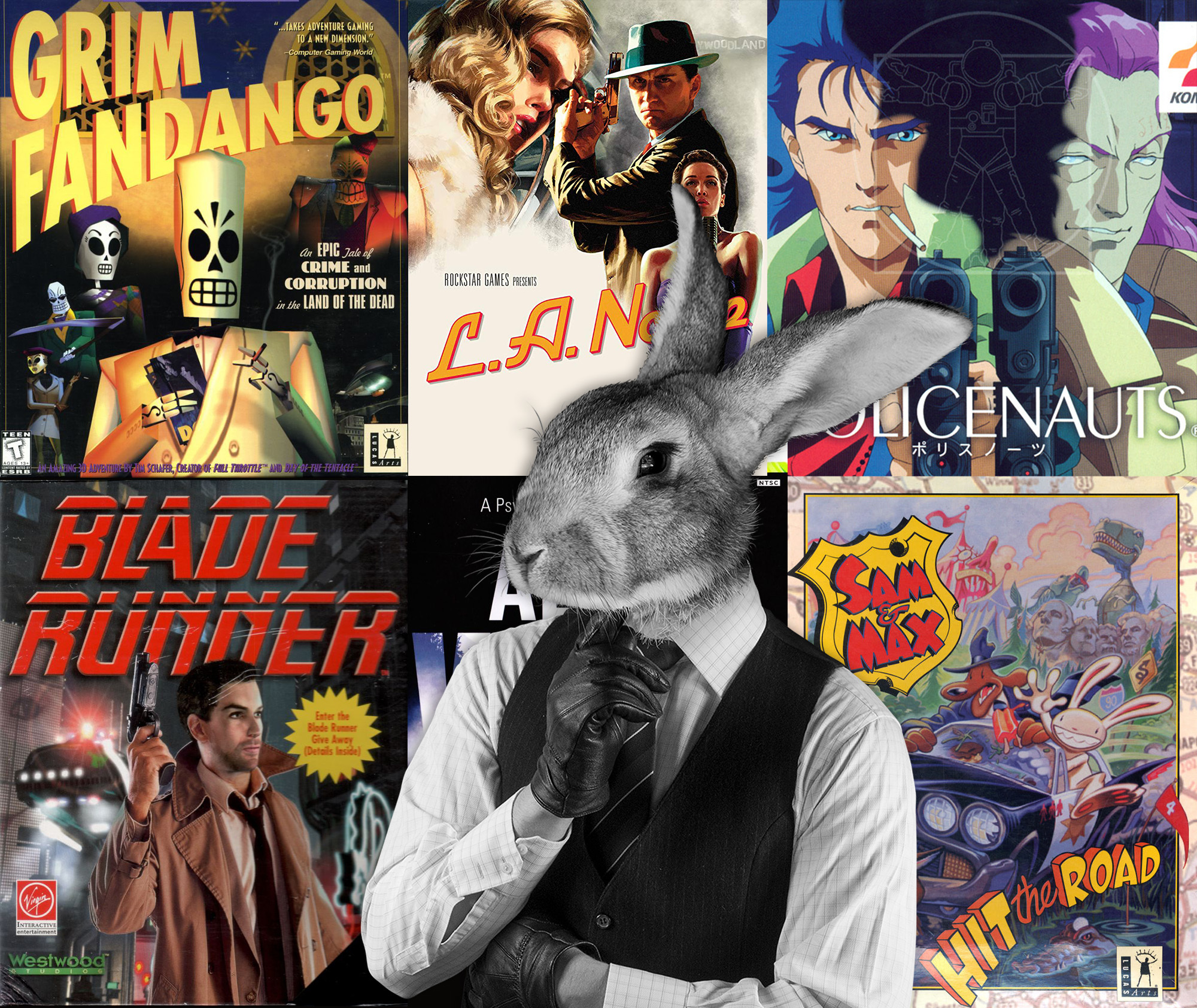
Bánk, the project's writer-director gathered for us which games were especially influential in creating Chicken Police's story, world and characters. They might not come as a surprise, but the reasons are. ;) If you read the arcticle, you will become a little bit closer to the spirit of Chicken Police.
Bánk"I wanted to be a videogame developer since my childhood. Among other things, these games were the ones that eventually drove me to this fantastic journey and even played a huge role in the development of Chicken Police."
GRIM FANDANGO – For Love and Bones
Grim is everything! It was maybe the most definitive gaming experience of my childhood, and also turned out to be one of the most determinate experiences of my adulthood too. Amazing characters, endlessly exciting and insane story, simply... everything about it! For a long time I only had the demo version of the game, which I've completed about 10-15 times if not more.
I didn't even understand the text completely. I learned English from video games and then I was less than a beginner. So I came back to it again and again and I understood more and more every time. Not just the text, but what the game really wants to say.
Grim taught me that no matter how great your setting and your story is, the characters are always the most important! - That's why I've created my own character generation formula (which I use ever since), and Grim, among others, made me fell in love irrevocably with the noir genre, and movies like Gilda, The Big Sleep, Double Indemnity or (the actually not even noir) Casablanca.
Oh and Manny's adventure also taught me that music is one of the most important elements of moody games like these. "Un dos tres cuatro... ta ta taaaaa!" Huge heartfelt thanks to Tim Schafer, Peter McConnell and Tony Plana amongst many others...
L.A. NOIRE – The Golden Boy
Not even a question. By the time this game came out, noir was already one of my favorite genres. L.A. Noir was not only an almost perfect story with a fantastic mood, but the definitive investigating simulator. Unfortunately the project was bleeding from a few wounds, but it still inspired us immensely. So, huge respect and thank you, Team Bondi!
POLICENAUTS AND SNATCHER – Neon lights and buddy-cop noir
Both of them are amazing detective games in Mr. Kojima's unique storytelling, featuring real, alive characters (and incredibly funny dialogues at times). Policenauts is closer to my heart because of the buddy-cop theme, which Chicken Police also borrowed in the end. Actually it's Lethal Weapon in sci-fi version, and it's hard to come up with anything cooler than that...
Furthermore these games' gameplay is similar to what we created, with dialogues and interrogation being in the focus. Cult classics, that's true, but still undeservedly ignored. (REMASTER, anyone??)
BLADE RUNNER – Do the androids dream of good videogames?
When I first saw it as a child, it made my brain explode (it still does even today, when I get back to it from time to time). It was a little bit of adventure and a little bit of action, and the "camera-photo" riddles were almost surreal, the like I've never seen again ever since. (If you know about something similar, tell me!)
It was a groundbreaking game! To be honest... I never finished it because of some sort of bug, but it was still an unforgettable experience. I also LOVE the original novel by Philip K. Dick, and the movie version is very close to my heart too, so it's a no brainer BR is in my top games. (and yes, Deckard was an andorid!)
ALAN WAKE – "Previously on Alan Wake"
Another undeservedly ignored game. It masterfully twists the literary topoi of classic pulp-horror novels and their movie versions. Simply a forgotten masterpiece. I've completed it a thousand times, and - when I'll have time to play anything -, I'm sure I'm going to reach for it again.
"Previously on Alan Wake" I'm never going to get this sentence out of my head.
SAM & MAX HIT THE ROAD – Total mindfukk
Shame or not, I've only run into this game in my adulthood. I started to play with it at the insistence of our programmer, Péter, and its humour, breakings of the fourth wall and the two main characters blew my mind.
I'm still trying to recover from it, with more or less success... (probably less)
+1 BIOSHOCK - Would You Kindly?
There's Bioshock and there's everything else...Narrative design, writing, characters, setting, music, mood. Bioshock is one of a kind. Whatever game I'm working on or will be in the future, Bioshock will always affect me one way or another. I'll have to shake hands with Ken levine once.
"Maybe the most important thing is that the mood and the atmosphere must be coherent. In creating narrative games, you must pay attention to a lot of things that the player maybe won't even notice (or will be affected only subconsciously), but all in all I believe everything stands on the characters, who we'll learn to love or hate in order to be breathing with them within the world they live in.
It all depends on whether you, the player, want to know, is the character have a life outside of the game? If the answer is yes, you, as a writer, did your job well. "
- Bánk
In a later developer diary post, Bánk will elaborate on how he builds his characters and their world, and even unveil his "top secret" character generation formula.
Until then we'll be back with lots and lots of exciting developer posts, soon for example we'll talk about character animation with our animator, Alex.
Stay tuned, folks and don't forget to spread the word: The Chicken Police is coming... ;)
The Wild Gentlemen
And don't forget to Wishlist Chicken Police, folks. ;)
THE DEV DIARIES #1 - Natasha Catzenko - Making the characters
THE DEV DIARIES #1 - Natasha Catzenko - Making the characers
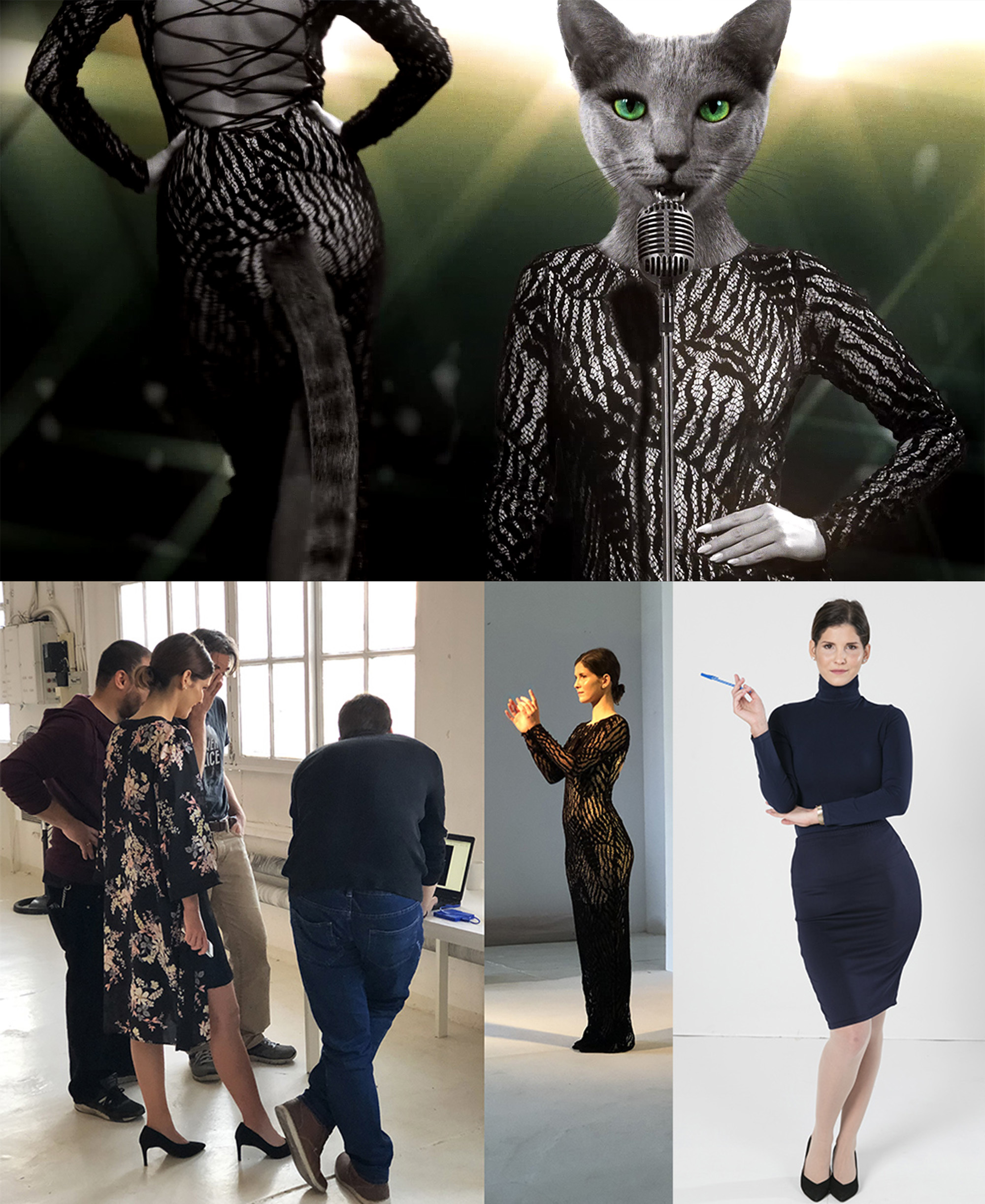
One of the most exciting aspects of game development is character design. But what's so interesting about creating a character? First of all, you need to write the background story, figure out what type of animal he/she should be, endorse the most important personality traits, find the motivations, and find the model ... moreover, in our case two models, one human and one animal, because in Chicken Police all characters are made with photo manipulation technology.
Our art director Zoli tells us how the characters were made in the first place.
"The amount of time spent with one character is difficult to determine... It can be one and a half weeks if it's not problematic. But usually it is. The NPC's which are "single-phase" characters done in several (1-2) days.
However, there are complex characters (Our two main protagonists Sonny and Marty for example), and they are especially important.
The biggest difficulty is creating a head. We used stock photos for some of the characters, but then we realized that it'd be better to use our own photos. This is where the wildlife parks and zoos came into the picture.
But it doesn't solve all the problems... The background and small depth of field are almost always inseparable from the head. Therefore, 85% of the time, I have to draw the hairs and feathers around our characters.
Zipp is full of tattoos and scars, Natasha's got an almost human look, with painted eyes. On Bubo, the glasses were built from scratch.
Combining bodies and heads is difficult. In many cases, because the neck size is very different from that of a man, believable shadows are vital for a good and natural end result.
Why did we decide on our own photography? From the above I think it's clear. Same animal for different views, right angle, depth of field, illumination, and enough size!
For me the most exciting task is to create a new creature who has never existed. Often the challenge itself is joyful. Seeing the starting material that looks hopeless but the strategies are in the head, that's how it can be solved! The greatest pleasure, finally, is to see the character in your own environment! In the game!
I am most pleased that I can work in such a team of professional people and such an exeptional project!
Stuff I use: The characters are made in Photoshop only. (on an 8 year old PC, but on a much newer and better monitor, and on a drawing tablet)
I also use a Canon 5DsR camera with professional optics for the photo shoots."
- Zoli
Thank you for reading our post. Every week, we will arrive with new, exciting blog posts from the making of Chicken Police, so it's worth following us.
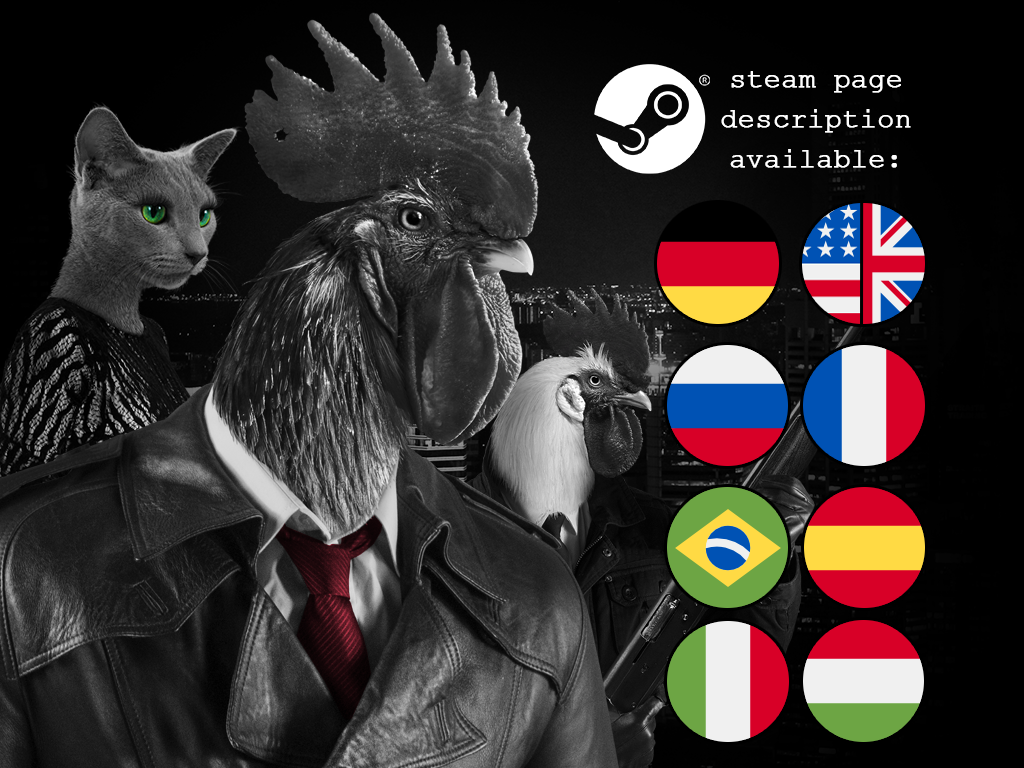
We added six more languages to the steam descriptions, making it available in eight languages altogether. :)
(which we'll probably expand later)
Our steam site is available in: English, French, German, Brazilian Portuguese, Hungarian, Russian, Spanish and Italian.
How many languages will be exactly when the game is released? We don't know for sure... but we planning to add a minimum of 4 language at release, and to add more to the list later. :)
Have a nice weekend, folks!
The Wild Gentlemen
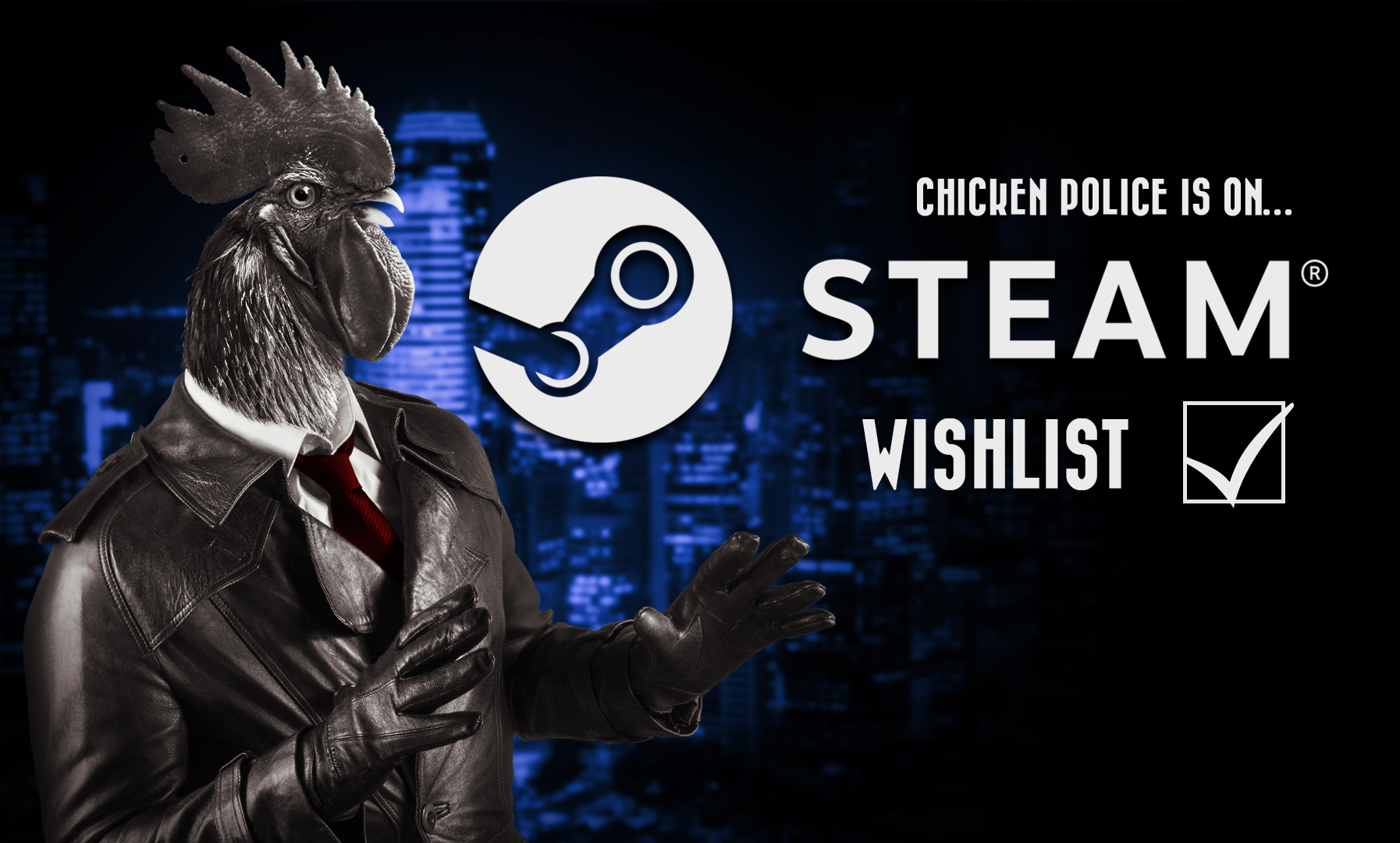
THE CHICKEN POLICE IS HERE!
Dear Everyone, Hey, folks!
We are pleased and proud to inform you that our "Animal Noir Adventure Game", Chicken Police, is now present on Steam as you probably already noticed.
It's been a long journey getting this far and a way longer journey is still ahead of us.
The game is developed around the clock with expected release in the first quarter of 2020.
If you like what you see, please share it, spread the news, 'cause in this wolf-dominated world you can easily lose two roosters, whatever the size of the gun they're carrying ...