Another busy week after the official Eons of War announcement! These past few days we focused on defining the list of features that we want to test during the private beta in November. There will be a follow-up post describing the private beta goals in more depth. Aside from that, we also made some progress on the game itself.
Graphics Improvements
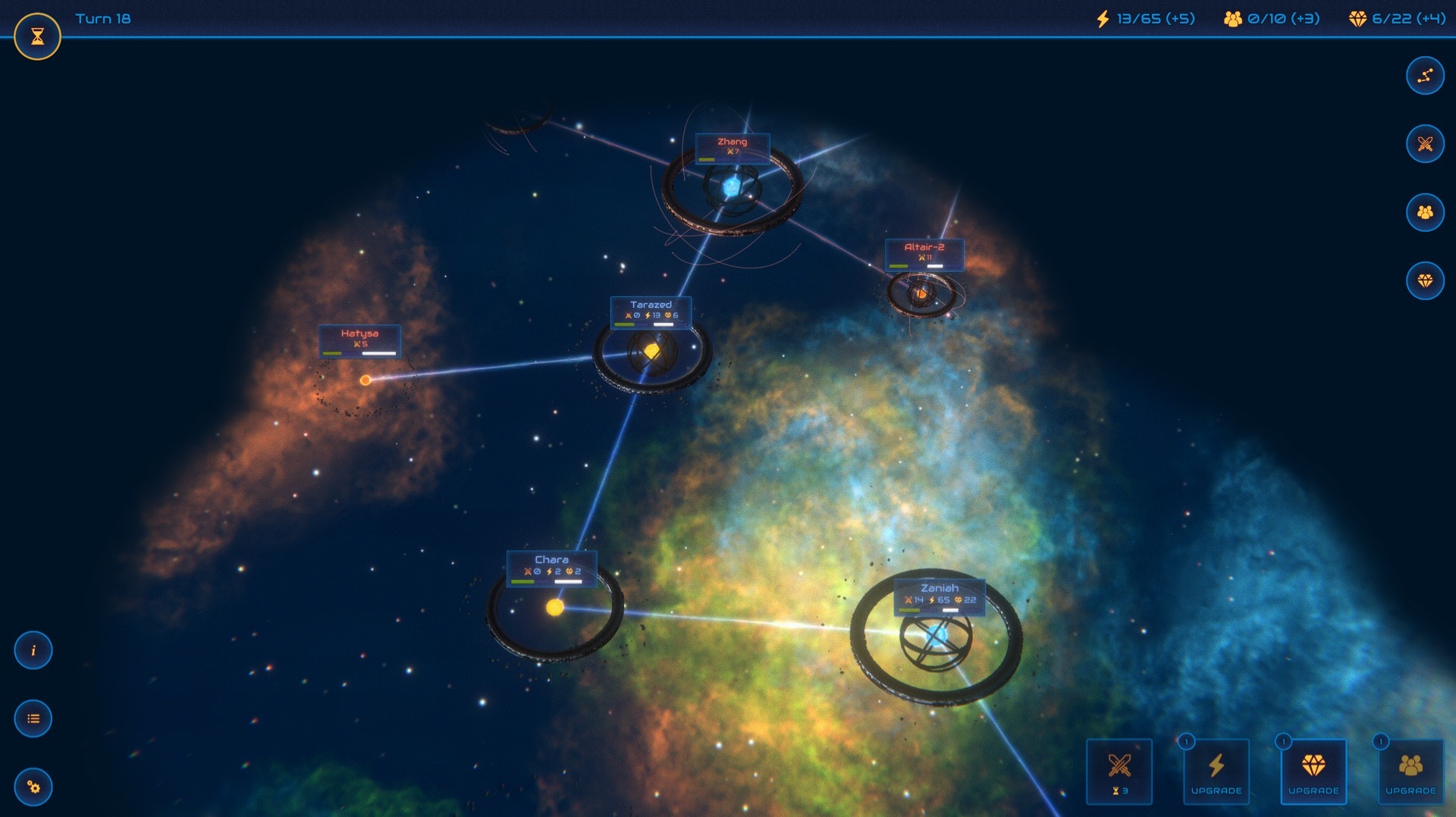
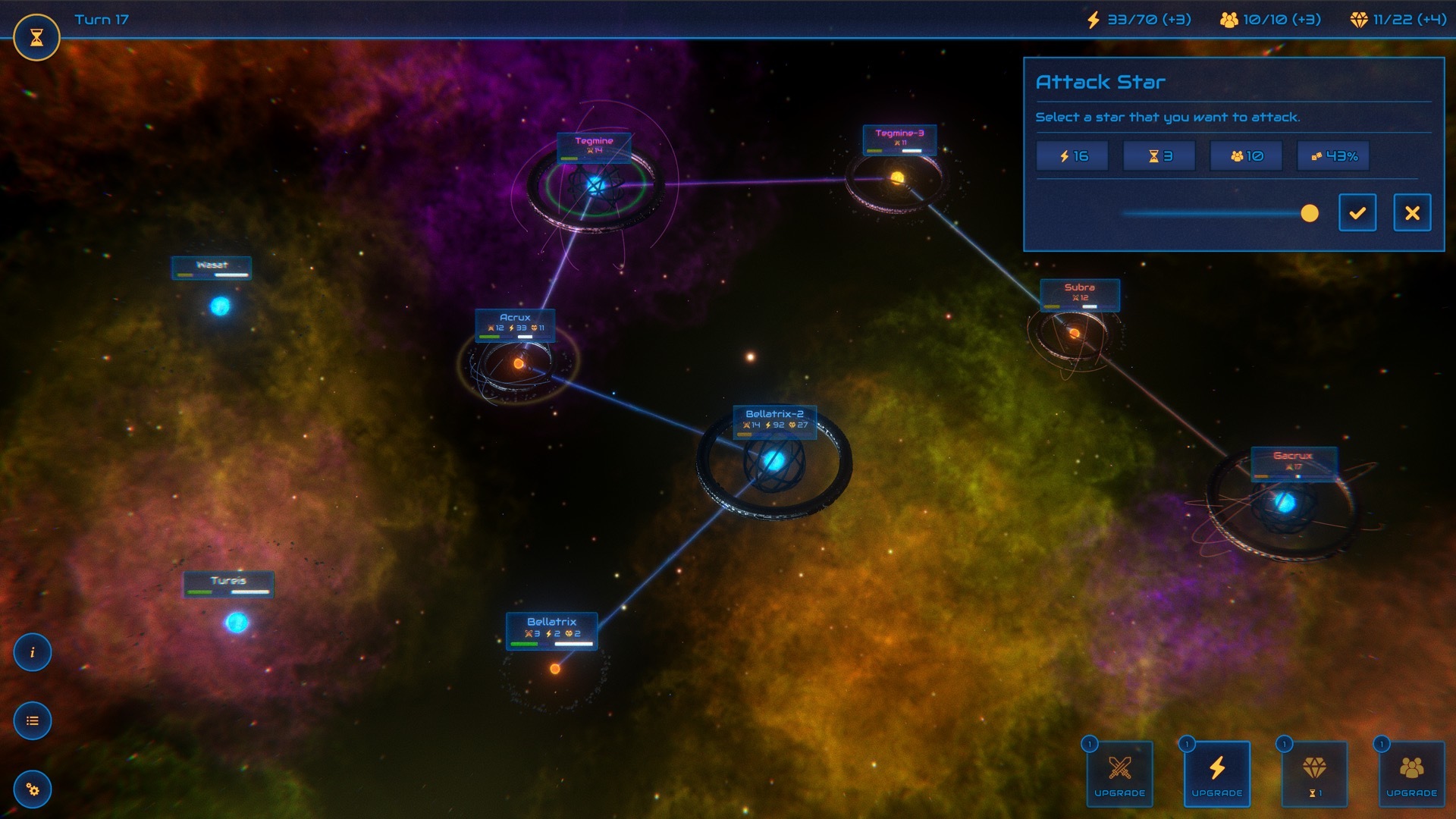
After spending an unreasonable amount of time playing with different color palettes, brightness, contrast, and special effect settings (we finally have interstellar dust!), I think we finally got to the point where the look and the aesthetic feel of the game is acceptable (at least for now). I'm really happy to see the background brightened up and the objects stand out more.
One important graphics and gameplay-related feature that we added is the fog of war. It's a standard strategy game mechanic that will be optional in Eons of War depending on the type of battle. It really brings out that 4X "explore" component.
Minor Features and Game Mechanics Updates
We updated the following game mechanics and added some minor features:
Game mechanics: all operations happen right away now. This is actually a pretty big update that dramatically improved the game. Before this change operations like attack*, *travel*, and *transportation took several turns depending on the mass of the target star and the distance to this star. Building upgrades still take several turns to complete depending on the level of the upgrade.
Balance: star mass-to-energy conversion ratio was balanced, so star lifespan is longer across all types of stars.
Balance: initial star resources were increased across all star types.
Balance: star resource harvesting rate was lowered.
Balance: energy sphere maximum energy storage amount was lowered.
Controls: the game camera can be moved with the right mouse button.
UI: if any numeric value overflows the parent container ellipsis is added.
Following the Eons of War announcement from last Monday we’re going to start publishing weekly developer updates to keep the community engaged. These past seven days were pretty busy as we were receiving feedback from friends and fellow game developers. It definitely takes time to process it and even longer to implement. It’s exciting to be getting any feedback at all though!
New Graphics
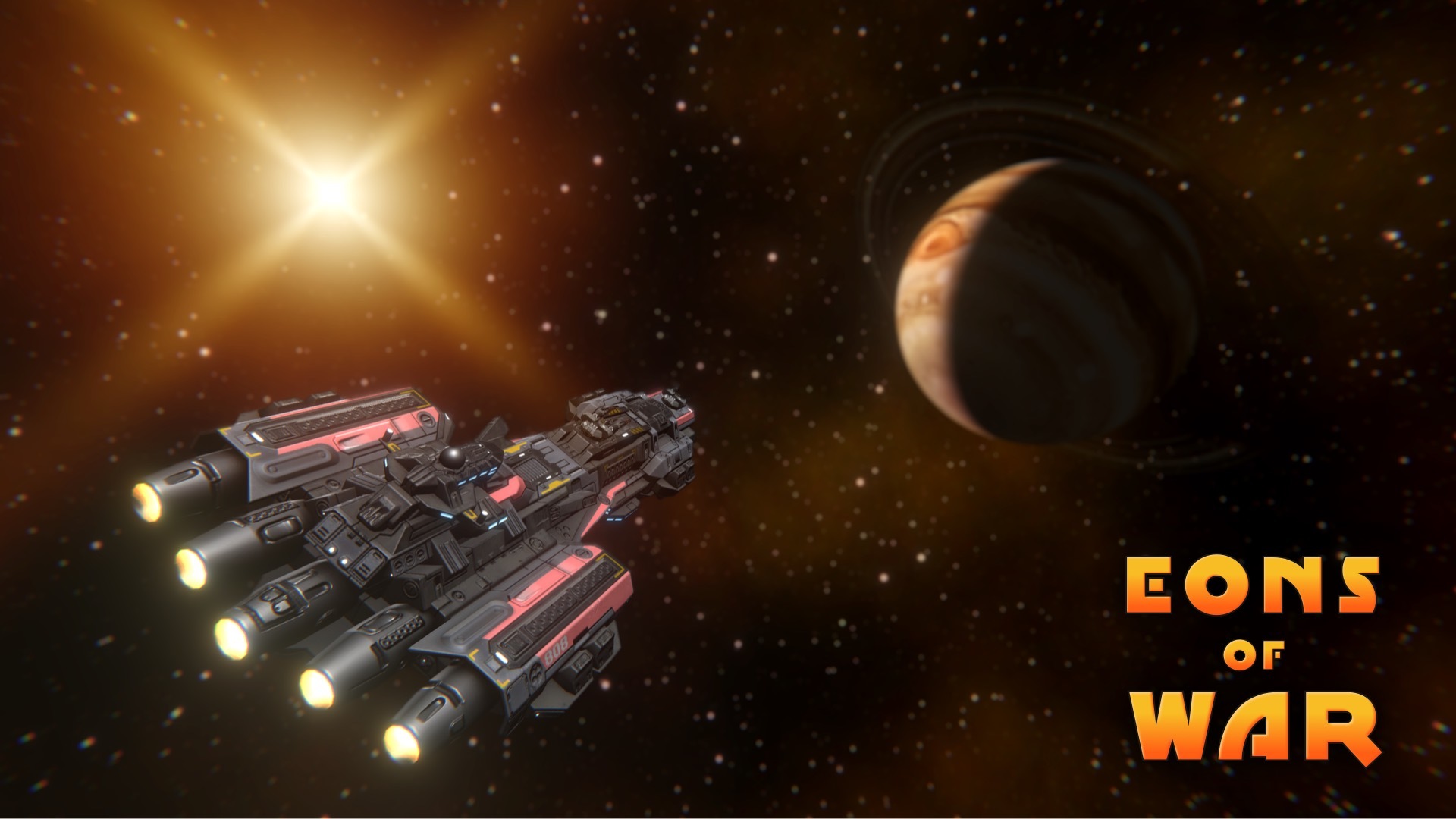
One of the points that people kept making after the announcement is that the game looks too indy, which is not the look and feel we’re going after. We decided to spend time updating main promo graphics and changing the look of the game itself. Here is an updated promo screen (yes, Jupiter will be an important part of the single-player campaign ;) ):
We updated the battle mode with new 3D models for energy spheres and ringworlds. We also made lighting more bold, added contrast to the nebula backdrop, and added the stardust effect. Stardust is hard to see in the screenshots but it makes the scene look way more epic when the camera moves.
Interface
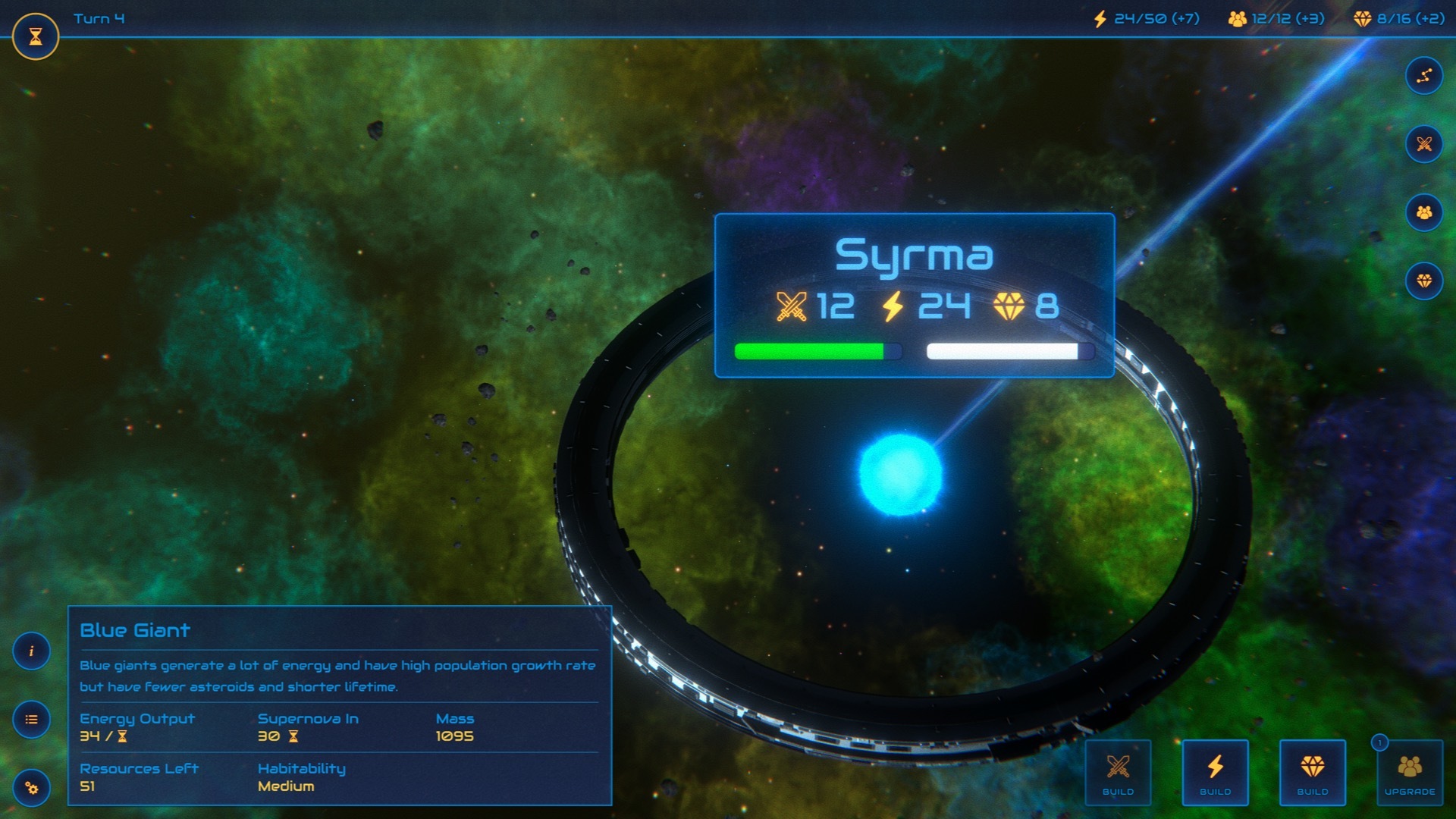
We added a star info panel with several relevant stats like the total energy output, supernova countdown, and remaining resources. It was added, so players can make better tactical decisions about which stars to abandon and which ones to attack. Depending on unlocked research or type of map some star stats might be hidden.
We also updated UI icons, made buttons smaller, added the main menu (and consolidated it with the game over menu) in the battle mode, and made padding around some UI elements smaller.
Game Mechanics
After several playtesting sessions, we updated the following game mechanics:
Stars have more initial resources and it takes longer to harvest them.
Star luminosity (energy output) is now calculated based on the star type (it used to be hardcoded) and, as the game progresses, the mass is reduced proportionally to luminosity. It was tricky to get the balance between stars’ physical properties and the gameplay right. We ended up with a mass to energy conversion ratio that’s far different from the famous E = mc² equation :)
Stars go supernova way before their mass hits zero (as it should be). Now it’s based on a random percentage (10-30%) of the initial mass.
I’m pretty pumped to finally announce something that I’ve been working on for the past few months!
Early 2018 was a confusing time when I wasn’t sure what to focus on in terms of work. I got disillusioned in the blockchain and cryptocurrency space and nothing seemed interesting enough to pursue.
It got so bad that I started to do things from one of those self-help “how to re-discover your passion” blogs. I wrote a list of things that always seemed interesting to me but I never had a chance to work on. Some of them were outside of tech, which was terrifying since it meant a career change. One of the things that I kept coming back to was game development.