Season 4: Infection, and your chance to hunt down the Survivors (or fight to survive!) is just around the corner.
Along with new maps, Career Rank, new equipment, Forge improvements, and more, Season 4 of Halo Infinite is chock-full of content for everyone. Today’s livestream illuminated even more about this exciting new season with closer looks at each of the upcoming additions. Watch the full video to get an overview of what’s on the way!
A brand-new Battle Pass, hundreds of new customization options, Shop improvements, and more will arrive when Season 4 launches on June 20. For a deeper dive into some of the features we’ve already discussed, check out the following:
Whether you prefer Arena or Big Team Battle (BTB), the new maps and equipment add fresh ways to play. Set in a lush, green jungle, the aptly named Forest is a gorgeous 4v4 Arena map while Scarr takes you to a Banished mining facility repurposed for some BTB action. You can read more about them in our Maps Overview.
This season’s new equipment will also be changing things up a bit. Grab the Quantum Translocator and beat a hasty retreat to safety if you find yourself in a jam, or jump into Ranked and use the Threat Seeker to locate your opponents. To learn more, you can check out the Sandbox Overview.
Forge is also getting some love. Players have long dreamt of being able to add water to their maps and we’re very excited to finally have that ability in Season 4. There’s a placeable and scaleable water plane, a whole host of new Forerunner objects, Minigame Mode, Visual FX improvements, and many more updates—all allowing players to create like never before! Get a more in-depth overview in the recent Season 4 Forge Update Overview.
Here’s a roadmap of what you can expect to see during Season 4. From Infection, to new maps, to the return of the fan-favorite Tenrai and Cyber Showdown, there’s plenty to do all season long!
Thank you to everyone who tuned in to the livestream and to for being with us on this journey. Find out when the update rolls out in your region here:
Season 4: Infection kicks off on June 20 – we’ll see you then!
Maps Overview | Season 4
Season 4 of Halo Infinite arrives on June 20, bringing with it two new maps – Scarr and Forest.
Scarr takes us to the mechanized heart of a massive Banished mining operation that will serve as a new space for BTB chaos, while Forest is an arena map set amongst the weathered ruins of an ancient temple complex.
We’re joined by multiplayer designers Cayle George (Lead Level Designer), Cliff Schuldt (Level Designer), and Ryan Bergstrom (Level Designer) to explore the making of these maps, but first let’s give you a closer look at them in our new flythrough video.
New season, new maps – it’s always exciting to have new spaces to learn and explore. How would you summarize Scarr and Forest to give Halo fans out there a sense of what they’re in for?
Scarr is the new BTB map in Season 4. Put simply: it’s a Banished mining facility in a volcanic setting – one side has a very molten kind of look to it, the other is colder and emphasizes more of the Banished aesthetic.
Forest is a new Arena map, and you’ll immediately get some Delta Halo vibes from it – though it’s not actually set on a Halo ring (you’ll find out exactly where in good time!) It’s got this gorgeous woodland aesthetic that will probably make you want to live there as much as you want to fight there.
I’m particularly excited about these being more alien-themed environments, the ancient and Banished aesthetics of Halo Infinite really look fantastic. What are some of the opportunities and differences that working with those palettes gives us compared to human-themed maps?
Ancient ruins in Halo naturally tell the story of another species and another time as you look at the architecture and design nuances. And then, on the Banished side of things, Scarr really shows the grittier industrial complex that feeds their war machine – it’s an interesting contrast to some of the human-themed industrial spaces we’ve seen.
These themes really give us some cool storytelling elements to work with for these maps. Walking around them really makes you feel like you’re in a living space in the universe, and that’s an important element of what a Halo map should feel like.
Forest feels like it takes us right back to Delta Halo from Halo 2 with its buildings made of weathered stone. Was that the main inspiration for this map?
No doubt this’ll be detailed further in Canon Fodder, so we won’t give too much away, but this map shows a bit of a relationship between humans and Forerunners from a unique period of history.
Artistically, Forest is different to the Pacific Northwest theme of Zeta Halo, as this has more of a jungle vibe to it. And then there are some cool gameplay aspects to it as well. There’s a massive hollow tree base, there’s a waterfall where you can grab the sniper and – if you’re channeling your inner Linda-058 – attempt to snipe players through it.
What are some of the unique features that Scarr has as a BTB map?
One of the things we decided to do for power weapon placement on Scarr is, instead of a gravity hammer, we put the Diminisher of Hope on there for players to fight over. Its area-of-effect damage is larger, and the wielder can run faster while holding it, which can make a big difference on a BTB map.
There’s a kinetic launcher and teleporter, which both change up the dynamic of the map to make it distinct amongst the other BTB maps. The kinetic launcher will send you flying over to the other side of the map, but you have to go through vehicle territory to get to it; you can alternatively take side lanes where there’s more of a focus on infantry engagement, but Ghosts and Warthogs can get into those spaces as well. So traversing this map is something that presents some interesting choices.
We’ve got some cool new equipment arriving in Season 4 – namely the Quantum Translocator, which adds some interesting dynamics to traversal. How does it feel to use this tool on a larger BTB map like Scarr and a smaller one like Forest?
The cool thing about using the Quantum Translocator on Scarr is that you can play with the kinetic launchers in an interesting way. Activate the QT before you go in to create your jump-back point, then soar over to the enemy base to make your play, and if you find yourself taking too much fire then you can blink back and reposition and wait for your shields to recharge before trying again. With thoughtful planning, it’s a piece of Power Equipment that can enable you to spread yourself out further, which can be useful on a larger map.
On Forest, let’s say you’re playing Strongholds. If you play smart, you can activate the Quantum Translocator at one capture point and head over to defend another. Then, if the first point is being attacked, you can warp back to it – it’s not quite being in two places at once, but you can use it to a similar kind of effect.
It’s also fun to fake your death by activating it before jumping off a cliff, then blinking back to potentially land a backsmack, or at least surprise an enemy player who thinks you’ve just tumbled to your death!
Which modes are your favorite to play on these maps?
Infection on Forest is great fun! There are some good camping spots, and fighting Infected in a shadowed forest feels a bit like you’re in Predator.
This is probably a good point to say that we’ve reworked all of the maps for Infection. These map variants have dead Spartans on the ground, blocked off areas, and other little additions which make it feel like a more bespoke experience for the mode rather than running around the exact same space you’d play any other match on.
CTF on Scarr is another one we’ve enjoyed a lot as well. Lots of tense moments to be had on that map as players get creative with how they make their plays!
Do you have any fun stories from playtests on these maps?
On Scarr, we had a tied game of CTF – both teams had 2 points, so whoever got the next capture was going to win. I got in a Ghost and managed to take down the flag carrier, but then I got killed and the enemy team rallied on that position to escort the flag back to their base. I thought we’d lost then and there… but then Cayle, who has a rocket launcher, grabs the active camo and makes it back to their base, and he kills every. single. one. of the enemy team as they’re inches away from winning. Cue a whole lot of yelling in the playtest lab!
For Forest, here’s a silly one. There’s an eagle’s nest you can get up to, and seeing other players jump up trying to melee you but failing is just quite funny.
Are there any Easter eggs or secrets that players should keep their eyes open for on these maps that you can hint towards?
I’m still trying to find my lunch. And don’t look under the bridge!
Thank you for helping us dive into these awesome new maps! Do you have any parting words?
First of all, a huge thank you to our partners over at Certain Affinity and Sperasoft for the collaboration that went into making these maps. We’re thrilled with how these turned out and we can’t wait for you to get to play them.
Secondly, be sure to share your clips! Tag us, we love seeing them and all the chaotic things you get up to.
And thirdly… really, don’t look under the bridge!
That wraps things up for our Season 4 map preview. We can’t wait for you to get to play them for yourselves, so mark those calendars for Season 4’s release on June 20.
For a closer look at some of the major elements of Season 4, take a look at our other blogs below.
Season 4 of Halo Infinite arrives in just a few days on June 20 and brings with it the highly anticipated fan-favorite Infection mode.
The Academy has been compromised. Iratus has taken control, and mayhem is about to be unleashed. Will you succumb, or survive?
Foundation
Once upon a time, Infection was an unofficial custom game played with honor rules in Halo 2 – a game that released in the periphery of 28 Days Later, Dawn of the Dead, Shaun of the Dead, and Resident Evil, and so it was little wonder that Halo fans had zombies on their collective minds.
The precise origin of this particular game mode is difficult to determine, perhaps even lost to time, but it is undoubtedly a very early example of the kind of impact that community creativity has had on Halo.
In its original form, Red Team were the humans and Green Team were the Energy Sword-wielding zombies. You would manually switch teams using the pause menu if you got killed by a zombie to join the infected horde (and hell mend you if you didn’t honor that rule). All sorts of variations and allowances and compromises would be debated, agreed upon, and inevitably broken.
These were the early days of online multiplayer gaming on Xbox Live. During this time, the maps Foundation and Headlong became a fiery crucible in which lifelong friendships were forged amongst clan mates gathering to play a few rounds of Zombies – until they realized through bleary eyes that it was 3AM. Thus, the foundations were set for what remains one of the most beloved modes in Halo.
Infection has returned as an official mode in each successive title, bringing some updates and variations along the way to its settings and aesthetics.
And now it returns once more to Halo Infinite.
Iratus Unleashed
In Season 3: Echoes Within, we saw our Spartan descend into a hidden area of the Avery J. Johnson Academy with Spartan Dinh – a black site built early in the Covenant War where the Office of Naval Intelligence have buried some of their secrets.
After the Banished AI Iratus scoured Dinh’s memories, he seized on the opportunity to take control of the Academy’s systems, appearing over a disassembled suit of MIRAGE IIC armor held in a Brokkr armor mechanism.
As noted earlier, each iteration of Infection over the years has had some variations to its aesthetics. In Halo 4 and Halo 2: Anniversary, the infected player model was a Flood-infected Spartan, while in Halo 2 through Halo 5: Guardians it has been elements of customization (such as armor color and effects) that separated the survivor from the horde.
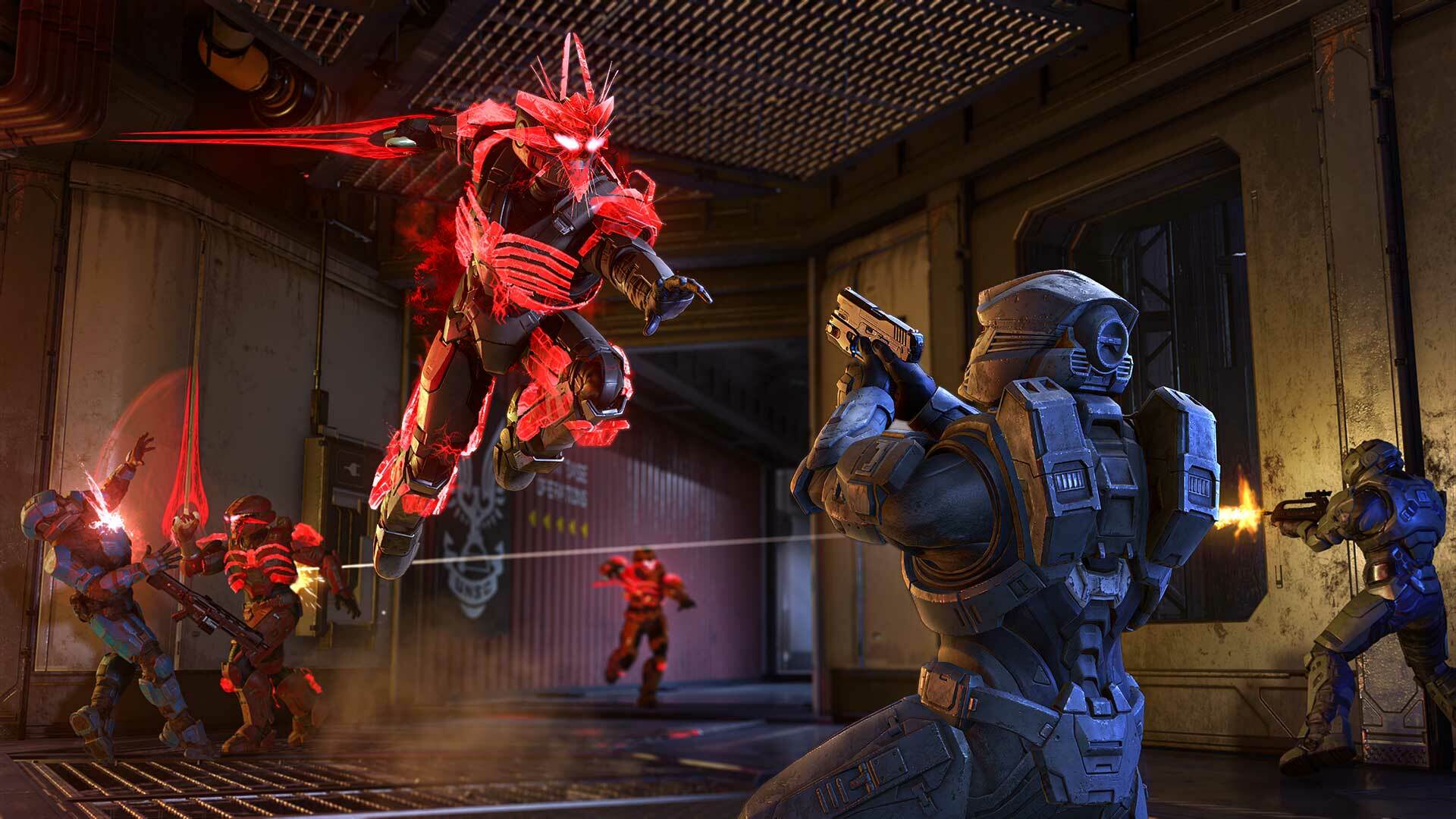
Halo Infinite is no different, as Iratus brings a new visual flair and flavor to the Infection experience, as you can see in some of the stunning concepts our Art Team has cooked up.
Alpha Infected will see more prominent effects on their Spartan, with Iratus covering their helmet and other red holographic effects over their armor. Beta Infected will also have Iratus-themed effects applied, but more subtly to differentiate them from Alphas.
Some of you may have noticed certain peculiarities in the Academy background as you navigate various menus throughout Season 3, such as power surges in UNSC equipment and red flickering. Upon entering the simulated environments of the multiplayer maps, you will see some very noticeable changes to these spaces because we’ve got Infection-specific map variants that will be played with this mode.
Maps will be overtaken with distortions and digital lightning to convey the thematic aspects of this incarnation of Infection, but they’ll also have dead Spartans on the ground, new areas to hide or find temporary shelter, and other paths that might be blocked off by crates that could leave you at a dead end.
Rules of Engagement
With that groundwork established, let’s talk about the rules of how Infection is played in Halo Infinite—for many of you, the music to this particular dance is undoubtedly well known.
Infection is a round-based mode where one team (Infected) converts enemy players (Survivors) to their team upon killing them
Each round, a limited number of players are selected to be Infected – these are Alpha Infected, and the Survivors they kill are converted to Beta Infected
Survivors start out with limited supplies and will need to acquire additional weapons, equipment, and ammunition from the map
The goal is for the Infected to eliminate all Survivors. The last Survivor (the Last Spartan Standing) will have special traits applied to them (such as Overshield and unlimited ammo), but a nav-point will reveal their location to all Infected
And there you have it. Scout, scavenge, survive – or succumb to the Infected…
Season 4 is almost here and Hell needs a new janitor, so get ready to dust off that shotgun and prepare to face Iratus as he goes viral.
For a closer look at some of the major elements of Season 4, take a look at our other blogs below.
CAREER RANK – Learn more about Halo Infinite’s new progression system
FORGE UPDATE OVERVIEW – Find out about new objects, palettes, options, and more coming to Forge
SANDBOX OVERVIEW – All you need to know about the Quantum Translocator, Threat Seeker, and other sandbox balancing changes in Season 4
MAPS OVERVIEW – Take a guided tour of Scarr and Forest with our multiplayer designers. (COMING LATER TODAY)
Olive Rad BR75 Coating | Synthetic Runtime Bundle
Olive is a pretty rad color!
Complete all of your Weekly Challenges and the Ultimate Challenge to earn this week’s Ultimate Reward – the Olive Rad weapon coating for your BR75.
A new Ultimate Reward will become available every week, so be sure to keep an eye on your Challenges and take advantage of these free rewards.
Sometimes, pieces must be removed from the board in service of the greater game...
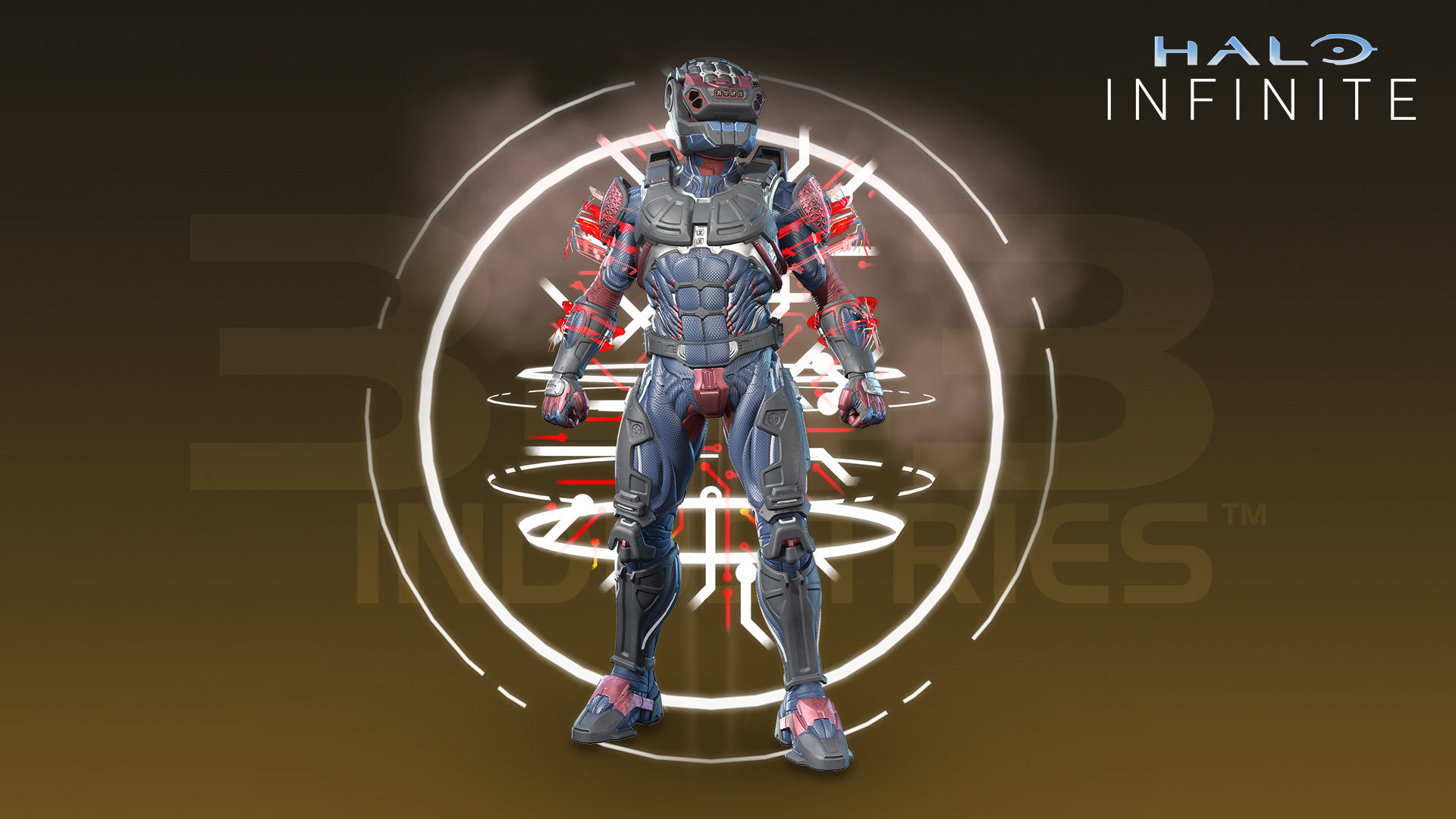
Customize your CHIMERA armor with the Synthethic Runtime bundle featuring:
Abatur helmet
Decimation Adaptation helmet attachment
Cooling Star armor coating
Synthetic Markers mythic effect
Synthetic Emitters armor effect
Synthetic Runtime death effect
Head to the Shop and become an ABATUR-class agent for your infolife assembly.
Season 4: Infection Launch Trailer
Halo Infinite’s Season 4: Infection arrives on June 20! ☣️
Whether they’re rocking their MJOLNIR armor or vanishing due to Active Camo, Spartans are always utilizing the latest technology. In Season 4, they – and you – will be getting even more fun tech to take advantage of on the battlefield.
Let’s see what the Halo Infinite sandbox will look like when you go hands on with Season 4: Infection on June 20!
Quantum Translocator
Since Halo: Combat Evolved, teleporters have been a staple of Halo gameplay. With our newest addition to Power Equipment in the form of the Quantum Translocator, players can take that staple and utilize it in all-new ways. Designed to have as much impact as an Overshield or Active Camo, while still requiring deliberate set-ups and proper execution, the Quantum Translocator will appear on map as Power Equipment.
How does the Quantum Translocator work?
Once secured, the first button press activates the Quantum Translocator and creates a slipspace thread at that location. After repositioning around the map, the second use of the QT will teleport the player back to that original thread location. However, upon teleporting, a new thread is created at the location the player just teleported from and the thread they just teleported to (the original thread) will disappear. Each subsequent use will teleport the player and update the destination slipspace thread until the QT time has expired. Be mindful of when and where you use it though, as there’s a cooldown between uses – meaning you can’t spam it and you may even end up in a situation from which you might not escape.
Its potential for playmaking through planning and movement is truly what sets this equipment apart from the rest. If you’re a player that prides themselves on thinking two or three steps ahead of your enemy, then you’ll love how the Quantum Translocator allows you to outplay your opponents.
Threat Seeker
The next piece of equipment landing in Season 4 is the Threat Seeker. This equipment focuses on skilled, well-timed use in order to gather information about an enemy’s location.
It’s different from the Threat Sensor in that it only sends out one pulse, requires the opponents to be within its line-of-sight (meaning it will not reveal enemies around corners or through walls), and the equipment’s projectile can bounce in order to reward accuracy by allowing for unique and clever shots. If an opponent is within its radius and direct line-of-sight when it pulses, they will be revealed for the same duration as a player’s shield recharge timer.
Ultimately, the brand-new Threat Seeker requires it to be well-placed and well-timed to benefit your team. We look forward to watching how you all use this equipment to gather information, make smart plays, and win matches.
Balance Update
Threat Sensor
With Season 4 and the launch of the Threat Seeker, we wanted to make some adjustments to the Threat Sensor to ensure both equipment items had their own unique playstyles.
The goal of these changes was to create more location-based marking, giving more permanence and coverage to the sensor by increasing its duration and sensing radius. The time each target is revealed was decreased to give more focus on sensing threats within the radius of the sensor while active.
Here are the exact balance changes to the Threat Sensor:
Ping Frequency: 2.8 > 1.8 seconds
Sensor Radius: 3.1wu -> 4.25wu
Sensor Duration: 6.5 -> 15 seconds
Reveal Duration (how long a target stays revealed): 2.5 -> 0.75 seconds
Legacy Toggle Zoom
In addition to the upcoming Equipment additions and tuning update, Season 4 will also be bringing in a new quality-of-life update based on community feedback – the legacy zoom toggle. This new setting allows players to choose how their zoom state behaves on a weapon with two zoom states when switching between their weapons. With this new setting set to its legacy option, players that are 10x scoped in (double-zoomed) on their S7 Sniper can exit their scope by switching weapons, return to their S7 Sniper, and then zoom in with the rifle back at 5x (single-zoomed) rather than having it default back to 10x.
Furthermore, we always strive to go after improvements via bug fixes with the launch of each season. If you spot any issues while playing, please be sure to let us know by submitting a report on the Halo Support site so we can take a closer look.
The full list of bug fixes will be provided in our Season 4 Patch Notes, which will be found at aka.ms/HaloInfiniteUpdate, when the update goes live on June 20.
Season 4: Infection lands on June 20, bringing Infection, Career Rank, Forge updates, new maps, new customization, and more to Halo Infinite. Keep it locked here to see the latest Season 4 news as we gear up for its launch.
Fracture: Firewall
Fracture: FIREWALL returns from June 13-20!
The final Fracture: FIREWALL week is here, giving you another opportunity to outfit your Executor’s CHIMERA Armor Core with a variety of free limited-time customization rewards.
Just like last time, there is no event-specific playlist that players have to dive into – play what you want, complete FIREWALL-themed Event Challenges, and progress (or finish) your free Event Pass.
For those of you who have already been progressing that free 20-tier Event Pass, this week is your first opportunity to finish the fight and complete all twenty tiers. Doing so will make you eligible for Season 3’s Halo Gear Reward: the FIREWALL Logo Pin.
The Fracture: FIREWALL Event Pass is free and offers players themed, limited-time rewards for playing multiplayer matches and completing Event Challenges while the event is live.
During FIREWALL event weeks, the Event Pass will appear in your Season 3 progress menu between the Battle Pass and your Challenges. Each week, players can unlock up to 10 tiers of their 20-tier Event Pass.
FIREWALL event weeks are scheduled for the following dates:
Week 1: March 21-28
Week 2: April 11-18
Week 3: May 23-30
Week 4: June 13-20
Let’s take a look at some of the customization items you’ll be unlocking…
Precipice, Part 4
Check in June 13 for the finale!
Halo Gear Rewards
Halo Gear Rewards are back for Season 3 and Fracture: FIREWALL!
Halo Gear Rewards are exclusive limited-edition products in the Halo Gear Shop that players can earn access to purchase after completing specific in-game accomplishments.
In Season 3: Echoes Within, players will have the opportunity to earn access to four collectible Halo Infinite pins, each tied to a specific event in Season 3.
Next up, players can earn access to the FIREWALL Logo Pin by completing the full Fracture event and making their purchase from the Halo Gear Shop by July 4 to secure the reward.
How does it work?
Upon completion of each qualifying event, the player will receive a reward code via their Halo Waypoint Profile.
When you complete each event, simply visit Halo Waypoint online or via mobile and sign into your account to trigger your reward. The reward code will be delivered to you via Waypoint notifications.
Please note that it may take up to 24 hours for the code to be delivered after completion of an event.
Once you receive the reward code, visit the Halo Gear Shop and hop to the respective Pin product page to proceed with your purchase. The price will look REALLY high, but don’t worry!
Add the pin to your cart and proceed to checkout
In checkout you will enter the code in the “Gift card or discount code” field. Click apply
The cost will update to the pin’s actual retail price
Finish your transaction by entering your shipping and billing details and selected your shipping option
This is a pre-order item that will ship in Q3/Q4 2023
The Halo Gear Rewards items are available for purchase until the dates specified
Note: This is not the real price of the collectible pin. This is a Halo Gear Rewards item, exclusively for Halo Infinite players that have completed one of the qualifying Season 3 events. Qualifying players will receive a code to reduce the price to the intended retail cost.
Now then, Executor, it’s time for you to combine mind and machine by donning your CHIMERA and showing those rogue biologics how it’s done.
Forge will be getting a slew of new updates when Season 4: Infection lands on June 20.
Let’s see what building blocks are coming into play this season!
New Objects
Static Water Plane
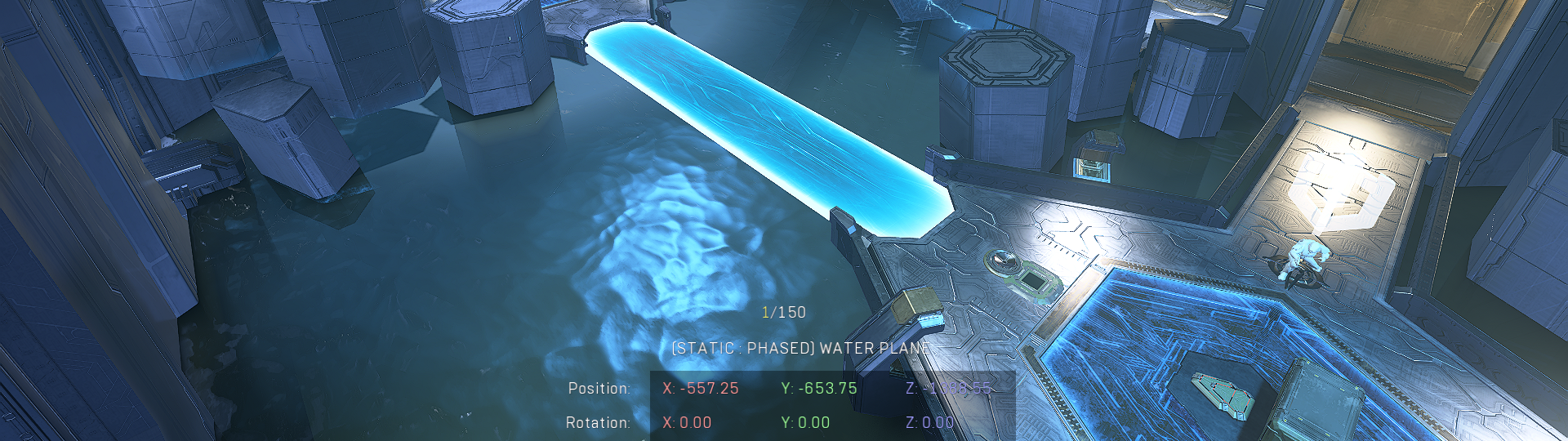
For the first time in Halo’s history, Forge will be receiving a placeable and scalable water object. This static water plane, which is meant to help Forgers art up their creations, will provide an entirely new way to add detail and character to every map.
Chasm, no water:
Chasm water object:
Chasm, with water:
Beyond Season 4, we plan on continuing to expand Forge’s water objects with a dynamic volume as well.
Forerunner Object Palette Additions
The visually stunning Forerunner object palette will be getting even more pieces with Season 4. A plethora of new objects and decals – of varying shapes and use cases – will be available for Forgers to use however they see fit. Whether you want to build structures that would reflect the power of the Forerunner ecumene at its peak or create fun-filled custom games, these beautiful objects will now be in your hands in short order.
Universal Blocker Object
We currently have very specific types of blocker objects such as Player Blockers, Projectile Blockers, Vehicle Blockers, One Way Blockers, and Team Blockers in Halo Infinite. While this granularity has been extremely valuable, players have had to use multiple blocker objects to smooth out surfaces or add containment on their maps. With Season 4, we’ll be adding a new set of Universal Blockers which will block Players, Vehicles, and Projectiles. This new object type should help speed up a map’s polish phase while also reducing the budget overhead in those situations.
Minigame Mode
Minigame, a brand-new game mode in Halo Infinite, will allow creators to build modes from scratch. Much like Halo 5’s Minigame mode, this mode contains no underlying game logic and gives Forgers complete control of making the mode they desire.
Along with Minigame’s release, we are excited to be introducing Generic Game Mode Objects to Forge. These objects are decoupled from any mode logic, meaning players will be able to place and script experiences without being tied to a particular mode. Want to capture a hill in a CTF game? Want to gain vampire traits whenever you hit someone with an Oddball in a Slayer match? Want to score points for hurling a ball through an Area Monitor in Last Spartan Standing? We’ve got you covered.
The three objects you’ll have access to in Season 4 are:
Generic Capture Zone
Generic Skull
Generic Ball
To complement the new mode and Forge objects, scripting via Node Graph will receive a few quality-of-life nodes to make common scripting tasks a little easier. Many of these nodes were requested by members of the Forge community and we were happy to get them included with the launch of Minigame.
In addition to the ~25 nodes associated with the Generic Game Mode objects, here are the new quality of life nodes being added to Node Graph:
“Get Object By Label” – Make Object Lists without using Object References
“Get Is Game Mode” – Run logic only in certain game modes
“Increment Number Variable” – An easier way to Get, Add, and Set advanced number variables
“Toggle Boolean Variable” – An easer way to Get, Branch, and Set advanced boolean variables
“Boolean NOT” – Negate a boolean variable. By popular demand.
“Global Custom Event, Async” – Run custom events asynchronously
“Stopwatch” nodes – the ability to create, start, pause, and reset timers from any point in script. Stopwatches will be able to trigger other scripts based on how much time has elapsed.
All of these additions combined mean that when Season 4 launches, Forge will be able to build entirely new modes that combine multiple mode objectives into a single cohesive and entirely unique experience.
Budget Improvements
We’ve also heard the community feedback about wanting to have the various aspects of a map’s budget communicated effectively. We want to ensure creators can take full advantage of each system’s budget, understand it more clearly, and ultimately maximize Forge’s potential.
As seen in the image above, the new budget categories will be broken down as follows:
Global Simulation
The overall cost of entities networked by the game, including dynamic objects, projectiles, units, actions, etc.
Dev Note: Some global systems like Audio, Stats, and Player Networking will reserve simulation memory when the game starts so they always have bandwidth regardless of what’s happening on the map.
Forge Simulation
The overall cost of Forge specific entities, including dynamic and static objects, prefabs, user strings, Node Graph elements, etc.
Object Limits
Dynamic
Total
Vehicles
FX Count
Reflection Volumes
Movers
Animations
Physics
Collision
Static
Total
*Dev Note: These are specially marked objects that animate/move before all other objects and can have specialized physics interactions with players. Mover objects will be added to Forge in a future update.
Node Graph
Total: The total % of Node Graph content currently contributing to Simulation Memory
Scripting Budget
Each script brain has limits on how many nodes and node connections it can contain (128 Nodes, 512 connections)
Run Time Budget
The Run Time Budget, shown in Forge Play mode, will switch to showing the runtime budget that is the fullest at any given moment. When runtime budgets are exceeded, the engine stops creating more instances of that type of entity.
Run Time Budget Categories:
Navpoints
Objectives
Managed Objects (objects spawned during play but not part of the map, like weapons, equipment, grenades, etc.)
In Season 4, VFX objects – such as placeable fires and explosions – will be able to be scaled to your desired size. These VFX objects are also getting two high-requested toggles to help ensure Forgers can use them in various ways. The new Damage and Audio output options for these VFX objects mean that they don’t always need to deal damage or play sound effects, that can now be determined directly by the map maker themselves.
Original Size:
10x Scaled:
300x Scaled:
Quality of Life Updates
We’ve also been working hard to bring additional quality of life (QoL) updates to your existing workflows. One update that will help players art up their maps even faster is that material changes will now affect all objects within a prefab. Previously, only the parent of the prefab would have its material changed, but now this bulk change should help convert a prefab into the desired look even faster.
Another QoL improvement is tied to the asset management side of Forge. Now, when saving a new version of a Forge map in the pause menu, players will be able to add a custom note for that version. This is extremely helpful for documenting changes made during a Forge session, especially when looking at a map’s version history. We expect this to help with personal projects as well as larger group efforts that have multiple collaborators.
Beyond these core additions, improvements, and quality of life updates though, there will also be many bug fixes coming with Season 4. Issues reported to the team via the Halo Support site are shared directly with the Forge team and prioritized based on severity and frequency. If you run into any issues, be sure to submit a ticket so that the team can investigate appropriately.
The full list of bug fixes will be provided in our Season 4 Patch Notes, which will be found at aka.ms/HaloInfiniteUpdate, when the update goes live on June 20.
Thank you for your continued support and constructive feedback on all things Forge. Please do not stop sharing your feature requests and bug reports (and everything in between) with us. We built this tool for you, and we want to make sure it’s something you can enjoy—whether you’re Forging or playing experiences created in Forge.
We’re excited to place all of these new and improved Forge tools in your hands shortly and we look forward to seeing what you can create in Season 4 on June 20.
Complete all of your Weekly Challenges and the Ultimate Challenge to earn this week’s Ultimate Reward – the Tankwalker Skorpios vehicle coating for your M808 Scorpion.
A new Ultimate Reward will become available every week, so be sure to keep an eye on your Challenges and take advantage of these free rewards.
You are a PEACEWEAVER-class Executor. The FIREWALL agendum has a new mission for you...
The Peaceweaver Bundle includes the following CHIMERA customization items:
Peaceweaver helmet
Gravehound Adaptation helmet attachment
Shroudshot Augmentor shoulders
Serene Manipulars gloves
Defiance Protocol chest attachment
Threat Shift armor coating
You have your directive, Executor. Head to the Shop and become a PEACEWEAVER today.
Career Rank Overview | Season 4
Season 4: Infection is landing on June 20 and will be bringing with it some incredible content, features, and quality of life fixes. One of the most notable additions coming with this season is Career Rank – an all-new progression system in Halo Infinite.
Today, we’ll be sharing a first look at Career Rank, how you progress through the system, and more. Let’s dive in!
Overview
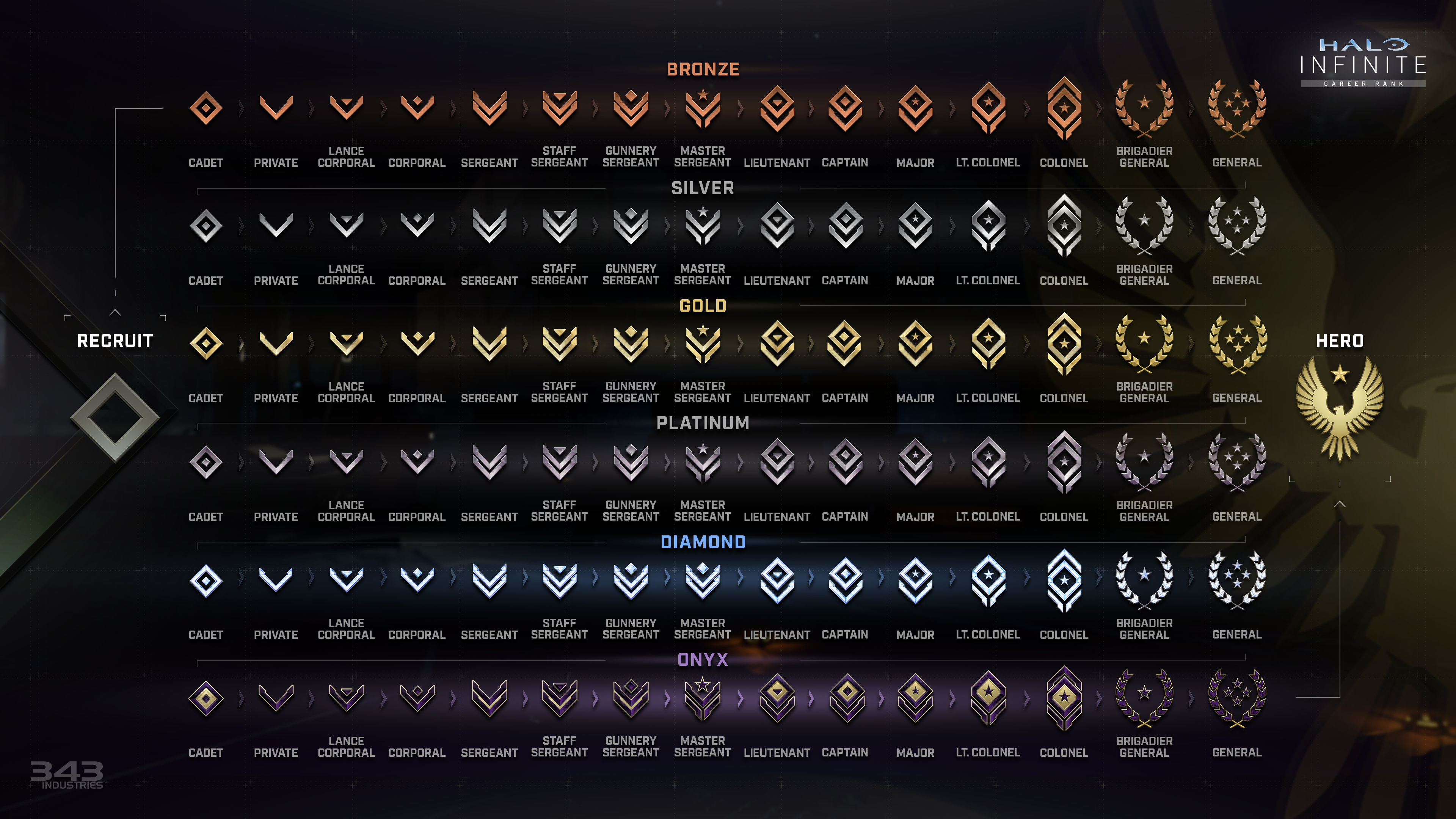
Career Rank will provide players with an opportunity to advance through a larger progression system that reflects their time in Halo Infinite. Similar to the progression systems in Halo: Reach and Halo: The Master Chief Collection, each level will have military-style ranks with unique names and corresponding icons.
To make progress through these new ranks, all you have to do is play. Whether you’re jumping into your favorite playlist solo or squadding up with your friends, every matchmaking match completed carries you forward.
Additionally, Career Rank utilizes performance-based progression taken directly from your Personal Score in each match. The better you play, the faster you’ll rank up.
Progression
As we alluded to above, Career Rank will likely feel most like MCC’s progression system. “Tiers” such as Bronze, Silver, Gold, etc. are the largest bucket, which are all broken into smaller military-style “Ranks” such as Cadet or General. Then, within each of those Ranks, you will move in three smaller increments called “Grades.”
Example 1: If you are a Bronze Private Grade 1, you’d work through Bronze Private Grade 2 and Bronze Private Grade 3 in order to achieve Bronze Lance Corporal Grade 1.
Example 2: If you are a Platinum General Grade 3, your next advancement would bring you to the next Tier as a Diamond Cadet Grade 1.
Presentation
Once you start working your way up the ranks, you’ll also likely want to start showing off your level. Fortunately, there will be plenty of ways to see your rank (and those of other players).
A few of the notable places where you can see your accomplishments:
During the match intro. When the camera pans to a Spartan, you will now see a banner that displays their Career Rank.
Every individual player’s Profile will include their Career Rank.
Inspecting a player in the Post-Game Carnage Report (PGCR).
In general, in most places where you see a player’s full nameplate, a banner with their Career Rank will also be displayed.
Ultimately, we wanted to make sure that we are recognizing the time you invest in Halo Infinite. Ensuring that your Career Rank shows up and is visible to all whenever and wherever possible is key to that celebration.
From Recruit to Hero, advance through the ranks and show what you’ve been able to accomplish when Season 4 lands. Career Rank, Infection, new maps, new customization, Forge updates, and more all land later this month on June 20.
If you have additional questions about Career Rank, be sure to check out the FAQ below.
The race to claim Hero status is on!
FAQ
Are Career Rank levels gated by a CSR skill rank similar to Halo 3?
No, there are no skill requirements in Halo Infinite’s Career Rank progression system.
Will this include my previous game history?
No, Career Rank will begin tracking your Halo Infinite progression when it lands on June 20.
Will I be able to rank up in Custom Games, Forge, or Academy?
No, Career Rank progression will be earned via Personal Score in multiplayer matchmaking.
Will Double XP Boosts work towards Career Rank progression?
No, Double XP Boosts are meant to help players advance through their Battle Passes via Match XP.
Will I earn customization content from leveling up in Career Rank?
Yes, for select ranks there are corresponding nameplates as well as armor, weapon, and vehicle emblems that you can sport in-game on your Spartan and gear.
Is Career Rank tied to a Battle Pass?
No, Career Rank progression is separate from the Battle Pass system and is entirely free.
Will Career Rank impact matchmaking in any way?
No, Career Rank will not impact what matches or opponents you play in matchmaking.
Will Career Rank ever reset with Seasons?
No, Career Rank will not reset with Seasons. It is meant to track your overall progress in Halo Infinite.