We have deployed another hotfix for the Exploration update that addresses some of the issues currently present in the game.
- T2 Singularity Cell Detonator can now be obtained through the main story right as the player is tasked with flying to Eridil.
- T2 Warp Cells can now be found around Broken Marble
- Civilian Ruins, Knossos Residential and Knossos Terminal quest stations changed to always have power for the quest terminal
- Added several new spawns to Athnar Region
- For singleplayer users: Simply download the update and loot and stations will be updated during respawn.
- For multiplayer users: Changes will become active after the next regular server restart
Exploration Hotfix is deployed
We have deployed a Hotfix that addresses the Haven issue.
For single player users, simply download the updated game files.
For multiplayer users, download updated game files and await the regular server restart (due in 30 minutes from the posting of this announcement)
We apologize for any inconvenience this might have caused.
Exploration - Hotfix
We are aware that there is currently an issue where Haven Outpost doesn't spawn during the Rude Awakening quest. We are working on a hotfix right now.
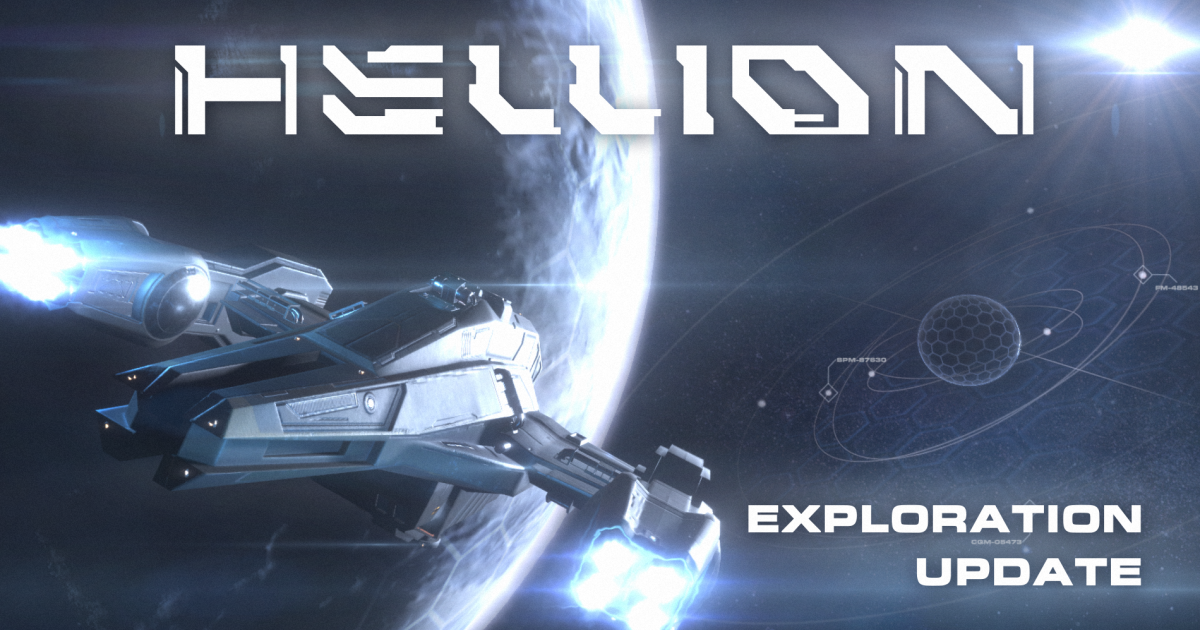
Exploration Update is now LIVE
We've received a transmission from the Hellion system that the Exploration Update just went live!
Exploration - patch Notes
Exploration update is finally ready for deployment and with it a bunch of new features and bug fixes. Update will be arriving in Hellion today, June 25th at “time”. Servers will be down from 4PM GMT/8AM PST until 5PM GMT/9AM PST. Servers will be wiped to ensure proper patch deployment. All current single player saves will be incompatible with the new version. Private server owners please delete server save files.
Warp Drive Changes
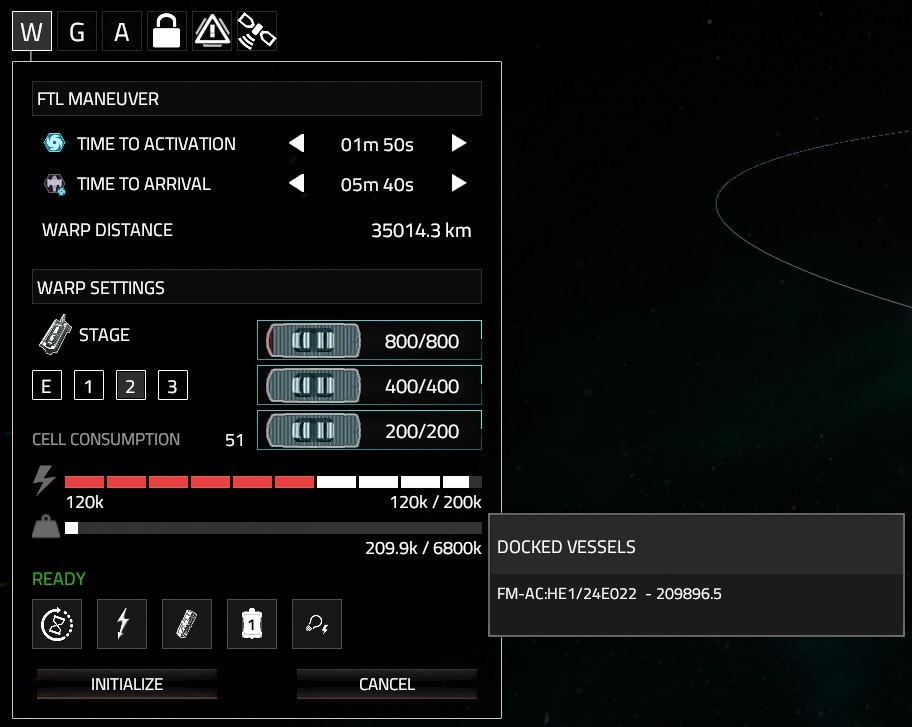
New Warp tiers - there are now 5 warp tiers available: Emergency Warp (Warp E), Warp 1, 2, 3 and 4. Faster warp is unlocked by using a higher tier Singularity Cell Detonator.
Emergency Warp - extremely slow warp that requires a lot of power and does not consume Warp Cells. It cannot be used to tow any additional modules.
Base Warp Cell Consumption - all standard warp tiers now have a base Warp Cell consumption in addition to regular consumption. This makes faster warps less fuel efficient when moving across short distances.
Mass Based consumption - regular warp cell consumption is now affected by the combined mass of modules you are attempting to move.
Mass based towing - number of modules you can take with you into warp is now based on their mass. Maximum towing capacity is directly affected by your ship’s mass amplified by the installed SCD. Emergency Warp cannot tow any additional modules.
New Warp Cell tiers - Warp Cells are now available in 4 tiers of increasing capacity.
Scanning mechanic
Players can now use NavMap to scan for distant objects using the new Scanning Interface. Scan results depend on the radar’s sensitivity, amplified by the installed Radar Signal Amplifier, distance to object and object’s signature value. Scan results are further affected by debris fields, proximity to the star and planetary modifiers. Object’s signature depends on the number of docked modules and online systems.
Passive Radar - automatically tracks nearby objects and warp signatures in a 360 radius around your ship.
Active Radar - used to actively search for new contacts on the NavMap
New Navmap icons:
Green outline - known object, currently within ship’s passive radar range
Orange outline - known object, currently beyond ship’s passive radar range
White brackets - new contact
Purple sphere - unknown contact, scan sensitivity too low to provide accurate info
Blue sphere - warp signature
Green cone - local warp signature direction
Advanced start locations
These are alternate character starts that can be unlocked by progressing through the main story line. These are intended for experienced players and offer increased challenge and better starting equipment.
Stranded Miner
Jailbreak
Son of Earth
Improvements
Damage effects added for low HP modules
Map objects persistence
New Quest: A Proper Warp Drive
New Quest: Exposure Protection
New Quest: Industrial Fabrication
Changed Quest: A Rude Awakening (tasks players with picking up Nanite Core instead of Warp Cell)
Turret tier indicators added (Glowing colors)
Improved warp animation
Tweaks
Heaven moved to a higher orbit
Item weight changes
Network optimization
Civilian Nanite core HP increase
Warp endpoint deviation added
New stations added
Changed positions for existing stations
Most Stations removed from “always visible”
Asteroids removed from “always visible”
Anchor docking port disabled for all quest stations
Unlocked RCS controls access for all premade stations
Bug Fixes
Ship auto stabilize on Q and E rotation when an option is turned off
Scanned ships stay on NavMap after scanning
Server restart timer notification missing
Game crash due to sound engine problem
Haven orbit intersecting with Burner
Knossos Residential and Knossos Terminal have anchor port dock available
Catalyst losing HP when generating power
Incorrect damage from weapons
Towed modules and ships do not properly update celestial bodies when entering gravity zone
Resume warp effect & countdown timer after relog
Server getting stuck on player logout problem
Map icons overlap
Exploration Update Coming Out Next Tuesday
It’s finally here. Exploration Update! We talked a lot about it lately and now we are putting together the last bits of it.
The Exploration Update will be out on Tuesday, June 25. In our previous posts we briefly went over some of the most important changes regarding Scanning and Warp Drive. This time we are going to take a step further and hopefully get both the new colonists and veteran astronauts to be excited for this update.
Junkyards
Let’s start off with junkyards. Instead of a single massive Junkyard orbiting a planet, expect to find many more smaller “sections”. These sections are often on intersecting and sometimes even collision orbits with each other and together they form a “junkyard system”. This is important because junkyards are no longer immediately visible on your NavMap, in fact very few map objects are now visible from the get go. In order to find any of these sections you will need to scan for them. As you go about salvaging these sections for parts, modules and resources odds are that your orbit will get you into close proximity to another junkyard section, giving you another exploration target.
Lone stations
Lone stations are another thing we will be adding with this update. These will often be located away from the “usual debris fields” only getting closer once every few hours (sometimes even days) so they will be quite a bit more difficult to find, but they will also contain loot usually beyond what the zone normally offers.
Asteroids
Asteroids have also been affected and just like junkyards, won’t be “always visible” on your map. Your passive radar will often pick the largest nearby rocks on its own, due to their signature, smaller ones on the other hand won’t be so easy to find and will require you to actively look for them.
All of the above should give you an idea of what we are aiming for with the Exploration Update. As stated previously our goal is to bring some mystery back into the world of Hellion and offer a completely new and unique experience for both veterans of the game and newcomers alike.
Scanning improvements
Aside from the features explained in our previous post, there are several other factors that affect the signature of the station/module when scanning. These are damage, number of online systems and active scan. All of these negatively impact the vessel’s signature making it easier to find. Damage increases signature exponentially as the module takes more and more damage, while each online system increases the module’s signature by a fixed amount unique to that particular system. Usually larger modules with higher “base system” consumption or large active systems such as refinery or fabricator provide a much bigger signature boost compared to smaller modules such as corridors, airlocks and life support modules. So, while deploying your solar panels won’t increase signature by much, a fusion reactor most certainly will. Active radar will also make your ship/station more visible for the duration of the scan.
All of this creates a much more dynamic system where “going dark” becomes a viable strategy if you are trying to sneak up on someone, or find others before they find you. Of course, many of these won’t affect your starting Steropes, as it is generally very power efficient, but they will make a big difference once you get your hands on the Arges, especially should you choose to use the engine or that big loud and rather hot fusion reactor…
Advanced starts
Finally we want to briefly go over the advanced starts that will become available once you reach certain quest milestones. Keep in mind that each one of these new starts is a scenario in its own right and will be considerably harder to survive than the usual “Fresh Start”. Why? Well that is because none of them are shaped as a tutorial, so there will be no hints or clues as to what you are supposed to do to get out of them alive. Second, each one has a specific theme to it and comes with a very specific challenge in mind. Finally each scenario will put players into a situation they normally would never end up in during normal play. After all how often do you find yourself running at a turret without a full suit and only a crowbar as a weapon…
To give you a hint on what to expect, the advanced starts that will be included in this update are: Stranded Miner, Jailbreak and Son of Earth.
That’s all for today folks, expect the full patch notes on Monday.
Until then, fly safe!
Zero Gravity team
Devblog #53 - Scanning 2.0
Well fellow explorers, it has been a few very busy weeks for us at Zero Gravity, hence the absence of a devblog last week, we simply didn’t have enough time. Some of these features are still a work in progress and lack proper visuals, but we are getting there. As promised in our last post, this blog will cover changes coming to the scanning mechanics of Hellion.
Ever since the launch of Hellion’s early access, scanning factored into the gameplay in one way or the other. Some of our early supporters may remember orbits of planets and moons being crowded by various derelicts and modules, as well as mysterious purple “death clouds” that have been the bane of many an explorer. As the game evolved, scanning became less and less prominent, eventually turning obsolete with the introduction of junkyards and quest stations in the Rude Awakening update. While the gameplay became slightly more engaging a certain element of mystery was lost. After all it is hard to ask a question “what else could be there” if everything is already visible.
Needless to say we were not happy with this situation and had planned to address it sooner, but there were always other more pressing matters to consider. It also turned out to be rather challenging and far more complex than what we initially imagined. That is because scanning was a lot more than just a way for players to find other objects in space, it was a linchpin that would tie together all aspects of Hellion’s gameplay.
Scanning 2.0
The new scanning mechanic is supposed to bring mystery back into the world of Hellion by giving players a fun and engaging way to discover both distant and nearby locations based on a number of different parameters. It also provides players with a meaningful way to find each other in multiplayer. Now that the basic idea behind scanning is out of the way let’s break it apart and go over each of its components.
Signature
Signature is the basic determining factor of “how visible an object is” and is based on mass, volume and construction. Larger objects such as asteroids are more visible compared to smaller ones and the radar will be able to “spot” them from greater distance. Each ship/module has a specific signature value and the values of multiple docked objects will be added together making junkyards and large player owned stations much easier to spot, compared to single ships and modules.
Radar System
All ships and command modules now come equipped with a radar system that can be accessed from the NavMap. Radar is comprised of three subsystems, active radar, passive radar and warp detection. Each subsystem has a base “sensitivity” value that determines how effective it is. Higher sensitivity equals better detection. Sensitivity can further be modified by installed parts as well as certain locations and conditions you may find yourselves in.
Passive radar will automatically detect all nearby objects based on its sensitivity every time you access the NavMap. This system is autonomous and requires no special input from the player.
Active radar scans in a cone that can be directed and adjusted by players and is a lot more powerful compared to the passive radar. By adjusting the cone players can choose to scan a wide area or direct a more focused scan towards a specific zone by reducing the cones scanning angle.
Warp detection is handled by the ship’s passive radar and will automatically search for nearby warp signatures.
(placeholder art, new visuals are on the way)
Scan results
When scanning an area players can receive a few different outcomes based on signature and sensitivity. These are Visible, Unknown, Unidentified and Warp contacts.
Visible contacts are all ships, stations or asteroids within the range of you passive scanner. They are actively tracked on the map and their position and values will automatically update as they change. Player owned station (authorized vessels and cryopods are always visible on the map)
Unknown contacts are objects that have been identified by an active or passive radar but are currently outside your passive radar range. This means that their orbital parameters are known and you can warp to them, but they are not tracked in real time. In case they are destroyed or moved, you will not see these changes until you either move close enough for the passive radar, or actively scan for them to update the information.
Unidentified contacts show up as spheres on the NavMap and indicate that an object is currently present in that area, but it’s signature is to weak for your radar to detect. To reveal these objects and their orbital parameters you will have to move closer, or direct a focused scan towards the marked area. Note that these contacts slowly fade away after a certain period of time.
Warp contacts work similarly to unidentified contacts and will show a sphere of potential “exit points” for a ship in warp, if it happens to be close enough to detect. Warp signature is determined primarily by the combined mass of objects in warp. As before these contacts will slowly fade away after a certain amount of time.
(placeholder art, new visuals are on the way)
Radiation, planets and debris fields
As mentioned earlier there are several parameters that will affect both the signature of objects and sensitivity of the radar systems. High radiation values in an area will lower the sensitivity of all ships. Debris fields will reduce both signature and sensitivity of all objects inside them, turning them into potential “hiding” spots. Similar to the debris fields certain planets will feature “unique zones” that will make scanning harder or easier.
In order to counter these modifiers you can always find or craft better parts for the radar system that will improve it’s detection capabilities.
Epilogue
Finally it is worth mentioning that many of the issues in the current game, like the infamous “always visible after scanning” bug will be resolved with the new system. In addition all of the information for the NavMap is now persistent for a character and will not reset upon death or relog. Also expect to discover many new and “hidden” locations throughout the Hellion system.
Until next time, fly safe!
Zero Gravity Team
Devblog #52 - Warp 2.0
As we’ve mentioned last week, it’s time to talk a bit more about the overhaul of the warp mechanics and what we hope these will bring to the table. So grab that coffee machine, ready your favourite mug and make sure that gravity is turned on. Spilling coffee in space is no laughing matter…
Warp drive is the primary means of travel in the Hellion system and is used to quickly travel across vast distances that would take hours and even using conventional propulsion. While no object with mass may travel at or faster than the speed of light, space-time itself can. Well technically it doesn’t actually “travel” but rather it can “extend and contract” faster than the speed of light. Warp drive works by encasing a vessel inside a bubble of warped space-time that shrinks in front of the ship and extends behind it. This way the vessel doesn’t actually move at FTL speeds and is instead “carried” by the space-time bubble to its destination.
Now that science behind it is out of the way, what are the improvements we are talking about and more importantly how will they affect Hellion’s overall gameplay.
Warp Tiers and Emergency Warp
There are now 5 warp tiers, compared to only 3 in the previous versions. These are: Emergency Warp then Warp 1, 2, 3 and 4. Warp tier is determined by the tier of the installed Singularity Cell Detonator. If there is no Detonator, the ship will only be able to use Emergency Warp, or Warp E as we’ve come to call it. It only requires power from the capacitor in order to activate allowing ships to execute a warp maneuver without an installed Detonator or any Warp Cells. The trade-off is that it is exceptionally slow compared to all other Warp tiers and is meant to be used, as the name implies, only in emergency situations.
Other warp tiers are unlocked by installing an appropriate tier Detonator in the ship’s warp drive. Tier 1 detonator provides access to Warp 1, while a tier 4 will provide access to all 4. Each Warp has its own cost in both power and warp cell consumption, with faster warps consuming more energy and resources but allowing players to travel significantly faster.
Mass and Warp Cell consumption
Up until now we’ve imposed an artificial limit on the maximum number of modules players could take with them into warp. This was never a proper solution and led to a number of inconsistencies and gameplay issues, such as a situation where a small Bulkhead or an Industrial Container had the same “value” as a fully stocked Cargo Bay or a Power Supply.
This is no longer the case as the amount of modules you can carry and fuel usage is now directly tied to the total mass. Maximum “extra mass” you can bring with you is now affected by the mass of the ship that you are using and the installed Detonator tier. As an example Steropes that weighs a little under 500t will be able to carry less mass compared to Arges (1700t) with the same tier Detonator.
Note that we used the term “extra mass”. This is the additional mass your ship can carry with it into warp and it will exponentially increase its Warp Cell consumption based on how close you are to the mass limit. While Arges may have a larger base Warp Cell consumption due to higher mass, it can also tow a heavier load and do so more fuel efficiently due to its more powerful warp drive, making it ideal for relocating large bases. Steropes remains faster and more maneuverable but is not nearly as efficient when it comes to carrying things. This also means that a higher tier detonator will still be beneficial even if you do not use a higher speed warp, as it will increase the extra mass limit.
It is also worth mentioning that Warp E barely handles the mass of the ship and cannot be used to tow any additional modules. So before you try to move your base around make sure to upgrade your ship with at least a T1 Detonator and some Warp Cells.
Finally we’ve also added “base” warp cell consumption for all warp tiers (Warp E excluded) in addition to the “standard” consumption based on travel time. This base cost is the minimum amount of fuel necessary to initiate a maneuver and is unique for each Warp tier. What this means in practice is that using Warp 1 is more fuel efficient when moving over short distances compared to Warp 4. However Warp 4 will be much more efficient when traveling between planets. You can still travel over any distance using any warp, but it may consume more fuel.
Warp Cell tiers
Speaking of fuel, in order to balance fuel usage and mass we have introduced multiple tiers for all Warp Cells. Higher tier cells provide exponentially more fuel and are also harder to find and more expensive to fabricate. Combined with mass and warp speed changes, higher tier cells should offer greater flexibility and make moving around a bit easier for players that invest time and resources into obtaining them.
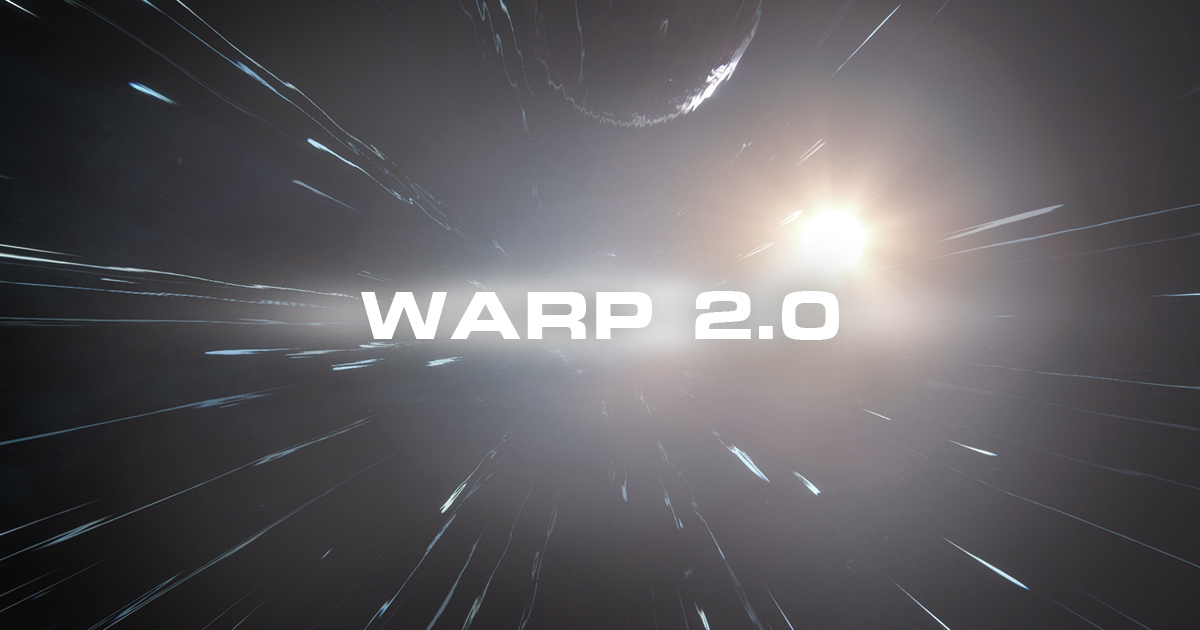
New Warp Visuals
Of course all of these changes wouldn’t be complete without a complete visual overhaul of the actual warp effect. Our goal here was to make Warp drive feel visually appealing while maintaining immersion and realism that Hellion is known for. The image below is still a work in progress and we will be adding subtle changes and tweaks to the effect as we move into the final stages of this update.
Well that is all for today. We hope you’ve find this information interesting and would love to hear your thoughts on all of the Warp Drive changes. So let us know what you think in the comments below and stay tuned for information regarding Scanning 2.0 that is also planned for this update.
Until next time, fly safe!
Zero Gravity Team
Devblog #51 - What's coming next
What’s up space survivors, have you managed to shield yourselves from the deadly space radiation that Exposure brought in? Or are you still struggling with keeping your base safe? Regardless, we believe that you will welcome the changes we have in store for the next update.
So what can you expect to see in the next update? Well, a lot of bug fixes, quality of life changes and balance improvements, major improvements to the warp drive, and warp travel in general and the introduction of a proper scanning system. This time we will cover some of the important quality of life changes and leave the warp drive and scanning system changes for later blogs. Most of these are a direct result of the community feedback sent our way and we can’t thank you enough for it! Keep sending ideas and critiques our way and we’ll keep making Hellion better, one update at a time.
Civilian Nanite Cores
These cores were designed to protect your base from various hazards over long periods of time therefore reducing the amount of maintenance and busy work that players would have to put in to keep their stations safe. Based on the feedback we’ve gathered so far, we have decided to improve their overall durability, making them last significantly longer across all zones. This is to reduce the amount of effort needed to maintain larger bases in high radiation zones, but also allow players with less free time to still enjoy Hellion’s multiplayer aspect, shifting the focus from maintenance to other activities like exploration and mining.
Critical Degradation Effects
Now, onto an issue that had plagued every Hellion salvager since the Don’t Panic Update! The indicators for low module HP. This wasn’t a big problem before the Exposure Update, since degradation was uniform across the entire system and its value was extremely low. With the introduction of radiation damage and nanite cores, this issue became a major problem for anyone exploring junkyards and debris fields beyond Bethyr’s orbit. Since most derelict stations have no power, their ENV monitors remain offline, preventing players from accurately judging the module’s current HP leading to numerous deaths, as the module they are passing through suddenly turns into a flaming ball of debris.
Since repair points alone weren’t sufficient, and we wanted to maintain immersion, we’ve added several new visuals to damaged modules that clearly indicate that they are close to falling apart. Special explosion effects will now trigger when a module reaches a certain structural integrity, increasing in intensity, frequency and number as the structural integrity comes closer and closer to 0. And in case the visuals aren’t enough of an indicator, explosions will also cause minor harm to nearby players prompting them to either get away, or start looking for that nanite diffuser.
Advanced Starts
Another interesting feature that will be making its way to Hellion is the ability to unlock and choose several “advanced starts” when starting a new character. Instead of waking up on a doomed Contingency station in Bethyr’s orbit, advanced start will allow you to start at another location, in a completely different set of circumstances and with different starting equipment. Keep in mind that selecting one of these will skip the tutorial and likely place you in a rather nasty predicament, as they are aimed at players with a bit more experience. Equipment you will be able to find will also match the difficulty of the scenario, so a stranded miner, for example, might wake up in the middle of a debris field, and have to fight for survival right off the bat. They will, however, gain access to advanced equipment such as EVA suits, higher tier mining equipment and more.
To access these new options, you will first need to progress through the main storyline and reach certain milestones. Once unlocked, advanced starts will be account wide, allowing you to “skip ahead” when creating a new character, or when starting on a different server.
Balancing
We’ve also gone over various issues players have experienced over time regarding how parts and systems take damage, part bonuses and several other problems regarding quest specific stations. Expect that several under-used modules, such as the Solar Power Module will once again be viable, and that several issues currently present with various quest stations and junkyards will be addressed.
Bug Fixes
We may not always say it, but bug fixing is part of every update. Granted, some bugs are more annoying than others, and we always work on fixing the most notable issues, or the ones that have the greatest impact on Hellion’s gameplay, before we address smaller problems. So expect another round of bug fixes with the next update.
That would be all for this week. We have deliberately left warp changes and scanning out of this one, as each of these is important and complex enough to warrant a full blog post. So expect a full dive into new warp drive mechanics next week, followed by scanning 2.0. You can be sure that both of these will make quite an impact on the Hellion system.
Until next time, fly safe!
Zero Gravity Team
Exposure update 0.4.2 is now LIVE
As the title says, the 0.4.2 is now live. Good luck survivors!