

Heretic Operative
Patch Notes 0.9.18
- Leafseer now gives +6 Fate (down from +8)
- Mutilation (Blood) now gives +2 Lore and +1 Arcane skill (from +1 Lore)
- The following items no longer require an Action Point to use: Mysterious Jewelry, Codex Compendia, Exotic Incense, Elven Thistle.
- Murdering the poor orc who is trying to read in "Him Read Bad" adventure now adds Corruption.
- Doing nothing in the "Sick Pigs" adventure now costs -1 Tranquility.
Misc
- Using Lore to solve the "Widowmaker" adventure now has more appropriate wording.
- Adjusted volume down on numerous sound effects for consistency.
- Reward for the "Hidden Meaning" adventure is now more clearly displayed when you get it.
- Added a generic item use sound when a more specific one is not available.
- "Watchtower" and "Preparations" adventures explain their benefits more clearly.
- Added custom spawn text for the rare item & book shops.
- Combat-only effects (like Orcish Rage) no longer generate entries in the game log.
- Exhausted status tooltip modified slightly for clarity.
- Tooltip formatting for random result tables has been improved.
- Tooltips for effects that apply a status modifier have been improved.
- Damage type assist tooltips indent on wrap for better reading clarity.
- Use some alternate formatting when showing skill requirements for items and spells
- Getting a bad result in the "Heirloom" adventure is now reflected in the log.
- Sirrata's "Return" spell is now listed in their pregame description.
- Tooltip for the Herbalist Townsfolk makes it clearer what you get by recruiting them.
- Made the events of Abomination story Chapter 3 better reflected in the log.
- The fate of the Apprentice is now clearer in the "No Swimming" adventure.
- Improved some text formatting when using the Ancient Wards.
Bugs
- Fixed a layout issue with skill challenges with very high values.
- Fixed a problem that could cause save games to fail once the starting Operative had become corrupted.
- Fixed a typo in "Bad Luck" adventure.
- Fixed a typo in "Artifact" adventure.
- Fixed a typo in "Harbormaster's Rumors" adventure.
- Fixed a typo in "Cultist Infiltrator" adventure.
- Fixed a typo in "Restricted Collection" adventure.
- Cleaned up a confusing line on the Cult Site tooltips.
- A particular Tomb adventure card that kills the Thief now actually does so.
- Whitefang & Renni now have correctly gendered sound tags.
- Status effects now obey the annoying rules of English when there is only one turn remaining.
- Some minor localization support fixes.
- Cleaned up a number of strings in the "Sealed Fate" story.
- Fixed a minor text issue in the Tranquility tooltip.
- Fixed a source of phantom tooltip flicker.
- Tooltips no longer appear underneath cards when choosing a multi-card reward option.
Mechanics #11 - Locations
The most dominant feature of the region is the capital city of Ione. It is the center of power for the Empire and the Hierarchist Church, and a thriving hub of commerce and culture. The capital is large enough that it is broken up into three distinct locations: The Harbor, Cathedral, and Museum Districts. While patrolling Church Templars and cultist plots can make the city dangerous, it is also a vital resource for the Heretics.

The lands outside the capital are well settled but more rural - Copec’s Tavern is a crossroads for travel and information, and further out there are various farmsteads and country roads to traverse. Far from the capital and well off the beaten path lies the Heretic’s base of operations. Secrecy is key, for if the Cult ever manages to find the Hideout, they could destroy the Heretics organization completely.
At the far edges of the map are wilder, more dangerous places. The safest of these is the vast forest where the Elves have secluded themselves to study magic in peace. Tribes of orcs to the south continually test the defenses of the Elves and the Empire’s outposts. Even further out lie forgotten tombs and ancient temples where the darkest of magics are possible...
Mechanically, moving an Operative from one location to another takes one Action Point, so deciding when and where to move to is important. There are many ways to reduce this cost, recruiting Townsfolk who can open new travel routes or gaining assets that can give free movement points each turn.
Each location is rated with a primary skill challenge type and a matching difficulty. For example, Woodbridge Farmstead is a “Physical” location with an Easy difficulty, so Adventure cards there are likely to use Physical skill and have a target difficulty of zero (meaning there is at least a 50:50 chance of succeeding even if untrained). All the locations in the center of the map have a fairly low difficulty rating, but there are many reasons you will need to visit the more dangerous areas. Using Operatives with the right skills, and increasing those skills, is key to success.
The Cult moves from location to location as well, spreading their Influence. Next time on the blog we will explain Cult Power and why those Cultist controlled locations matter so much!
Patch Notes 0.9.17
Gameplay / Balance
- New spell: "Forge Artifact" (Conjuration magic).
- Eased the metagame XP curve a bit to make it easier to unlock all Story decks.
- When interacting with an Abomination Nest, if you choose to back out you get the Action Point refunded.
- Madness (Blood) is now 7 dice, -1 tranq (from 6, -2)
- Rage (Blood) is now 12 dice (from 10)
- Soulrend (Night) is now 9 dice (from 8), and has -1 tranq
- Adventure card "Terror" now adds 2 Cult Influence (was 1)
- Cult Influence in a location is now capped at 8 for Shadow & Storm cults.
- Adjusted the number of uses on spellbooks to better match the number of spells available in that school.
- Scrying Pool now gives +3 Rumors & +3 Influence (up from +1 / +1) but also costs -1 Tranquility and only lasts 3 turns.
- Sirrata's "Return" spell no longer costs an Action Point to cast.
Misc
- Added a "getting started" help page, accessible from the ESC menu or the ? button.
- Added a brief controls overview to list the hotkeys, accesiable from the ESC menu.
- Inventory & Spell viewing panels are now tall enough to show 15 items without scrolling.
- Significantly increased responsiveness when using a mouse scrollwheel on scrollable panels like the game log or the news text.
- Text change to better clarify an endgame mechanic for the "Betrayal" story.
- Clarify tooltip for Wraithwalker's Assassinate ability that it targets a Cultist at their location.
- Effects that destroy multiple entity targets (like winning against the Orc Warlord) show a more concise tooltip.
- "Betrayal" story now fails at Chapter 1 if it becomes no longer possible to complete it.
- It takes some doing, but if you manage to kill Octavia in Chapter 2 of "Initiation", you fail the story.
- Provide better feedback when using the Lore choice in the "Elven Cultist" adventure card.
Bugs
- Fixed a UI glitch possible when going between the Inventory and Spell panels if one had a lot of items and the other was empty.
- Fixed an issue where the Inventory & Spell panels would create a scroll bar before they visually needed to.
- Fixed an issue where the "Veteran" Townsfolk would not properly spawn an Orc Raider.
- Fixed an issue that could cause the "invasion dispersed" log message to never show up.
- "Mob Rule" Adventure now properly kills a Townsfolk if the negative choices are made.
- "Kegs" Adventure now kills a random Townsfolk (when failed) instead of always the same one.
- Spymaster-in-Exile no longer is missing a sub-icon.
- Minor text edits to the first challenge in the "Initiation" Story deck.
- Fixed numerous references to a no-longer used piece of backstory text.
- Fixed a typo in the "Locals" event card.
- Minor text edit to spell research entry in game log.
- Fixed a typo in Illusion spell research challenge.
- Added a missing tooltip to the gamelog button.
- Fix an issue with loading a save game that had a corrupted Operative in it.
- Fix a rare issue with using the Mind Control spell after loading a save under certain conditions.
- Scrying Pool now has a slightly more sensible tooltip, and cannot be cast multiple times in the same location.
- Fixed numerous issues with the "Stunned" combat status, including a missing icon.
- Fixed numerous plural possessive apostrophes, because English is weird.
- Fixed a typo in the Storm Obelisk description.
- Fixed an issue where some card tags were not being loaded properly from a saved game.
- Modified text for the "Kegs" adventure to be less specific about the victim.
Mechanics #10 - Skill Challenges
There are three skills in Heretic Operative: Arcane, Social, and Physical. They are each useful in different domains - a researcher will find Arcane skill of the utmost importance, but it is of little use to a diplomat attempting to secure passage for a group of refugees. Having a good mix of skills on hand is important, and it is usually a good idea to supplement the strengths of your starting Operative with recruits that are skilled in other areas.
Each challenge is rated by a difficulty factor, and each Location has a rating that shows what the likely difficulty of challenges there will be. These range from Easy (0) to Hard (6), though a few story challenges break the rules and go even higher. If your Operative’s skill exactly matches the difficulty of the challenge, you have a 50 / 50 chance at success - rolling an 11 or better on 3 dice. As your skill falls below what is needed, your chance drops as well, needing better rolls to succeed.
Fortunately, you aren’t always stuck with whatever luck gives you. By spending a Fate point, you can re-roll one of your challenge dice, and you can do this as many times as you want (until you run out of Fate). Fate is a great way of making sure things go your way, but if you spend it all when the difficulty of a Challenge has you badly outmatched, you will quickly run out.

Will you be able to survive the deadly traps in the Ancient Tomb or the rampaging war parties of the Burning Woods? On the next mechanics blog we will take a deeper look at some of these Locations and what else you will need to consider when exploring the Northern Reach.
Mechanics #9 - Magic & Corruption
Casting spells always generates Corruption. As Corruption grows, the caster’s attunement to Magic grows - encouraging more powerful magic and even more Corruption. If you aren’t careful, this process can feed on itself and rapidly get out of control. Mechanically, stronger levels of Corruption improve your Arcane skill, which is used for researching spells, passing magical challenges in Adventures, and makes some kinds of spells even stronger. So higher Corruption might seem like an advantage! But eventually it gets too high, and the Operative will have to struggle each turn to retain their sanity. Fail, and the Operative becomes a twisted version of themselves who will actively oppose you in combat.
To offset Corruption, each Operative has a certain amount of Tranquility. Each turn, their Corruption goes down by that amount. Powerful mages have a strong baseline of Tranquility to work from, so they can cast strong spells, and quickly let their Corruption subside to a manageable level. But it is always tempting to win one more combat or summon one more magical item, pushing that threshold of Corruption upwards. Higher levels of Corruption reduce Tranquility, and if it becomes negative you automatically gain Corruption each turn - once the spiral starts it can be difficult to stop.
Managing Corruption and Tranquility isn’t just a question of controlling spells. Resisting Corruption is closely linked to a character’s mental and emotional state, so undergoing trauma or making self-centered decisions in Adventures can also directly alter these stats for the worse. The flip side is true as well, acting in a virtuous manner or resisting temptation can help build your mental defenses to better resist Corruption.
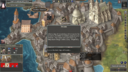
There are many pressures in Heretic Operative to act quickly - Cultists spreading their nefarious influence, imminent disasters, and monsters roaming the land. Balancing your need to address these pressures quickly with managing your long-term Corruption & Tranquility can require skill and finesse.
Next time on the mechanics blog we will delve into Skill Challenges!
Mechanics #8 - Combat, Part II
Each attack has a damage type, which affects how the dice you roll for it behave. Fire dice can “heat up” and generate bonus damage if you roll matches. Blood dice can be rolled in large quantities, but if you get any rolls of 1, you will take a point of damage. Iron dice are the most common type of damage die, and they get a direct boost from the Physical skill of the Operative. There are seven different damage types in all, and which one is best can depend greatly on your overall strategy and available Operatives.
Your enemies have a few tricks up their sleeve as well. Many are resistant to certain types of damage dice, neutralizing your strongest rolls of 5 or 6. Cultists, monsters, and other enemies can use special abilities in combat, such as summoning reinforcements on bad rolls, inflicting poison, or ending the combat early. Boss enemies will often have extremely high Combat Rank values that require some additional story-related maneuvers to reduce down to a manageable level.
Many enemy abilities and other negative effects will trigger when you roll a 1 on any of your dice. This can impact your overall combat strategy, as it might be more effective to use your attacks that use fewer dice and hope you get lucky before dropping the big dice bombs that are more likely to leave you vulnerable. Beyond just taking damage, some of these negative effects give you penalties (like being Injured or Poisoned) that can last well beyond a single combat.
Combat in Heretic Operative is fast-paced while still giving you interesting strategic choices to make each round. Most combats can be won by casting your most powerful spells, but knowing how to maximize the value of your damage types and manage your resources is vital. Use those powerful spells, but remember that magic always brings Corruption...
Next time on the next mechanics blog we will discuss how Corruption works in detail!
Mechanics #7 - Combat, Part I
The core tension in each combat is unleashing your best attacks vs the costs - usually in gold or corruption - that they require. You have 3 rounds to generate a total # of Battle Points, and each card you play adds to your total. Once you reach the enemy’s Combat Rank, you win! Or, if you still haven’t after 3 rounds, the enemy will do some damage to you and you can try again on another turn (or run away!).
Each Operative has some innate combat moves - scholars may start with knowledge of a few spells, and veteran fighters start with techniques learned on the battlefield. Throughout a game, you add to your arsenal in combat, and putting together a good set of combat abilities is required to fight some of the tougher end game enemies. These cards come in a few different flavors:
- Mercenaries are fairly reliable to hire at Copec’s Tavern, but require gold each time you deploy them to battle. Without a good source of income, they may not be there when you need them most.
- Spells are the most powerful and devastating of all your choices, but they must first be researched, which requires Lore, Arcane skill, and time. Casting the strongest spells is a sure way to win most combats, but each one you cast builds up Corruption - too much and your strongest allies may suddenly become your strongest foes.
- Items and other treasures can be acquired through adventures or purchase, and some rarer artifacts can provide a great boost in combat. These are some of the most effective sources of combat power, but are hardest to reliably obtain.
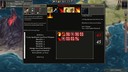
But that’s just an overview of how the Combat System works in Heretic Operative. Join us next time for a more detailed dive on how damage types and enemy abilities work.
Patch Notes 0.9.16
- You can now safely back out of attempting to destroy a Cult Site if you don't like your options.
- "Grave" adventure now properly gives tranquility on choice 2 instead of reducing it.
- Fixed a bug that could let you use the same Operative for all adventures regardless of location.
- Fixed a problem with tooltip lines running together (most easily seen on Cult Site tooltips).
- Fixed a formatting issue where suppressed tooltip requirements were still putting newlines into the tooltip, causing weird internal gaps.
- Minor cleanup to Storm Cult Site tooltip.
- fixed some capitalization issues in "init" story.
- Fixed a minor whitespace issue with some spell decks.
- Text edit to Raining Blood effect.
- The victims of Raining Blood appear properly in the log now, and the spell text makes it slightly clearer that it only generates Fate when it kills Townsfolk.
- Minor text edit to challenge for "Notes on Suspicious Activity".
- Changed art for Whitefang's "Battle Frenzy" skill.
Patch Notes 0.9.14
Balance / Gameplay
- Chapter completion is now worth 3 metagame XP (up from 2), in order to unlock things a little more swiftly.
- "Museum Shipment" adventure now gives 3 cloaks (down from 5).
- Mayor recruitment now prevents Cult Activity as well as construction of Cult Sites
- The Dubious Merchant's rewards in Gold have been improved, and they now also provide Rumors.
- Cultists's Cloak and Monster Trophy are now sellable items.
- Added a warning notification when there are Cultists at the Hideout.
Improvements
- The order of phases in the turn now has a sequential visual layout instead of just being text.
- Map movement buttons are now shown with arrows.
- Cards played in combat now are disabled and in red, rather than disappearing, so that the position of cards in your tableau remains fixed between rounds.
- "Basic Attack" combat card now always is first in the combat dialog, regardless of alphabetical ordering.
- Operative specific personal combat moves have a portrait overlay and tag descriptor to make them easier to understand.
- Card view of items & spells now show any requirements or tags on the card.
- Tranquility per-turn world flyoff is now colorized whether it is good or bad.
- When an item or status is consumed by an effect, there is now an entry in the full log.
- Cultist's Cloak and Monster Trophy items can now be used from the inventory if you are in the proper location (as well as through the location action).
- New game tooltips now show more detailed information about your previous victories with an operative, story, or cult.
- Added a special icon for completing a win collection.
Misc
- Fate re-roll indicators now only appear once challenge dice are finished rolling
- Made map-dragging camera control more consistent when crossing over or starting on UI elements.
- Minor adjustments to the resource bar for layout and mouseover.
- Minor text edits to early turn ending and cult site warnings.
- Variant cult sites (Snake Pit & Beast Shrine) have a modified icon to more clearly show that they are still sites.
- Townsfolk version of recruitable Operatives now show their full name in mouseover.
- FPS display is off by default now (use control-f to toggle it back on)
- Added some legal text to the main menu.
- The "Lost Pack" Adventure is now clearer that it will remove an item on one of the choices.
- The "Lightning Pillar" Adventure has been reworded for clarification, and has a Corruption gain associated with sacrificing your friends.
- Chapter 3 of "Initiation" now is clearer that you are researching a new spell, and provides more explicit guidance text.
Bugs
- Fixed an issue where the tooltip for the Cult Resistance display was not appearing consistently.
- Fixed a missing title on Beast Cult Power 2 card.
- Removed some placeholder text on the main menu C Prompt Games button.
- Don't show the Cult Activity / Resistance display in a few cases where it would be misleading.
- Fixed an issue where the final few Cult Activity points would not show up when they cause you to lose the game.
- Adjusted card options spacing so that adventures with 4 options fit better.
- Minor tooltip capitalization changes.
- Fixed a problem where the Fate from Elven Thistle was not being generated correctly
- Fixed some references to "cult nodes" to properly refer to "cult sites"
- Resource bar numbers look better if you manage to get 99+ of a resource.
- Fixed several issues that could cause the camera to jump around helter-skelter in between turns
- Cult activity markers now show up properly when loading a saved game.
- Desolate Isle adventure card "Worst of Me" now spawns a corruped operative instead of a placeholder.
- Misc debug keys removed so that they aren't accidentally pressed
- Fixed an issue that could change your selected operative in an unexpected manner when selecting an already-selected location.
- The Lost Mercenary no longer "offerns" his contract.
- Fixed a bug on several different Adventure cards where statuses or items would not be detected correctly.
- The Dubious Merchant is no longer referred to as a "Shady" Merchant in some places.
- Fixed a bug that could cause the Dubious Merchant to not want to buy anything.
- Using the Antidote Kit now properly generates Fate.
- Cleaned up extra trailing whitespace on a number of tooltips.
- Fixed an issue where usable items in inventory would still appear dimmed even though their requirements were met.
Turn Structure
First off, you take your actions – you have two Action Points (AP) to spend doing things like moving, researching spells, and using special abilities. During your action phase you can also do things that don’t require AP, like spending Influence to grow the Heretic network of Operatives and Townsfolk. This is the main phase of the game.
Once you are done taking actions, you must encounter an Adventure card in every location where you have an Operative present. These adventures require you to make difficult choices, like whether to risk exposure to save innocents in danger, or how to best avoid a Church Templar that is on your trail. Each location has a unique set of Adventure cards. There are around 270 encounters currently in the game, and we plan to add even more as post-release content, so the mix of encounters you will face can be very different from game to game.
Then the Cult takes a turn, advancing their plans and putting new threats out on the map. If you let the Cult run unchecked they will rapidly start creating their own powerful network of influence. Cult Activity causes more cards to be played from both the Cult deck and the Event deck, which can create a lot of trouble for the Heretics.
That’s just a high-level view, but here is the full official turn order:
- Upkeep – “per turn” effects and other book-keeping.
- Story – progression to next Story chapter, if conditions are met.
- Action – player Operatives spend Action Points
- Adventure – each Location with an Operative is activated
- Draw an Adventure card and choose a primary Operative to encounter it
- Combat occurs in that Location, if needed
- Draw an Adventure card and choose a primary Operative to encounter it
- Enemy – the Cult, Church, and “monsters” take actions
- Automatic movement and generation of Cult Activity
- Draw Cult or Event cards as the enemy meter fills
- Automatic movement and generation of Cult Activity
Here's a closer look at part of the UI – what turn & phase you are in, and AP remaining:

Of course, there are a lot of details still to go into for each of those phases, which we will get to in future mechanics posts. But next up is another core backbone of gameplay – resources and economy!