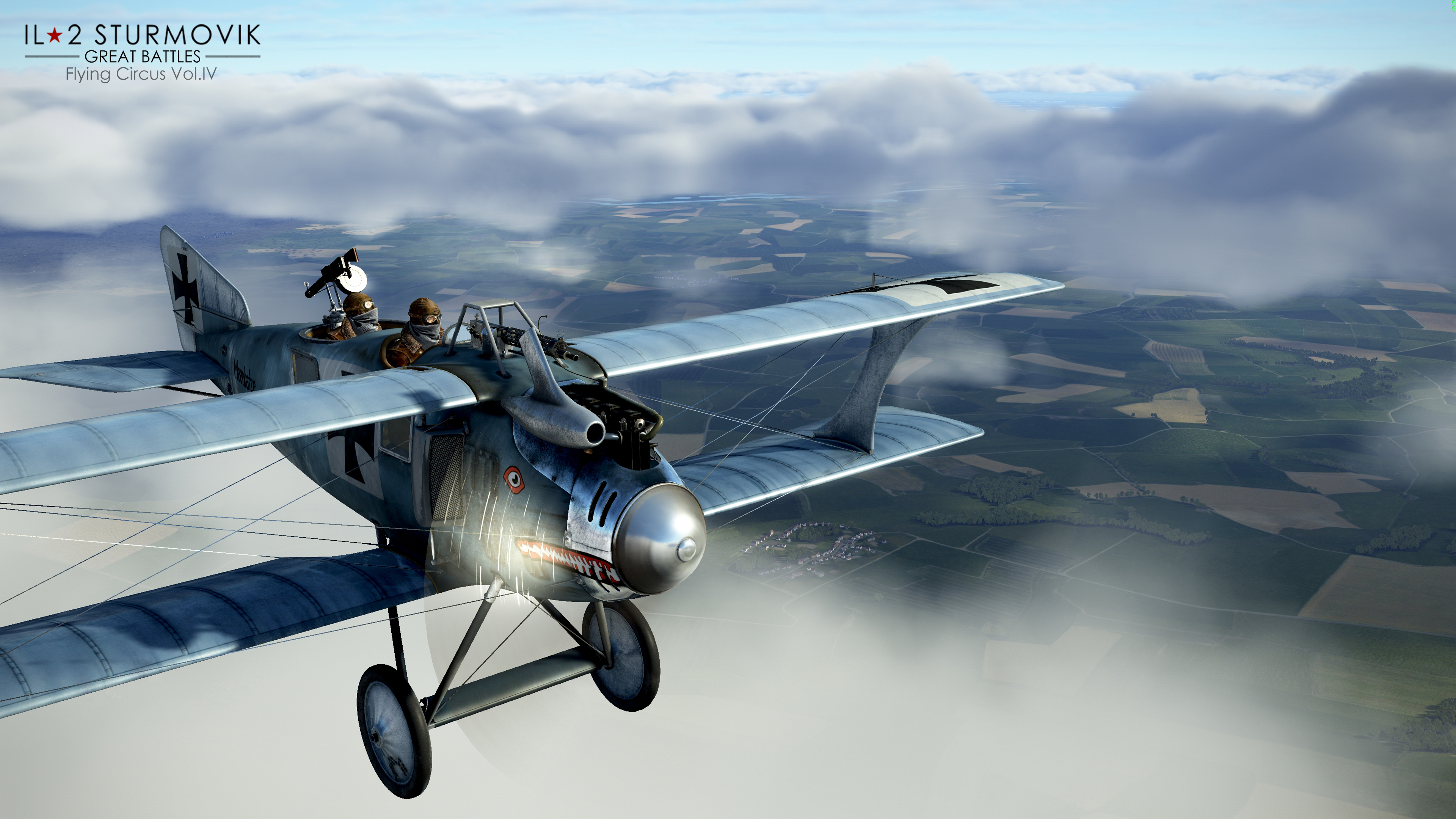
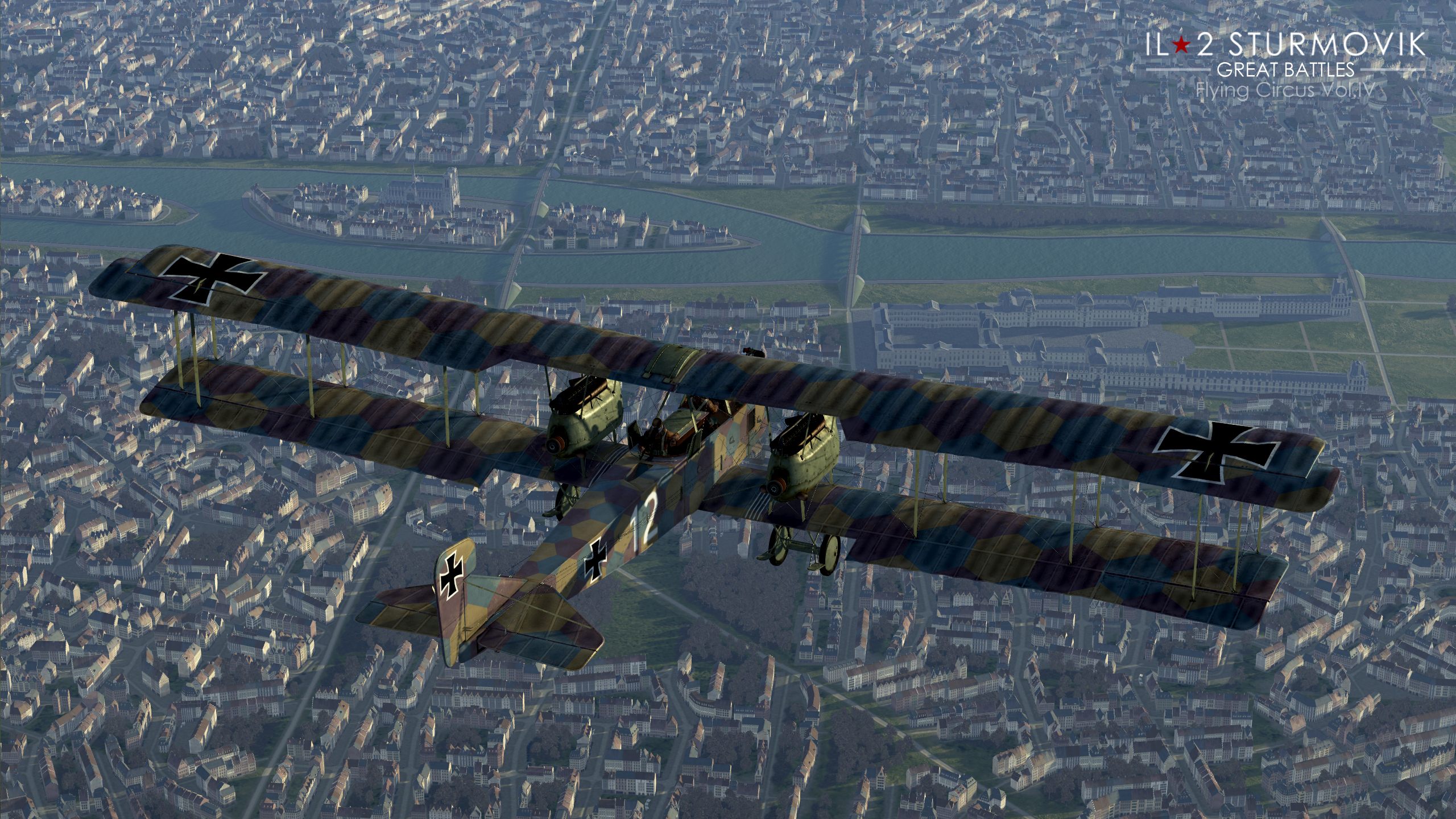
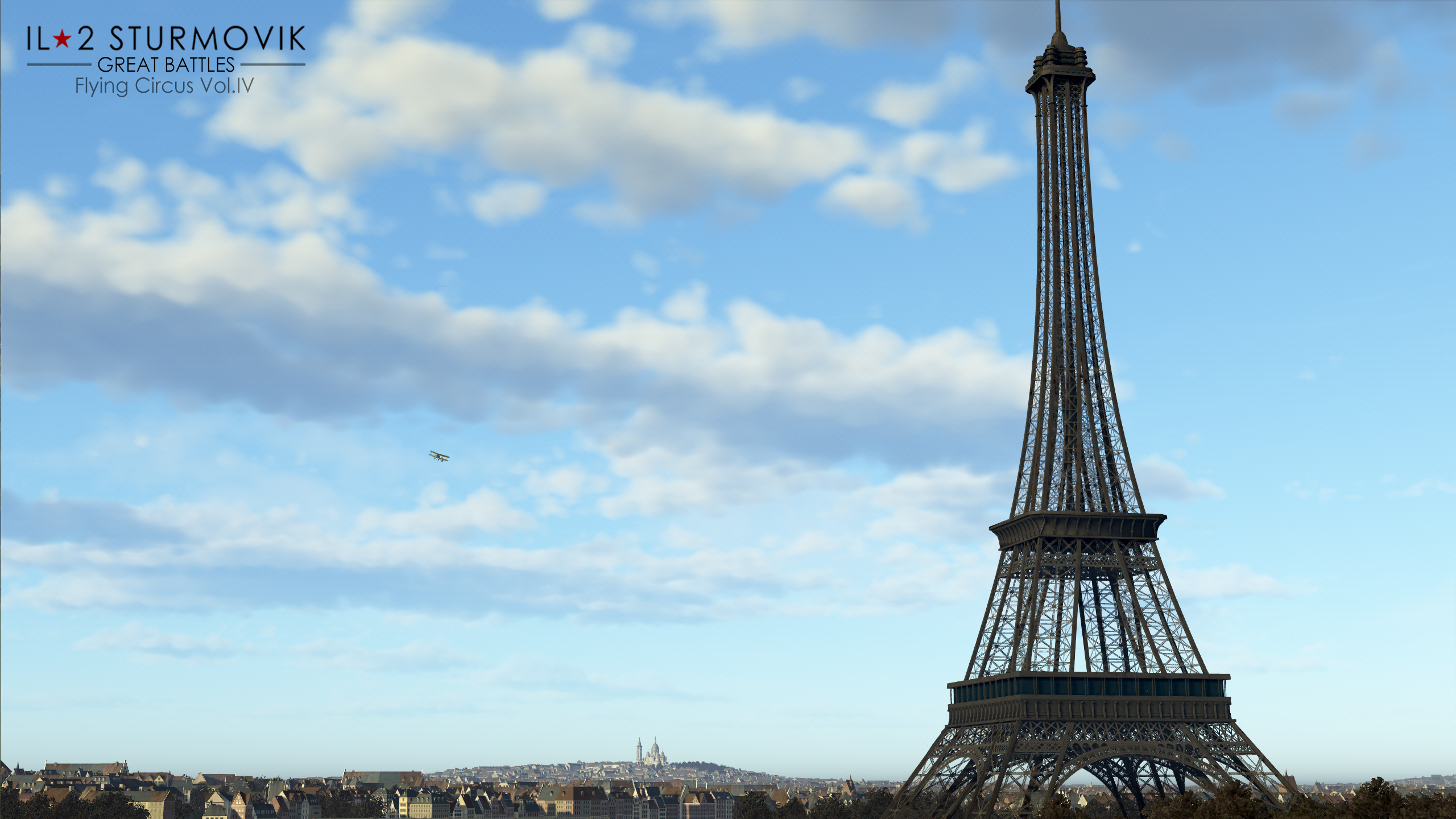
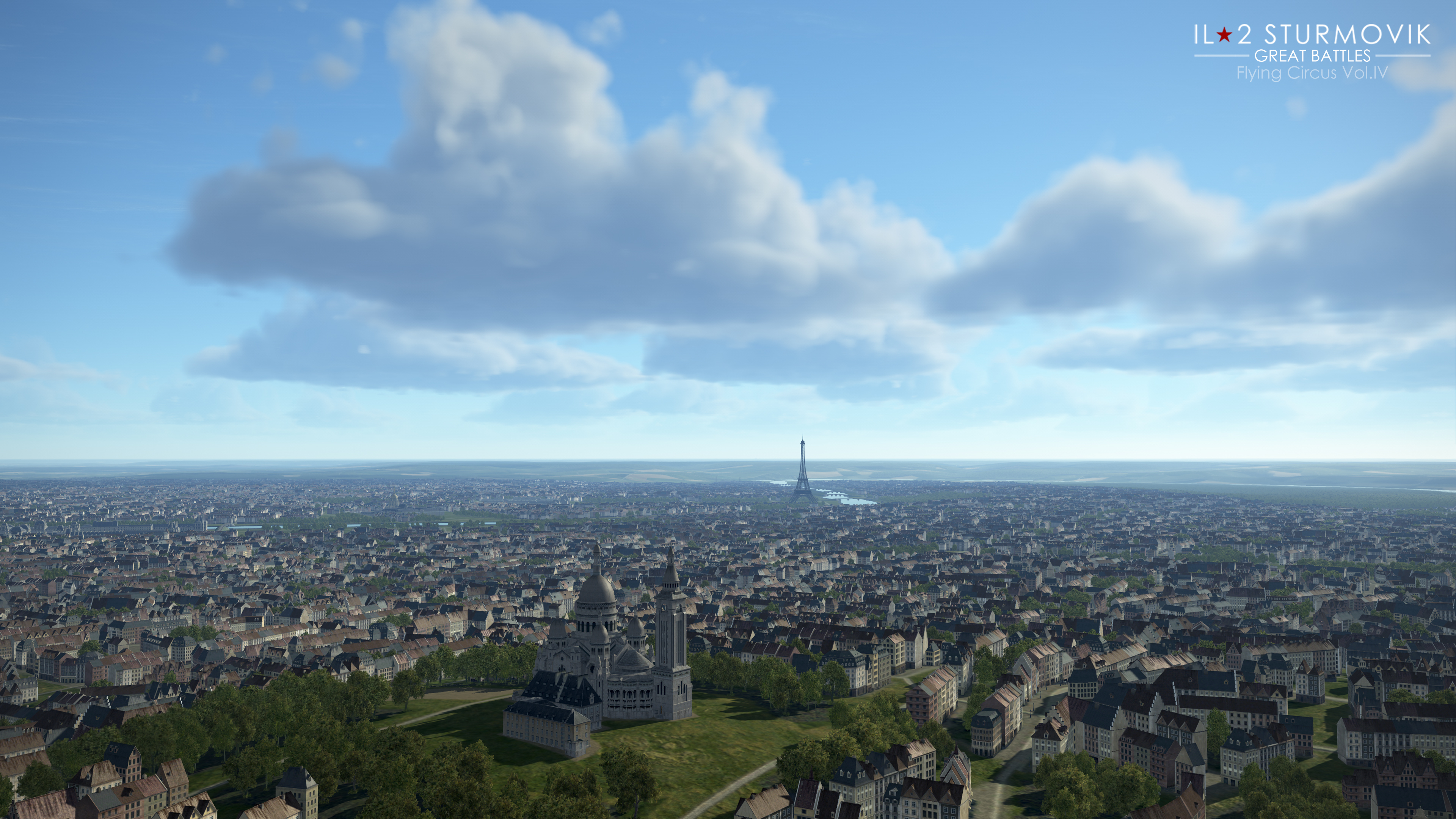
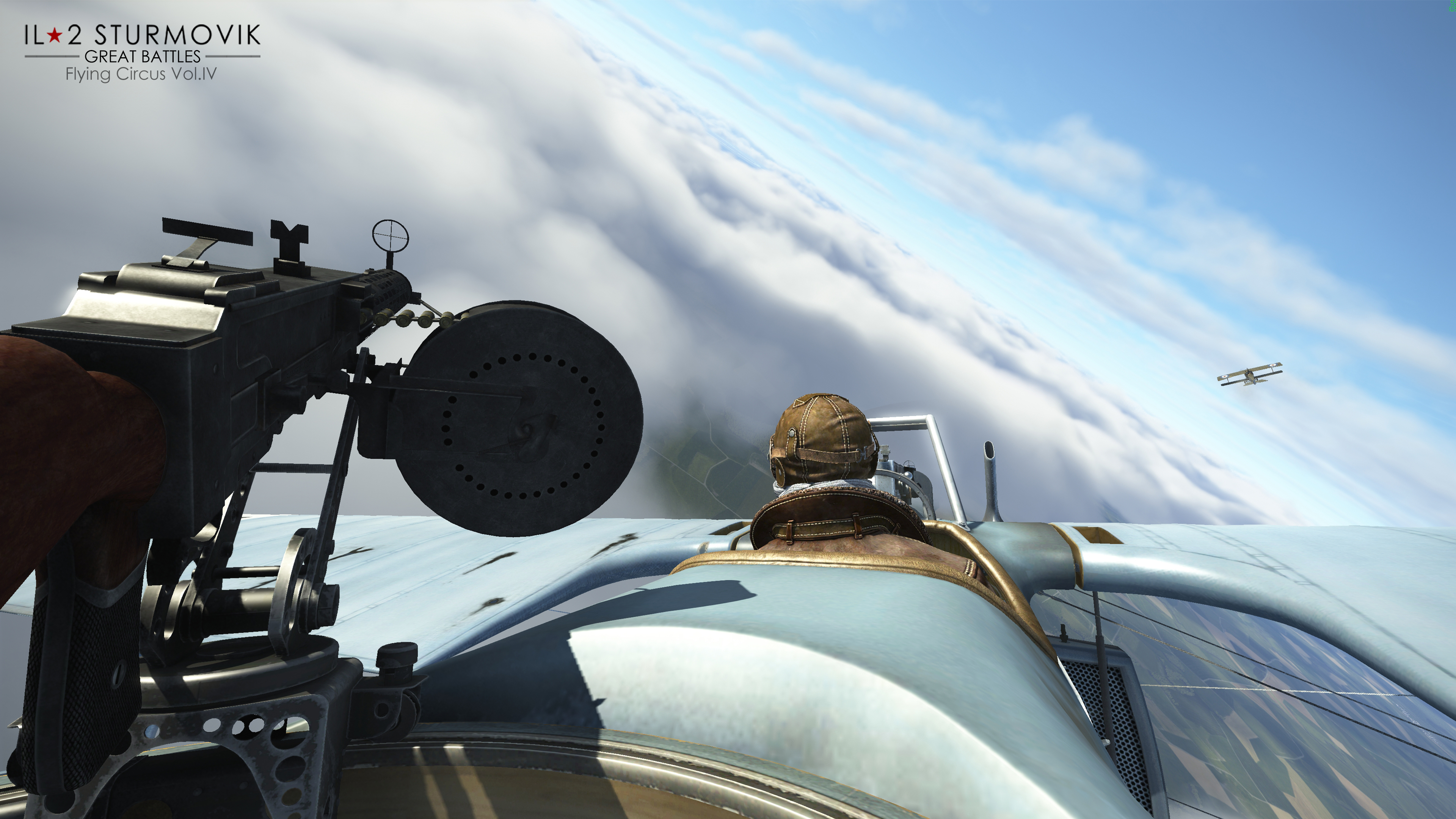
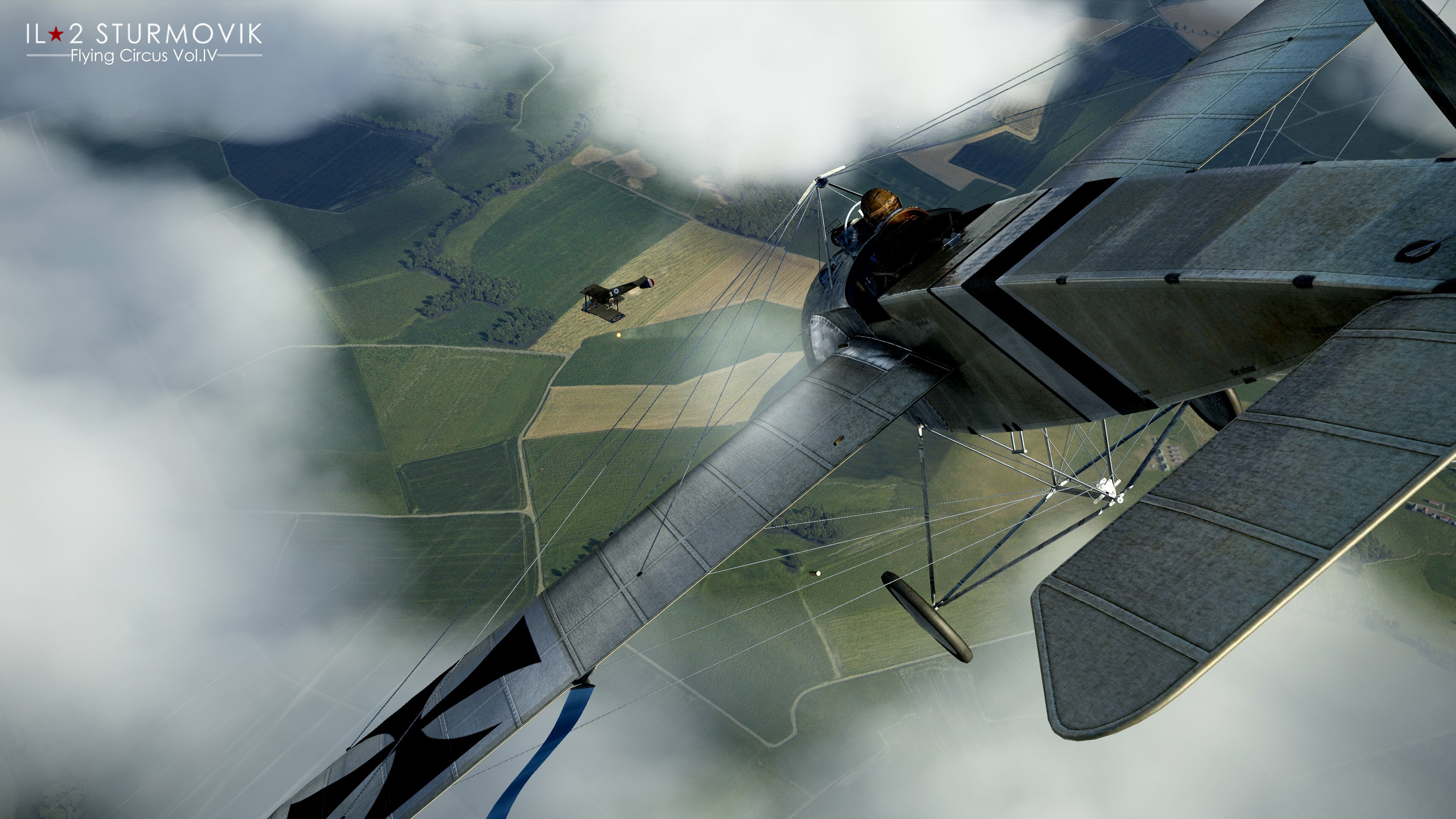
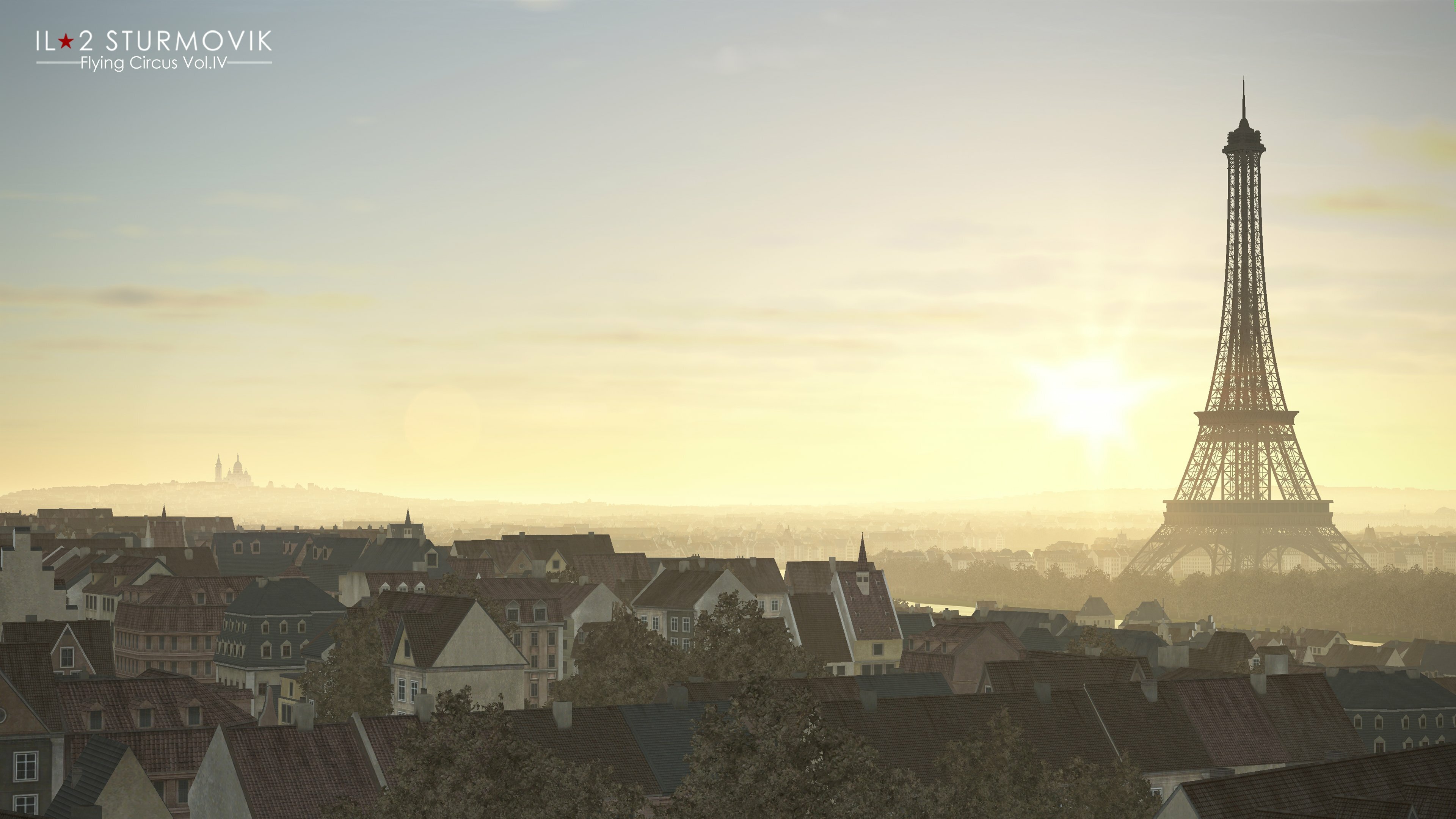
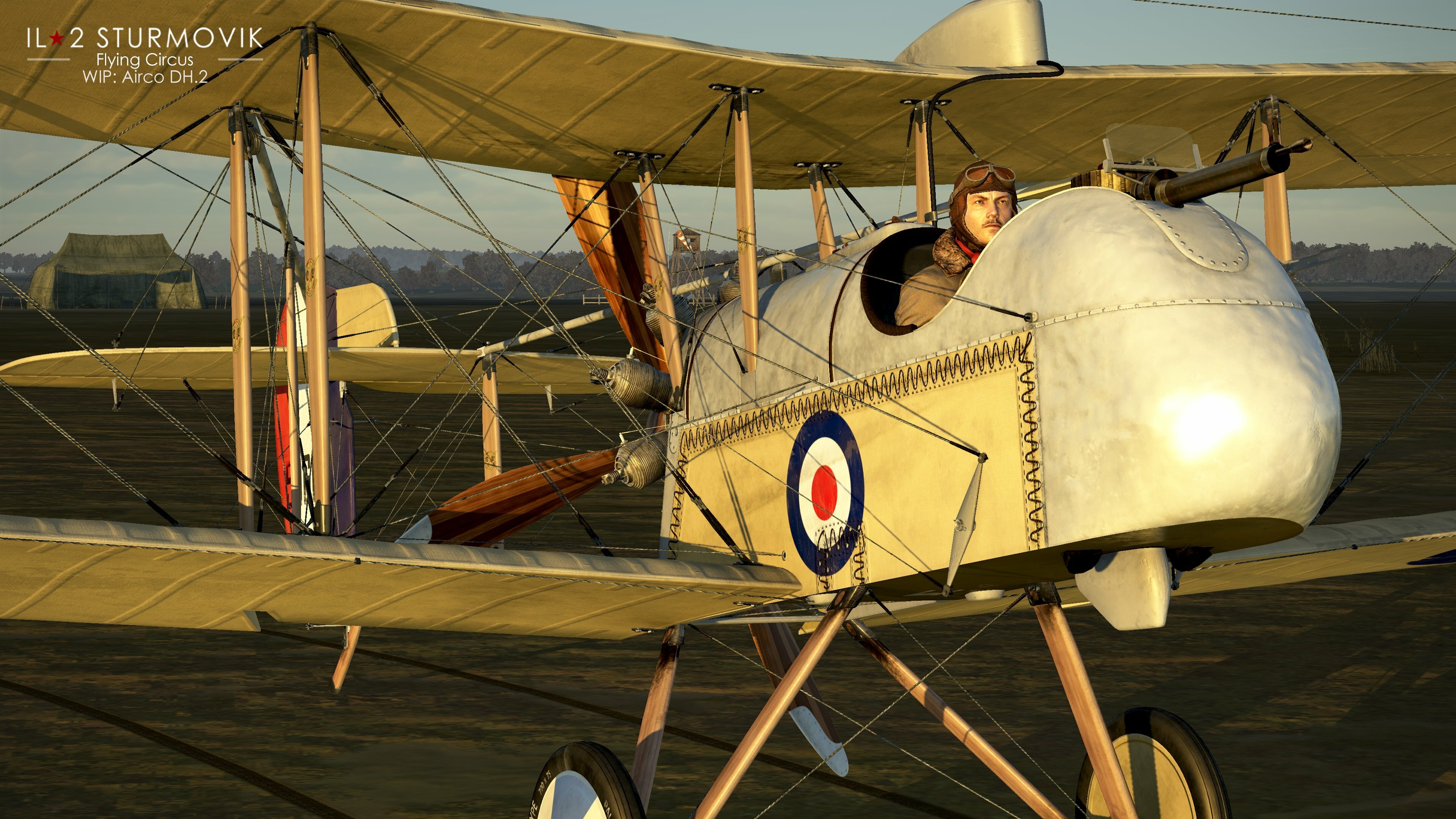
We're glad to report that Flying Circus Vol.IV is scheduled to be released next week.
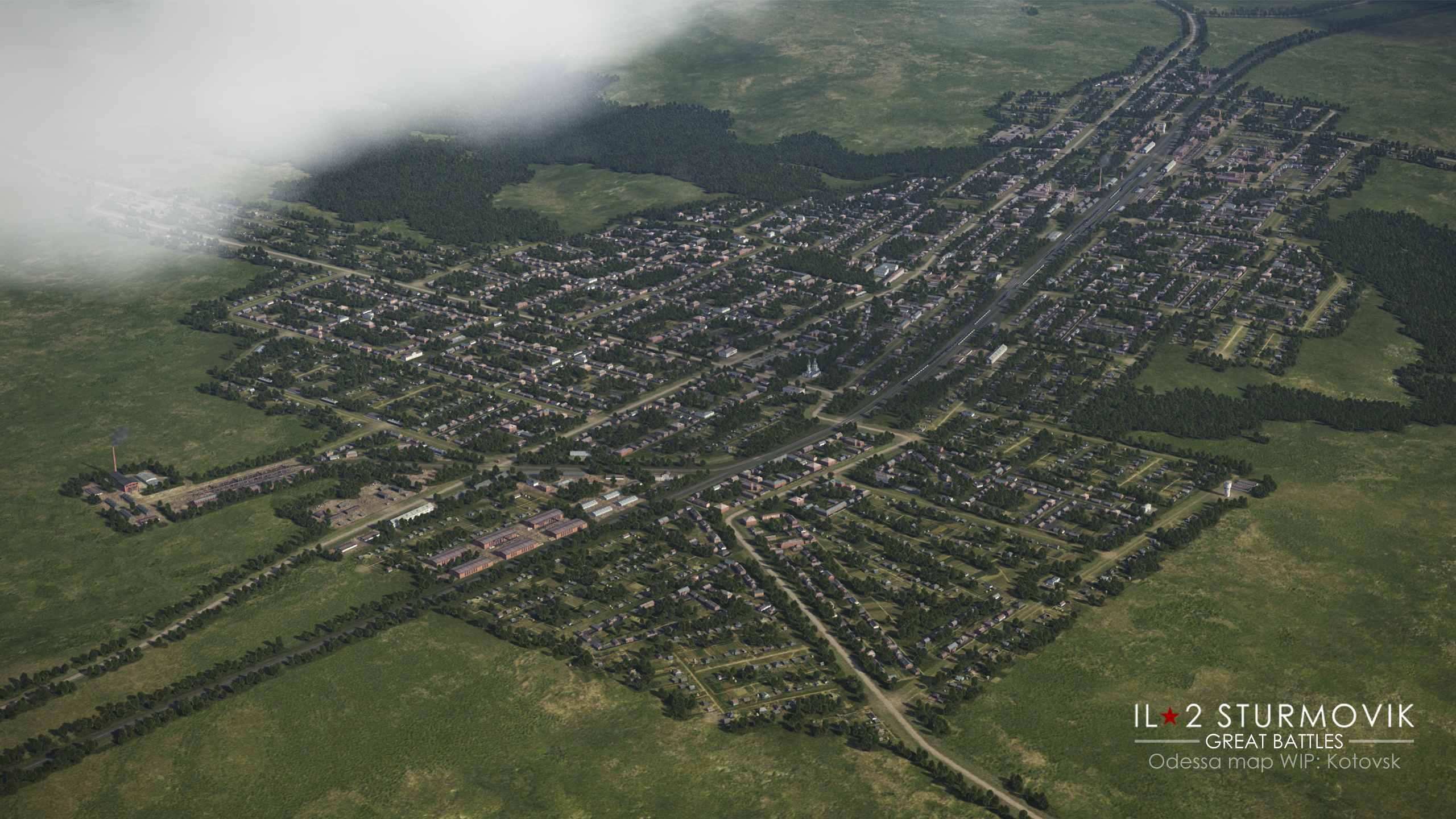
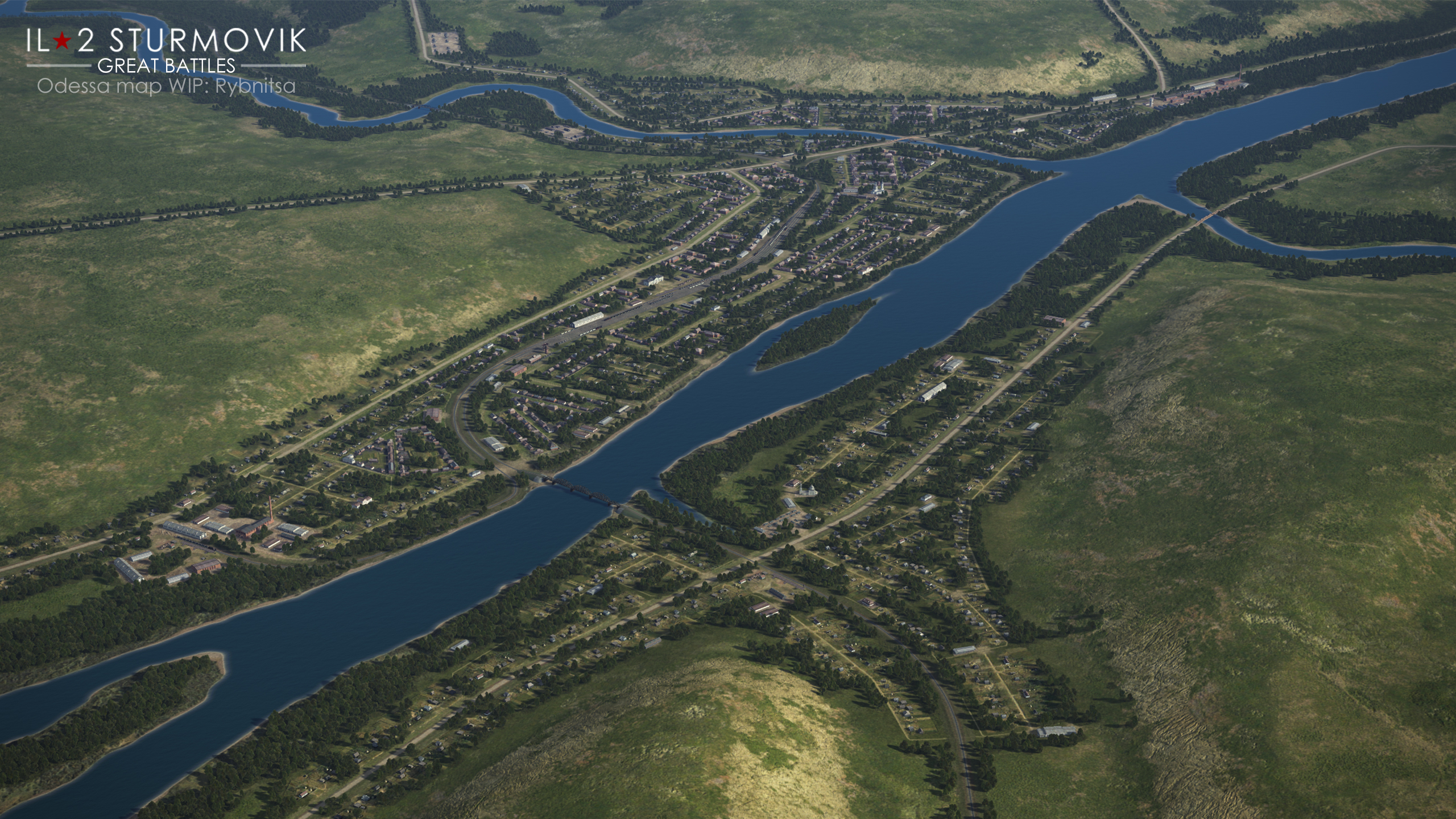
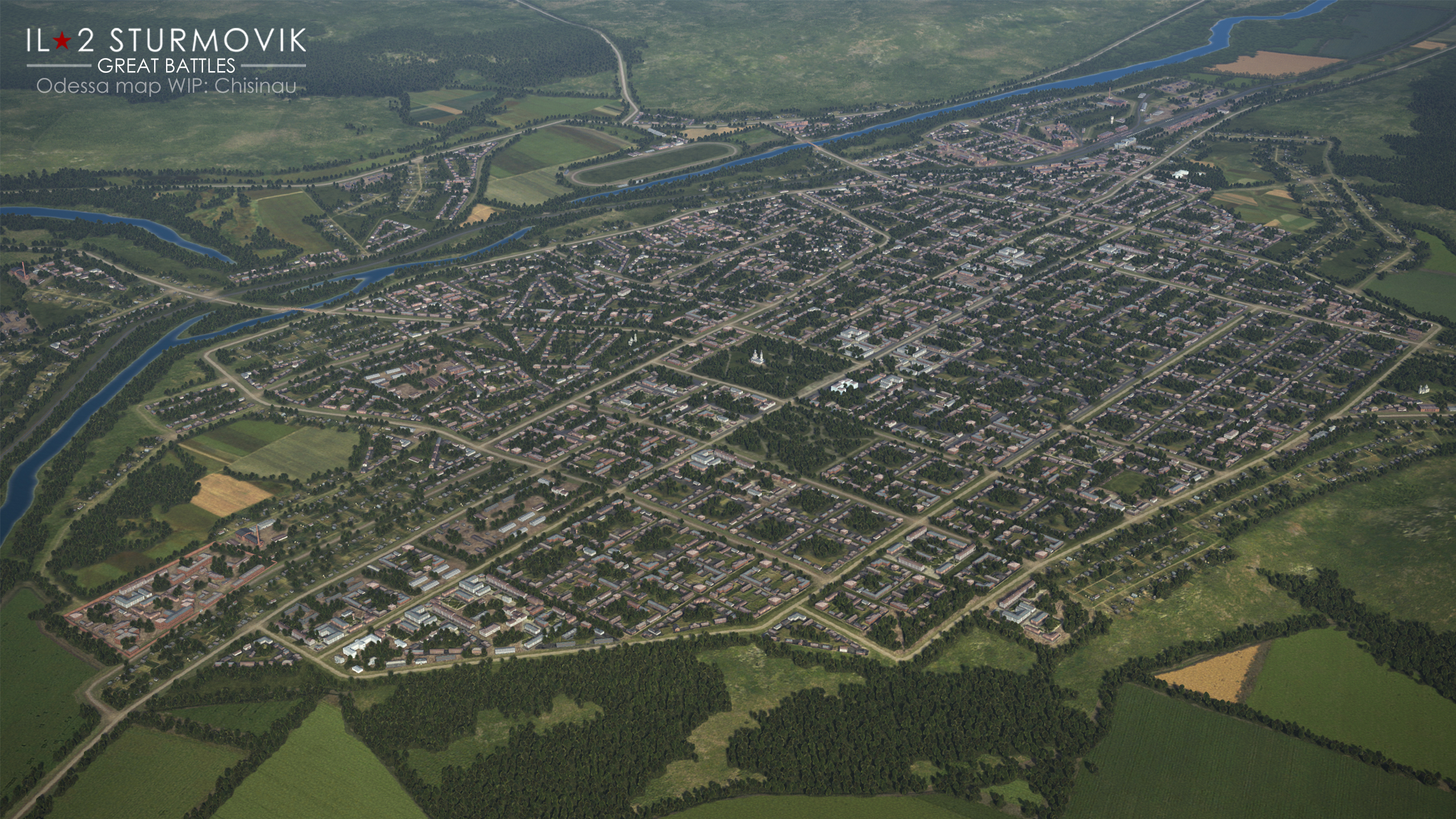
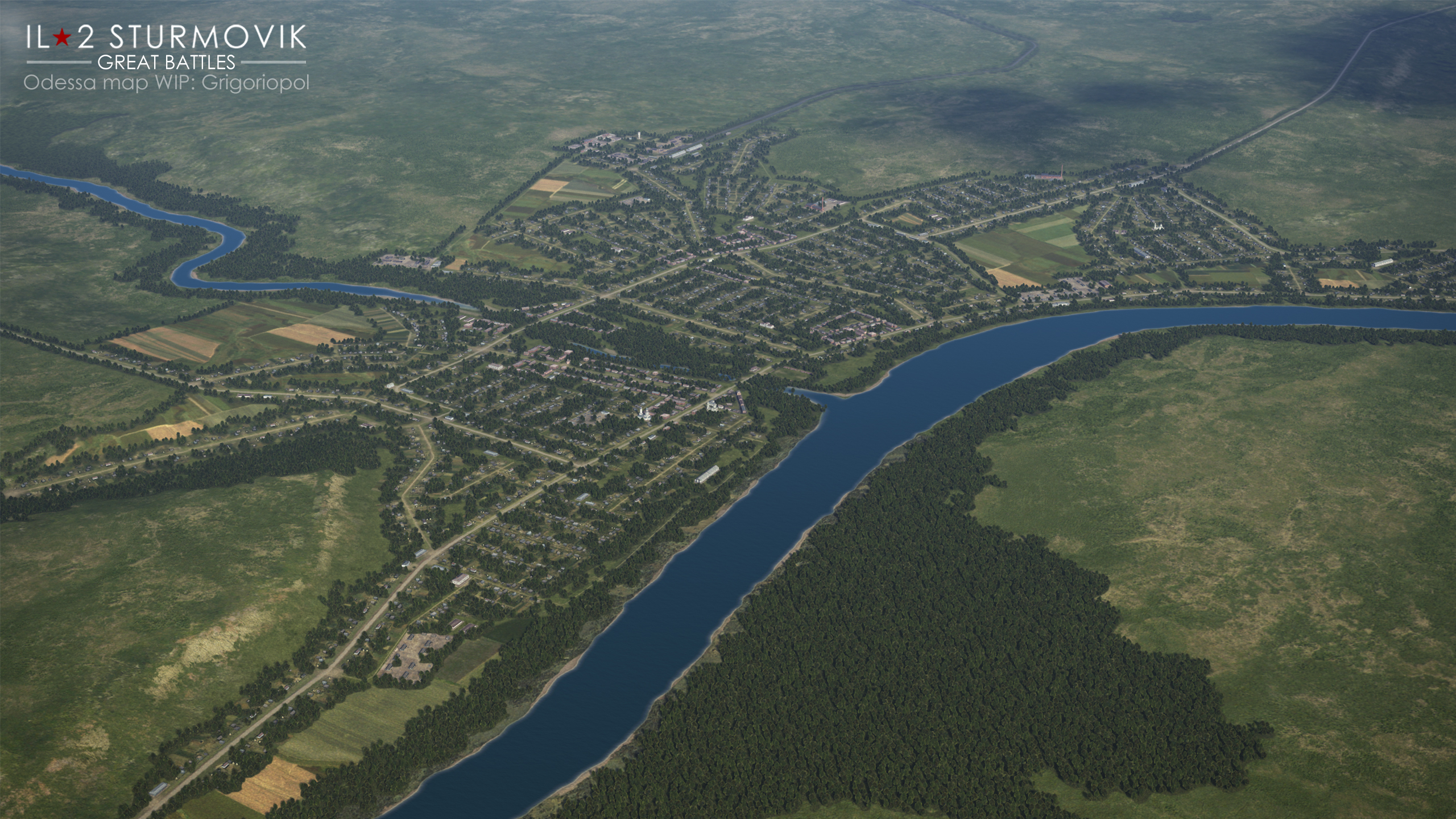
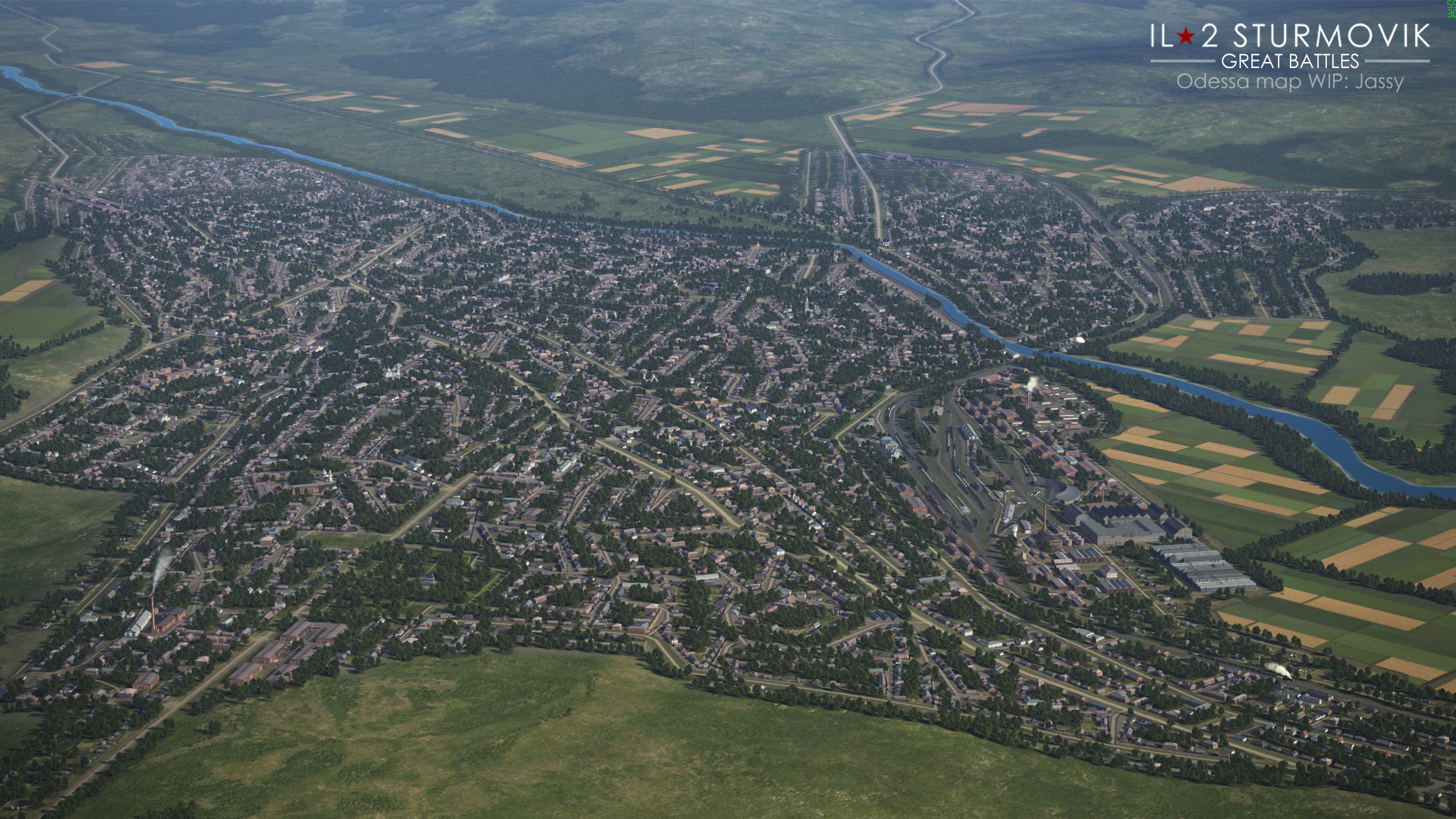
The team working on the Odessa map for the next Great Battles module is also making good progress - more and more settlements are being recreated. On these WIP screenshots, you can see the cities and towns in the area in 1941: Kotovsk, Rybnitsa, Chisinau, Grigoriopol, and Jassy.
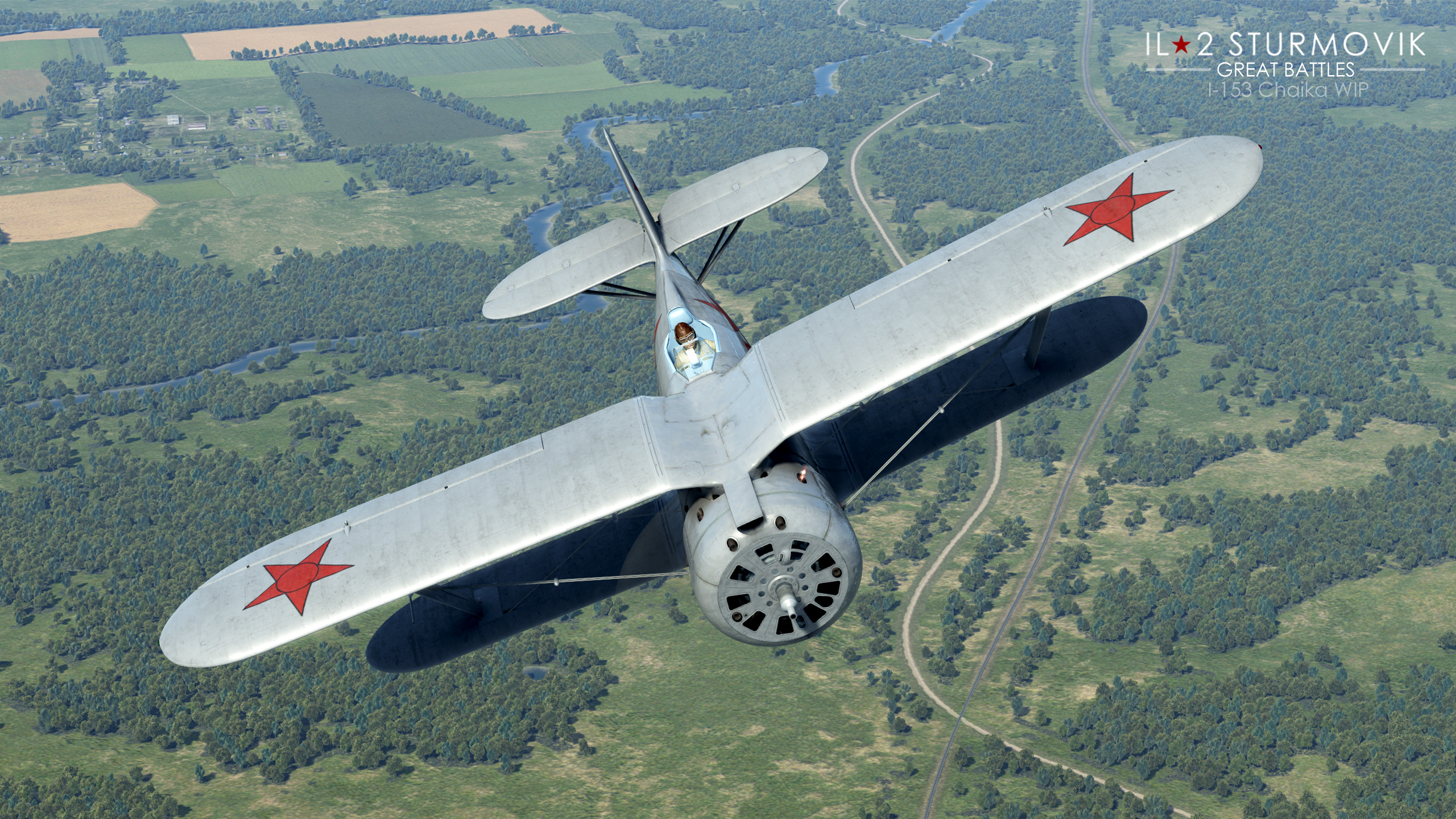
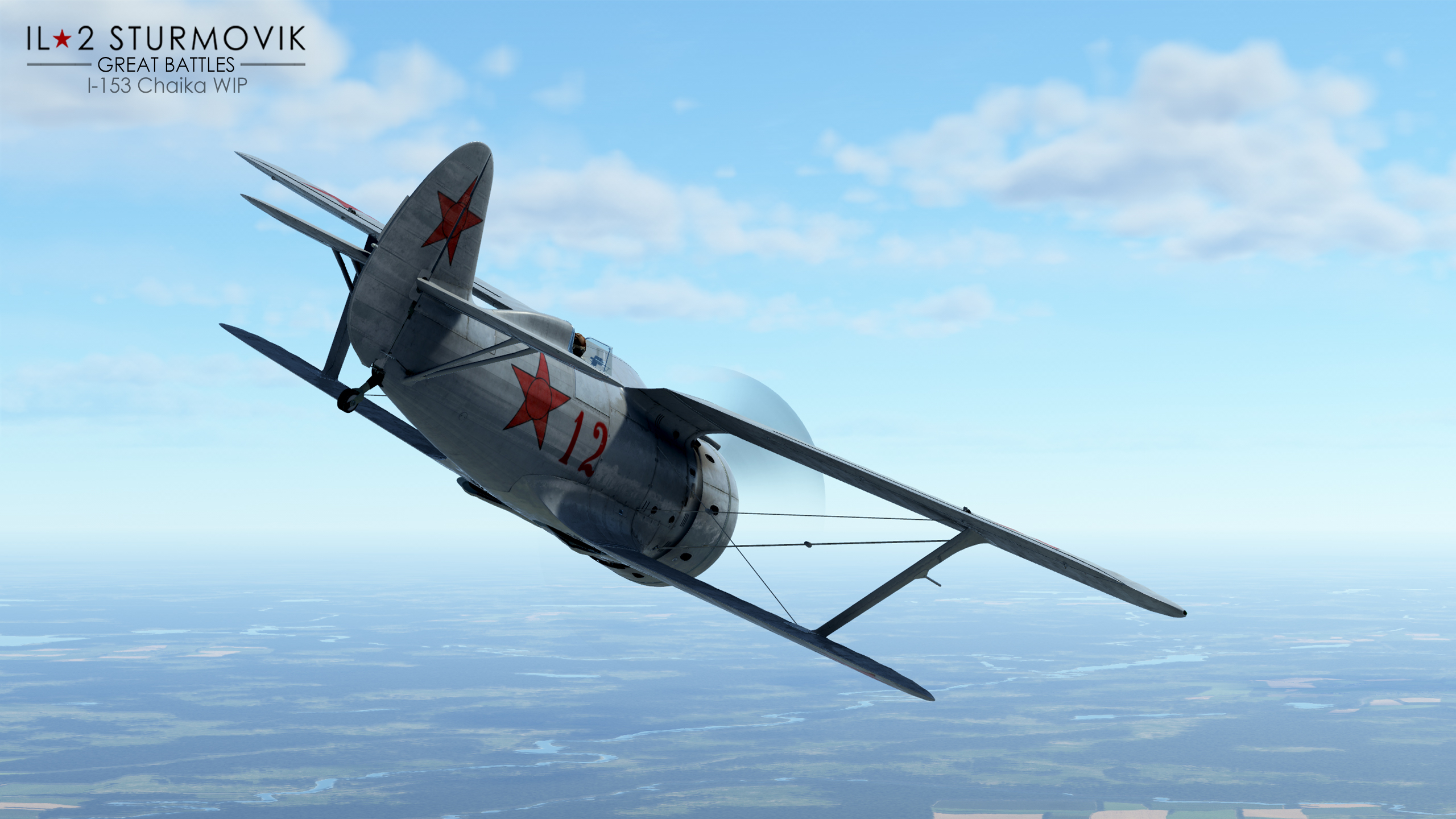
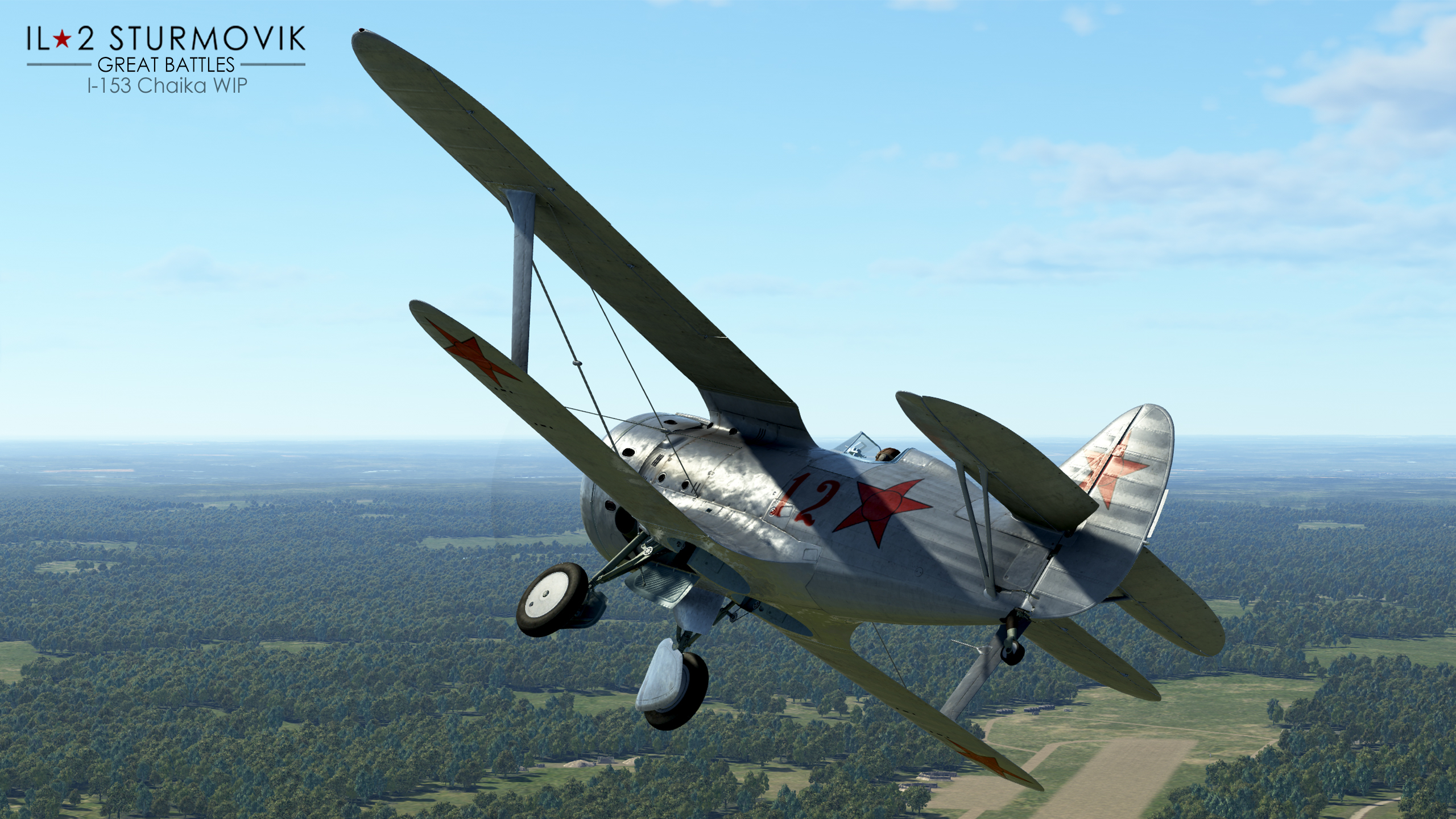
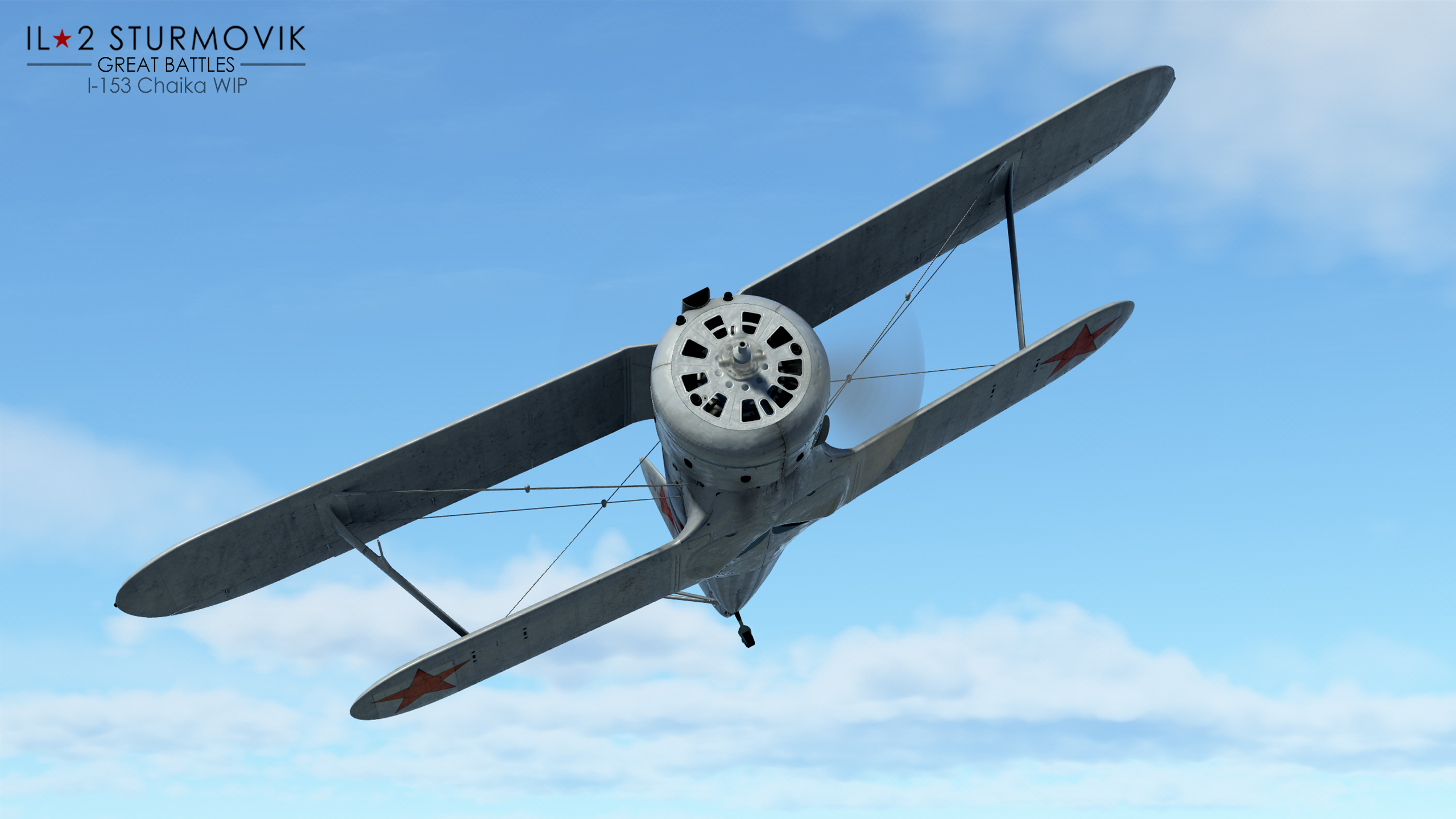
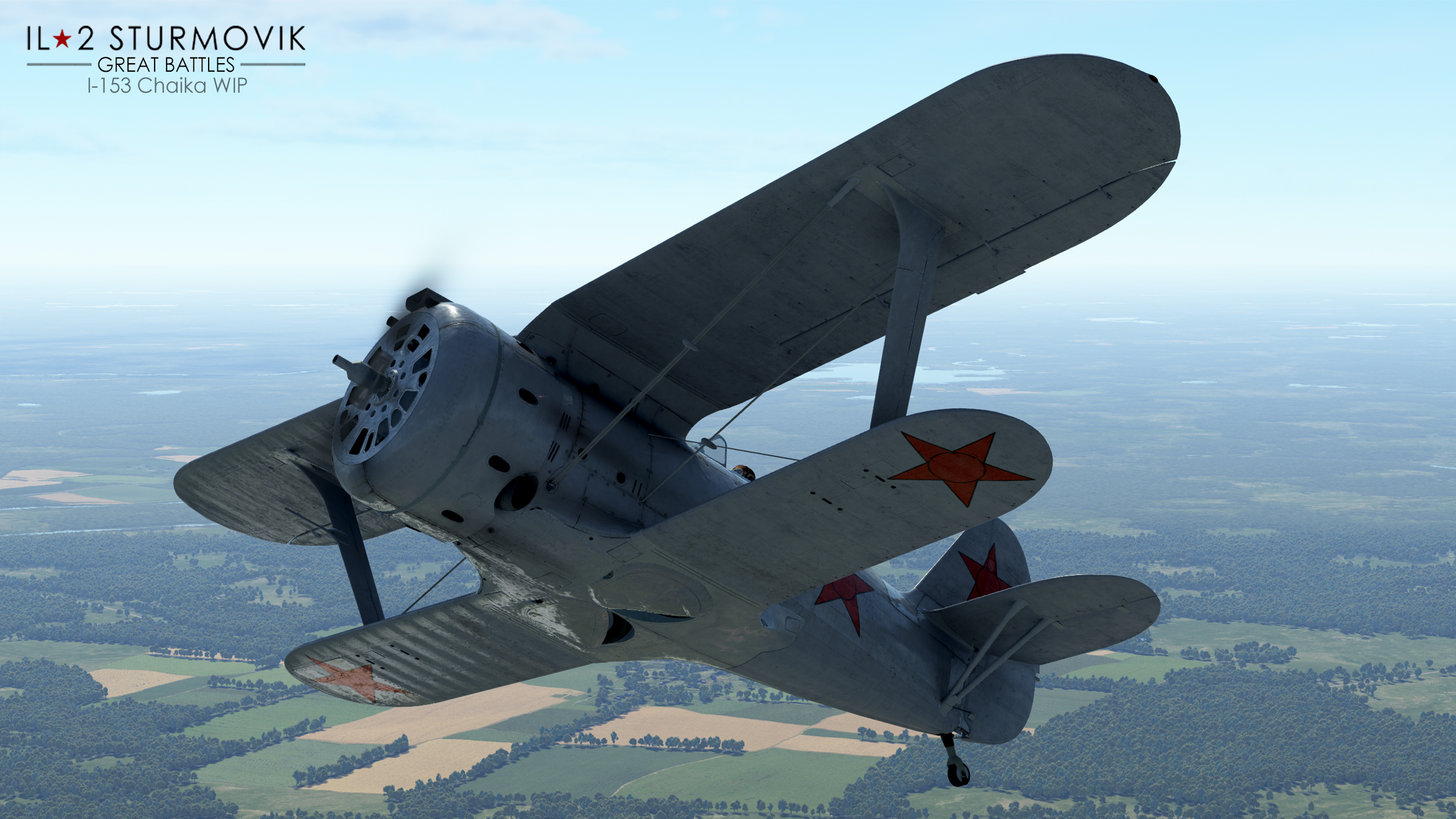
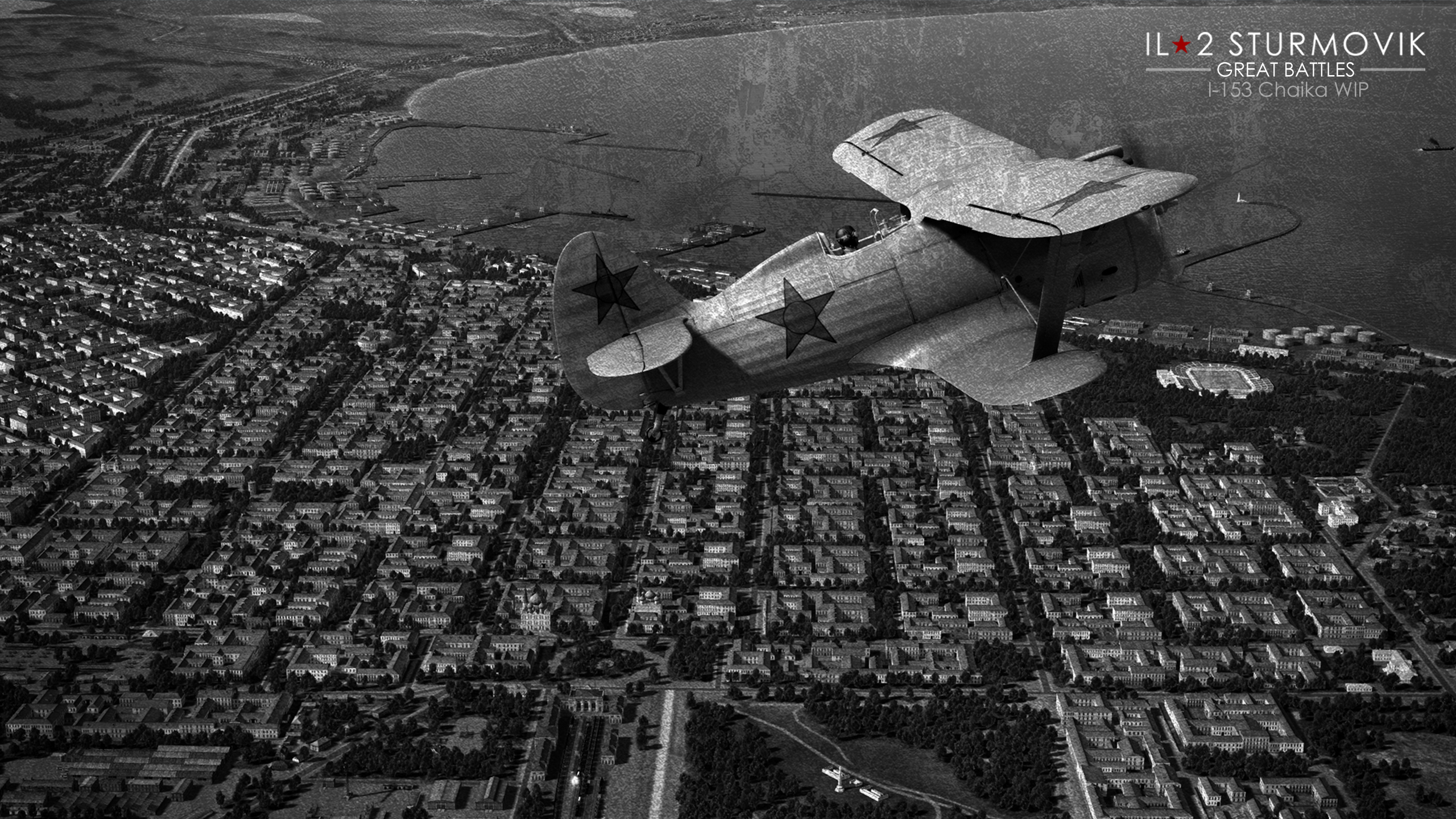
And here are the first in-game shots (WIP since the cockpit is not ready yet) of the aircraft many have been waiting for - the I-153 Chaika, which will be included in the same module.
Dev blog #365
Dear friends,
Today we would like to show you new screenshots of the new module in development. It is planned to include two maps instead of one, Odessa and Karelia, and a number of aircraft suitable for various operations.
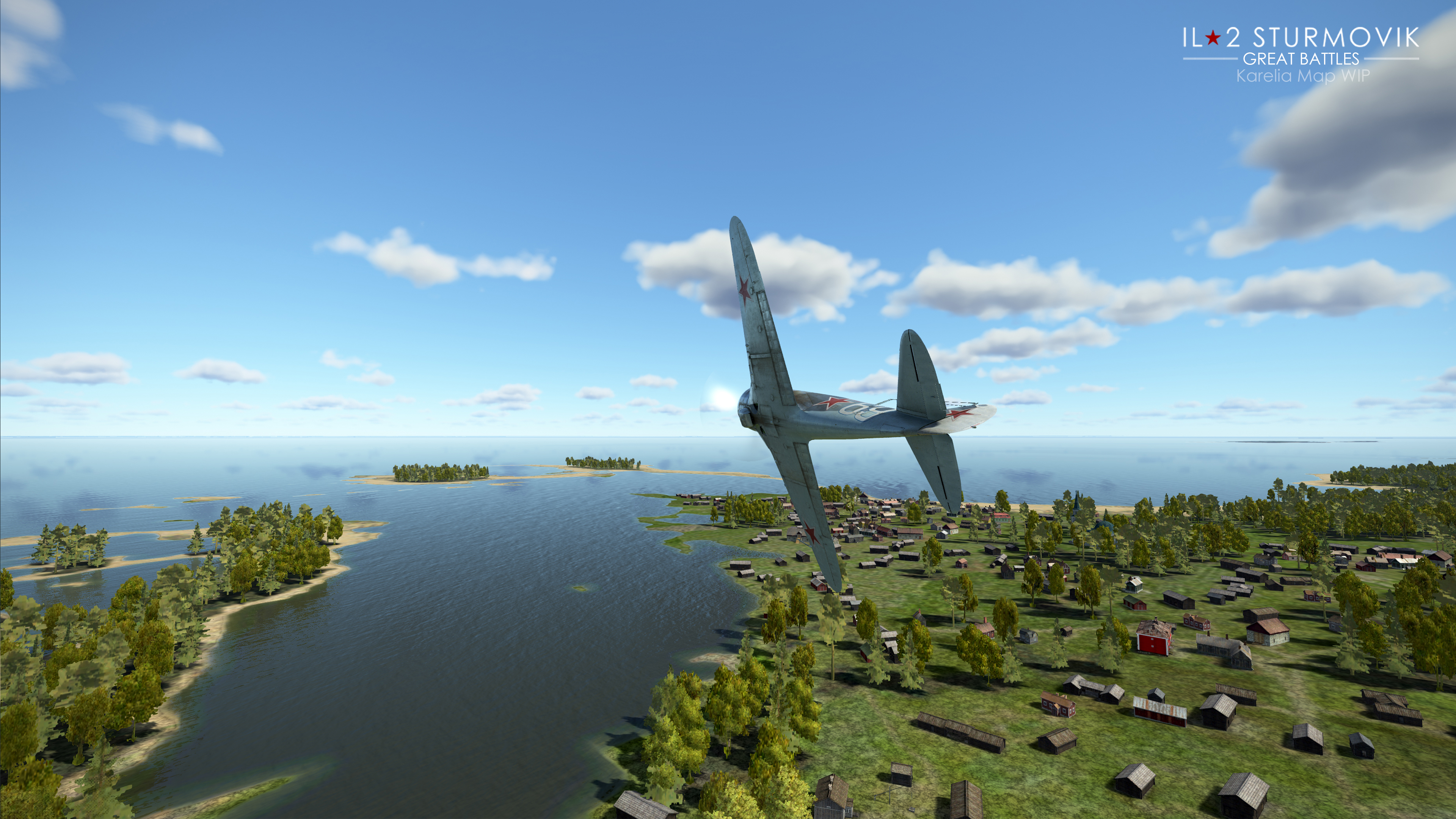
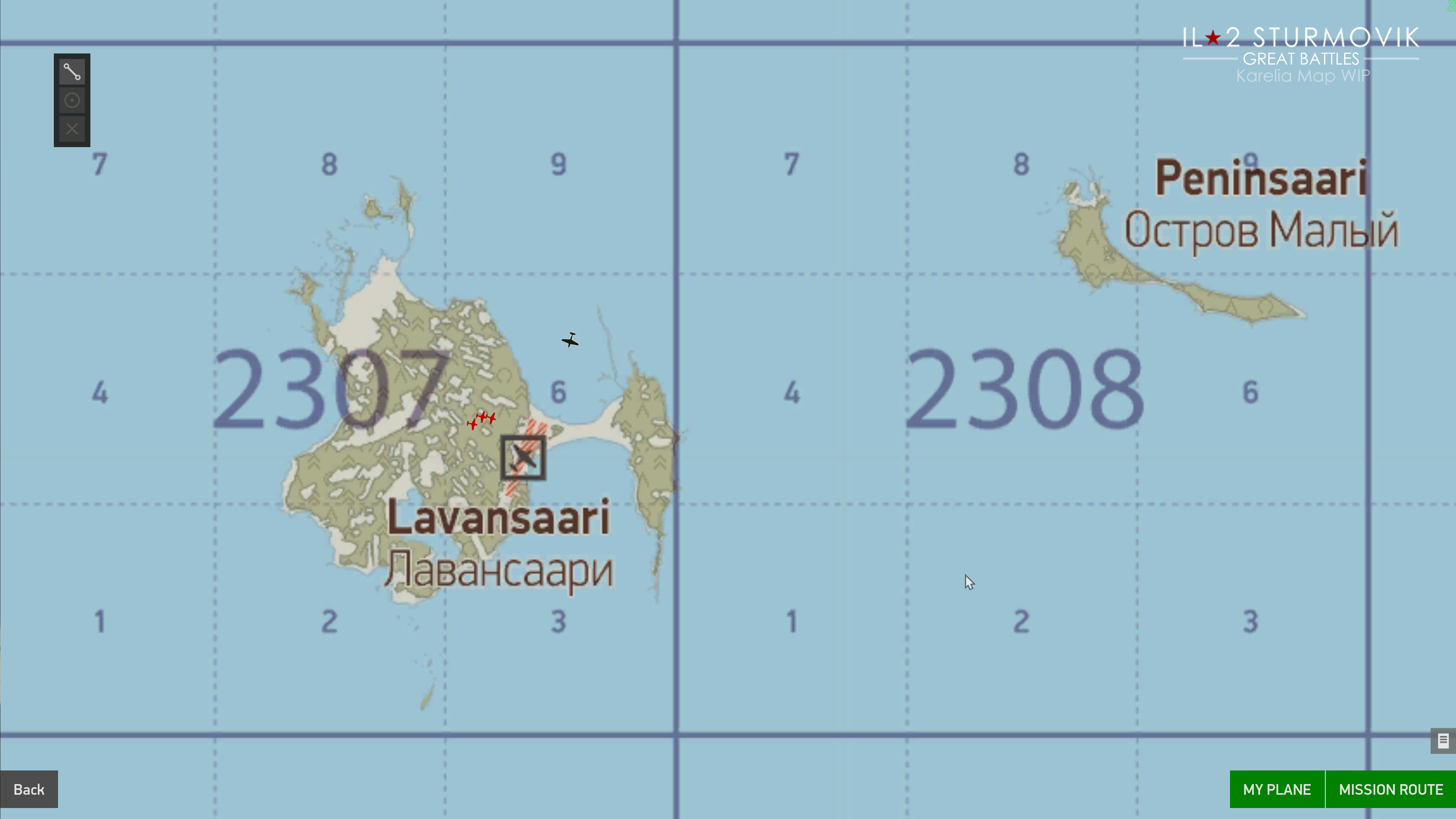
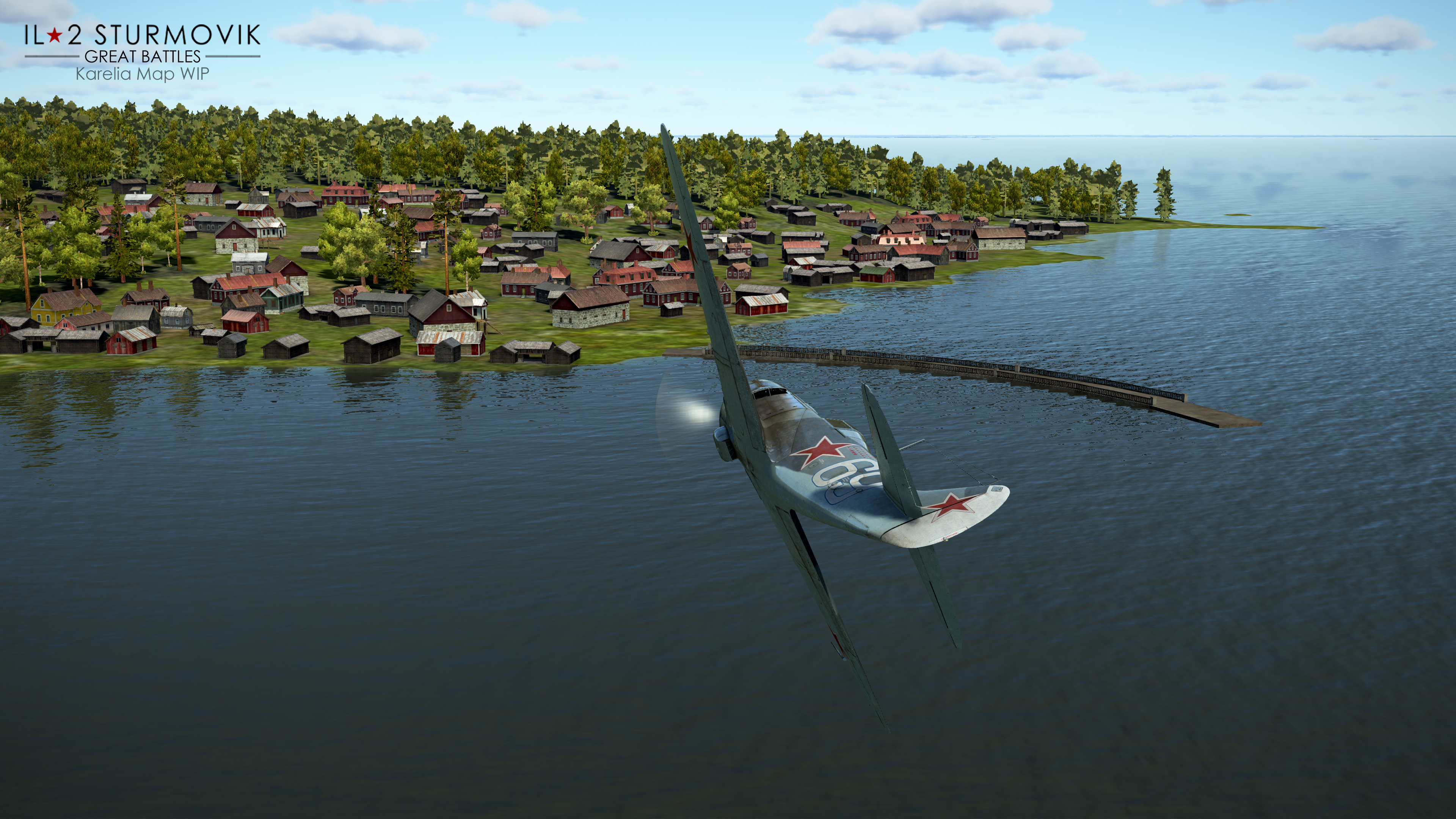
On the Karelia map screenshots you can see the port of Kotka and the islands where the two main airfields of the Soviet Baltic Fleet Air Force (VVS KBF) were located: Lavansaari (asphalt airfield) and Seiskari (grass airfield).
Kotka was one of the most bombed places in Finland because it was an important military port for the German Kriegsmarine and the main base for guarding, defending and repairing the sea minefields that trapped the Soviet Baltic Fleet in Leningrad. As the pressure from the Soviet Navy and Air Force increased in 1943, Kotka was protected by about 30 Bf 109 G-2 Messerschmitt fighters bought from Germany and later by the infamous German cruiser Niobe, which was sunk by the Soviet Air Force in July 1944.
Here's a short video made by the Finnish team KarttaKomppania that is developing the map - it shows an air raid over Kotka Harbor.
Among the new aircraft is the Yak-3 series 9 fighter. The artists are currently working on its textures and cockpit.
The Odessa map covers almost all of modern Moldova and small parts of Ukraine and Romania. Since our May Dev Blog about this map, more than 200 medium and small settlements have been added, the transportation network including all roads, railways and their corresponding bridges is finished. We're currently working on the terrain textures and rebuilding the airfields on the map as historically accurate as possible. More than 100 small settlements in Moldova will be added as well.
In other news: we have updated our user agreement on the website - the Schedule No. 3 has been clarified.
Dev blog #364
Dear Friends,
We would like to let you know that the development of Flying Circus Vol.IV is nearing its end. All of its planes will be released simultaneously in one big update that will be released soon - it is currently in the beta testing phase.
It will bring seven new planes: Airco D.H.2, Albatros D.III, Fokker E.III Eindecker, Roland C.IIa and Sopwith ones - Pup, 1½ Strutter and single-seat Scout 1½ Strutter (Strutter B). In addition to these new aircraft, there are extensive changes to the Western Front WWI map - unlike the new aircraft, these changes will be available to owners of any Flying Circus module. Dozens of new settlements, factories, and airfields are being added, including Paris.
The early World War I Airco D.H.2 and Fokker E.III did not even have a throttle (to reduce engine speed, the pilot had to hold down an ignition switch called a blip switch). In addition, the Airco had a pusher propeller instead of the usual puller propeller to allow forward firing - at the time, this technical task prompted exotic solutions, such as attaching metal deflector wedges to the propeller blades so that projectiles hitting the blades would ricochet. Needless to say, this was a dangerous arrangement that tended to damage the propeller anyway. Sir Geoffrey de Havilland used the development of the "pusher" propeller concept for Airco, where the propeller is located behind the pilot, to get around this problem and make forward firing unobstructed.
After the capture of a French aircraft equipped with metal deflector wedges attached to the propeller blades, Anthony Fokker chose an alternative approach to the problem by creating a gear assembly that connected the shaft of the engine to the trigger of the machine gun. Bullets would be fired only after the propeller blade had cleared the front of the machine gun muzzle and during the gap left as each blade moved in turn around the spinner. Thanks to this invention, the Fokker E.III, the legendary monoplane, was equipped with a synchronizer mechanism, a revolutionary innovation that changed the face of air combat: it was now possible to fire a machine gun through a rotating propeller without damaging it.
This device drastically improved the performance of aircraft in the fighter role: German aircraft dominated the skies until early 1916. This period was known as the "Fokker Scourge." At the same time, biplanes did not have ailerons - roll control was achieved by physically deforming the entire surface of the wings ("wing warping"). This unreliable and ineffective function was replaced by ailerons in later designs.
These exotic features make flying one of them a unique experience even for a seasoned virtual pilot.
Other planes in the list are much more like the planes we are used to - aircraft innovation happened really fast in this era. They are interesting in their own way. For example, the high production rate of the Albatros D.III (1346 built in total) resulted in numerical superiority for German aviation in April 1917, known as the "Bloody April", and its flight characteristics allowed it to remain in frontline service until the fall of 1918 - a very long time for an era when a new design could change the situation in the air very quickly.
The ambition of engineer Tantzen, who designed the Roland C.II, was to present a drastically cleaned-up airframe, eliminating as much as possible the "built-in" drag of the inter-plane, center section strut arrangements, and associated bracing. The streamlined fuselage design and thin wing profile resulted in great performance for its time. It was one of the fastest planes at the front, able to outrun any enemy fighter, but due to its wide oval fuselage and aft pilot position, it was a very unforgiving plane to land: very few pilots who flew this plane did not crash or damage it during landing. Because of its performance, it was often used as a strategic reconnaissance aircraft, capable of flying deep into enemy territory - Allied aircraft couldn't catch it. Later, when the Allies introduced faster fighters, the Rolands were used in close support and reconnaissance roles and were slowly withdrawn from front-line units by June 1917.
The Sopwith 1½ Strutter took its name from the arrangement of the center section of the upper wing - "one and a half" (long and short) pairs of struts supporting the upper wing. It was the first true two-seater fighter to enter service and, in fact, the first British aircraft armed with a synchronized machine gun. The B variant did not have an observer and turret-mounted machine gun - four 65 lb H.E.R.L. bombs were carried in the second cockpit and dropped through the opening below.
The Sopwith Pup was officially designated the 'Sopwith Scout', but soon became nicknamed the 'Pup' due to its similarity to the 1½ Strutter (but with smaller proportions). The Pup nickname was never officially recognized, but it started the tradition of naming all later Sopwith aircraft after a bird or animal. Manfred von Richthofen, after encountering the Pup in combat, remarked, "We saw at once that the enemy plane was superior to ours." The excellent combination of the Pup's light weight and large wing area allowed British pilots to outperform the enemy in dogfights. British ace James McCudden remarked, "It was so extremely light and well surfaced that with a little practice, you could almost land it on a tennis court." As a result, the Pup became the first aircraft to land aboard a moving ship, HMS Furious, on August 2, 1917.
In addition to the WWI additions and improvements, there will be a lot of other changes from the career mode including new mission types to the correction of certain aircraft such as the Tempest. We hope to release the new huge update as soon as possible, in a few weeks - please stay tuned!
Patch 5.204b
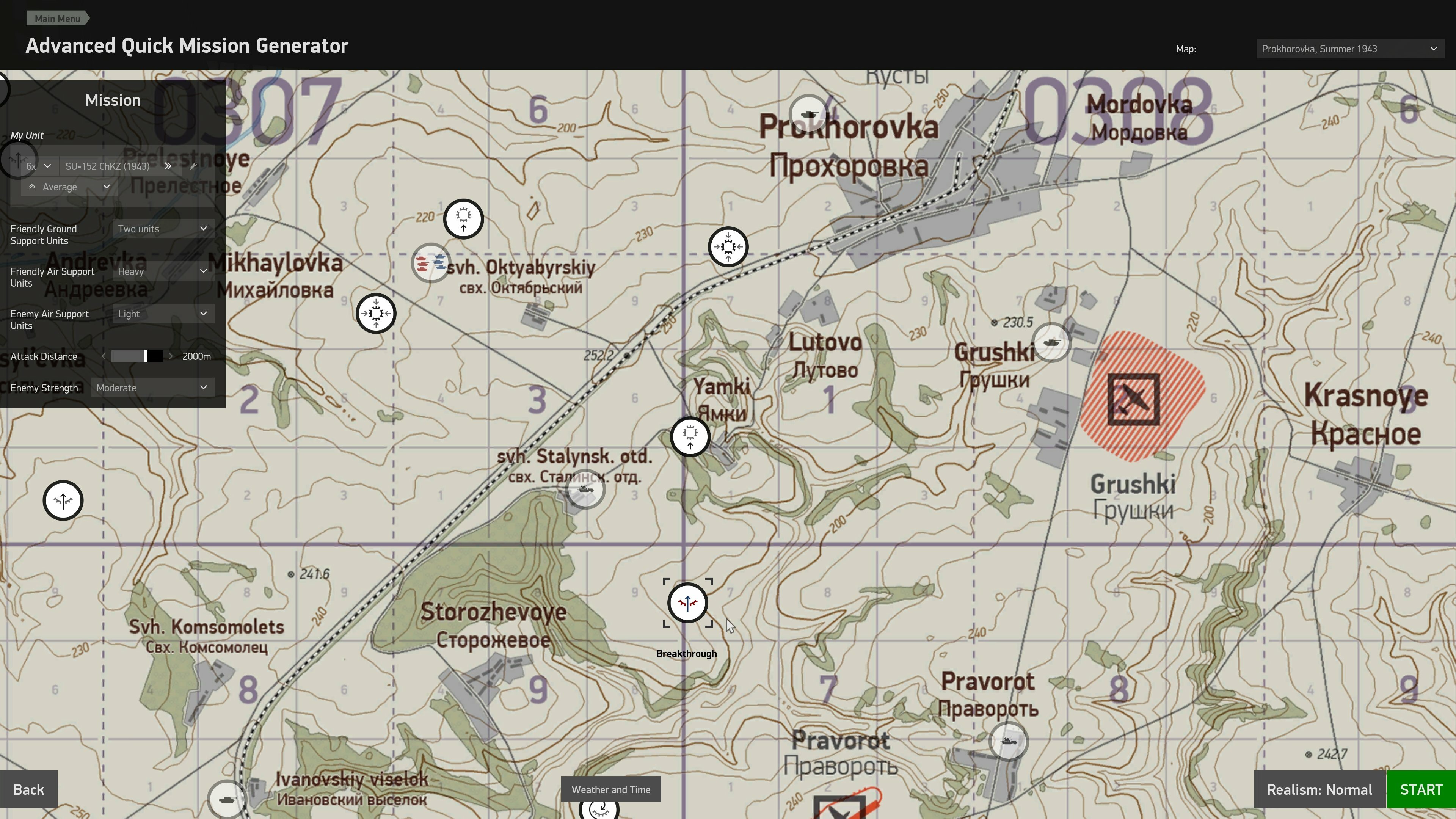
This small patch corrects Ta 152 attitude indicator (artificial horizon) and restores the advanced quick missions functionality for ground vehicles on Prokhorovka map.
Update 5.204
Dear friends,
We're glad to present you with another update of the sim - 5.204. It brings the new Collector Plane, the very late war Ta 152 H-1. This unique machine was a pinnacle of German piston engine technology of its time, designed to be able to engage Allied bomber formations at very high altitudes and prevail over Mustangs and Spitfires. You could say it was over-engineered with its three-stage (!) supercharger and two simultaneous boost systems (MW-50 water-methanol for altitudes up to 10 km and GM-1 nitrous oxide for 11+ km). Yes, this is not a typo - this piston-engine aircraft could not only climb above the modern airliners (its ceiling was 13 km), but also be able to dogfight there.
Like most late-war German war machines, there were too few of them to make a difference. By the spring of 1945, when it was too late to intercept Allied bomber formations - Allied ground forces were advancing into the Reich from both the east and the west - only about two dozen aircraft were combat-ready. The few planes were used in the usual fighter roles and, ironically, much closer to the ground than they were built for - covering the takeoffs and landings of the new jet-powered aircraft (see below). This is similar to the story of the Allied P-47 Thunderbolts, which were designed for high-altitude combat and had special systems for it, but ended up spending a good part of their flying time close to the ground because they proved to be the best ground attack fighters of the US Air Army Air Forces. The Ta 152 Pilot's Career mode is only available on the Rhineland map (I./JG 11 since March 1st, 1945), but for player convenience, it is also available in the Scenario Quick Mission (AQM) mode on the Normandy map, and of course on every map in the game in simple Quick Missions.
There is a new mission type available for the late war German Career Mode - Jet Airfield Cover, where you should prevent the Allied fighters from shooting down jet aircraft near the airfields where they were stationed. New jet aircraft such as the Me 262 and the Arado 234 were hunted by the Allies when they were most vulnerable - during takeoff, when their speed was still low, or during landing, when their speed was already low. One such episode is shown in our promo video.
The Jet Airfield Cover mission type is available not only to Ta 152, but also the Fw 190 D-9 and several Bf 109 squadrons that were flying it historically.
Another important change is the increase of the maximum amount of buttons and axes on a controller from 64 to 128 - modern joystick and throttle combinations could exceed the old limit when connected to one another. This shouldn't be a problem anymore.
Last but not least - please check out the new section on our website, Museum. We have been preparing it for some time, here you can find the historical information about the aircraft and ground vehicles modeled in our sim.
5.204 Change Log:
Ta 152 H-1 Collector Plane has been released;
Maximum number of active buttons increased from 64 to 128 buttons per device;
Rhineland Career: a new Jet Airfield Cover mission type is available for Fw 190 D-9, Ta 152 and some
Bf 109 E-7: Romanian Air Force color scheme added;
Fixed a problem with assigning a command to the 64th button of a controller. Please note that
previously added command assignments to this key will need to be reassigned;
Career and AQM: Fixed landing at High Halden airfield from east to west;
Career and AQM: fixed taxiing at Dortmund airfield;
Kuban Career: fixed action point generation at wrong coordinates (a corner of the map);
Stalingrad Career: removed missions of gunboat artillery spotting in winter;
Career: fixed a bug where cover fighters mentioned in the mission briefing failed to arrive;
Career: fixed a bug in Bomb Artillery Position missions when the attacking planes failed to drop the bombs;
Fixed a randomly occurring bug with technochat being disabled in multiplayer when one of the players logs out of the server;
Improved MK 108 cannon firing sound on external views.
Developer Diary #363
Dear Friends,
Today we'd like to start this dev blog in an unusual way - with a retrospective. Over the years of work on IL-2 Great Battles we have created many aircraft, and for each of them we could write a whole article about how we searched for information, solved contradictions in documentation and drawings, built a visual model and designed a physical model and FM. But sometimes you can just show it - as they say, sometimes a picture is worth a thousand words.
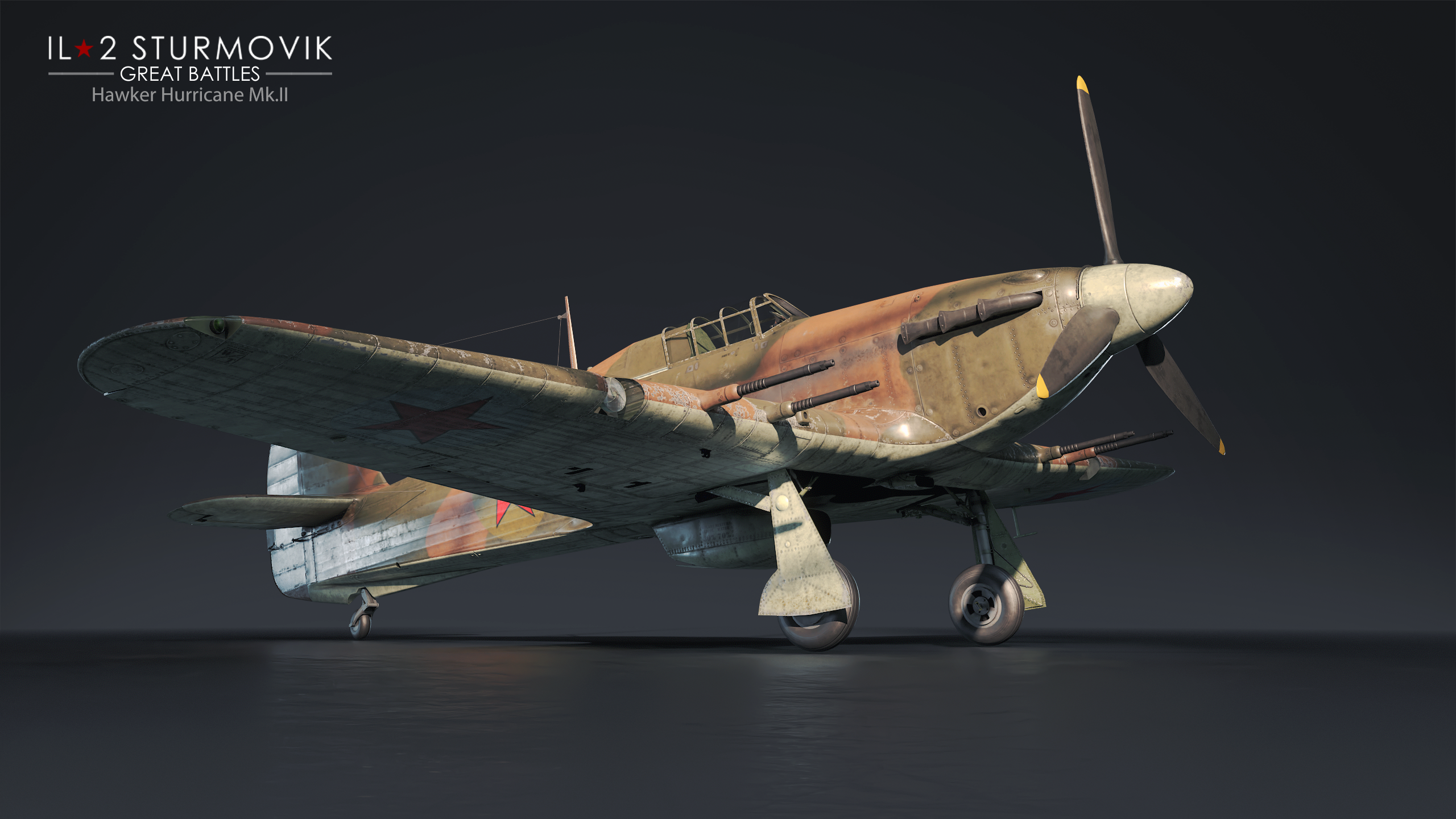
With studio-quality lighting, rather than a real-time renderer, you can really see how much work and love went into recreating each of our aircraft. The Hawker Hurricane Mk.II, a collector's aircraft we built three and a half years ago, is still a model of excellence in both visual modeling and physical model perfection.
As for the latest news, the new update 5.204 will be released soon, in two weeks; its testing is almost finished. It will include the new Ta 152 H-1 Collector Plane from the end of the war, which we described in detail in Dev Blog #358, as well as a number of important improvements and changes.
Modern controllers have many buttons and encoders, and their total number may exceed the limit of 64 buttons or axes if multiple devices are connected at the same time. Therefore, to support such configurations, the maximum number of buttons supported by the game will be increased to 128.
Several bugs in the career mode will also be fixed, such as friendly aircraft attacking the player group, and a new type of combat sortie will be added for the Luftwaffe on the Western Front - covering the takeoff and landing of the jet aircraft. Since Allied piston fighters usually could not catch up with them in the air, they used the tactic of shooting them down on takeoff when they had not yet gained much speed, or on landing when they had already dropped it. To protect the jet-powered Me 262s and Ar 234s from such attacks, they were covered near the airfield by German piston fighters, including Ta 152s.
Developer Diary #362
Dear friends,
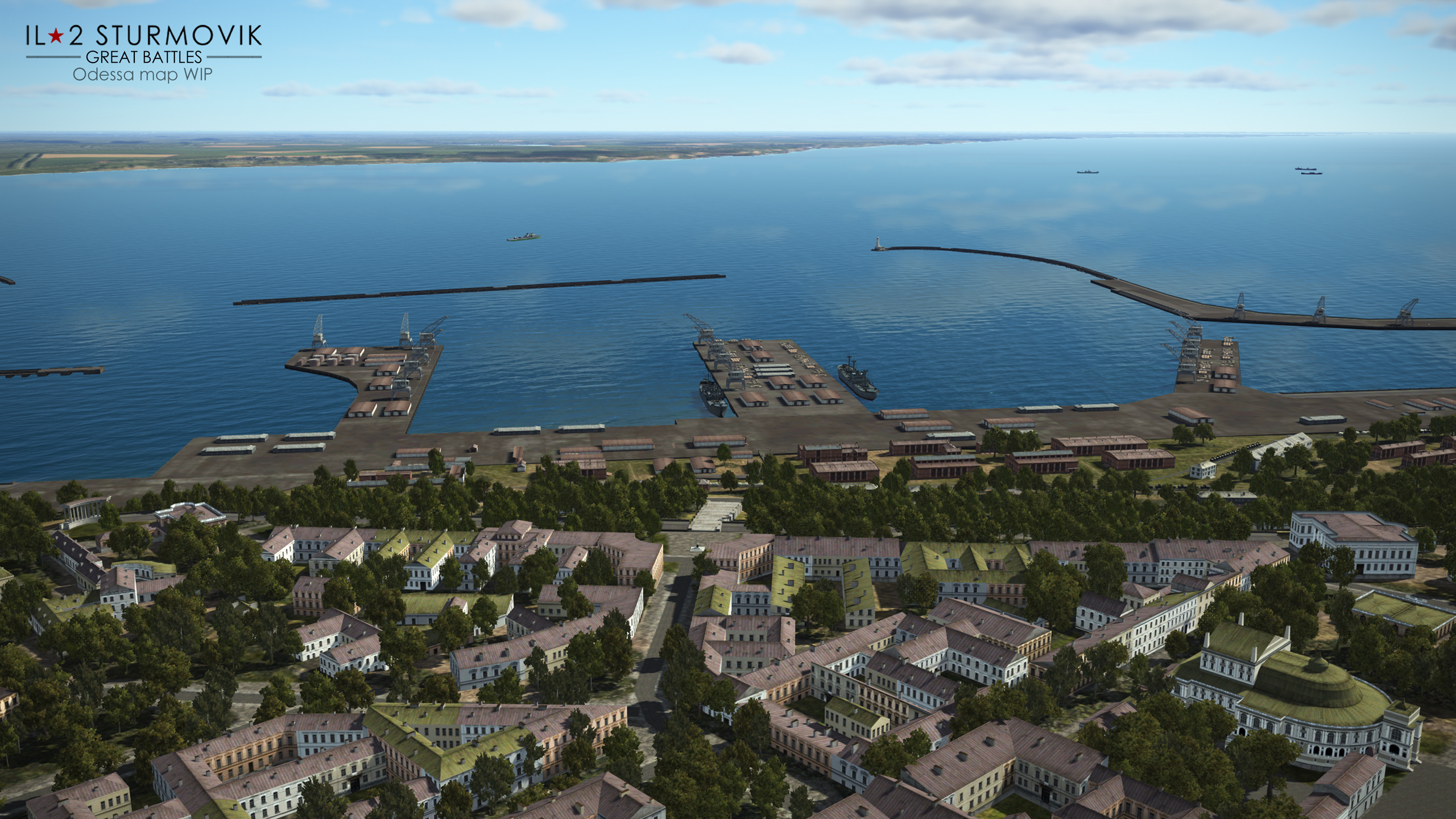
Today we would like to show you the first screenshots of the new map under development - Odessa. In addition to the city itself, it includes almost all of modern Moldova and small parts of Ukraine and Romania. At the moment, about half of the work is done. It's a big task because more than 400 settlements and at least 30 airfields are planned. Odessa, Tiraspol, Beltsy, Bolgrad, and Kilia are finished, while work is still going on with Chisinau, Kotovsk, Izmail, Voznesensk, Rybnitsa, Galati, and others.
Odessa in the 1940s is modeled with a good level of accuracy; it is correct to a point where one can learn its layout and landmarks: in the city there are the famous monument to the Duke, the cannon of the frigate "Tiger" monument, the opera house, the railway station, Kulikovo Field, Potemkin Stairs, "Chernomorets" stadium, the prison building, the artillery school, cathedrals, and monasteries, the old Vorontsov lighthouse (it was blown up during the war and rebuilt in the early 1950s) and others.
MULTIPLAYER SHORT VIDEO
DIGITAL IMMORTALITY
We would like to repeat our appeal to contact us if your ancestors fought in the war in aircraft and ground vehicles you can control in our sim - if you have the photos of your loved ones taken during the war in your family archives, we can add them to the virtual cockpits as default photos instead of the generic ones, with your permission.
The idea is to have a photo that the pilot or tanker would have placed there himself, so a photo of his girlfriend, wife, children, or parents is needed, not a picture of him. For example, this is what the family photo of Squadron Leader Jack Collins looks like in the cockpit of the Typhoon, as shared by his son (the Growling Sidewinder video tells more of his story).
Patch 5.203b
Fixed missing roads on the Stalingrad map;
Pilot Career mode: fixed bug in transport escort missions on the Moscow map;
Pilot Career Mode: reduced the time required to cover transport planes during their landing at a forward airfield;
Pilot Career mode: ground attack duration for AI pilots increased from 2-4 to 4-6 minutes (10-12 minutes on IL-2s due to their large payloads);
Pilot Career mode: I-16 fighters will not be assigned to intercept missions and bomber escort missions because of their low maximum speed;
Pilot Career Mode: Bofors anti-aircraft guns can no longer appear on German side in bomber escort missions;
To reduce the time spent over the target, Il-2 AI pilots now fire all 82 mm rockets and up to four 132 mm rockets in one salvo, and use up to four FAB-50s and two FAB-100s in one bombing run;
WWI AQM mode: enemy column attack scenario fixed;
One of the Ar 234 bombs won't be dropped together with the launch boosters;
Corrected IAR-80A propeller rotation direction;
Corrected flap release angle in the basic IAR 80-B;
FOCOASE lamp on IAR-80A and B won't light up when power is off;
IAR 80-M and IAR 80/81-C canopy can be opened at up to 650 km/h speeds (it was pneumatically operated);
Corrected the IAR engine modes naming in its description (combat corrected to nominal);
Typhoon Mk.Ib is correctly counted in the statistics;
Made minor improvements to the ground forces AQM mode;
Corrected the place of spent casings ejection of Li-2 front ShKAS MG.
Update 5.203
Dear friends,
We have released a new update 5.203, which includes a new ground combat generator mode for Tank Crew owners, which we told you about in one of the previous editions of the Dev Blog, new mission types for the scenario generator and career mode, updated descriptions of all WWII aircraft, added popular campaigns created by enthusiasts AEthelraedUnraed and Juri_JS, and much more (the full list of changes is below).
One of the most important innovations in this version is the introduction of a new dynamic battlefield system in the pilot's career mode to create the most interesting and varied scenarios and to optimize the CPU load (usually, the graphics card's performance limits the saturation of the battleground to a lesser extent because the objects are far apart and they are not rendered with high detail all at once). Since this system directly affects your gaming experience, let's learn more about it.
DYNAMIC RESOURCE ALLOCATION SYSTEM
The new system now works in WWII career mode escort scenarios, where the player's fighter escorts AI-controlled attack, bomber, or transport planes - there are several unique variations, from escorting Ju-52s flying out of the Stalingrad cauldron, or bombers on their way to V-1 launchers in Normandy, to escorting transports with paratroopers during Operation Varsity at the end of the war.
It is based on a dynamic resource accounting mechanism. Both individual combat vehicles and groups of them are assigned a certain performance cost - for example, a truck requires very few CPU resources, while a group of heavy aircraft requires many - and request permission to appear in the game world from the resource controller. The resource controller first checks the amount of resources required, and then, in the case of an aircraft group, the probability of its appearance. The only exceptions to this general rule are such key elements of the scenario as the player's unit, its cover or other groups covered by it, and a group of the player's air targets - they will appear in the mission anyway.
If a unit or group is destroyed, crash-landed, just landed, or otherwise removed from the game world, the controller will use the freed-up resources to create a new group. A bonus effect of introducing this mechanism is that it virtually eliminates the problem of many objects appearing at the same time for ground vehicles, which can cause a noticeable "stutter".
Early warning posts
Enemy interceptors appear in the air for a reason - they are summoned by observation posts located along the front and rear lines. They are organized into three large interception zones along the front line - each zone is assigned its own group of interceptors. The posts request the appearance of interceptor groups from the Resource Controller and then direct them to the group of aircraft to be intercepted: interceptors can either appear in the air at a sufficient distance or take off from their home airfield. In the current implementation, Airborne Warning Posts do not initiate intercepts of single aircraft or groups of fighters that don't cover strike aircraft.
Additional Events
When generating the next day in Pilot Career mode, additional events are selected that may occur on the player's route that day if a friendly aircraft is passing nearby. For example, there could be a pair of enemy fighters on a free hunt or a group of friendly fighters, an enemy reconnaissance plane at high altitude, a group of transport planes flying to the rear, an airfield cover flight of 4 fighters, and so on. They will not suddenly disappear into nowhere - if you follow them, they will fly their full route and land on their airfield, and to save resources, if they are far enough away from enemy planes or the player's plane, they will be removed.
Other changes
Player squadron aircraft are limited to two flights of 4 aircraft each and the second flight if covers the first by default. Large-caliber anti-aircraft guns will stop firing when friendly aircraft are nearby and will not distinguish the player's aircraft from other available targets. Ground vehicle firing modes have been optimized (they pause between bursts of fire).
Effect of career settings on performance
The "Air Forces and AAA" setting has the greatest impact on performance because aircraft consume the most CPU time - it limits the appearance of air groups (other than the player's link) and anti-aircraft artillery units on both sides in the scenario. The higher this setting is, the more aircraft there will be in air groups, the more anti-aircraft artillery units will be operating simultaneously, and the higher the chance of a random event being triggered (and the higher the CPU load).
The "Ground Forces" setting controls the number of ground vehicles to which resources are allocated, independent of the "Air Forces" and "AAA" settings. For example, you can set "Air Forces and AAA" to the minimum and "Ground Forces" to the maximum. By combining these settings, you can find a setting that will allow you to play comfortably in Pilot Career mode on your computer.
As for the "Power Balance" setting, as you can see from its variants "enemy inferiority - parity - enemy superiority", it makes the enemy forces weaker or stronger than the forces of the player's allies, both quantitatively and qualitatively (experience level of pilots, marksmanship, etc.). For example, at the first setting, the chance of a group of enemy interceptors arriving is so low that they may not appear at all, at the equal setting this chance is about 50%, and at the enemy superiority setting they will almost certainly appear.
The new battleground system will be extended to other types of career missions if it receives positive feedback from the community.
5.203 CHANGELIST:
Advanced Quick Mission mode for player-controlled ground vehicles has been added to the Prokhorovka map - it is available to all owners of Tank Crew: Clash at Prokhorovka;
Career: a dynamic battlefield generation system has been added to all scenarios of player flight escorting bombers, attack or transport planes;
Career: evacuation mission previously only available on the Normandy map has been added to all theaters;
Career: added night variants of Attack Railway Junction and Traffic Interdiction missions;
Advanced Quick Mission mode on Western Front WWI map: added Balloon Defense, Artillery Spotting, and Photo Reconnaissance mission types;
Advanced Quick Mission mode on Normandy and Rheinland maps: added glider towing;
Descriptions of all World War II aircraft updated: additional instructions added for manual startup and approximate fuel consumption at different modes (work on the descriptions continues);
Added popular unofficial campaigns: Kerch-Eltigen Operation (Bf 109G-6 pilot in late 1943, by Juri_JS) and Battle of Hürtgenwald (P-47D pilot in late 1944, by AEthelraedUnraed);
Flying Circus Career mode: corrected career progression of American Sqn. 94 and Sqn. 95, German Jasta Boelcke, Jasta 11, Jasta 12, Jasta 14, Bosta 13, FA(A) 235;
Flying Circus Career and AQM modes: parked aircraft have been added to all airfields used by players;
Western Front WWI map: started adding new settlements to a previously mostly empty part of the map;
Updated campaigns "Lightning Strikes", "Havoc over Kuban", "Hawks over the Bulge";
Synchronized ShVAK guns on all aircraft have the muzzle velocity of projectiles increased by 25 m/s, from 815 to 840 m/s due to the difference in the length of the rifled part of the barrel;
All Soviet aircraft from the middle of 1942 (except for I-16 and Il-2 rev. 1941) have late-type HE ShVAK ammo with increased weight to 96 g and increased explosive filling to 5.6 g;
Fixed taxiing on High Halden and Woodchurch airfields on the Normandy map;
Fixed mission point placement near the edge of the map in free hunt missions;
Corrected the audible ranges of airplane engines in first-person view;
Fixed a problem with the vertical stretching of modification pictures in the equipment customization menu;
Bf 109 G-2: fixed wrong technochat message about negative propeller pitch value ("-1%");
P-47D-28: corrected animation of gyroscopic sight sun filter handle;
Typhoon Mk.2b: fixed animation of the right rudder trimmer;
Yak-9 and Yak-9T: fixed bug with collimator reticle not disabling when the reflector is broken;
Fw 190 A-3 and A-5: fixed minor graphical bugs in the wing model.
Developer Diary #361
Dear Friends,
Today we'd like to tell you about the new Great War aircraft that are in development.
While transferring them from our classic project Rise of Flight to IL-2 Great Battles, we are fixing problems we found during this work - sometimes there are some asymmetric aerodynamic elements, a wrong object hierarchy, engine overheating/overcooling, and other similar problems.
For example, while working on the Airco DH.2 recently, we found problems - it had an invisible "ghost" stabilizer in the physical model, inconsistencies in drag values, and it was also missing its top speed - judging by the reference data, it was missing it by about 15 kph. Well, mistakes happen, and they will be corrected: the DH.2 in FC will have recalculated drag values, corrected handling, and an increased top speed. Soon the beta testers will try it out, and some additional changes may be in order after these tests.
Its AI will also be updated as it needs to be taught how to use its blip switch for taxiing (such early flying machines had no throttle and the engine always ran at full power - its pilot had to press and hold a blip switch button that cut the ignition when he wanted to slow down).
Another upcoming aircraft, the Sopwith Pup, also had some problems with its flight characteristics and engine, which are currently being corrected.
While working on Flying Circus aircraft, we are not only adding new features thanks to the IL-2 Great Battles engine but also fixing old problems whenever we get the chance. The new Flying Circus aircraft pack is scheduled for release this summer.