We know, we know… it’s been over a month since the last Dead Air Movie Club review. But like that haunted doll we keep throwing away, we’re back. If you need to catch up before diving into this week’s movie, you can check out our previous entries over on Letterboxd.
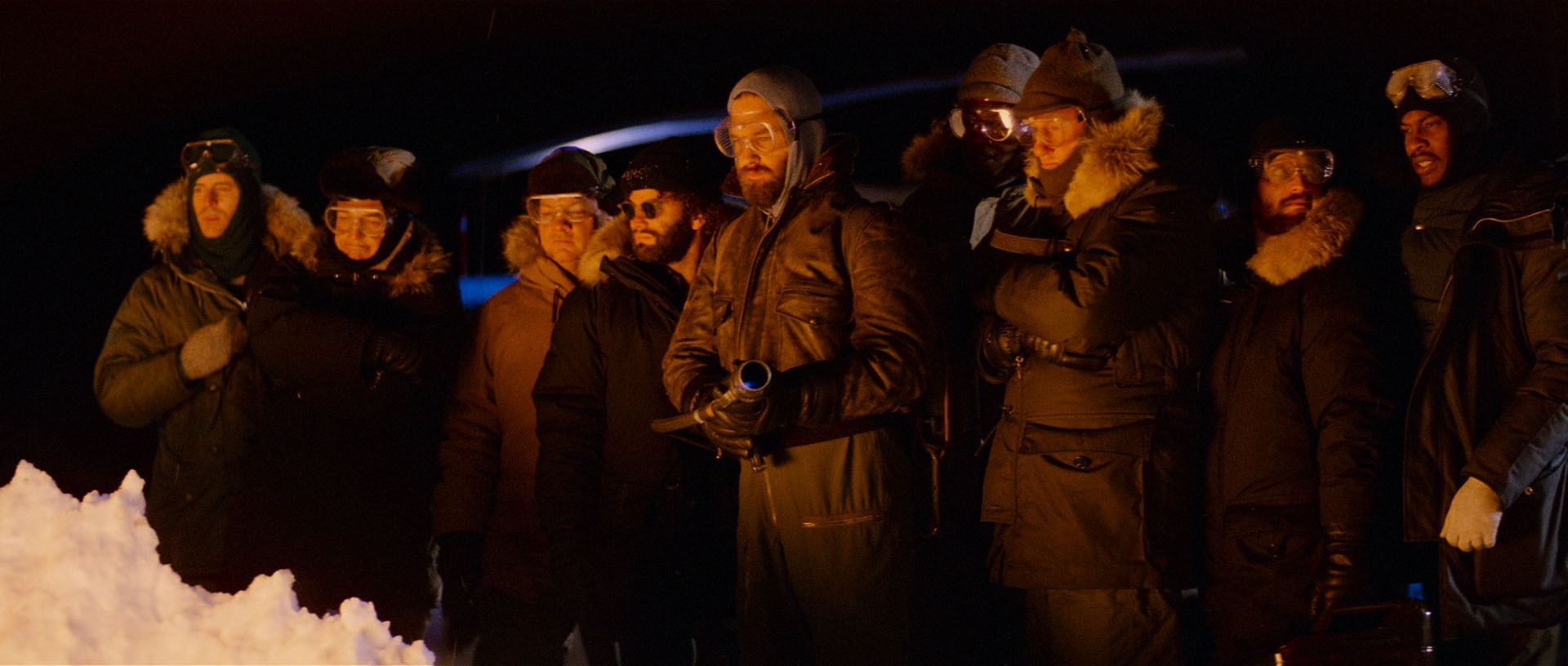
The film we watched this week likely needs no introduction: The Thing by John Carpenter. This 1982 sci-fi horror classic stars an ensemble cast led by Kurt Russell and centers around a group of Antarctic researchers dealing with an alien lifeform, the shapeshifting “Thing,” that imitates its victims and must be stopped before it takes over the world.
This week, the Club is excited to be joined by Michelle Lega, narrative designer for Interference: Dead Air! As always, spoilers ahead.
(The gang enjoys a nice, pleasant bonfire.)
Brad: When it came time to do a write-up on The Thing it felt appropriate to revisit what we’d previously written about Invasion of the Body Snatchers. Both are movies that lean heavily into themes of paranoia and distrust and are not afraid to use some visceral body horror to make that point. But despite these similarities, I found that these two movies lend themselves to very distinct viewing experiences. Whereas Body Snatchers focuses on a more widespread paranoia at the societal level, The Thing is much more intimate – focusing on the person to person distrust in a smaller group in a confined space where there’s nowhere to run. It makes the movie feel bleaker; the underlying fear of not knowing if anyone is who they say they are is the same, but the way it plays out in the dark, cold isolation of the Antarctic setting feels more terrifying and personal. It’s not just the abstract concept of “humanity” at stake, it’s your humanity at stake. And every bloody abomination we see serves as a reminder of that. It might not pack quite the same punch as a political allegory that Body Snatchers brings to the table, but when it comes to creating a memorable horror experience, The Thing is hard to beat.
Jared: I technically cheated this week and did not watch The Thing fresh, but since it’s one of my all-time favorites, I’ve seen it several times and feel equipped to talk about it anyway. You’d be hard-pressed finding another film that grapples with the themes of paranoia and distrust as swiftly and effectively as The Thing. It’s truly remarkable how “in-control” Carpenter is over subject matter that quickly becomes anything but, and through the very end, he retains the mystery of who has been compromised by the alien entity. The ending in particular is fascinating to me, an ambiguous declaration that we can never really know who other people are. Trust is a fundamental aspect of our society, and without it, there’s only chaos and disorder. I don’t think I have to explain how that sentiment is as relevant as ever in this day and age. Bolstered by some absolutely disgusting practical effects, The Thing‘s themes become visceral, transcending the “horror” in a way that’s not simply, dare I say, superfluous. Combined with the claustrophobic setting, the intimacy and subsequent violation of trust saturate the movie, as inescapable as the creature itself. To me, this movie is a high-water mark for horror.
Michelle:The Thing is certainly about a thing, and boy do I have some things to say about it! There’s something reassuring about the humanness of the characters in The Thing that’s hard to find in modern films. The scenes aren’t drenched in melodrama or drawn out emotional agony. Though there’s not a lot of characterization there and I had trouble keeping track of which white guy was who and what all their jobs were, the characters aren’t really the point of the movie. These people are smart and act logically, with the exception of how often they split up. (Seriously, why would you keep splitting the group up when the monster’s whole thing is that it will infect someone when nobody’s around!) It’s also a horrendously gory movie. A lot of squelching gaping wet holes and very fake looking blood dripping everywhere. Oh, and I loved the ending. Love a good ambiguous ending and this one really takes the cake.
(Disgusting alien shapeshifter… or cake?)
Want to join the Dead Air Movie Club? It’s as simple as watching what we watch and leaving a comment! So give The Thing a whirl, and let us know what you think. And while you’re at it, go and wishlist Interference: Dead Air. You won’t regret it.
We’re back with another entry into the Dead Air Movie Club! Last time we watched Philip Kaufman’s Invasion of the Body Snatchers (1978); this week, we watched Phantasm, Don Coscarelli’s 1979 cult classic starring A. Michael Baldwin, Bill Thornbury, Reggie Bannister, Kathy Lester, and Angus Scrimm as the iconic Tall Man.
This science fiction horror film is about a teenage boy Mike and his older brother Jody combatting the supernatural Tall Man to put an end to his plot to turn the dead into loyal servants. It’s a wild movie, and this week we’re lucky enough to be joined by our lead writer for Interference: Dead Air, Edward Spelman. Spoilers ahead!
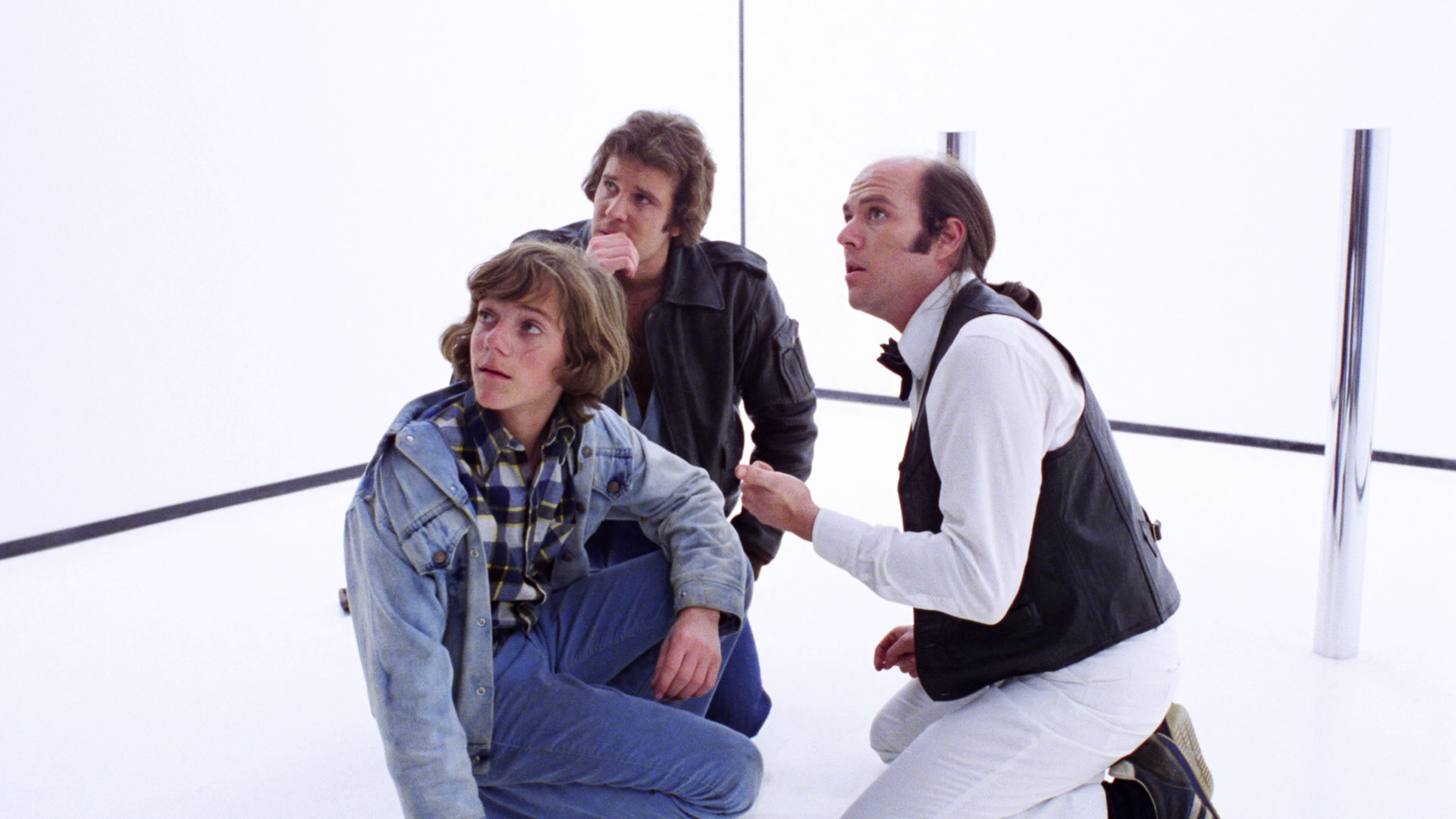
(Mike (A. Michael Baldwin), his brother Jody (Bill Thornbury), and their friend Reggie (Reggie Bannister).)
Jared: Oh, boy! Where do I even begin with Phantasm? Whereas the last film we watched, Invasion of the Body Snatchers, was a more sophisticated commentary on larger, more grounded ideas, Phantasm is much rougher around the edges. From whatever unearthly dimension this film fell out of, its brisk 89 minutes is brazen and unapologetic. This film is the kind that’s greater than the sum of its parts, which at times can be clunky, stiff, and hokey beyond belief. But the whole experience works as a nightmare manifestation of a young boy’s grief after unfathomable loss. I loved it. At one point, it just blatantly rips off Dune; admittedly, this "homage" put me off at first, but when viewing the film through the main character Mike’s perspective, the imagination of a teenage boy with a love for science fiction is bound to recirculate and regurgitate ideas it finds helpful to reconstitute a narrative around and provide an explanation for the devastating deaths of his parents and brother. I know this film spawned a whole slew of less-than-well-received sequels, but I’m greatly interested in seeing where Don Coscarelli takes this bonkers story next.
Brad: I went into Phantasm knowing very little about it beyond the surface level premise, and I think that is definitely the way to do it for the first time. The movie is so delightfully weird and rarely was my expectation for how things would unfold in line with the actual film. The scenes in the mausoleum with the Tall Man had such an unsettling, almost Lynchian quality that drew me in and kept me on my toes, but the central dynamic between Mike, Jody, and Reggie was really the heart of the movie, and allowed the themes of family bonds and processing loss to come across without feeling overly cheesy. The way Reggie’s character was introduced (ice cream man with a pony-tail in a horror movie? Come on!) I kept expecting him to be a crass, one-dimensional comic-relief character who dies in grisly fashion. But that expectation was subverted throughout, all the way up to the final scene where it’s revealed that he stepped into the role of Mike’s big brother after Jody’s death in the “real world” outside the dream. I definitely enjoyed this movie a ton, and will be looking to revisit it (and the incredible soundtrack) again.
Edward: Narratively, Phantasm doesn’t have much going on: there’s an evil old man with supernatural abilities, a bloodthirsty mausoleum, a silver ball, and a mystery whose parameters could be almost entirely detailed in about thirty seconds. Nobody in the film even attempts to vocalize a theory of what’s going on until the very end. We return again and again to the same few settings, where events play out in a pattern that might become repetitive were the execution not so unique. But however clunky this all may sound (and be), there is a vision here. The repetitions, omissions, and lengthy plateaus function in service of an experience that is emotionally real to the main character, a thirteen-year-old boy named Mike. Mike’s fundamental need is captured in a single, unforgettable image by his mad dash down a neighborhood block in pursuit of his older brother. His is a longing that can be understood by anyone who has ever been taken care of, and a longing that the film treats with respect. Phantasm may not be a paragon of cinematic cleanliness; but its emotional core and its treatment of the horror genre in service of that core have always made it, for me, a classic.
(Now what the heck is going on here?)
We’re always happy to have more members join the Dead Air Movie Club, so if you want to watch Phantasm and contribute to the discussion, we’d love to hear your thoughts in the comments! We’re also now on Letterboxd! Until next time…
Have you wishlisted Interference: Dead Air yet? No? Well, what are you doing just sitting there reading this? Go wishlist the game on Steam!
Dead Air Movie Club: Invasion of the Body Snatchers
Interference: Dead Air is chock-full of film and television references. Can you tell Brad and I are film majors? We just can’t help it.
How a love for cinema and pop-culture shapes the relationship between the characters in our game we’ll leave for you, the player, to discover when the game launches sometime later this year (stay tuned for news on that front, by the way). Until then, we’d thought it’d be fun to start what we’re calling the “Dead Air Movie Club” as a way to explore the media of the era. What we watch won’t necessarily be referenced directly in the game; sometimes vibes are enough, ya know?
Some quick logistical notes: we won’t be summarizing the plots of the films we watch in our reviews, nor will this be a super-regular blog series; we do have a game to finish!
This week we watched Philip Kaufman’s Invasion of the Body Snatchers (1978), starring Donald Sutherland, Brooke Adams, Veronica Cartwright, Jeff Goldblum, and Leonard Nimoy. If you don’t want any Invasion of the Body Snatchers spoilers, now is a great time to read one of our recent blog postsabout the game! Alright. We warned you!
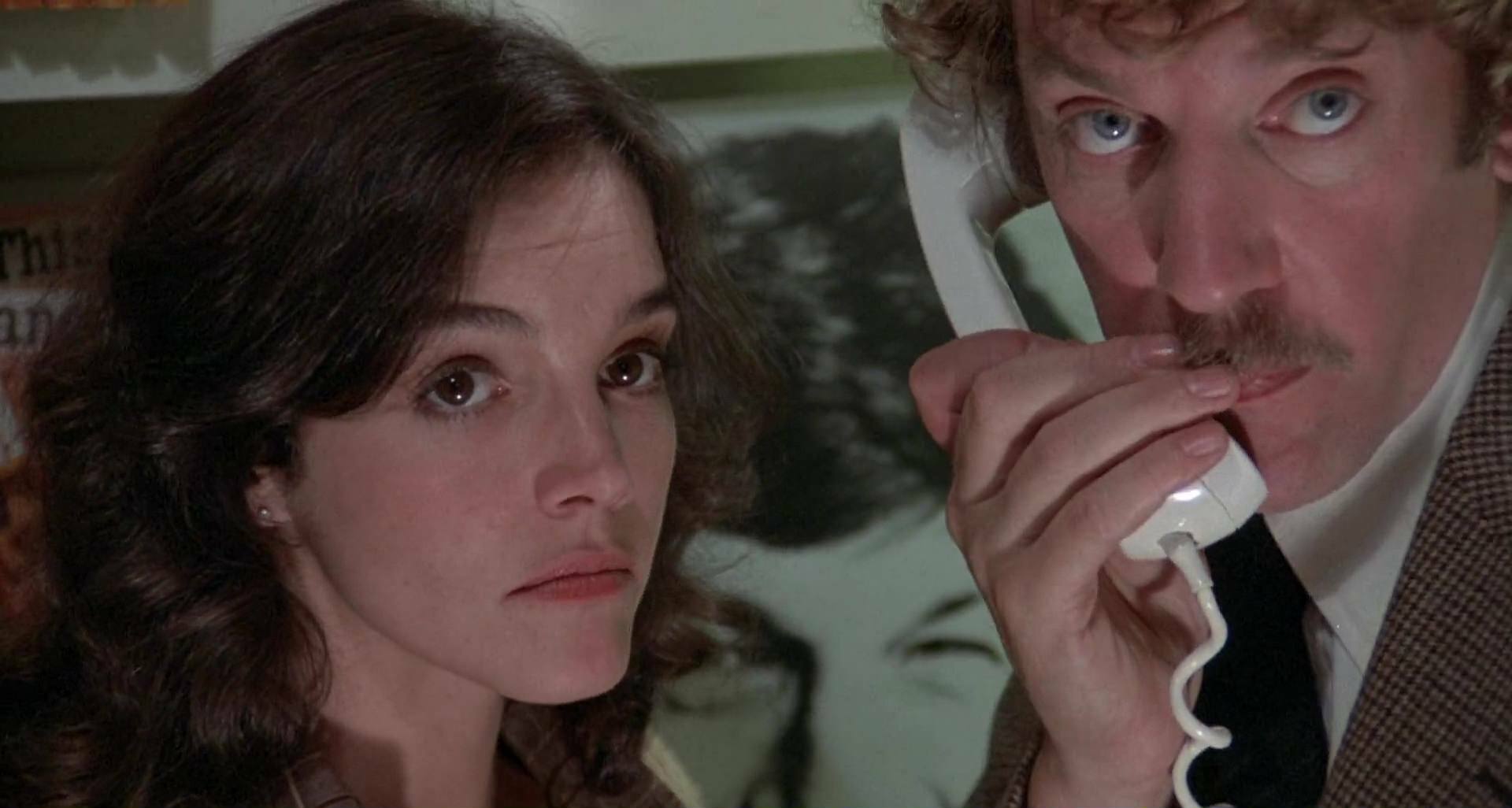
(Brooke Adams as Elizabeth and Donald Sutherland as Matthew in Invasion of the Body Snatchers (1978).)
Jared: For a movie from the 70s, Invasion of the Body Snatchers is eerily prescient, and perhaps that’s why this movie has persisted as a cult classic. Steeped in themes of paranoia and distrust, the film can be read in myriad ways, not the least of which working as political and cultural commentary on the end of the decade’s counter-culture. The practical effects are perfectly grotesque and serve as a visual metaphor for the decay and rot eroding the public trust of authority and the abject disgust our protagonists have for conformity and an emotionally bankrupt world. Plus, I’m a sucker for practical effects, the allure being that the execution will look the same decade after decade, whereas CGI, even now at its best, so quickly falls victim to time (and armchair critics lambasting cutting-edge CGI as “looking bad” from the get-go). The cast is great, and the direction is sharp. Admittedly, I haven’t watched a ton of films from the 70s, but I’m inspired to dive into the catalog more.
Brad: It really speaks volumes that a movie from 1978 that was well regarded as a masterful political allegory still functions so well as a political allegory in 2022. I won’t get into the specifics of how exactly the allegory extends to the current political landscape (that will vary wildly from person to person), but I will say that watching this movie definitely felt timely in the context of an ongoing global public health crisis. As much as the idea of “pod people” had become ubiquitous in the popular zeitgeist, the story never felt tired or predictable as is sometimes the case with massively influential works that were groundbreaking for the time but lose their appeal in retrospect thanks to decades of lesser copycats. I credit that to its near-perfect narrative pace, which peppered in just the right amount of dread and gross-out body horror to keep me fully engrossed from start to finish. This is a movie that certainly stands up on its own merits regardless of era, and left me inspired to check out the 1956 original to assess how it holds up as a remake.
(The aforementioned “pod people” emerge as Matthew (Donald Sutherland) catches some Zs.)
If you want to join in on the discussion, the more the merrier! Give Invasion of the Body Snatchers a watch, and leave a comment letting us know what you thought. And don’t forget to wishlist Interference: Dead Air on Steam!
One of the very first things we discussed when brainstorming ideas for Interference: Dead Air is how we can combat scope creep early on by establishing a single room where the bulk of the game will take place. This was largely the genesis of the guard booth setting from which the rest of the game came to fruition. But from the start, we knew that if the game was going to be set in a single room, the onus would be on us to make it interesting. So… how do we do that?
First and foremost, we established a narrative guideline of depth of space. In lieu of having huge, sprawling maps with content spread out, we focused on densely packing lots of details in the guard booth to make a space that feels real. The story is focused on a few key characters, but there are numerous characters who we get glimpses of via memos, journals, sticky notes, and personal belongings scattered throughout the booth.
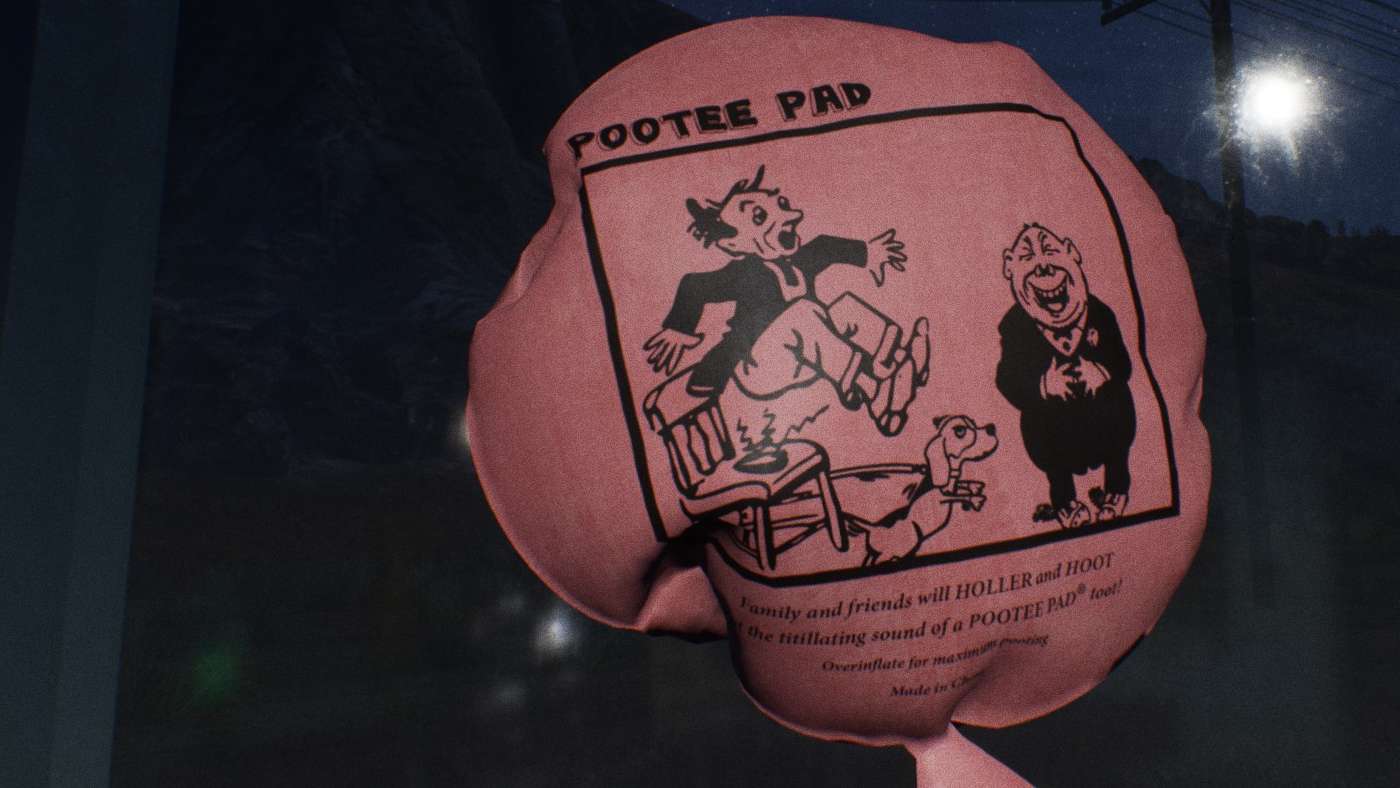
(Whoever had the idea to bring this to work is my kind of coworker.)
These characters don’t have speaking roles and they don’t appear physically in the game, but we wanted their presence to be felt. For every item we placed in the booth, we considered a number of questions about its in-universe origin. Who does it belong to, and how did it end up in the booth? Is it relevant to the relationships its owner has with the other booth occupants (both friendly and antagonistic)? Does it tie into any of the lore details we’ve introduced via readable items? The hope is that the result of these considerations is a game world where exploration is rewarded by learning new details of that world with every playthrough.
But with all these environmental details occupying this space (a space primarily designed as a stage to tell our game’s story), an interesting conundrum arose.
(One of Jared’s notes on the design of this packaging was to make the crackers “more wet.”)
How do we balance the tone of these environmental details with our central narrative? Interference: Dead Air is at its core a narrative-driven thriller game. Tension and dread are a big part of the experience. So what role do these environmental details play in that? Does the fact that many of these details utilize humor cut the tension? Possibly! Is that a problem? We don’t think so!
The truth is, dumb jokes are also at the core of Interference: Dead Air, and a major part of our creative process. Something we discovered early on is that comedy and dread are not mutually exclusive, and utilizing environmental details to inject humor into the game allows the player to engage with it as much or as little as they want to. Someone who wants to focus on the main narrative can ignore it completely, whereas someone who does explore the booth might discover unexpected juxtapositions in the tension of the gameplay and the humor of the environment. Perhaps a joke that reads one way at the start of the game hits a little differently when the intensity starts to ramp up.
Like with so much else in those early brainstorming sessions, it all came down to wanting to create a game where the player’s choices affect the experience and where multiple replays are rewarded. We hope that players will have half as much fun discovering these environmental details as we had crafting them. And if the process of discovering them all results in at least one audible groan or visible eye-roll, we’ll know we’ve done our job.
A question I often ask myself as I lie awake at night in a cold sweat thinking about Interference: Dead Air is… why is our game set in the 80s? I wasn’t alive, at least according to my birth certificate, and unless Brad has been lying to me all this time, neither was he. Seems peculiar then that we’d choose a time period that we have no frame of reference for, right? WRONG!
Well… still actually kind of right. We set the game in the late 80s to give ourselves a little bit of leeway to dip into the early 90s when it came to aesthetics, but the fact of the matter remains that neither one of us has any authority over what it was like to be pushing our 30s, like the characters in our game, during that time. And even though we both can remember an age before the internet, I at least was more preoccupied with school picture day than the existential dread that comes along with the search for belonging in an ever-changing, chaotic world.
So, back to the question: then why the 80s?
Well, believe it or not, Interference: Dead Air was originally conceived to take place in a not-so-distant future. Our setting of a remote outpost in the desert felt timeless, and imagining what we could do from a story perspective in a year that hadn’t come yet was more exciting than the prospect of sinking a ton of time researching a bygone era. It wasn’t until we started developing the mechanics of the game that our philosophy changed.
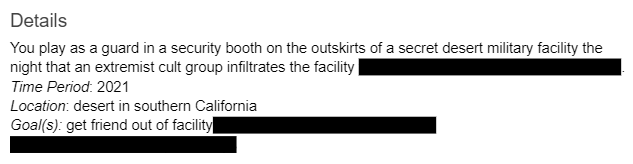
(You have to remember, 2021 was the not-so-distant future when we drafted the base concept in 2018. A few other details have since changed as well. Spoilers redacted.)
We knew fairly early what our three primary mechanics were going to be: talking over a radio, using a map to track locations, and utilizing a computer to reroute power… none of which require any cutting-edge technology. In fact, the complications of modern tech and communication methods were really the catalyst that forced us to reconsider when the game takes place. This is a common problem Brad and I have both encountered with our background in film: cell phones and the internet complicate everything. And if the game is set in the future, the technological abilities would be even more advanced. Writing around those possibilities was beginning to feel contrived as our story began to take shape.
On top of that, there’s a sense of nostalgia that comes with setting a story in the past, and thematically that felt more appropriate. So much of our game’s narrative is centered around the friendship between the player character and their best friend, Valerie. That relationship itself is tied to a long and storied past, rooted in “better times” and a fondness for how things once were. The future couldn’t afford that.
So, we dove in and did that research that we had been trying to avoid. And you know what? What a treat! We learned so much about the past culturally, politically, socioeconomically, and many other words ending with “-lly” that it gave us a new perspective on where the world was at when we entered into it. I’ve since become obsessed with 80s movies. And Brad? Well, let’s just say I’ve given up on talking him down from exclusively wearing parachute pants.
Missed our livestream last night? No worries, we got you covered! We will be LIVE tomorrow, June 14 at 3:00 PM Eastern with Interference: Dead Air! We'll share with you some insights into our game's features and gameplay, and we'll be answering questions in the chat.
Steam Next Fest June 2022 Edition runs from June 13-22, and during this time you'll be able to check out an updated demo of Interference: Dead Air.
So be sure to mark Tuesday, June 14 at 3:00 PM EST (12:00 PM PST) down on your calendar. See you there!
Steam Next Fest is nigh, and we're excited to announce that we will be LIVE June 13 at 8:00 PM Eastern and June 14 at 3:00 PM Eastern with Interference: Dead Air! We'll share with you some insights into our game's features and gameplay, and we'll be answering questions in the chat.
Steam Next Fest June 2022 Edition runs from June 13-22, and during this time you'll be able to check out an updated demo of Interference: Dead Air.
So be sure to mark Monday, June 13 at 8:00 PM EST (5:00 PM PST) and/or Tuesday, June 14 at 3:00 PM EST (12:00 PM PST) down on your calendar. See you there!
We will be LIVE again for the Steam Next Fest tomorrow, June 19th at 3:00 PM Eastern. We'll share with you some insights into our game’s features and gameplay, along with answer questions along the way.
Steam Next Fest runs from June 16th through the 22nd, and during this time you’ll also be able to check out our demo.
So be sure to mark June 19th at 3:00 PM EST (12:00 PM PST) down on your calendar. Look forward to seeing you there!
What is Interference?
What is Interference?
Interference is a narrative-driven sci-fi survival horror game where all of the scary stuff happens miles away. It looks like another quiet night in your isolated desert outpost, monitoring the mysterious happenings of the top-secret research facility you're paid minimum wage to protect. However, the night quickly turns deadly when a security breach throws the facility into chaos, trapping your best friend inside—the same best friend with whom you've spent the last few hours arguing, of course! Armed with only a shortwave radio and the items scattered around your booth, will you put aside your differences and help your friend survive? Or will you go radio-silent? It's up to you.
A Little History:
Interference began as an experiment in player autonomy: how do you construct a game whose narrative is not dependent upon the player's participation? With loads of branching dialogue, numerous playstyles, and the freedom to just kick back, relax, and ignore all the narrative elements we've spent months carefully crafting, Interference is a game about player choice. Maybe you'll opt to just observe. Or perhaps you'll decide to... interfere.
A time has been set to Interfere (Livestream)
Hey everyone,
Today, we wanted to share that the Steam Next Fest is in less than a couple of weeks. We will be LIVE June 17th at 8:00 PM Eastern and June 19th at 3:00 PM Eastern, for this Fest. We'll share with you some insights into our game’s features and gameplay, along with answer questions along the way.
Steam Next Fest runs from June 16th through the 22nd, and during this time you’ll also be able to check out our demo.
So be sure to mark Thursday, June 17th at 8:00 PM EST (5:00 PM PST) and/or June 19th at 3:00 PM EST (12:00 PM PST) down on your calendar. Look forward to seeing you there!