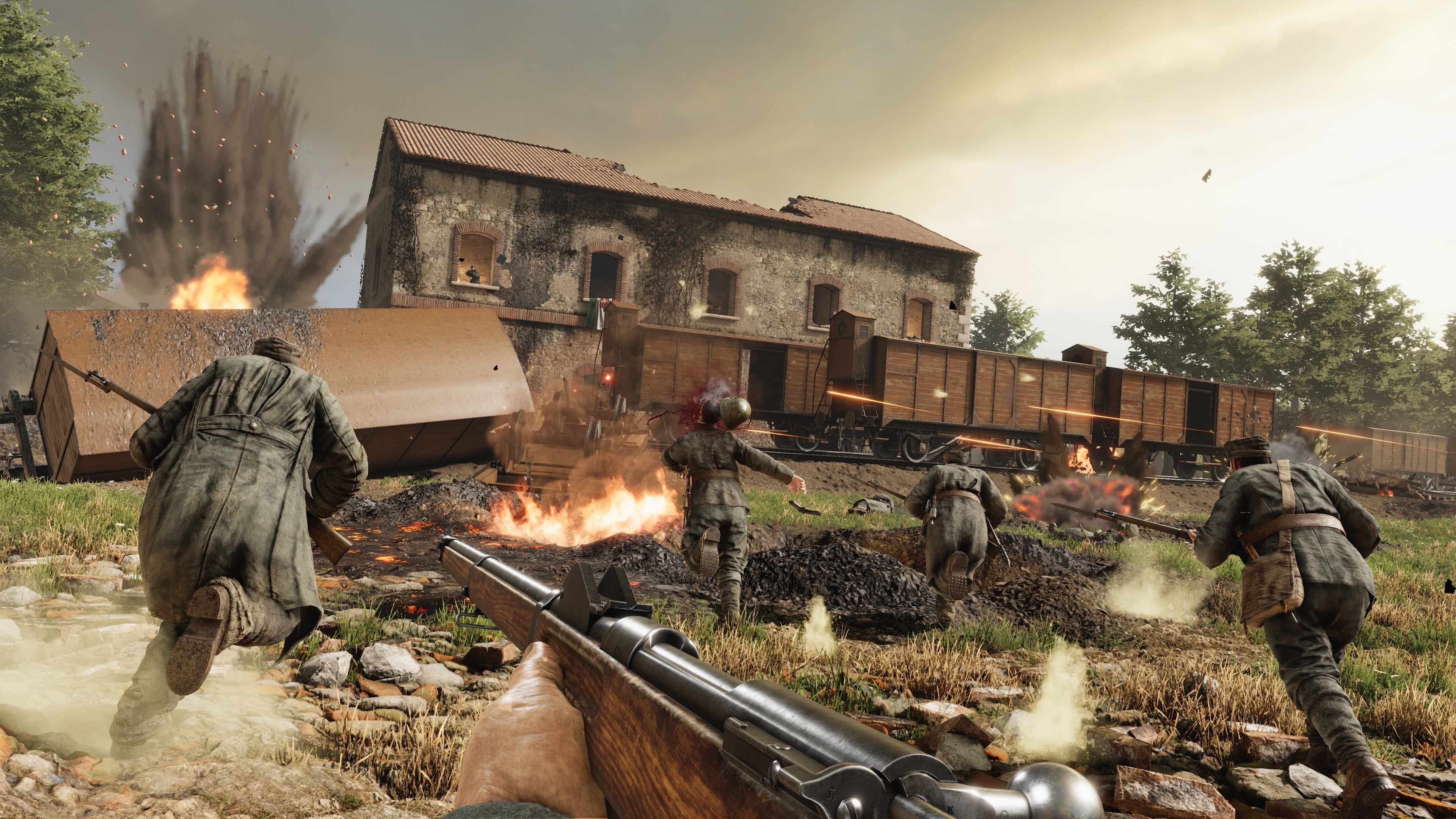
Isonzo cover
Isonzo screenshot
PC PS4 XONE PS5 Series X Steam Epic
Genre: Simulator, Strategy, Indie

Isonzo

Movember Handlebar DLC available NOW for a limited time!

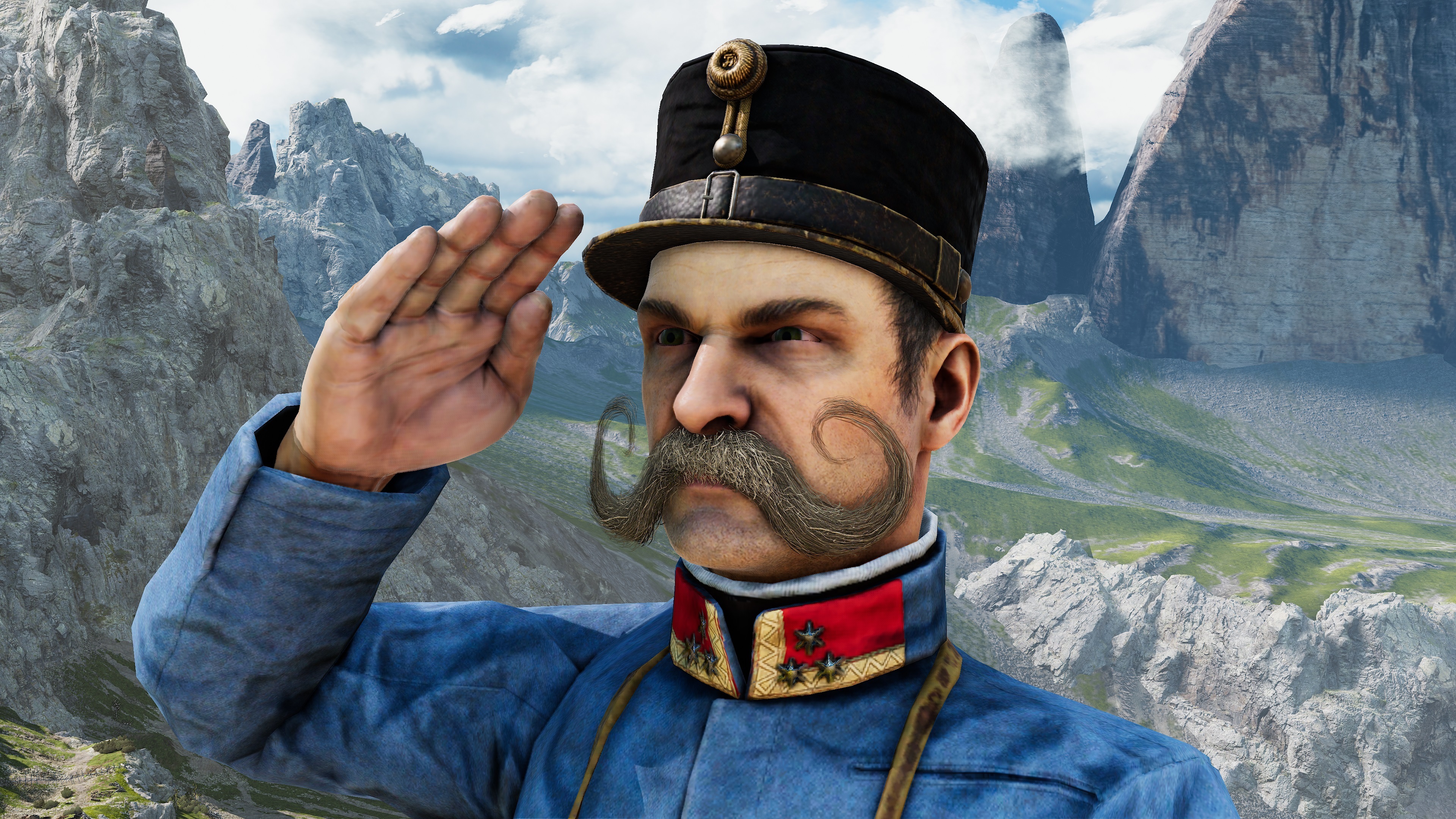
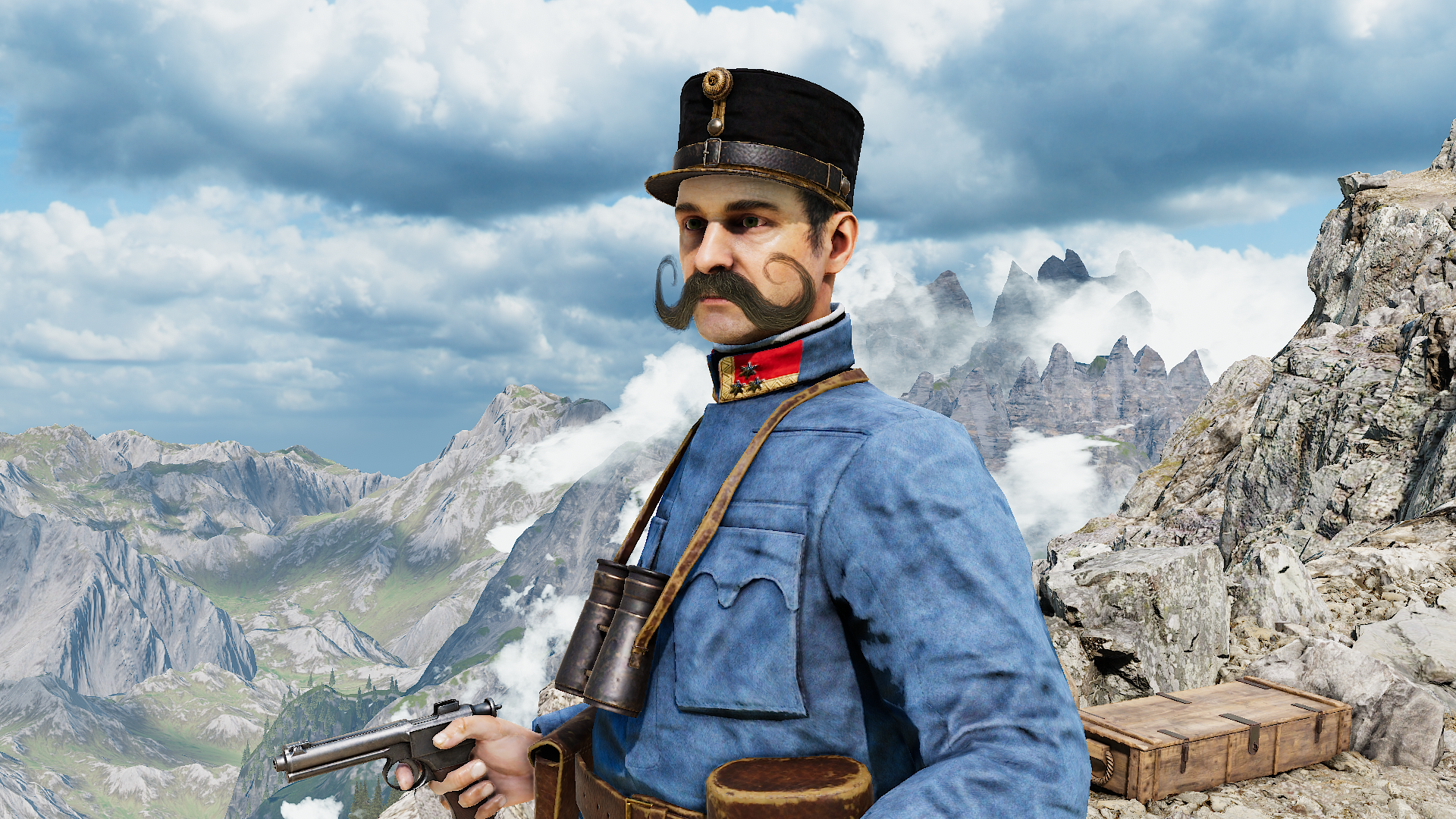
This November, we've teamed up with the Movember Organization to bring you the Movember Handlebar DLC for Isonzo! Unlock the Handlebar Moustache and fit it on your upper lip to impress your peers.

The Movember Handlebar DLC is available for purchase until January 2nd, 2025. Proceeds will be donated to the not-for-profit Movember Organization.


https://store.steampowered.com/app/3253670/Isonzo__Movember_Handlebar

The Handlebar Moustache remains accessible in game once bought.


Men's health during and after WW1


The First World War was one of if not the most cruel war ever fought. The actual fighting was one thing, but the continuous shelling, disease and infections wreaked havoc on not only their bodies, but their minds as well.

Soldiers lucky enough to return home after the war faced severe psychological trauma, often for the rest of their lives. We all know this as 'shell shock' or post-traumatic stress disorder (PTSD) now, but this was the first time post-war trauma was formally recognized by doctors and society. It wasn't without skepticism though; many just assumed soldiers were faking it to not be sent back to the front.

These traumas affected soldiers in many different ways and caused trouble for their direct surroundings as well. Some simply were no longer able to move, while others who were able to continue their normal life with episodes of distress.

"I used to have little breakdowns now and then and my wife used to be very frightened. It more or less used to happen at night, when I was in bed. I used to spring up off the bed, you know; it used to frighten her. My daughter, incidentally, is terribly nervous, she’s terribly nervous. My wife says it’s all my fault. Well I had shell shock, you see. I got blown up, you see, and it affected my whole system. I got a pension for about oh, what was it, about 9 shillings a week." - Thomas Olive


The Movember Organization


While the stigmas around men's health have lessened a lot in the past century, there's still a lot to be done. Many neglect their health, both physical and mental, and so don't get the care they really do need. That's where the not-for-profit Movember Organization comes in, though we'll let them introduce themselves!

Movember continues to shake up men’s health research, and transform the way that health services reach and support men, taking on prostate cancer, testicular cancer, mental health and suicide prevention with unwavering determination.

They have raised millions for men’s health, thanks to a passionate network of global Movember supporters. These critical funds have delivered more than 1,320 men’s health projects around the world. Funding hundreds of biomedical research projects and developing some of the largest prostate cancer registries in the world, based on the real-life experiences of hundreds of thousands of men. Since taking on mental health and suicide prevention in 2006, Movember has emphasised the importance of better social connections, early recognition of what men’s poor mental health looks like, and how clinicians can better respond to men in distress. They want to make sure more men know what to do when mental health issues appear, and that their supporters are better prepared to step in when they need it.

Movember will continue championing new research, cutting-edge treatments and healthy behaviours. Advocating for inclusive, gender-responsive healthcare systems that are tailored to the unique needs of men, women and LGBTQI+ people, from a diverse range of cultural backgrounds. In doing so, Movember hope to forge a future where barriers to healthy living are overcome, stigmas are removed, and where everyone has an equal opportunity to live a long healthy life. By improving men's health, we can have a profoundly positive impact on women, families, and society. Because healthier men mean a healthier world.

This moustache is a symbol of solidarity, plus it’s hard not to respect someone sporting such an impressive upper lip accessory. We hope the moustache adds a little bit of fun, whilst doing good!
- Daniel Cooper, Global Innovation Director at Movember



We're donating all the money we make with the Movember Handlebar DLC to support Movember in their cause. If you're looking to support them even further or maybe even get involved, be sure to check out their website for more information: https://movember.com/


https://store.steampowered.com/app/3253670/Isonzo__Movember_Handlebar

Follow our socials:


X / Twitter YouTube Discord Reddit
Adamello Release Date & Map Flyover

Here we are, the second part of Adamello! The release is close, so let's dive into it right away.

The Adamello update will release on November 14th!


There will not be a new DLC accompanying this update, but you'll already have all the gear you need for this battle if you own the Glacial and Altitude packs. There will be two new weapons (one of which is a grenade), but we'll reveal them later. Onto Adamello!

Watch the full Adamello flyover here:


We'll continue from where we left off after the initial Adamello reveal. If you haven't read it yet, be sure to do so first for the history of this map:

https://store.steampowered.com/news/app/1556790/view/4547038257929295109

Moving onwards & upwards


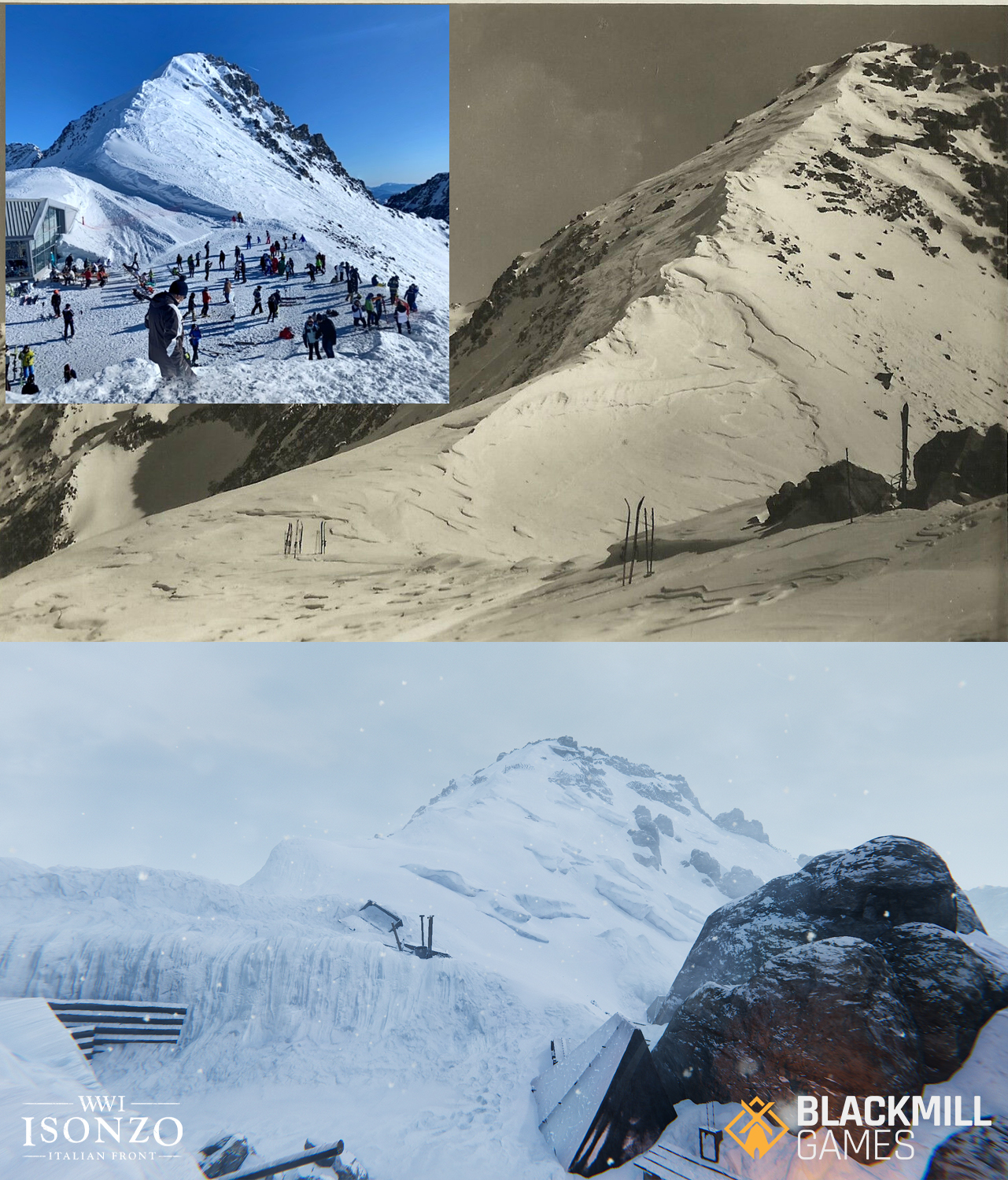
If the objectives of Sector #1 are captured, the battle moves on towards the second and last sector, Cima Presena. However, getting there may be a difficult feat for the Italians as the map opens up into a sea of white. Here, the Italians have to climb to the very top of the mountain without getting hit by the lead raining down. They'll need to make use of smoke cover and artillery to press on, as the Austro-Hungarians have excellent cover and a significant height advantage.


While the defenders have the high ground, it's not over for the Italians. The Austro-Hungarians don't spawn at the peak either and have to make their way up from the other side. Featuring plenty of workplace safety violations, their routes take them across sketchy bridges, extremely steep slopes and sometimes even just a single plank over a gap. Watch your step!

Defenders' spawn leading up towards Sector #2


Historically, the first attempt the Italians made to take Cima Presena failed. It's very difficult to get across a small no man's land with little to no cover. The advantage the Austro-Hungarians had at the top was significant enough to force a retreat, but the Italians came prepared with artillery to soften up the defenses.

Sector #2


Once at the top, there's just one objective. This capture zone is light on cover and hiding places: it's just you, rocks, snow and your enemy. Getting here is the most difficult part for the Italians, but they'll be able to turn the tide once they make it here. As the Austro-Hungarians will also need to climb to get here, Italians will be able to make use of the newly-acquired height advantage and return the favor. The defenders may have a hard time getting back to the objective once they lose control. Be ready for a lot of chaos and lots of artillery!


That's Adamello! Of course, none of this beats exploring it yourself. You won't have to wait long, just two weeks to go.

There's more to come!


While we are in the end game of 2024, we still have a lot of really exciting things to share with you this year. In fact, we have a special something coming tomorrow, so be sure to keep an eye on the Isonzo Steam page :)


Follow our socials:


X / Twitter YouTube Discord Reddit
The Montello Cycling Tour Recap & Bonus Stop

Did you enjoy the Montello Cycling Tour? Wait, you missed some stops? Well no worries, we got you covered. Welcome to the Montello Cycling Tour Recap, where you can find every stop of the Tour in a handy overview!

As an extra bonus, we made an extra stop at a local airfield where they display a ton of replicas of historic aircraft, from the very first bombers to more modern fighter jets. If you're not interest in the recap, you can skip ahead to the Jonathan Collection here!


The Montello Cycling Tour was a collaboration with local organizations. We'd like to thank them for helping us out with information about the region, the history and photos they provided. The Prosecco area is a wonderful area to explore with tons of history, great food and beautiful sights. If you're looking for a new holiday destination, be sure to check it out.

These organizations can be a great help to get the most out of your visit, so be sure to reach out to them and tell them we sent you.

[table noborder=1]
[tr]
[td]

[/td]
[td]
For bike renting and a historic tour with possibility for a meal.

Bike Rental Montello


https://aglizattieri.com/
[/td]
[/tr]
[tr]
[td]

[/td]
[td]
Looking for your next holiday destination?

Visit Prosecco Hills


https://visitproseccohills.it/en
[/td]
[/tr]
[tr]
[td]

[/td]
[td]
Want to learn more about WW1 and the history of the area?

Museo della Battaglia di Vittorio Veneto


Location on Google Maps
[/td]
[/tr]


Montello Cycling Tour Recap


Stop #1: The Piave Crossing


We started the tour where the Austro-Hungarians crossed the river Piave to secure a foothold across the river. The Italians installed bunkers here in anticipation of an attack, as this was a relatively easy area to cross, but it was not enough to push the attackers back. These bunkers still exist to this day as an open-air museum, which can freely be visited. We did as well as part of our research for Isonzo!

https://store.steampowered.com/news/app/1556790/view/4608959311774212150


Stop #2: Monumento Ragazzi del '99


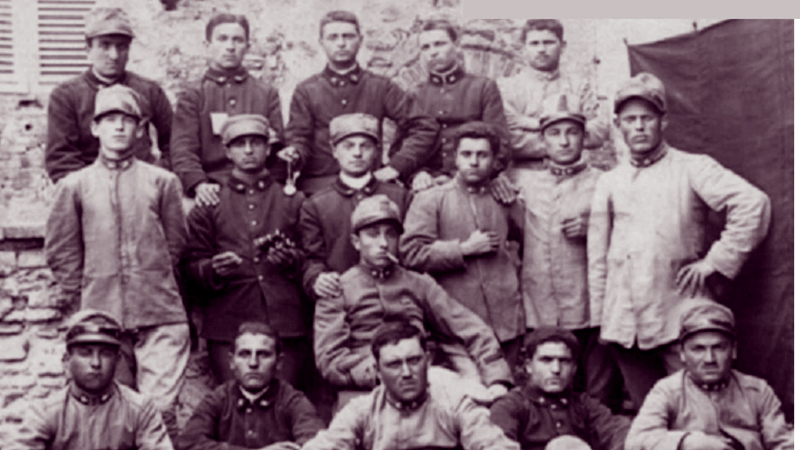
Our second stop was at a monument dedicated to the Ragazzi del '99: The Boys of '99. Around 300,000 Italian teenagers were drafted, hastily trained and sent to the front line in 1917, once they turned 18. The fresh soldiers propped up the ranks at the Piave, Grappa and Montello fronts, but they lacked experience. Their numbers were enough to secure a couple of victories and allowed for a large scale counter-offensive, swinging the battles in Italy in the defender's favor.

https://store.steampowered.com/news/app/1556790/view/6468946777869867362


Stop #3: Montello Hill


For our third stop, we took a quick break on top of Montello, surrounded by fields and vineyards. We explored the hill's and area's extensive history, which took us back 15,000 years! From cavemen exploiting the region's bounty and the writing of Il Galateo – a book that defined the etiquette many still abide today – to Venice kicking out all the locals and (one of) the strongest tornado ever recorded in Europe. A hill can be more interesting than you think!

https://store.steampowered.com/news/app/1556790/view/4706913871769004155

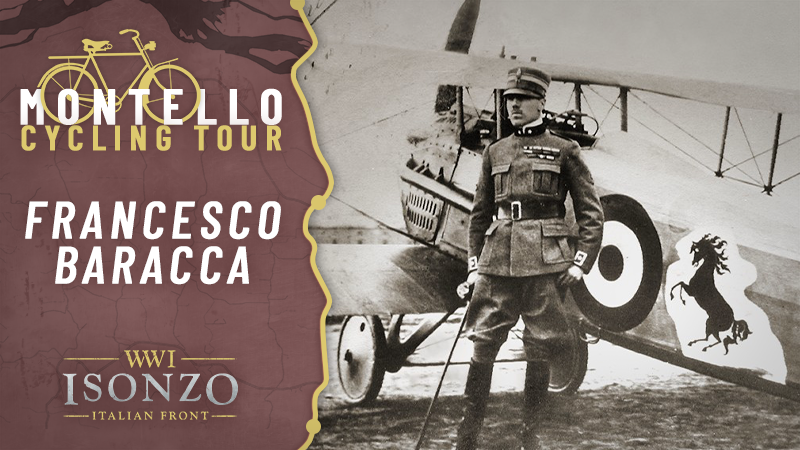
Stop #4: Monumento a Francesco Baracca


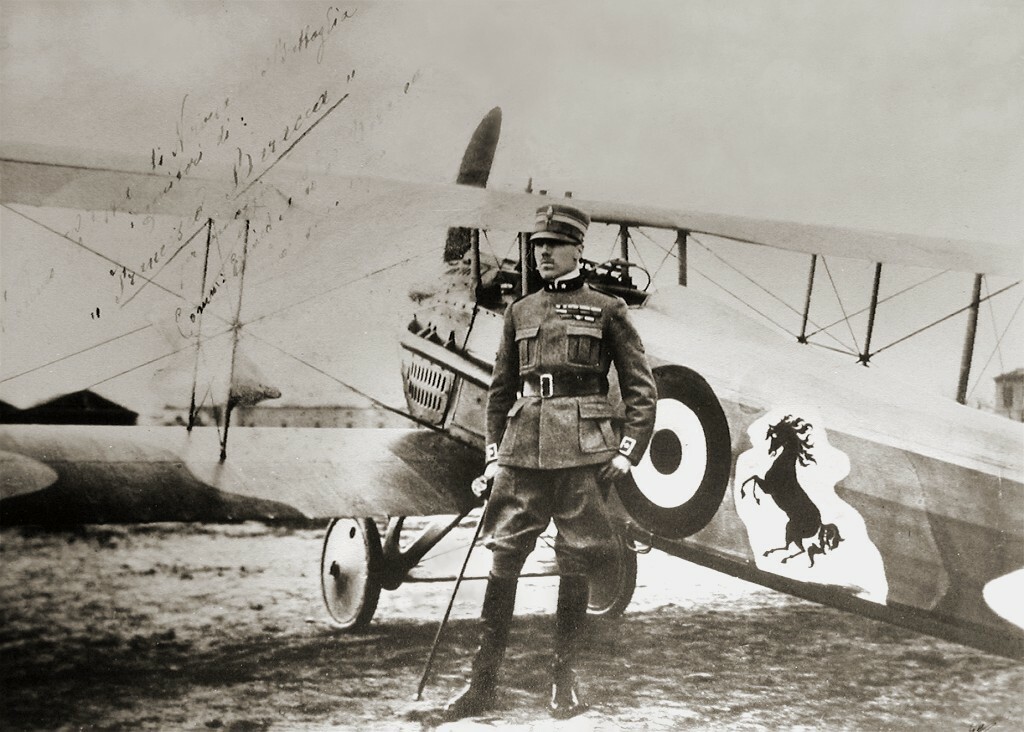
The fourth stop took us through the life of Italy's greatest fighter pilot: Francesco Baracca. Starting his career as cavalryman, he took an interest in aviation and joined the air force. Equipped with new fighters, he quickly scored his and Italy's first aerial victory. Many more followed, until his plane was shot down at Montello after 34 victories.

Somehow, his story takes us to the former queen of Belgium and the origin of the iconic Ferrari logo, so be sure to read the full blog!

https://store.steampowered.com/news/app/1556790/view/4704662705453838153

Stop #5: Sacrario Ossario Militare del Montello


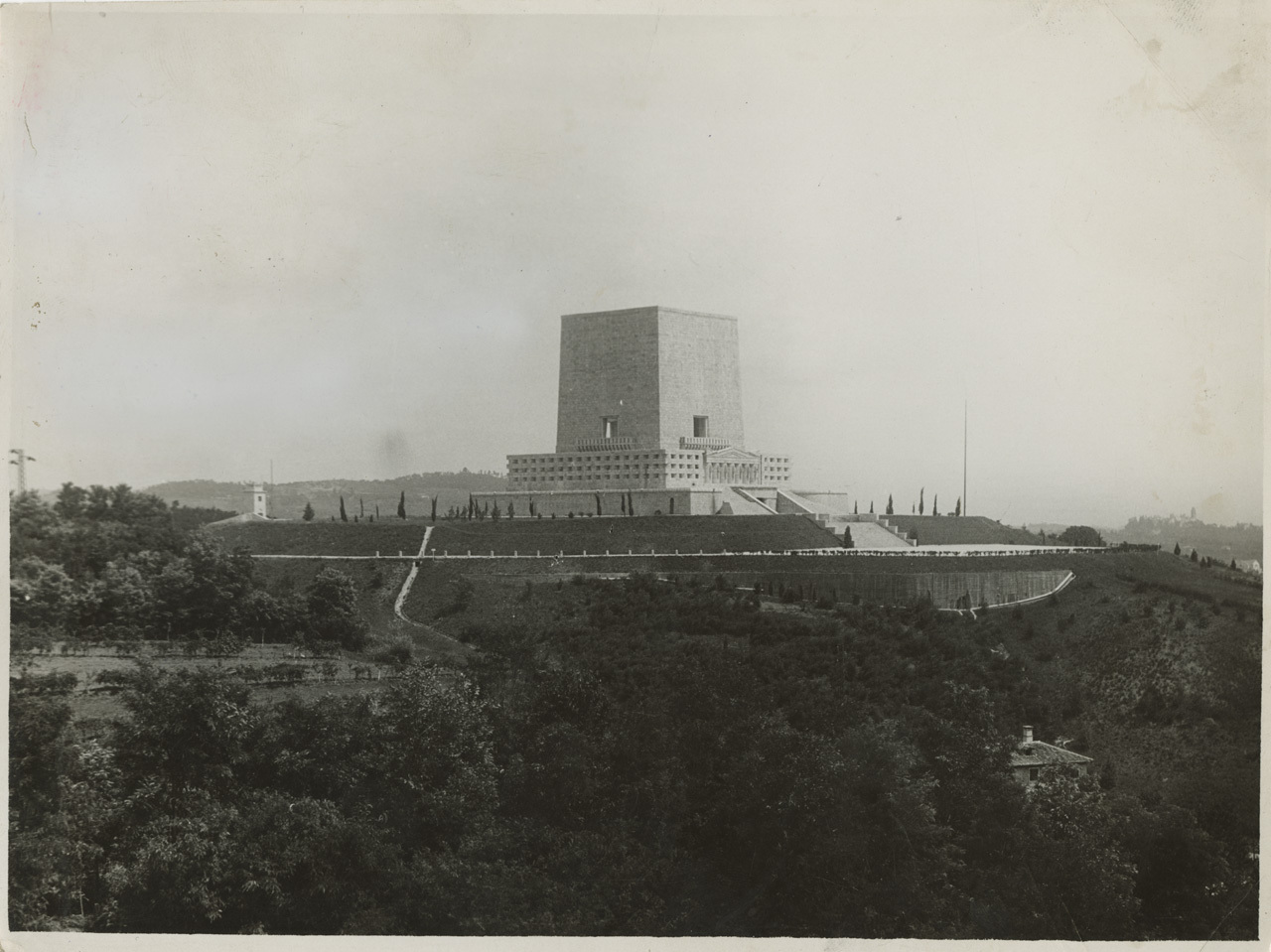
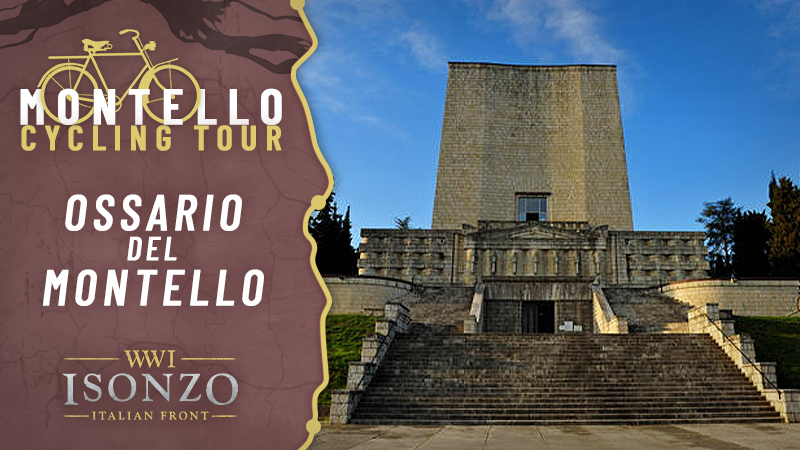
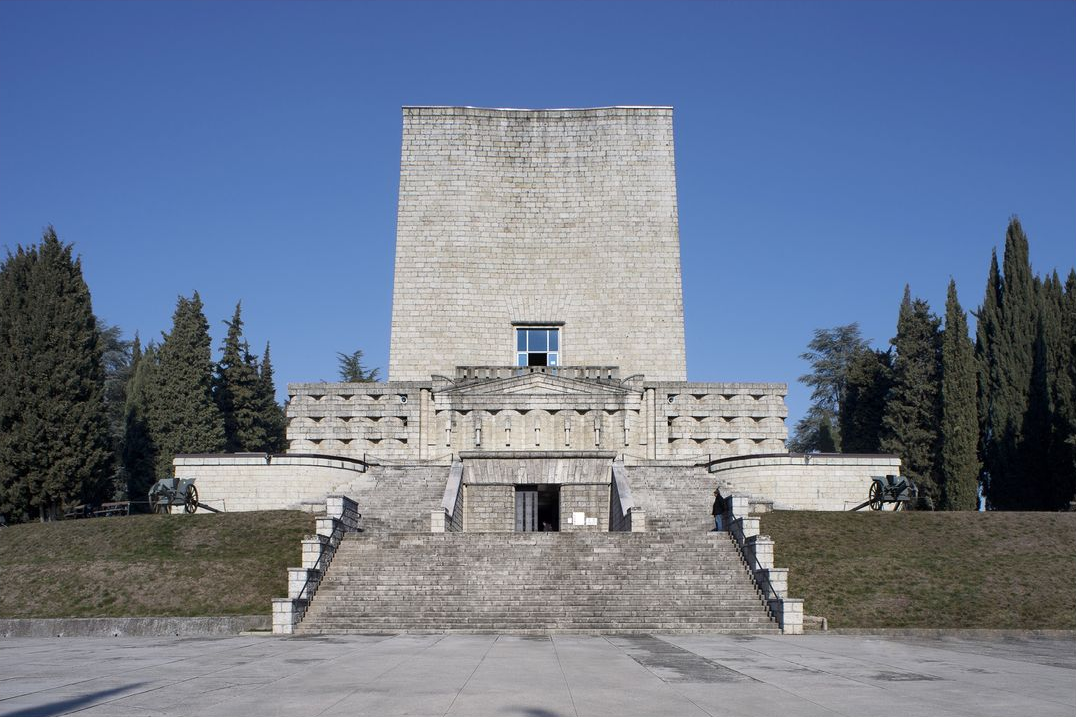
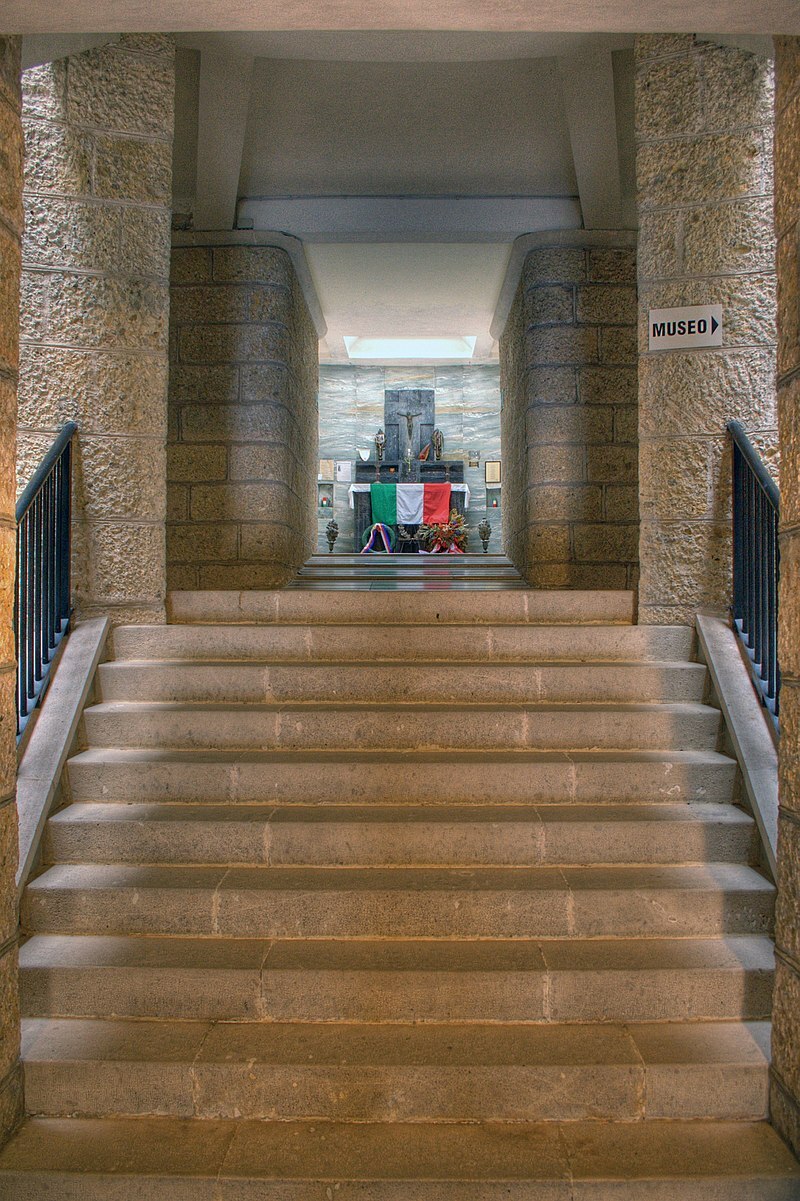
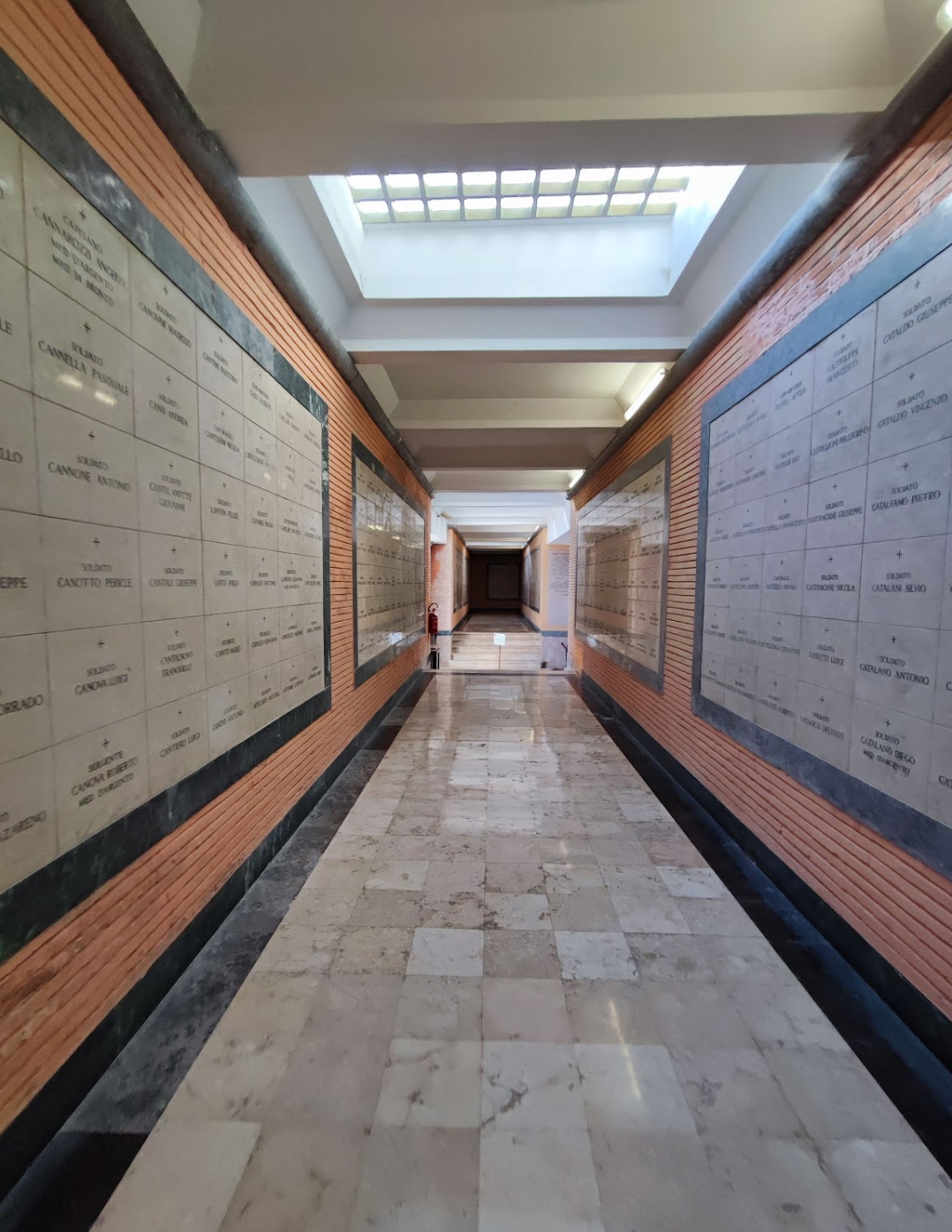
We arrived at the fifth stop: an Ossuary – comparable to a large-scale mausoleum – that houses the remains of 9,325 soldiers, of which 6,099 were identified and 3,226 were not. While previously spread over 120 small cemeteries, they've been collected and placed here as a dedicated resting place for those who fought here during WW1. There's a shrine inside as well as a small WW1 museum, maintained by volunteers.

https://store.steampowered.com/news/app/1556790/view/4704663339700706595

Stop #6: Fontana di Piazza la Piave


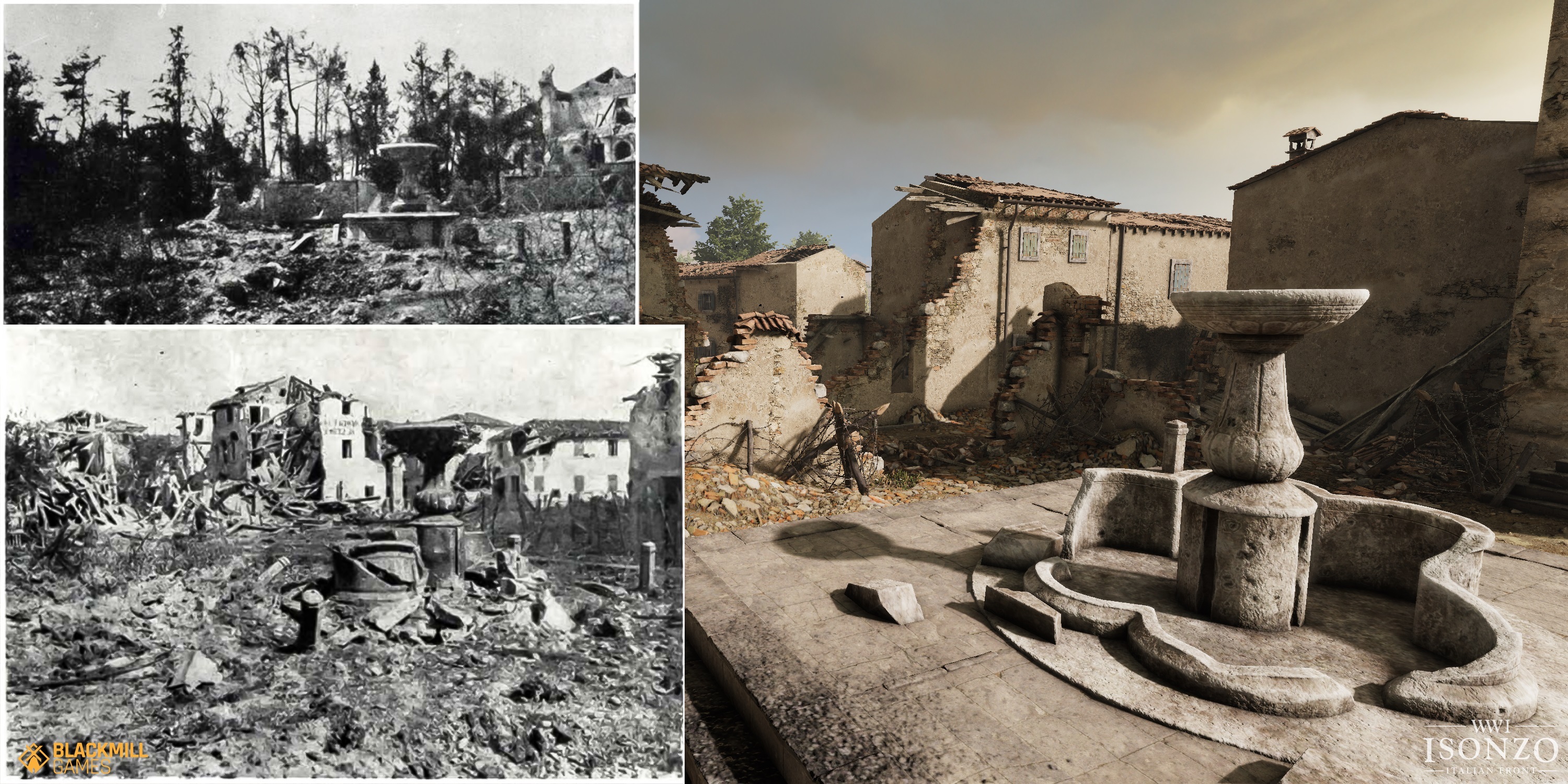
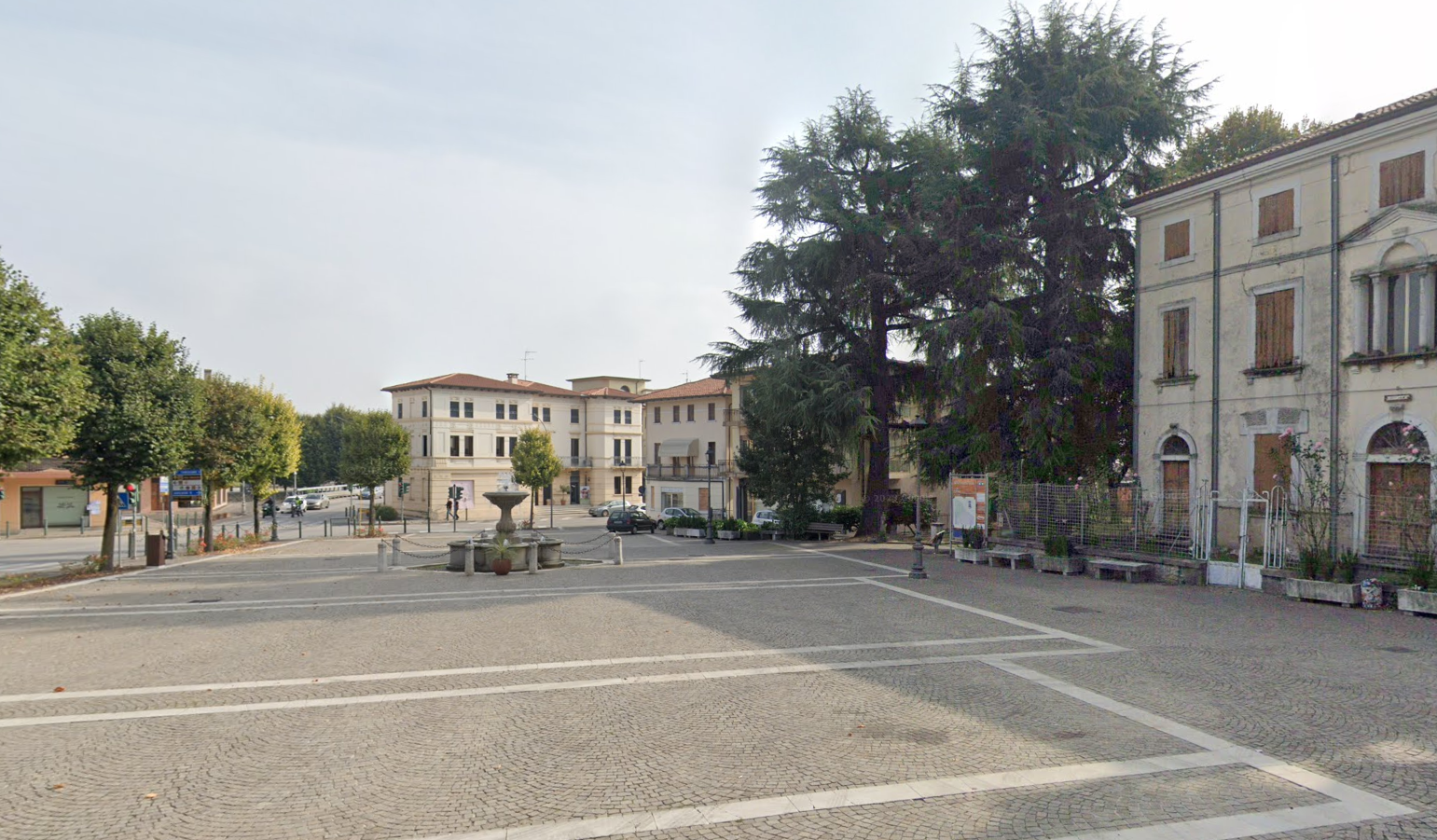
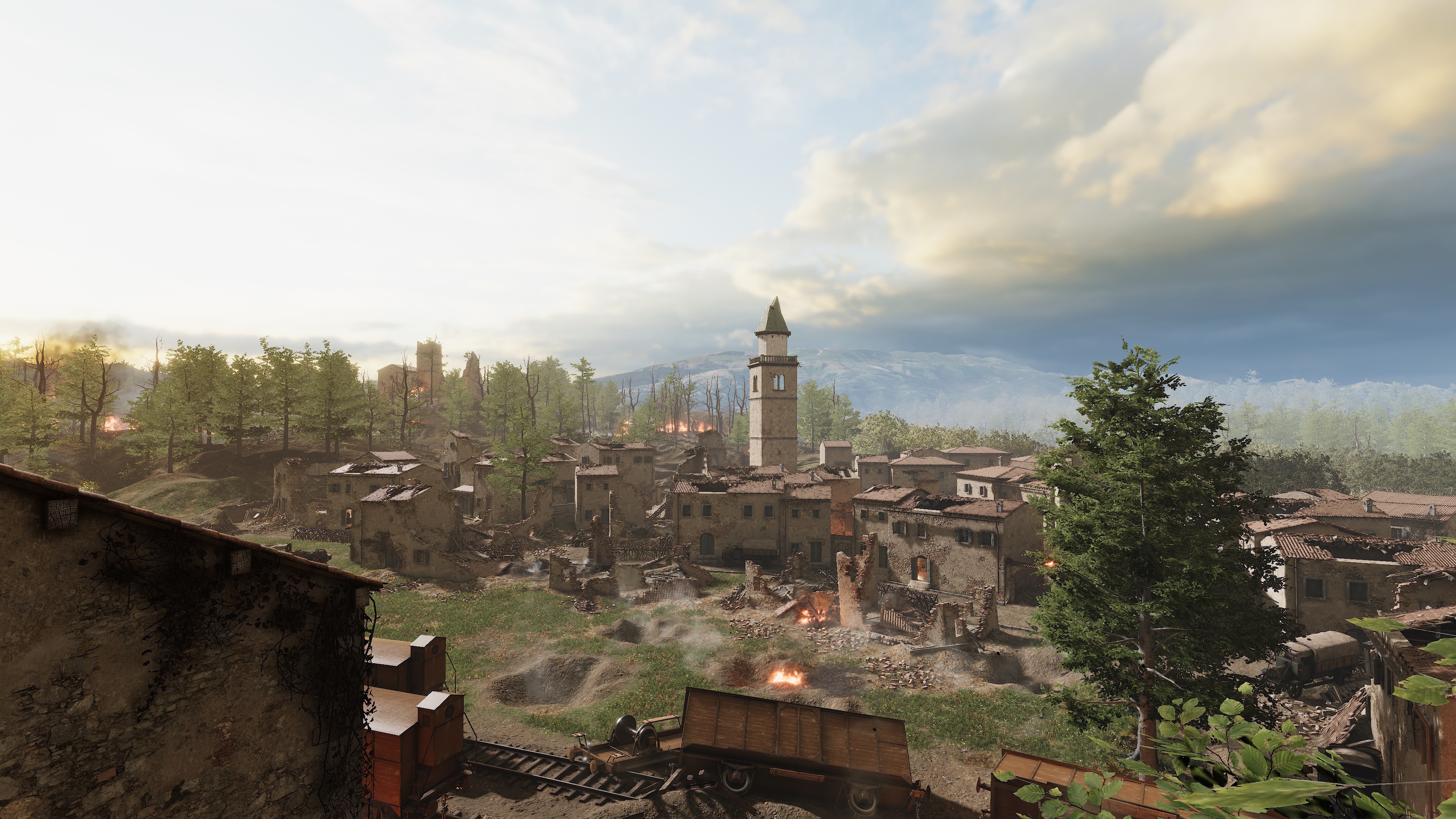
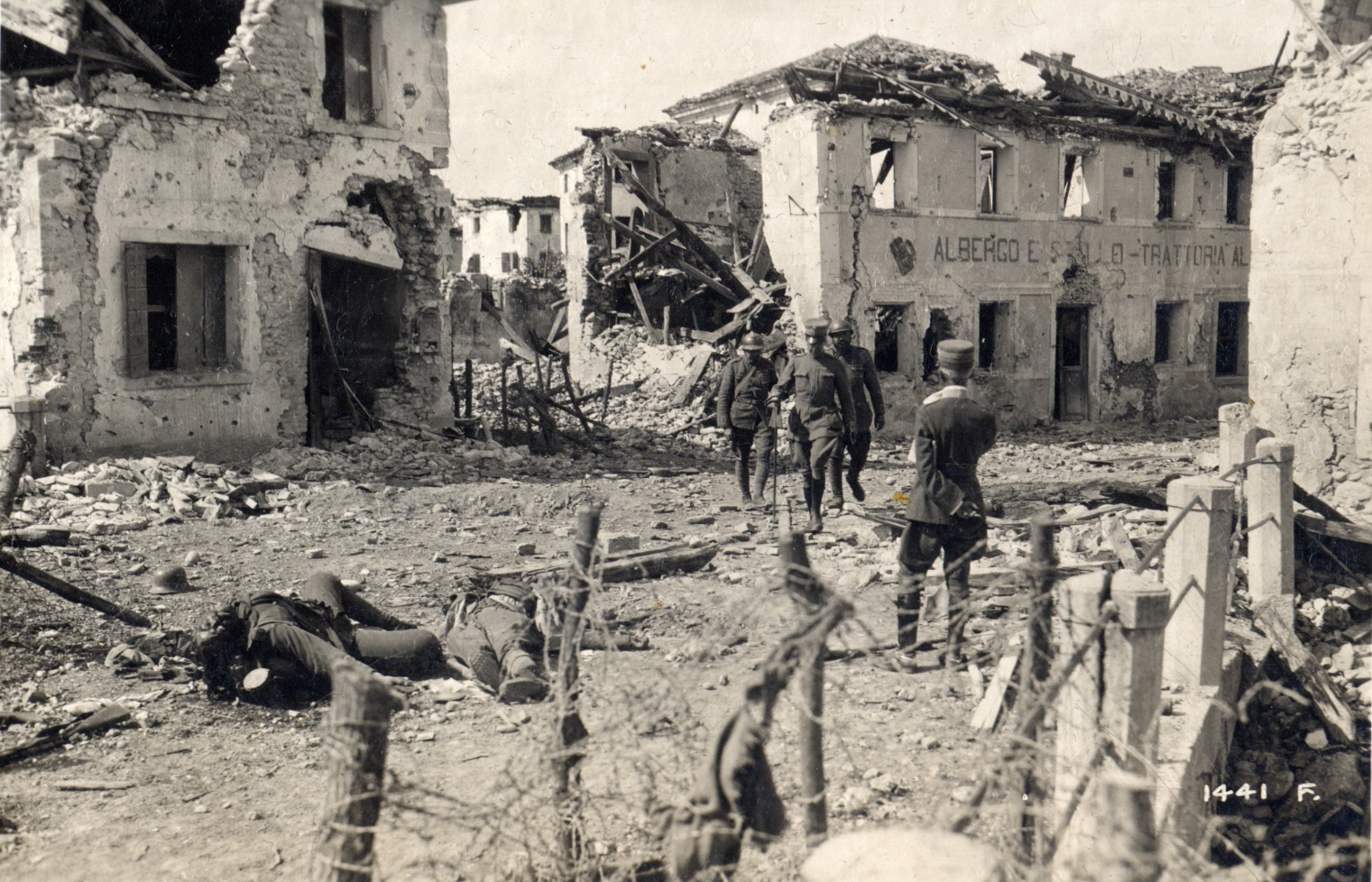
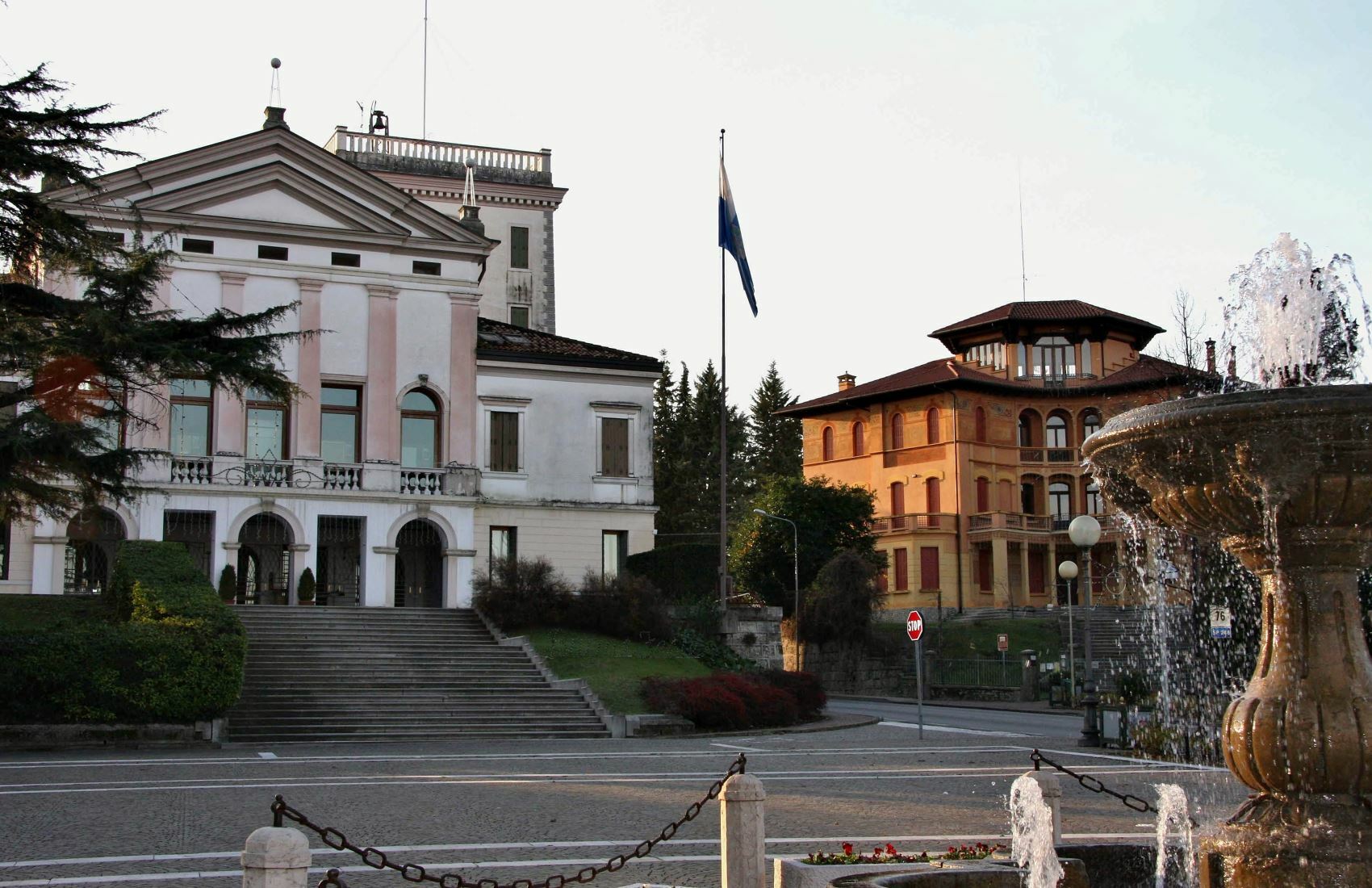
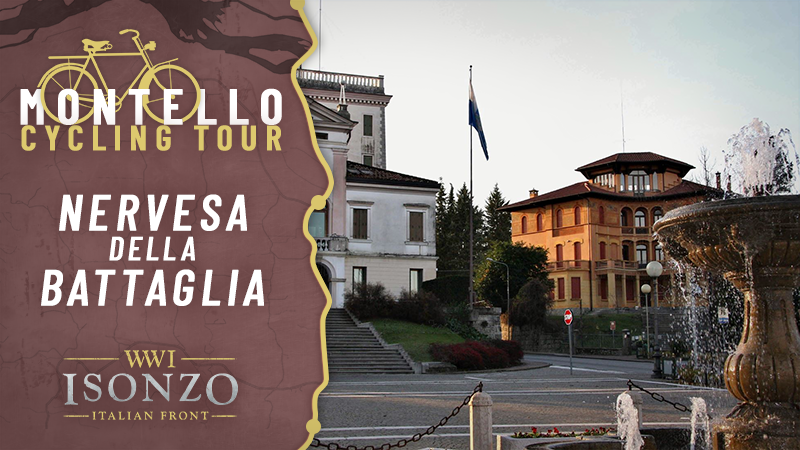
The fountain at the village square marked our sixth stop, which you may also recognize from the Montello map! Here, we dive deeper into the history of Nervesa della Battaglia: from the Romans building a fortress here and the Holy Roman Empire documenting Nervisia, to how WW1 razed it to the ground and the residents returned.

https://store.steampowered.com/news/app/1556790/view/6660352202745486093

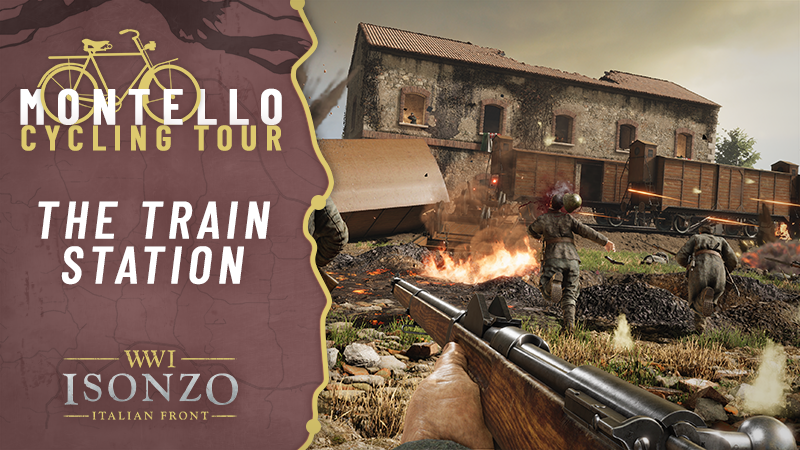
Stop #7: The Nervesa della Battaglia train station


We wrapped up the tour at the seventh stop, the old train station of Nervesa della Battaglia! While no longer in use and abandoned, the rails are still visible in the greenery. The old line was transformed into a ~16km historical walking & cycling trail called "La Tradotta", featuring plenty of history and memorials. We also briefly touched on changes we made while adapting the region into the Montello map in Isonzo.

https://store.steampowered.com/news/app/1556790/view/4535779621892161358


Bonus Stop: The Jonathan Collection


When we were talking about the story of Francesco Baracca, some of you requested us to visit the nearby aviation museum. Sadly, we didn't have time to make it a full stop, but we can make some time for it here!

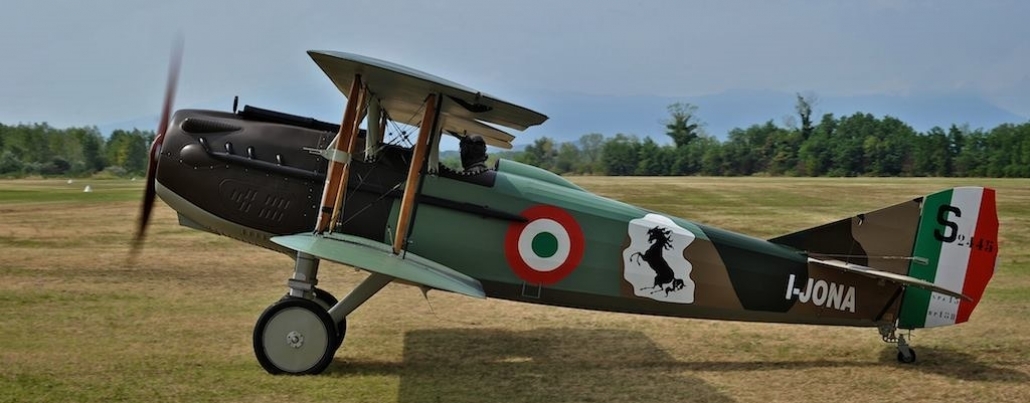
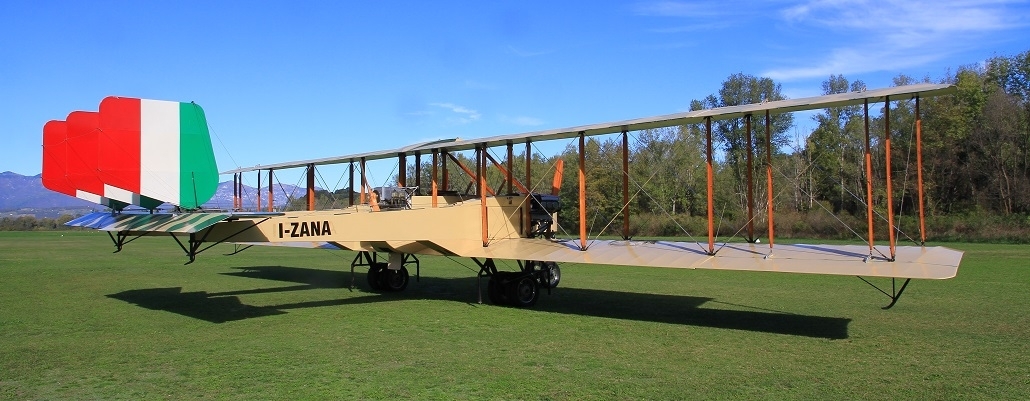
Back at Stop #6, if you take a left instead of a right when looking towards the river, you'll end up at The Jonathan Collection, housing tons of authentic replica aircraft spanning all of aviation's history – if it fits on the airfield, of course – and organizing historic reenactments. From the first strategic bomber Caproni Ca.33Z to a more modern Fiat G.91 jet fighter, there's a lot to explore and the planes do still fly! The collection also includes aircraft from Germany, France and USA. If you'd like to take a break from all the history, they have some other things as well.

I'll leave a couple of pictures from their collection below, but be sure to check out their website as well: https://www.jonathanaereistorici.it/


Replica of Francesco Baracca's Spad XIII R with his emblem

Replica of the Caproni Ca.33Z

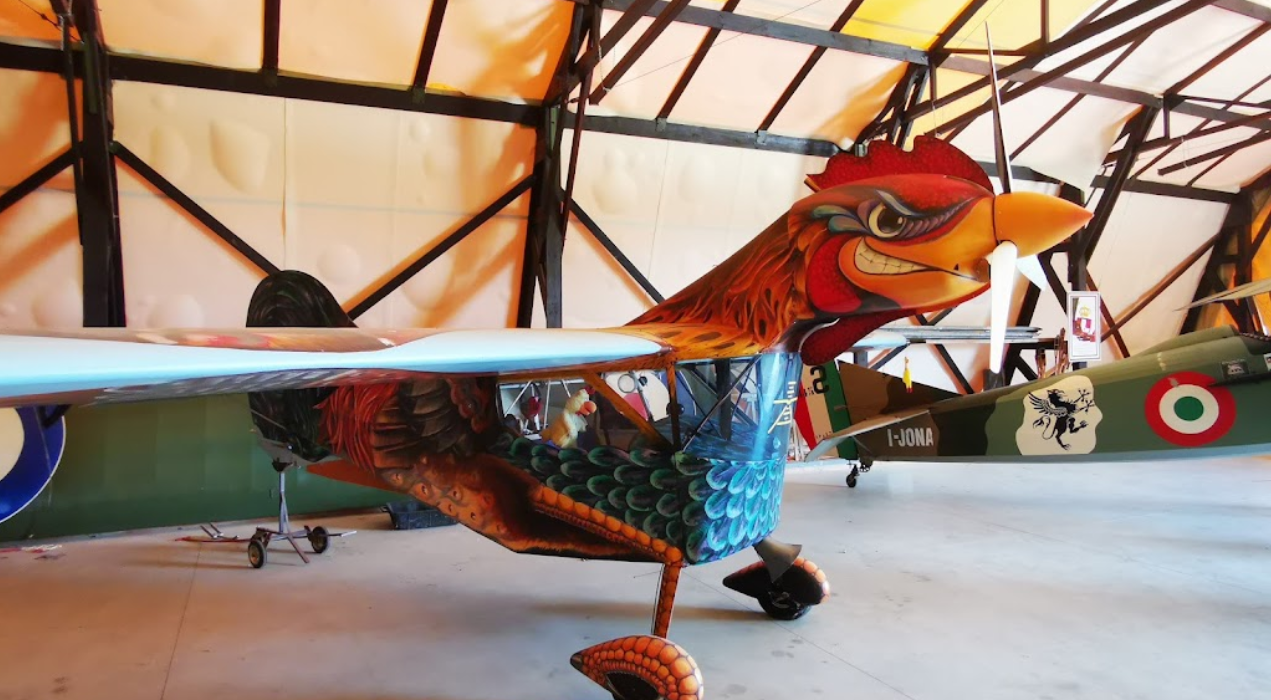
Uhh...


That's the tour all wrapped up. Again, hopefully you enjoyed it and learned something new. Now, it's full steam ahead for the next map coming to Isonzo: Adamello. You'll learn more about the map next week!


Follow our socials:


X / Twitter YouTube Discord Reddit
The Montello Cycling Tour: Nervesa Train Station [Finale]

To celebrate the release of the Montello Expansion, we bring you the Montello Cycling Tour! Just a little bit further, almost there.

Previously: Nervesa of the Battle [#6]


https://store.steampowered.com/news/app/1556790/view/6660352202745486093

We've already cycled quite a bit and explored a ton of the area's history, WW1 and beyond. Today we'll arrive at our final destination: The Nervesa della Battaglia train station.


Stop #7: The Nervesa della Battaglia train station


Starting at the fountain, we take the scenic route through the village, over Via Rimembranza (meaning Remembrance), continuing southwest and crossing the canal. Here, you'll notice the road is crossed by an old, overgrown railroad and a path. Spoiler alert: the train station is no longer in use.

Nervesa della Battaglia was once part of a short, double-track train line connecting Montebelluna, Volpago del Montello, Giavera del Montello. Nervesa della Battaglia and finally Ponte della Priula across the Piave river. There's one photo of this train line on the bridge, but you'll have to squint a bit.


The rail was opened in 1916 as part of the supply chain to get food, gear and weaponry to the front. However, when the Austro-Hungarians pushed for Nervesa, it became part of the front. Bitter fighting happened at the Nervesa train station and the Austro-Hungarians did end up capturing it.

In 1920, the line was restored as a single-track route, upgraded to double track 5 years later and then downgraded back to single track another 15 years later. It was primarily in use for passenger service during this time, which was shut down in 1966. The section between Giavera and Ponte della Priula remained in use for an army depot until 1980.

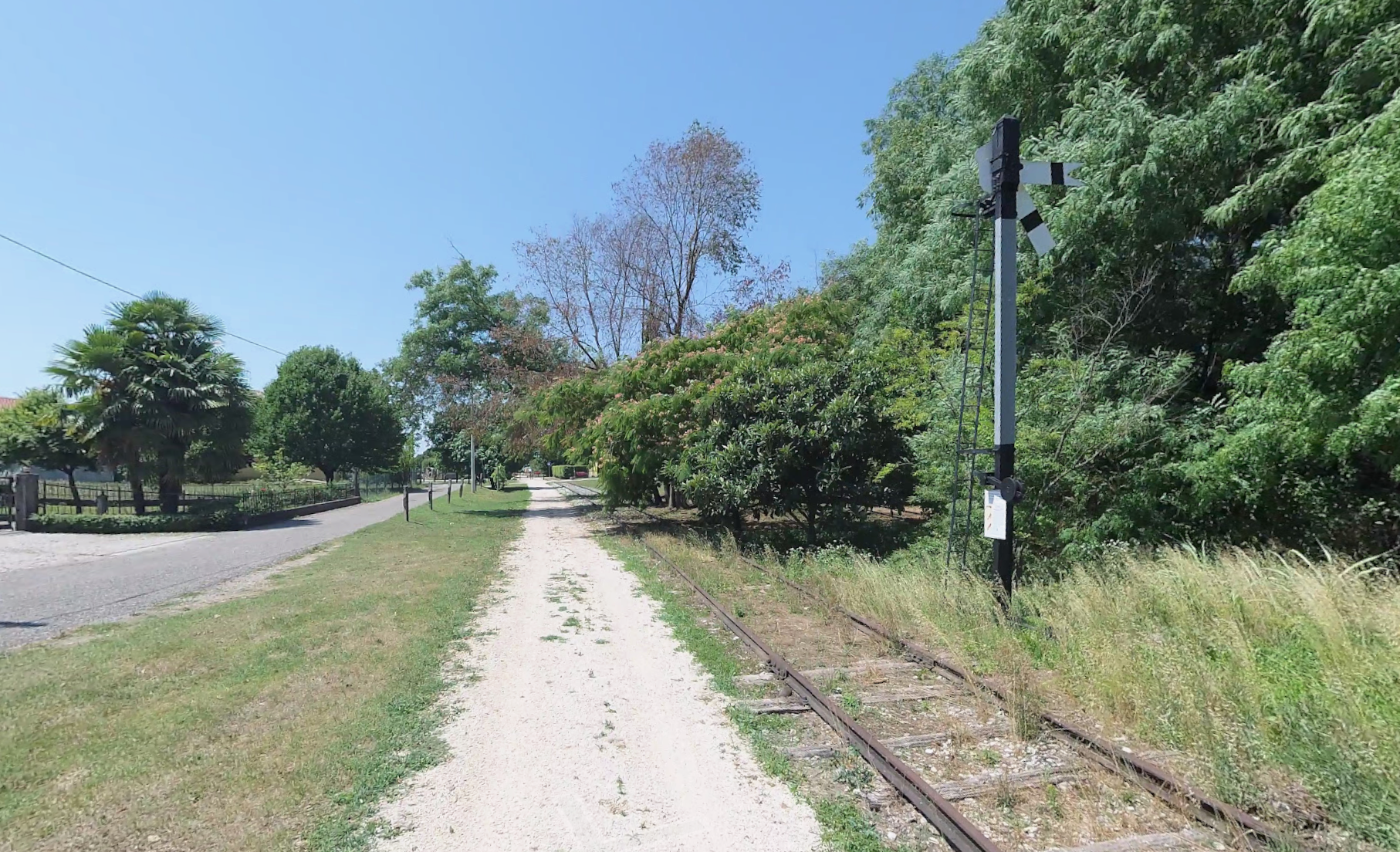
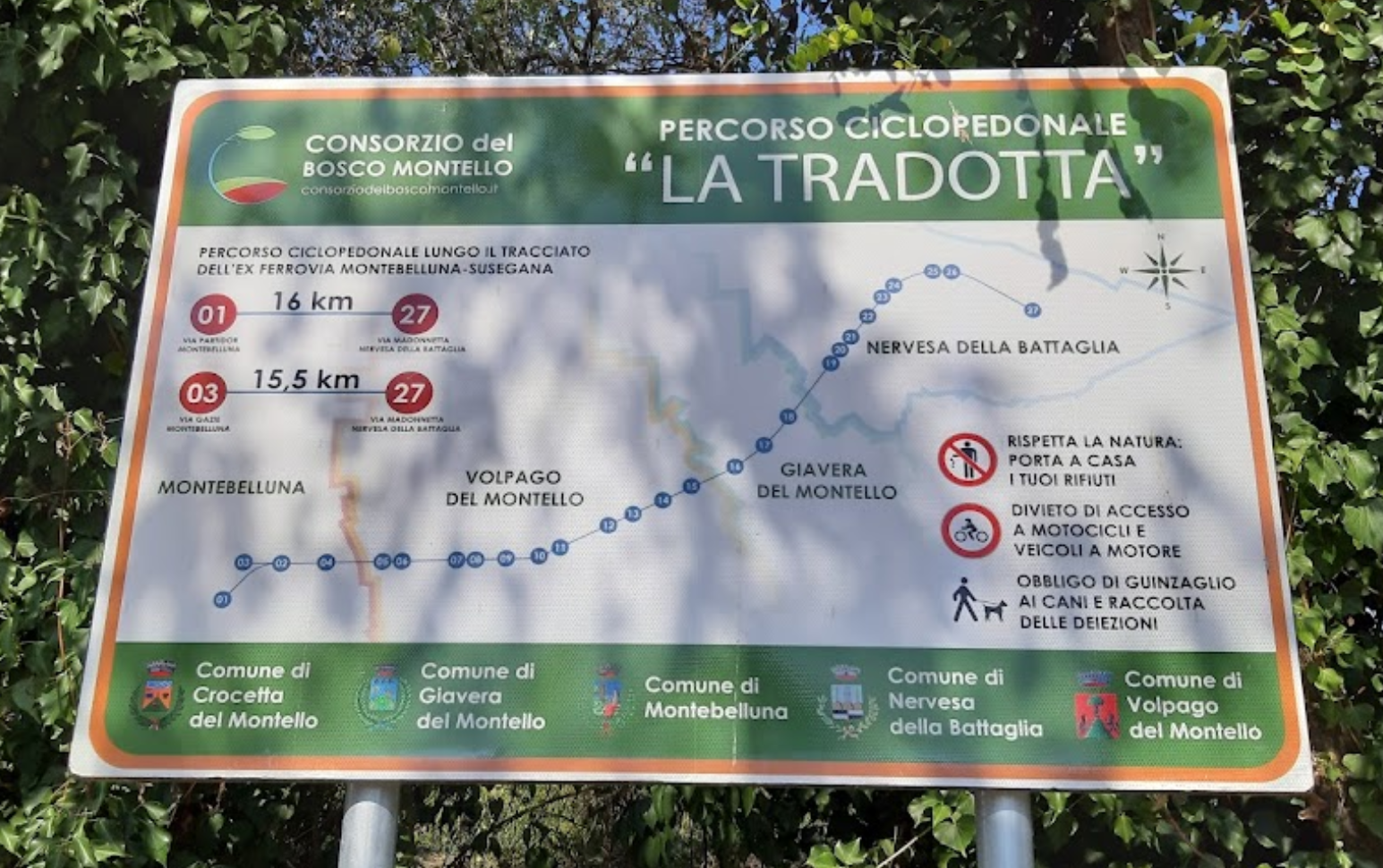
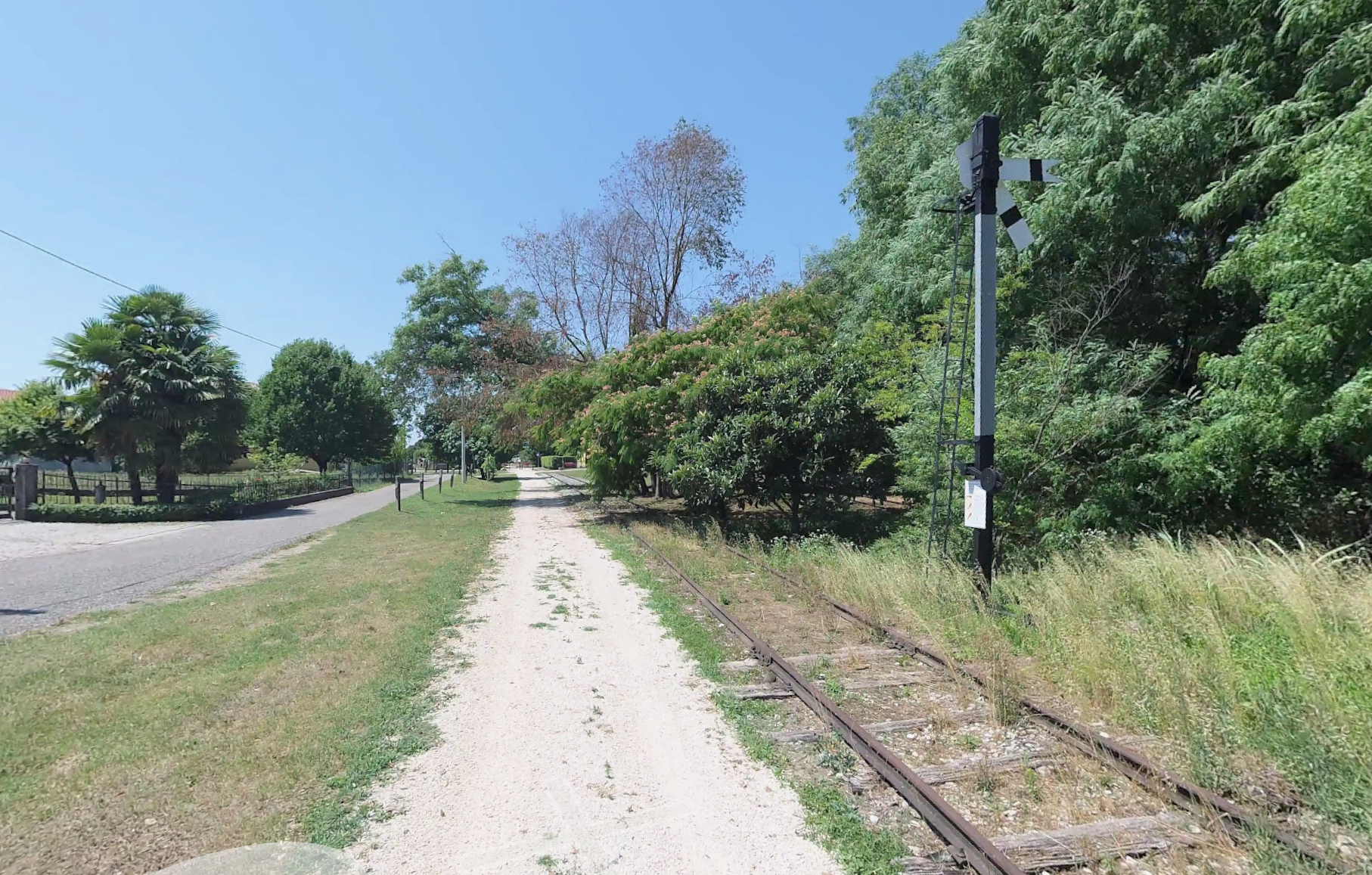
Most of the line has been dismantled, though some rail remains around the Nervesa train station. Instead of building over it, the former railway has been transformed into a ~16km historical walking trail "La Tradotta" from Montebelluna until past Nervesa.


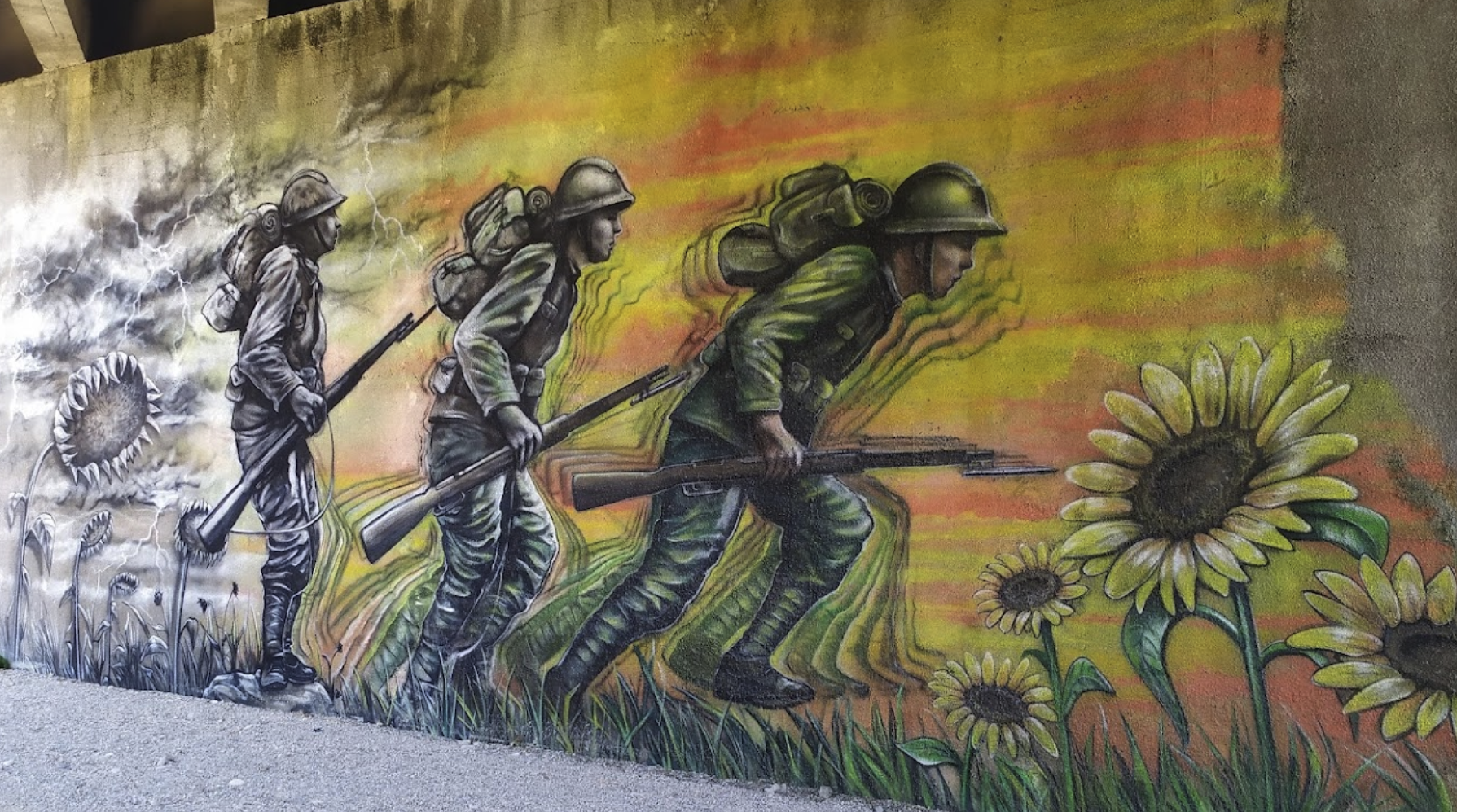
Under a bridge along the route

You're allowed to cycle on the trail, so we join in at route marker #24 heading east. This section is mostly overgrown aside from the path itself, though the old rails and signs are still visible.


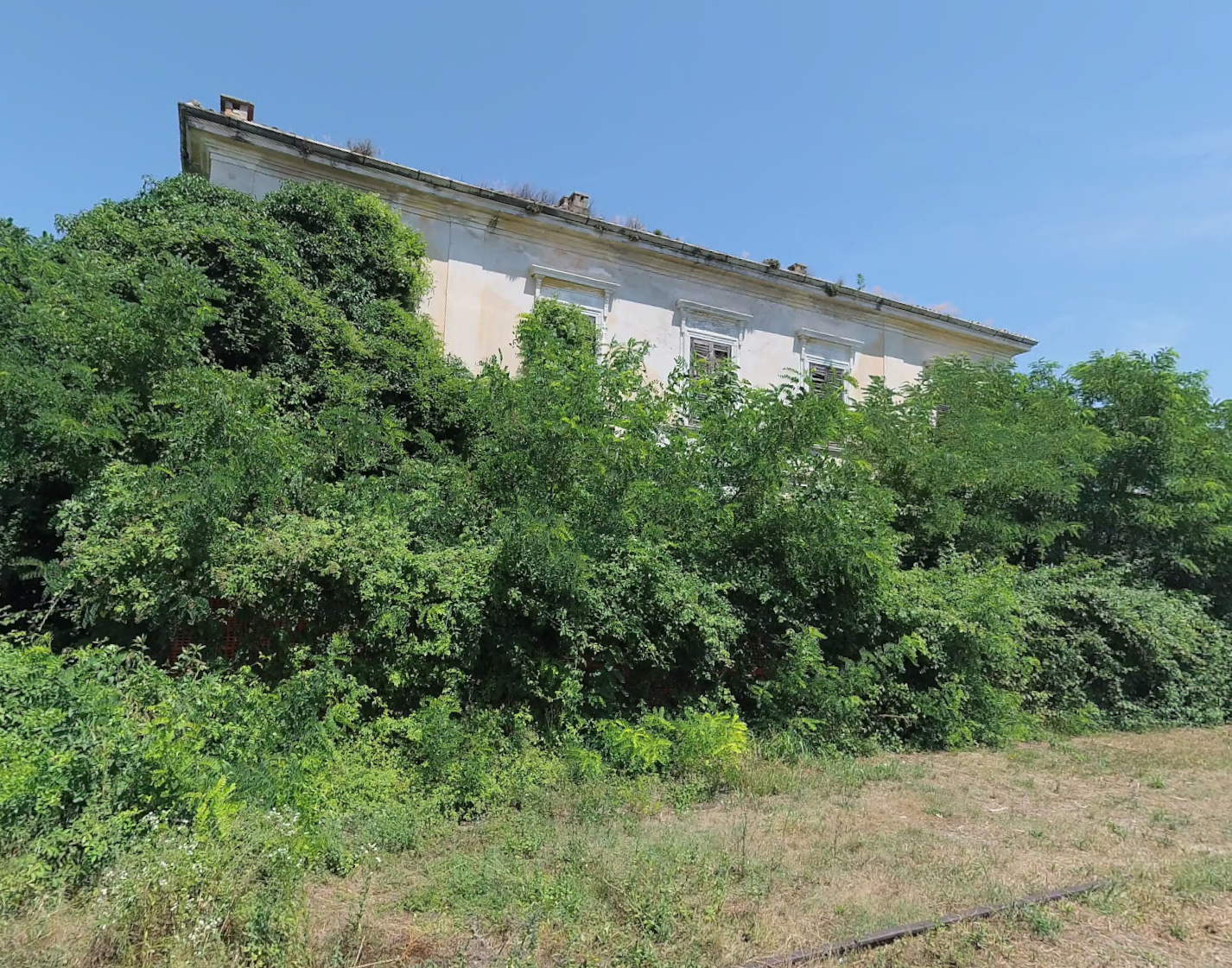
As we near route marker #25, we arrive at our final destination. Hidden behind the greenery on our left, there's an old abandoned building. Unmaintained, overgrown, slowly falling apart. You guessed it: it's the Nervesa train station.


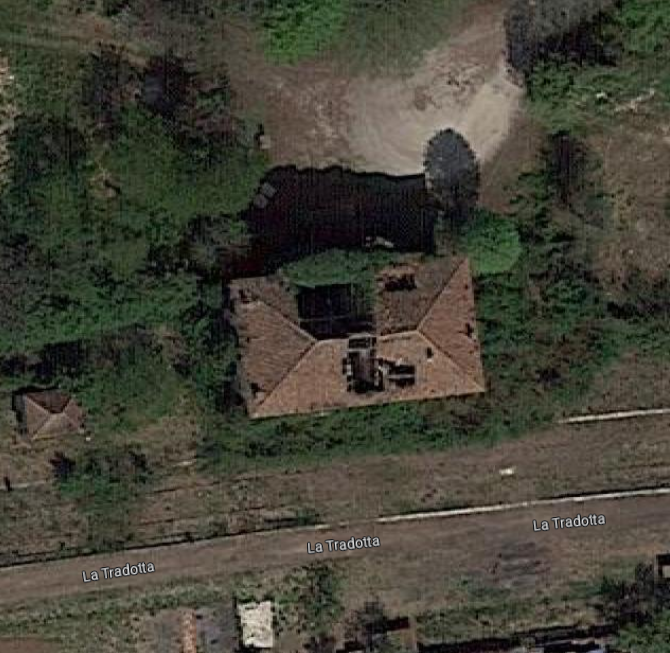
The station as seen on Google Maps.

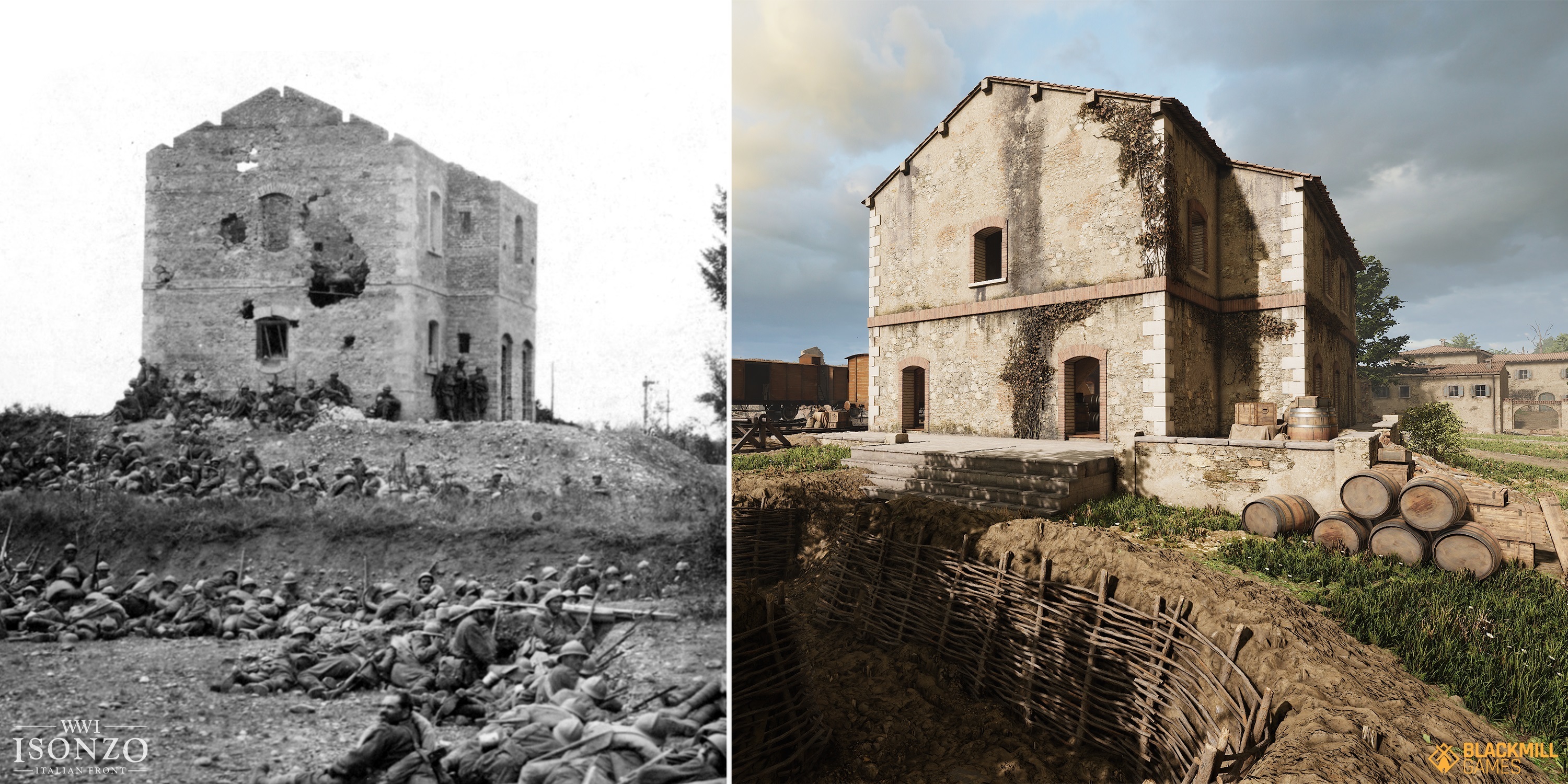
This very building is the site of so many last stands on Montello. However, we should mention that some changes have been made to make the map more enjoyable. Compared to the old reference photos, there are extra doors on the sides of the building and you may notice that we're on the tracks and are looking towards the station, while in game the station is south of the tracks. Having the rails and wagons in front of the station makes a more interesting final objective than behind the station, where it would only block the Italians from getting back to the fighting.


Note that the historical photo has been flipped horizontally. The side you see is the other side of the station in game. Soldiers are facing north.


Well... that's it! We have arrived at the final stop of the tour, the last objective of Montello. From the Second Battle of Piave to ancient history and the surprising cultural impact this region had on not just Italy, but even Europe, we told a lot of stories in the past few weeks. We really hope you've enjoyed it and learned something as well – we sure did.

Up next?


While we assume you've read all Montello Tour blogs already (right?), we'll have a recap of all the stops next week, plus maybe a quick look at something some of you have requested us to check out. It involves aviation. See you then!


Visit Montello!


The Montello Cycling Tour is a collaboration with local organizations. We'd like to thank them for helping us out with information about the region, the history and photos they provided. If you're interested in visiting the area, please check them out and tell them we sent you!

[table noborder=1]
[tr]
[td]

[/td]
[td]
For bike renting and a historic tour with possibility for a meal.

Bike Rental Montello


https://aglizattieri.com/
[/td]
[/tr]
[tr]
[td]

[/td]
[td]
Looking for your next holiday destination?

Visit Prosecco Hills


https://visitproseccohills.it/en
[/td]
[/tr]
[tr]
[td]

[/td]
[td]
Want to learn more about WW1 and the history of the area?

Museo della Battaglia di Vittorio Veneto


Location on Google Maps
[/td]
[/tr]


Follow our socials:


X / Twitter YouTube Discord Reddit
New Map Reveal: Explore the first half of Adamello!

It has not been long since the release of Montello, but we’re already getting ready for the next new map. Grab your thickest coat and sturdiest snow gear – you’ll need it for the second part of the White War campaign.

Introducing: Adamello


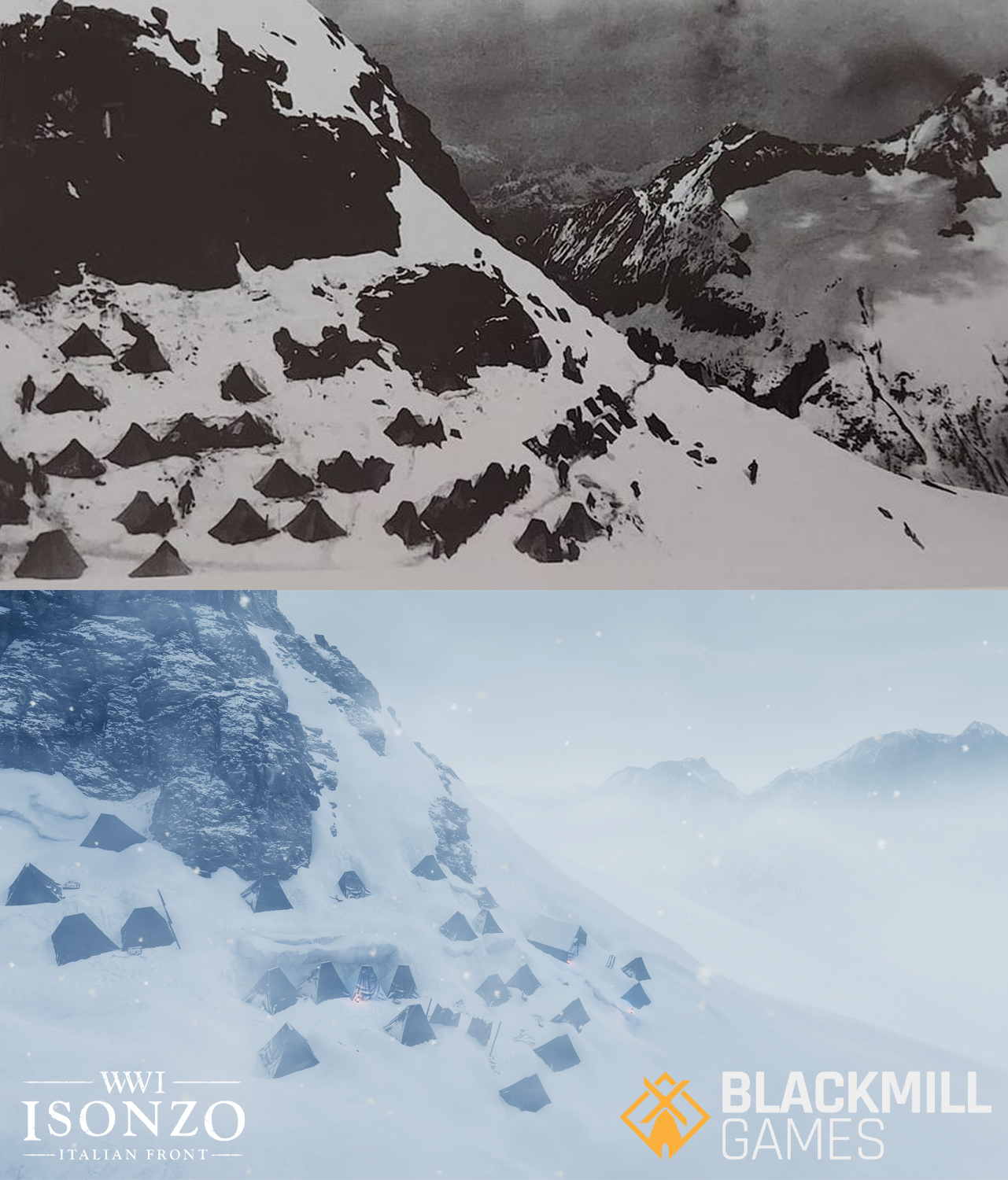
We’re headed for the highest battlefield featured in Isonzo so far, where Italian Alpini regiments launched a large-scale assault on the Presena Glacier held by Austro-Hungarian forces. While the positions of Zigolon and Marocarro were captured quite swiftly, the fortified position at Cima Presena proved to be more difficult.

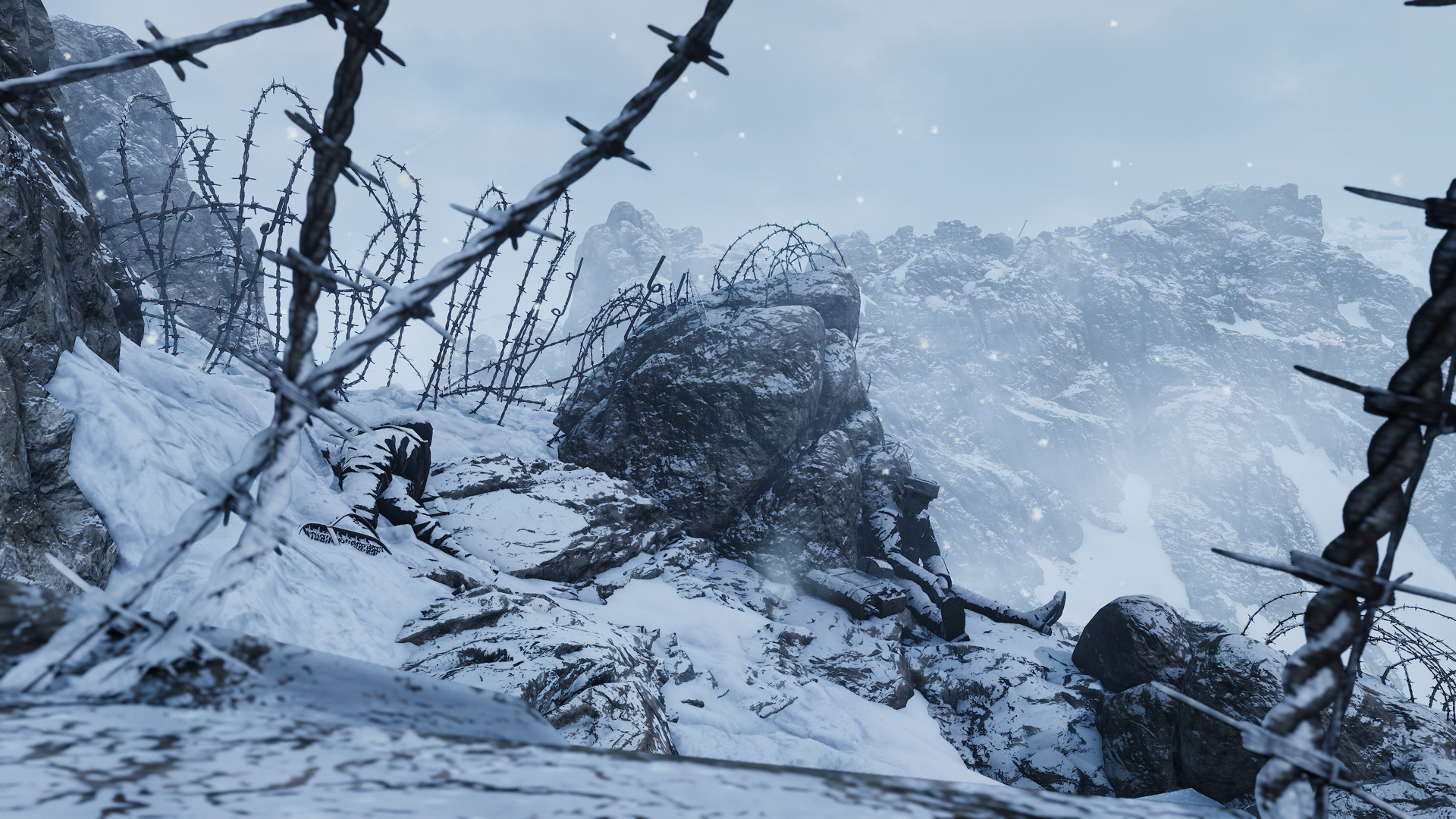
Austro-Hungarian defenses.

The Italians ended up shelling Cima Presena extensively to soften it up for a simultaneous attack from both Zigolon and Maracarro. The Austro-Hungarian garrison was decimated by the artillery. Surprised by the assault that followed, they surrendered to the Italians, severely shaken and exhausted.

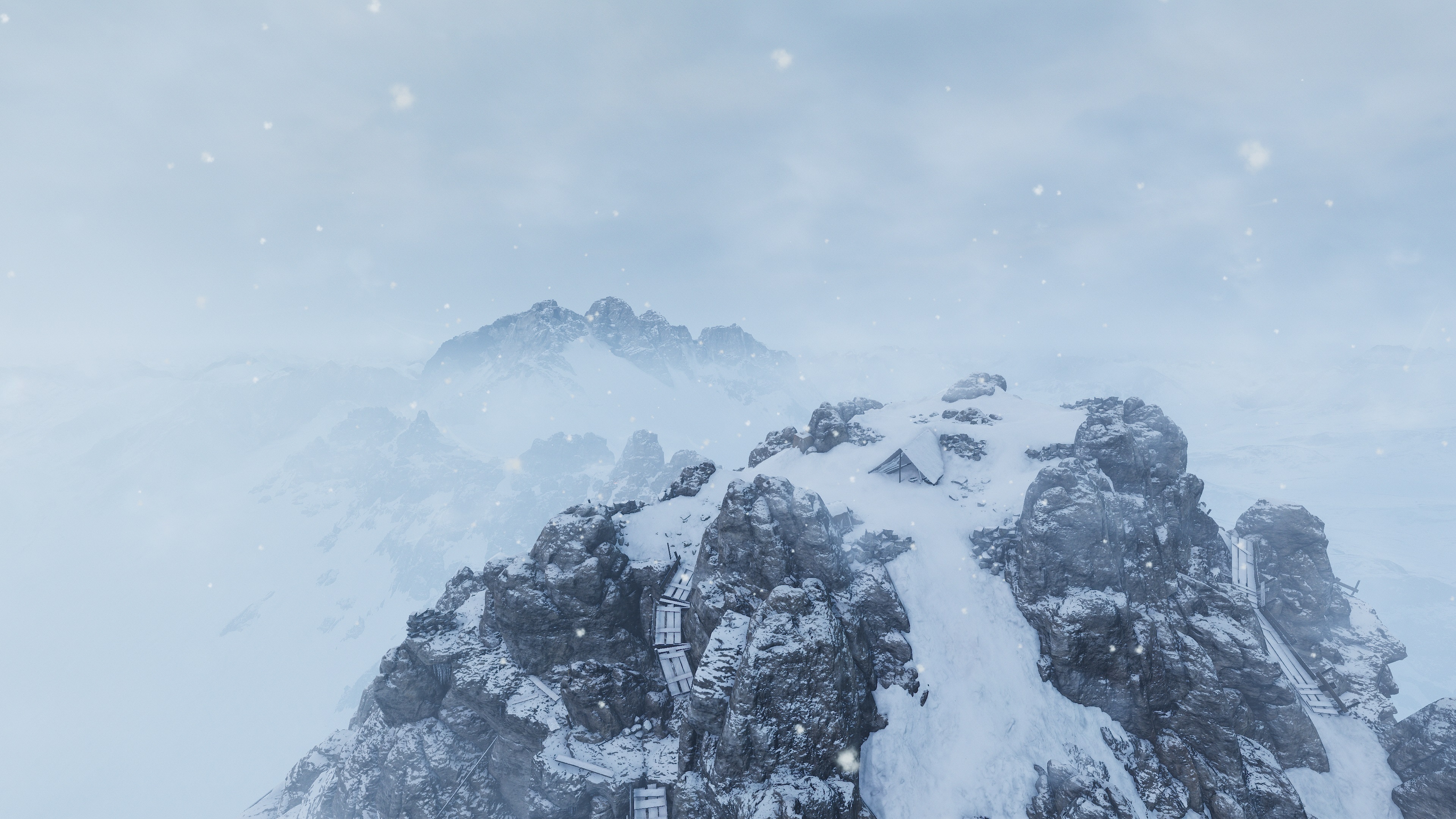
However, they were not just fighting each other. The environment and harsh snow storms at 3000m altitude were a force to be reckoned with and could make or – more commonly – break, an attack. During winter, fighting was simply impossible.

Heavy snow at Marocarro.

The Adamello map focuses on the Marocarro sector and the push for Cima Presena from the north. Today, we’ll show you the first half: the advance for Marocarro!

The lay of the land


Italian starting position with reference.

Right as the Italian attackers kick off their advance, they’ll be able to pick between three distinct routes. From their point of view, the left side of the map is an open, snow-covered area. You can follow the snowy trenches to guide you to the B objective of the first sector. You’ll need the cover as well, as you’re vulnerable from most angles – especially from above.

The middle route is a bit of a climb away from the leftmost route, halfway up the mountain ridge. While similar to the left route, the terrain is steeper and there are several connections leading to the ridge and the third route. It leads to Objective A, from where you can shoot down towards Objective B.

In between left route and middle route, defenders' POV.

The rightmost route is perhaps the most interesting. Right on the other side of the ridge is a narrow path, allowing for flanking maneuvers aided by the cover provided by rock formations. It’s not all sunshine however, as this side route merges with the middle route at the A objective and the defenders are well prepared for sneaky Italians. Also, be sure to watch your step – a tiny slip up can be a quick one-way ticket to a respawn point.

The ridge route.

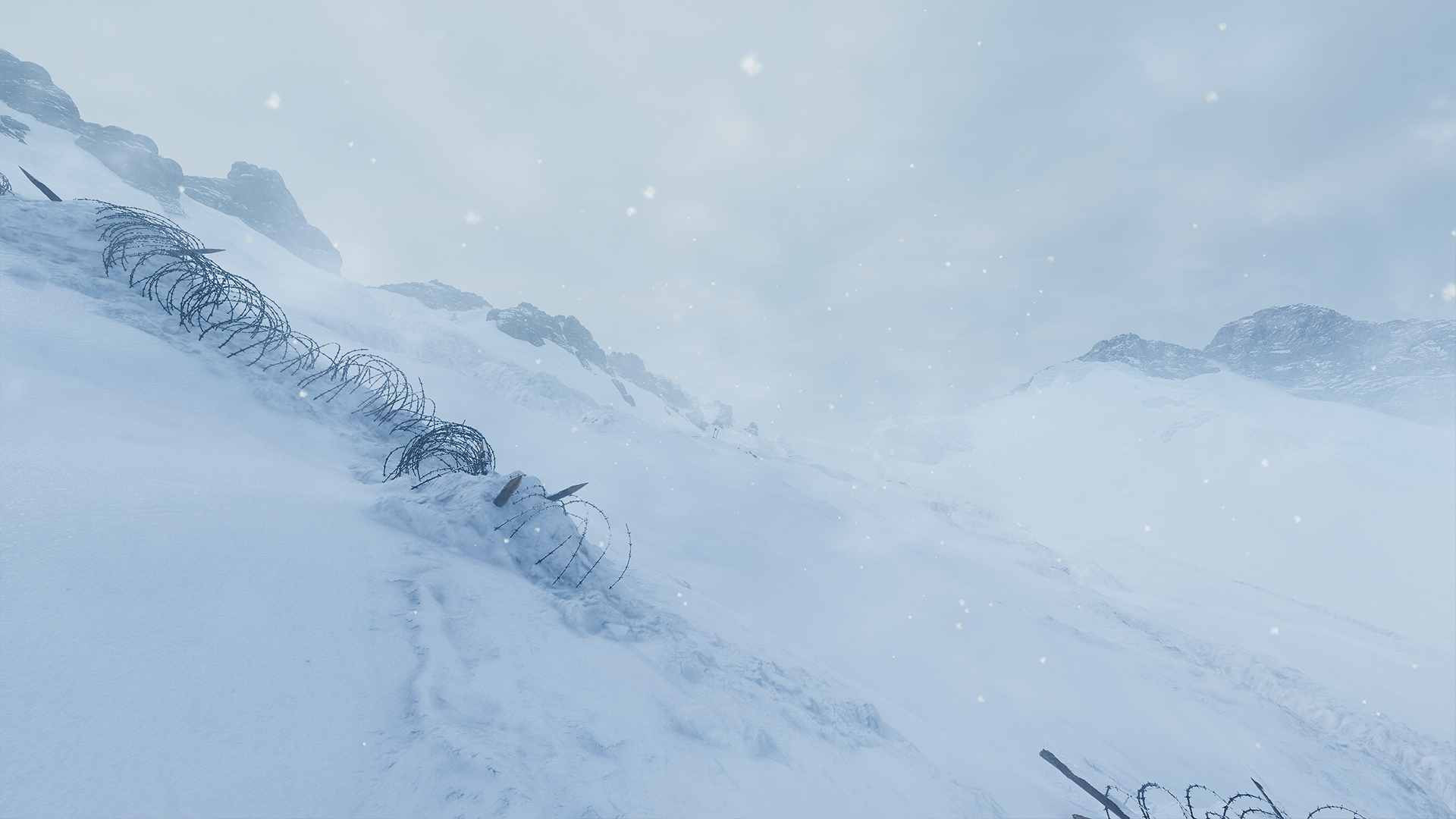
Regardless of the route, vision is severely limited by the stormy weather. While the slope provides little cover aside from the two trenches, it’s difficult to accurately hit long-range shots.

Sector #1: Maroccaro Sector


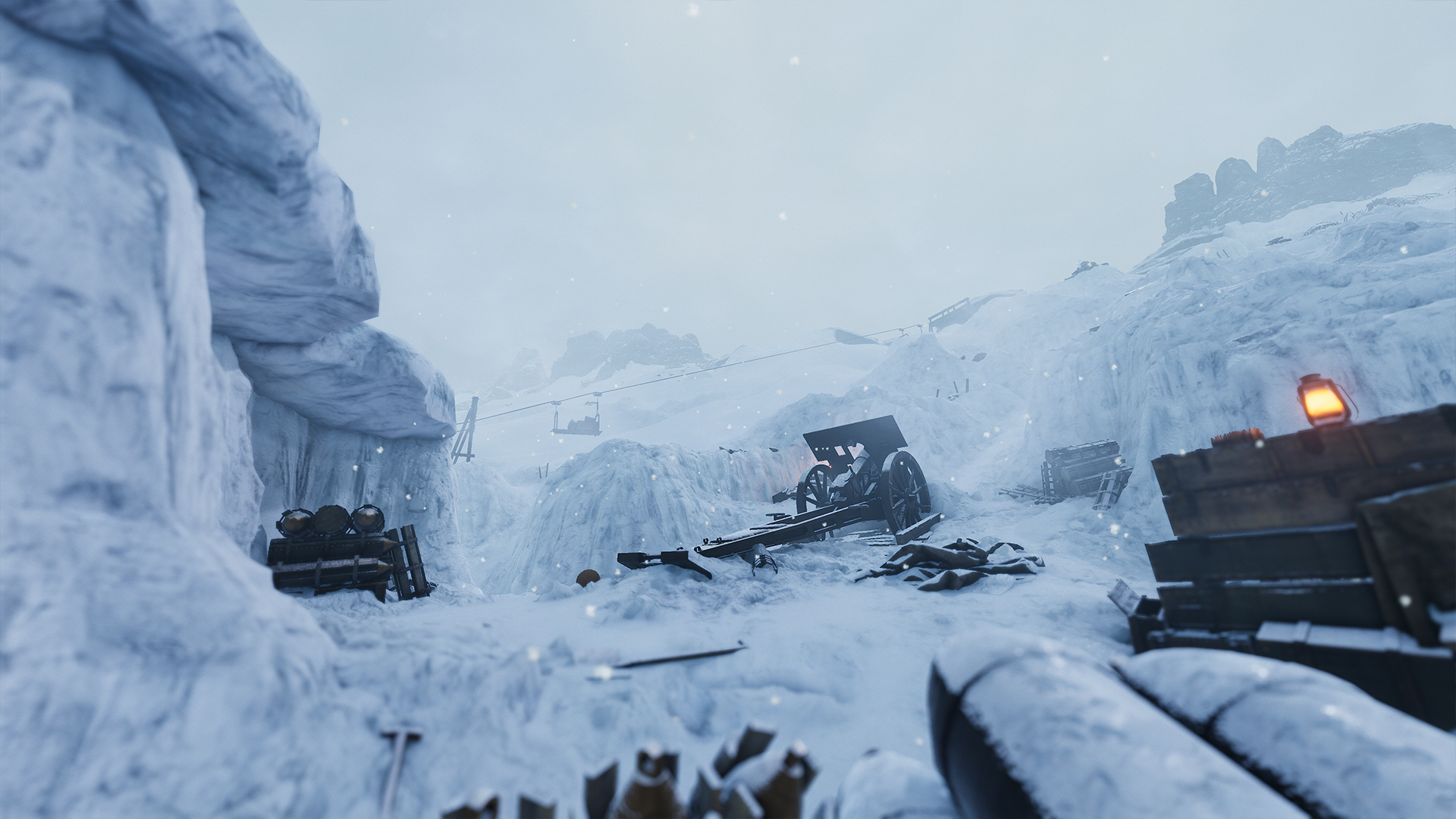
As the Italians make their way to the first sector across wire barriers, the Austro-Hungarians have dug themselves into the snowy slope.

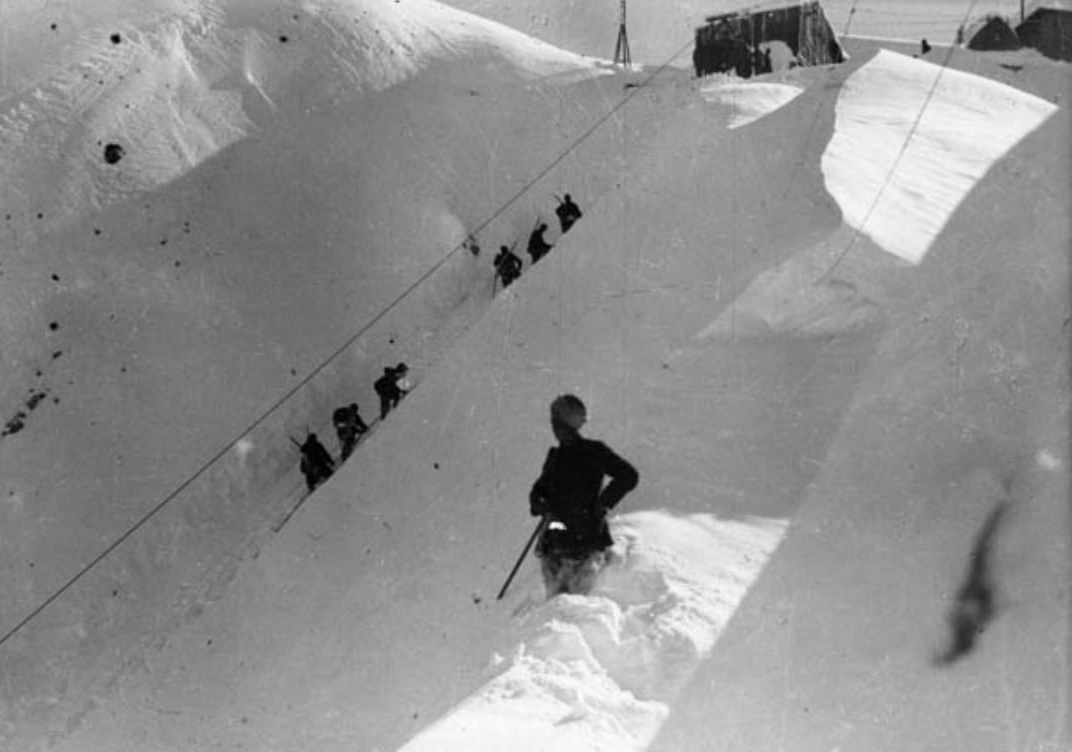
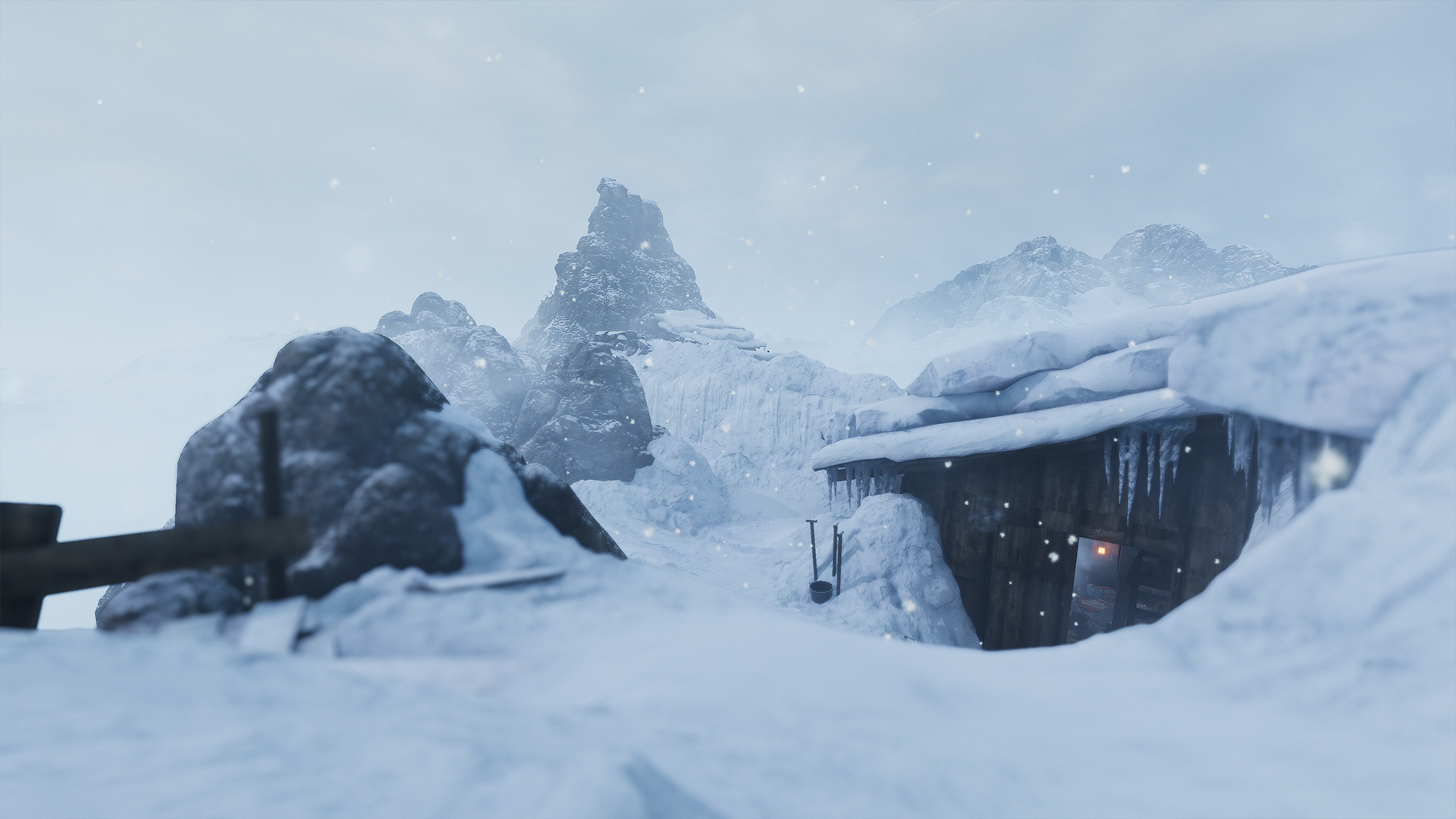
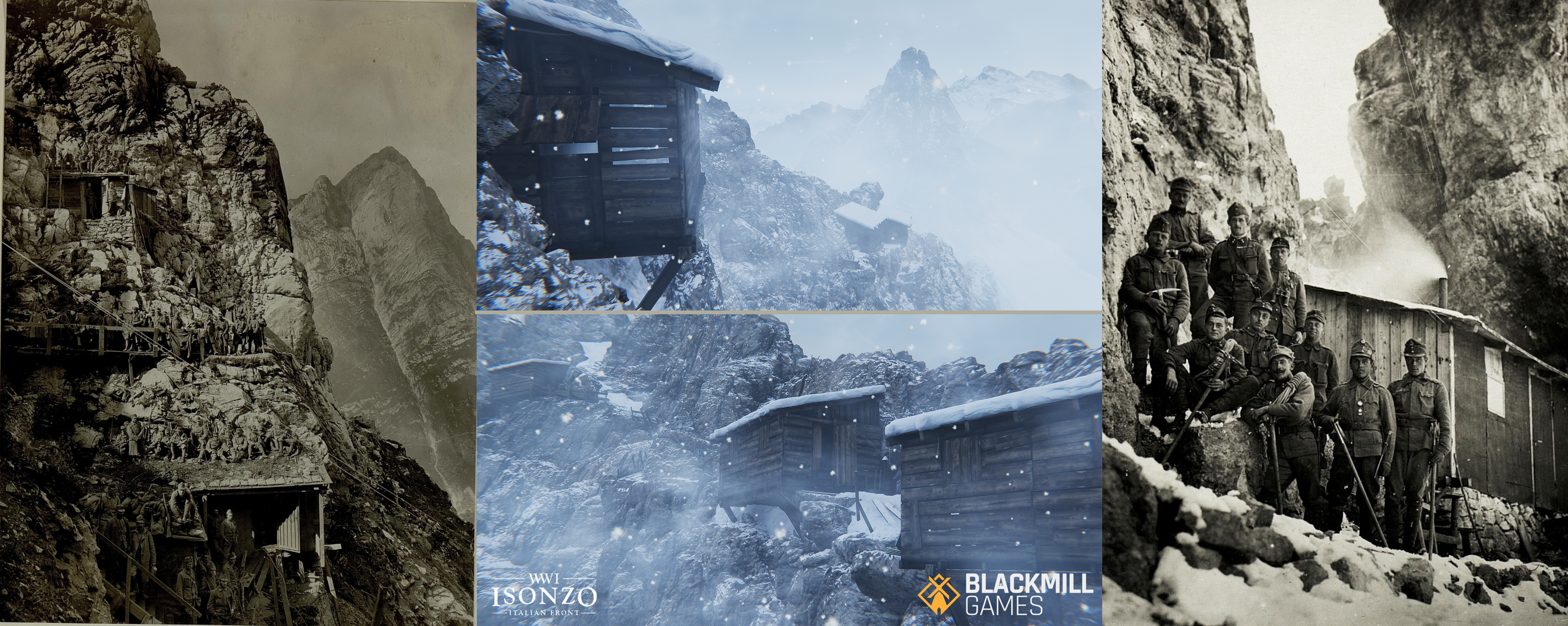
Objective A is a small supply hub on the ridge, with various storage huts and some sleeping spots connected to the cable lift used to get supplies up the mountain. The Italians will have to capture this key area before advancing.

Objective A.

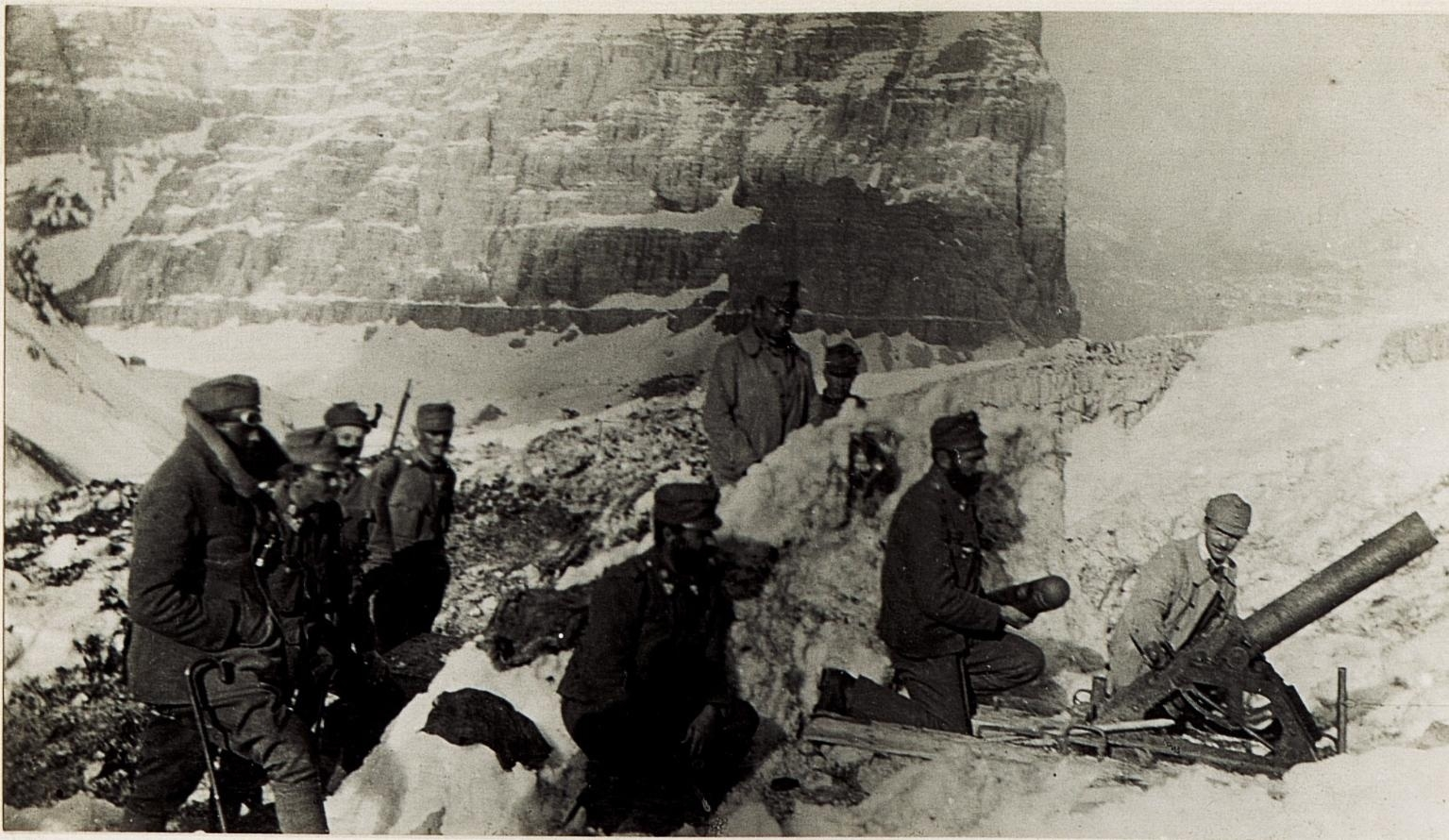
Objective B is entrenched in the snow some way down the slope of the mountain. Between the attackers and the cable lift stands a maze of frozen trenches. In the middle, there’s a Feldhaubitze the Italians are all too eager to destroy.

Objective B.

What happens on Adamello after the first sector is captured, we’ll save for part 2!

Join us next time at Cima Presena!


Follow our socials:


X / Twitter YouTube Discord Reddit
The Montello Cycling Tour: Nervesa of the Battle [#6]

To celebrate the release of the Montello Expansion, we bring you the Montello Cycling Tour! You'll likely see people here, act natural.

In the Cycling Tour, we'll be exploring the area represented in the Montello map. There's a lot of history to be found here, from the very structures that played a role in this battle to the monuments erected in memory della Grande Guerra. Every Friday we'll make a new stop at one of these historic locations until we arrive at our final destination: The Nervesa della Battaglia train station.

Previously: Visiting the Fallen [#5]


https://store.steampowered.com/news/app/1556790/view/4704663339700706595

We speed down the hill and end up on a larger road (I hope your breaks work). Taking a left, our stop is just up ahead.


Stop #6: Fontana di Piazza la Piave


We arrive at the central square of Nervesa della Battaglia; probably a familiar name by now, as it's the village we recreated on the Montello map. In fact, you can find this very fountain in game as well!


Nervesa della Battaglia is a village (or comune) with a population of about 6,500. We already mentioned some of its long history while cycling over Montello, but here's a quick rundown.

A brief pre-WW1 history


Based on archeological finds, it's assumed the Romans built a fortress on the site of present-day Nervesa in the first century. The surrounding area was involved in the centuriation of Treviso, a system used to divide land among the Roman populace. Nervesa was first documented by the Holy Roman Empire in 954 as Nervisia and gifted to the Collalto family.

The Second Battle of the Piave


Fast forwarding a bit, we arrive at the latter half of WW1. After the Italian defeat during the Battle of Caporetto, Austro-Hungarian forces pushed across the Piave river in June 1918, in an attempt to create a foothold across the river and eliminate the natural defenses it offered to the Italians. The Austrian forces initially succeeded, but were stopped in their further advances south towards Bavaria (no, not the German state) and Arcade (no, not the game kind) by the Italian counteroffensive. French artillery bombarded the Austro-Hungarians, their walkways across the river as well as Nervesa, forcing them back to the defensive.


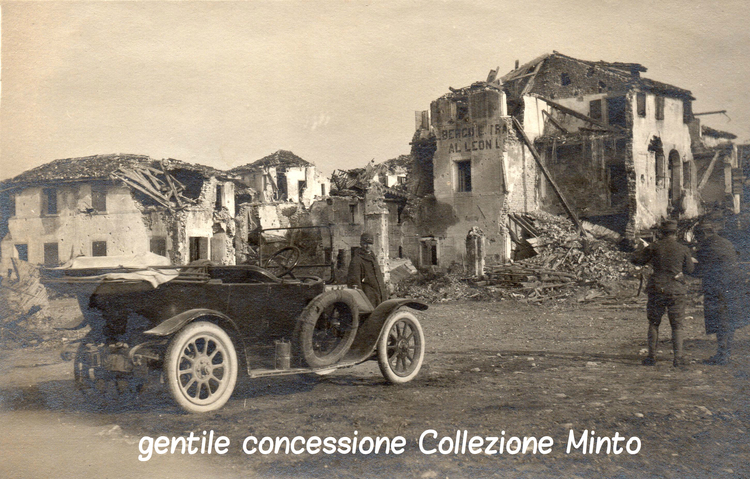
After a week of fighting (during which Francesco Baracca was downed), Italian forces got the upperhand and the Austro-Hungarians decided to retreat back across the river. This marked the end of the role Nervesa played in WW1. Hours after the retreat, the Italian King Vittorio Emanuele III visited the village only to find it razed to the ground from the fighting and artillery.


Modern day Nervesa


While not much remained of Nervesa after the war, this wasn't the end of the village (which probably isn't very surprising considering where we are). Its people returned and the population even exceeded pre-war numbers by 1921. Around this time, Nervesa was renamed Nervesa della Battaglia, or "Nervesa of the Battle", referring to the Second Battle of the Piave.

Today, Nervesa della Battaglia is an industrial village supported by the local agricultural sector. In the surrounding industrialized areas of Dus, Bidasio and Foscarini, you'll find producers of everything from concrete to gelato.

The village itself is quite a typical, idyllic Italian comune. Its main attractions are many of the places we've talked about already, like the shrine to Francesco Baracca and the military ossuary. However, it is very beautiful here, so be sure to explore and grab a bite if you're ever nearby visiting the historical landmarks.


Up next


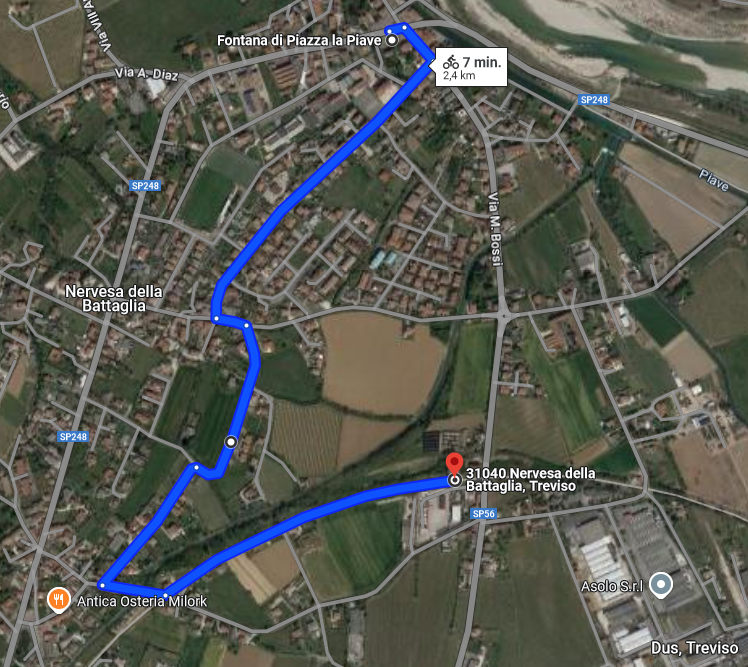
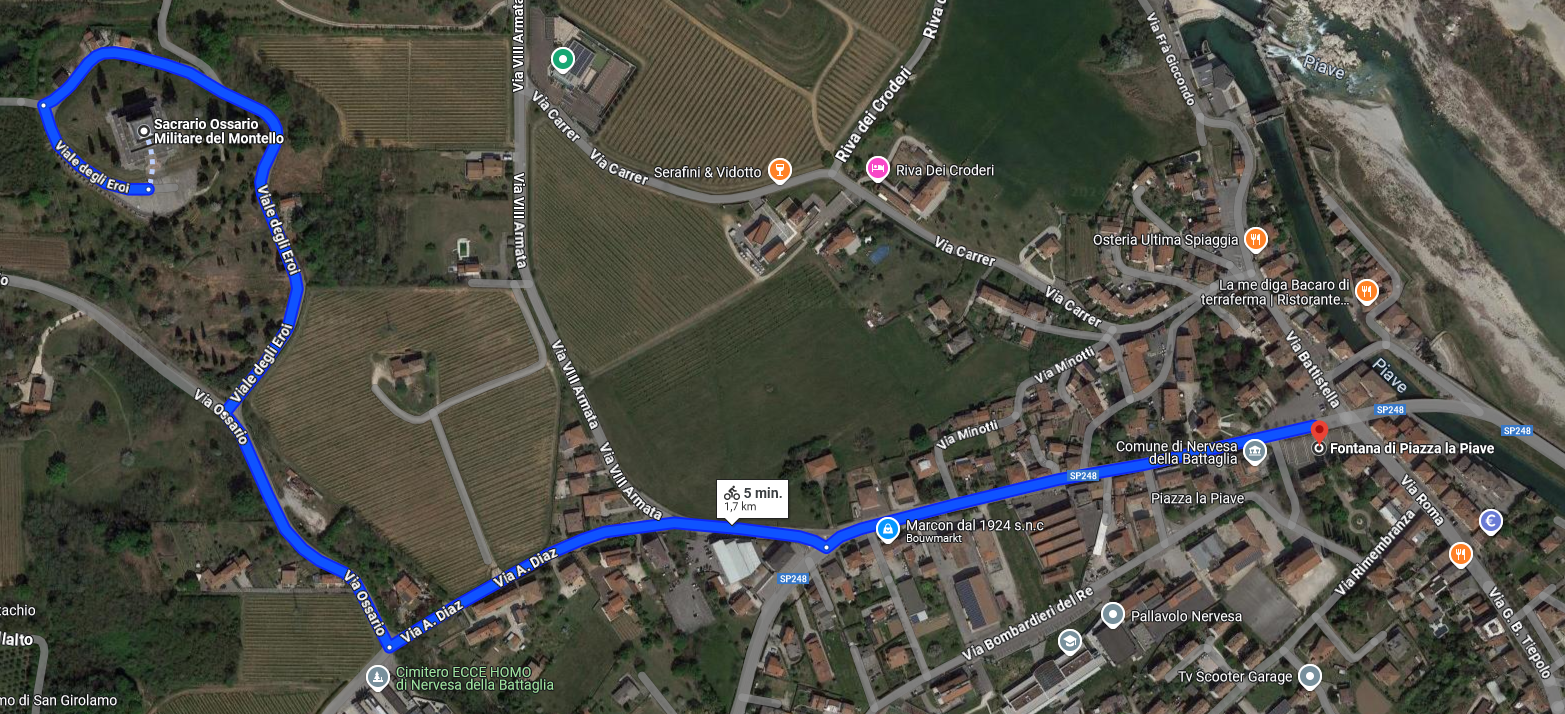
Next time, we wrap up the cycling tour! We'll arrive at our last stop, the old train station of Nervesa della Battaglia. The route we'll take isn't the fastest option, but it allows us to see a bit more of the village.

The route on Google Maps


Visit Montello!


The Montello Cycling Tour is a collaboration with local organizations. We'd like to thank them for helping us out with information about the region, the history and photos they provided. If you're interested in visiting the area, please check them out and tell them we sent you!

[table noborder=1]
[tr]
[td]

[/td]
[td]
For bike renting and a historic tour with possibility for a meal.

Bike Rental Montello


https://aglizattieri.com/
[/td]
[/tr]
[tr]
[td]

[/td]
[td]
Looking for your next holiday destination?

Visit Prosecco Hills


https://visitproseccohills.it/en
[/td]
[/tr]
[tr]
[td]

[/td]
[td]
Want to learn more about WW1 and the history of the area?

Museo della Battaglia di Vittorio Veneto


Location on Google Maps
[/td]
[/tr]


Follow our socials:


X / Twitter YouTube Discord Reddit
The Montello Cycling Tour: Visiting the Fallen [#5]

To celebrate the release of the Montello Expansion, we bring you the Montello Cycling Tour! Time to pay our respects.

In the Cycling Tour, we'll be exploring the area represented in the Montello map. There's a lot of history to be found here, from the very structures that played a role in this battle to the monuments erected in memory della Grande Guerra. Every Friday we'll make a new stop at one of these historic locations until we arrive at our final destination: The Nervesa della Battaglia train station.

Previously: Francesco Baracca [#4]


https://store.steampowered.com/news/app/1556790/view/4704662705453838153

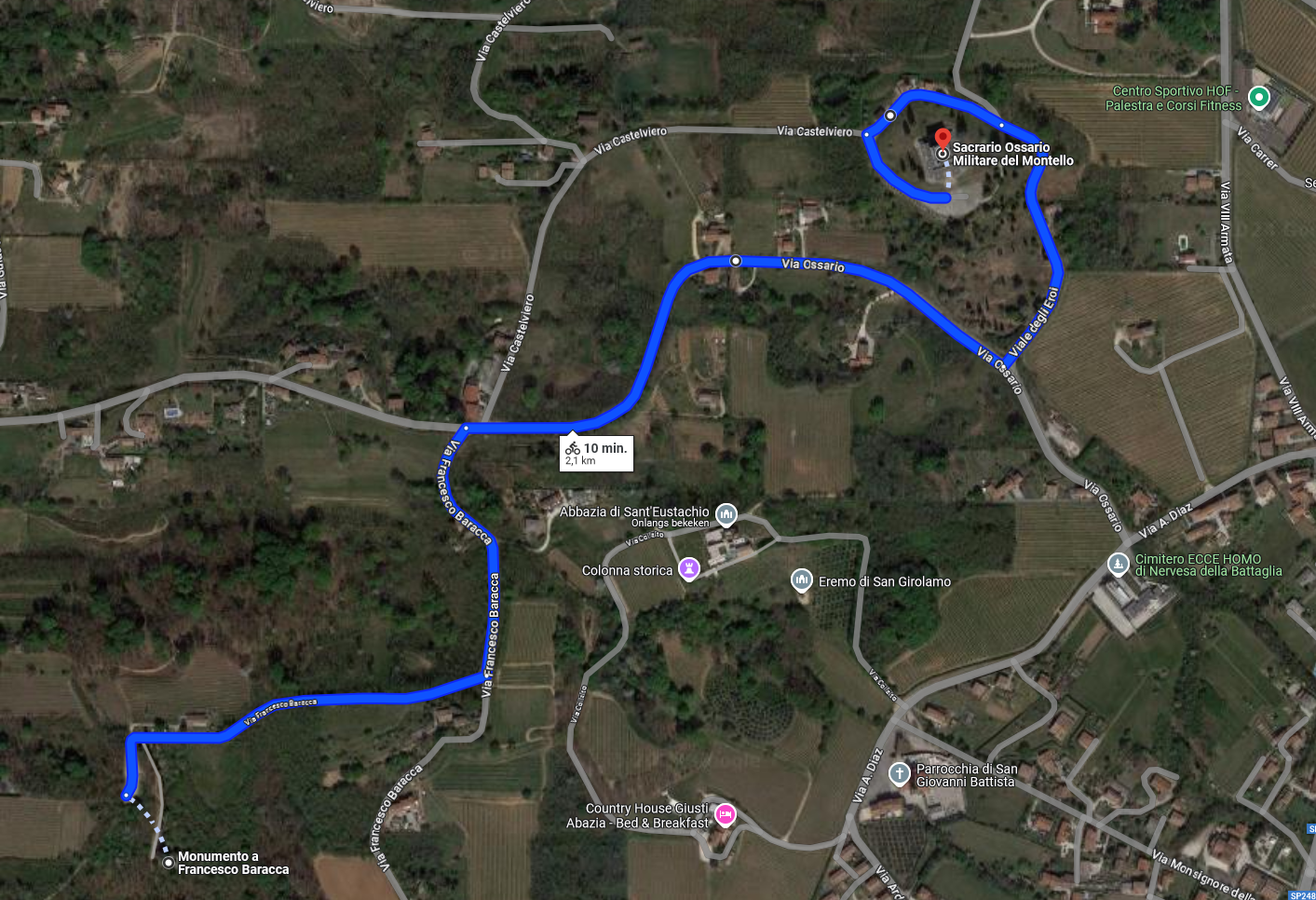
We continue cycling up and down the hill as we make our way to our next stop. Following the main road down is the quickest way. Going straight will get you stuck at a private road, though you can cycle the long way around for the scenic route!


Stop #5: Sacrario Ossario Militare del Montello


Literally translated as "Military Ossuary Shrine of Montello", this structure designed by Felice Nori is the final resting place of many Italian soldiers that fell fighting in the surrounding region during WW1. It stands 32 meters tall and houses the remains of 9,325 soldiers, of which 6,099 were identified and 3,226 remain unknown. They were previously buried in about 120 smaller cemeteries scattered along the Piave, but were collected and moved to this ossuary (similar to a mausoleum but at a much larger scale) when it was inaugurated in 1938 for the 20th anniversary of the Second Battle of the Piave.


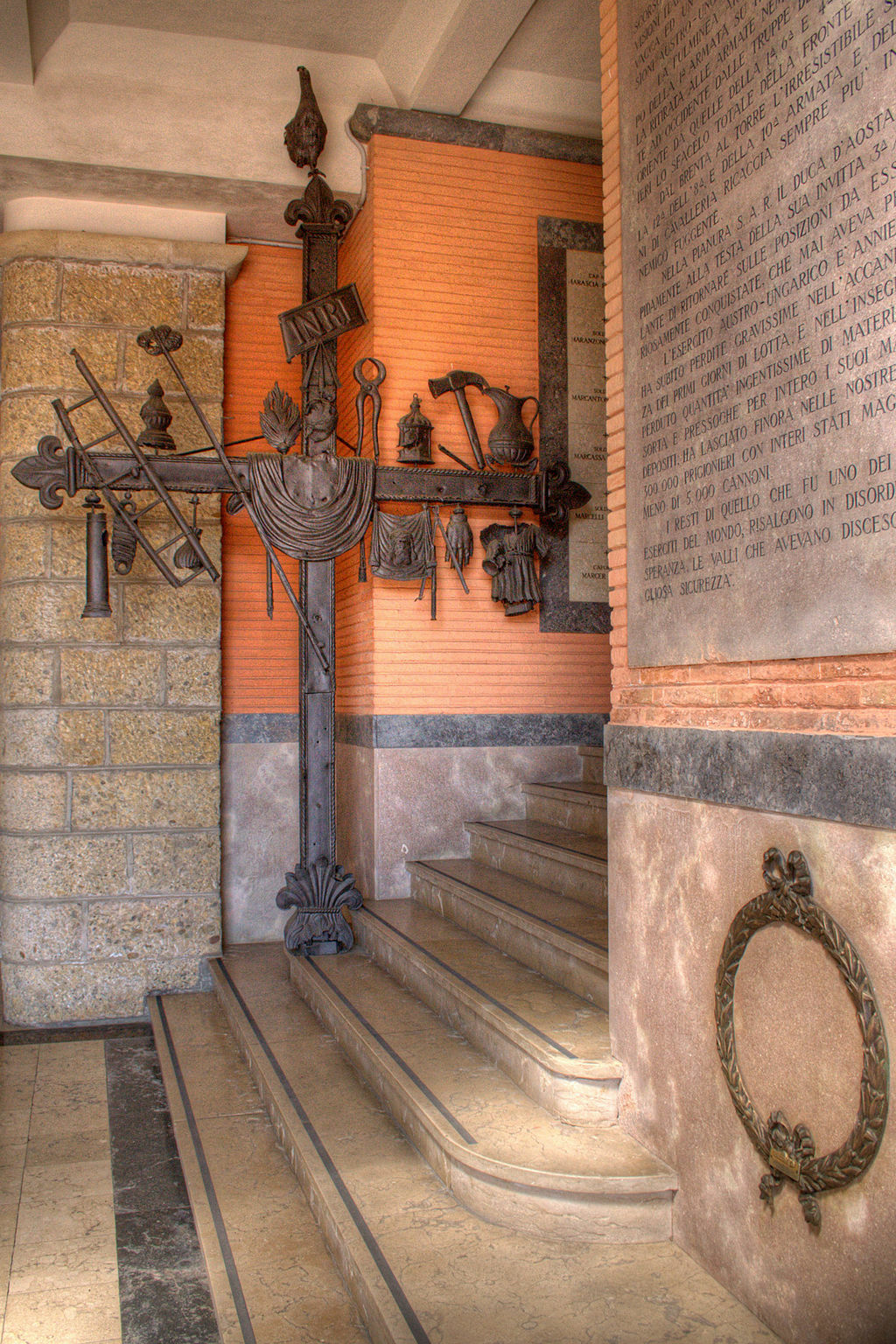
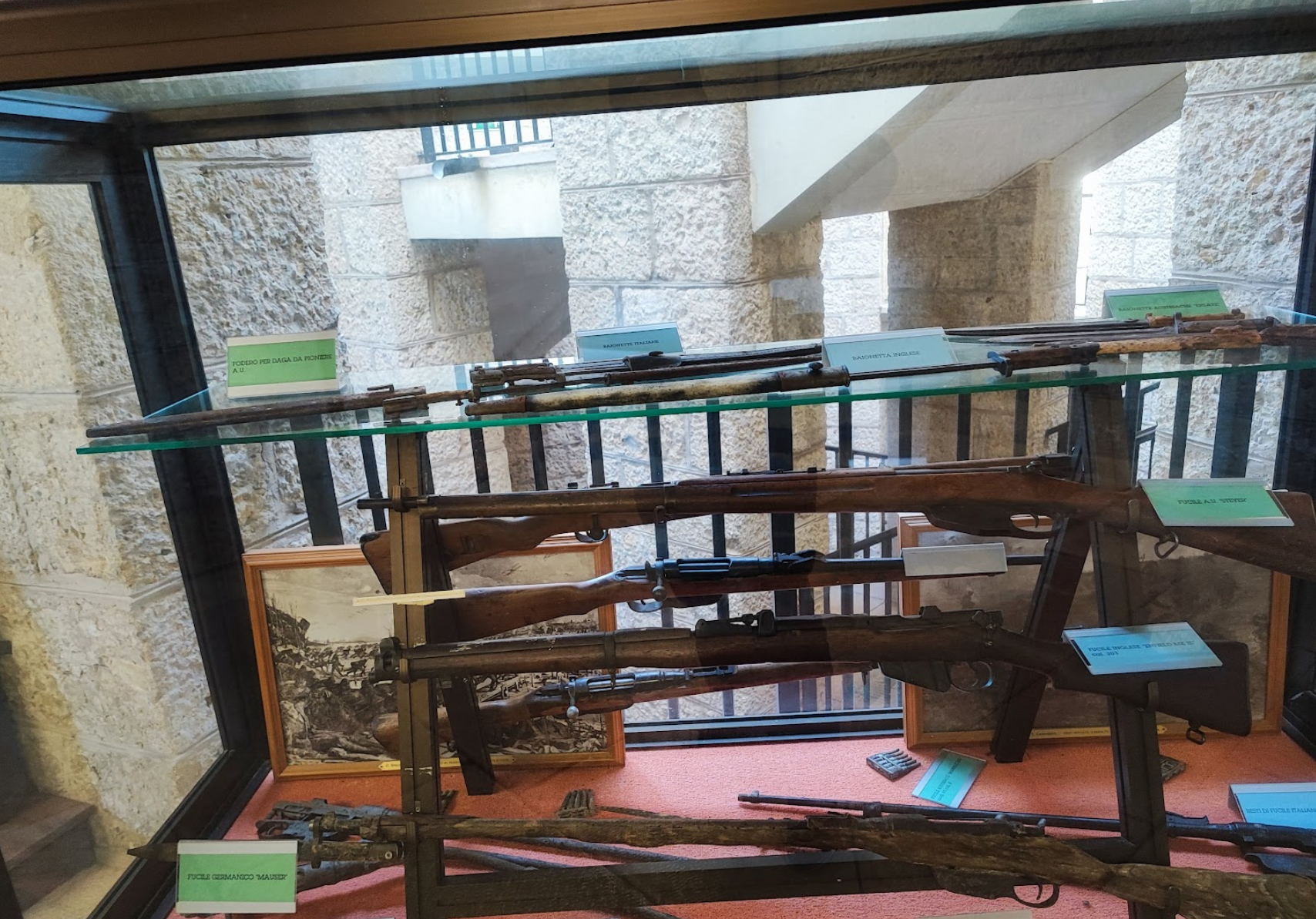
Inside however, there's more than you might expect. The ossuary has four floors, the first two of which house the remains of the soldiers with a small chapel on the second flour. A lot here is beautifully decorated in marble. On the third floor, there's a small museum dedicated to the Second Battle of the Piave. The displays are filled with finds from the battlefield, including rifles, pistols, grenades, swords & medals.


On the fourth floor you'll be able to admire the surroundings from higher up through the square windows you can see in the photos. You can't get all the way to the top of the tower, but it does feature a glass roof to let in a lot of light.

Both the ossuary and the museum inside are completely free to visit, so if you're ever nearby, be sure to check it out! Feel free to leave a little donation for the people who keep the place open and well kept.

Up next


Next time, we'll cycle downhill and say goodbye to Montello, as we enter the village of Nervesa della Battaglia. See you at the Fontana di Piazza la Piave!

The route on Google Maps


Visit Montello!


The Montello Cycling Tour is a collaboration with local organizations. We'd like to thank them for helping us out with information about the region, the history and photos they provided. If you're interested in visiting the area, please check them out and tell them we sent you!

[table noborder=1]
[tr]
[td]

[/td]
[td]
For bike renting and a historic tour with possibility for a meal.

Bike Rental Montello


https://aglizattieri.com/
[/td]
[/tr]
[tr]
[td]

[/td]
[td]
Looking for your next holiday destination?

Visit Prosecco Hills


https://visitproseccohills.it/en
[/td]
[/tr]
[tr]
[td]

[/td]
[td]
Want to learn more about WW1 and the history of the area?

Museo della Battaglia di Vittorio Veneto


Location on Google Maps
[/td]
[/tr]


Follow our socials:


X / Twitter YouTube Discord Reddit

Update v56308

Today we released a small patch, these are the changes.


  • Updated the network version
  • Updated the Unity version
  • Made minor changes in the back-end


The download size is expected to be around 515mb.

The Montello Cycling Tour: Francesco Baracca [#4]

To celebrate the release of the Montello Expansion, we bring you the Montello Cycling Tour! Prepare for inclines.

In the Cycling Tour, we'll be exploring the area represented in the Montello map. There's a lot of history to be found here, from the very structures that played a role in this battle to the monuments erected in memory della Grande Guerra. Every friday we'll make a new stop at one of these historic locations until we arrive at our final destination: The Nervesa della Battaglia train station.

Previously: The History of Montello Hill [#3]


https://store.steampowered.com/news/app/1556790/view/4706913871769004155

After a pleasant cycle over Montello and down the hill, we take a right, a second right and face the 15% incline back up. Don't worry, it's only half a kilometer. Here, we arrive at our next destination!


Stop #4: Monumento a Francesco Baracca


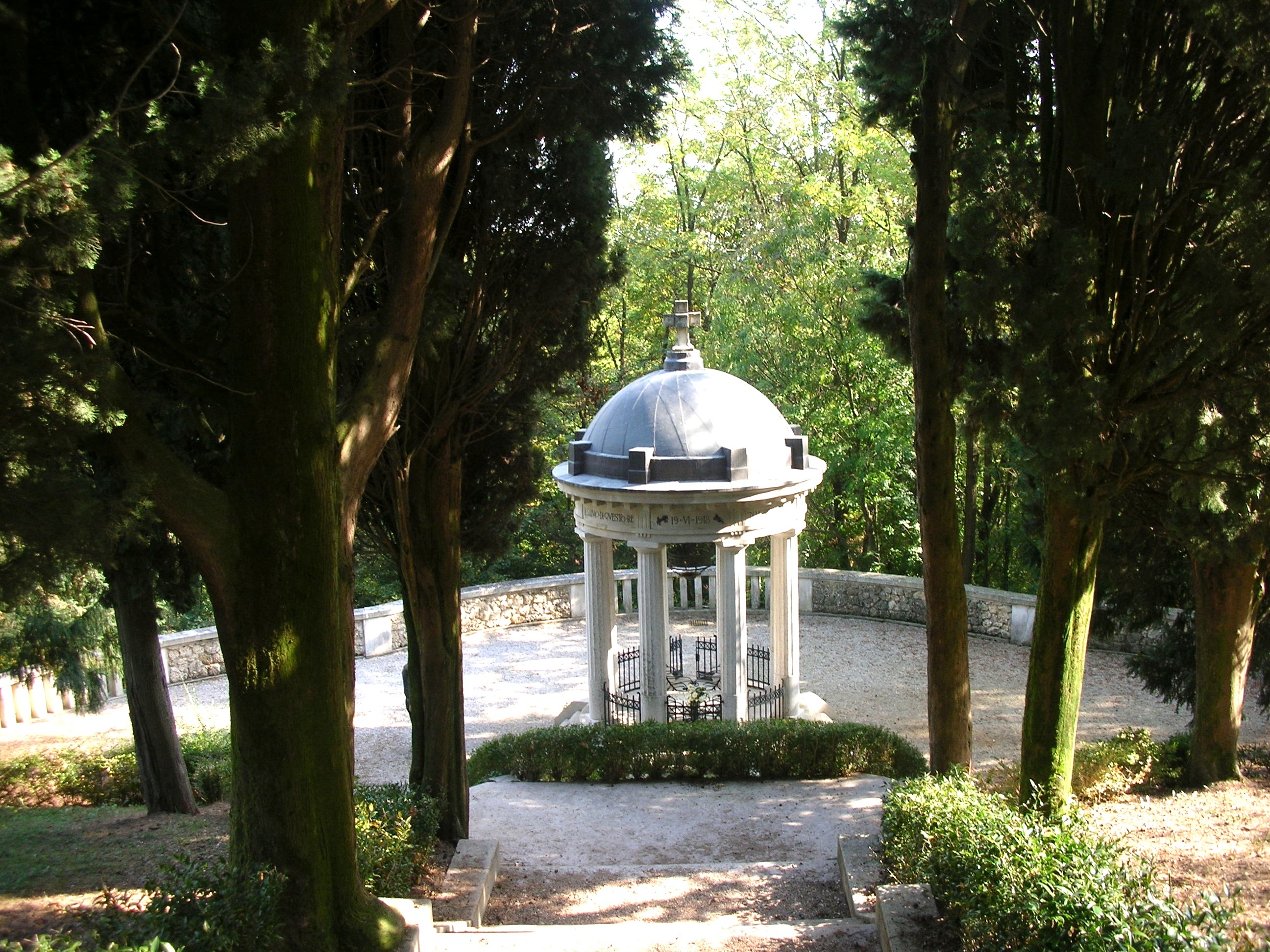
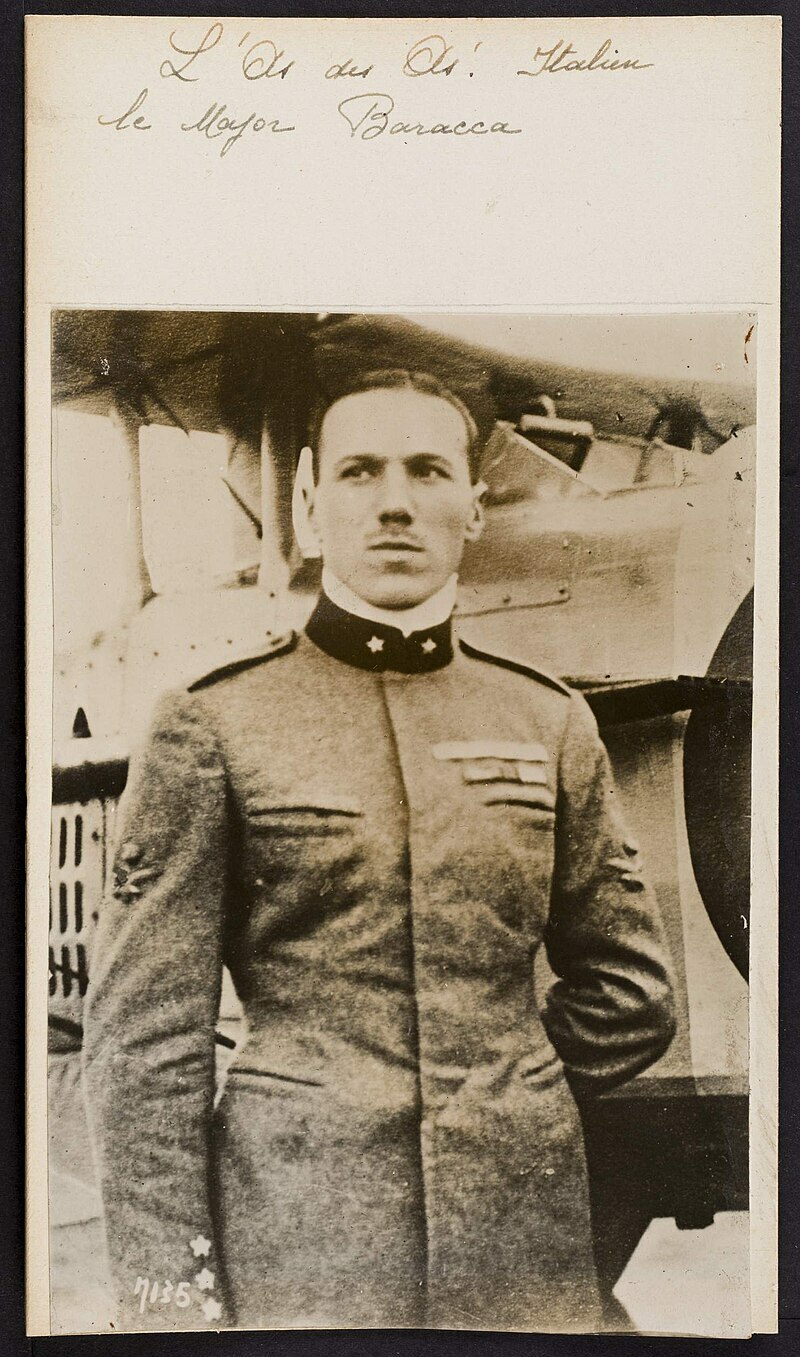
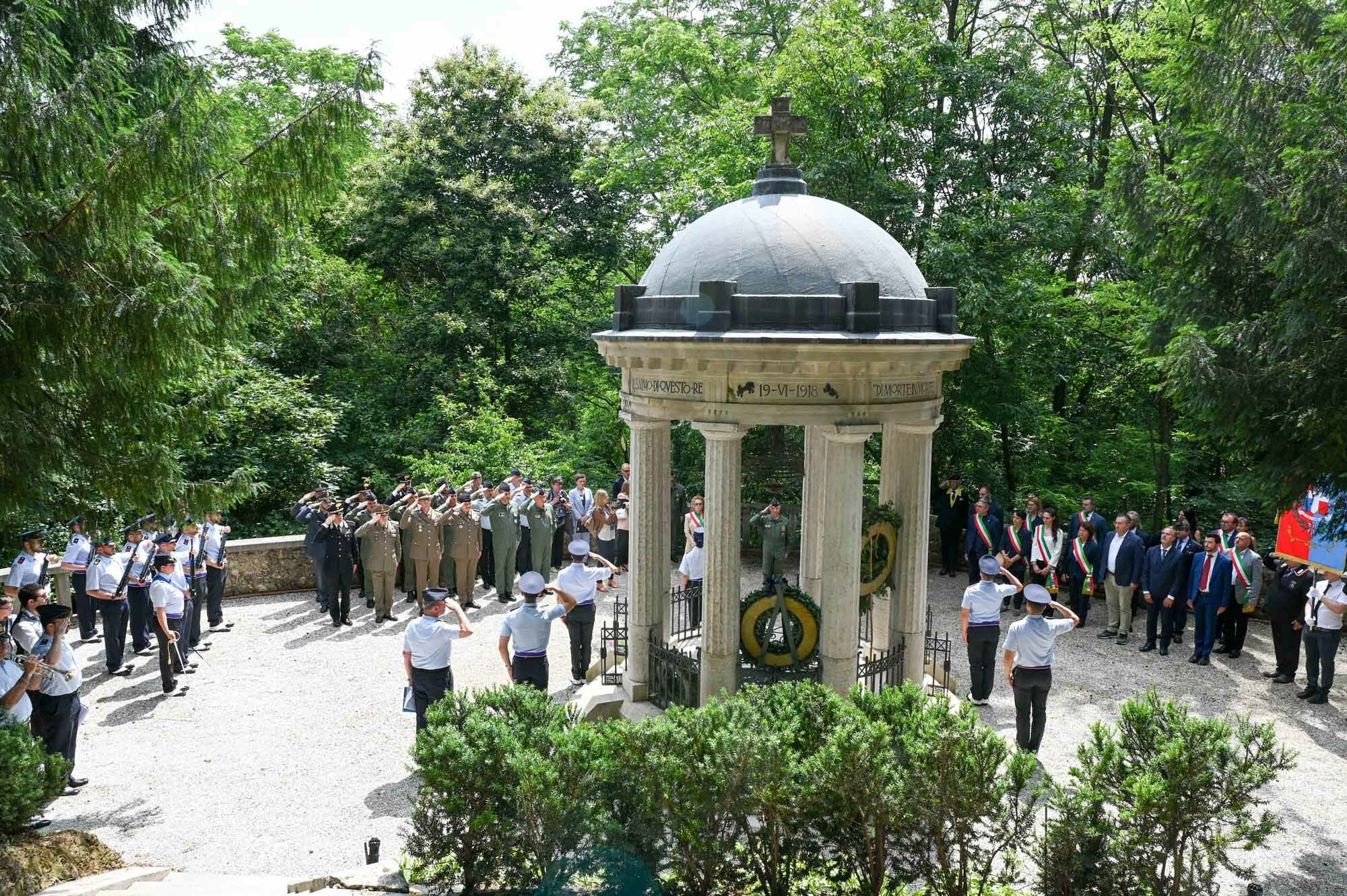
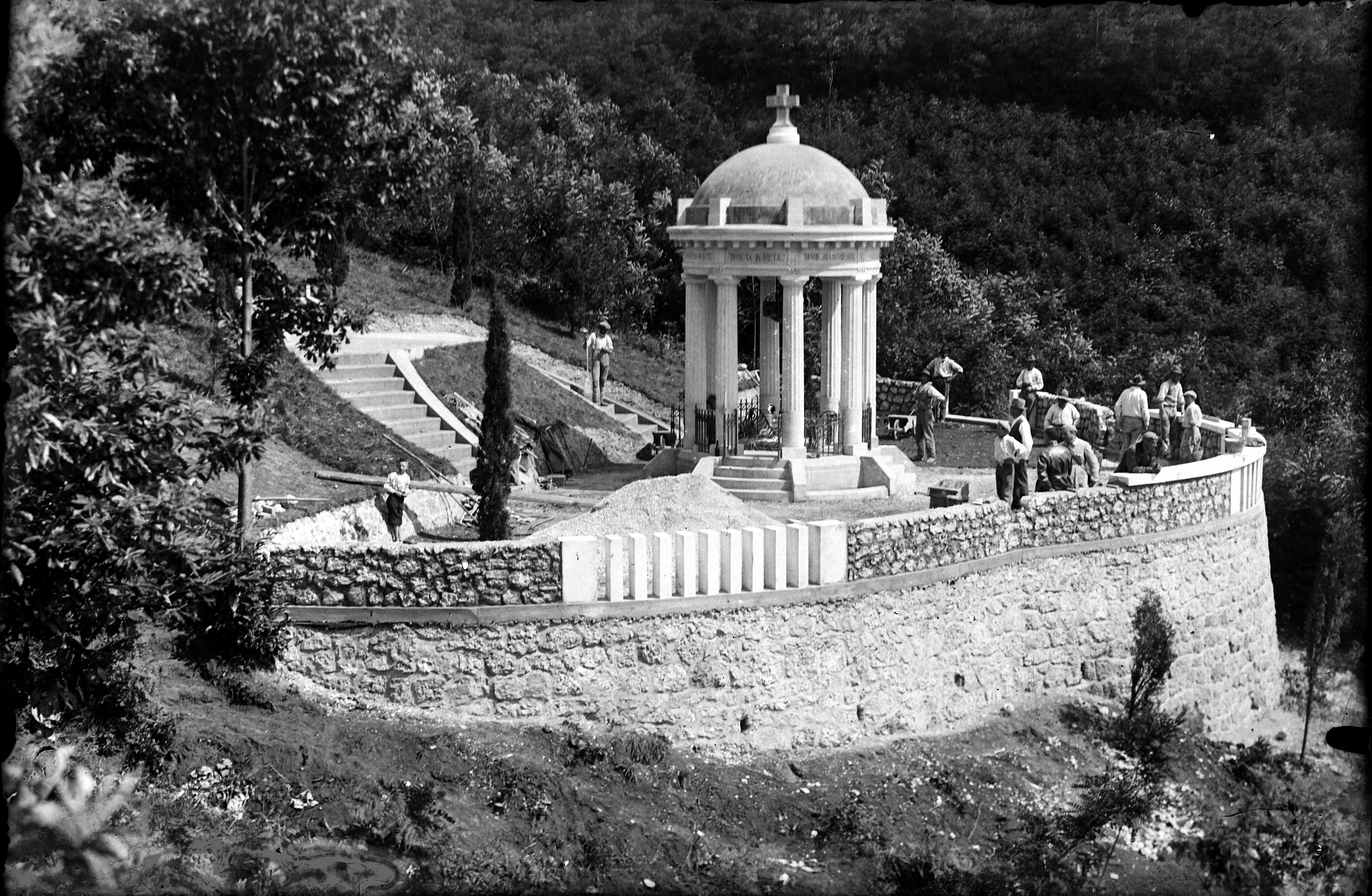
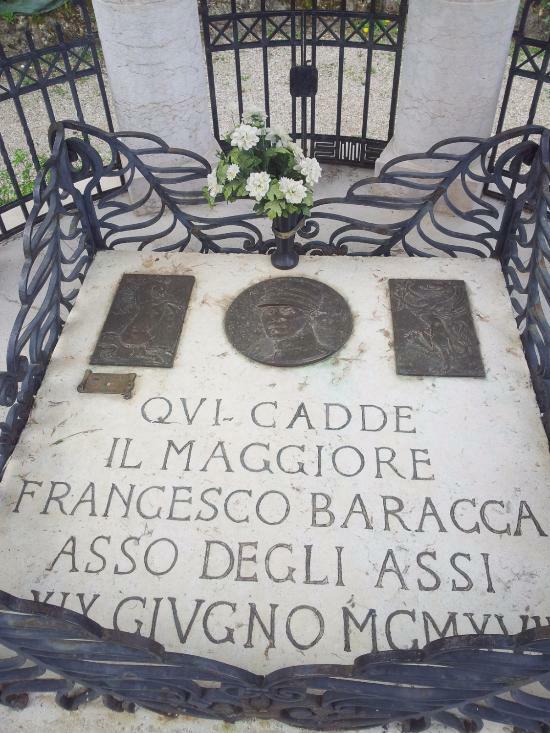
On the side of Montello hill overlooking Nervesa della Battaglia (if it wasn't for the trees), we find ourselves at a shrine-like monument made in honor of Count Francesco Baracca, an Italian war hero credited for 34 aerial victories. He was one of the highest-scoring pilots of the Allies, but sadly did not survive the war.


Born in 1888, Baracca entered the Military Academy of Modena in 1907 at the age of 19 and became a cavalryman with the Piemonte Reale Cavalleria in 1910. After a short period of being stationed near Rome and later in central Italy, he took an interest in aviation and got his pilot's license in France, 1912. Baracca served the Battaglione Aviatori from then on and into WW1.


WW1


In 1915, Baracca was assigned to the 8a Squadriglia Nieuport. However, the French Nieuport 10s biplanes used by this squadron were heavily outclassed by the Austro-Hungarians as they were too slow and the guns had the tendency to jam when you needed them the most.

A year later, the squadron was upgraded with Nieuport 11 fighters equipped with Lewis guns. With this new plane, it took Baracca only a couple days to score his first victory, the first aerial victory of Italy in the war. The maneuver he used for this victory quickly became his signature move: he would fly behind and below the enemy, moving in while remaining unseen. Once within pistol range, he would unleash the Lewis.

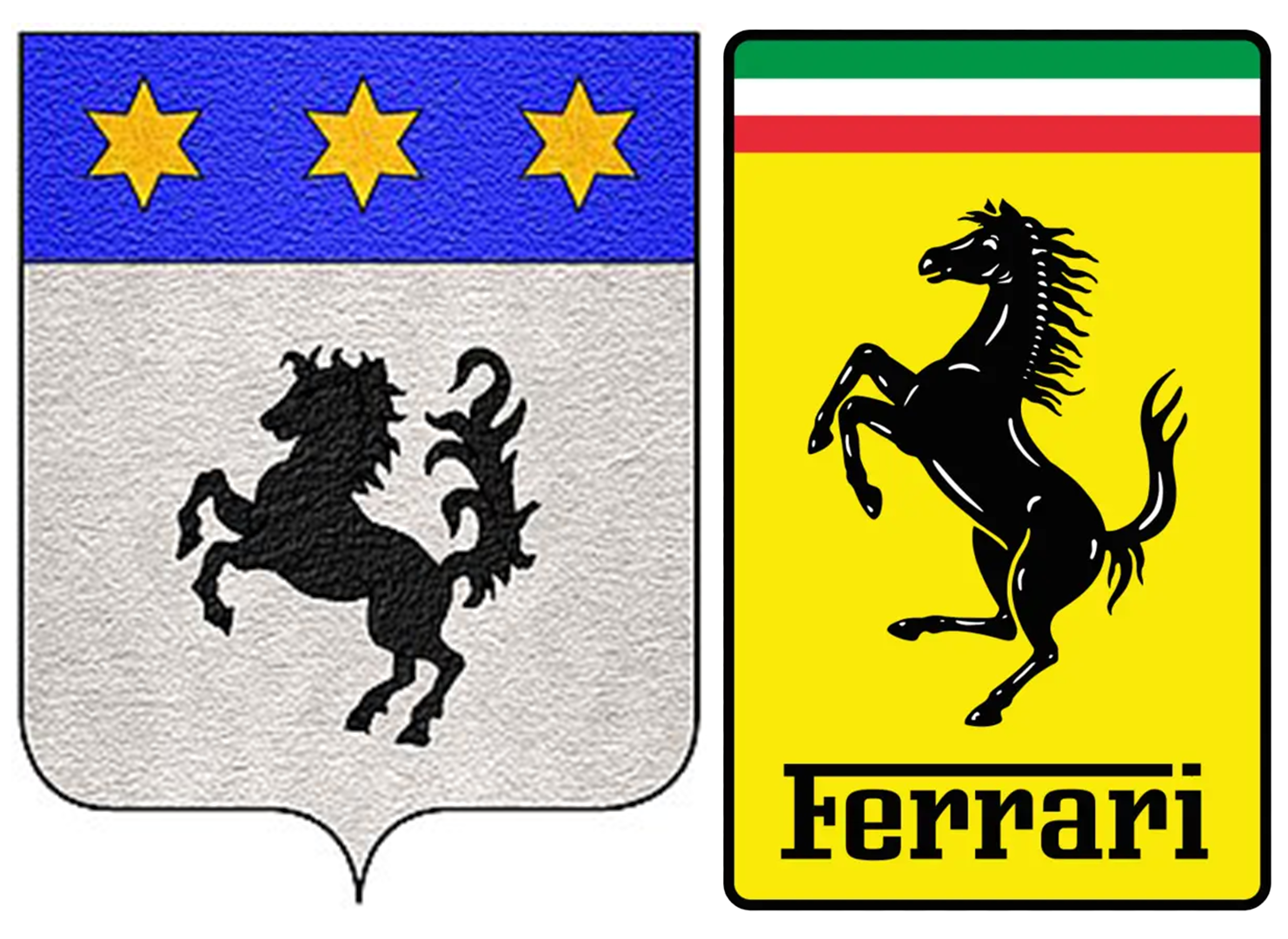
Around this time, Baracca adopted a black prancing horse as his personal emblem, plastered on his plane in tribute of his former cavalry regiment. We'll get back to this later!


He got his second victory over Gorizia a couple weeks later and was transferred to a new squadron as Capitano after his third victory, Baracca and his new SPAD VII plane were transferred again after 9 victories a year later to the newly formed 91st Squadriglia as the head of the "Squadron of the Aces". At this point, he was already nationally famous for his victories.

Baracca almost lost his life to friendly fire by one of his friends, Fulco Ruffo di Calabria, who was later senator of Italy until 1934 and father of Paola Ruffo di Calabria, Queen of Belgium until 2013 as wife of former king Albert II.

The Montello Mission


His success continued throughout the war, being promoted to Maggiore (Major) in November 1917 and raising his victory count to 30. Baracca didn't see much action in 1918 but did get 4 more victories. In June 1918, he was assigned to a strafing mission on Montello. Accompanied by rookie pilot Franco Osnago, they were hit by ground fire and got seperated. Minutes later, both Osnago and the airfield saw a plane light up in flames and fall from the sky.

After the Austro-Hungarian retreat, Baracca's remains were recovered. Reportedly, he took a bullet to the head, but it's unclear what exactly took place. His pistol was out of its holster and away from his body, leading people to think he took his own life before hitting the ground. However, an Austrian pilot claimed to have shot him in combat, which is backed up by Austro-Hungarian records.

Baracca's Legacy


Francesco Baracca was awarded with a Gold Medal of Military Valor, two Silver Medals of Military Valor, one Bronze Medal of Military Valor, the British Military Cross, the French Croix de Guerre, the Belgian Order of the Crown and the Serbian Order of Karađorđe Star for his service during the war. His home in Lugo di Romagna was turned into a museum dedicated to him, many bridges and roads across the country are named after him. The airport of Bolzano, the Roma-Centocelle Air Force base and the Lugo di Romagna airfield are named after him as well.


The monument we're at right now was erected where Baracca's plane crashed. Once proudly looking over Nervesa della Battaglia, the spot is now quite obscured by trees, visible only to those who visit the monument to remember him. The monument features a dedication by Gabriele D'Annunzio on its frieze and a plaque in the center with his likeness, the Prancing Horse from his emblem and the griffin used by the 91st Squadriglia.


The Baracca legacy continues to this day, however. In the years following the war, Baracca's mother paid a visit to Enzo Ferrari. She suggested to adopt the Baracca Prancing Horse for the logo of Ferrari, as a good luck charm. Ferrari accepted this request. While the exact design was changed numerous times over the years, the iconic Ferrari logo – likely one of the most recognizable logos in the world – is the Prancing Horse of Francesco Baracca.


Up next


Our next stop isn't that far away: the Sacrario Ossario Militare del Montello. You'll have some downhill to enjoy, but don't get too comfortable! There's even steeper incline around the corner. See you there!

The route on Google Maps


Visit Montello!


The Montello Cycling Tour is a collaboration with local organizations. We'd like to thank them for helping us out with information about the region, the history and photos they provided. If you're interested in visiting the area, please check them out and tell them we sent you!

[table noborder=1]
[tr]
[td]

[/td]
[td]
For bike renting and a historic tour with possibility for a meal.

Bike Rental Montello


https://aglizattieri.com/
[/td]
[/tr]
[tr]
[td]

[/td]
[td]
Looking for your next holiday destination?

Visit Prosecco Hills


https://visitproseccohills.it/en
[/td]
[/tr]
[tr]
[td]

[/td]
[td]
Want to learn more about WW1 and the history of the area?

Museo della Battaglia di Vittorio Veneto


Location on Google Maps
[/td]
[/tr]
[TAG-100]


Follow our socials:


X / Twitter YouTube Discord Reddit

The Montello Cycling Tour: The History of Montello Hill [#3]

To celebrate the release of the Montello Expansion, we bring you the Montello Cycling Tour! Please don't get lost in the woods.

In the Cycling Tour, we'll be exploring the area represented in the Montello map. There's a lot of history to be found here, from the very structures that played a role in this battle to the monuments erected in memory della Grande Guerra. Every friday we'll make a new stop at one of these historic locations until we arrive at our final destination: The Nervesa della Battaglia train station.

Previously: The Boys of '99 [#2]


https://store.steampowered.com/news/app/1556790/view/6468946777869867362

While heading to our next stop, the Monumento a Francesco Baracca, we're cycling through the beautiful landscape on Montello. Let's have a little intermission here, take a little break and talk a bit more about the history of Montello itself and a bit about the area as seen in-game.


Stop #3: Montello Hill


There's more to this hill than simply being "bean-shaped". It played a big role in the history of the region for as long as humans have lived in the area, so let's talk you through some of the highlights. We're not sticking to just WW1 this time!

Up until the Renaissance


Humanity's relationship with Montello goes back all the way to pre-historical times. Chipped stone points were found along the northern edge of Montello. These rudimentary stone tools were dated all the way back to the European Mesolithic era, dated roughly to 13,000-3,000 BC. It is assumed that these early inhabitants occupied the many caves that lead into Montello and exploited the river and forested area on the hill to sustain themselves.

Skipping ahead to the Classical Era, Montello and its surrounding region was settled by reformed soldiers of the Roman army. It's assumed a fortress was built on the site of current-day Nervesa della Battaglia, which was first documented as Nervisia in the year 954.

In 1062, the Abbey nearby was founded. This was the site where between 1550 and 1555, Giovanni Della Casa wrote Il Galateo. Known in English as Galateo: The Rules of Polite Behavior, this courtesy guide on how to behave in 'ordinary' social life during the Renaissance formed the very foundation used for modern etiquette used to this very day. It's likely to have influenced even Shakespeare's comedies.


Post-Renaissance to the 20th Century


Montello forms a large patch of oak & chestnut trees and is a major source of timber for the region. This is especially true for Venice, which used the timber procured from Montello for their shipyards and building foundations. In fact, it was so important to Venice that the Republic of Venice assumed ownership over the hill and declared it completely off-limits to the local population.

The residents, mostly hunters and woodsmen, were deprived of their homes and income. They became a class of "landless, homeless and jobless miserables", known as the Bisnenti ('twice have-nots'). They survived on odd jobs and crime but eventually emigrated in search of greener pastures in the Americas, France, Germany and Australia. Legislation was pushed to give Montello back to the Bisnenti in 1892, but the re-settlement and the damage from WW1 ruined the appeal of the woods for many.

The Bisnenti are remembered with Le Scorrerie dei Bisnenti, a competition where contestants cut and transport timber. Source.

Skipping WW1 for now (we'll get back to it, don't worry), we're going to 1930. In July this year, the Montello area was struck by an extremely violent tornado. While a tornado is quite rare in Europe to begin with, this specific one ranked F5 and is one of if not the strongest tornado ever recorded in Europe. With gusts of an estimate 400-500 km/h, this tornado caused extensive damage in its 132km long path from Casoni to Talmassons, killing at least 21.


Damage done to a church in Volpago del Montello

WW1 and Isonzo


Going slightly back in time, let's talk about WW1 again.

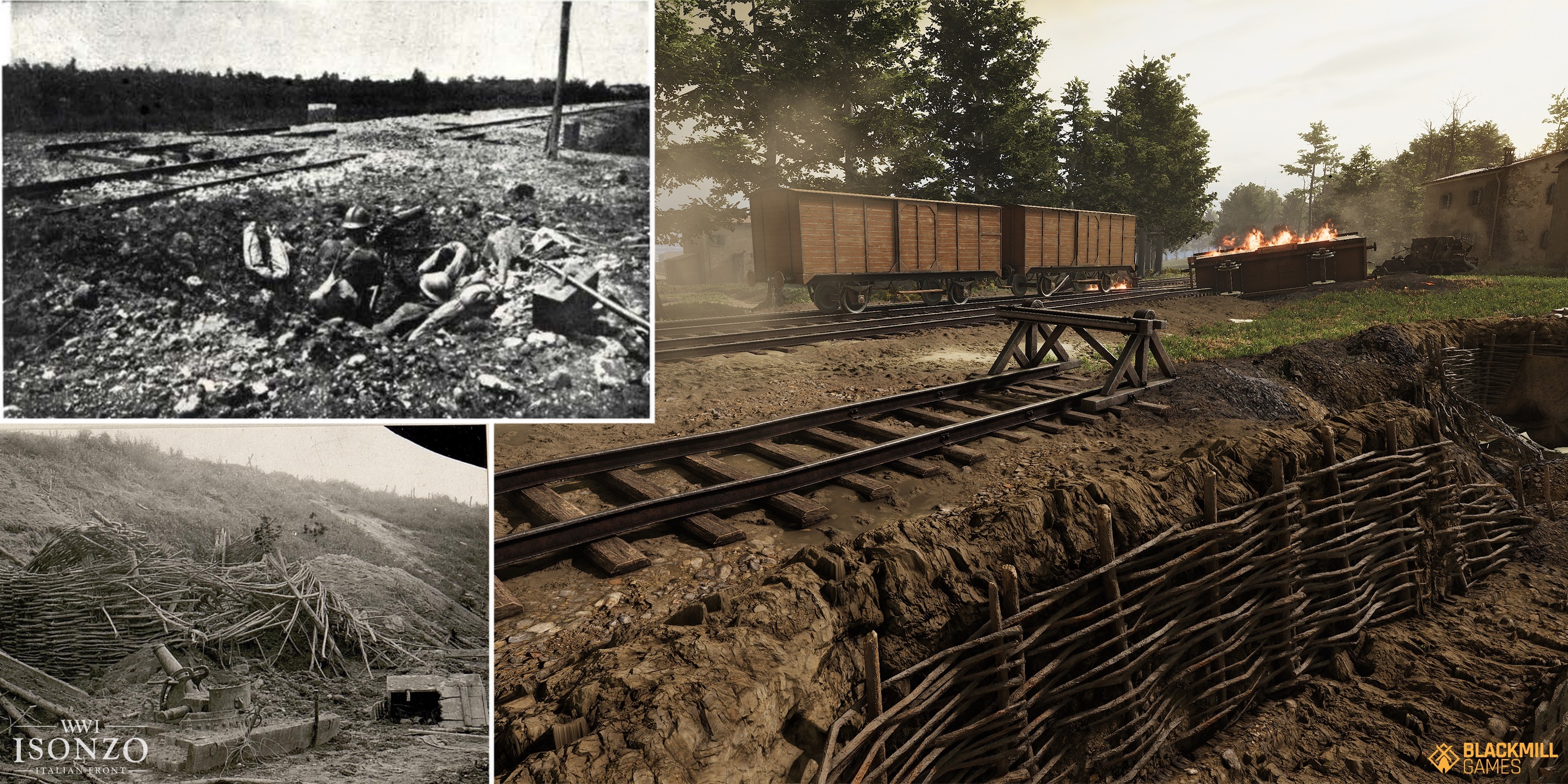
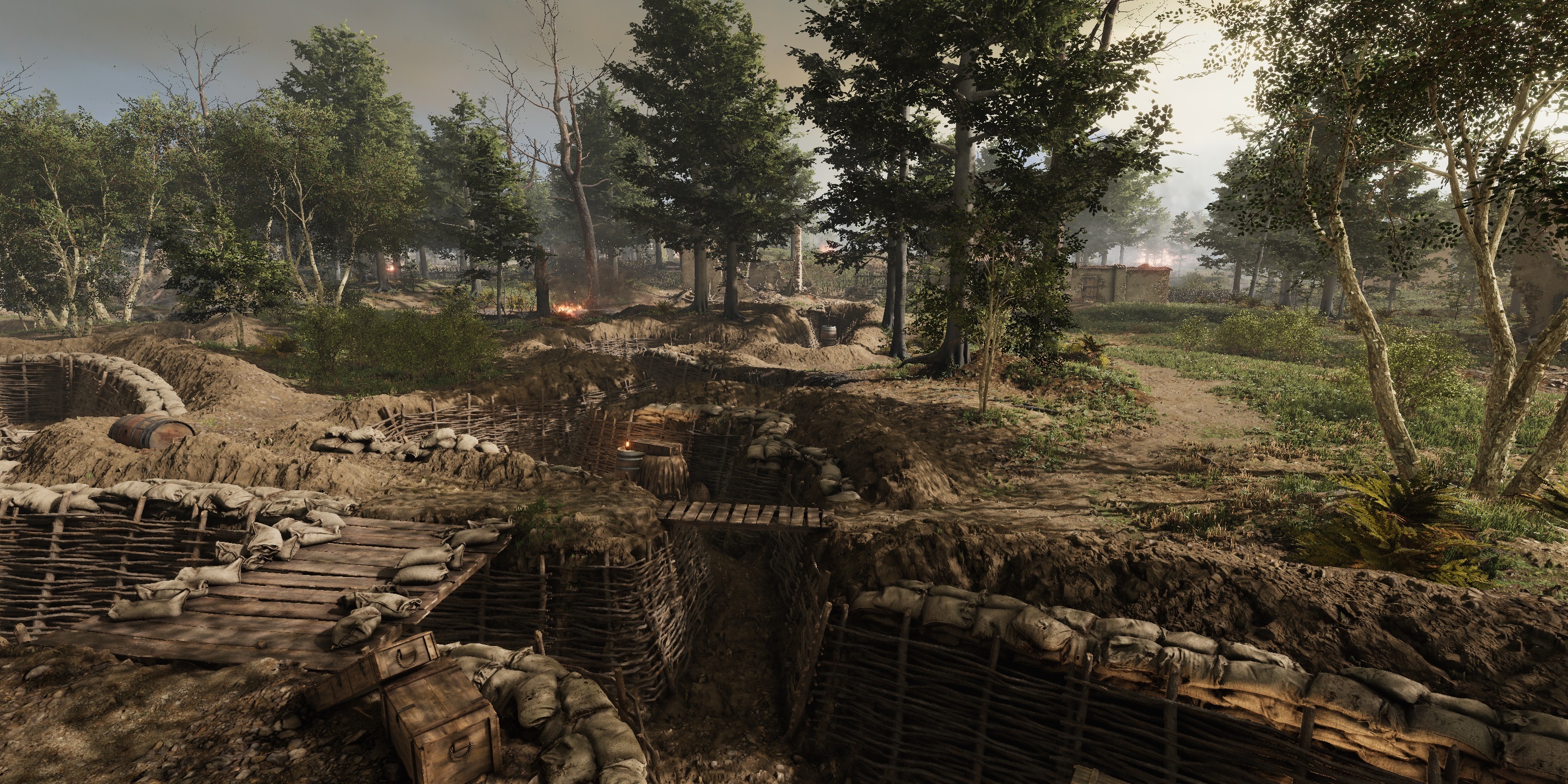
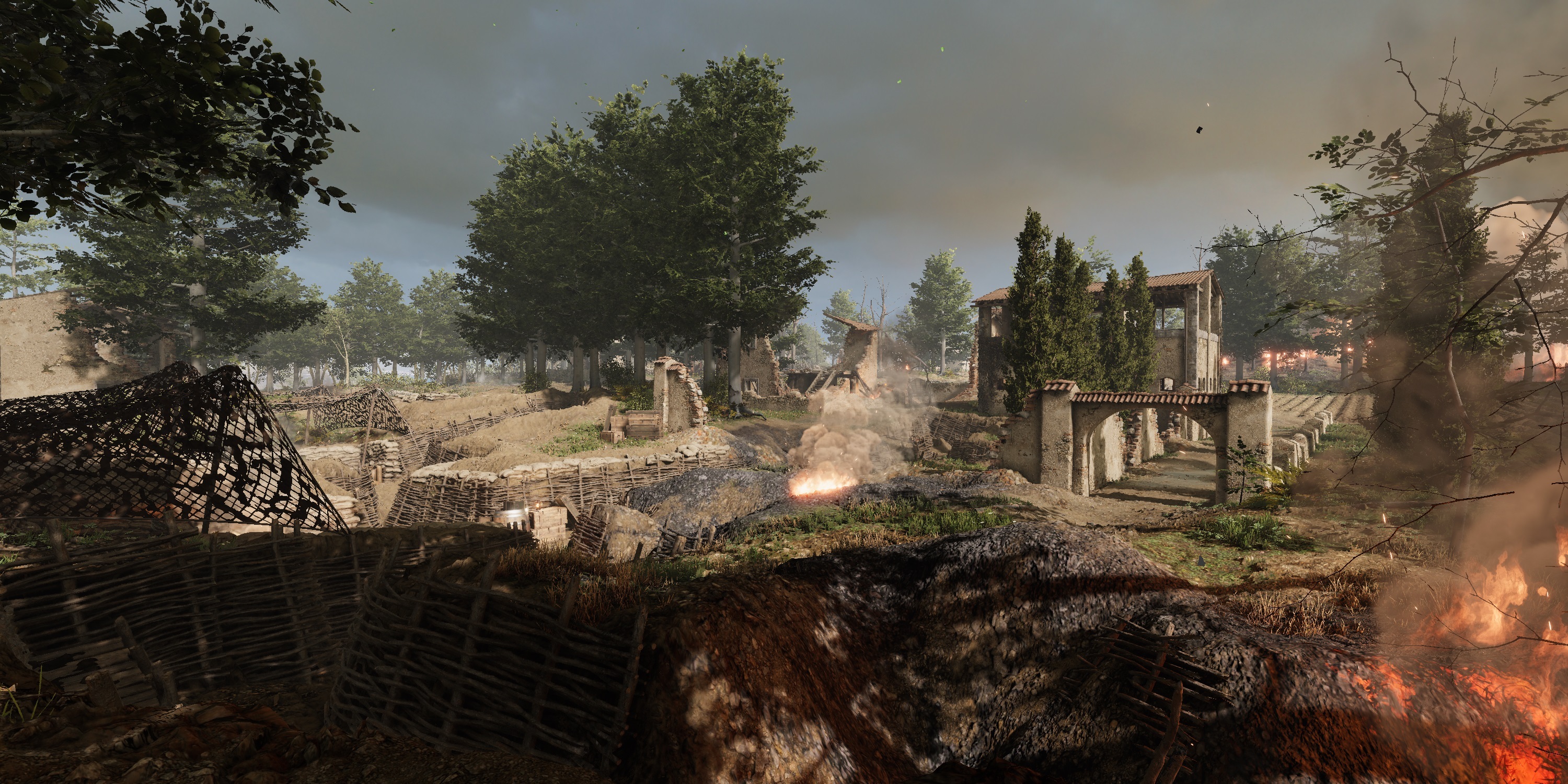
When the Austro-Hungarians pushed for Nervesa della Battaglia, they passed through the farms and woodlands on Montello, about where we're at with the tour right now. The first sector in-game is set around this area, where Italian artillery is set in a system of trenches. These trenches are quite unique: instead of planks, they weaved branches together to strengthen most of the sides.


Below are a couple more images of the woods, farms and vineyards on Montello as seen in Isonzo. War doesn't leave much nature intact, so it's not too surprising the Bisnenti weren't too interested in going back. It takes a lot of time and work to get a battlefield back to its old self, which may not always be worth it when the soil isn't that great to begin with.


Up next


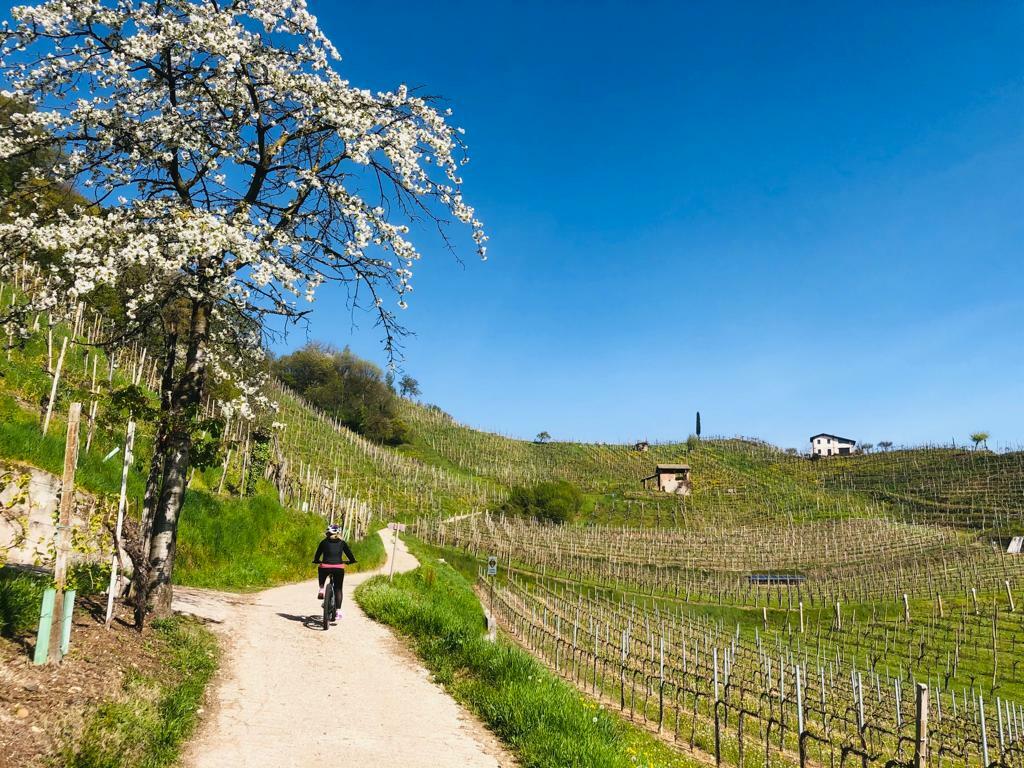
Back to the present! Let's continue our cycle through the forests and the vineyards that occupy Montello in the current day. It's a beautiful area with lots of little roads and paths to explore – just be careful not to turn into any private roads.

Photo supplied by Agli Zattieri.

Now, we're off to the Monumento a Francesco Baracca, for real this time. See you there!

The route on Google Maps


Visit Montello!


The Montello Cycling Tour is a collaboration with local organizations. We'd like to thank them for helping us out with information about the region, the history and photos they provided. If you're interested in visiting the area, please check them out and tell them we sent you!

[table noborder=1]
[tr]
[td]

[/td]
[td]
For bike renting and a historic tour with possibility for a meal.

Bike Rental Montello


https://aglizattieri.com/
[/td]
[/tr]
[tr]
[td]

[/td]
[td]
Looking for your next holiday destination?

Visit Prosecco Hills


https://visitproseccohills.it/en
[/td]
[/tr]
[tr]
[td]

[/td]
[td]
Want to learn more about WW1 and the history of the area?

Museo della Battaglia di Vittorio Veneto


Location on Google Maps
[/td]
[/tr]
[TAG-108]


Follow our socials:


X / Twitter YouTube Discord Reddit