Invincible KV-1 and his commander destroyed 70 German tanks in one day! Story that many didn’t believe it!
When World War II began, Zinoviy Kolobanov already had serious military experience. For example, he fought in the Finnish War of 1939-1940, during which he escaped from a burning tank three times.
In 1941, Kolobanov commanded a tank unit during the German advance toward Leningrad (now St. Petersburg). Near the village of Voskovitsy, Kolobanov’s unit got the order to defend the road leading to the town of Krasnogvardeysk (now Gatchina, 26 miles outside Leningrad). With only 5 heavy KV-1 tanks at his disposal, Kolobanov moved his unit to an important crossroads where he ordered two tanks to block the two roads to Krasnogvardeysk. Meanwhile, he strategically parked his tank 300 meters away in a hull-down position, such that it was barely visible.
As the German tanks approached their troops were overly confident, some even sitting on the hulls with hatches open. Clearly, they didn’t spot Kolobanov’s tank in a hull-down. Andrey Usov, Kolobanov’s ace gunner, destroyed the first and the last of the 22 tanks in the enemy column, effectively blocking them on a narrow road surrounded by swamp. The rest of the tanks were all lined up before Kolobanov’s tank just like in a shooting range.
Amid the turmoil, some of the enemy tanks’ ammunition exploded, while others slid into the swamp, rendering them motionless, yet they fired fiercely. Fortunately, KV-1 tanks proved almost invincible to German guns. After the battle, there were over 100 hit marks on the hull of Kolobanov’s tank, but none had pierced the armor. Kolobanov destroyed 22 enemy tanks, and his entire unit destroyed 48 in total, stopping the German forces.
Shortly after his most famous battle, Zinoviy Kolobanov was seriously wounded and recovered only in 1945. He lived in Minsk until his death in 1994. Kolobanov’s win was considered so incredible and audacious that many didn’t believe it. When in the 1970s Belarusian TV wanted to make a story about Kolobanov’s feat, it was disapproved by superiors as preposterous.
Wargamer put us in the list of the most anticipated PC games of 2019!
While we are progressing and improving KPB, it is clear that many expect a lot from us and we strive to achieve the expectations that are put before us.
We pay special attention to every detail of the game, and in March, our Panzer Battles should see the brightness of your screens.
In the meantime, articles like this give us a special motivation to keep up with our work!
Please read an article, there are also many other good stuff that is coming out soon.
When it comes to historical games, historical accuracy has a lot of value. Read the next chapter of our Dev Diaries to know more about how we keep the balance between historical accuracy and the gameplay.
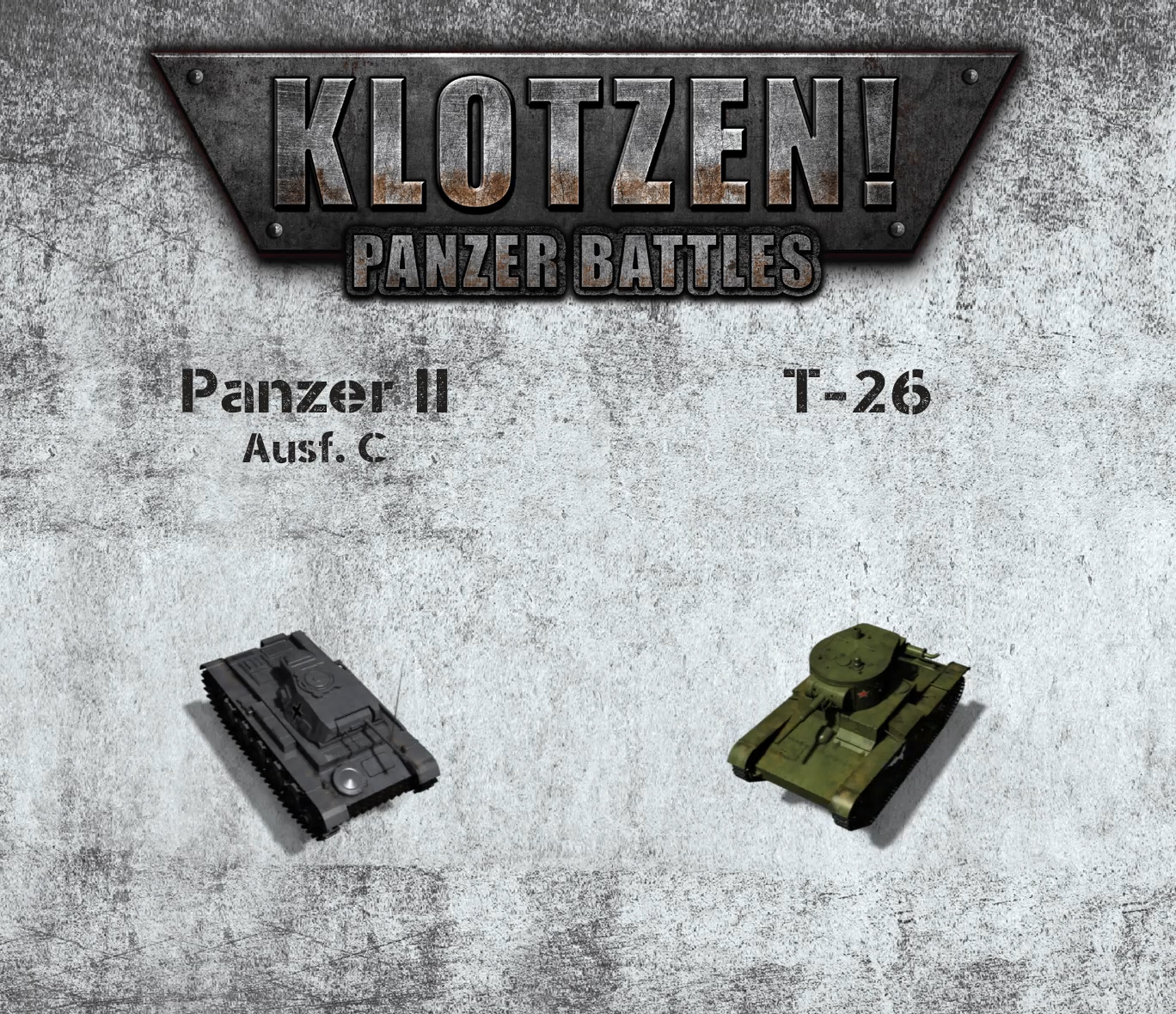
This Friday we decided to take a step back and see what tanks we haven't mentioned yet. Today's post is dedicated to Panzer II Ausf. C and T-26. Check the description of each tank below and don't forget to tell us which model you like more and why.
Panzer II Ausf. F
Panzer II Ausf. F is a light German tank designed to fill in for the larger Panzer III and Panzer IV models while they were developed. Nonetheless, Panzer II played an important role in early war during the Polish and French campaigns and was used in North Africa and on the Eastern front against the Soviet Union. The hull was designed with a flat 35 mm plate on its front, and the armor of the superstructure and turret were built up to 30 mm on the front with 15 mm to the sides and rear. The tank was armed with a 2 cm KwK 30 L/55 auto-cannon and MG 34 machine gun. The 2 cm auto-cannon proved to be ineffective against many Allied tanks, but the tank was very light and mobile. Panzer II was replaced by more effective Panzer III and Panzer IV models by 1941.
T-26 model 1933
T-26 model 1933 is a Soviet light infantry tank used in World War II and during the wars in the 1930s. The turret was cylindrical, relatively low, simple in design, with rear storage, housing a high velocity 45 mm gun with anti-tank capabilities. The secondary armament consisted of three machine-guns which were provided to cope with dedicated anti-tank crews. At the beginning of Operation Barbarossa, T-26s were the most numerous tanks in the Red Army. Despite a clear superiority over the German Panzer I, II and some parity with the Czech-built Panzer 35(t) and 38(t) fielded by the Wehrmacht, they were no match for the 50 mm and 75 mm armed Panzer III and IV which formed the main cluster of every Panzer Division. Their relatively thin armor could withstand Pak 36 gunfire, but not any other German anti-tank gun. As the war progressed, the T-26 was gradually replaced through attrition by the vastly superior T-34. The remaining T-26s participated in battles with the Germans and their allies during the Battle of Moscow, the Battle of Stalingrad, and the Battle of the Caucasus.
Panzer III Ausf. J and M3 Lee
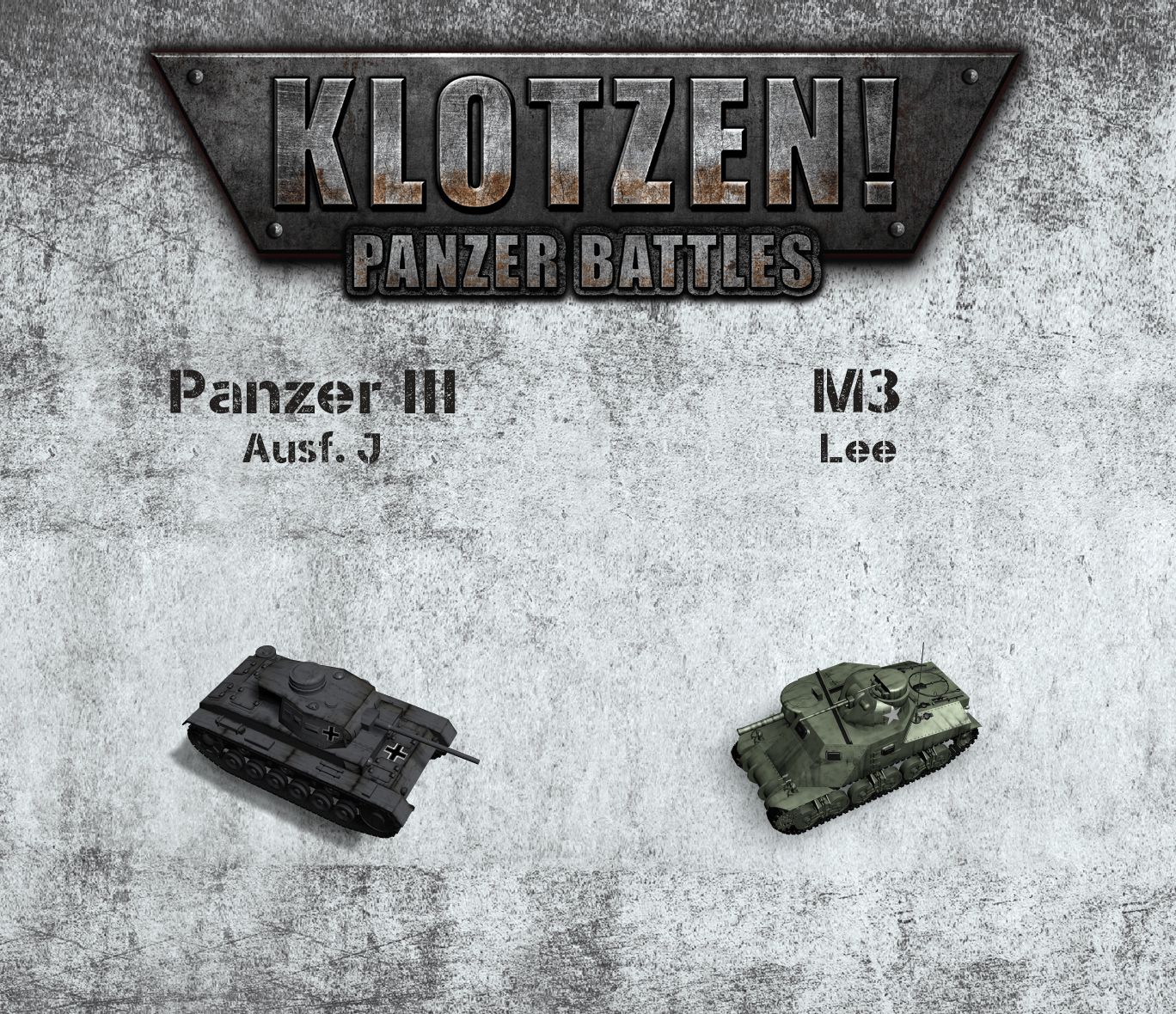
Oh, hey! We have a new pair of tanks today, not as heavy as the previous pair, though. Check the description of each tank below and don't forget to tell us which model you like and why.
Panzer III Ausf. J
Panzer III Ausf J. is the most common version of Panzer III which saw fighting in Russia and North Africa. It was equipped with a short-barreled 50mm gun. The tank fared well in fighting against British Crusader cruiser and US-supplied M3 Stuart light tanks. However, this model was less effective against heavily armored Matilda II tanks. The production stopped in 1942.
M3 Lee
M3 Lee is an American medium tank named after Confederate general Robert E Lee. The main weapon – a larger caliber, medium-velocity 75 mm gun – was in an offset sponson mounted in the hull with limited traverse. The sponson mount was necessary because, at the time, American tank plants did not have the design experience necessary to make a gun turret capable of holding a 75 mm weapon. A small turret with a lighter, high-velocity 37 mm gun sat on top of the tall hull. Also, there were two Browning machine guns mounted in the hull. M3 Lee saw fighting in North Africa where it brought much-needed firepower to British forces and on the Eastern front, used by the Red Army. Its overall performance was not satisfactory, and the tank was withdrawn from combat in most theaters as soon as the M4 Sherman tank became available in larger numbers. In spite of this, the design was considered to be superior to the best German tank at the time of its introduction, the Panzer IV, until the F variant.
Panzer VIII Maus and IS-3
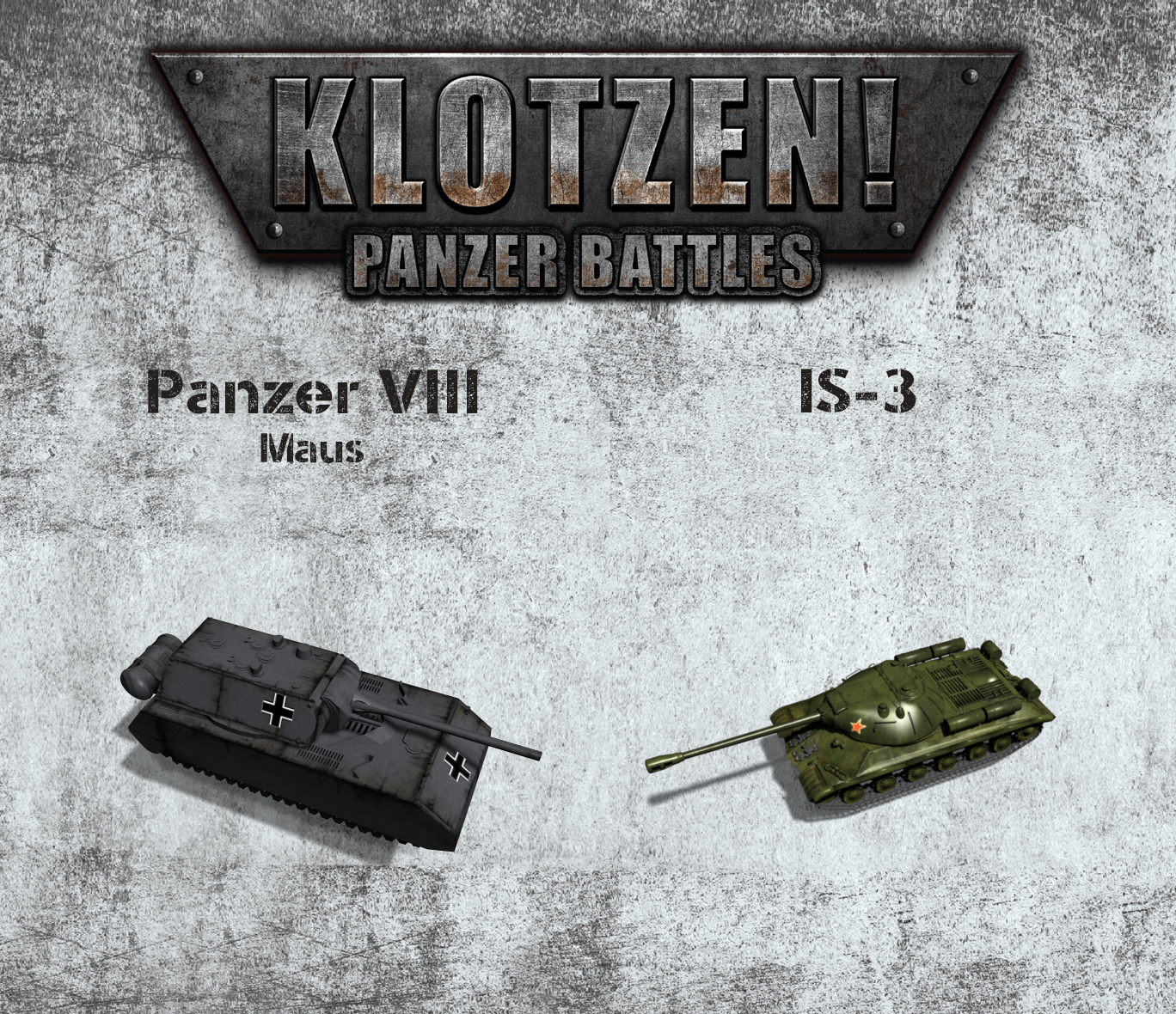
Today we have a few heavy-lifters for you. Both models were developed at the end of the war, and both haven't seen the actual combat. We are talking about the Panzer VIII Maus and IS-3 models.
Check the description of each heavy tank below, and don't forget to tell us which model is the heaviest and why :)
Panzer VIII Maus
Panzer VIII Maus is a German super-heavy tank and also the heaviest tank ever built. Only two prototypes were built, and one of them had no turret. These two models underwent trials in late 1944.
Tank’s main armament is the 128 mm KwK 44 L/55 gun, based on the 12.8 cm Pak 44 anti-tank field artillery piece also used in the Jagdtiger tank destroyer. It also has the 75 mm KwK 44 L/36.5 gun as secondary armament and the MG 34 machine gun. Maus was too heavy to cross bridges, so an alternative system was developed where the tank would ford rivers instead. Due to its size, it could ford relatively deep streams. For even deeper streams, it was to submerge and drive across the river bottom. The solution required tanks to be paired up. One tank would supply electrical power to the crossing vehicle via a cable until it reached the other side, and the crew would receive air through a large snorkel. Due to its size, Maus was extremely slow and intended to punch holes through enemy defenses whilst taking almost no damage. However, the tank was developed too late and never saw actual combat.
IS-3
IS-3 is a Soviet late-war heavy tank. The chassis was left virtually unchanged from the IS-2 model, but the hull sides were largely inclined and well-sloped. The turret was changed. It was hemispherical, bowl-shaped, larger than the width of the tank itself and presented a pronounced tumblehome form. This shape, later simplified, ended as the trademark of all Soviet Cold War tanks. The armament was 122 mm D-25T gun with a muzzle brake. The rate of fire was 2-3 shots per minute, still largely inferior to German and western tanks in general. There was a single DT secondary machine-gun next to the gun in a fixed cast encasing. Overall, IS-3 had great armor, a good cannon, and good maneuverability. The first IS-3 tanks rolled out of the factory in May 1945. They didn’t take part in fighting but were paraded proudly on the 7th of September 1945 during a military parade in Berlin.
Valentine Mk III and Panzer III Ausf. J
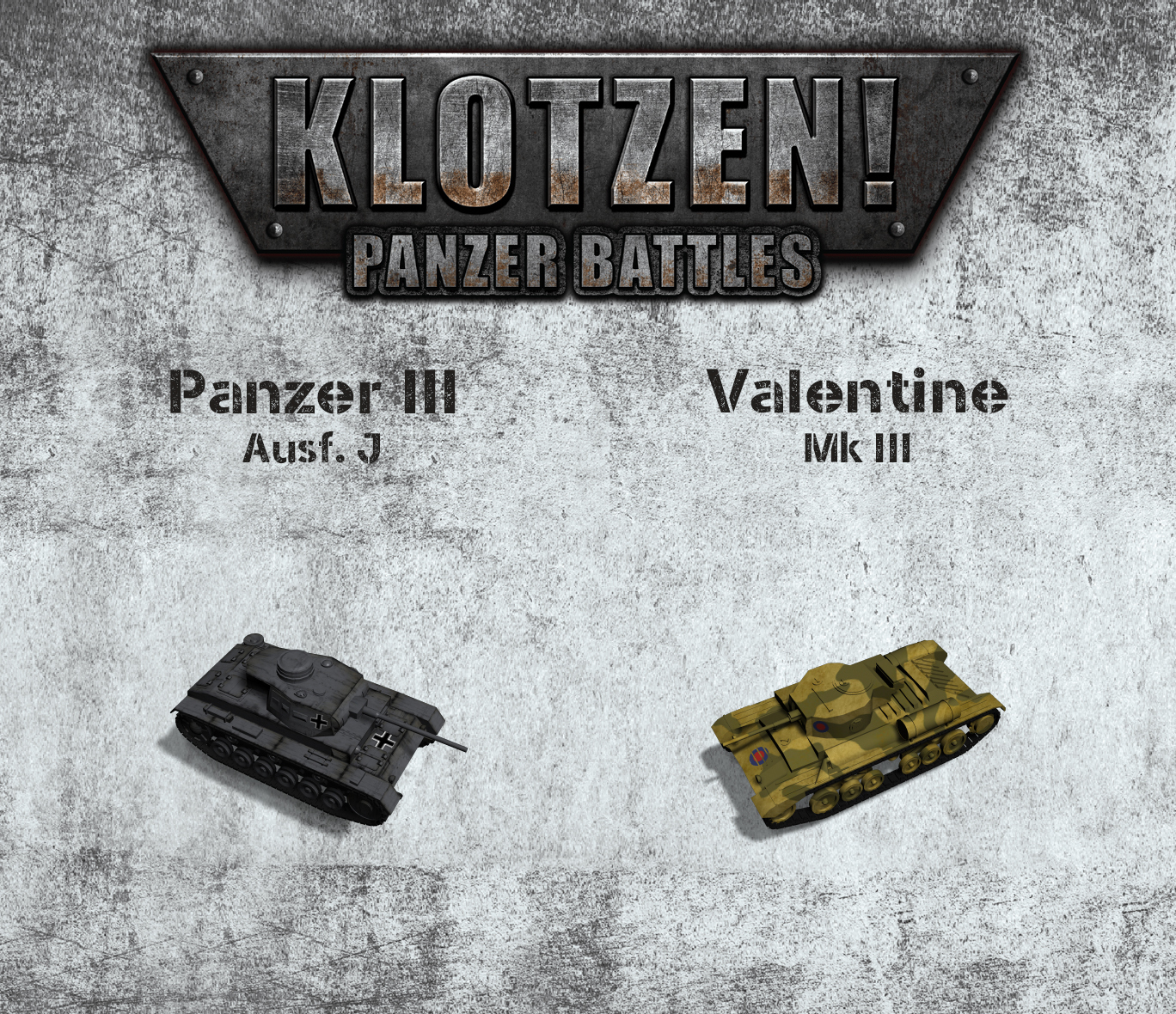
We are back with another pair of tanks to compare. Please welcome Panzer III Ausf. J and Valentine Mk III. The guys are very old (you could say they saw WW2 with their own eyes!), so please be nice to them! Check out the description of each tank below, and don't forget to tell us which model is your favorite and why.
Valentine Mk III
Valentine Mk III is a British infantry tank with a QF 2-pounder (40mm) tank gun as the main armament and a machine gun as a secondary. Valentine was extensively used in the North African Campaign, earning a reputation as a reliable and well-protected vehicle. The tank has replaced the Matilda tank. Mk III shared the common weakness of the British tanks of the period - its 2-pounder gun lacked high-explosive (anti-personnel) ammunition and soon became outdated as an anti-tank weapon. By the time the models with a 6-pounder gun were developed, superior tanks were already in use. By 1944, the Valentine design had been almost replaced by the Churchill and M4 Sherman tanks.
Panzer III Ausf. J
Panzer III Ausf. J is the most common version of Panzer III design which saw fighting in Russia and North Africa. The tank was equipped with a short-barreled 50mm gun. Ausf. J fared well in fighting against a British Crusader cruiser and the US-supplied M3 Stuart light tanks. However, this tank performed less effective against heavily armored Matilda II. The production stopped in 1942.
If you want to see them move and shoot, play our game. Ah, wait! That's not an option yet. Sorry! Well, at least you can see them rotating at https://twitter.com/IndieMaximGames/status/1048222834034659328
Panzerjäger Tiger (P) and SU-152
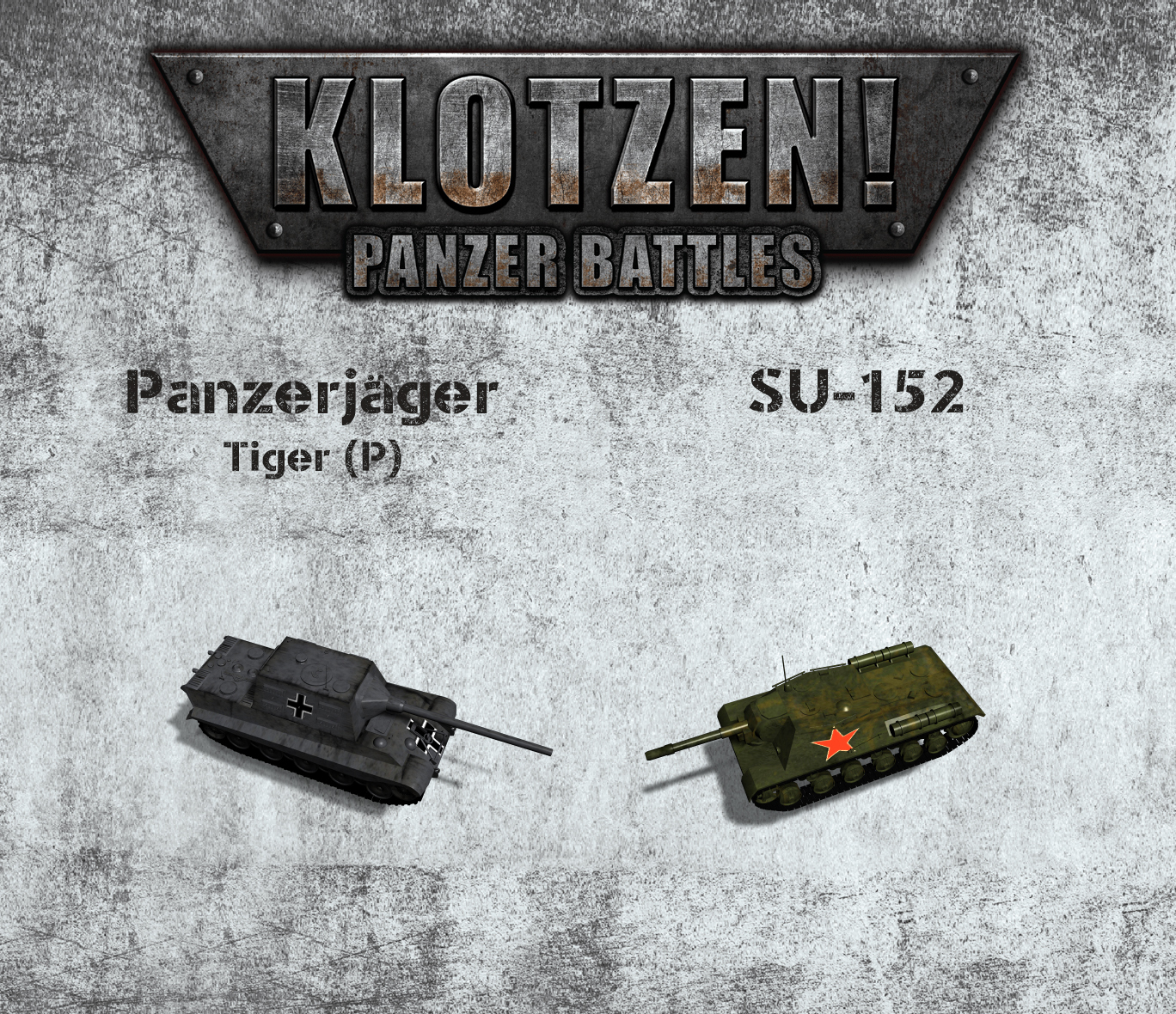
A new pair of tank destroyers is here. Today we compare Panzerjäger Tiger (P) and SU-152. Find the description of each vehicle below.
If you want to see a GIF with these tank hunters, check our Twitter post at https://twitter.com/IndieMaximGames/status/1045690877295951873
Panzerjäger Tiger (P)
Jagdtiger or "Hunting Tiger" is the common name of a German turretless heavy tank destroyer. Jagdtiger was the heaviest armored fighting vehicles used operationally during World War II. It carried a 128 mm PaK 44 L/55 main gun, capable of out-ranging and defeating any Allied tank. The gun used two-part ammunition, which meant that the projectile and the cased propellant charge were loaded separately. Two loaders were tasked with the work. The destroyer used a boxy superstructure, with its sides integral with the hull sides, on top of a lengthened Tiger II chassis.
The resulting vehicle featured a very heavy armor with 250 mm armor on the front of the casemate and 150 mm on the glacis plate. The main gun mount had a limited traverse of only 10 degrees which meant that the entire vehicle had to be turned to aim outside that narrow field of fire. Jagdtiger suffered from a variety of mechanical and technical problems due to its immense weight and underpowered engine. The vehicle had frequent breakdowns and about 20% were lost in combat; most were destroyed by their own crews when abandoned, mainly due to mechanical breakdowns or a lack of fuel in the final stages of the war. The destroyer saw service in small numbers from late 1944 to the end of the war on both the Western and Eastern Front, with only between 70 and 88 vehicles produced.
SU-152
SU-152 is a Soviet heavy tank hunter that mounted a 152 mm gun-howitzer on the chassis of a KV-1S heavy tank. Although its original role was to fight against infantry and destroy fortifications, it proved to be a cheap, widely-produced, and effective heavy-tank killer. It was capable of knocking out the heaviest German armored vehicles, like Tiger and Panther tanks and Elefant tank destroyers.
The disadvantages of the vehicle included a low rate of fire due to the heavy ammunition, low ammunition storage, and a cramped crew compartment. The 65 mm of sloped frontal armor still left it vulnerable frontally to the Tiger tanks and Elefant tank destroyers at long range and the Panzer IV tanks and StuG III/IV tank hunters at medium and short ranges. The 152 mm gun, while having a maximum range far superior to the 88 mm, had a much shorter accurate range than either the 88 mm or the 7.5 cm gun and was still vulnerable to return fire at the same distance. This made it most effective for use in ambushes, where the German heavy tanks' advantages could be nullified, and the SU-152's one-shot kill potential could be best utilized.
From the second half of 1943 to the end of World War II, SU-152s were used on all Soviet fronts. Eventually, the design was replaced by the more reliable and better-armored ISU-152.
Edited on 08.10.2018 - fixed the description of Panzerjäger Tiger (P)
Dev Diary #4
One idea can spark an inspiration and change a life forever. Read our next dev diary to know how the idea of creating Klotzen! Panzer Battles was born and changed the life of our studio head, Zoran Stanic.
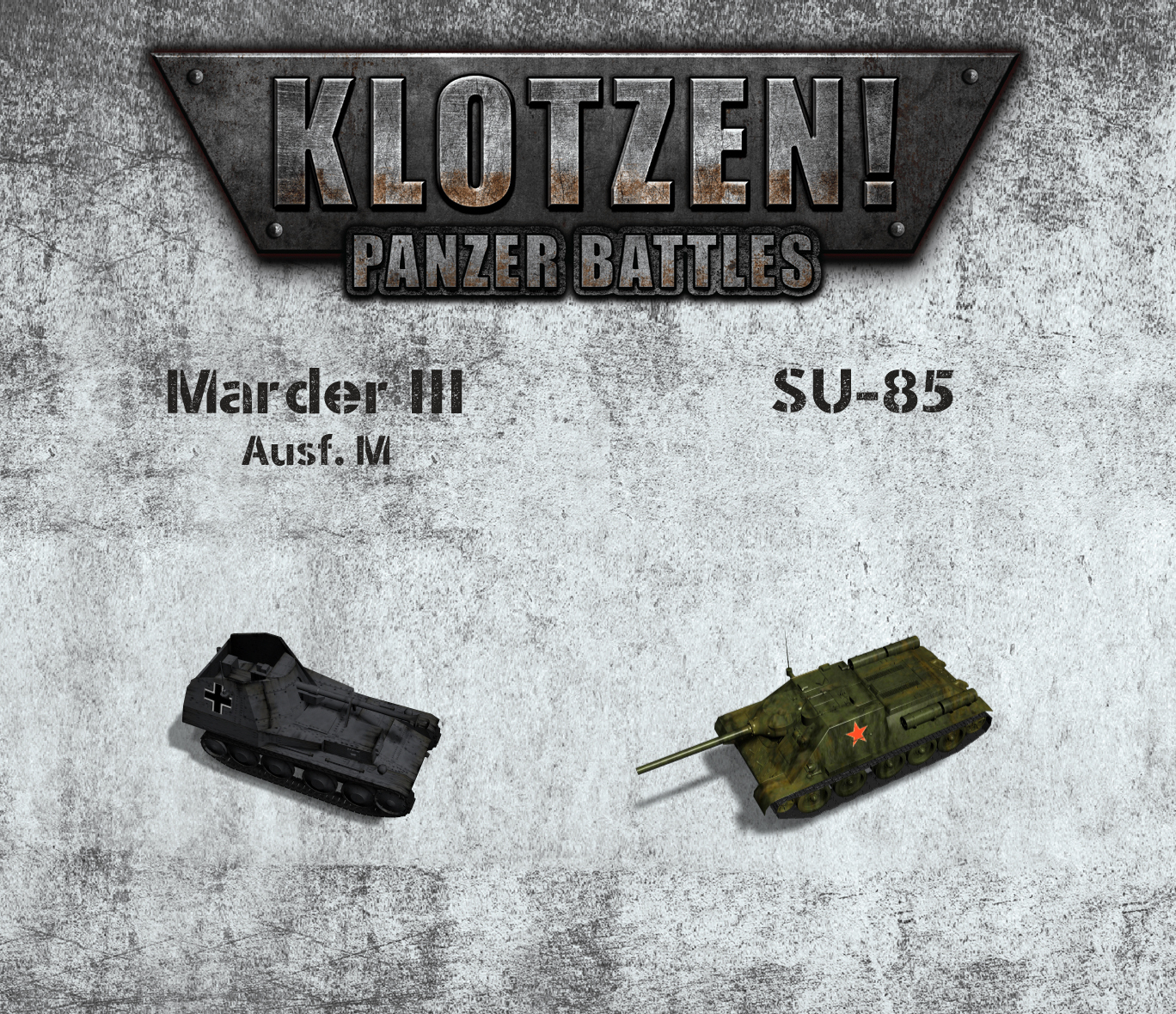
Today we have a new pair of tank hunters to compare. Marder III Ausf. M vs SU-85. Find the description of each vehicle below.
If you want to see a GIF with these tank hunters, check our Twitter post at https://twitter.com/IndieMaximGames/status/1043140839076253696
Marder III Ausf. M
Marder III Ausf. M is a German tank destroyer based on the Geschützwagen 38(t) Ausf. M, a purpose-designed vehicle for self-propelled gun use, armed with the 75 mm PaK 40 anti-tank gun. Ausf. M was the final variant of the Marder series and a significant improvement over previous models, with its lower silhouette, sloped armor, and more functional fighting compartment. It was the variant that was produced in the largest numbers, with 942 vehicles built in two series from May 1943 to May 1944.
The various Marder IIIs fought on all European fronts and North Africa, with the Sd. Kfz. 139 being used mainly at the Eastern Front, though some also fought in Tunisia. Marder III was mechanically reliable and its firepower was sufficient to destroy the majority of Soviet tanks on the battlefield at combat range.
The weaknesses were mainly related to survivability. The combination of a high silhouette and open-top armor protection made Ausf. M vulnerable to indirect artillery fire. The armor was also quite thin, making the design highly vulnerable to enemy tanks and to close-range machine-gun fire. From 1944, the weak-armored Marder series were phased out of production in favor of the Jagdpanzer 38(t) but served until the end of the conflict.
SU-85
SU-85 is a Soviet self-propelled gun based on the chassis of the T-34 medium tank and meant to serve as tank destroyer. The gun is a modification of the earlier SU-122 self-propelled howitzer. The 122 mm M-30S howitzer got replaced with a D-5T high-velocity 85 mm anti-tank gun, and this is where the vehicle got the "85" designation. D-5T was capable of penetrating the Tiger I from 1000 m, and the vehicle had a low profile and excellent mobility.
SU-85 entered combat in August 1943 and saw active service across the Eastern Front until the end of the war. Though a capable weapon, it was found that its 85 mm weapon was not adequate to penetrate the armor of the larger German armored fighting vehicles. When the up-gunned T-34-85 medium tank entered mass production in the Spring of 1944, there was no point in continuing production of the tank destroyer without superior firepower. In light of this, SU-85 production was stopped in late 1944 and replaced with the the SU-100 tank destroyer, armed with the more powerful 100 mm D-10S gun.