This week in science: Pompeii, black holes and frogs!
Hello, Mythbusters!
Ready for a new dose of recent scientific discoveries? Here we go!
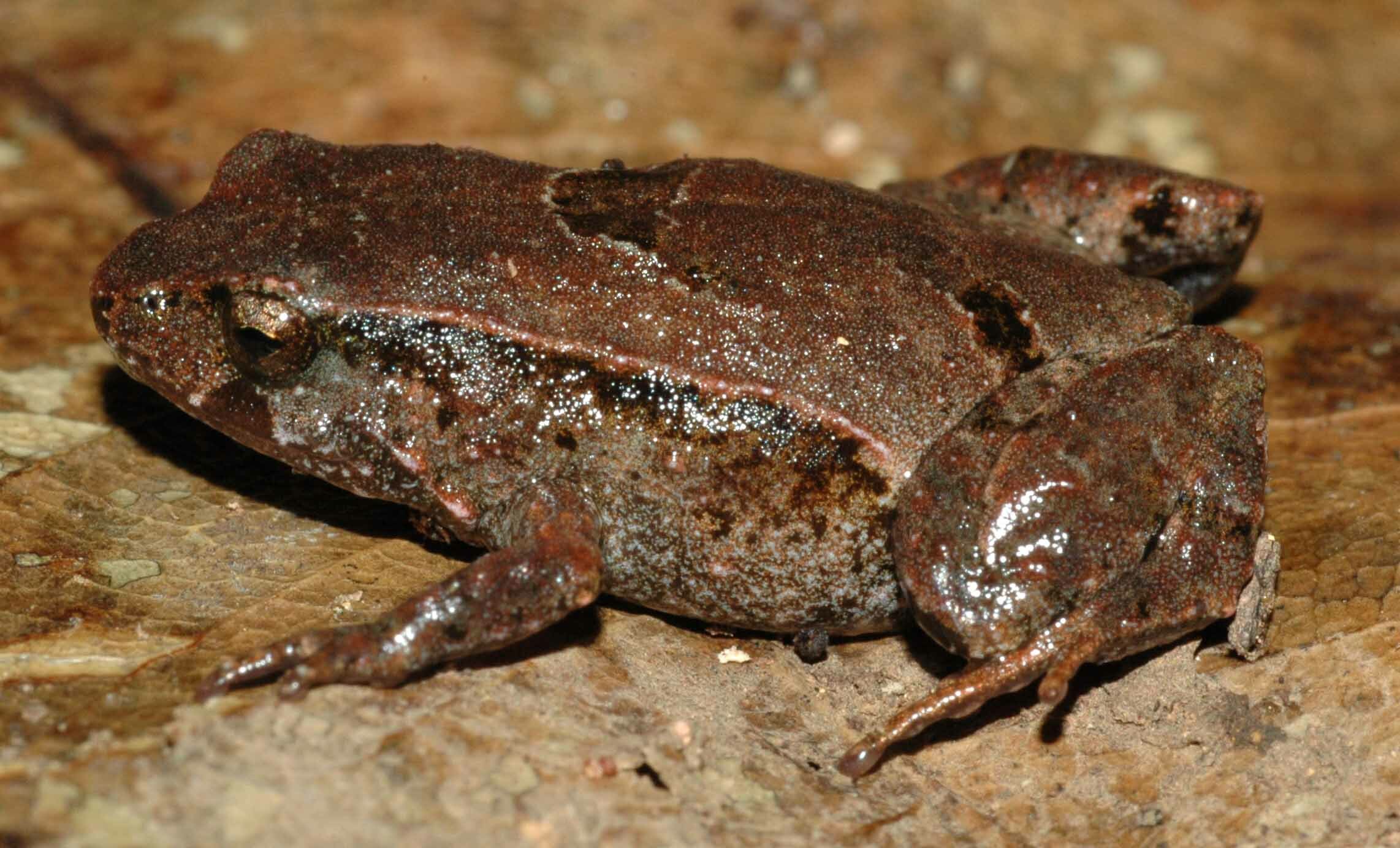
The newly discovered frog species in Australia carry tadpoles in their pockets. The hip-pocket frog, also known as the marsupial frog, is a critically endangered species living in the Australian rainforests. They lay eggs on the forest floor, rather than in the water, and after they liquify, tadpoles climb into small pouches near the top of their father’s legs.
[Source: Hexasoft / Wikipedia CC BY-SA 3.0]
The world’s most advanced lab-grown meat facility opens in California. As people become more aware of the devastating environmental cost of animal agriculture, there’s been a boom of vegan alternatives. One company, Upside Foods, offers something different: real meat but grown artificially in a lab. Would you try a lab-grown burger?
[Source: Missvain / Wikipedia CC BY 4.0]
Roman slave quarters were unearthed at Pompeii. Like everything discovered so far in this ancient Roman city, they are incredibly well-preserved and archaeologists speculate that it belonged to a family of three (parents and a child) who took care of nearby stables.
35 new black hole collisions were spotted. The international LIGO-Virgo-KAGRA collaboration observed 35 new cosmic collisions that released gravitational waves (tiny vibrations in the fabric of space-time). 32 of them likely involved two colliding black holes. Another two were most likely a result of a much rarer collision of a black hole and neutron star. As to the final event, scientists are uncertain which objects were the cause.
Are you following science news yourself? Let us know in the comments below!
Follow us and add our game to the wishlist. MythBusters: The Game is perfect for anyone interested in science and experiments!
Let’s visit the Planning Room!
Hi, Mythbusters!
Join us on a short tour around one of the areas of the game that’s going to be important in your gameplay.
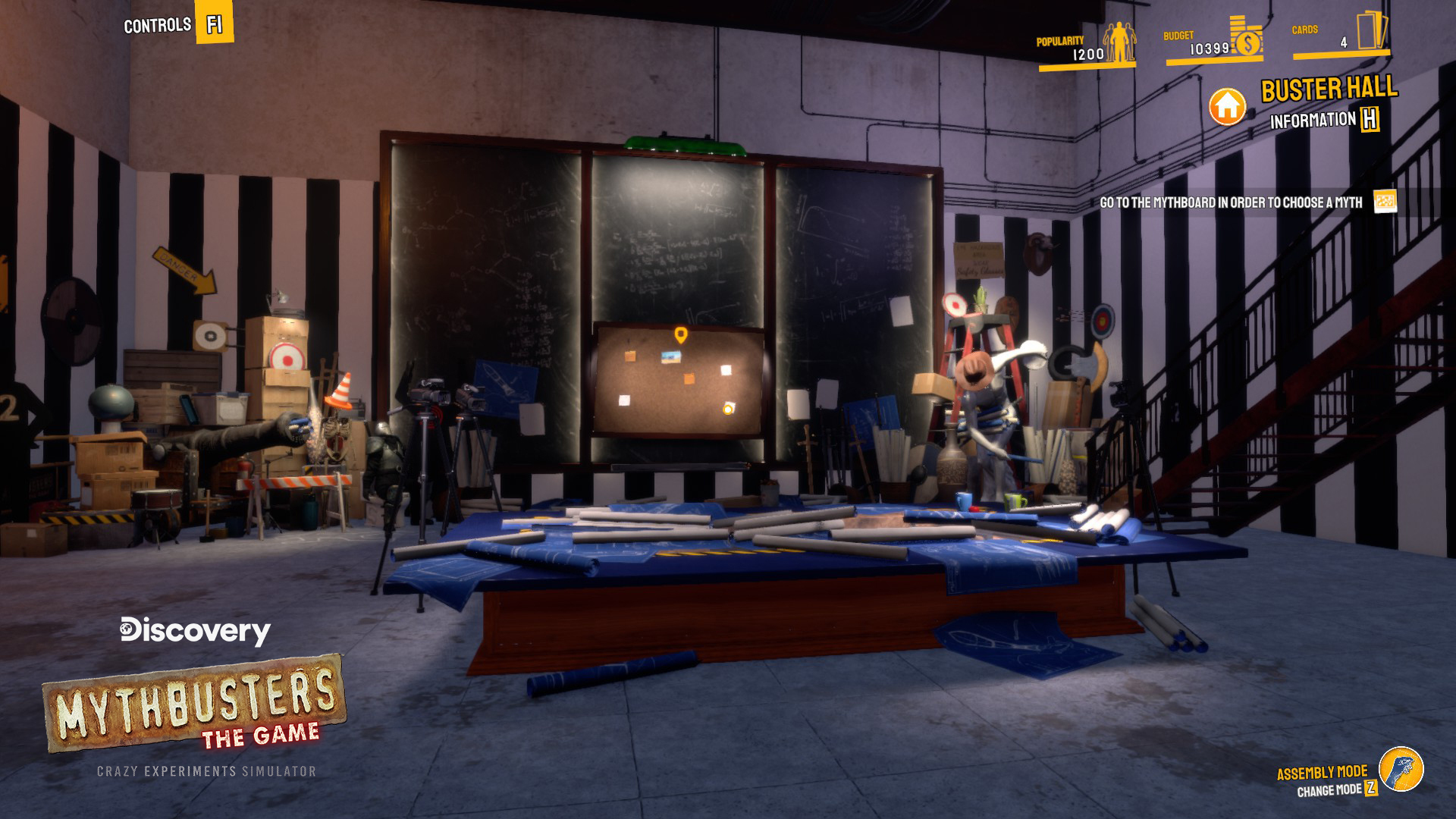
The Planning Room is… well, the place where you plan the experiment. It’s where you’re going to spend a bit of time at the start of the myth, preparing for the next stages.
If you walk closer to the cork board, you’ll see the myths that are available at this point of the game. You can see what they’re about and then proceed.
Now let’s turn back and approach the table with the blueprints. It is the first stage for each myth. You’ll have to solve some mind-twisting puzzles before you can proceed to set up experiments.
Now, in the first picture you could see the stairs. These lead to the upper floor with the nice view below.
The area upstairs is also important for managing your operations, but let’s leave that for another tour.
Thanks for joining us, and see you next time!
This week in science: VIKINGS!
Hello, Mythbusters!
Here's a quick roundup of the latest discoveries from all kinds of areas.
There's proof Vikings lived in America 1000 years ago! The scientists analyzed wooden objects found at an archaeological site in Newfoundland. They've determined that Vikings lived there in 1021. Can you imagine crossing the ocean back then?
Horses come from Russia. Analyzing DNA of hundreds of horses showed that the modern domesticated horse originated somewhere around the Pontic-Caspian steppe. This area was settled by a bunch of peoples, including Huns, Bulgars, Khazars, Hungarians, Cossacks and Russians.
Tuskless elephants are the latest to confirm the theory of evolution. Over the years, the ratio of tuskless female African elephants rose from 18 to 51 percent, which seems to show that the elephants have adapted to the emergence of ivory hunters. However, elephants need tusks to dig in the ground for water or strip trees from bark, which they eat.
The use of an atomic clock has confirmed that gravity indeed affects time. Einstein theorized that a clock will tick faster the further away it is from Earth or another large celestial body. Now, an amazingly precise clock confirmed that height difference affects the speed of the measured time.
Did you like the science news?
Are you up for doing some experiments yourself?
Follow us and add our game to the wishlist. MythBusters: The Game is a game for anyone who is something of a scientist themselves!
This week in science: Pluto’s atmosphere is disappearing
Hello, Mythbusters!
Science is galloping forward every day, and while we’re waiting for the full game, we can spare a minute to catch up on the latest news straight from the scientific field. So what has happened this week?
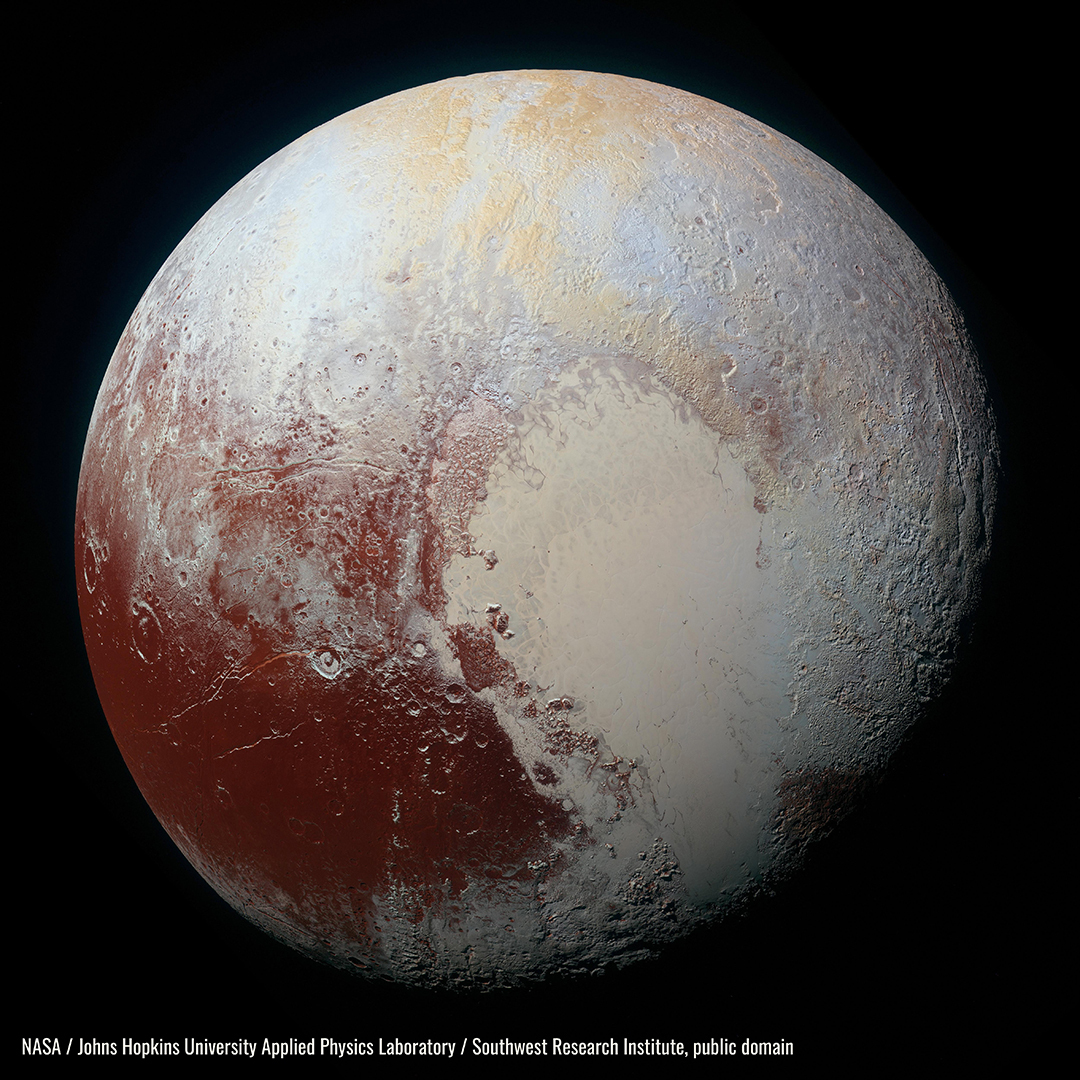
The astronomers noticed that Pluto’s atmosphere started to disappear! Pluto is a dwarf planet (some of us still don’t agree with the new classification but that’s a topic for another time) which lies in the Kuiper Belt, over 4.8 billion kilometres (3 billion miles) away from Earth. When the planet was passing in front of our sun back in 2018, the astronomers were able to observe the curious change in its atmosphere, which the recently described in a new study.
Pluto’s atmosphere is primarily made out of nitrogen, just like Earth’s, and exists as a result of the vapours from the planet’s icy surface. It seems that the changes in surface temperature can dramatically impact the atmosphere’s density. To put it simply, the closer Pluto is to the Sun, the hotter its surface is. The hotter the surface, the denser the atmosphere becomes when ice turns into gas. And then it goes in reverse.
Pluto has been moving farther away from the sun for the last 25 years now and it seems that its atmosphere is actually refreezing back onto its surface due to the dropping temperature. So why is the atmosphere disappearing now if Pluto is already going further from the star? It’s all thanks to a phenomenon known as thermal inertia. Basically, Pluto had residual heat from when it was closer to the sun. Think of sand on the beach. It gathers the heat until noon when the sun shines the most but continues to burn your bare feet for at least a few more hours. The same happened with Pluto – only now has it started to lose the accumulated heat from the planet’s surface. It results in the nitrogen from the atmosphere turning back into ice and “glueing itself” back to the ice on the surface.
And how did we know that? There is a method astronomers use to guess the density and size of a celestial body by observing the changes in the light of a star when an object passes in front of it. Because we already have an excellent density profile of Pluto obtained in 2015 during the New Horizons mission, astronomers noticed a change in the density of Pluto’s atmosphere when it was passing in front of the sun a few years later.
Science is fascinating, isn’t it? Would you like to hear more science facts like this one? If you can’t wait to make your own experiments, wishlist Mythbusters: the Game and tell your friends about it. Stay tuned!
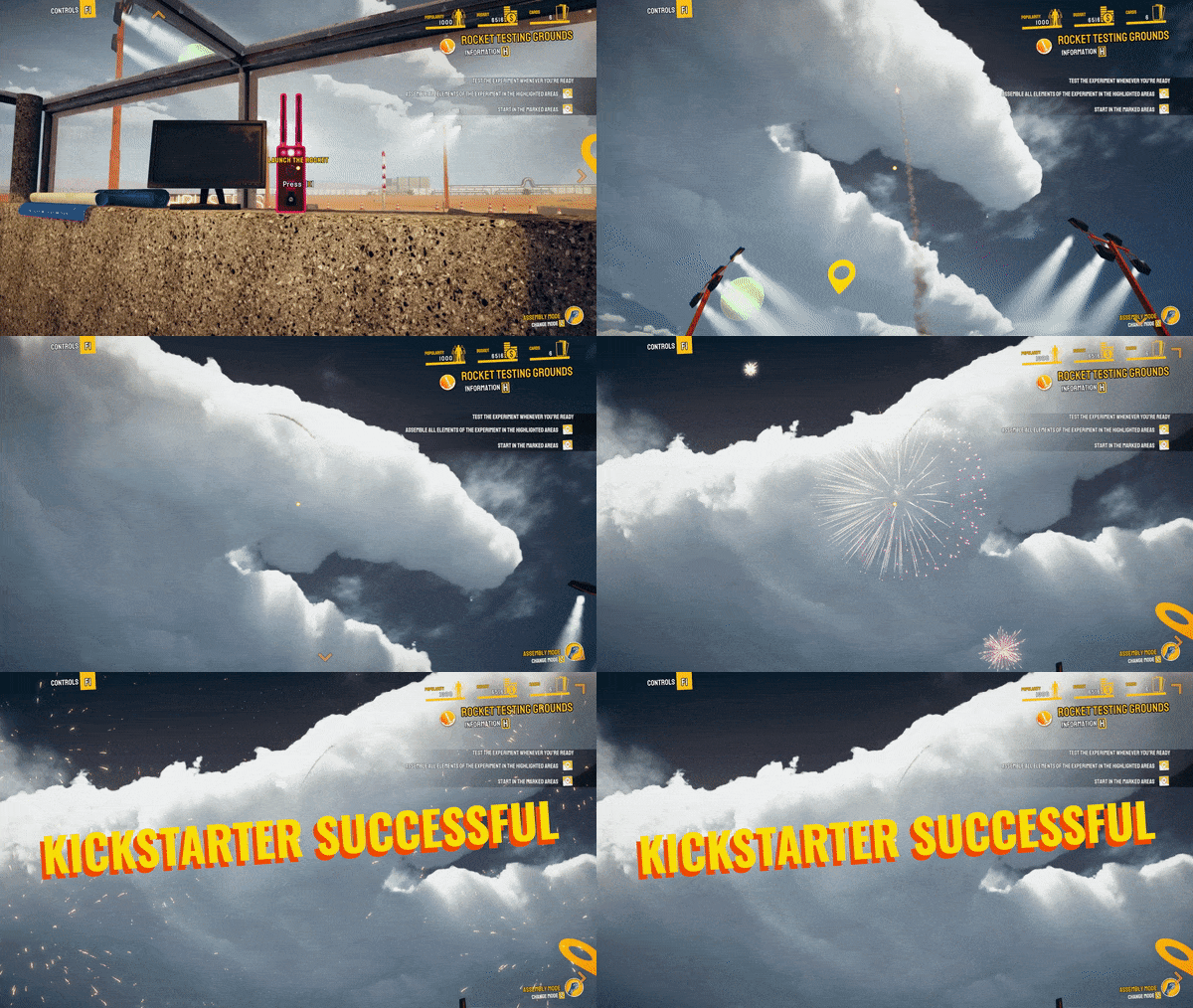
Our Kickstarter is SUCCESSFUL!
Dear Mythbusters,
It’s a joyful day for everyone here at our studio! We’ve reached the finish line of our Kickstarter campaign, and the results are thrilling. 231% funded, 5 goals reached, more than 600 supporters. All we can say is a sincere, warm THANK YOU! You’ve made it possible for us to make the game bigger, richer and better.
The campaign is complete, but our adventure continues. Stay with us for what’s coming next. We’ll keep letting you know about the progress of our game. We’ll show you more things that you haven’t seen in the demo.
It’s going to be a fun journey and we hope you’ll be with us for the rest of it!
Next goal ACHIEVED, 222% funded, 4 days left!
It’s CONFIRMED: we CAN achieve 5 goals within our campaign!
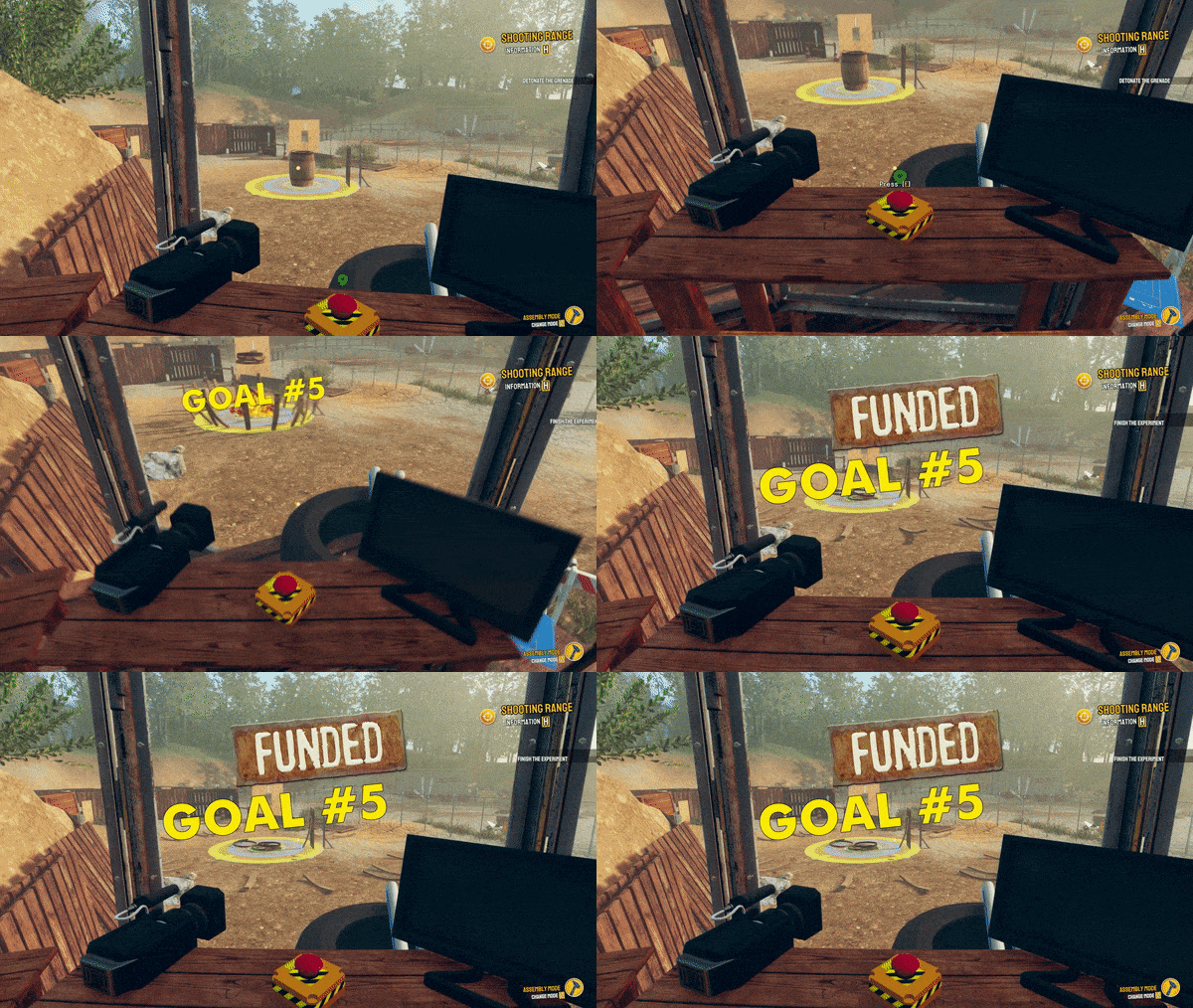
Hi Mythbusters, we’ve just hit our 5th goal. This means our game will now feature more customization options to let you make your experiments truly yours. As always, thanks!
Now, let’s prepare for the home stretch.
We have 4 days left and still more goals to meet!
From new collectibles to additional firearms to test, to new camera modes or even a complete new myth to explore.
Here are the many ways you can help us if you have already backed us:
Spread the news about our campaign on social media. This also counts towards our social goals, which add smaller content to our game.
Add our game to your Steam Wishlist. You’ll make us more visible on Steam.
Follow our publisher’s Twitter for future updates.
If you’re already backed us, you also can increase your pledge.
Let’s make these final days truly epic!
Yours, Ernest
Save up to 90% on simulators, horror games and more!
Our publisher Movie Games teamed up with PlayWay to offer you great prices on more than a dozen of great games! See what you can get up to 90% off, and don’t miss the chance.
Wishlist any game that you can’t get today. Enjoy!
Win a copy of Gas Station Simulator!
Hi folks!
We have great news: our friends at DRAGO entertainment, the team behind the hit Gas Station Simulator, have organised a contest where you can win the game for free! All it takes is joining their Discord.
Gas Station Simulator recently topped Steam charts, and for a good reason. It’s a unique and fun game loved by gamers and streamers alike.
If you haven’t played it, take this chance for a shot at a free copy. It’s also a great opportunity to discover other titles from DRAGO entertainment.
Good luck, and have fun!
Test It Yourself! Demo Out NOW
Greetings, Mythbusters!
We’re happy to invite you to test our demo, now available within the Tokyo Game Show
If you like what you see, go to Kickstarter and support our campaign to expand the game even further!
We’ve reached the next stretch goal of our Kickstarter campaign. More blueprints are FUNDED! This means we can create additional “big” experiments to solve within our myths! Thank you again for your support - and let’s make it to another goal!
Next up: MORE CUSTOMIZATION OF CRAFTER ITEMS
If we reach it, you will be able to choose different decals, paint jobs, or other details for the items you use in our experiments.
Customization already exists in our game, but you can help us expand it. This way your experiments can become more unique!