Welcome to the monthly progress report covering the major aspects I worked on in October 2022. As always, if you do prefer bullet points and not read everything in detail you can skip the sections after the TL;DR part.
TL;DR:
Implemented new (finite) world generation algorithms featuring
Worlds up to 64km² or ~25miles²
Mountain ranges as natural world borders
Mountains and hills with forests and meadows
Future points of interest position evaluation
Road network to connect all points of interests
Implemented new vegetation renderer
Used UI Toolkit (new production ready Unity UI system) to create world generation setting menu for upcoming tech demo and get experience with the new system for future UIs
Feel free to follow on any of the social media platforms or join the discord for more in depth and more frequent update posts.
Procedural world generated with new algorithms
World overview (White circles represent points of interest connected with a road network)
New World Generation Algorithms
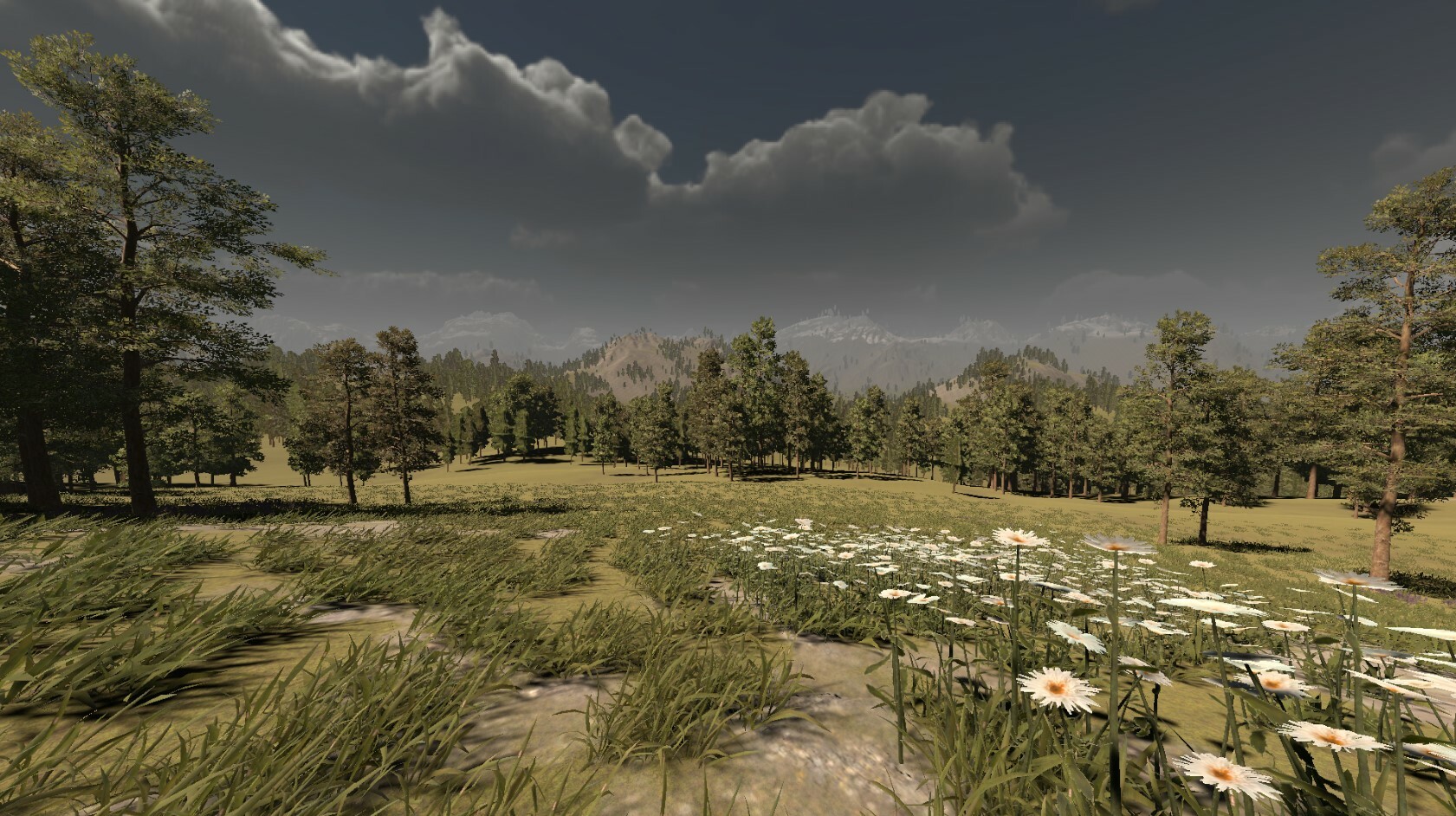
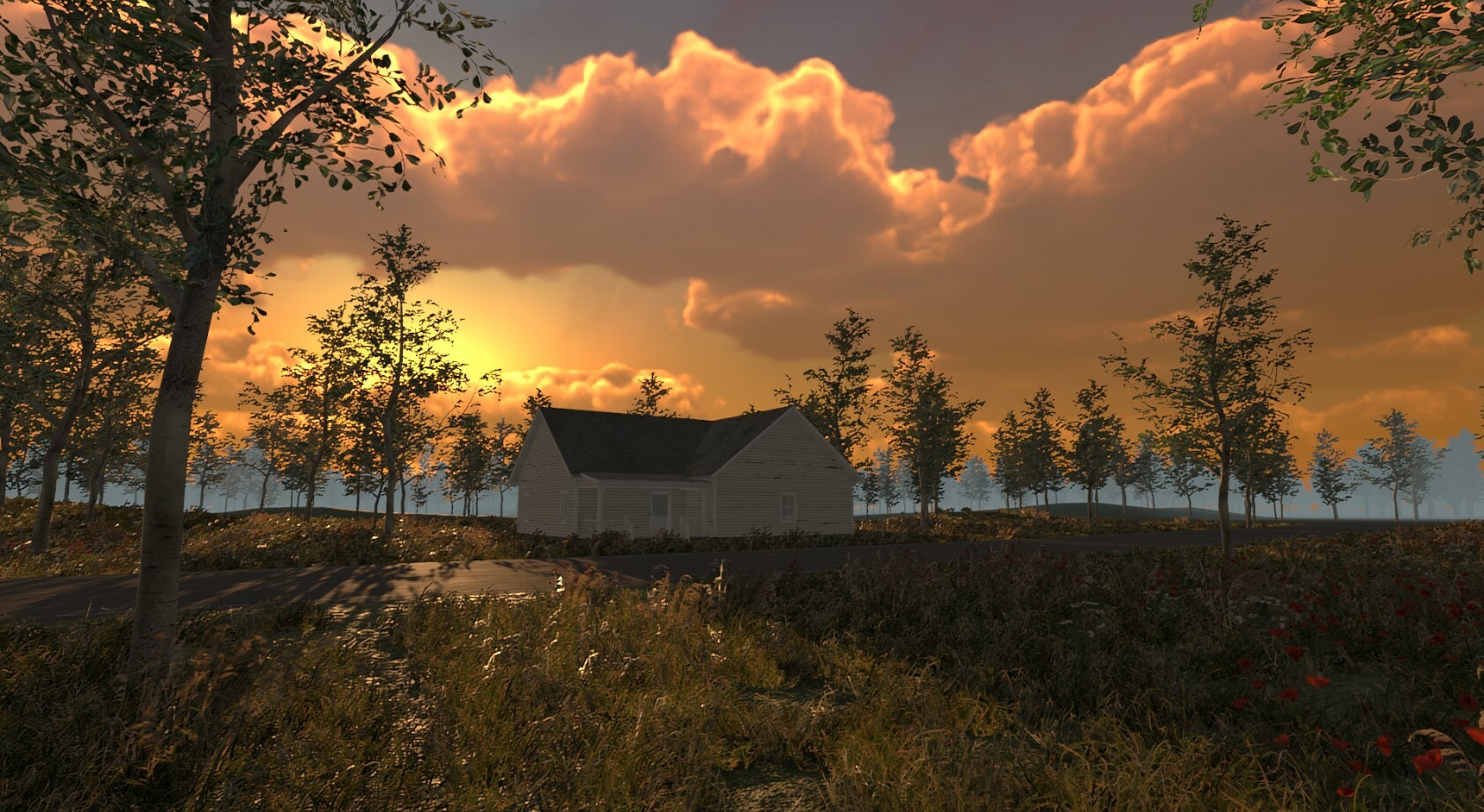
After additional testing of a new asset for designing worlds I decided to give it a try to reimplement the procedural world generation for the game utilizing the features of said asset. The asset is not specifically designed for my use case, meaning it’s intended use is to create worlds manually during design time. However, with some input from the asset creator I was able to make it work at runtime too. So far I was going for infinite procedural worlds but over time this turned out to make certain things incredibly difficult to implement and balance so I made the decision to take a step back and attempt to create the new world generation algorithms for a finite world. This for example allows me to ensure much easier that certain points of interest are always within a reasonable distance to the player. With the asset working at runtime I immediately started working on the new algorithms and thanks to the functionalities provided by the asset I was able to quickly make visible progress. With the rapid progress of the first week I decided to focus all my efforts in October on getting the world generation as far progressed as possible. I am happy to say that the core of the world generation is already implemented. This current implementation allows the generation of worlds up to 8x8km (64km² or ~25miles²). Those worlds have mountain ranges at the edges of the world as natural borders. Mountains and hills are also already available and can be increased or decreased in a world generation settings menu. Vegetation placement functionality is also already implemented. To not waste time on crazy variety and density I went with a basic forest and some grass land with a couple flowers for demo purposes only. Next month I will put some time into more diversity of vegetation to give the world an even better look. As mentioned in the September progress report this change means also stepping away from my current vegetation renderer and replacing it with a new one. Fortunately this change went quick and without issues. An algorithm to evaluate viable positions/spots for future towns and other points of interest is also already in place. Those points can already be connected via a road network. This leaves only the generation of towns as part of the absolute core world generation.
UI Toolkit - Unity’s new UI system
With Unity’s UI Toolkit being production ready as of late I decided to familiarize myself with it. The old/current UI system in Unity is quite bad when it comes to performance and as I heard good things about the new one it was important to take a look at it before making any new UI for the game. As the upcoming world generation tech demo does require a simple UI to allow the various settings to be chosen it was the perfect time to learn and practice the workflow of UI Toolkit. The workflow is quite different but so far I am really happy with improved modularity and simplicity of the system. I did create a very basic settings menu for the world generation tech demo and will likely use this system for any future UI implementation and will also consider porting over existing UI in the game.
Plans for November
The primary goal for November is to add support for generating the town roads and having basic building placements. With those 2 features in place, the core world generation would be complete. To add more vegetation variety I will also be taking a look at biome placement which would allow dedicated vegetation to be placed in specific areas of the world. The addition of rivers and/or lakes are also planned but I don’t know how long the implementation of the previous features will take me so it’s hard to say if I will be able to take a look at those in November.
I’m looking forward to reading your thoughts, feedback or criticism in the Steam discussions.
That’s it for this update post. I hope you are all doing well. Stay safe out there and I’ll see you in the next one.
Welcome to the monthly progress report covering the major aspects I worked on in September 2022. As always, if you do prefer bullet points and not read everything in detail you can skip the sections after the TL;DR part.
TL;DR:
More tweaks to high definition render pipeline (HDRP) setup
Researched and planned upcoming zombie implementation using UMA (Unity Multipurpose Avatar)
Researched new asset to improve world generation
Took about a 2 week break due to covid
Feel free to follow on any of the social media platforms or join the discord for more in depth and more frequent update posts.
General
I started off the month by doing more tweaks to the high definition render pipeline settings along with a lot of testing to make sure to stay within the performance requirements. There are a couple more systems left to be updated to HDRP before I can integrate them back into the game, most importantly the terrain shading. This will be worked on in October to hopefully get everything fully working as before. For that reason I am currently still using the default Unity terrain shader in the screenshots of this progress update. Unfortunately I got Covid and while I never had a fever or felt too bad I decided to take it slow and take a break from development for about 2 weeks. This means development time this month was significantly less than I planned for.
Zombie Research & Planning
Most of my time this month went into researching, testing and planning the upcoming zombie implementation. For that I explored various approaches before finally coming back to an asset called UMA. This asset is freely available and offers the necessary versatility I need to create modular zombies. During research of the asset I discovered that 7 Days To Die also makes use of that asset for their zombies which further strengthens my believe that it is possible to achieve modular zombies with modding support using UMA. The nature of it being free allows me to add modding support for zombies much easier because I don’t have to deal with licensing or copyright which would be the case for alternative approaches. The asset does come with a set of human models which I will be basing the zombies on to also make it easier for modders to add contents to the zombies like custom clothing models. Since the human models are of course not really looking like zombies I will be doing initial retexturing of the skin, applying blood platter and possibly some wound overlays in combination with custom facial expressions and of course animations to make them look and feel more like zombies. Once the zombies are implemented on a technical level and I can be sure to stick to this asset and models I will commission a professional character artist to do the necessary changes to give the zombies the quality I am looking for. Waiting for that gives me the option to still decide on whether or not I think fully custom 3D models are required and if need be commission them instead. Unfortunately due to my covid break and the required thorough planning for the zombie implementation to meet all its requirements there was not much time for anything else this month.
Plans for October
Since the zombie implementation is a huge task I will not solely focus on it for October. Unexpectedly the creator of the terrain shader I am soon going to be implementing back into the game just released a new asset for environment creation. I already spent a bit of time looking into the asset to see if it would help me with certain tasks in my world generation pipeline. From what I can tell it should fit nicely into my pipeline and even potentially allow me to skip certain implementations I had planned for in the future. However, this integration won’t be a quick one as it would require me to step away from my current vegetation placement and rendering asset. While this may sound bad it’s actually a good thing because the current asset for that has not received any updates in a long time and may break in future Unity versions. With the uncertainty of the future of that asset I currently rely on and the absence of the developer of said asset I think it’s well worth the time to try and switch to another vegetation rendering system and utilize the new asset to manage vegetation placement. I’ve already found a potential replacement for the new vegetation rendering too and will be looking into that a bit in October. Ultimately I think this switch could prevent running into serious issues later in development and save me time in the long run by taking the step now while it’s much easier to do than later. I will be doing a good amount of tests before making any final decisions but that is certainly where some of my time in October will be allocated for.
I’m looking forward to reading your thoughts, feedback or criticism in the Steam discussions.
That’s it for this update post. I hope you are all doing well. Stay safe out there and I’ll see you in the next one.
Welcome to the monthly progress report covering the major aspects I worked on in August 2022. As always, if you do prefer bullet points and not read everything in detail you can skip the sections after the TL;DR part.
TL;DR:
Researched and tested new high definition render pipeline (HDRP) for improved visuals
Upgraded project to use the HDRP
Feel free to follow on any of the social media platforms or join the discord for more in depth and more frequent update posts.
In the month of August I decided to switch from the builtin to the high definition render pipeline which offers significantly better visuals. With the summer break until mid August the pipeline switch took up all the remaining development time of the month so there isn't a lot to talk about in this progress report.
Switch To High Definition Render Pipeline (HDRP)
After my summer break I wanted to continue working on the zombie implementation but didn’t get far due to some performance issues I ran into with the basic implementation. After considering my options I made the decision to go on an unplanned detour instead. This was to take the rest of the month and test out Unity’s high definition render pipeline. With the recent change to photorealistic graphics the render pipeline switch made sense especially before going forward with the zombie visuals as they will be directly impacted by the new render pipeline. It’s always better to do these kinds of switches sooner than later as they will always require conversions of existing assets. Since such a switch is no small task and I had no prior experience with the HDRP I decided to first get familiar with the pipeline before making the final decision of switching. I first started testing out a good amount of the pipeline in different projects and did some asset conversion too. Since the HDRP provides better visual quality it also comes with a bigger performance impact. To be able to get a feeling on how much that would mean in my project I also tested various scenarios in both the builtin (current) and HDRP (new) pipeline. The switch also required me to replace the weather asset I previously used because it is not compatible with the HDRP. I quickly found an alternative weather asset I could use and after over a week of learning and testing of the pipeline I decided it’s worth going forward and actually do the switch to the new render pipeline. I managed to finish the core part of the switch just by the end of August. Unfortunately not everything is set up yet to actually showcase the new visuals in the game. I will be showcasing the visuals in the progress report of September when I had more time to tweak all the settings and get the best visuals possible without compromising performance too much. The new render pipeline comes with a whole bunch of new visual features that the builtin render pipeline doesn’t provide. I hope to be able to make use of at least a few of them in September and showcase them in the next progress report too.
I’m looking forward to reading your thoughts, feedback or criticism in the Steam discussions.
That’s it for this update post. I hope you are all doing well. Stay safe out there and I’ll see you in the next one.