

Steam
Genre: IndiePictoglyph
Steam Next Fest Demo
I will take this is as a lesson for the future. I will leave the demo available for download after the Fest finishes.
The demo is a basic slice of the game - its main purpose to gather feedback on the puzzle ruleset. It will be full of bugs (if you wish to submit any bug reports, please do so in this thread - very much appreciate it) There are various animations missing/buggy etc.
The final version will include:
Music/Sounds
Interactive Tutorial
Save Functionality
Plethora of Interface Options
Also, just a quick shout out to Steam Staff, who approved the initial upload of my Demo Build in record time.
Friday Dev Update #6
This week I've been doing a lot of 'under the hood' stuff. As the menu system is a bit convoluted in Pictoglyph, I've been testing to make sure the player can't click the wrong thing at the wrong time and crash the game. I've also been working on the save system etc.
I will be doing a 2nd pass of the art assets soon - this means the Steam page will be updated - I'm hoping to to add some nice gifs to show off the game and hopefully explain the concept visually a bit better.
Thanks for reading - Steam Next Fest is soon!
Friday Dev Update #5
This week I've been working on how the player interacts/marks tiles to solve the puzzle. I'm finding that this has been a challenge in terms of art and animation. As Pictoglyph has a 'theme' of sorts - keywords like "ancient, stone, Mayan, temple" etc. and does not have a simple, minimalist abstract art style, it has been hard to help to show the player when they are marking shapes.
In Pictoglyph there are several ways to mark tiles:
- you can block out tiles which are not part of the solution like in a normal nonogram puzzle
- mark tiles in a generic way - these tiles you suspect to be correct, however you do not know which 'Pictoglyph Shape' they belong to
- mark tiles as their corresponding 'Pictoglyph Shape'
The gif below shows how a player would mark tiles belonging to the 'Snake' shape - which in this save is a Tetris like letter "L" which is on its side.
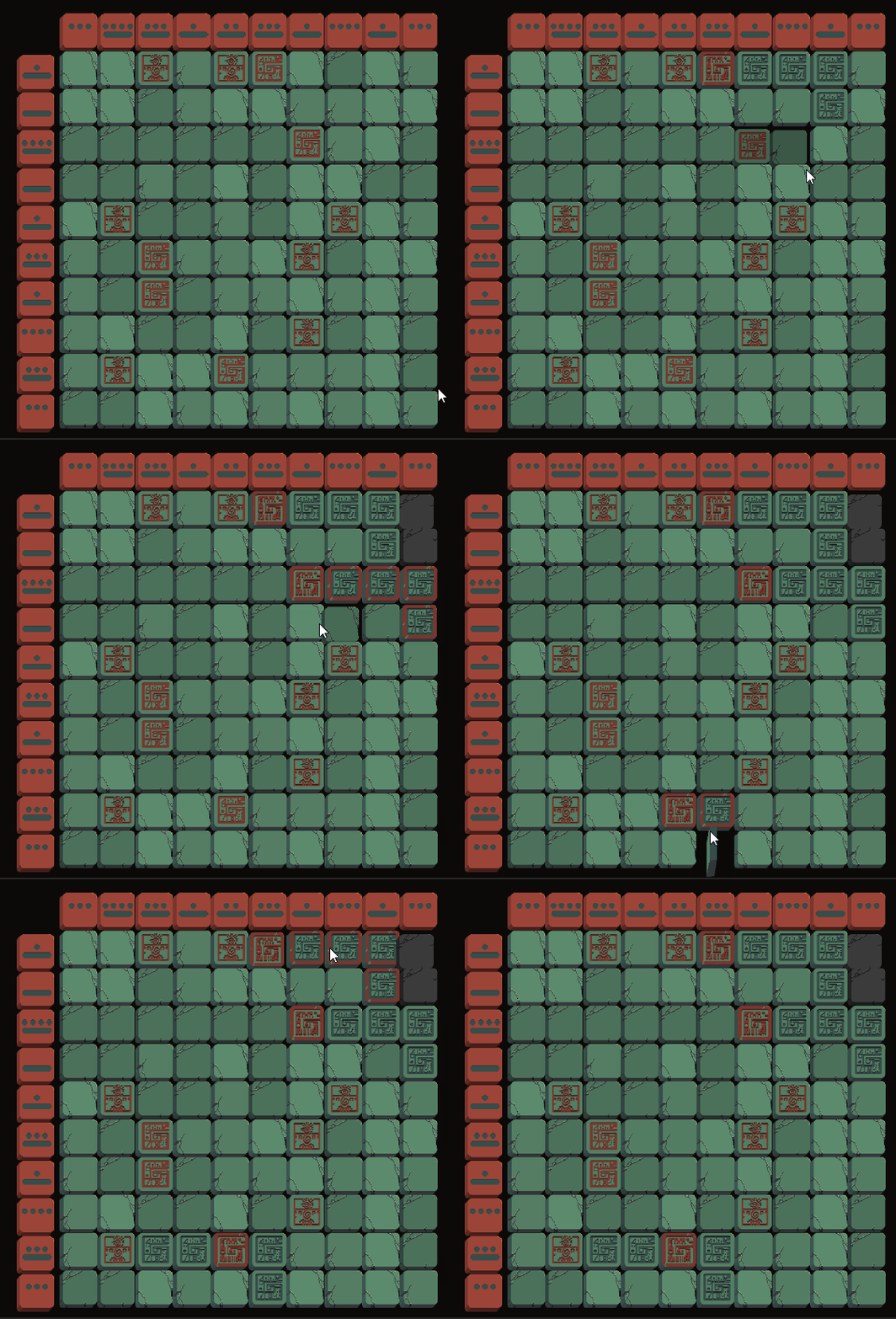
The player first clicks a clue tile to begin marking tiles they have worked out to be part of the Snake Shape. The clue tile could be any one of the tiles of that shape of course. While marking, the tiles appear to have a red border. Once the player is finished marking tiles for that shape (to cancel they can click the Clue Tile again or right click etc) The tiles flip back, lose the red border and become 'normal'.
As there could be many of the same "Snake" shapes in the puzzle, the red border around the tiles you're currently marking helps the player keep track of which shape they're actually interacting with. I'm finding that explaining this sounds more complicated than it is in practice. I cannot wait for feedback from the demo once that is out.
Also, please note, all the animations/symbols/tile sprites etc, will have a couple of art passes (one for the Demo, then a final one for release) so the final game will look slightly different.
Thanks for reading.
Friday Dev Update #4
Nothing to visually show this week as most of the work has been tackling 'under the hood' type stuff. I have now finished migrating all the code for procedural generation into the new version of the game - as the puzzles are now fully playable I've been able to do some play testing. I'm now more excited then ever to be able to have the demo out soon to hopefully gather feedback on things like difficulty etc. I am not an amazing nonogram player - however Pictoglyph's default 10 x 10 generated puzzles take me about 10 or more minutes to solve - which put it in the medium to hard bracket in my opinion. Again, once the demo is out I will be able to gather feedback and maybe do some tweaking. I plan on having modifiers to the way clues are displayed to make the puzzles easier/harder.