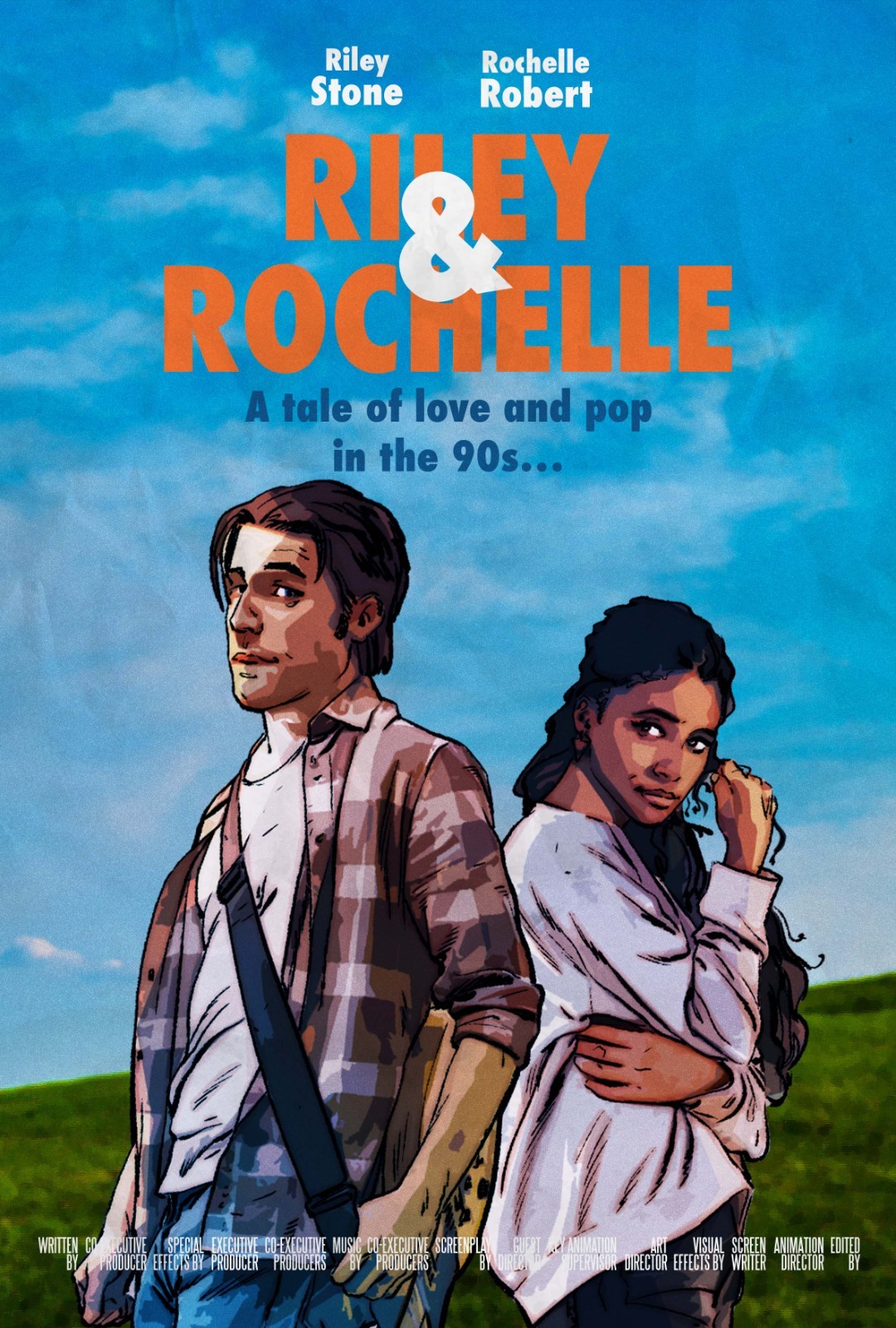
Riley & Rochelle
Riley & Rochelle Devlog pt.5
Ironically at the same time I was writing for R&R I was invited to join a writer’s room for a very different project. My homework for that project had me watching a bunch of 90’s music-adjacent canonical films, including Empire Records, Britney vs. Spears, and Josie and the Pussycats. Throughout the first half of 2022, I was fully immersed in 90’s culture. I was a teenager in the 90’s and by the time I was moving away for uni in 1998, I was already in deep in the music scene. I was playing in bands, writing music reviews for Vice, hosted a Canadian indie rock college radio show, and was a DJ at the Biftek, an iconic Montreal bar where all the rock and rollers hung out.
The ’90s were weird! Everything was physical media (cassettes, CDs, vinyl) and music was consumed in a completely different way than it is today. We discovered new bands by reading magazines, watching TV and listening to the radio. It seems quaint by today’s standards — but these limited means of sharing music also meant there was limited real estate for new acts to break through. The idea of “indie rock” was just emerging — and I think we captured this moment with Riley’s entry into music. Recording cassettes on his 4-track, being discovered by smaller labels and the DIY ethic all play into his story. And for Rochelle we played into the trope of being “discovered”-- a path that isn’t always as clear as some think it might be.
I am still waiting for the green light to make Riley & Rochelle branded scrunchies. That would be the ultimate swag.
Meet the Voice Actors
Tirelessly dedicated, versatile and precise, she is a brilliant person to work with.
Riley & Rochelle Devlog
Rochelle's Music
Rochelle's music represented the biggest step outside of my tastes yet. In other ways, the music was not particularly difficult to conceptualise. After all, I was a child of the 90s - growing up with stars like Celine, Whitney, Mariah, Toni and many others. Another thing was that the UK Britpop I grew up listening to was inherently melodic. As such, I've always had a taste for strong tunes, which the divas had in multitudes.
Early on, I decided that I wanted to base Rochelle's early music closely on that of Celine Dion's. By the mid 90s, Celine had settled into an established template, but her early work exhibited much more variety - experimenting with new wave pop, as well as more traditional balladry.
We see Rochelle progress from classical-lite pageantry (Richelieu), through euro pop-rock (Couer Brise) to her first big hit 'Strong'. This is a wide range of styles straight off the bat and required a very capable vocalist. I found Colombes Ran, an Madagascan singer, who also spoke fluent French and sang Celine Dion like the lady herself. We were very nervous waiting for our recording of Strong to come back. When it did, we immediately knew we had nothing to worry about.
I think one of the reasons I didn't find writing Rochelle's work particularly taxing is because it was so biographically driven. I knew the beats that Rochelle's character followed and wrote songs that either fit or the story could be altered to. In particular, a lot of movies feature in Rochelle's career, allowing me to have fun with over the top ballads.
The one anomaly is Stay, written by Rochelle, but sung by popstar Brandon Boynton. This had come from a closely preceding project, in which I wanted to make a game similar to Family but involving the 1990s Swedish Pop Sound (Backstreet Boys, N*Sync, Britney, Christina). One can clearly hear the song's lineage from these mid-90s radio hits.
Riley's Music
Writing Riley was quite a different proposition to Rochelle. His songs were more incidental to his story beats, but were rather meant to be tied to personal development. I wanted to hear a real evolution in his sound - from indie DIYer to hitmaker to auteur.
Luckily, I had no doubt who would voice Riley. Riley Catherall had worked with my on Rivals and Echo Beach and had the perfect singing voice for the role. In fact, I had around this time considered making a game for just the Riley character, based more closely on Elliott Smith, which had generated some of the material.
Riley's music also had specific influences - Elliott Smith, Radiohead, REM, Neutral Milk Hotel. However, he also represented more of a general type and so I wasn't as concerned with nailing a specific artists' style and only one or two are distinctively homages (try and guess).
Riley & Rochelle Devlog Pt.4
Rochelle's Music
Rochelle's music represented the biggest step outside of my tastes yet. In other ways, the music was not particularly difficult to conceptualise. After all, I was a child of the 90s - growing up with stars like Celine, Whitney, Mariah, Toni and many others. Another thing was that the UK Britpop I grew up listening to was inherently melodic. As such, I've always had a taste for strong tunes, which the divas had in multitudes.
Early on, I decided that I wanted to base Rochelle's early music closely on that of Celine Dion's. By the mid 90s, Celine had settled into an established template, but her early work exhibited much more variety - experimenting with new wave pop, as well as more traditional balladry.
We see Rochelle progress from classical-lite pageantry (Richelieu), through euro pop-rock (Couer Brise) to her first big hit 'Strong'. This is a wide range of styles straight off the bat and required a very capable vocalist. I found Colombes Ran, an Madagascan singer, who also spoke fluent French and sang Celine Dion like the lady herself. We were very nervous waiting for our recording of Strong to come back. When it did, we immediately knew we had nothing to worry about.
I think one of the reasons I didn't find writing Rochelle's work particularly taxing is because it was so biographically driven. I knew the beats that Rochelle's character followed and wrote songs that either fit or the story could be altered to. In particular, a lot of movies feature in Rochelle's career, allowing me to have fun with over the top ballads.
The one anomaly is Stay, written by Rochelle, but sung by popstar Brandon Boynton. This had come from a closely preceding project, in which I wanted to make a game similar to Family but involving the 1990s Swedish Pop Sound (Backstreet Boys, N*Sync, Britney, Christina). One can clearly hear the song's lineage from these mid-90s radio hits.
Riley's Music
Writing Riley was quite a different proposition to Rochelle. His songs were more incidental to his story beats, but were rather meant to be tied to personal development. I wanted to hear a real evolution in his sound - from indie DIYer to hitmaker to auteur.
Luckily, I had no doubt who would voice Riley. Riley Catherall had worked with my on Rivals and Echo Beach and had the perfect singing voice for the role. In fact, I had around this time considered making a game for just the Riley character, based more closely on Elliott Smith, which had generated some of the material.
Riley's music also had specific influences - Elliott Smith, Radiohead, REM, Neutral Milk Hotel. However, he also represented more of a general type and so I wasn't as concerned with nailing a specific artists' style and only one or two are distinctively homages (try and guess).
Chat with Developer Tim Sheinman
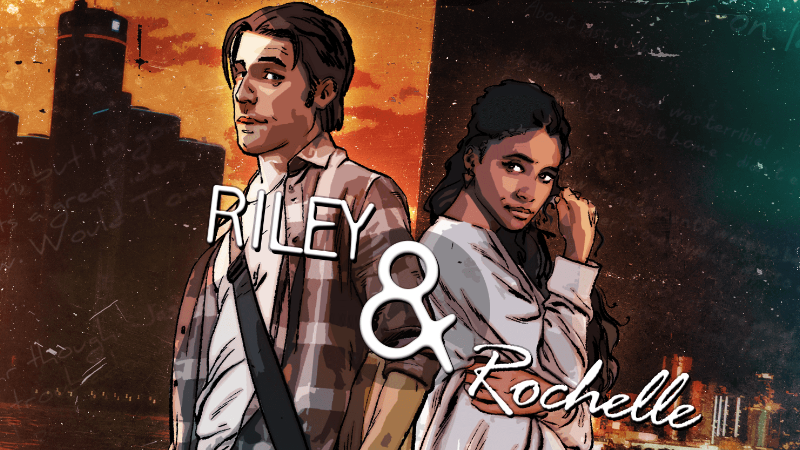
Meet The Voice Actors
Songwriting Diary - Waiting for Love
Riley's first song 'Waiting for Love' was written when he was 15. It is in many ways a deeply precocious song for someone that age to write, however, it is not impossible, nor does it feel like the work of an older artist. Kate Bush wrote the Kick Inside at 16 and since Riley is meant to be a generationally important indie artist, it made sense to me it the writing was great from pretty much the get-go.
The Story
Waiting for Love takes in a range of lo-fi singer-songwriters practising at the same time as Riley, in the late 80s and early 90s. These include Neutral Milk Hotel, Daniel Johnston and mostly importantly Elliott Smith. Elliott was the initial template for Riley - a model of indie realness and passionate DIY music-making.
Several key qualities bind the artists I mention. The first is the use of DIY or low-quality recording equipment, frequently the home TASCAM recorder. Indeed one of the discarded clues in the game regards the purchasing of this recorder by Riley (with a receipt to prove it). The use of these machines often balanced astonishing musical ambition with naivety. Daniel Johnston, unaware of how to copy tapes, would run home to record an entirely new iteration of his record when asked for one. With each 'bounce', cumulative tape hiss would build, leading to a distinctly 'lo-fi' sound, which has become more en-vogue in the digital age.
The second is a love of the Beatles, particularly John. Both Smith and Johnston drew deeply from the well of John Lennon's melodies. Indeed, Elliott would later cover Lennon's, Jealous Guy. The result is deeply catchy melodies, often with a nursery rhyme-like quality (Lennon once said his biggest musical inspiration was 'three blind mice'). Waiting for Love has some of the waltzing qualities of Bill Joel's 'Always a Woman to me, which I fancy was on his parent's record player and would have exerted a powerful influence on the six or seven-year-old Riley.
Production
To achieve the lo-fi quality, I did several things.
Firstly, I put some chorus on the piano. This has the effect of creating a watery sound, with a slight out-of-tune element similar to a honky-tonk. I figured that Riley would be recording on the family piano, with the Tascam's limited condenser mic and so pick up a lot of the room as well.
Secondly, I filled the recording with reverb, for the same reasons. TASCAM's were virtually incapable of close recording(which eliminates the sound of the room). I also wanted to capture some of the squelchy magic of the early Daniel Johnston records, where Daniel's voice emerges like a ghost from the fog.
Finally, I strapped a cassette emulator across the entire mix. This provided hiss, wobble and cut out a lot of the low end. The result was a track that, I felt, sounded authentically DIY.
Riley & Rochelle Devlog Pt.3
I definitely took the lead on writing Rochelle and wanted to make sure she was authentically Canadian and Quebecoise. And while I know I was taking a risk writing a biracial character, I felt I had enough of a voice to impart as a woman in the music business who had professionally (and personally) experienced loads of injustice, sexism and racism. Being in a rock band (that I often managed) with a black lead singer we definitely challenged the norms. When we rolled up to a gig we were often asked if we were a rap band or if our lead singer was, in fact, the bass player for mysterious reasons. In one instance when we arrived for soundcheck the bar owners took one look at us and asked us not to perform, even though we had a contract. Admittedly that venue was in Alabama and had a huge confederate flag on the stage. So stereotypes work both ways, I guess.
This is not a game about social justice but a game about how the music industry is founded on a complete disregard for social justice. In the 90’s the business model had three pillars: sex, drugs, and rock and roll. Encourage the musicians to be rock stars and let the suits do the rest.
Institutional change happens slowly, in tiny steps. I hope that in writing Rochelle, and in playing her story, that you get a sense of this. Of the barriers and gatekeepers in music, and how these barriers escalate 1. If you're a woman or non-binary; and 2. If you're a person of colour.
Riley is the perfect foil to this, a textbook example of how casual-core gets a free pass while everyone else is held to a higher standard. If you're not the white guy then you're something exotic and the marketing team better be able to put that in the press release.
Too cynical? Too jaded? Maybe a little, but the truth is hard sometimes. Take a look at the demographics of the artists on your favourite playlist. What artists are on there? How hard are those lines between the type of music a white person is "allowed" to make, vs. a person of colour? Any patterns? Most of the black artists are rappers, or RnB singers, when the white folks are allowed to do whatever the fuck they want, right? Assuming, dear reader, that you have tons of Insane Clown Posse and Eminem on your playlists…
How are female artists portrayed? Are they sexualized and wearing tons of makeup? Or baggy pants and a big t-shirt (Billie Eilish excepted).
I wanted to show how these hard gender lines are often forced on young women, especially in America, and especially in the entertainment biz. I think things are getting better, and newer artists have more freedom to be themselves, but there’s still a lot of pressure on folks to fall into a certain category so their music will be easier to sell.
Meet The Voice Actors
Here he is talking about the role of Riley.
Riley & Rochelle Competition
Feel free to make the film any genre.
Click here for the file (link)
To enter, please post your entry up in the art section and also tweet it with the #Riley&RochellePoster and a link to the steam page (shorturl.at/cdfrv).
We will award the 5 entrants we think have put in the most effort by the 14th with an advanced copy of the 16-song soundtrack.
Here are some examples to give you inspiration.