On November 20, 1998, the ISS was built, it is an international manned orbital station used as a multipurpose space research complex. This joint project involved 14 countries. One of the main station launch objectives was the possibility of conducting experiments that required the presence of unique space flight conditions: microgravity, vacuum, cosmic radiation.
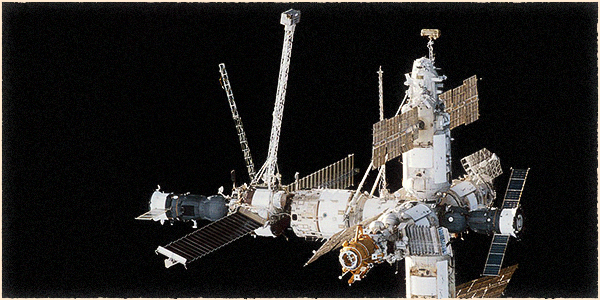
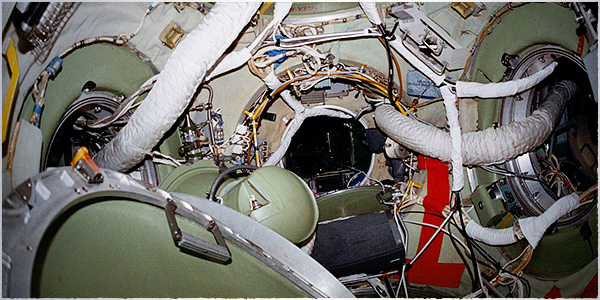
The launch of the Mir space station base block.
On February 19, 1986, the base block of the Mir space station was launched. The base block is designed to provide working and rest conditions for the crew (up to six people), to control of the on-board systems, electricity supply and radio communications, as well as to transmit telemetry information, to receive command information, to control orientation, to correct orbit, to ensure the approach and docking of target modules and transport ships.
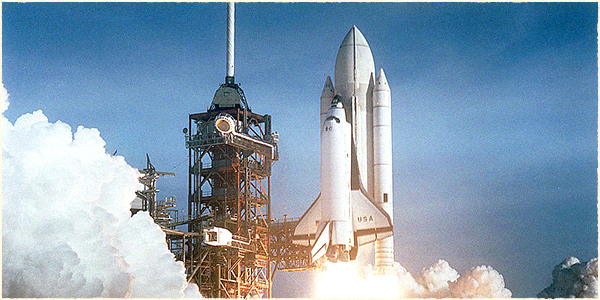
The first reusable spacecraft.
Columbia was the first reusable spacecraft created by NASA. A test flight on it took place on April 12, 1981, which was (and remains) unique: it was a test launch of a spacecraft, but it was with the crew on board. The reason is that the shuttle can not land without pilots due to insufficiently developed automation.
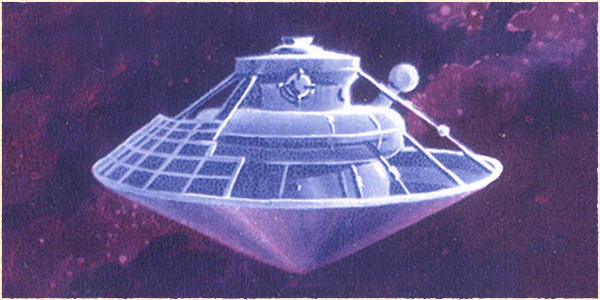
The world's first soft landing on Mars.
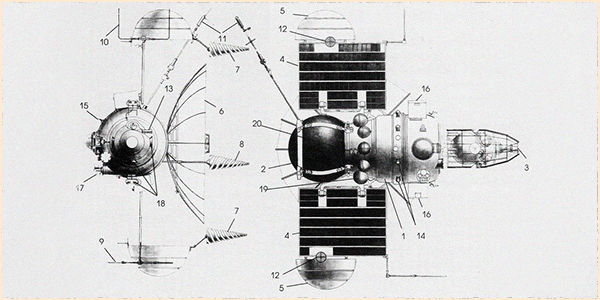
On December 2, 1971, the Soviet AIS Mars-3 made the world's first soft landing on Mars. The Mars-3 was designed to explore Mars both from orbit and directly on the planet surface. During the work on the Mars-3, the Mars surface topography was poorly studied, there was very little information about the ground, besides, the atmosphere is very thin, strong winds are possible, which made a soft landing on Mars a difficult task.
The first landing on another planet - Venus.
On December 15, 1970, the Soviet AIS Venera-7, designed to study Venus, made a soft landing on Venus. For the first time people receive data on Venus collected with help of equipment designed to study the cosmic particles flow, to determine the planet surface rocks type, and to measure the atmosphere temperature and pressure.
The first person on the Moon
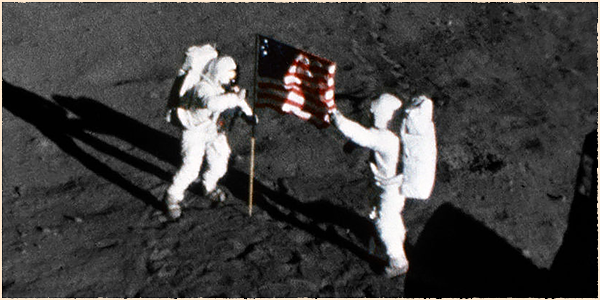
On July 16, 1969, for the first time in history, the crew of the American manned spacecraft Apollo 11 landed on another celestial body, besides the Earth, - they landed on the Moon. The first person to set foot on the Moon was Neil Armstrong. Astronauts installed a flag of the United States at the landing site, placed a set of scientific instruments and collected 21.55 kg of lunar soil samples.
Let's Go!
58 years ago this very day mankind took one of the most important steps in its history. The first manned spaceflight, performed by the Soviet cosmonaut Yuri Gagarin, changed our world forever. But as the engines of the Vostok were running and the famous phrase “Let's go!” was said, could anyone imagine the discoveries we'd be able to make thanks to, among others, this flight? Years later we'd land on the Moon, find water on Mars, discover a new planet and capture an image of a black hole. But this was only possible thanks to the devotion, dedication, tireless work and cooperation of scientists and cosmonauts from around the world. So, let's keep solving the mysteries of space together! Happy Cosmonautics Day!
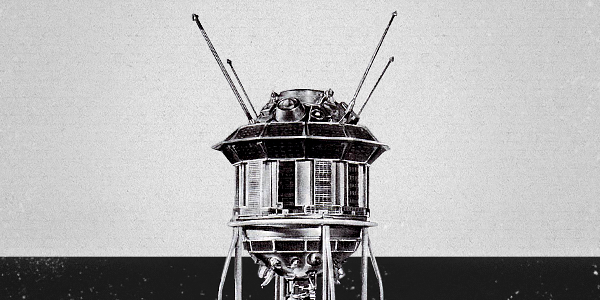
The first soft landing on the Moon
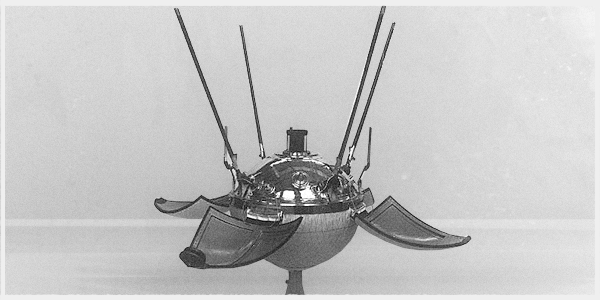
On February 3, 1966, the Soviet automatic lunar station (ALS) Luna-9, for the first time in the space exploration history, made a soft landing on the lunar surface, transmitted panoramic images of the lunar landscape to the Earth and measured radiation intensity. The duration of the ALS active existence on the lunar surface was 75 hours."
The first spacewalk
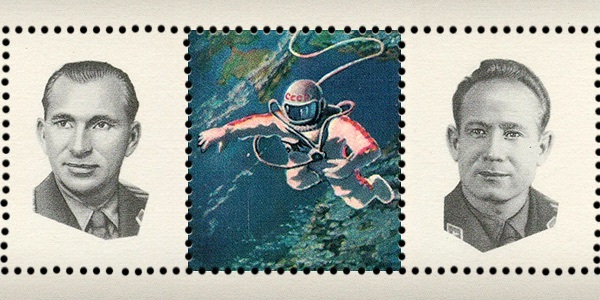
During the flight, the Soviet cosmonaut A. Leonov on March 18, 1965 made the first spacewalk in the cosmonautics history, which lasted 12 minutes 9 seconds. While landing, the automatic orientation system failed. P. Belyaev manually oriented ship and turned on the brake engine. As a result, Voskhod landed in an off-site region.
The lunar surface clear photographs
On April 23, 1962, American AIC Ranger-7 transmitted to the Earth the Moon photos taken at close range. The flight purpose was to reach the lunar surface and transmit clear photographs during the flight final minutes before the collision. Flight program was not meant any other experiments.