To break out of radio silence over these past few months, we are kicking off a series of new blog posts about the design and development of TIHL, we have been working non-stop during these past months so we will use these brief capsules to share with you what is happening behind the scenes and keep on improving with your support and feedback.
As the game's many-hat creative director I am also responsible for the art side of the game, so today I want to start by talking a little about how The Time I Have Left style came to be. Let's get down to business!
A look to the past
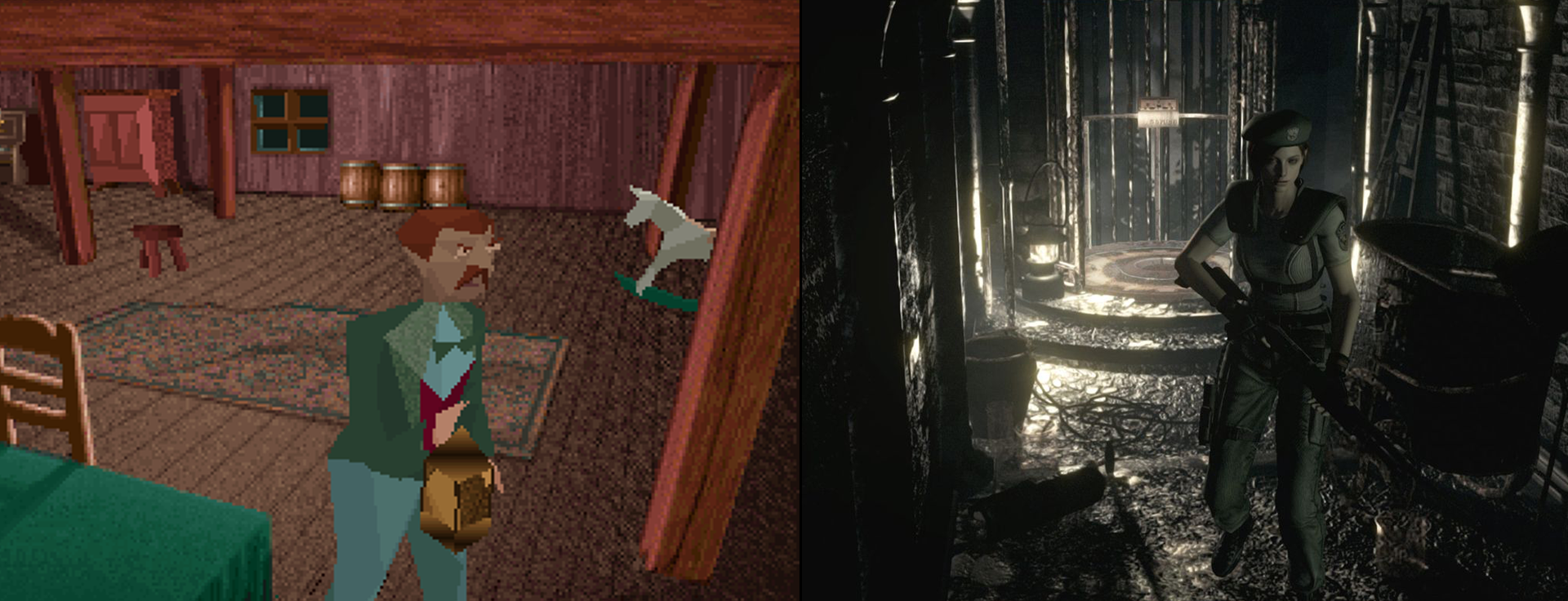
If you are reading this article, you probably know about pre-rendered backgrounds and their use during the early days of 3D games. Tons of horror, RPGs, and adventure games used this technique to produce imagery far more complex than what could be done in real-time, and by the end of the first decade of the 2000s, we had gorgeous titles like Onimusha 2, or Baten Kaitos.
This technique altered the way games were being made, and for a while, it was a pretty popular format. In exchange for beautiful and cinematic camera angles, some degree of freedom has to be lost (mainly camera control) and the level design and positioning of those cameras had to be carefully thought out in advance by blocking the scene and then using the resulting frame as the base for the final render. Of course, navigating those areas with shifting cameras can be pretty difficult in terms of control too, so there was a lot of experimentation with the obvious dominance of the tank control scheme.
During the decade of the 2000s, many games tried to bring that essence into real-time 3D by adding fixed and on-rail cameras to replicate and improve on the formula, but the final image would compare unfavorably when compared to the pre-rendered option mainly due to the lack of rendering power.
Despite that, some truly incredible results were achieved at the time and there were critical improvements in cinematography and dynamism.
And then, as modern engines started to appear and machines became more capable, this kind of game design was abandoned by the big names and later on returned in smaller games and the indie scene (the Fixed Camera Appreciation Society has some great examples available on steam!).
We think there’s still plenty of room for expanding on this kind of system with current technology and bringing it forward with modern technology, and our art approach had to consider that.
Our art goals
All this history trip is very important to the topic at hand because it greatly influences our artistic process and also how we approach the level design and even narrative.
Having decided to create the game using fixed cameras, we got to define the core keywords from where to build up the whole art style. TIHL is a hybrid of genres, so we have to keep it familiar to both audiences while defining our own identity.
UNIQUE
We did some tests before actually defining this goal. Despite deciding soon on using Unreal Engine, realism was a no-go from the very beginning and we always aimed for a stylized approach, but it didn’t take long before we scrapped all that and decided to take a bolder approach that could be crafted with a very small team while still looking unique.
REAL-TIME
Everything in The Time I Have Left is rendered in real-time. Even though we love the approach, pre-rendered backgrounds are essentially bitmap files with set resolutions. Even if there is an ultra-high-res version of that background (which sadly, is not the case for a lot of old titles), eventually resolutions are gonna increase, making it difficult to bring the title to future systems.
RICH
Despite being real-time, we want to get as close as possible to the level of density and richness that many of the games with pre-rendered backgrounds achieve. Crafting each camera angle is a lot of work but we put our best into making all of them the most interesting we can!
HELPFUL
We use the aesthetics of the game as a visual guide of sorts, taking clues not only from the usual game design tricks but from signage and graphic design too. Light is there to guide the eye to important things but there might be some secrets hidden in the dark too!
Closing Words
In the second volume of our art posts, we will focus on our building process, roughly explaining how we create our levels.
Meanwhile, leave us your comments about what you like (or dislike) from TIHL’s aesthetic and art design, or tell us about your favorite games with fixed or on-rail cameras, which one do you think does it best?
You can drop us a comment on our Twitter, our Discord, or discuss it here in the Steam Forums!
Interviews
We're back with news, this time in podcast format!
The fine folks at ECI Games have interviewed us for their Indieviews podcast. If you want to learn some more about The Time I Have Left and its development, you can check it out in Spotify!
And for our Spanish-speaking community, we'll also be showing up live on the 'Game Over' podcast this Saturday 27 at 11:00 (GMT+2). It'll be broadcasted on their YouTube channel, and will stay there even if you can't make it to the live event!
We'll have a lot more news about The Time I Have Left in these coming months. If you want to stay up to date, consider joining our Discord Server!
The End of Pre-Alpha and the future
Thank you so much for checking out the pre-alpha demo for The Time I Have Left! We originally planned to take it down as soon as Steam Next Fest ended, but we extended it for a while due to its positive reception. As of today, this demo will no longer be available.
We are very grateful to everyone who reached out to us. If you haven't done it yet, we would appreciate it if you could fill out our short feedback form. It really helps!
Can you guess the size of our team from playing the pre-alpha? You may think that it is bigger than it actually is. About 85% of the demo you have played has been developed by 2 people wearing multiple hats: Yite (Creative lead, art, animation, music, graphic, game design...) and Nitro (Technical lead, programming, game design, and marketing).
Everything else, as well as other things that are not directly part of the game's development, we owe to our friends and freelance partners. They have helped us with the story, additional programming, 3D art, UI, design, web, QA...and even legal. Without their help, we could not be here!
There are many things to improve, lots of content to add, and plenty of polish left to do but now the team is about to increase in size, so from now on you can expect the game to improve substantially! We will be working hard on making The Time I Have Left the best it can be!
Of course, you can still reach us and share your thoughts with us on both Twitter and Discord. We'll do our best to keep posting updates as frequently as possible.
We hope to see you around!
Sincerely, The team at GROUND.
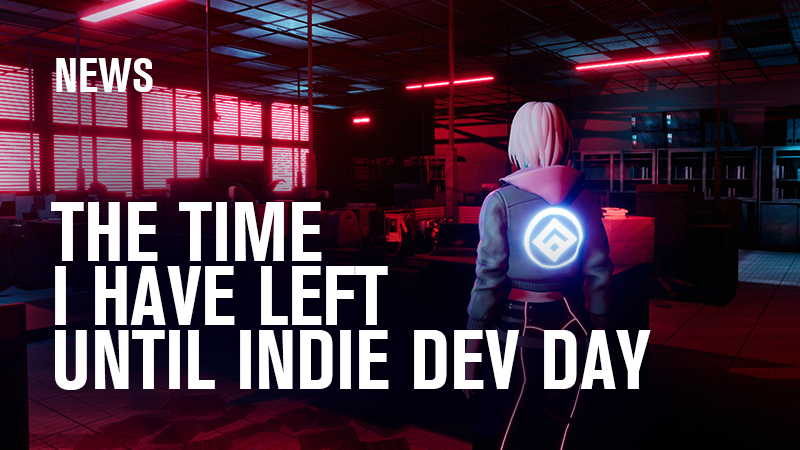
The Time I Have Left until Indie Dev Day
Barcelona's Indie Dev Day will take place this coming weekend!
The team at GROUND is taking part. We'll have a stand on both days so if you're in the area, come and say hi!
If you're not from around Barcelona, don't forget that you can also Join our Discord Server in order to get in touch with us.
The Time I Have Left After Steam Next Fest
Hi everyone!
We hope you had an amazing Steam Next Fest, so many great demos to play in so little time! We wish to thank everyone who played the demo for The Time I Have Left during this intense event, especially to those that have answered our survey or shared their opinions through the steam forums.
As you may have already noticed, The Time I Have Left pre-alpha demo is still available to download and play. We decided to extend the pre-alpha availability until November 6th, 2022. We’ve got a lot of feedback and we are already at work improving the game!
Since this was an early look at the project, this demo will be no longer playable after that date. We read all the comments, so make sure to play the demo and share your thoughts with us while it’s still up!
From now on, we will be more active in sharing regular updates and developer blog posts to keep you informed. Let us know in the comments if there’s anything about the game or its development that you would like to know more about!
The crew at GROUND is going on its own time-driven escape adventure to Köln, Germany!
We are one of four games selected to be part of the Catalan Arts delegation. You’ll be able to find us at Gamescom’s Indie Arena Booth! Keep an eye on our Twitter for more specific information regarding our location.
We’re super excited! Not only will this be our first public appearance on an event of this magnitude, it will also be the first time we’ll let the public play The Time I Have Left. We’re working around the clock to polish the experience and tune it for Gamescom!
We hope to see you there!
RPG x Time-Driven Adventure
Hi everyone!
I’m Nitro, tech lead here at GROUND. In other words, I’m the one responsible for creating (and hopefully also squashing) most of the game’s bugs. My area of expertise is game design and programming so that’s what I’ll be writing about in my blog posts.
The Genre (re)Mix
At the core of The Time I Have Left there is a mix of two distinct genres: A time-driven adventure game, and a turn-based RPG with active elements. Finding a good balance was naturally a big challenge!
While many RPGs have a good deal of adventure elements baked in (such as exploration, puzzles, and a focus on narrative) they rarely go as deep as it’s expected of the latter. What’s more, backtracking in RPGs is generally perceived as padding (or as a means to grind for better stats) but it’s generally part of the natural progression of an adventure game!
As we expanded on our original concept, we found, however, that weaving turn-based combats into the exploration phases helped break up the pace, and working with the environment to avoid encounters was a good way to keep players on their toes without having to rely on pure action elements.
An evolving formula
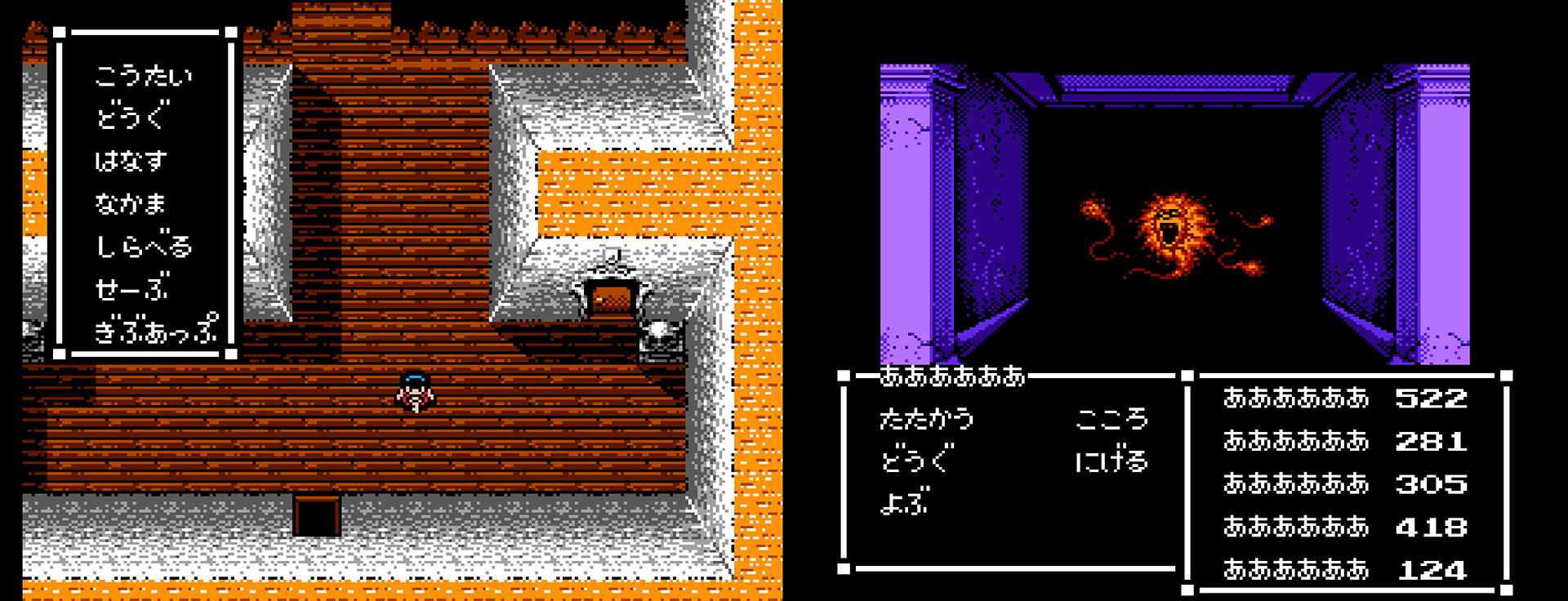
Of course, we aren’t the first ones to mix adventure games with RPGs: Capcom’s Sweet Home did it on the Famicom in 1989. By taking the RPG mechanics and turn-based combat that Dragon Quest had made popular and repurposing them into a much more focused setting, Sweet Home put an emphasis on the exploration of a mansion with a horror theme while also throwing into the mix some elements of the text-based adventure genre.
Another example would be Sacnoth’s Koudelka (PSX, 1999), a game that took the game loop and look and feel of survival horror titles popularized by Resident Evil (1996) and brought in the mechanics of its contemporary RPGs, including turn-based combat.
Those and many other games took established formulas and gave them a unique twist by mixing and matching elements from different genres. The Survival Horror genre was born under this type of experimentation: If you subtract the horror and action from a Survival Horror title, you’re left with a classic example of an adventure game!
The intricate environments and storylines of the adventure genre became an integral part of the golden age of the Survival Horror. The dangers of combat systems with lasting consequences for mistakes made exploration much more tense and exciting, and gave designers the possibility of sprinkling in item rewards for exploration (such as healing items, ammo, weapons, and others!). Add in puzzles and the whole package was much, much more varied than what you would find in other games. Even if the combat wasn’t as good as it is in action titles, or the puzzles could be abstract and immersion-breaking, it was a genre that embodied the idea that the whole is more than the sum of its parts.
You can find a lot of what makes an RPG special in its adventure game roots as well: exploring a deep, complex world, and a heavy emphasis on narrative, characters, and dialogue. Puzzles were much simpler and used sparingly, but they were still a part of the experience.
The RPG/Survival Horror I Have Left
In The Time I Have Left, we took a good look at these branches of the adventure game, and how they evolved and moved away from their origins as well as each other. Nowadays, the Survival Horror genre has more in common with the more than broadly encompassing “Action-Adventure” label, while RPGs dropped a great deal of their exploration and puzzle flavor in favor of deeper combat systems, complex progression mechanics, and sometimes more of a Visual Novel appeal.
Just in case all this Survival Horror talk is starting to worry you, now is the time for a big disclaimer: despite appearances, The Time I Have Left is not a horror game. We take a lot from the game design and structure of the genre but we are not trying to scare you (not on purpose, anyway!). Have you ever wanted to play an old-school survival horror because the narrative, puzzles, and exploration looked interesting, but the horror aspect made you reconsider? Then The Time I Have Left might be just right for you!
In any case, we grabbed our multiverse telescope and searched for a world in which the timeline split around the 2000s, where the Survival Horror and the RPG genre evolved in a different direction and became entwined.
One can’t simply reach back into the past and drag old sensibilities into the present by force. Player and market expectations are different now, and as much as we love older games, taking their design language verbatim wouldn’t be enough.
We aren’t interested in just replicating what came before, either: We wanted to make something that felt like an offshoot of the hidden gems we loved without falling on simple homage. This came with quite a few challenges as well, so throughout our (very likely semi-infrequent) blog posts we’ll share some on how we tackled them.
The Time I Have Left is a narrative time-driven adventure game with RPG elements.
For now, let’s talk about the phases of gameplay, and how they relate to each other: Turn-Based RPG, and exploration adventure. One of these challenges was finding a way to properly connect those two phases in a way that felt meaningful, where the consequences of each would be really felt in the other. For example, we decided to tie the rewards from Exploration into Combat and vice versa: If you level up from combat experience, you gain small benefits that make exploration easier (such as a longer sprint gauge); if you find enough clues and hidden details about the world, filling the in-game database with all sorts of interesting story details, you will unlock abilities that give you new tools in combat (such as a healing skill). We will be releasing more information about how the game works in the near future!
Closing Words
Phew! That was a mouthful. I sat here thinking I’d write a few lines promoting The Time I Have Left to fill space between updates, but I ended up writing a quick look back on forgotten design sensibilities.
Next time, I’ll force Yite to write one of these. Maybe he can share some insight on the game’s art style!
But what about you? What do you like about survival horror games? About exploration, and about RPGs? Which are your favorite examples?
Feel free to drop a comment on our Twitter, our Discord, or discuss it here in the Steam Forums!