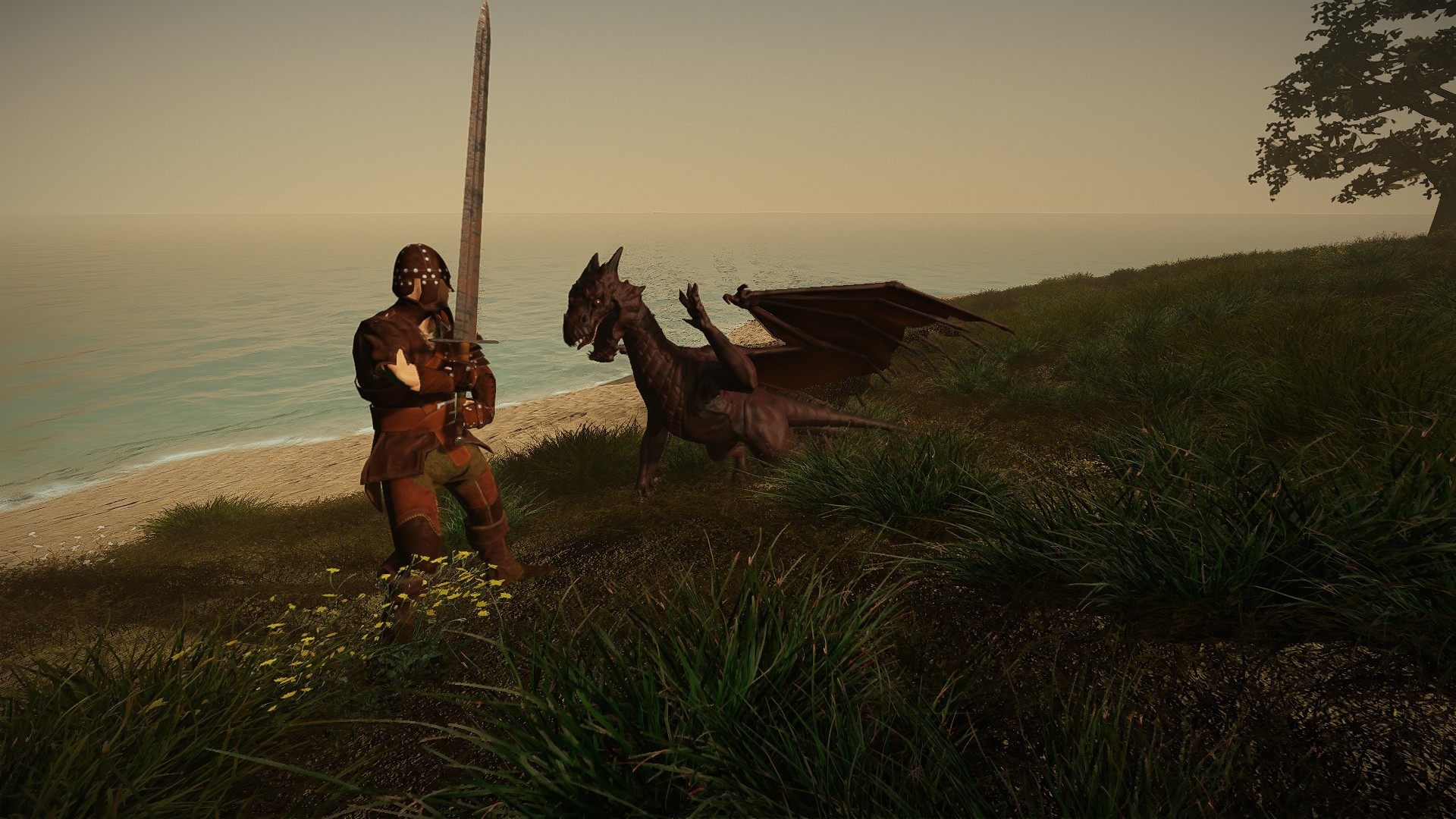
In Trials of Ascension: Exile, players get to experience the harrowing and triumphant life of a dragon in its entirety; starting with the humble hatchling and eventually growing into the boss-level ancient. Dragons face their own unique challenges, and their growth in power doesn’t necessarily mean that survival gets any easier for them. If you can overcome the trials of life as a hatchling and beyond, you will be rewarded with the strength of the most powerful character in the game.
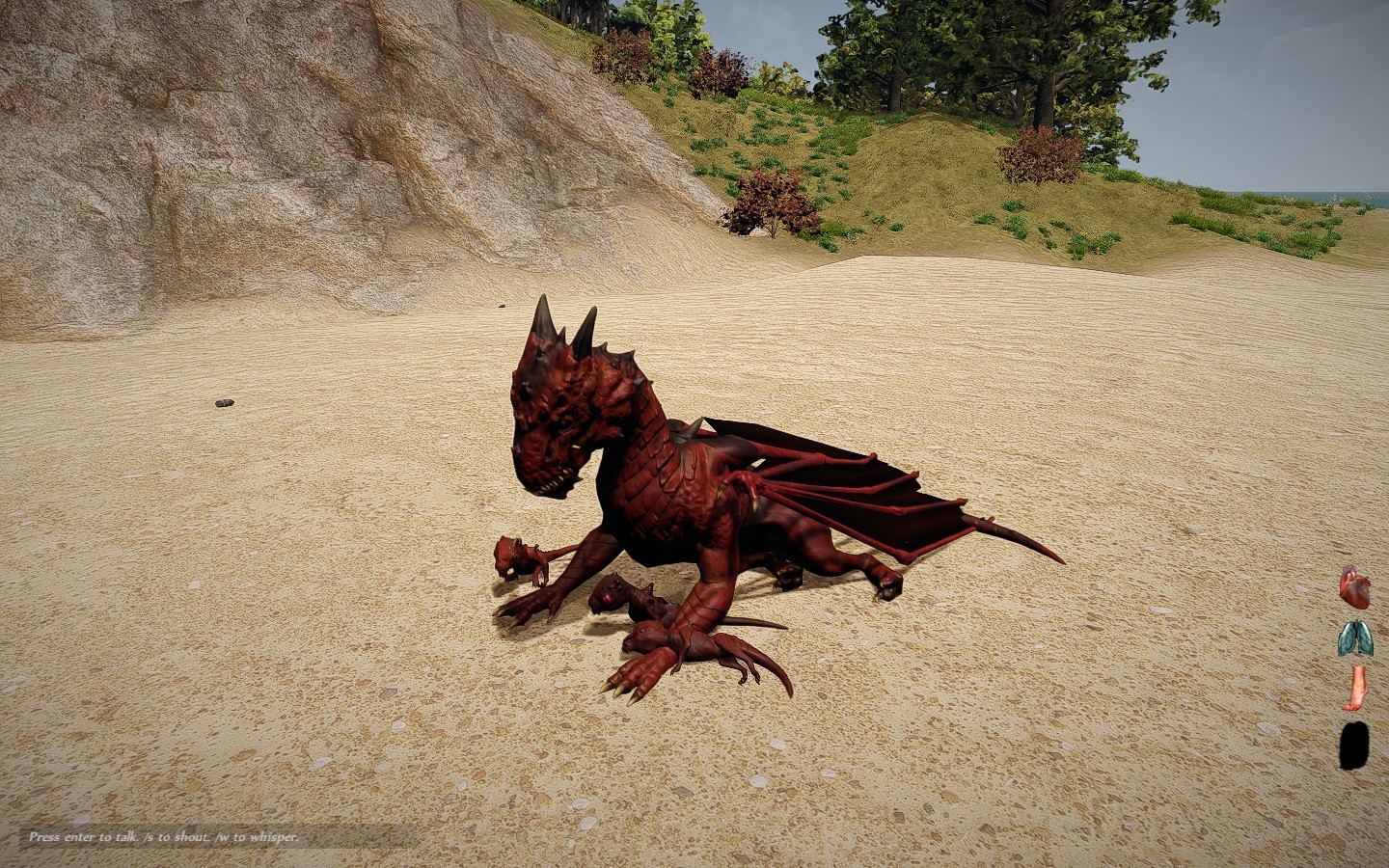
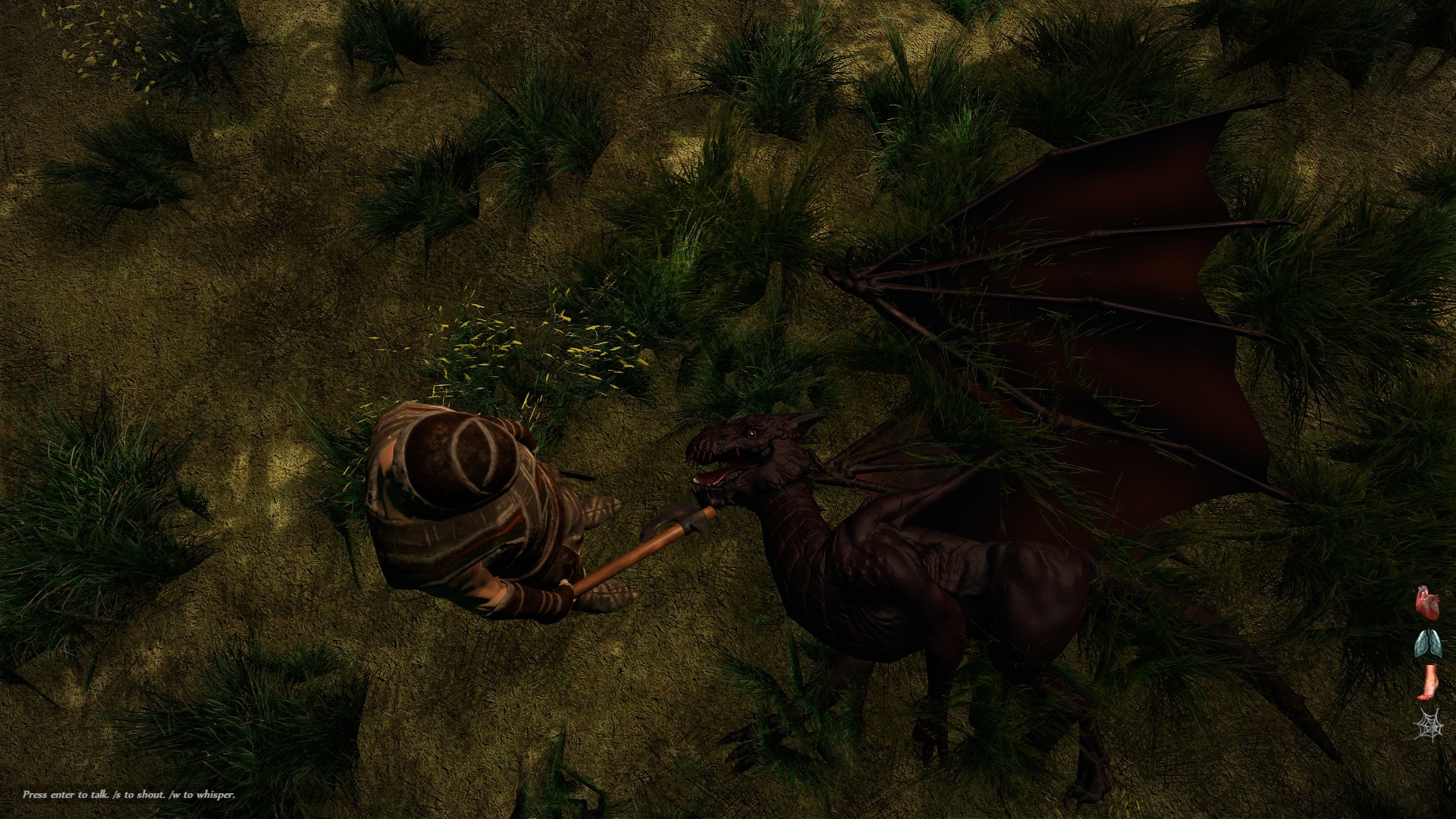
As the ancient breeding ground of the fire dragons, the Lost Isles are ideally suited for a growing hatchling. Food is plentiful and predators can be avoided if the player is cautious and attentive to their surroundings. The size of a small cat, hatchlings possess few hit points and what little armor they have provides only minimal protection. A well placed attack from nearly any creature will knock them out, and a second guarantees their death. But size isn’t always a draw back. Their small form makes targeting them difficult, even for those intent on exterminating the dragons.
A hatchling dragon will spend most of its time eating, collecting nuggets, and constructing its first nest, all while avoiding death. As growing babies, hatchlings have healthy appetites and a large number of grubs are required to keep them from starving to death. To help them along, they have three attacks to utilize; a bite, a claw strike, and a defensive tail sweep.
The key to dragon’s growing to larger sizes is to consume nuggets. Nuggets are rare metals found in the ground, such as copper, silver, and gold. Dragons are naturally attracted to these metals and can smell where enough of the metal is present to form a nugget in the ground. This smell appears as a wavy-air spot over the ground. Dragons become better at sensing the nuggets as they collect them, making finding the nuggets progressively easier. As they consume nuggets, their molting meter fills up, indicating their readiness to molt.
Once the molting meter reaches 75%, the dragon begins to develop molting sickness, as its body begins to grow uncomfortably tight in its scaly skin. This causes the dragon to take additional damage and slowly increases its effect until the molting meter is completely full. The only way to remove this effect is to go forward with the molt. All ages of dragons develop molting sickness, and the effects of it grow worse as the dragon grows larger.
In addition to being a requirement to molting, dragon nests serve other functions as well. They can store inventory in them as a bank, which cannot be accessed by anyone else. They also perform as a respawn point if the dragon should die, bringing them back to a familiar location and not respawned randomly in the wilds.
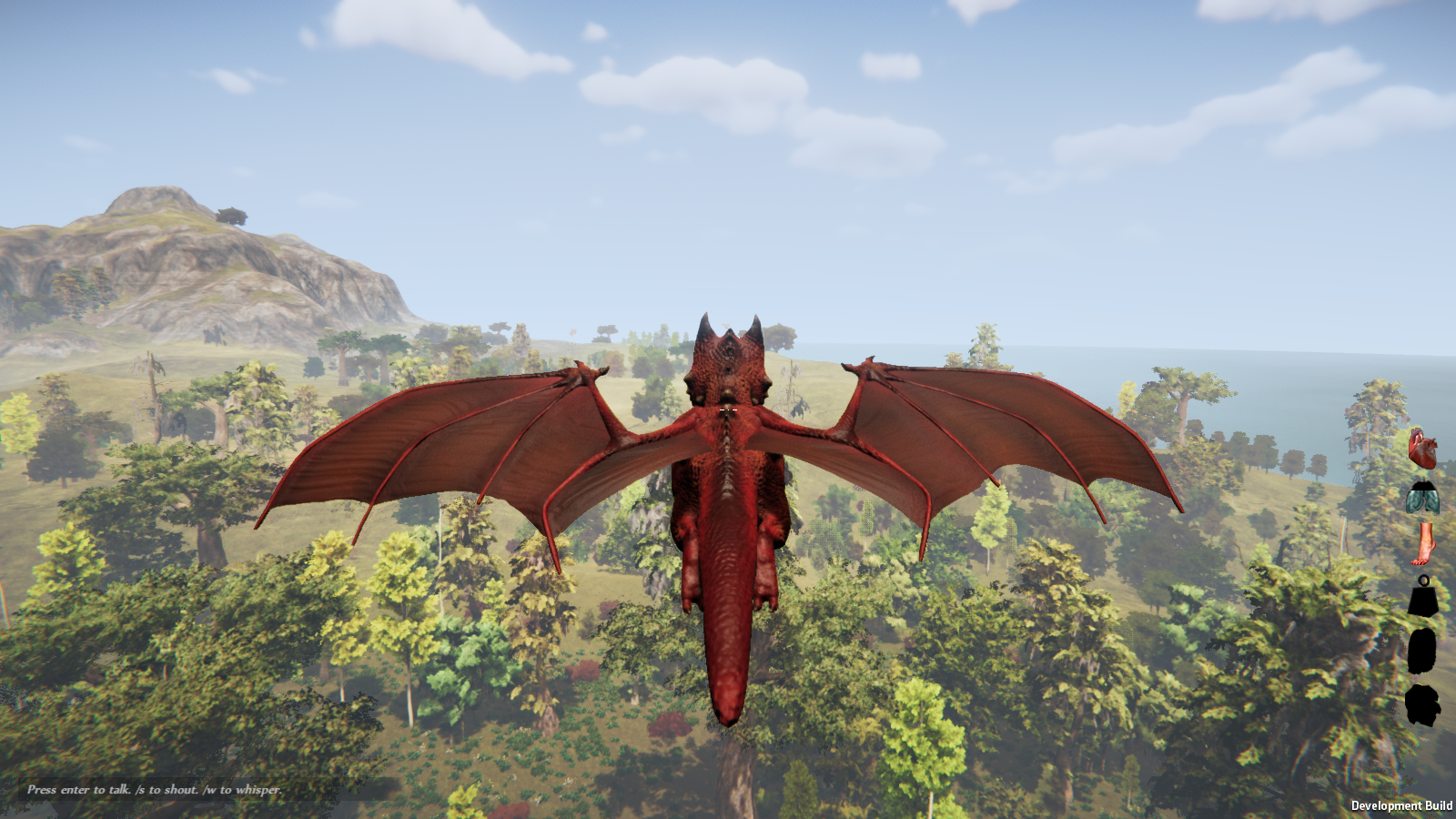
There are a total of six growth stages for the dragon, going from hatchling, to young, to juvenile, to adolescent, to adult, and finally ancient. Dragons hatch without wings and instead develop them during their first molt. Though they cannot yet fly, they can use them to glide down from high places to escape predators or to ambush their targets.
It is the juvenile stage where dragons really come into their own. By this age they are able to take off from the ground with a running jump and remain aloft for quite a while. At this age their breath sacs begin to mature and they can unleash their fiery breath attack. Because this attack is fueled by nuggets, it has quite a lot of variation. Rarer nuggets will increase both the range and damage of the attacks, while copper has the advantage of being much more prevalent than silver or gold.
Gameplay features for the dragons are still rather sparse, but the team has many plans to add content to their mechanics in the coming months. Dragons can look forward to more creatures to hunt and be hunted by, more visual customization, and we want to add new mechanics to their nests to allow them to customize them and add additional utility to them.
What is your favorite feature for the dragons? Do you plan to play one for yourself? Share with us in the comments below!
The Evolution of the Raknar
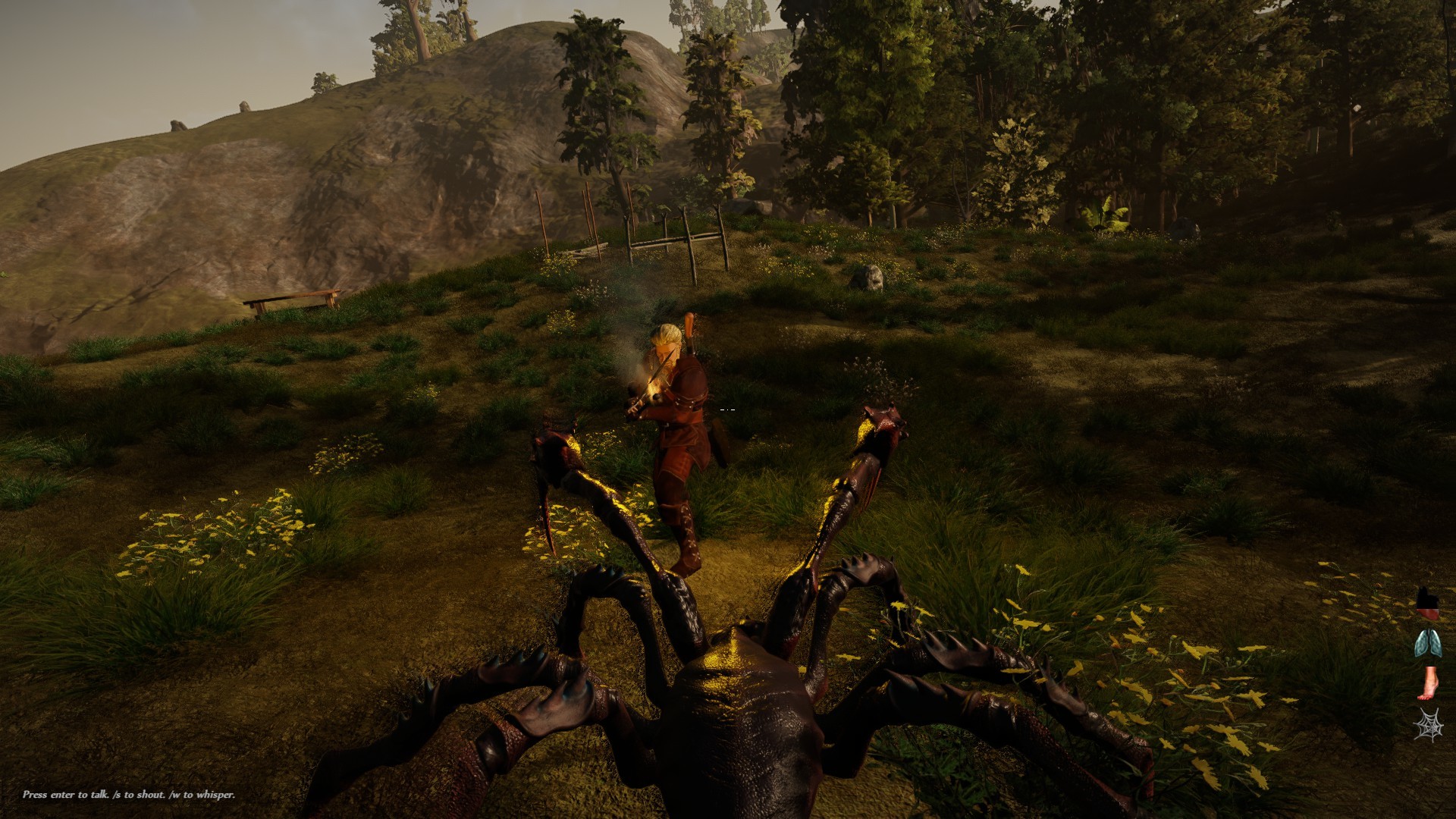
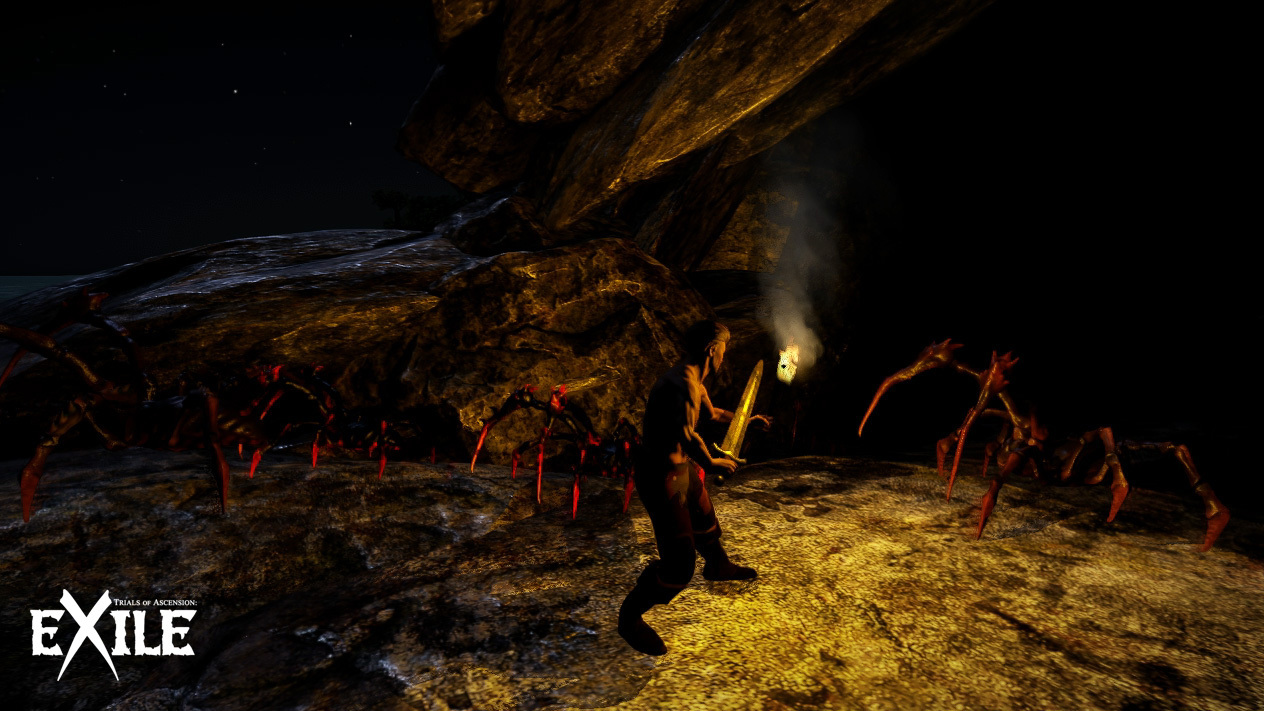
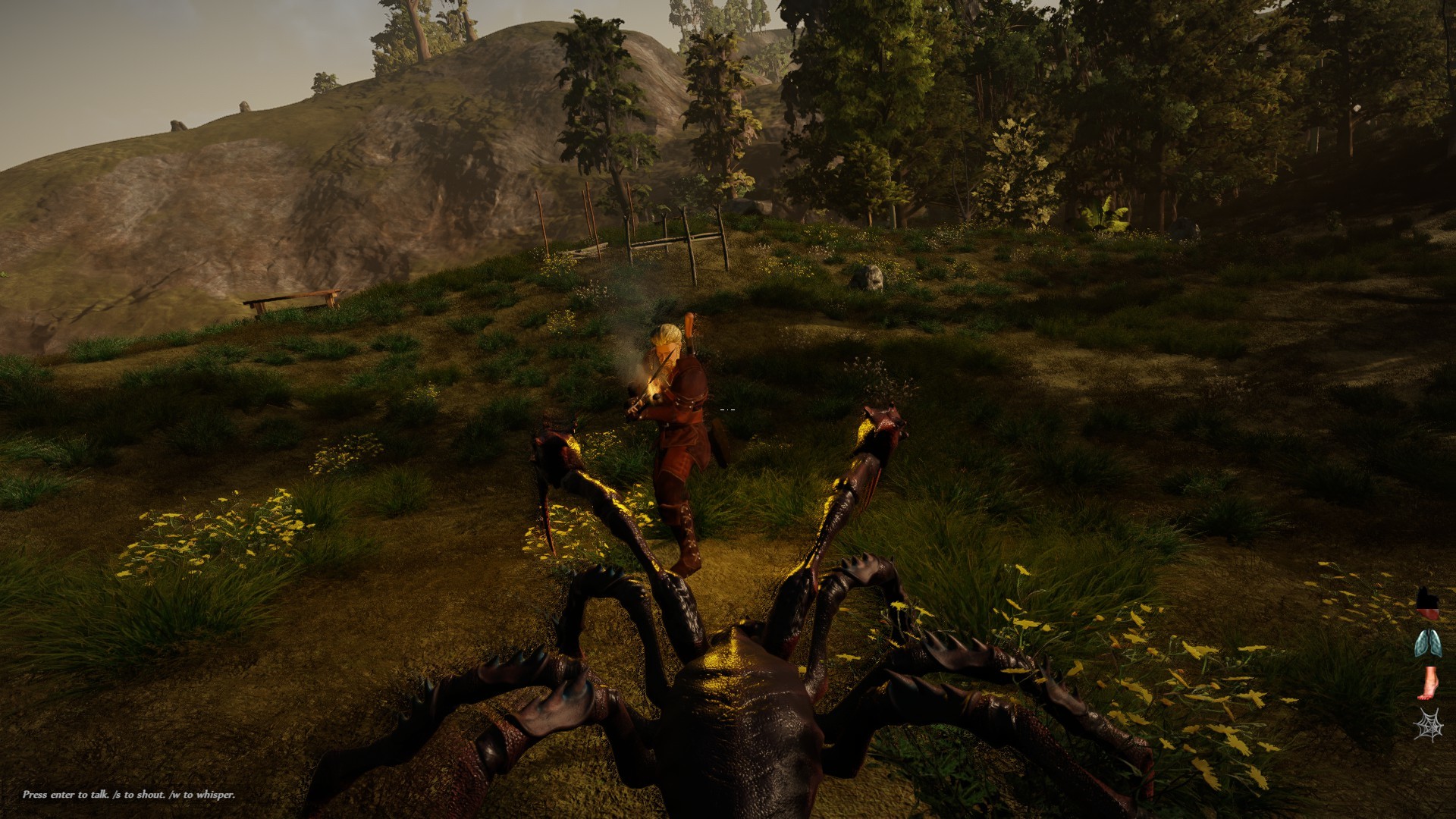
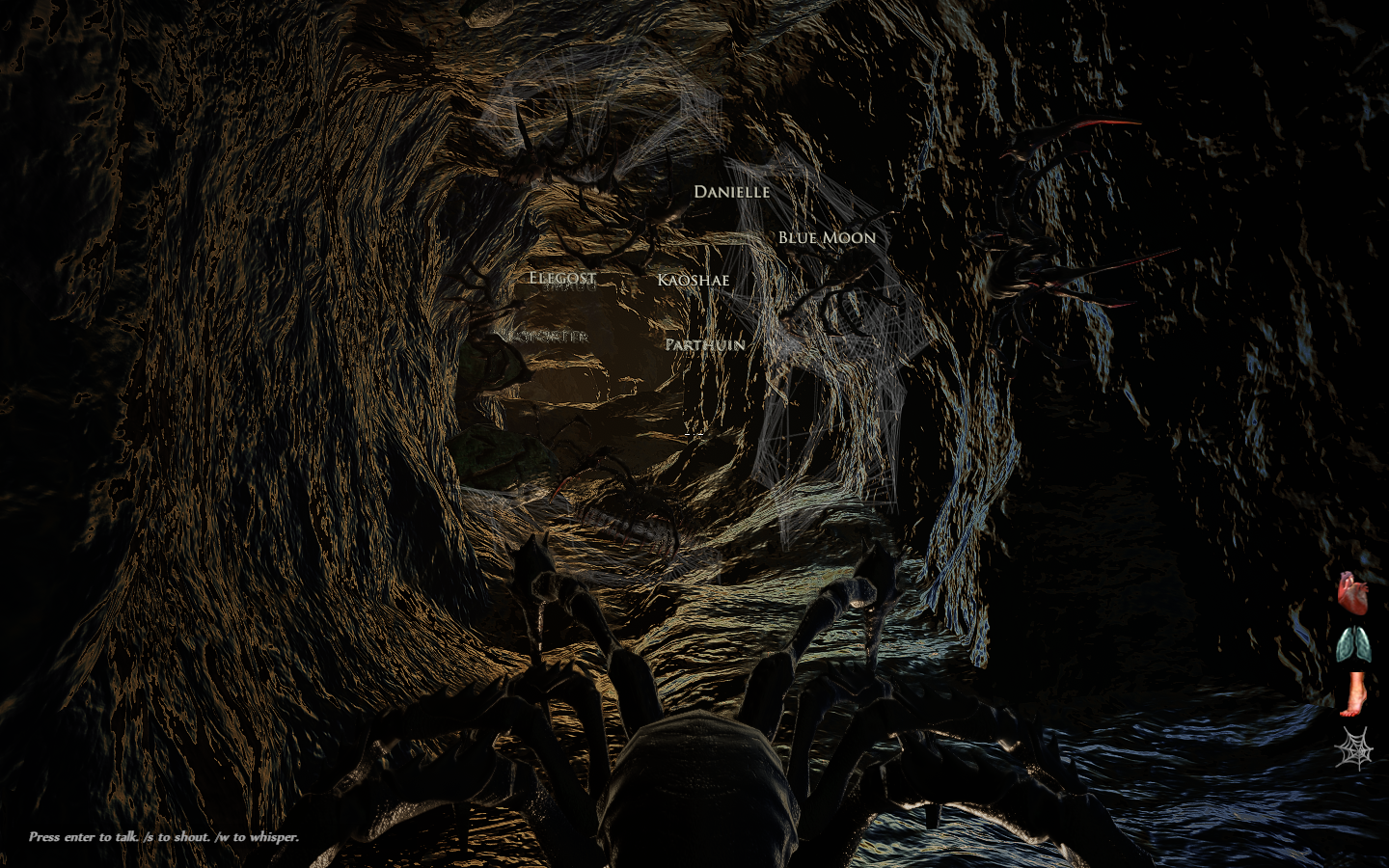
Raknar are a species of giant arachnids. Though they are similar to spiders, they lack pedipalps and their front limbs have adapted over time into specialized striking weapons, aptly named Strikers. They are a predatory species and voracious hunters, feeding on anything that they can capture or kill. They were driven underground centuries ago by ancient humans with the aid of fire. Trapped in the caves beneath TerVarus, they adapted to their merciless prison and sought out a way to return to the surface. Now that they have emerged they are ready to renew the hunt of their ancient enemies.
Players will find that raknar start with all their natural abilities unlocked and ready to begin hunting the creatures of the Lost Isle, and any other players they find along the way. The raknar’s primary attack is their strikers, which are controlled with the left and right mouse buttons by default.
In addition to physical attacks, raknar are able to lay down layers of webbing to slow anything that might enter the strands. The raknar can move over the webbing without any impediment, allowing it to effectively trap an area and drive their targets into the webbing and to their doom. Webbing can be laid on the ground or attached to another surface to span a gap, allowing these arachnids to create raknar-only paths between two points. Injured raknar are also able to use their webbing to heal their injuries.
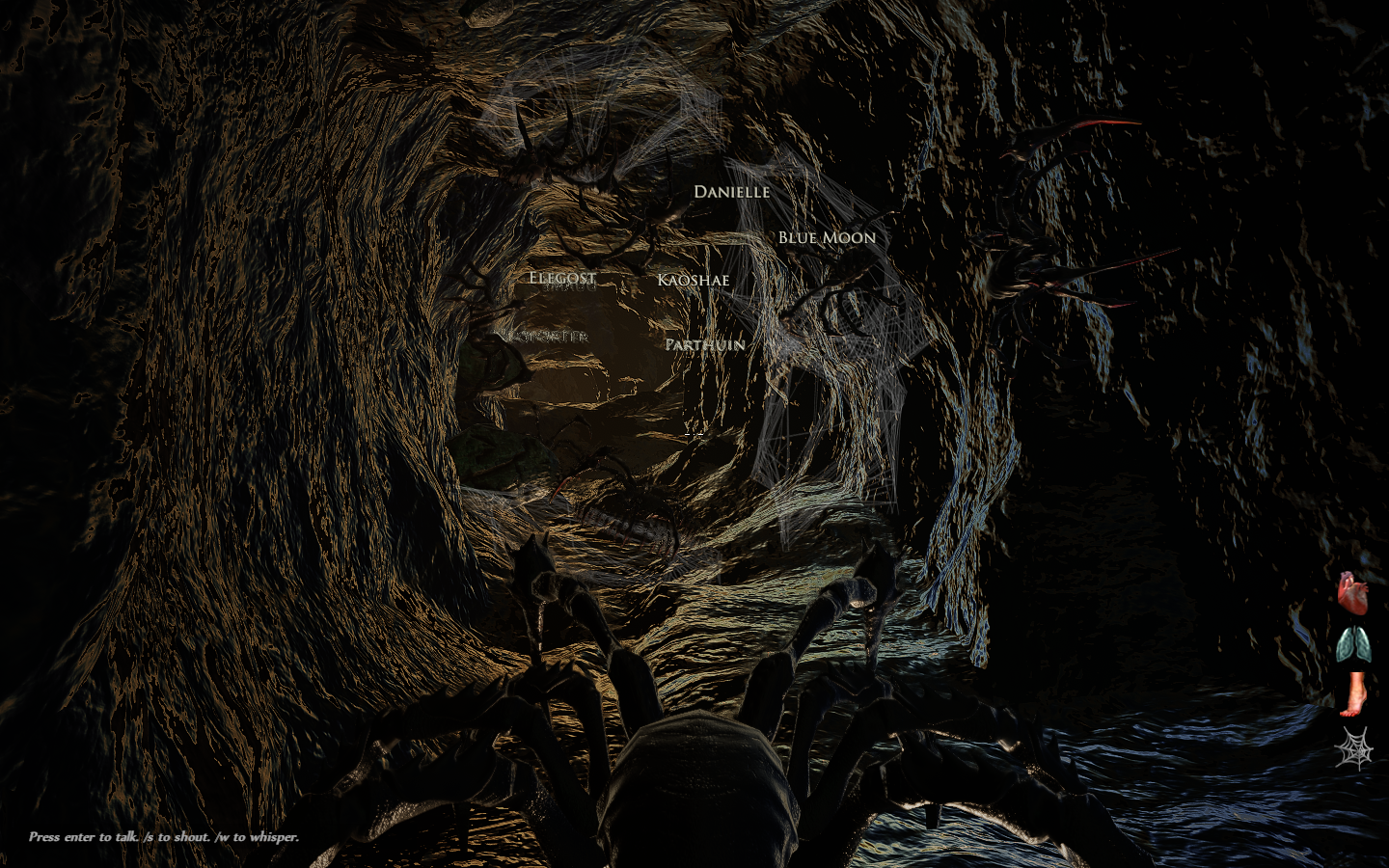
Raknar are ambush predators and as such their stamina drains very fast while sprinting. Fortunately their 8 limbs provide above average speeds for their basic movement. Their multiple sets of legs also allow them to traverse a multitude of terrains, including those that are inaccessible by the other races. This includes vertical surfaces like walls and inverted ones such as ceilings, both of which can be found in the caves under the island. They are especially well adapted to the caves, having access to a special night-vision that allows them to see in even the deepest reaches of the tunnels.
Egg laying is how raknar establish their respawn locations. They are able to lay an egg on any surface they can climb every 15 minutes. They can have multiple eggs in the world at once, but when they respawn at one after dying, it consumes the egg and a new one must be placed at that location if the player wishes to use it again.
Evolution is the key to raknar progression. They can evolve their carapace to increase their armor, their strikers to increase their attack power, their webbing to improve their production and strength, their metabolism to improve their sprinting efficiency, and their size to improve their hit points. Each of these evolutions also influences the appearance of the raknar, with chitin plates and spikes appearing on their bodies and their size increasing as well.
All this strength does come with a few drawbacks. Despite having eight limbs, raknar are incapable of swimming and will begin to drown as soon as they are submerged under water. They are also highly susceptible to fire damage, due to an oil they secrete from their carapace. This means that while a raknar might easily overpower an average human, a human with a torch is a force to be reckoned with and is worthy of caution.
We have a number of plans for the future of the raknar in our design. We want to add more to them that accentuates their predator status, as well as a few mechanics to encourage them to cooperate. One of these is the Hive mechanic, where raknar can form a community together that allows them to hatch out their eggs as npc raknar to maintain and guard the hive.
Have you tried out the raknar race yet? What aspect of them do you find most appealing? Share with us in the comments below!
How to Train your Human: Skills and Disciplines
Human progression is handled through our skill system. There are currently twenty-four skills across four categories; combat, crafting, gathering, and survival. As you probably guessed, the combat skills deal with various types of weapons, the crafting skills are associated with specific trades, gathering skills include harvesting resources from the surroundings, and survival skills encompass aspects of basic survival.
Humans begin the game with zero mastery with all the skills and they earn experience for a skill by performing a related action. Each time they rank up a skill, the tasks related to that skill become more successful. This is especially true for crafting skills, where increased skill lowers the overall crafting difficulty of the related items.
As humans earn ranks in their skills they are awarded skill points, which can be used to increase the related Disciplines for the skill. Disciplines allow the player to choose how their skill is improved. For example, the running skill has two disciplines: Speed and Endurance. Speed increases how fast the character moves while running, while Endurance reduces the amount of stamina drained each second while running. They both may result in similar outcomes (reaching the other side of the island faster than without a discipline), but there are situational differences. If you find yourself running away from enemies, the extra speed may allow you to break line-of-sight to hide. Meanwhile the reduced stamina cost of running would mean you would not need to stop to rest while chasing down a fleeing Sabretusk.
The player can invest up to ten skill points into a discipline, and the more skill points that a player invests, the greater the benefit becomes for them. This is based on exponential growth, so though the first skill point will not be very noticeable, the payoff of the 10th skill point is appreciably larger than the 9th.
Players can continue to earn ranks in a skill until they have fully mastered all available disciplines. The more disciplines available to a skill, the faster it will improve. That being said, the more ranks a skill has, the more difficult it becomes to improve it, so players should choose their disciplines wisely.
There are many more skills we want to add to the game for humans as we continue to add content, such as fishing, tracking, and mace combat. What kinds of skills would you like to see for humans? Share with us in the comments below!
Made from Scratch: Crafting and Construction
Unlike the raknar and dragons, humans start the game without any weapons or armor. Using resources they gather from the terrain and plants, they can craft various tools, items, and equipment that they will need to survive on their new home. While the bestial races will be able to craft and construct a few things for themselves, they don’t require equipment and so we will focus on how crafting and structures are used by the humans.
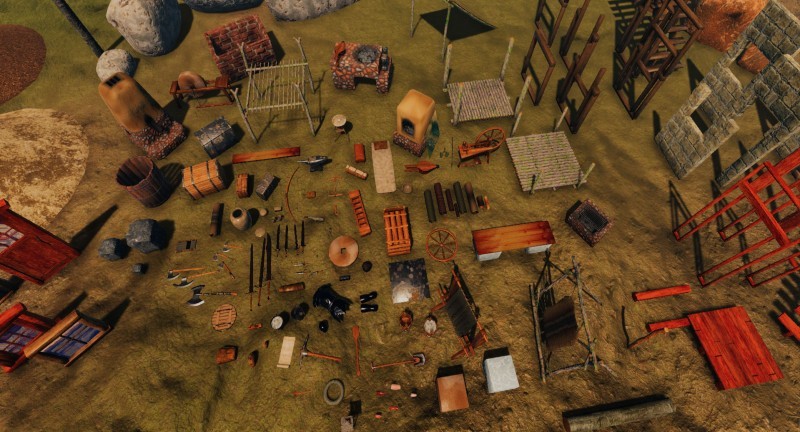
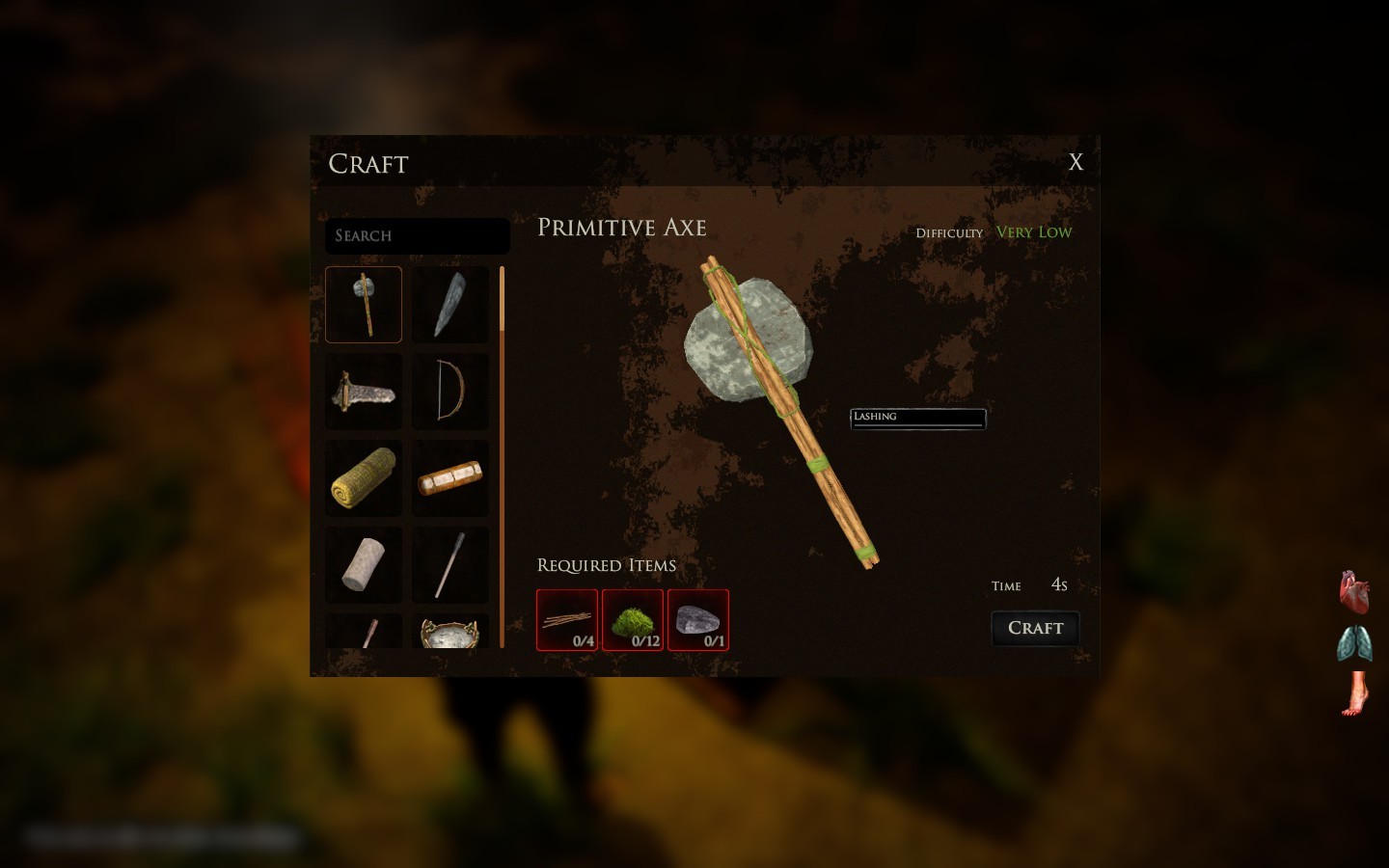
The crafting process starts with gathering resources from the terrain. This includes raw stone from boulders, logs from trees, sticks from bushes, sand from the beach, skins from animals, and so on. Primitive items, like rope and stone tools, can be crafted without other tools or stations, but more advanced tools, like iron blades or leather armor, will need them.
We tried to follow the general steps that a craftsman in the real world would need to follow with our items are made in the game. For example, iron is harvested as ore from boulders, then purified and refined using a bloomery or a smelter into an iron ingot. From there it can be cast into a mold or forged into an item. Items made from clay can be dried and fired to increase their durability, just as in real-life. In other cases, like with leather, we went with a process that made sense to us even if it wasn’t true to life. In ToA: Exile, leather starts with a skin off of an animal. It is then stretched on a stretching rack to make rawhide. After that it goes into the tanning vat and comes out as leather.
For humans, the chance of successfully crafting an item is tied directly to the related skill. So crafting metal objects improves the Blacksmithing skill, which then improves your odds of successfully crafting more difficult metal objects. We will cover skills in depth for tomorrow’s article, but it is important to note the relationship when crafting.
In addition to skill improvement, players can choose to improve their crafting technique for specific items. Choosing to do this will increase the overall difficulty of making the item, but it will allow you to make better versions of the item after that. When cooking a piece of meat, you can improve your temperature and preservation techniques, and they will make the resulting edible food more filling and last longer before expiring, respectively. Nearly every usable item can be improved with a related technique and some items have multiple.
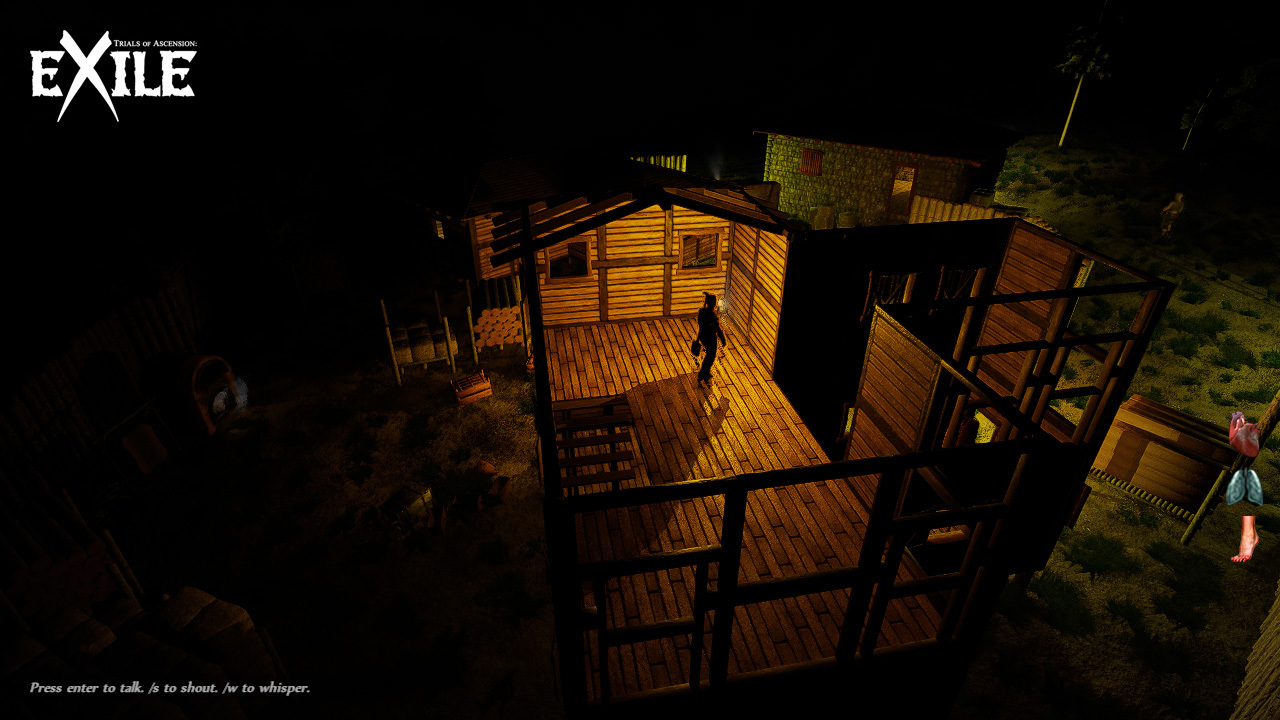
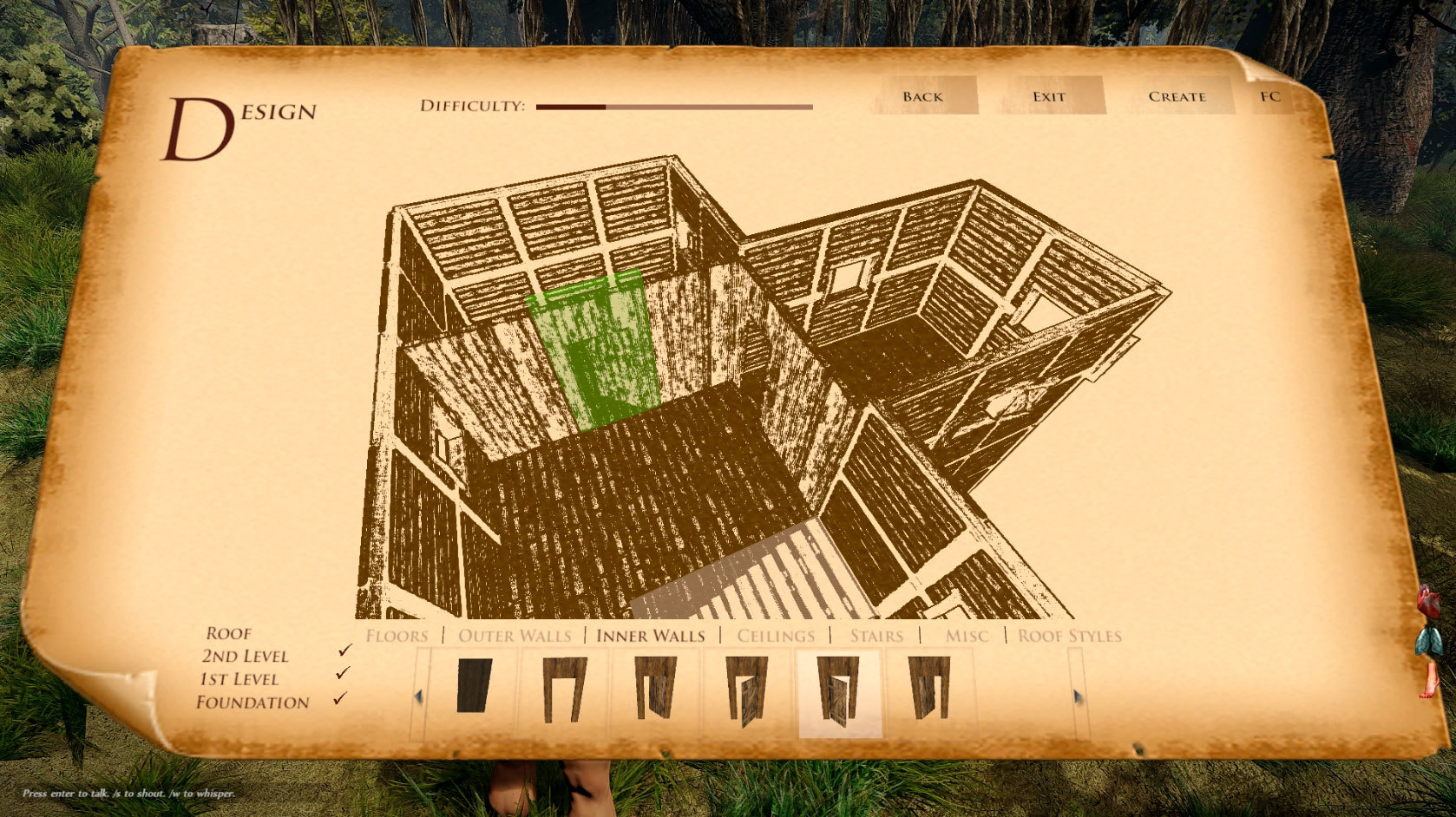
Going hand-in-hand with crafting is the building of structures. Humans get access to the drafting table station, which allows them to design and customize buildings within a 3D space, like a CAD program. It allows you to zoom in, out, and rotate around the model to get a better view. Exterior walls, interior walls, windows, doors, stairs and floors can all be placed by the player. In the future we want to create addons that players can build onto their structures to further customize their look and functionality.
Using the drafting table, the player creates a blueprint of their structure design using ink and paper. They can then place the structure on any terrain level enough to accept it. We built the foundations very deep to accommodate a moderate amount of terrain slope, but bigger structures necessitate more level ground. Once placed, construction can begin!
Building a structure is a slow process. Each section must be built up through multiple steps and usually requires a specific tool along with resources such as boards, timbers, stone, nails, and mortar. Multiple people can work on a structure together, and the total number allowed scales with the size of the structure. The player who places the blueprint is considered the structure’s owner, and they are able to lock the doors to prevent other players from entering, but any player inside can still exit the building. We will be adding additional features for structure owners in the future, like a permissions system to allow specific players to come and go as they please.
What do you think of our crafting system and our structure design? Do you plan to build a house of your own? Share with us in the comments below!
Combat is a Balancing Act
When it comes to combat in Trials of Ascension: Exile, we’ve aimed for a realistic feel and pacing, so that most fights will not end within just a few seconds. We do not have hit-chance, auto-attack, or auto-avoidance variables in the game. Instead, we use real-time on-demand attacks that the player controls with their mouse-buttons. Attack success requires the weapon hit box to collide with the character’s hit box.
Where the weapon strikes also matters, as the character's body is made up of several parts, each with their own armor rating based on the equipment of the character. Feet are protected by boots, legs are protected with pants, hands with gloves, and the arms and torso guarded by the shirt or chestpiece. Players also need to protect the heads of their characters, as critical hits are more likely to occur here than anywhere else on the body.
Just as attacking is completely in the control of the player, avoidance as well. To dodge an incoming attack, the player must move the character out of the arch of the attack swing. Blocking and parrying an attack means holding your weapon or shield out in intercept an incoming attack. This also means that your weapon takes the damage instead of your character, decreasing its durability. In the case of the raknar, blocking is best used for protecting their heads, but damage is still dealt to them. Dragons do not have a means to block.
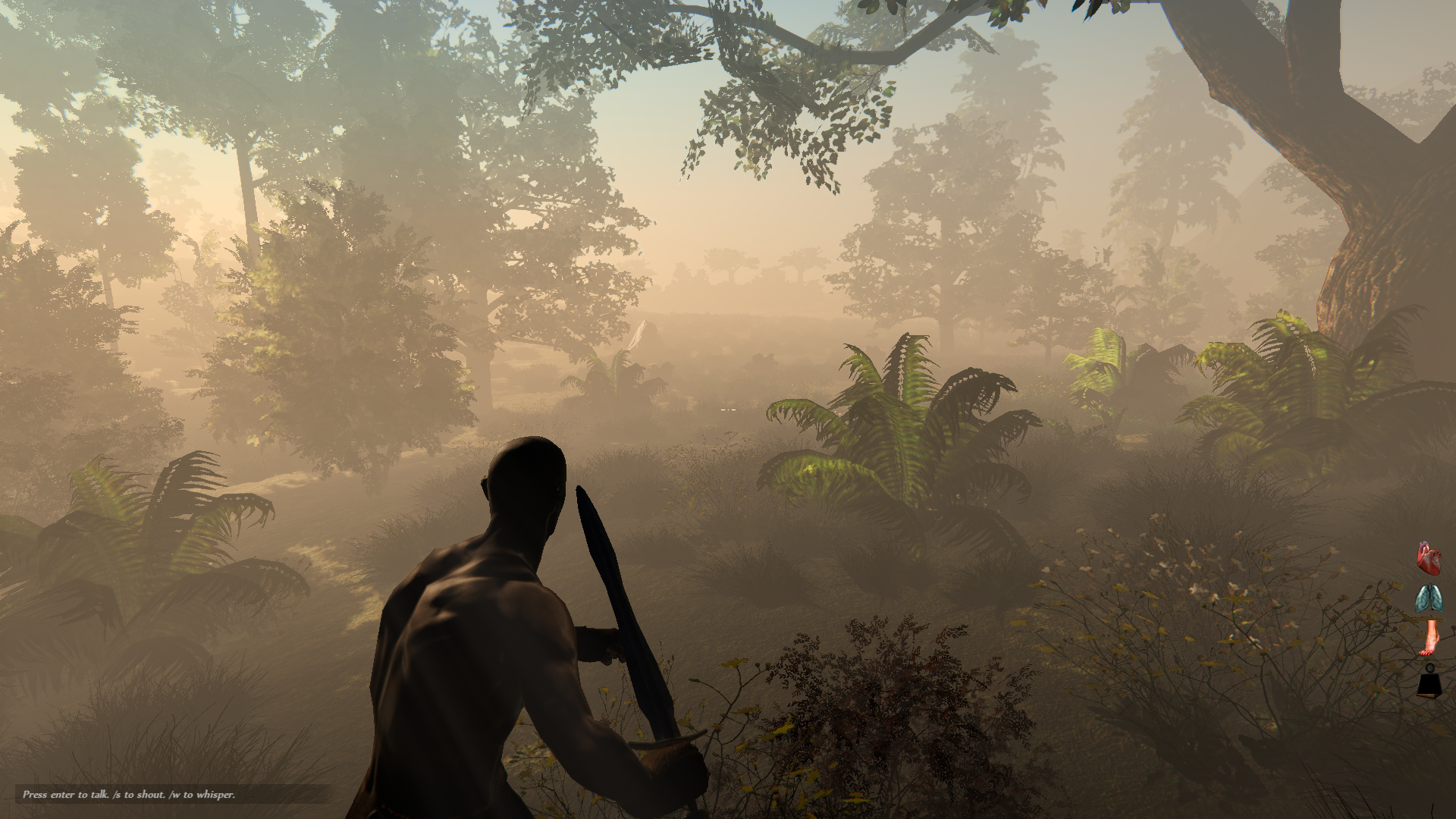
There are three resources that players need to monitor during combat, and they are all represented on the HUD. The heart represents the player's hit points. Hit points represent the amount of damage the character can tolerate before falling unconscious or dying. The lungs represent the character's stamina, which is spent with each attack, jump, sprint, and slowly drains when blocking. If there is not enough stamina remaining to perform an action, it will not occur. Stamina slowly recovers over time, provided the character is not currently blocking. Its function is to limit the amount of action that the character can perform in a short amount of time.
Finally there is balance, represented by the foot. Balance represents the stance or footing the character has, and is quickly spent and rapidly recovered. Low balance will not prevent action the way low stamina can, but it does impact both the amount of damage received and the amount of damage dealt. Spamming attacks will keep your balance low and ensure that they remain weak, while carefully timing your attacks will allow you to maximize their impact and prevent unnecessary HP loss.
In addition to resources and collision detection, there are other factors in combat to consider. All races can perform a heavy version of their attacks at a higher stamina and balance cost. There are also skills and abilities to take into consideration, and of course, there are the special racial abilities. With all these different aspects to combat, we hope that players will explore the full depth of our combat system.
What aspect of combat interests you the most? Share with us in the comments below.
Making Death Matter; Why we offer perma-death
Death is is a fairly common feature in video games. It is ubiquitous in RPGs, adventure games, tabletop games, MMOs, fighting games, shooters; it’s the universal punishment for failing to keep your character’s life above zero. It is the impact that death has on the player that varies from game to game. Some treat it as a resource-sink and minor inconvenience; it damages your equipment so that you must spend your hard-earned currency to repair it or you respawn away from where your character died and have to start back at the beginning of the dungeon/map. Other games swing to a harsher consequence with inventory loss, so that you must recover your original body to regain your equipment and possessions, or even progression loss.
For Trials of Ascension: Exile we wanted death to be something that players would avoid at all costs, so we looked to the more brutal side of the spectrum. We use a combination of inventory loss, limited progression loss (for dragons), random respawn locations, and life counters to encourage players to play purposefully. Like green 1up mushrooms and pink bottled fairies, life counters are lost each time the character dies. Unlike them, the player cannot earn more and when they run out the character permanently dies.
We believe that Perma-death is one of those features that can really impact how gamers play their characters, and any other death-penalties are minor in light of the possibility of losing a character forever. It is our experience that players take less risks, are less likely to randomly attack others, and tend to play more constructively when their value the longevity of their character. Perma-death also has other, less apparent, benefits.
In so many multiplayer games, players never have an ending to their story. By giving the character a finite number of deaths, their story has both a beginning and an ending. This closure gives the player the opportunity to try something new with their next character. It also prevents the traditional “End-Game” stagnation that happens when every character reaches the pinnacle of their potential and waits around for new content to consume.
The most important aspect of Perma-death for us is how it cycles the power-dynamic of the game. Should a player become too powerful and then terrorizes the rest of a server, the weaker characters can topple their tormentor by overwhelming their remaining life counters. For example, if a dragon should reach adult and decide to make life difficult for a nearby settlement of humans, the humans can hunt the dragon down and kill it enough times to eliminate the threat.
As good as we think Perma-death is, we also recognize that not everyone feels the same way about it. Some players become emotionally attached to their characters and would rather not play a game where they would eventually lose them. Still others might see the loss of a character as a blow representing the loss of their invested time. To that end we offer server hosts the option to give their players infinite life counters, so that everyone can play on a server that best fits their play-style.
Will you play on a server with perma-death? Why or why not? Share with us in the comments below.
Designing Conflict and Competition
Many games offer campaign stories or quest lines to immerse the player and help them to feel connected to the game world, but the result is that every player experiences the game in nearly the same way. The really good stories, the ones that players share with their friends and tell over and over again, are the ones that the players spontaneously create for themselves. Sometimes these are the result of cooperation by the players to overcome challenges, but just as often it is a result of conflict and/or competition.
Competition occurs in game environments that offer performance-based rewards or control of non-infinite resources to the players. Conflict arises from competition when players disagree on the allotment of such rewards and resources. How competition and conflict manifest in a game depends heavily on how the studio designs their game. Offering up faction-wide bonuses or special titles are both great ways of encouraging players to complete with one another. PvP servers can empower players to resolve or deepen their conflicts with more than just their words.
When we were designing Trials of Ascension: Exile, we wanted to create a game where the players were naturally inclined to compete with one another and points of conflict would occur organically. It is one thing to say that the races all hate one another and provide stories to support it, but it is an entirely different matter to convince the players that extinction of their enemies is in their best interest and not a kumbaya-circle around a campfire. So we brainstormed ways to encourage conflict between the humans, raknar, and dragons.
The first way we employed was to encourage PvP through different means. We made it so that character bodies provided resources to others, including food. This means that dragons and raknar can eat each other and the humans, while humans can harvest crafting materials and meat from dragons and raknar. We even hope to include crafting recipes that specifically require raknar or dragon components in the future. Players can also loot the inventory of other characters if they knock them unconscious or kill them out right.
But food is plentiful in ToA: Exile if you know where to look for it, and by itself was only a weak encouragement for PvP. We took a closer look at the mechanics of each race to see how we could tie them in with the needs of the other races. For example, Raknar thrive in the cave environment with their wall-walking ability and night-vision, so we added better mineral resources inside the caves to encourage dragons and humans to willingly enter their domain. Since dragons need nuggets for both their racial abilities and to molt to their next growth stage, finding ways to tie this rare resource in with the other two races would give a reason for them to fight one another for the nuggets. And finally, with limited lives and the destructive potential of the dragons, we encourage the players to eliminate the dragon threat early in their life cycle.
How did other games encourage you to fight with the other factions? Share your experiences with us in the comments below.
Less is More: How Removing Elements Adds to the Game
At first glance, some people might think that our game is missing several features that players have come to expect in modern video games. As standard as these elements are, we believe that leaving them out actually adds to the gaming experience.
Map/Minimap - You won’t find a miniature map hovering in the corner of your screen in ToA: Exile, nor can you press a key to bring up a screen that displays where you have already explored and where you are currently standing. By removing these tools from the players, we force them to really look at the world around them to determine their location. The sun, moon, and stars all move through the sky, allowing the player to orient themselves to the cardinal directions. Landmarks become vital for longer expeditions from base camp; choose poorly and a player will quickly find themselves lost. Even getting lost can be its own adventure, as the player explores their surroundings and searches for what is familiar again.
HUD - Though not eliminated completely, we’ve done our best to reduce the Heads-Up Display to the very minimum possible; only the most important information remains on the screen. Whenever possible, we’ve chosen to relay information to the player using audio and screen effects instead of bars or icons. We believe that this makes for a more immersive gaming experience as the player receives multiple forms of feedback and they don’t need to change their focus to monitor their stats.
Global Chat and Whispers - There aren’t any global chat channels or private whispers in ToA: Exile. Instead, players are given area-based chat functions to communicate. The default speaking option has a range of about 10 ft, while the /shout (/s) easily doubles that. Using /whisper is best for those standing next to you, but anyone within a few feet will overhear your conversation. While we do understand that friends and cooperative groups will will use VOIP to communicate outside the game, we felt that the feeling of isolation that comes with being alone helped to deepen the player’s immersion.
Enemy Information - Many games spoon-feed the player information about the difficulty of the enemies they encounter, such as with levels, colors, and skulls. This meta-game knowledge prevents the player from learning through their own unique experiences in the world and breaks immersion.
Character Names - A character’s name does not appear over their head by default in ToA: Exile. In fact, the name of every character is hidden from other players unless they choose to utilize the “/intro” command to introduce themselves. Even then, they can lie about who they are if they so choose. Players can also choose to overwrite the name given and rename a character to whatever they wish. This can be handy to help you remember the guy who shot you with an arrow then jacked your goods, the next time you happen to run into him. Hiding the names adds another layer of distrust with strangers, and it also serves the purpose of preventing a name plate from revealing a hidden character. Which brings us to our last “missing” feature.
Invisible Stealth - Long the staple of rogues, assassins, and snipers, the full-transparent invisible stealth won’t be found in ToA: Exile. Instead players will need to camouflage themselves in colors that blend in with their surroundings and take advantage of both shadow and visual obstruction to hide themselves from both their prey and anything who would make prey of them!
Do you think leaving these features out of the game will positively or negatively impact the play experience? What other game elements take away from immersion for you when present? Share your thoughts with us in the comments below!
Build 0.9b2 - A Hot Fix, And More...
Hey Everyone!
We've noticed an issue where young and juvenile dragons couldn't interact with anything. We consider that a game breaker for dragons so we've put out a hot fix. We're piggy-backing a few extra tidbits into the update as well, most of which stems from feedback from our testers and streamers. Keep that awesome feedback coming!
~~~
Fixed - not being able to harvest things as a young or juvenile dragon.
Fixed - caves being too dark for even creatures with night vision.
Fixed - crafting unfired clay brick not giving empty mug back
Fixed - footsteps not playing if holding a torch.
Fixed - deer animation twitching during sleep and unconscious loops.
Fixed - characters thinking they are in cave which affected sounds and visual settings.
Fixed - unfired clay mug trying an error when trying to fill it.
Addressed scrollbar inconsistencies in the UIs.
Volume of the intro music has been turned down.
Adjusted all arrow types to allow for a more consistent velocity.
Adjusted audio radius curve of ocean to smooth volulme change based on distance from the ocean.
Made multiple adjustments to the Bullder stats.
Welcome to the Lost Isle: Flora, Fauna, Terrain, and Weather
Whether you play as a shipwrecked human fleeing from the mainland invasion, a exploratory raknar separated from the Hive, or a newly hatched dragon struggling to survive, your story will unfold on the first of our islands; the Lost Isle.
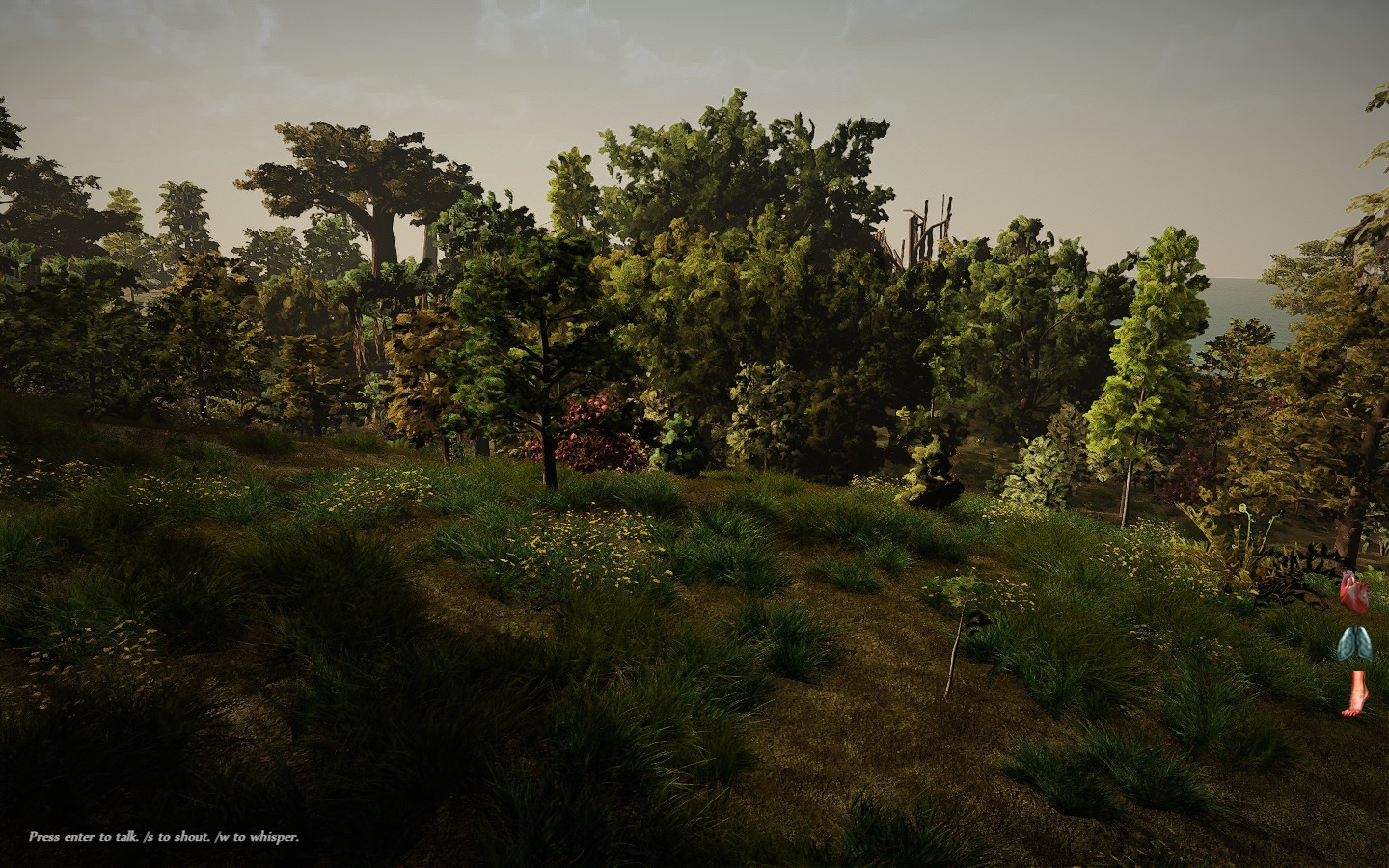
Roughly 3km2 in size, the Lost Isle is a temperate forest biome rich in all manner of flora and fauna. There is also an abundant supply of mineral sources such as iron and stone, along with trace amounts of copper, silver, and gold. Occasional rainfall ensures that the local plant life is productive and constantly growing. The warm days and cooler nights make this island an ideal paradise for all three races.
Both rain and thunderstorms occasionally occur on this island, impacting the temperature and visibility conditions. Seeking shelter can help to keep your character at their optimum condition, but it can make survival difficult if you are caught unprepared.
In addition to the various grasses, there are eight types of trees, six types of shrubbery, and six types of herbaceous plants currently in the game. All of these can be harvested for resources, or cleared out to make room for whatever the players have in mind. Many of them are food sources for the fauna of the isle and some are even edible for humans. But be careful, as some are poisonous and can negatively impact your character if consumed. Flora on the island dynamically spawns and expands in a natural manner if left to its own devices. It will spread, live, and die in a natural manner. Most plant-based resources regenerate on their own, though a few do require the destruction of the plant to harvest.
There are currently eight species of animals that can be found on the Lost Isle. Each plays a role within the ecosystem and provides different resources to the players. Our AI uses a variety of variables to determine the behavior of the wildlife, including hunger, thirst, tiredness, predator/prey, and if they are territorial or not. This can lead to some interesting scenarios such as encountering a sabretusk defending its territory from the evisceraptor trying to eat it, then running away when it becomes too injured.
Some resources can be gathered directly from the terrain itself, and that includes dirt, sand, grass, and a few types of water. Others spawn as objects on the terrain, such as rocks and seashells. Ore and clay can both be harvested from the boulders that dot the landscape. Underneath the terrain of the Lost Isle is a cave system that spans the length of the island. Though it is as dark as night, the boulders found below are rich in the rarer resources. Life exists here as well, with some flora and fauna spawning in the nooks and crannies of the stone caverns.
Though they are barren now, the lakes and oceans around the Lost Isle will one day be populated with life of their own. Dangers will await any player who carelessly swims too far from the safety of shore, and treasures will exist for anyone brave enough to try to reach them despite the danger.