War Thunder cover
War Thunder screenshot
Linux PC Mac PS4 XONE PS5 Series X Steam
Genre: Simulator, Tactical

War Thunder

USS Des Moines Returns on its Anniversary!


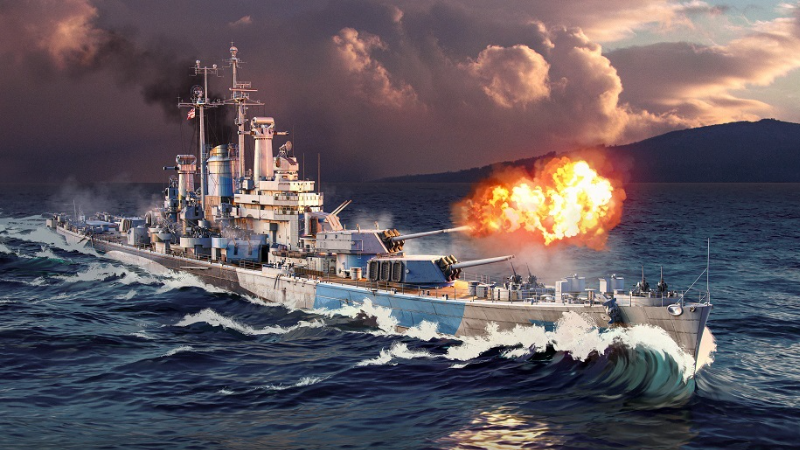
On May 28th 1945, the USS Des Moines heavy cruiser was laid down and was the third American ship to be named after the capital of the state of Iowa. During her service life, she traveled all over the world, demonstrating the readiness of the US Navy to meet any challenge.

USS Des Moines has returned for Golden Eagles and is here to stay!


This heavy cruiser is back and is available for 8020 Golden Eagles.

When: From May 28th (11:00 GMT).
Where: USA > Bluewater fleet > Premium vehicles.
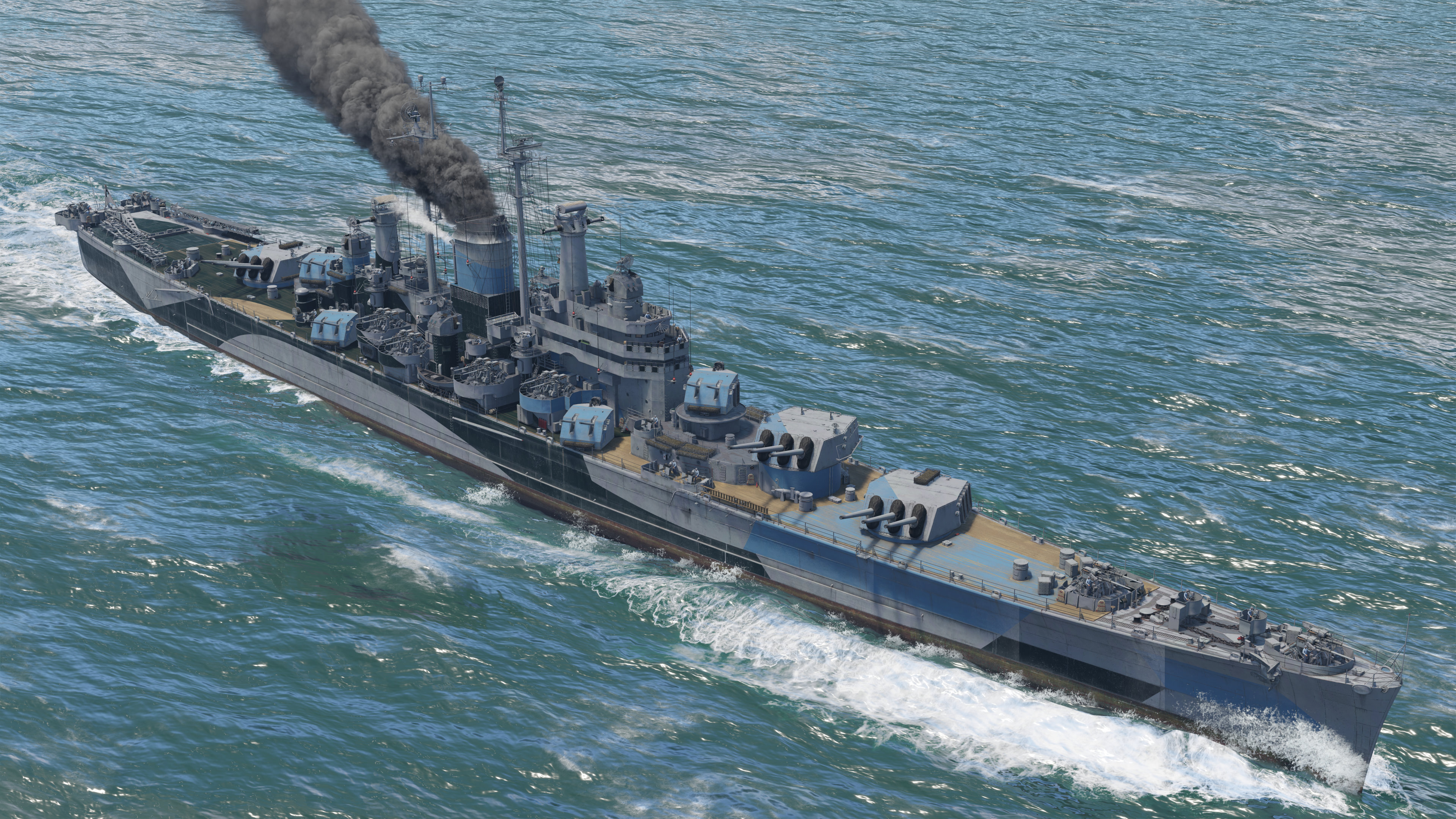


About this heavy cruiser

  • The 203 mm Mark 16 gun debuted on the USS Des Moines! Their power and rate of fire will be a pleasant surprise when playing this ship for the first time. USS Des Moines is well protected from aircraft and can overall inflict colossal damage to enemy ships.
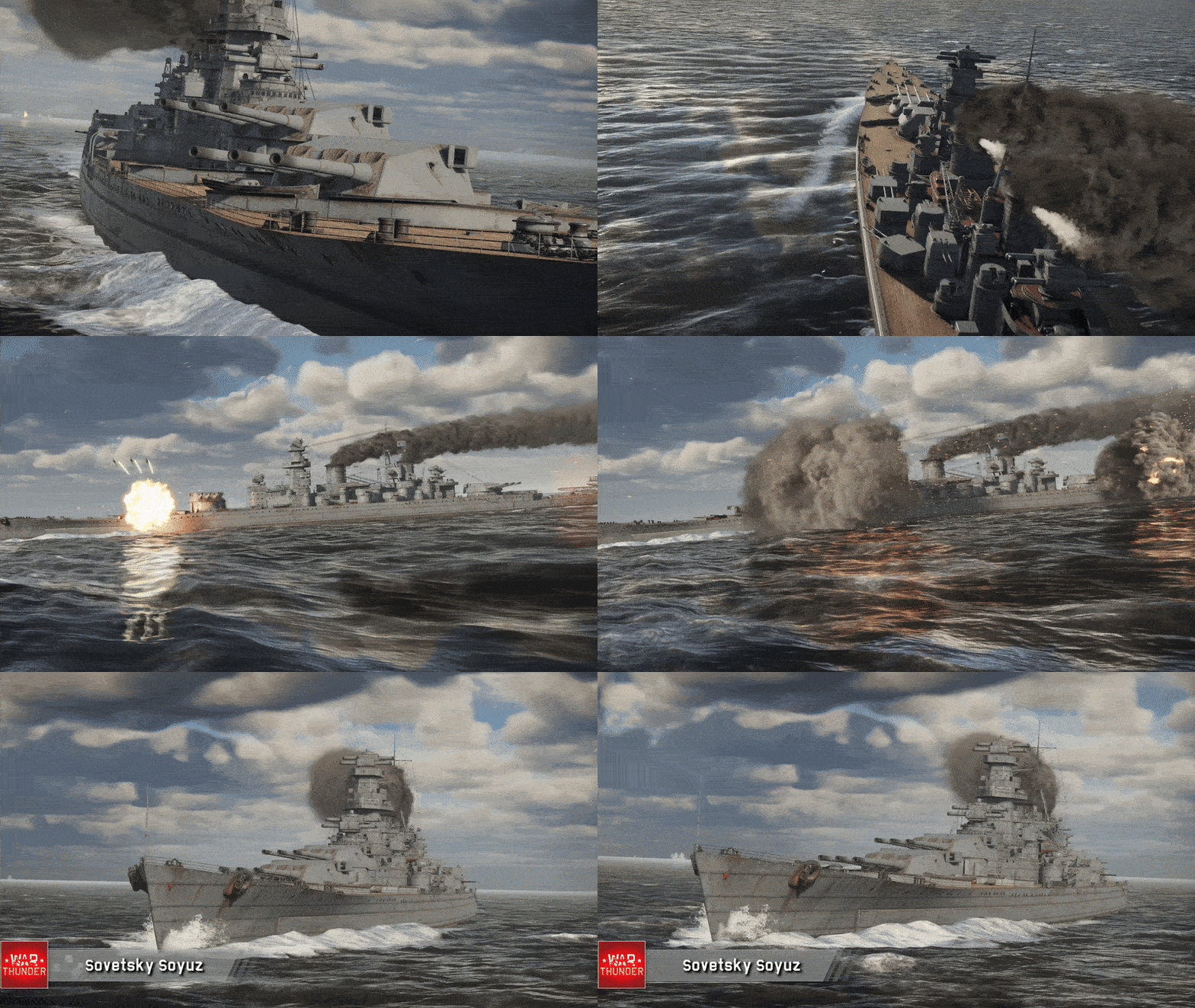
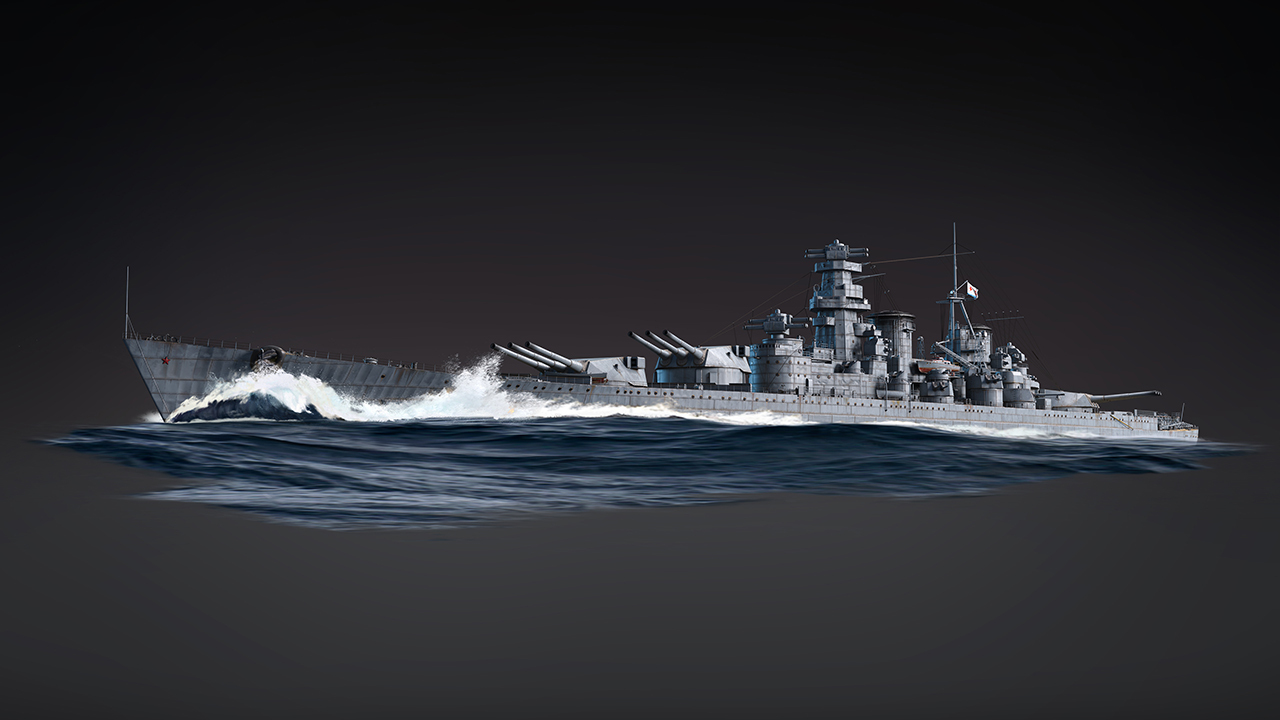
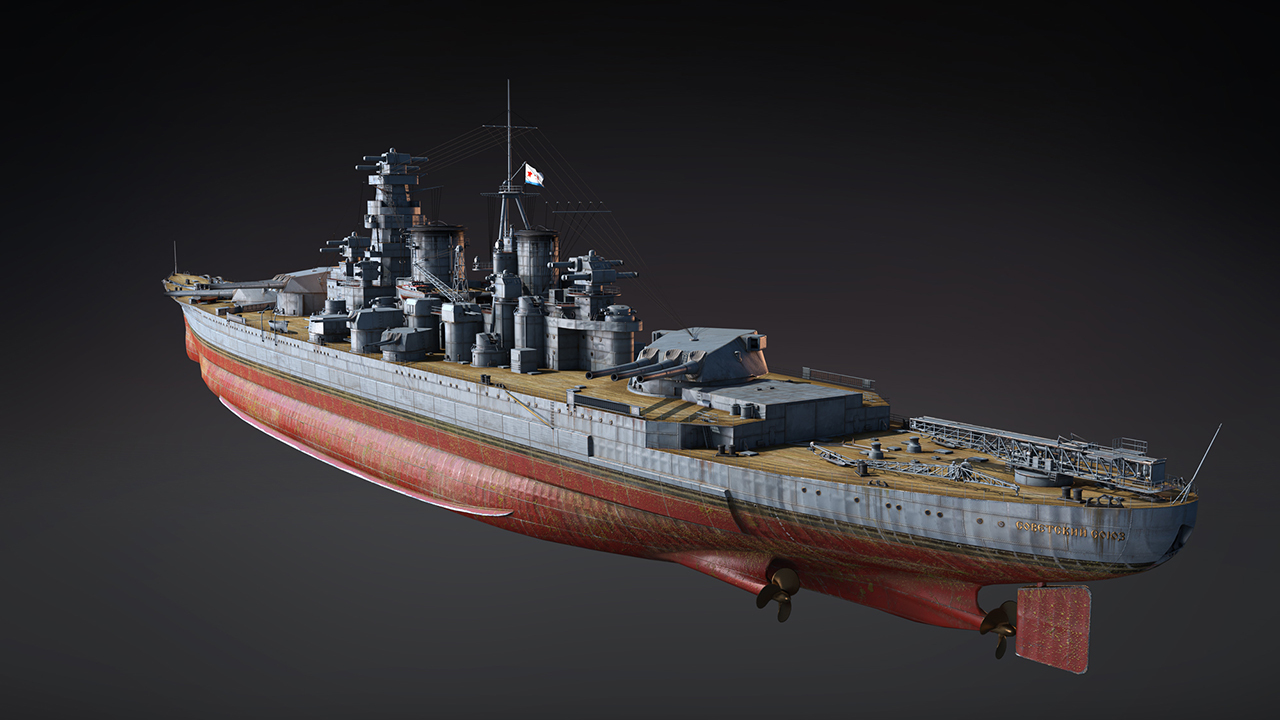
Sovetsky Soyuz: Red Oceans


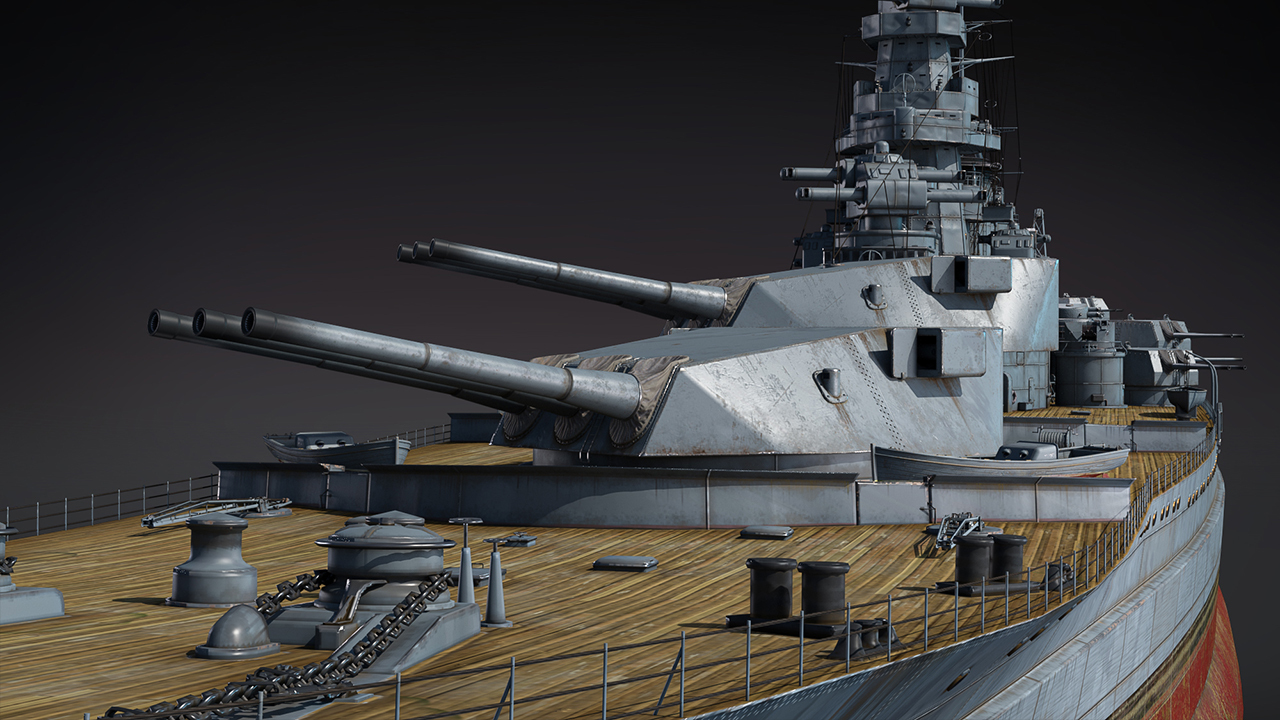
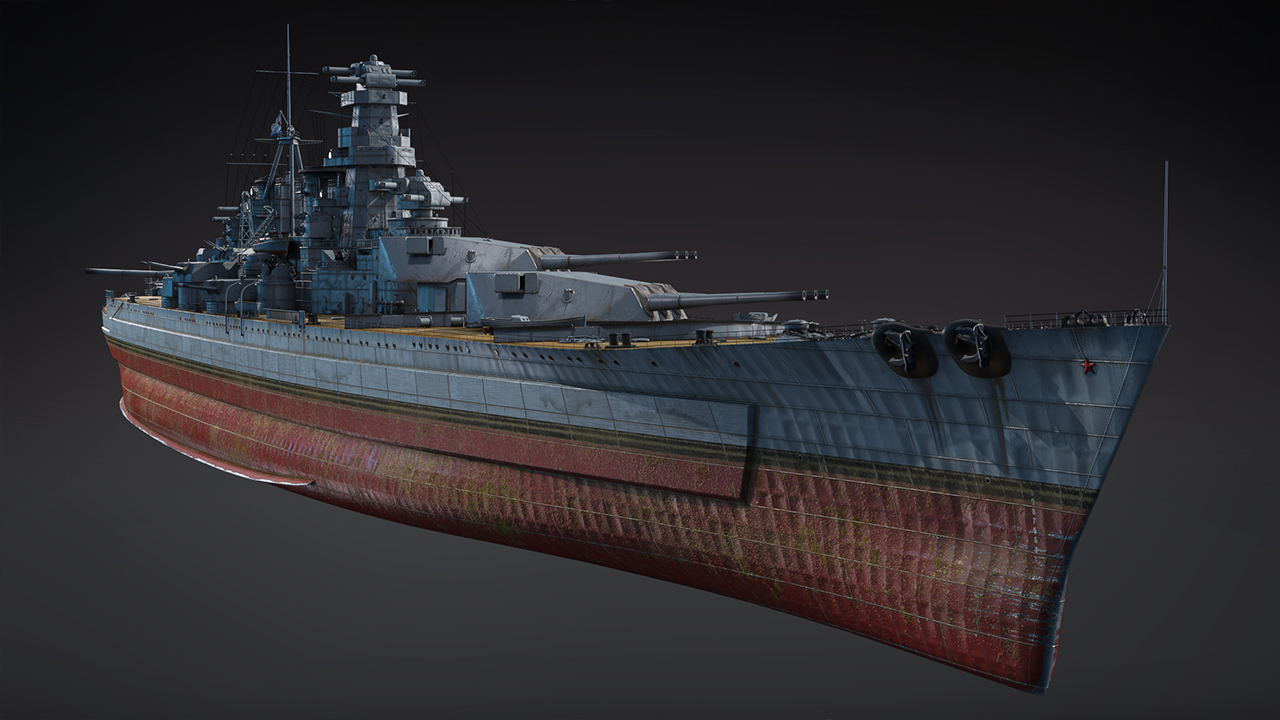
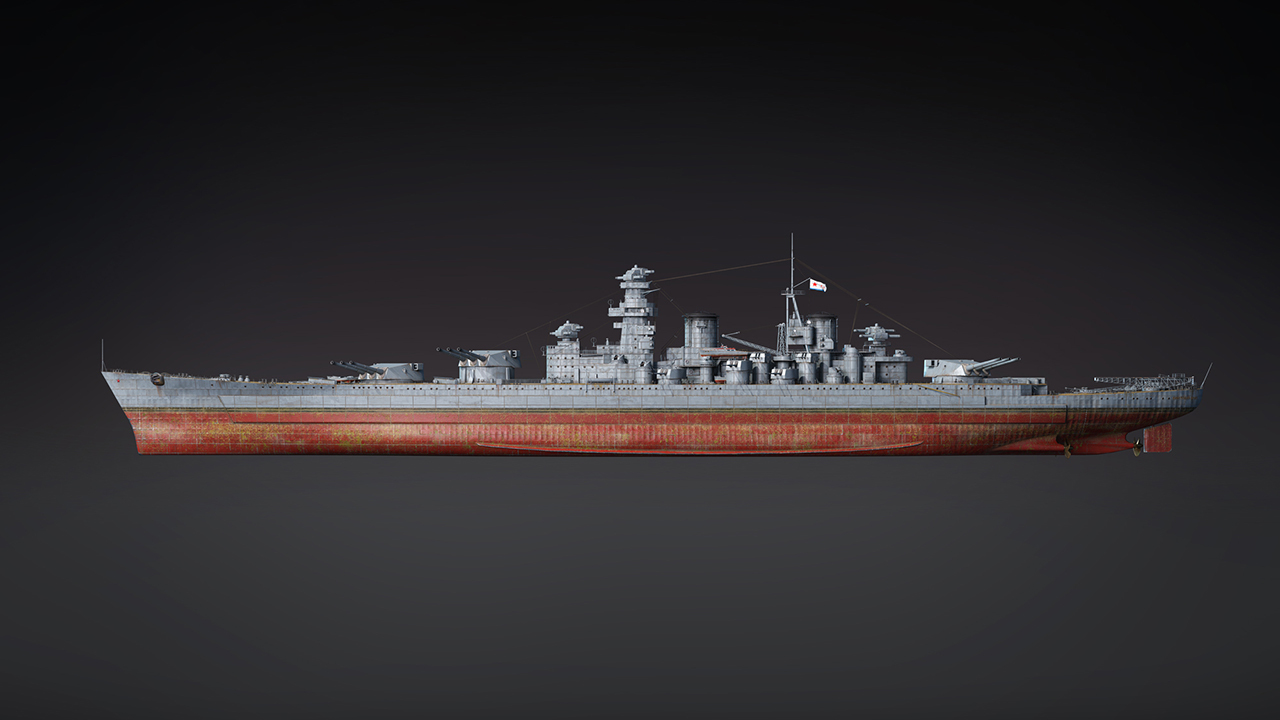
Today we’ll be taking a look at the Sovetsky Soyuz which was supposed to become the core of the USSR’s fleet, but the outbreak of war put an end to these plans.

Sovetsky Soyuz: A Battleship for the USSR at Rank VII


At a glance:

  • 406 mm (16 inch) guns
  • Strong hull armor and main battery turrets
  • Decent air defense weaponry
  • Mediocre mobility

Vehicle History

In the mid-1930s, the Soviet Union began work on an ambitious program to create a new and powerful fleet, with the center piece being given to the construction of a new generation of battleships. This new program envisaged the construction of eight Project 23 Sovetsky Soyuz-class battleships with 406 mm guns by 1943. Stalin himself personally attached particular importance to the project, viewing a powerful battleship fleet as an important attribute of great power and an instrument of international influence.

The first four ships were planned to be laid down in 1937 so that they could be introduced into the fleet by 1941. However, the implementation of such a large-scale program encountered enormous issues from the very beginning. Although four ships were laid down before the start of the war, (Sovetsky Soyuz in Leningrad, Sovetskaya Ukraina in Nikolayev, Sovetskaya Belorussiya and Sovetskaya Rossiya in Molotovsk), their construction was constantly behind schedule. The main problems were severe delays in the delivery of high-quality steel, a shortage of skilled workers, difficulties in overcoming challenges related to new technology, and constant adjustments to the program.

By June 1941, the technical readiness of the Sovetsky Soyuz, which was the lead ship, was only at 21% and was at even less for others. The outbreak of war put an end to this very ambitious program and in July 1941, by decree of the State Defense Committee, the construction of all battleships was stopped and their hulls were subsequently dismantled for scrap metal.


Introducing the Sovetsky Soyuz!


Meet the Sovetsky Soyuz, coming to War Thunder in the brand-new rank VII for Bluewater naval trees! This ship packs a serious punch, as it features 16 inch guns, great armor but is slightly on the worse side in terms of mobility. Read on for the full details.


All Project 23 ships were set to receive innovative 406 mm (16 inch) guns, and the Sovetsky Soyuz being one of them features nine of these guns in three three-gun turrets. These beefy guns can be loaded with armor-piercing rounds to use against heavily armored ships at long distances. For weaker ships, an option of semi-armor-piercing shells with very high armor-piercing values and an explosive charge of 88 kg is a great option to take them out.

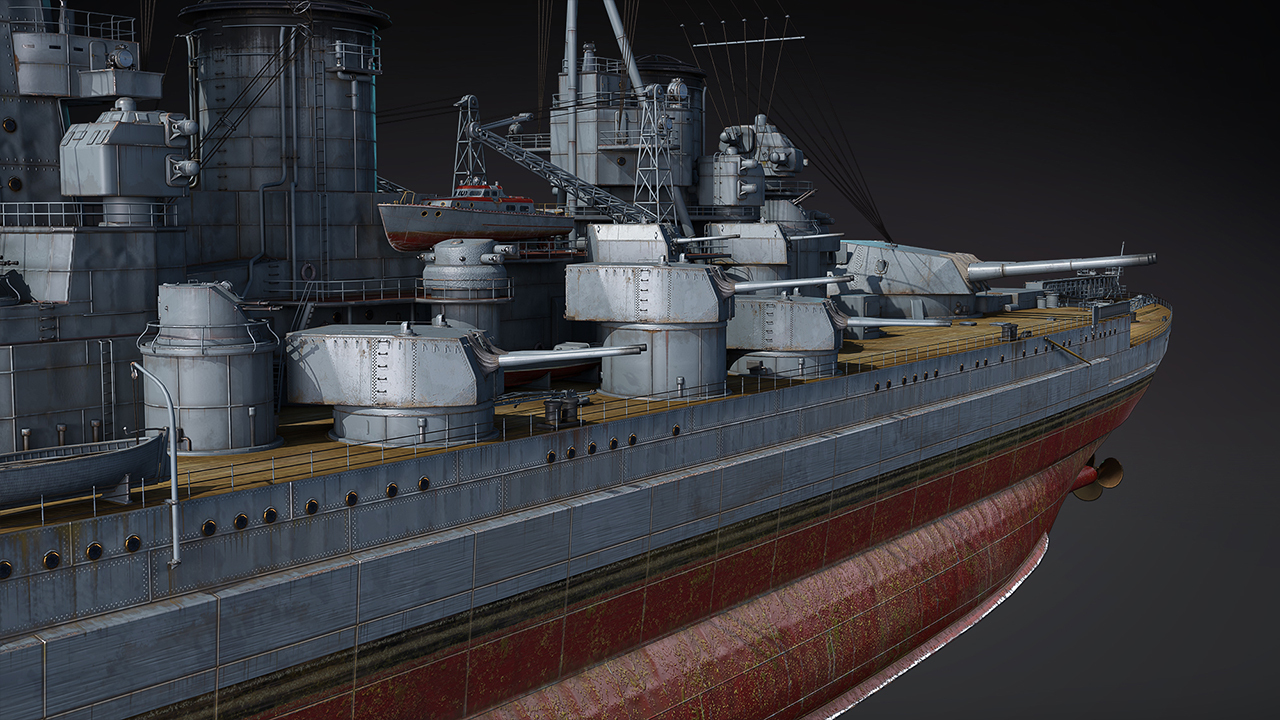
For secondary weapons, there’s two calibers — six 152 mm turrets with two guns in each, and four 100 mm turrets with two guns in each. Both calibers are universal and have time fuzed shells as an option. To top it all off, the primary and secondary loadouts are complemented by 37 mm automatic cannons for short-range air engagements. There’s a total of eight of these turrets with four guns in each.


So we’ve seen that the Sovetsky Soyuz has excellent firepower, but does its armor hold up? Yep! This ship features a main armor belt that starts directly from the deck and goes just below the waterline. The average protection here is about 375 mm, however the thickest armor reaches about 420 mm to protect the ammunition elevators of the front two main turrets. Below the waterline is a Pugliese anti-torpedo system that in the stern of the ship protects vertical compartments. Under the 25 mm thick anti-splinter armor deck is the main armor deck that reaches an amazing 155 mm of armor. We must not forget the main turrets that are also well-protected, with only the best armor-piercing shells being able to penetrate the barbettes.

With a displacement of just over 65,000 tons, the Sovetsky Soyuz suffers from performance issues as one might expect. The ship accelerates very slowly to its maximum speed of 28 knots (52 km/h), and the turning radius is also very large. Although only the best battleships in the game (including those we’ll announce later 😃) can pose a real threat to the Sovetsky Soyuz, the slightest mistake in a duel can be fatal. The Soyuz should be played with low mobility and not that impressive short-range AA in mind!


That’s a wrap. The majestic Sovetsky Soyuz will be one of the new rank VII battleships coming to War Thunder in the next major update. Keep an eye on our website for more dovblegs coming your way!

Please note that this vehicle’s characteristics may be changed before it is added to the game.

Pages of History (June): Rough Rider


In this month’s Pages of History, you will find yourself in the midst of key historical events across different theaters of war. Normandy and the Soviet Union, Libya and the Philippines — take part in battles using vehicles corresponding to these historic conflicts and earn rewards! 

From June 1st until June 30th, you’ll have access to 8 tasks consecutively. Completing each task will grant you a trophy with a reward, completing all of the tasks will earn you a unique player icon!


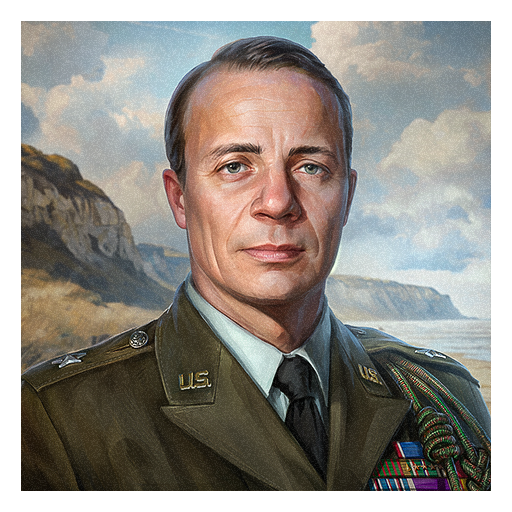
Theodore Roosevelt III


The son of U.S. President Theodore Roosevelt distinguished himself both in politics and at the front. He fought in both World Wars on the front lines, even becoming a Brigadier General. During the Normandy Landings, he personally led his troops and was one of the first to land on Utah Beach. At the age of 56, he was the oldest member of the D-Day landing party; however due to heart problems and arthritis, he was forced to walk with a cane. Despite this, he carried out all of his tasks flawlessly and for his heroism, he was awarded the Medal of Honor.

You can immediately purchase this profile icon for Golden Eagles until July 3rd (11:30 GMT) without completing tasks. To find it, go to your Nickname → Achievements → Pages of History.

Trophy reward for each task


Completing each individual task will give you a trophy with one of the following rewards:

  • 20-50% RP booster for 3-10 battles;
  • 20-50% SL booster for 3-10 battles;
  • 3-5 universal backups;
  • Premium account for 1 day;
  • A random camouflage for ground vehicles (out of the selection of camouflages currently obtainable in game for completing tasks, or purchasing with Golden Eagles).


Other terms


  • Tasks are available from 11:00 GMT until 11:30 GMT on the final day of each task.
  • Tasks can be completed in random battles except for “Assault” mode.


You can read a detailed description of which task is for which day and your overall progress by going to your Nickname → Achievements → Pages of History.

June 1st — June 4th


Battle of Midway


From June 4th to June 7th 1942, the most important battle in the Pacific Theater during the Second World War took place. Thanks to the interception of encrypted enemy messages, the Americans were able to prepare for the battle and take advantage of the disunity of the Japanese forces, inflicting a crushing defeat on them. Japan lost four aircraft carriers and more than 3,000 well-trained pilots and ultimately the strategic initiative in the war.

June 5th — June 8th


D-Day


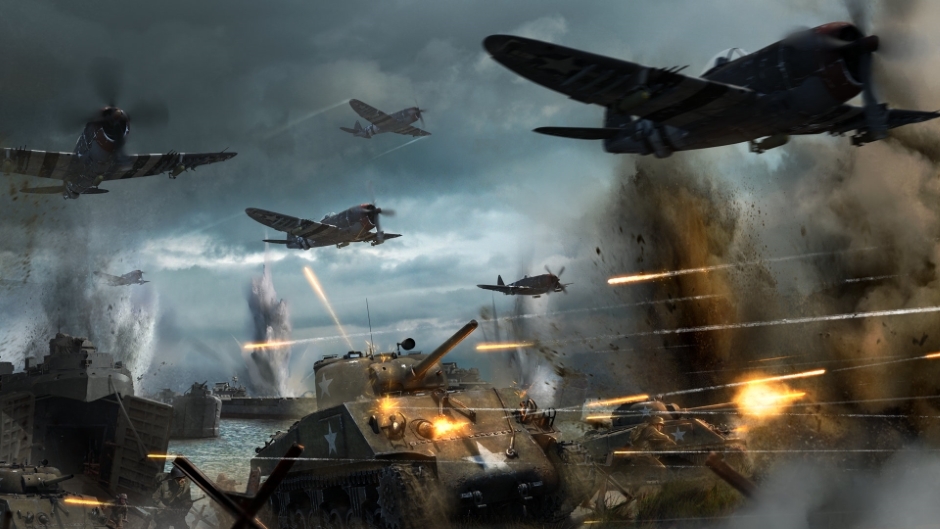
On June 6th 1944, the largest amphibious landing in history took place. More than 150,000 Allied troops landed in Normandy, opening the Western Front in Europe. By the end of the summer and with the capture of Paris, the ambitious Operation Overlord had succeeded entirely.

June 9th — June 12th


Vyborg–Petrozavodsk Offensive


On June 10th 1944, Soviet troops launched a large-scale offensive, north of Leningrad. Finland’s defenses of the Karelian Isthmus crumbled and on June 20th, they took Vyborg. The Finns transferred troops from Eastern Karelia to Vyborg, allowing the USSR to take Petrozavodsk on June 28th. Peace negotiations then began. On August 4th, Marshal Mannerheim became president of Finland, and on September 19th a peace treaty was signed.

June 12th — June 15th


Battle of Villers-Bocage


On June 13th 1944, British troops advancing through Normandy as part of Operation Overlord unexpectedly encountered German forces near the town of Villers-Bocage. At the beginning of the battle, the Germans were able to take advantage of the surprise and superiority of their heavy Tiger tanks. Despite this, the British regrouped and successfully repelled the German attack, with their tanks operating without any infantry support.

June 15th — June 18th


Operation Battleaxe


On June 15th to 17th 1941, Allied forces attempted to lift the siege of Tobruk in Libya. For the first time, the Wehrmacht was forced to defend itself, but despite this, Field Marshal Rommel’s masterful counterattack forced the enemy to retreat, nearly encircling a significant part of the British forces. Operation Battleaxe had failed.

June 19th — June 22nd


Battle of the Philippine Sea


On June 19th to 20th 1944, the largest carrier battle in history took place in the Philippine Sea. It involved 24 carriers, launching more than 1,300 aircraft. By this time, the Americans had technical superiority and had concrete plans for Japan, while Japanese pilots were under trained. As a result, Japan suffered a crushing defeat and lost a significant number of its pilots.

June 23rd — June 26th


Battle of Raseiniai


Shortly after the invasion of the USSR, German forces encountered heavy KV tanks in combat for the first time. This new armor rendered Germany’s anti-tank guns obsolete against them. However, Soviet forces were poorly organized and supplied. Due to the lack of shells, some tank crews abandoned their vehicles, while others went into battle and were forced to literally crush enemy guns with their tracks, having no other options. Victory remained with Germany.

June 27th — June 30th


Case Blue


On June 28th 1942, the execution of the “Blau” plan began. German leadership sent a significant part of the Wehrmacht forces to seize the Caucasian oil fields to provide the army with fuel. Stalin however was waiting for an attack on Moscow, so at first “Blau” had notable successes: in early July, German troops captured the western part of Voronezh and Rostov-on-Don. After that, Hitler ordered to split his forces, sending some of the Caucasus and some to Stalingrad. As a result, Germany suffered defeat on both fronts.

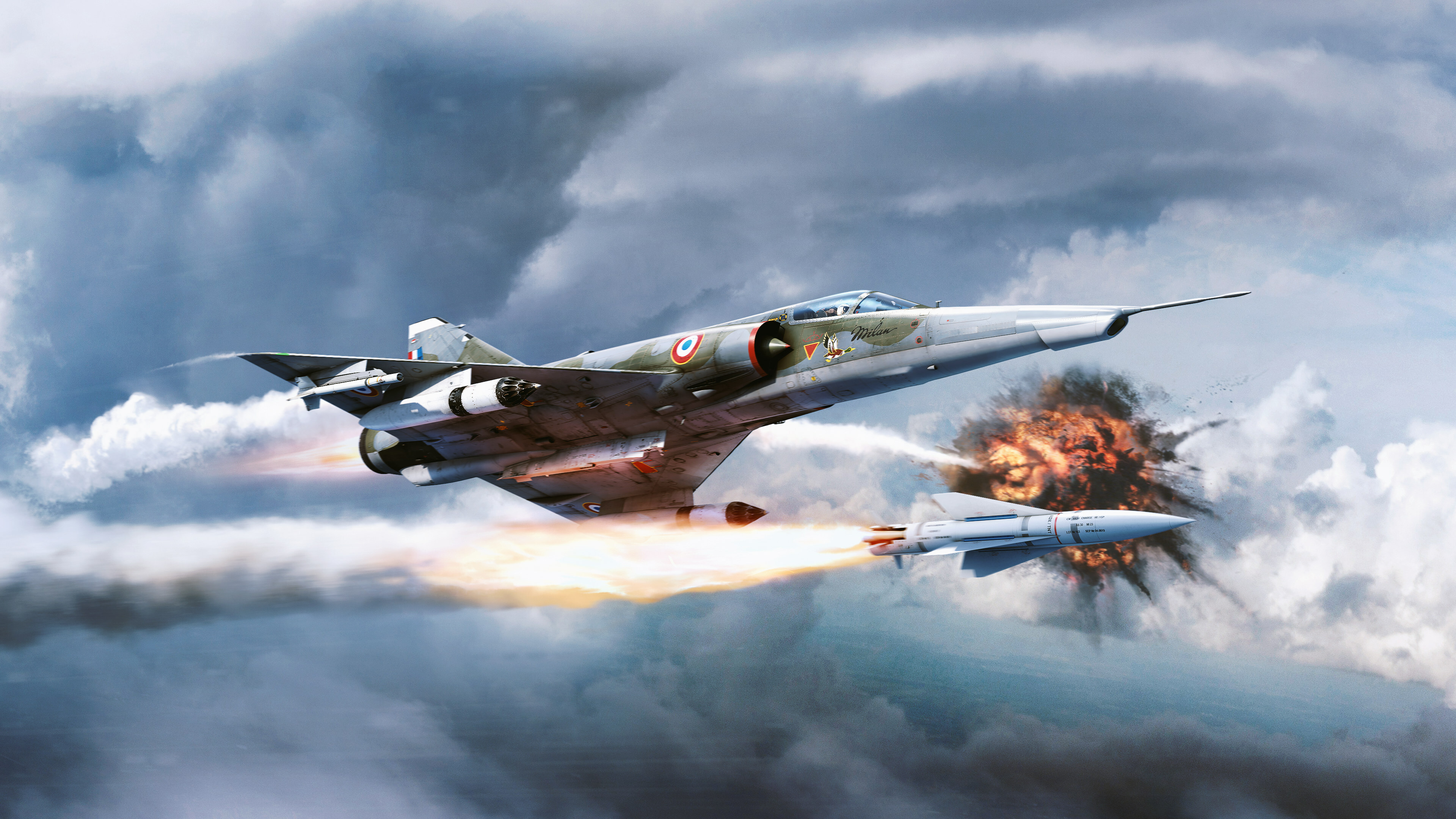
The Milan is Temporarily Discounted for the Anniversary of its First Flight!


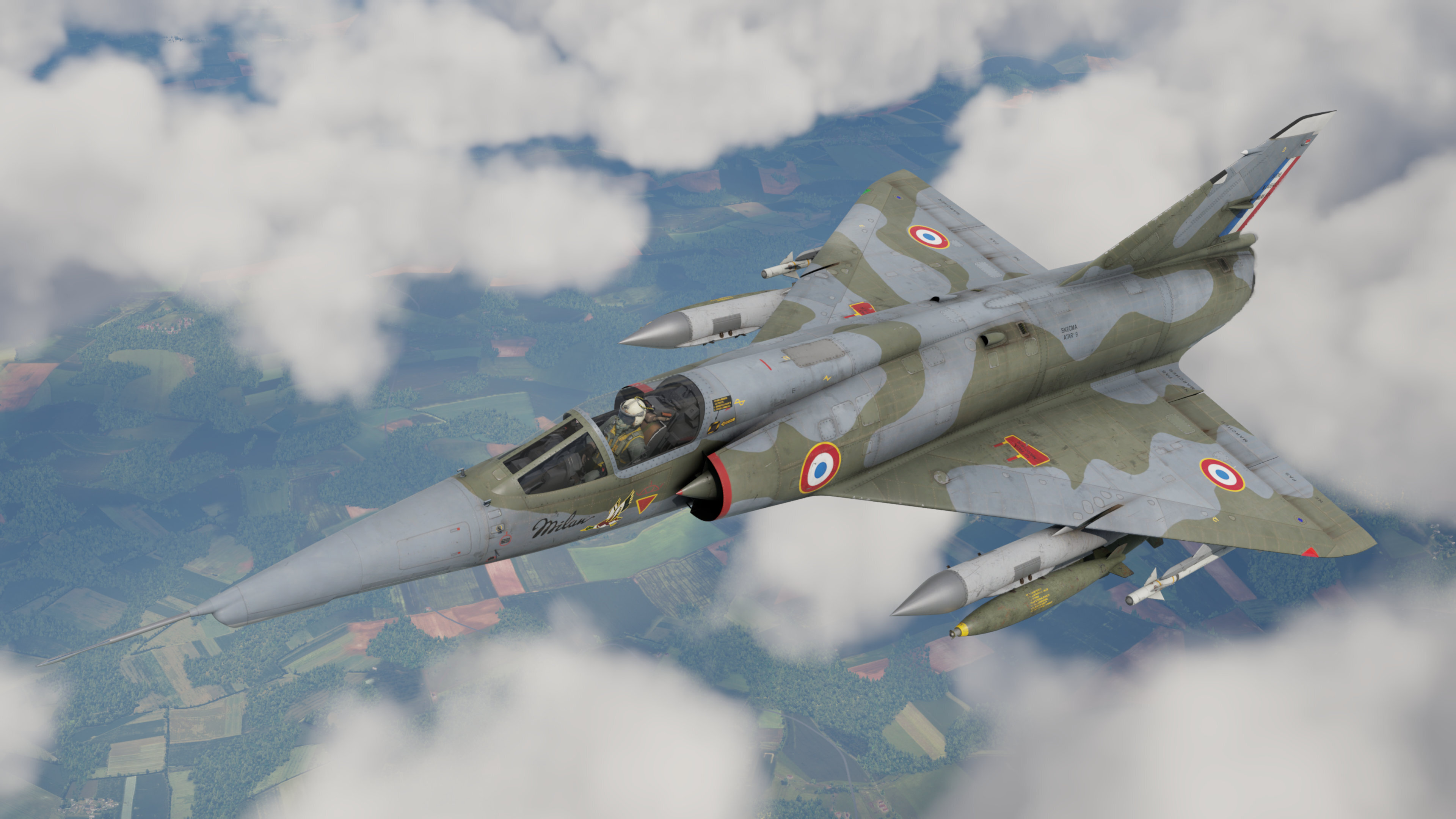
On May 29th 1970, the French Milan (“Kite”) jet fighter flew for the first time. This jet was created through an order from the Swiss Air Force and combined the Mirage III base with the Jaguar’s weapons. The core difference of the Milan was the folding canards at the front of the plane, nicknamed the whiskers.

The Milan is temporarily available for Golden Eagles!


The Milan is available with a 30% discount for 6363 Golden Eagles!


When: From May 27th (11:00 GMT) until May 30th (11:00 GMT).
Where: France > Aviation > Premium vehicles.


About this aircraft


  • The Milan is a very fast and maneuverable fighter, but is best suited for destroying ground targets thanks to its great payload of up to 3000 kg: air-to-ground missiles, various bombs of several sizes and rockets!

Richelieu: The Last French Gunslinger


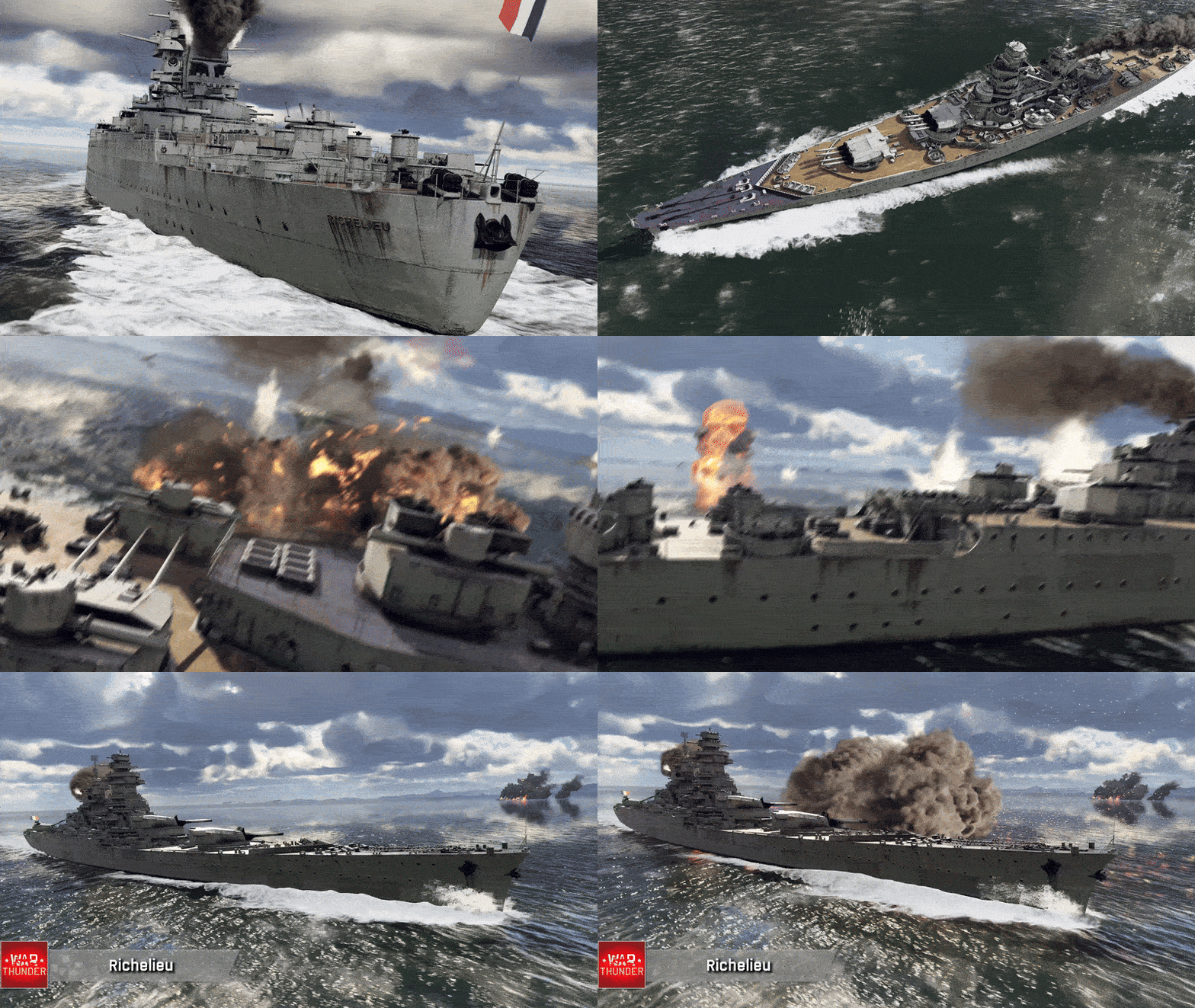
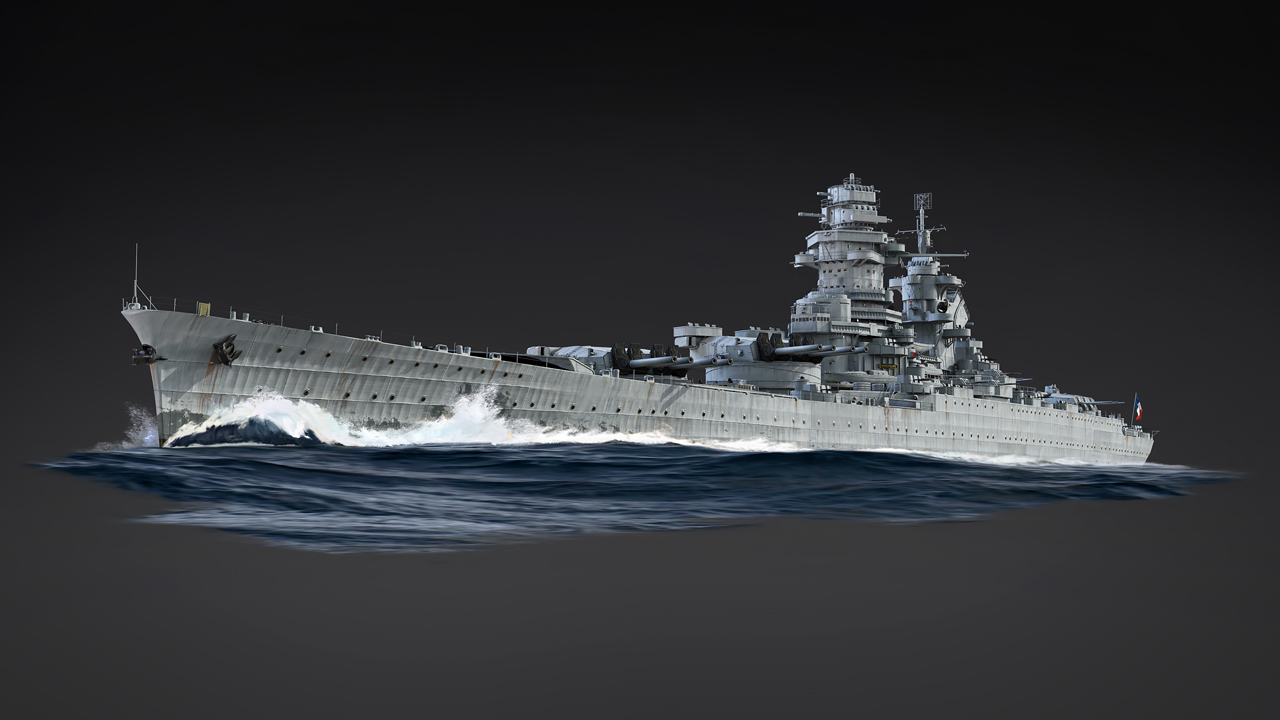
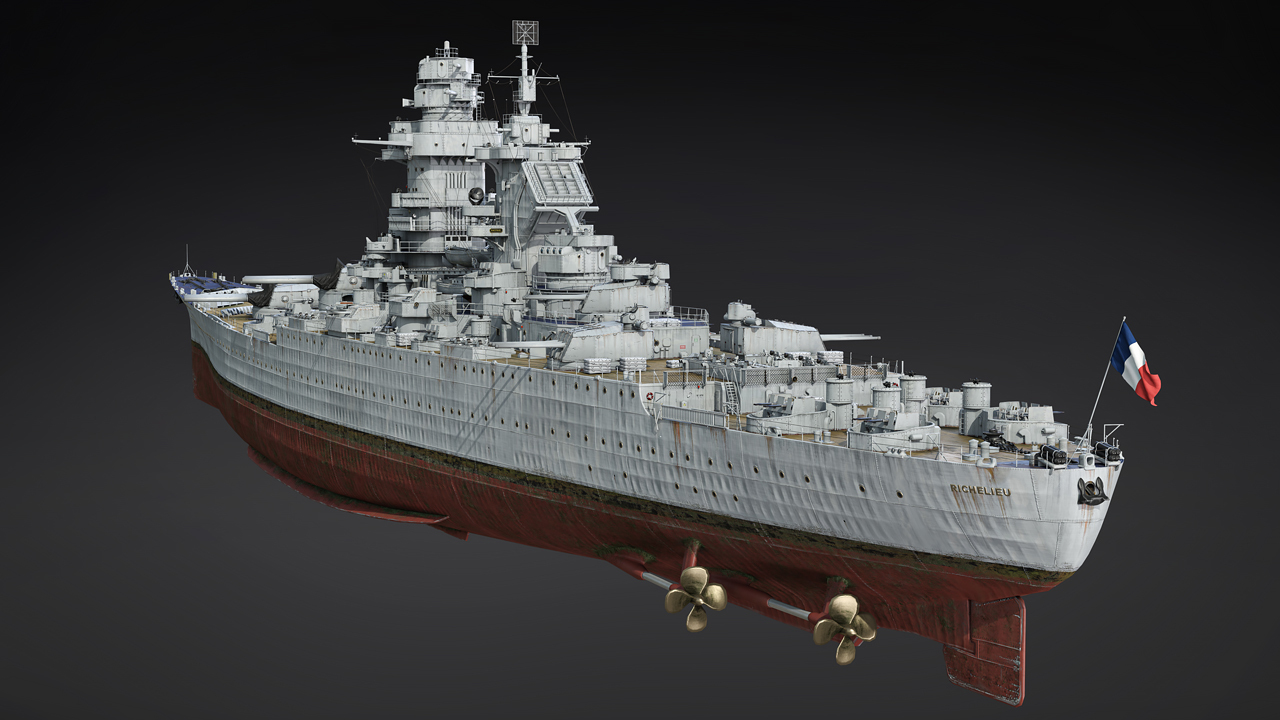
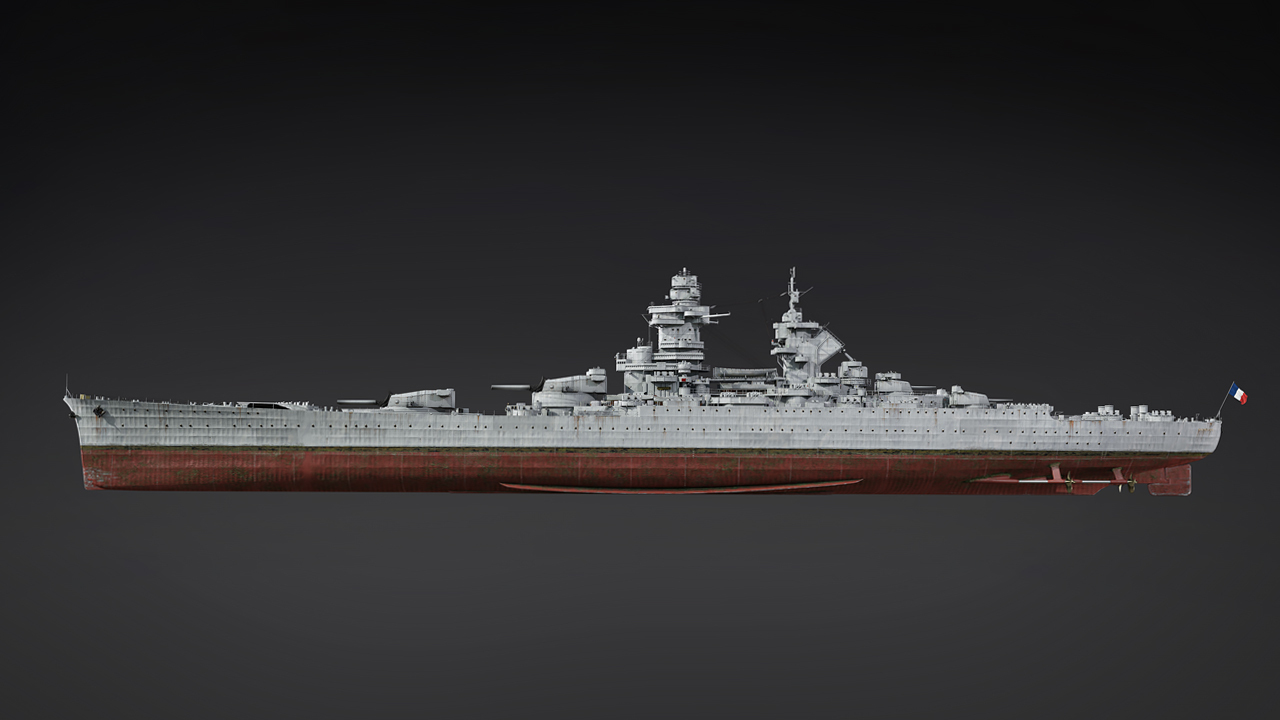
Today we’re taking a look at Richelieu, the lead ship of the last class of French battleships built during the 1930s in an effort to counter the latest capital ships of the Italian and German navies.

Richelieu: A Battleship for France at Rank VII


At a glance:

  • Powerful 380 mm main battery
  • Excellent speed
  • Vast secondary arsenal
  • Strong armor protection

Vehicle History

Richelieu was a French battleship laid down in 1935 and commissioned in 1940 as the lead ship of a new class of French battleships built in response to the naval buildup of Italy and Germany. Her design went to the limit imposed by the Washington naval treaty, featuring eight 380 mm (15‘‘) guns and a displacement of around 37,000 tons. The warship inherited a similar configuration to the preceding Dunkerque, an intentional design choice meant to save weight and reduce building time.

At the outbreak of the Second World war, Richelieu was still undergoing trials and rushed to Dakar to avoid falling into German hands during the 1940 armistice. In July 1940, British forces attacked Richelieu during Operation Catapult, damaging her to prevent her use by the Vichy regime. She remained at Dakar under Vichy control until 1942, when the Allied invasion of North Africa shifted political alignments. After joining the Free French, Richelieu was ferried over to the U.S. to undergo extensive refits. Richelieu was thereafter modernized with an improved radar, AA defenses, and American fire-control systems. Richelieu subsequently served with the British Eastern Fleet, escorting carriers and bombarding Japanese-held positions in the Indian Ocean and later supporting operations in Southeast Asia.

After the war, Richelieu represented French naval power during a transitional period, briefly supporting colonial operations before being placed in reserve. Technologically advanced for her time but soon rendered obsolete by air power and missile technology, she was decommissioned in 1968 and scrapped shortly after.


Introducing Richelieu!


In War Thunder, Richelieu will soon join the ranks of the French bluewater fleet as its next top bluewater warship. Representing a further developed and upscaled version of an unorthodox ship design first pioneered by the French by Dunkerque, Richelieu brings with it significant improvements to both firepower and protection, making for a highly potent warship, worthy of representing French naval power in top rank battles. Let’s dive in!


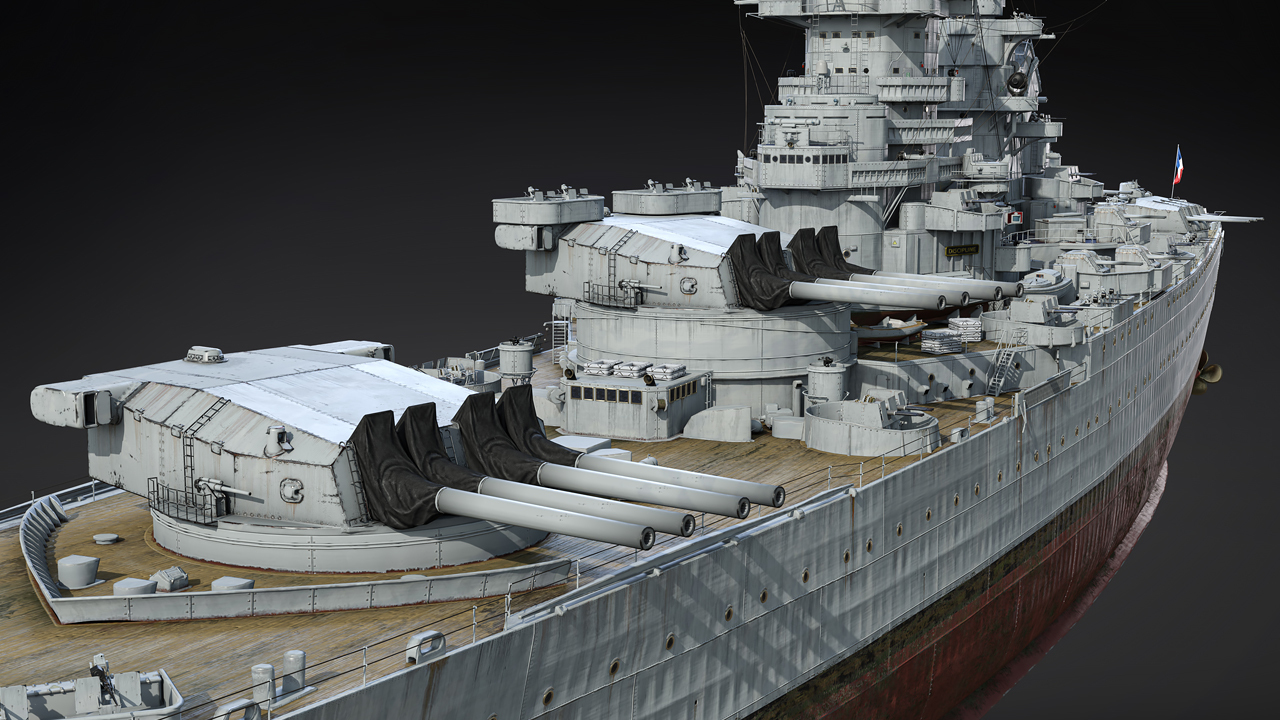
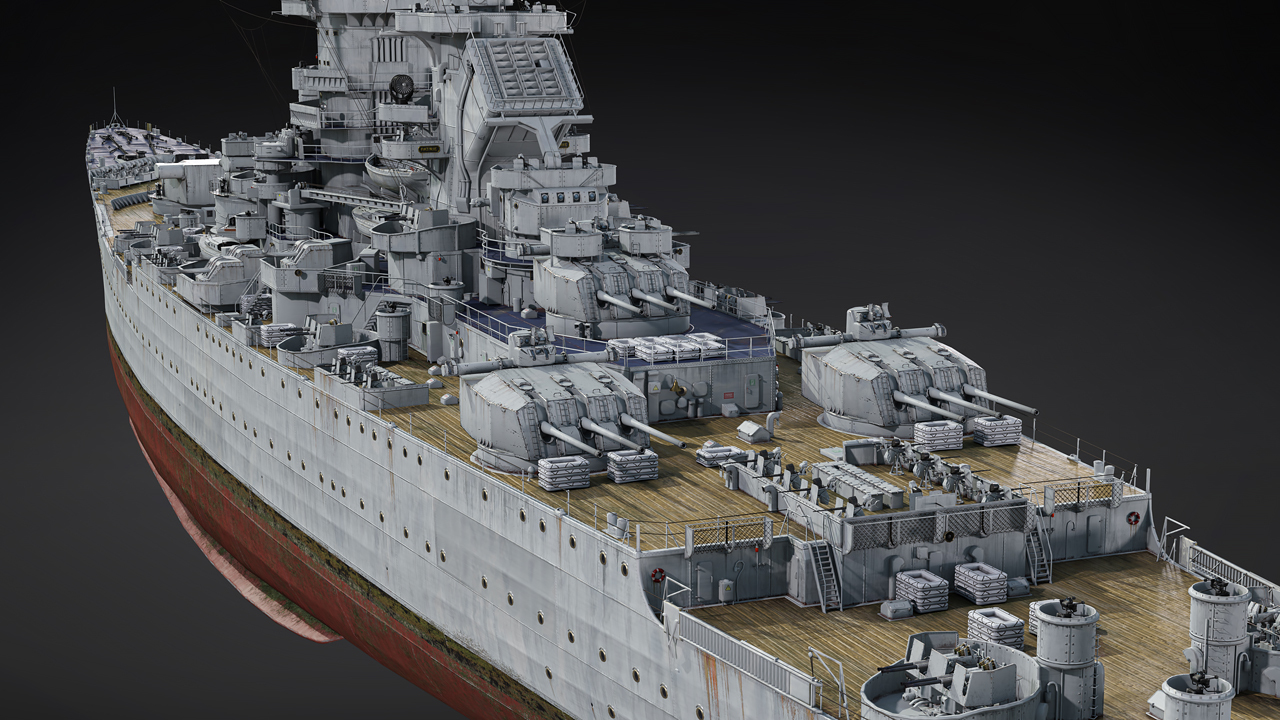
Although Richelieu and Dunkerque share many design principles, also reflected in their visual appearance, don’t mistake them for being identical! In fact, French shipbuilders merely based Richelieu off Dunkerque’s design while scaling the specifications up to match its counterparts of the day. The most prominent example of this can be observed in the ship’s main battery. Although retaining the two bow-mounted quadruple turret layout, these have been upgraded to 15’’ (380 mm) caliber, thus significantly improving their range and effectiveness against more heavily armored opponents. The secondary battery is also upgunned to nine 6’’ (152 mm) cannons, thus further improving the warship’s deadliness in gun duels. Coming to the game in its late war refit, Richelieu will also feature a substantially bolstered anti-air suite composed of a total of 56 x 40 mm and 48 x 20 mm cannons in addition to its original 12 x 100 mm long-range anti-air cannons.

Interesting: Richelieu stands out as the only French battleship to serve actively with both Vichy and Allied forces during the war.


In addition to a deadly arsenal, French ship builders didn’t omit including improvements to other aspects of the warship either. For instance, Richelieu’s belt armor was increased to 330 mm, allowing it to effectively shield the warship’s critical compartments and modules from high caliber enemy fire even at medium range engagements. Additionally, despite having a higher displacement than its predecessor, Richelieu also features a more powerful propulsion system which in turn allows the ship to reach a top speed of just over 32 kts (59 km/h). As a result, Richelieu is most capable of leading the charge together with its allies thanks to its superb combination of firepower, gun layout, mobility and protection — a true steel wedge to cut through the enemy lines!


That’s it for this one! Richelieu has set course for War Thunder naval battles and is due to arrive in the next major update. In the meantime, keep scanning the news section as we continue to release new info on the upcoming update. Until then, calm seas and good hunting captains!

Please note that this vehicle’s characteristics may be changed before it is added to the game.

Update 2.45.1.102


Naval Vessels


  • A bug where it was impossible to disable automatic repairs, fire extinguishing and water pumping in some cases when joining an ongoing battle has been fixed. (Report).

Interface


  • A bug where Chinese, Japanese and Korean characters might have started to appear as translucent squares on DX12 has been fixed.

Locations and Missions


  • [Domination] South Kvarken — the lower Battle Rating limit has been decreased from 3.7 to 3.3. The upper Battle Rating limit has been decreased from 5.0 to 4.3.

Sound


  • A bug where the sounds of engines, tracks and gunshots would not play when spectating other players has been fixed.

Other


  • A bug that could sometimes cause a player to be kicked from the battle after launching the client has been fixed. (Report).

Patch notes reflect only key changes, meaning they may not include a complete list of all improvements made. Additionally, War Thunder is constantly being updated and some changes may not require an update. Changes reflected in patch notes are formed by taking reactions and requests of the community from the bug reporting service, forums and other official platforms into account. Bug fixes and changes are implemented in order of importance, for example a game-breaking bug will be worked on and implemented sooner.

Screenshot Competition – Feathers of Fury!


Welcome to the 173rd War Thunder Steam Screenshot Competition!


Your collection of screenshots submitted last week looked fantastic! As designs improved through history, many planes, tanks and ships became bigger and more capable than their previous generations. This week, capture a heavy tank, bomber, or a ship from the bluewater fleet! The three most popular and three selected by us will get 300 GE. See the winners down below!

Let’s begin the 173rd edition of our competition!


Create a stunning screenshot and submit it on the War Thunder Steam Community Hub with the tag #WTscreen173. You have time until the 30th of May to submit your screenshot.

After that date, 6 winners will be selected (3 of which will be the highest rated by the community and 3 selected by our judges), each of which receive a reward of 300GE.

How to Participate!


Terms:


  • Your screenshot must include a light tank, fighter, or coastal fleet vehicle.
  • You must add the #WTscreen173 tag (title cannot have any other text in it).
  • Artists may only win by popular vote once per four screenshot competitions.

  • Screenshots need to be compliant with the War Thunder rules.
  • You need to be the author of the screenshot.
  • Screenshot needs to be new. You cannot use those which have previously been published or used in other competitions.
  • We will only accept raw screenshots from the game. You cannot use any editing software nor any other visual enhancements (like Nvidia Ansel filters).
  • You can use filters and settings built into War Thunder.
  • You can use the replay functionality built into War Thunder.
  • Rewards will be delivered to the author's account within 14 working days.


And now, time for the winners of the competition’s 172nd edition – Steel Giants!


Winners selected via community votes:


https://steamcommunity.com/sharedfiles/filedetails/?id=3483244627
https://steamcommunity.com/sharedfiles/filedetails/?id=3485043584
https://steamcommunity.com/sharedfiles/filedetails/?id=3482961203

Winners selected by our judges:


https://steamcommunity.com/sharedfiles/filedetails/?id=3484981477
https://steamcommunity.com/sharedfiles/filedetails/?id=3483329082
https://steamcommunity.com/sharedfiles/filedetails/?id=3484062397

Each winner will get 300GE! Congratulations and see you next week!

Pre-order: Battleship Gneisenau and Battlecruiser Sevastopol

Today we’re starting pre-orders for two new Bluewater ships at rank VI. Check them out below!

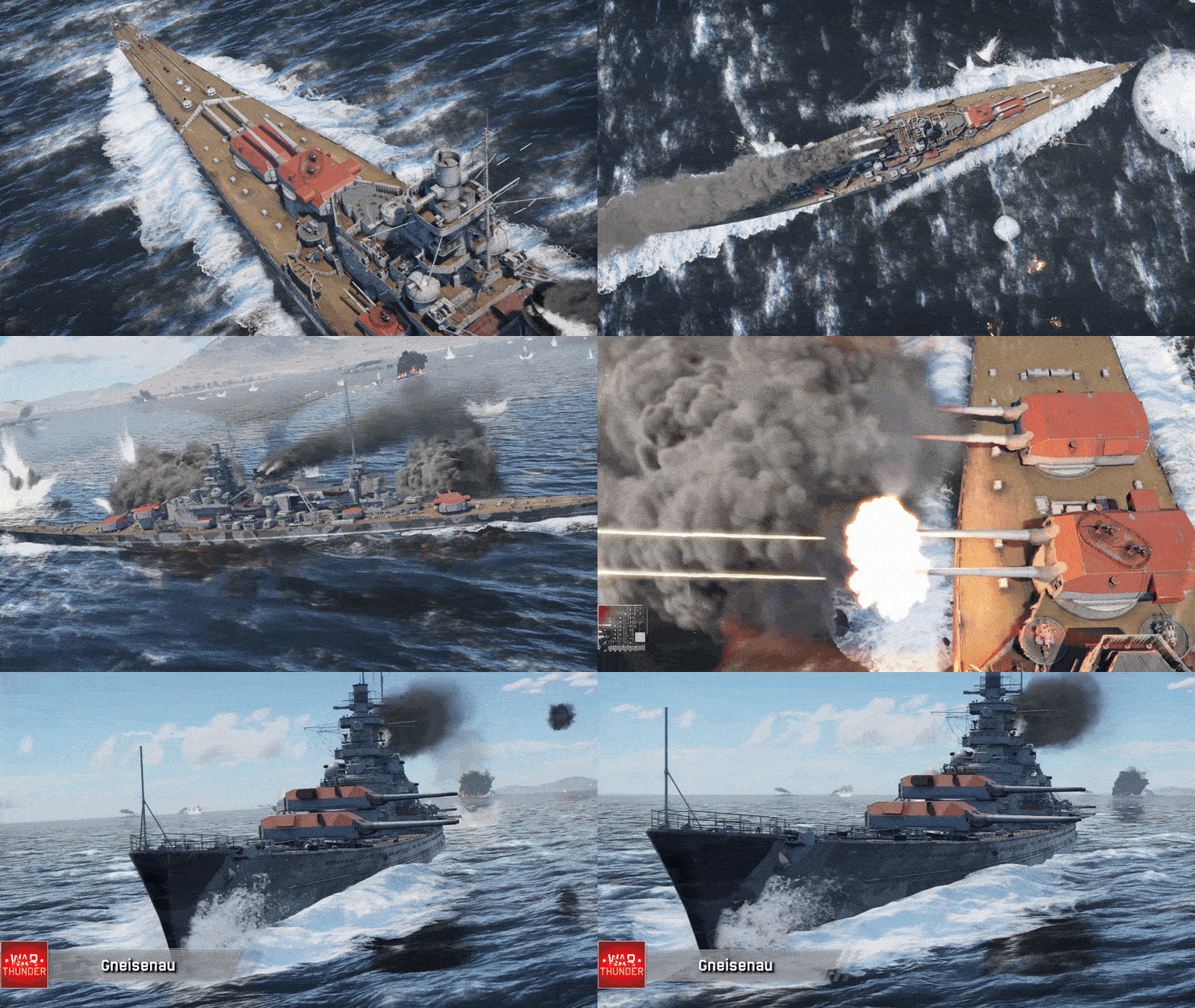
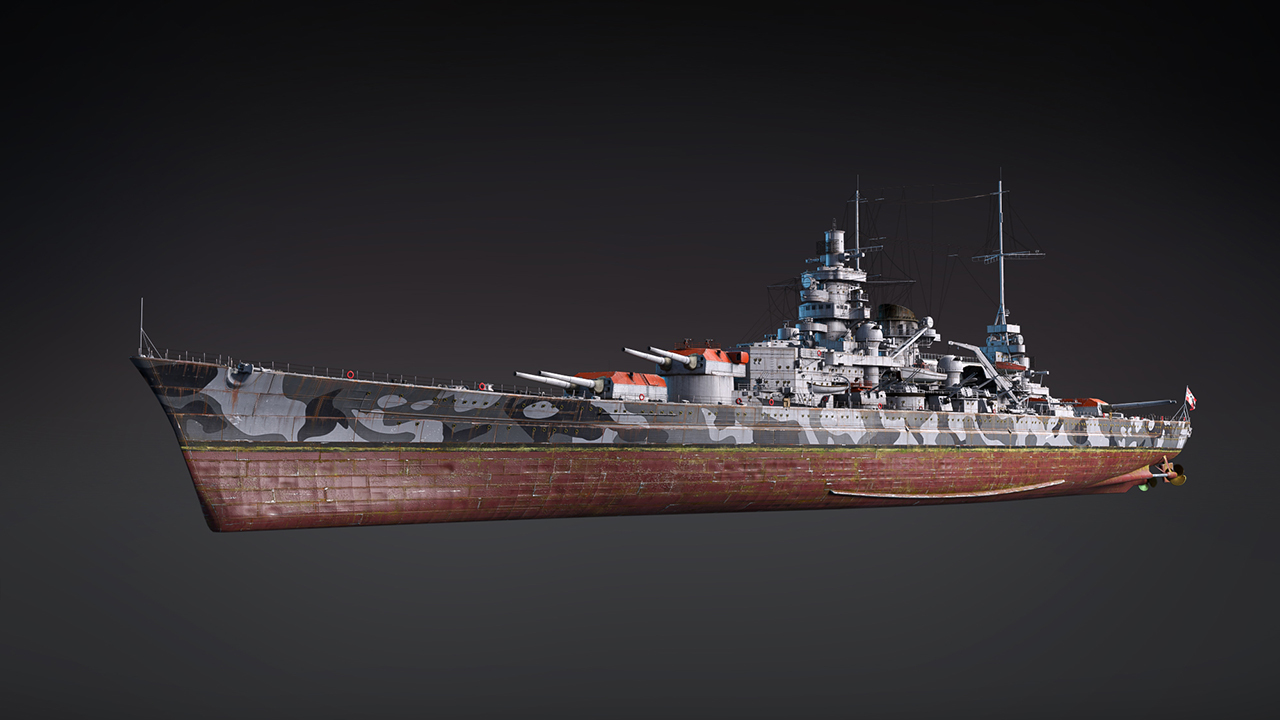
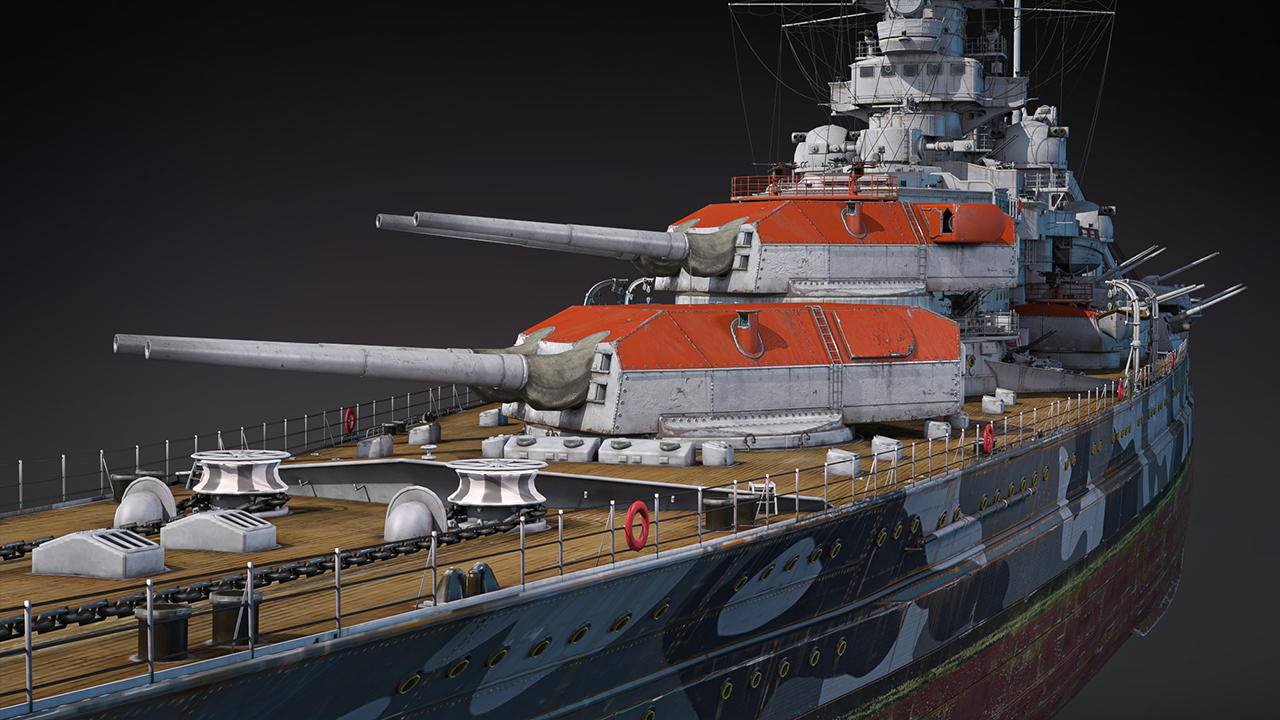
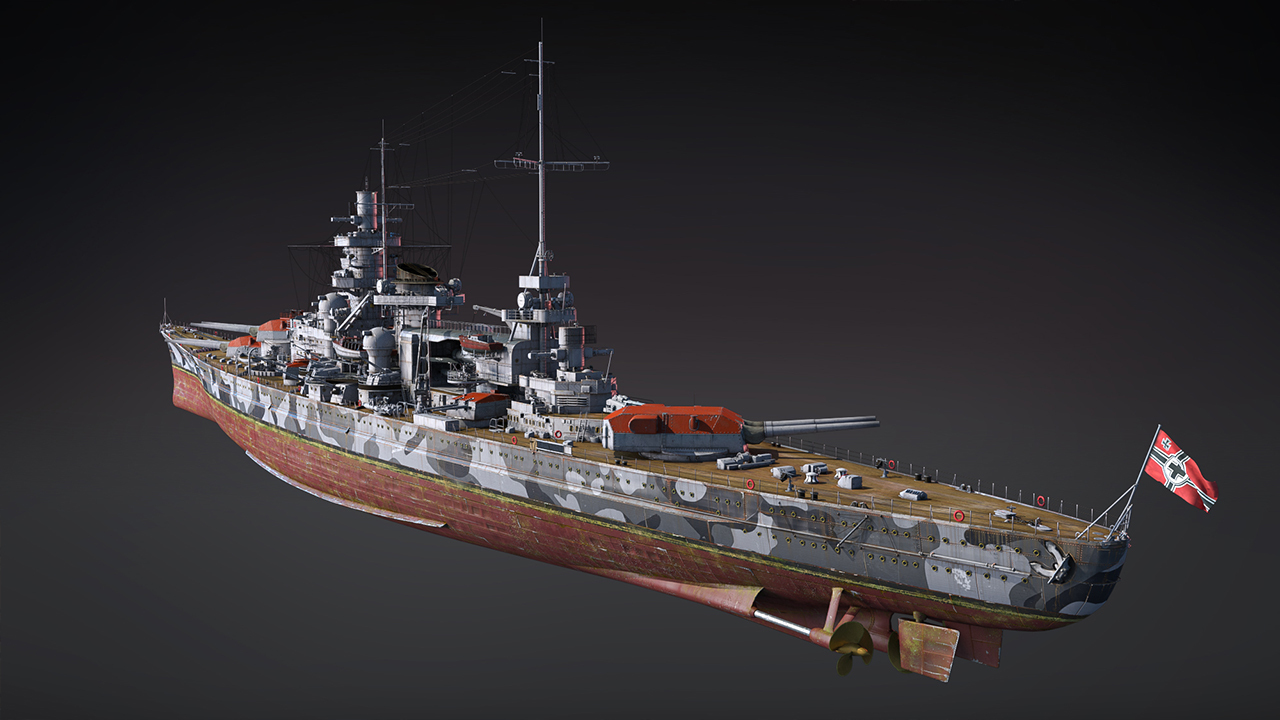
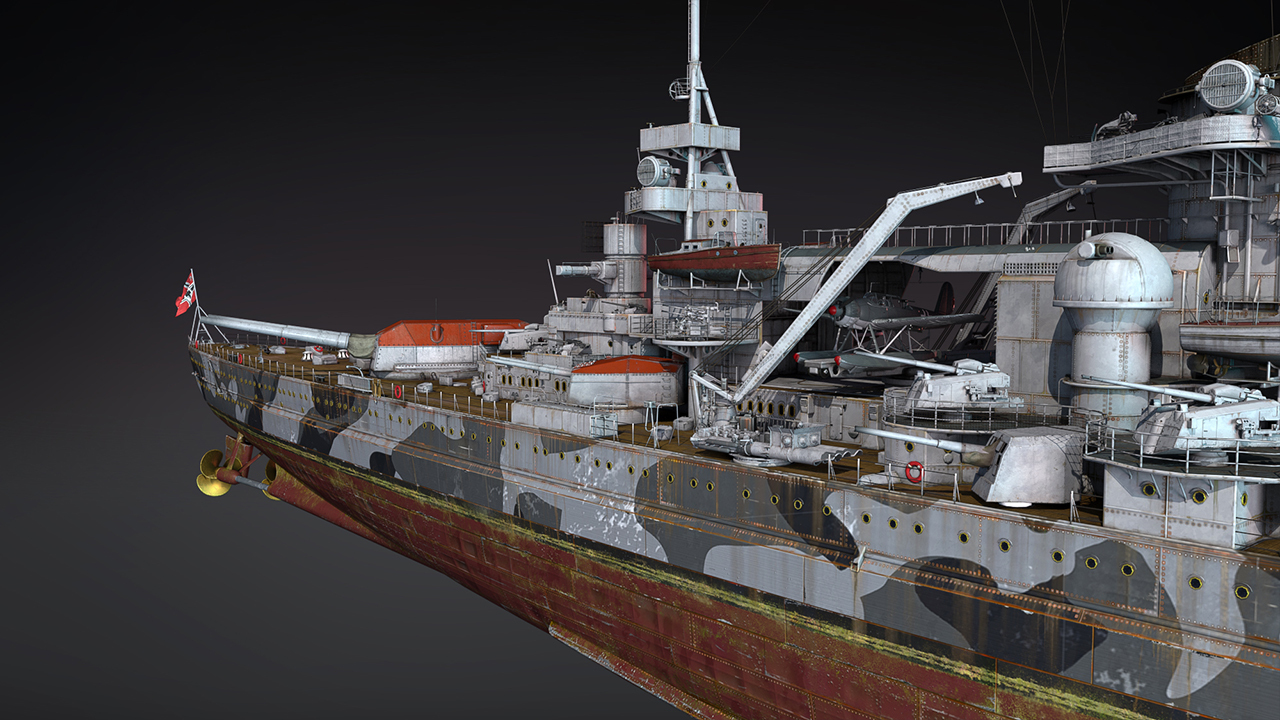
Introducing Gneisenau!


To get to the Gaijin Store through Steam, go to the in-game hangar > Shop > Online Store!

Pre-order - KMS Gneisenau Pack


79.99

  • Gneisenau (Rank VI, Germany)
  • 3000 Golden Eagles
  • Premium account for 30 days
  • Pre-order bonus: unique "Glorious Hit" title
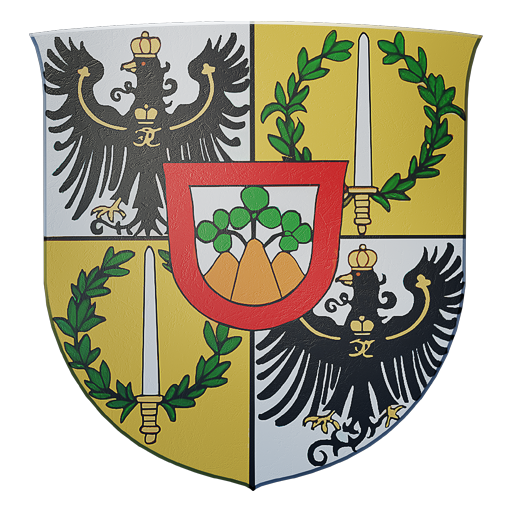
  • Pre-order bonus: unique "Gneisenau ship crest" decoration (available after the next major update)


Vehicle History
[expand type=details]
Gneisenau was the second of the two Scharnhorst-class battlecruisers commissioned for the Kriegsmarine in 1938. Like her sistership, Gneisenau featured nine 28 cm (11’’) guns in triple turrets. Considered inferior to other battleships of the time, Gneisenau’s primary battery was intended to be upgraded to 38 cm (15-inch) guns, at a later time in the ship’s service. Gneisenau operated alongside Scharnhorst during several Atlantic raids, sinking or capturing numerous Allied merchant ships.
In early April 1941 at Brest harbour, KMS Gneisenau was seriously damaged by a torpedo from a patrolling Beaufort British torpedo bomber. In February 1942 after repairs during Operation Cerberus, the ship was redeployed from Brest to Germany. While in dock for repairs after breaking through the English Channel, KMS Gneisenau was subjected to another air raid and was hit by a 454 kg bomb, causing a fire in the ammunition of the bow turret and serious structural damage.

During the reconstruction, Gneisenau was to receive its originally planned upgrade of the primary battery. However, all efforts to rebuild the warship were ultimately abandoned due to the worsening war situation. In the end, the Kriegsmarine chose not to complete her upgrades and in March 1945, Gneisenau was scuttled as a blockship in the harbor of Gotenhafen to prevent Soviet access. After the war, her wreck remained partially submerged until it was raised and scrapped by Polish authorities in the 1950s.


Gneisenau in War Thunder


This ship will soon be joining the German Bluewater fleet as a premium in the next major update, completing the Scharnhorst class in the game. Building upon the strengths of its sistership, Gneisenau most prominently features its originally intended upgrade to its main battery while retaining its signature superb protection and mobility. Let’s dive in!


From the outset, Gneisenau was planned to receive an upgraded suite of 380 mm main battery guns during its service life. Although this ultimately never materialized due to the war situation, you’ll soon be able to play this ship in its ultimate form! Swapping its triple 283 mm main battery for a twin 380 mm one results in Gneisenau receiving a monstrous upgrade to its firepower. As a result, this ship is capable of engaging in direct firefights with even the most heavily armored opponents.


While Gneisenau’s primary battery received a substantial upgrade, the remainder of the ship’s specifications remains similar to Scharnhorst. As a result, you can count on a superb match with both excellent protection and good levels of mobility. Furthermore, Gneisenau also packs some serious firepower in terms of its secondary and anti-air power, resulting in the ship being well protected against attacks from smaller vessels as well as airborne threats. Thanks to the premium status of this ship, you’ll be able earn more research points towards your German Bluewater fleet tree.


Please note that this vehicle’s characteristics may be changed before it is added to the game.


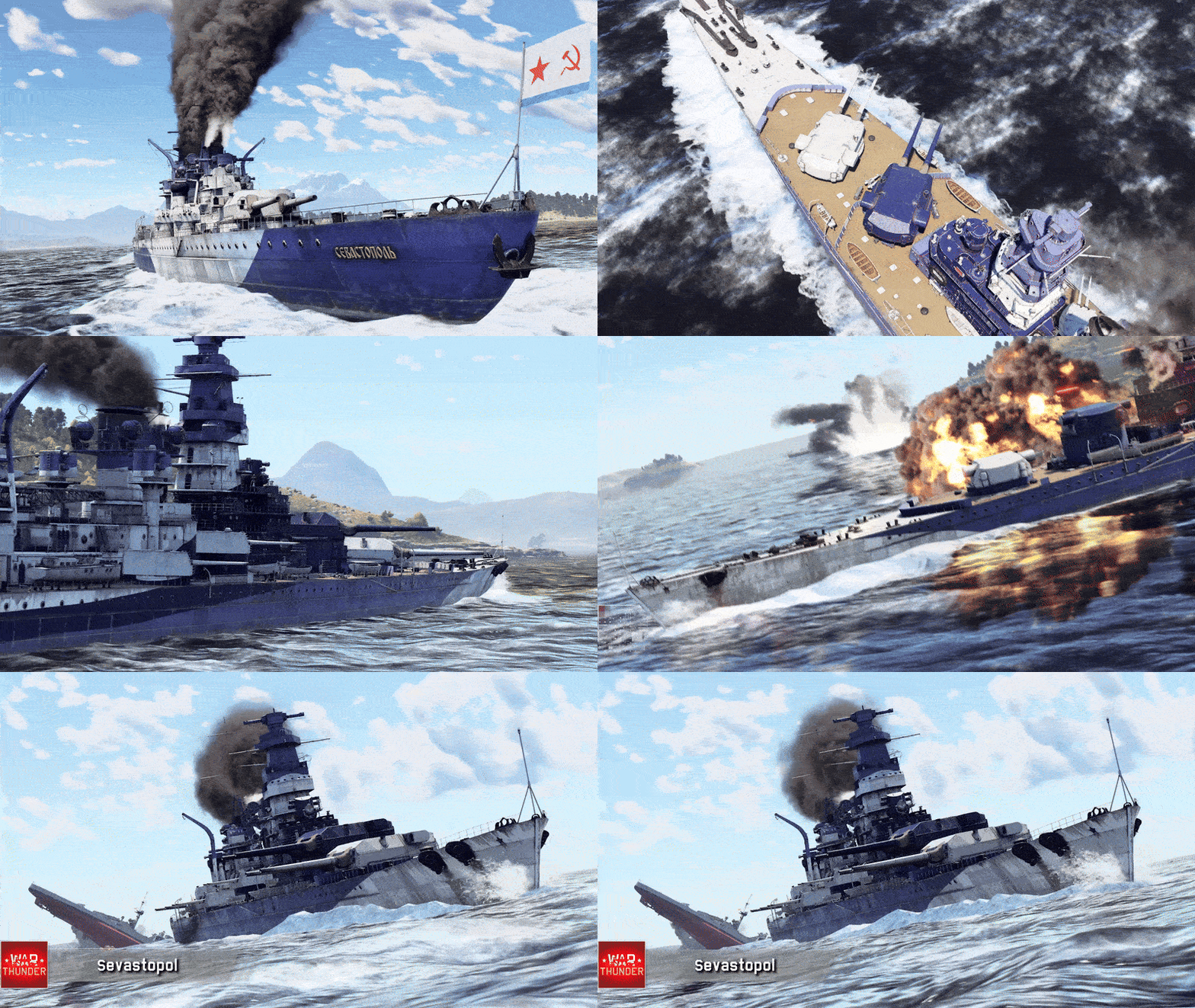
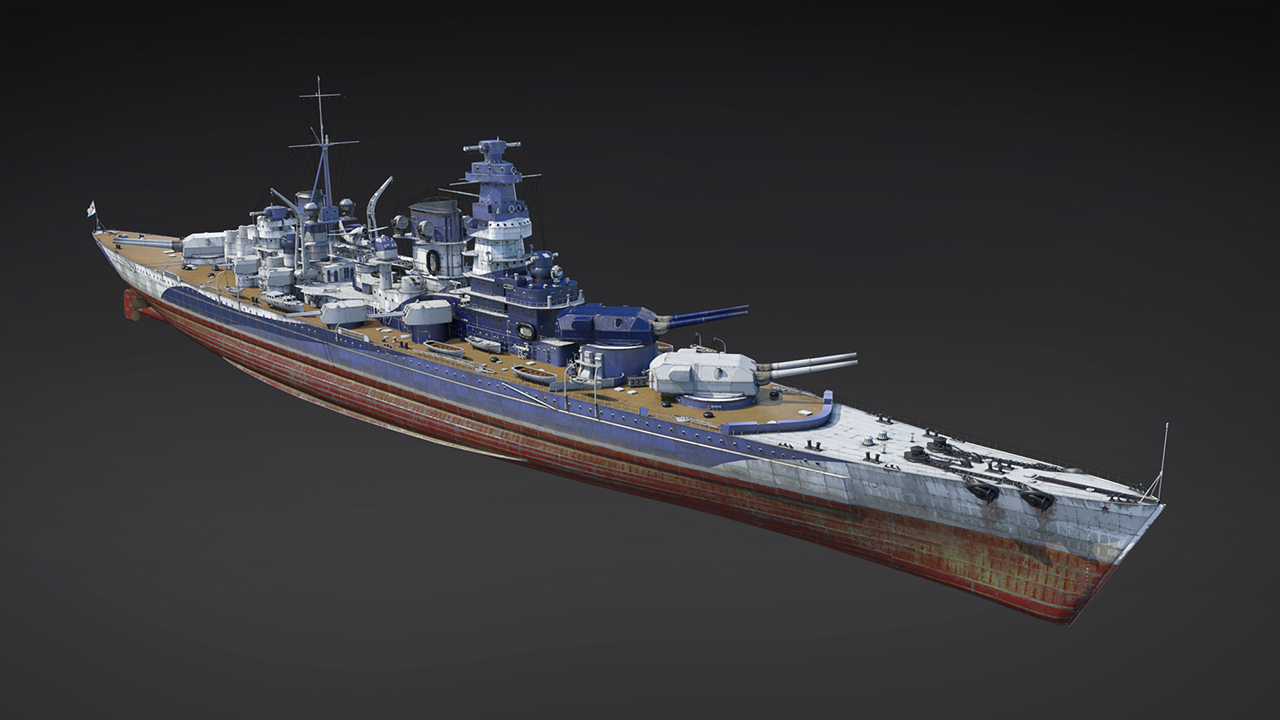
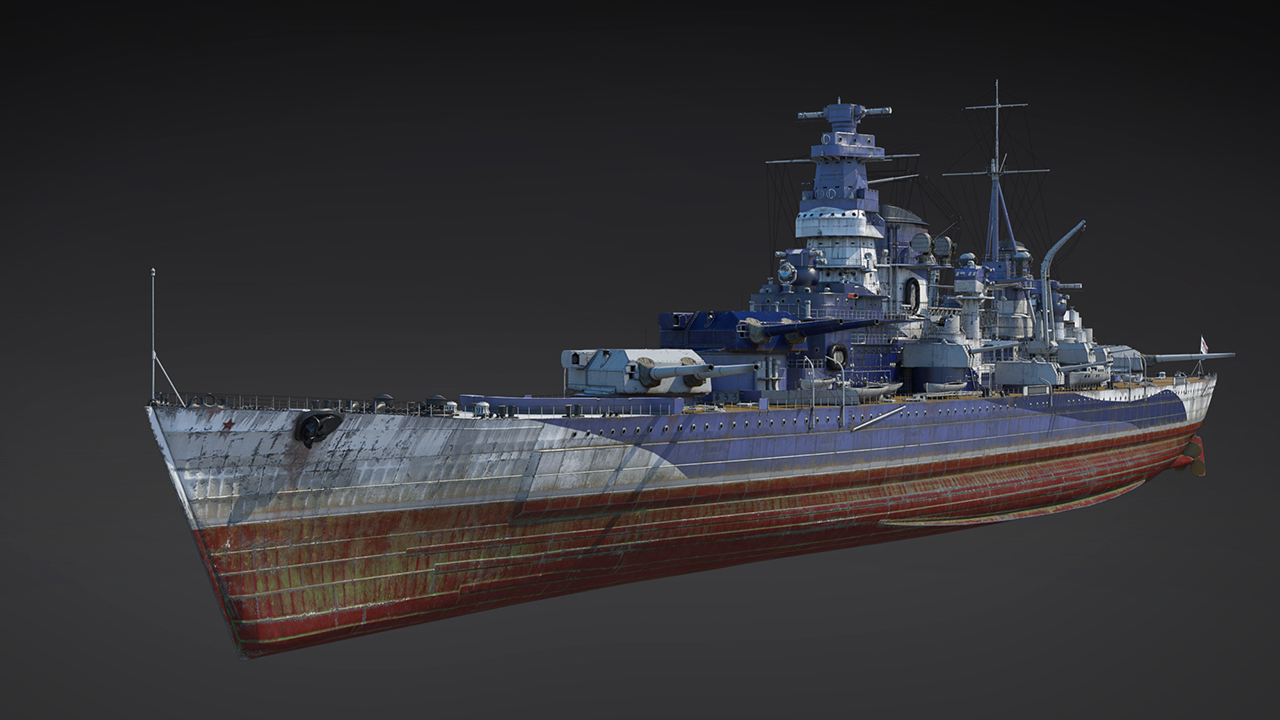
Introducing Project 69I Sevastopol!


To get to the Gaijin Store through Steam, go to the in-game hangar > Shop > Online Store!

Pre-order - Sevastopol Pack


79.99

  • Project 69I Sevastopol (Rank VI, USSR)
  • 3000 Golden Eagles
  • Premium account for 30 days
  • Pre-order bonus: unique title Steel Guardian
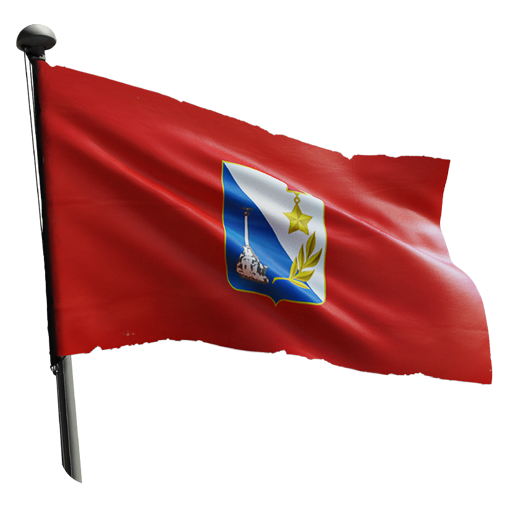
  • Pre-order bonus: unique flag with the coat of arms of Sevastopol (available after the next major update)


Vehicle History
[expand type=details]
The development of the Project 69 battlecruiser began in the Soviet Union in the late 1930s. The initial project called for a ship with 305 mm guns, but after receiving intelligence about the construction of Scharnhorst-class battleships with 380 mm guns in Germany, Soviet designers radically revised the project.

In 1939, a new version was approved. Called the Project 69I (with the “I” standing for “inostranny”, English: “foreign”) with a spec to use 380 mm main caliber guns, it was decided to purchase 38 cm SK C / 34 guns from Germany (the same ones that were on the Bismarck). The Kronstadt and Sevastopol were laid down in 1939, but construction immediately ran into problems. German deliveries of 380 mm guns were never completed, and the USSR did not have its own production of larger types of guns. The war finally put an end to the project and in 1947 the unfinished ships were dismantled.


Project 69I Sevastopol in War Thunder


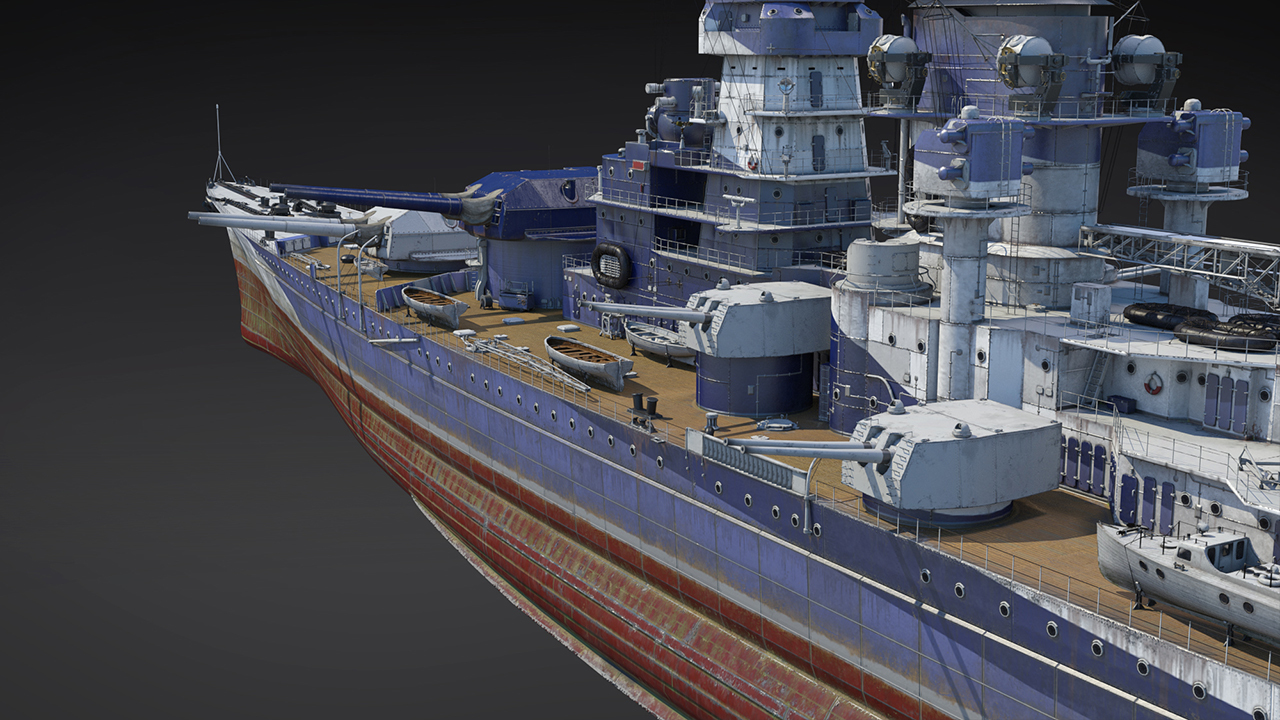
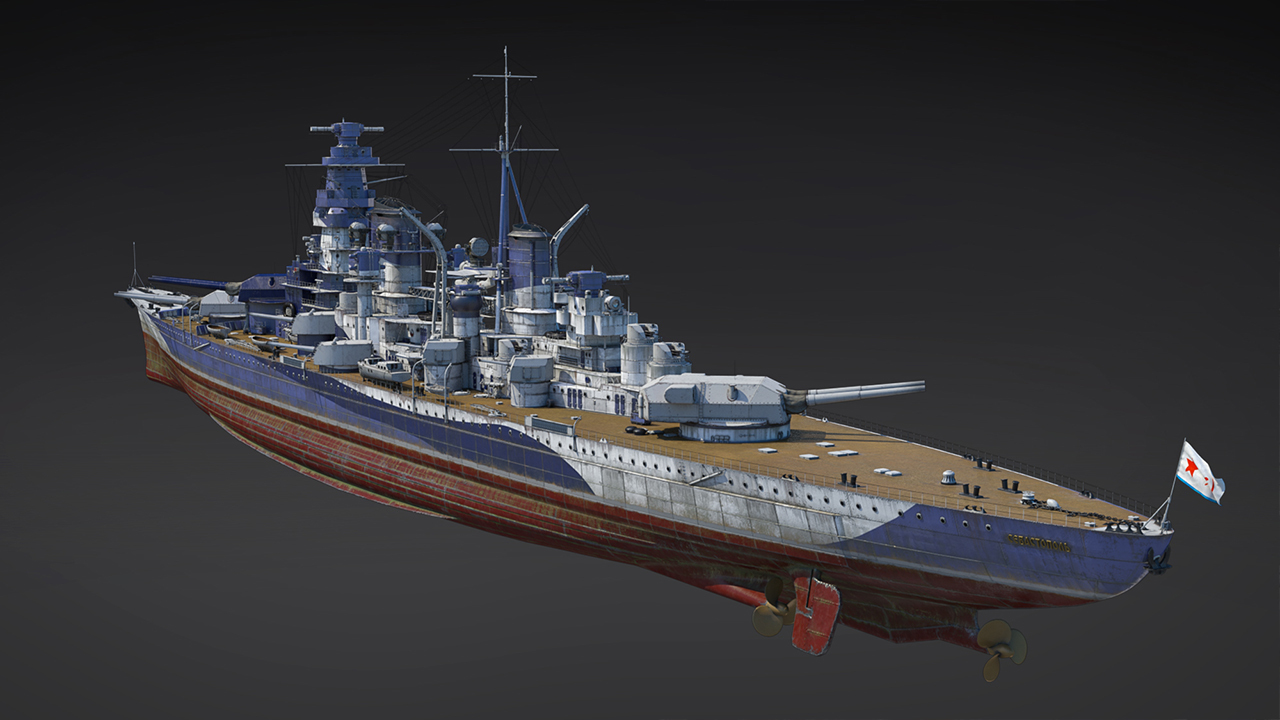
Sevastopol was designed as a classic battlecruiser, featuring powerful main weapons and good top speed but with relatively light armor. This ship features three twin-gun turrets with 380 mm guns, which are capable of taking out cruisers as well as battleships. Secondary weapons include four twin-gun 152 mm turrets, four twin 100 mm universal guns and anti-aircraft machine guns.


The Sevastopol’s main armor belt is relatively light, being only 230 mm. Soviet engineers paid extra attention to the armor under the waterline, and for the first time in the Soviet fleet, a 50 mm thick anti-torpedo bulkhead was implemented. Due to the increased displacement, newer engines were needed, meaning Sevastopol has an excellent speed of 32 knots (about 60 km/h).


All of this combined makes Sevastopol a powerful ship that’s capable of dealing devastating blows due to its main caliber to enemy ships on the high seas! Thanks to the premium status of this ship, you’ll be able earn more research points towards your Soviet Bluewater fleet tree.

Please note that this vehicle’s characteristics may be changed before it is added to the game.

Spirit of the Tempest: HF-24 Marut


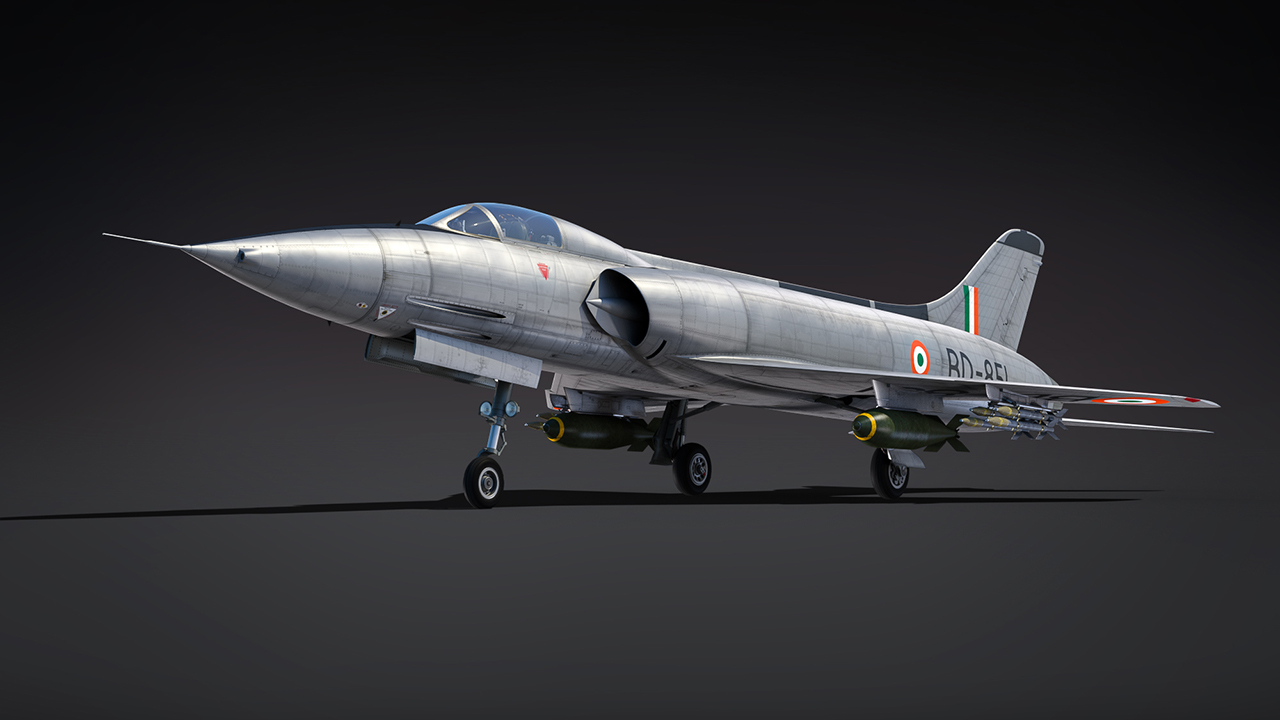
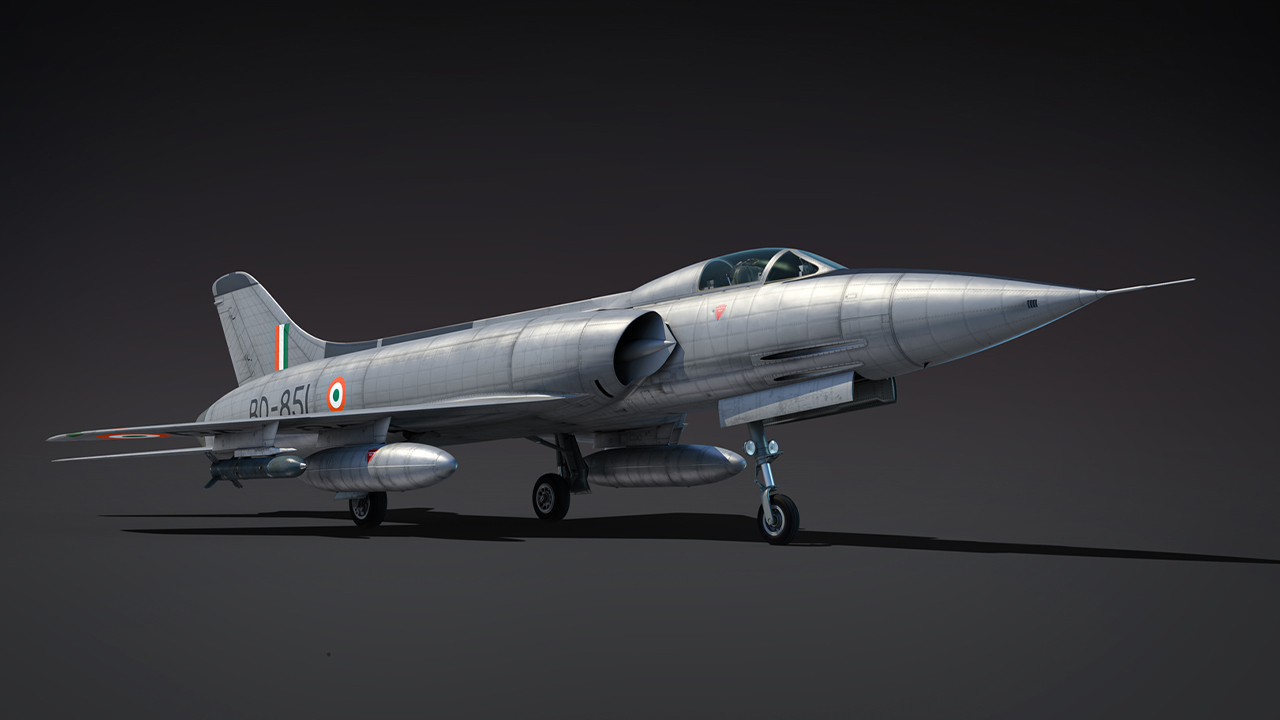
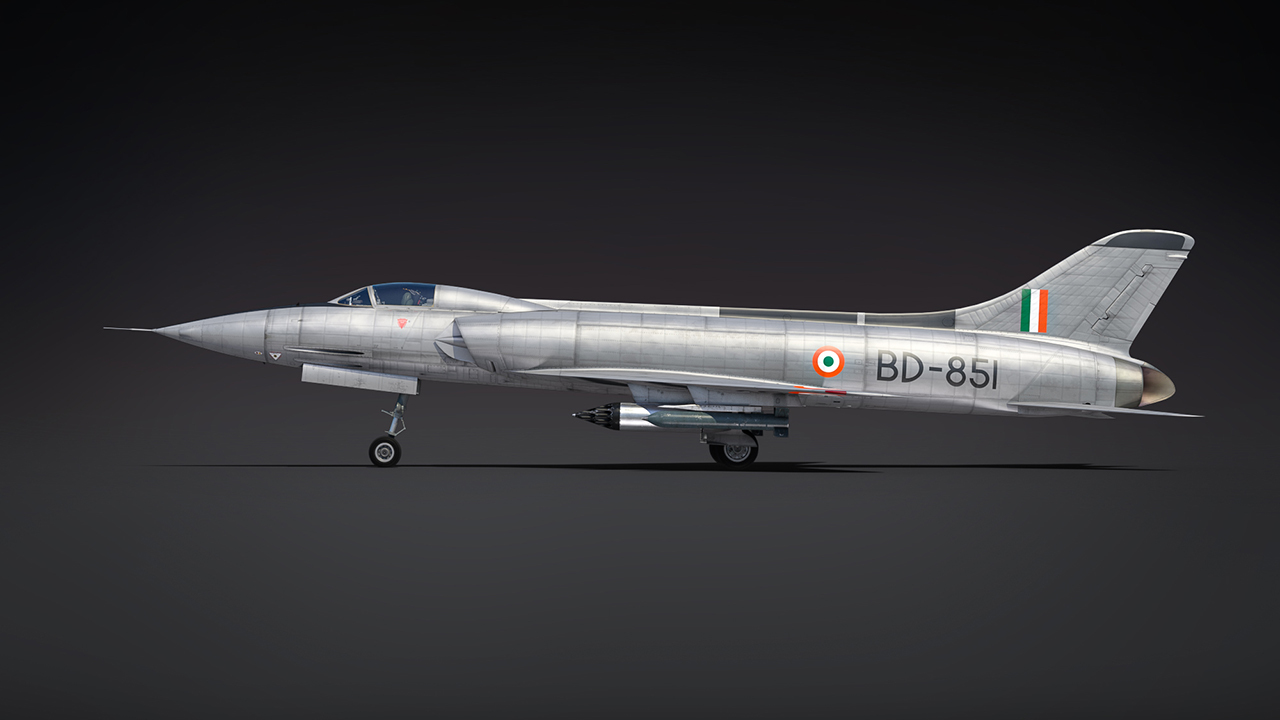
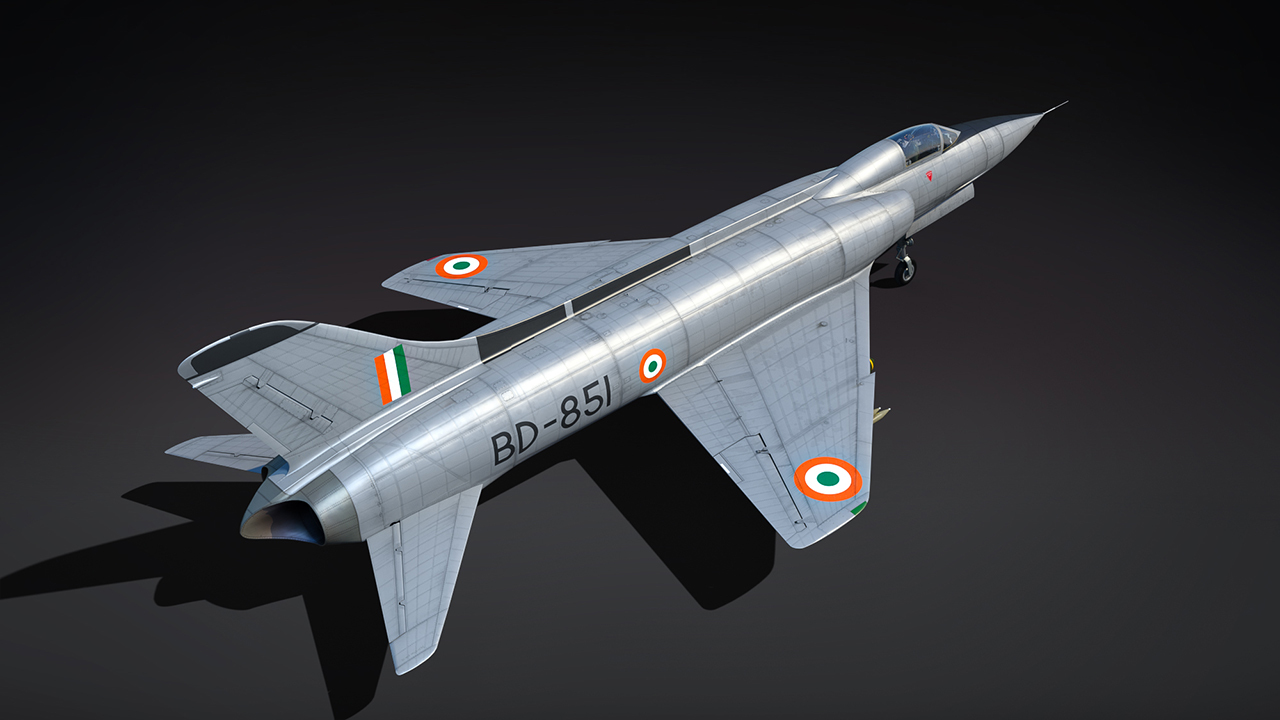
The main reward in the Spirit of the Tempest is the first Indian combat aircraft, the HF-24 Marut, designed by Kurt Tank!

HF-24: A Strike Aircraft for Great Britain at Rank V


At a glance:

  • High maneuverability
  • Up to 4,000 lb of bombs
  • SNEB rockets in a retractable pack
  • 30 mm cannons!
  • Subsonic
  • No guided missiles

Vehicle History
In the mid-1950s famous Focke-Wulf designer Kurt Tank, who had previously worked in Argentina, was invited to the position of chief designer at Hindustan Aeronautics Limited (HAL) to design the first Indian-made combat aircraft. At the time, HAL engineers already had experience in developing piston-engine training aircraft as well as licensed jet aircraft.

In 1961 after building and testing a wooden glider demonstrator, the first HF-24 prototype was built, receiving the designation Marut (Hindu for “Spirit of the Tempest”). Despite the fact that the aircraft was meant to be an interceptor-fighter capable of reaching speeds of up to Mach 2, issues in selecting a suitable engine led designers to use a pair of Bristol Orpheus MK.703 engines. The combined thrust of these engines barely allowed the aircraft to break the sound barrier, which only ended up being possible at high altitudes.

The first HF-24s were produced in 1964 and despite teething problems, the aircraft made a positive impression on combat pilots. 147 HF-24 Marut aircraft were built, including combat trainer variants. In combat, the Marut was typically used as a strike aircraft, leading it to receive an increased payload during modernization. The last Marut was withdrawn from service in the mid-80s.


Introducing the HF-24 Marut!


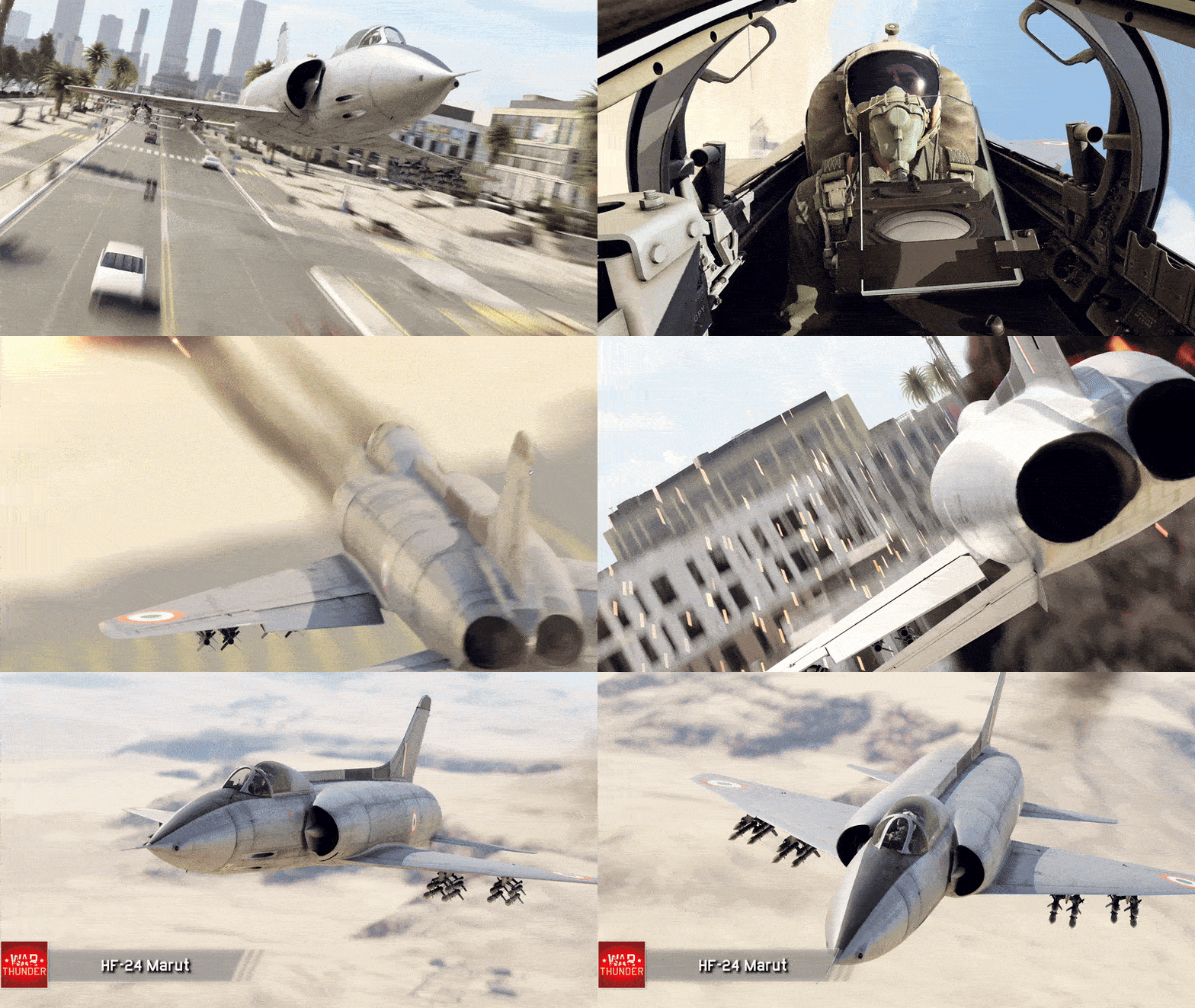
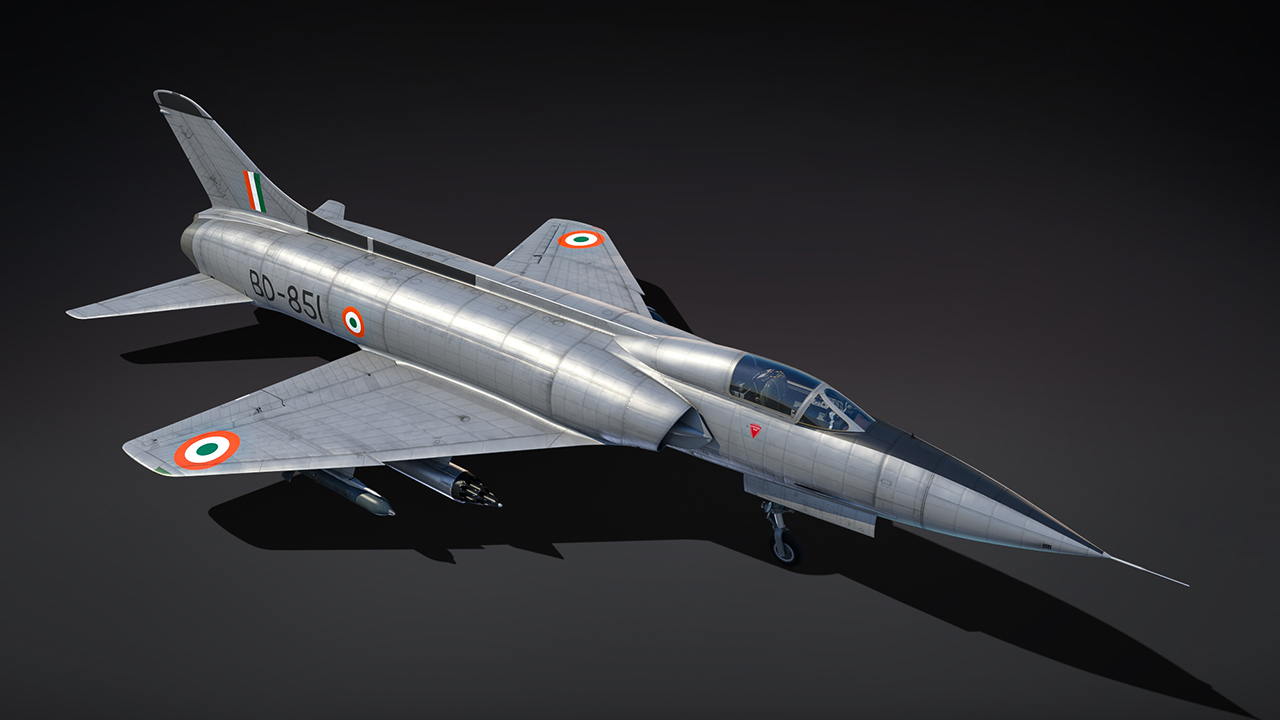
Meet the main reward in the Spirit of the Tempest event that started today: India’s first domestically designed combat aircraft, the HAL HF-24 Marut! This is a subsonic strike aircraft with good acceleration, excellent controllability and strong weaponry. Let’s dive in!


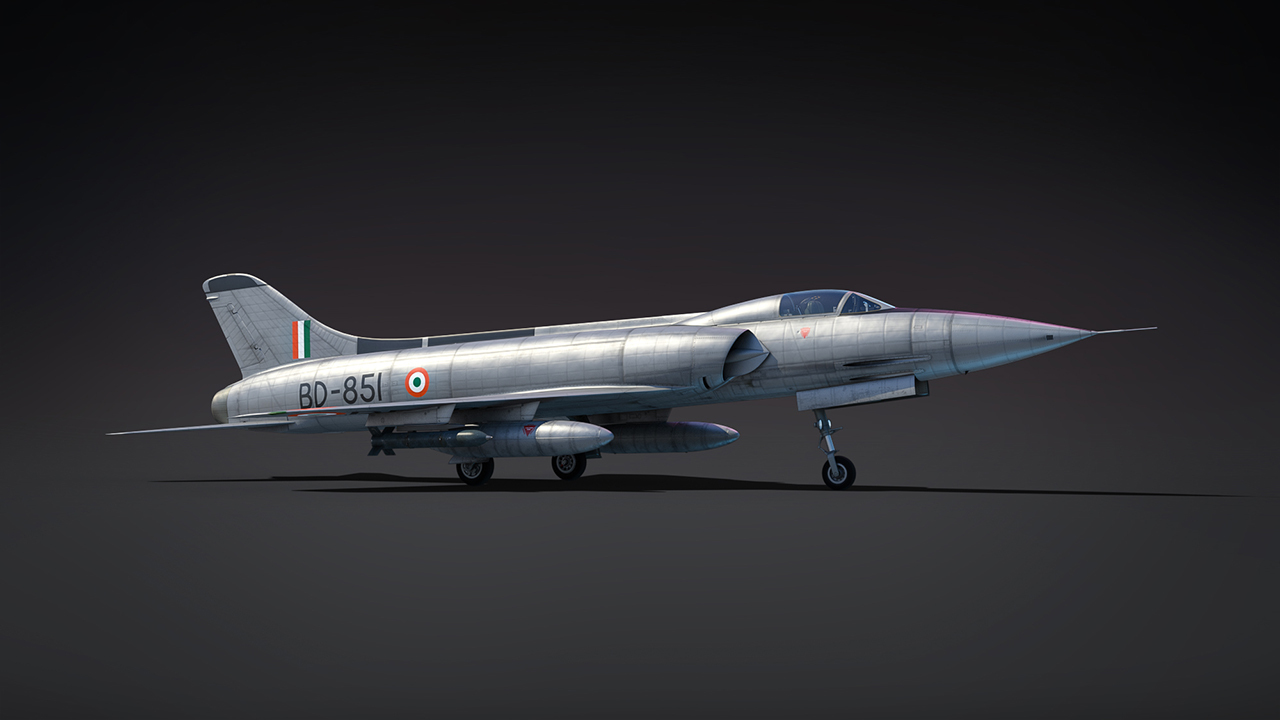
The HF-24 is a twin-engine aircraft that features swept wings and a fairly long fuselage. Using a pair of Bristol Orpheus MK.703 engines, the HF-24 is unable to break the sound barrier in most instances, with the exception of using minimum fuel with no suspended weapons at a high altitude. Despite this, the HF-24 has a very high rate of climb for its rank, and can be easily controlled throughout the entire speed range — even with a maximum load of fuel and suspended ordnance. The HF-24 can also withstand significant overloads, which is very useful during dive attacks.

Let’s take a closer look at the available set of weapons for this aircraft. For guns, the HF-24 is equipped with four 30 mm ADEN cannons, which are very familiar if you’ve played the British aircraft tree. These guns have a high rate of fire, overheat slowly and come with a decent ammo capacity of 520 shells. Among the available options is an armor-piercing belt, great for destroying lightly armored vehicles and being a menace to medium tanks.


At the front of the HF-24 is a retractable bay that contains 50 small SNEB rockets. One of these rockets alone is unlikely to cause serious damage, but if you fire in salvos, there’s a chance they will be able to take out a well-protected ground vehicle. And by the way — the same rockets can be taken on underwing hardpoints in blocks of 18. There’s another type of rocket available as well — 16 of the larger T10 151, familiar if you’ve played the French aircraft tree. The icing on the cake are four Nasser 240 rockets, the Egyptian version of well-known high-caliber S-24 from the USSR.

Interesting: The HF-24 Marut model was created for the game by War Thunder player Vitaly “NovA29” Vostokov — certainly a familiar name by now. From the players, for the players!


What kind of strike aircraft would it be without any bombs? The HF-24 has access to four underwing weapon hardpoints that can accommodate regular 500 to 1000 lb bombs, as well as 1,000 lb drag bombs. This is great, however the HF-24 has no guided weapons at all, either for air or ground combat. This means you’ll have to attack the old-fashioned way and win air battles with ye olde 30 mm ADEN cannons.


That’s it for this one! The Spirit of the Tempest aircraft event started today, so don’t miss the chance to obtain this famous-first Indian combat aircraft. Check out the link below for all of the event details!

Please note that this vehicle’s characteristics may be changed before it is added to the game.

Click here to find out more details about the Spirit of the Tempest event

A Decal and VLT-2 for National Sailor’s Day in France!


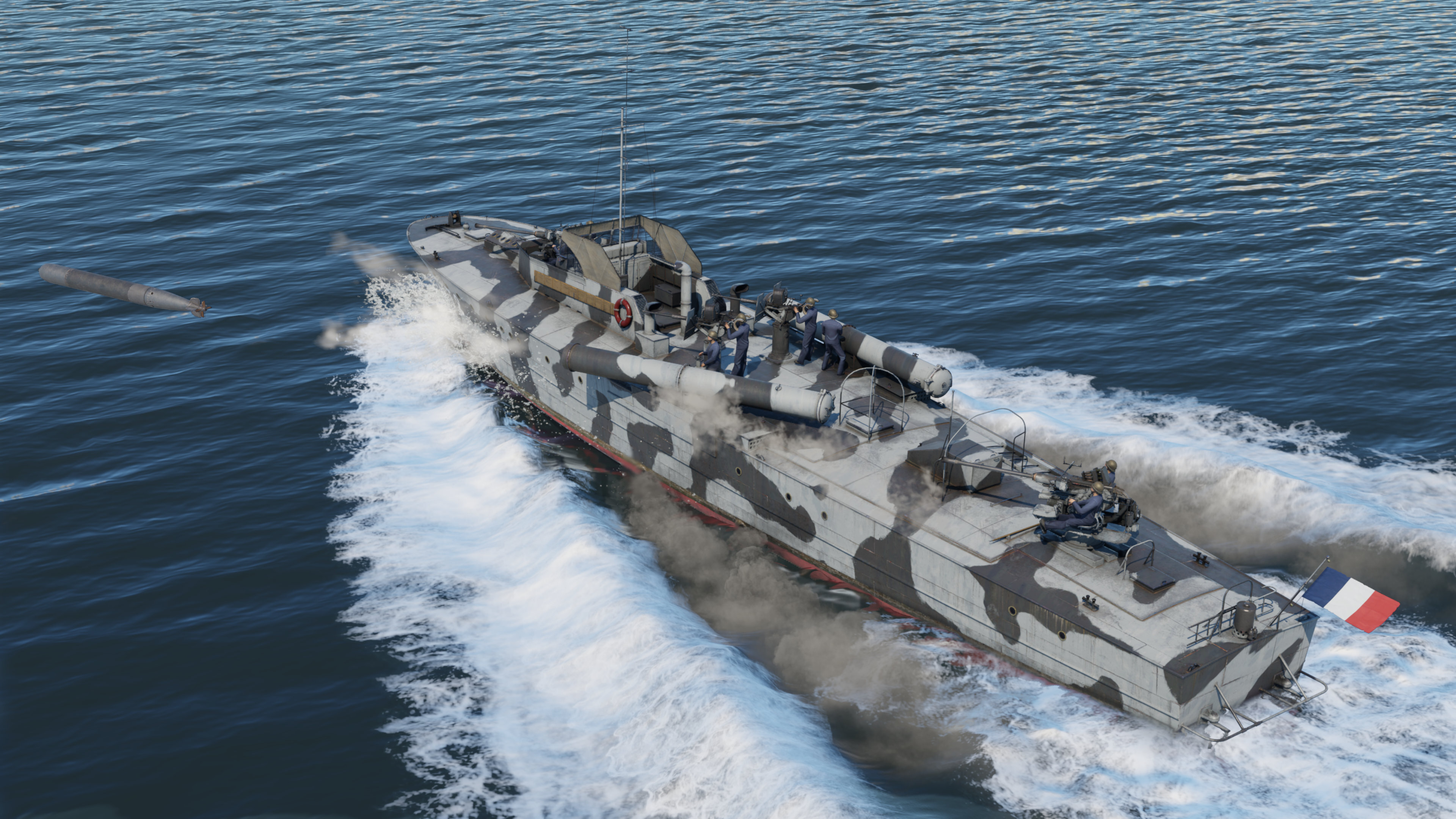
The French Navy has been around since the Middle Ages. It carried crusaders across the Mediterranean and was a participant in the Hundred Years’ War. In 1690, France won one of its most impressive naval victories in the Battle of Beachy Head, having sunk 10 Anglo-Dutch fleet ships without losing a single one of their own.

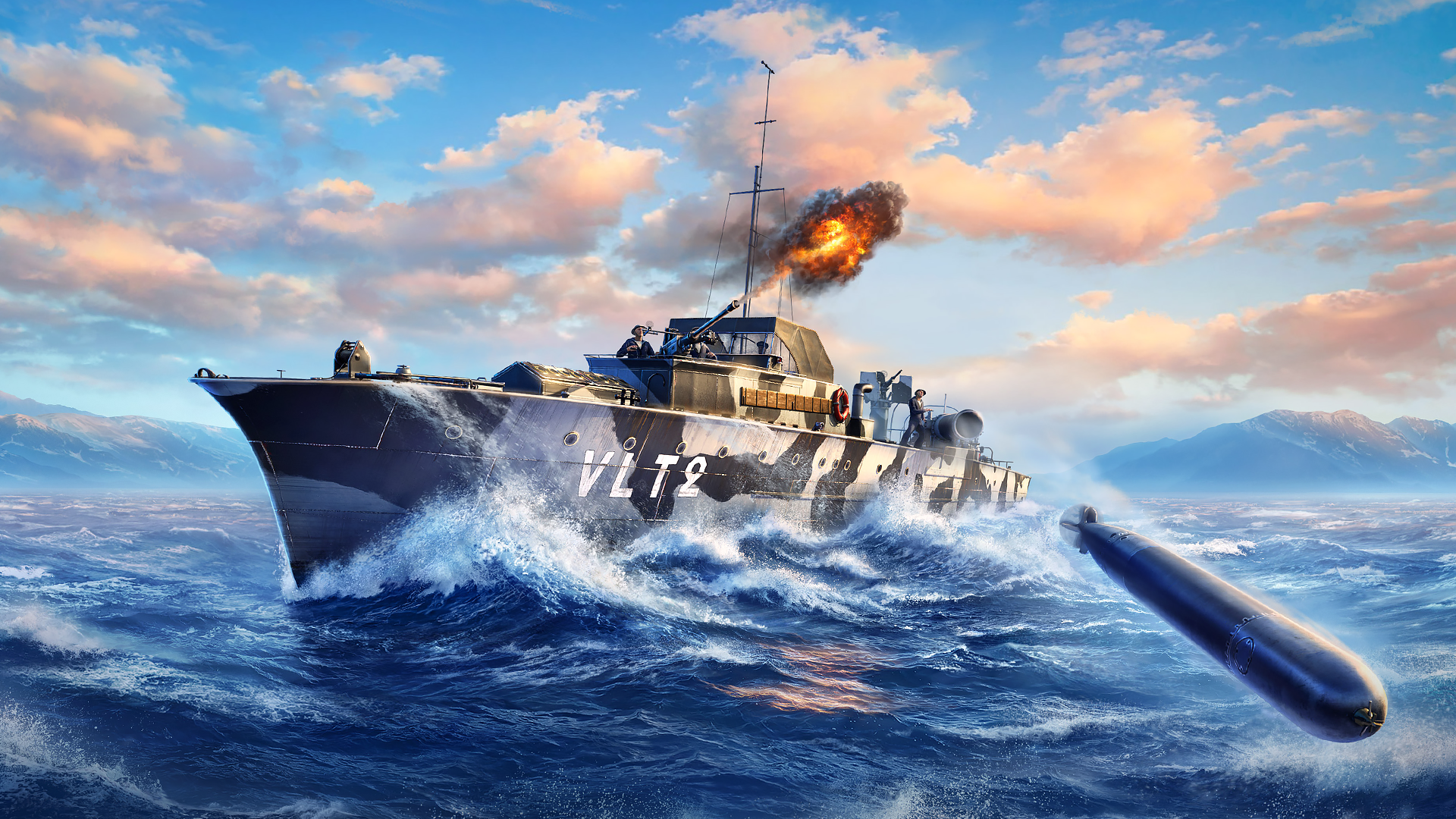
The VLT-2 is now available for Golden Eagles and is here to stay!


This boat is available for 4,880 Golden Eagles.


When: From May 22nd (11:00 GMT).
Where: France > Coastal fleet > Premium vehicles.


About this boat

  • The VLT-2 is not very well protected, but has good mobility and is well armed. It has two 40 mm Bofors L/60 Mark 3 guns (one at the front and one at the back) and two 20 mm/70 Oerlikon Mk.II autocannons. This boat can also take two 550 mm torpedoes as well!


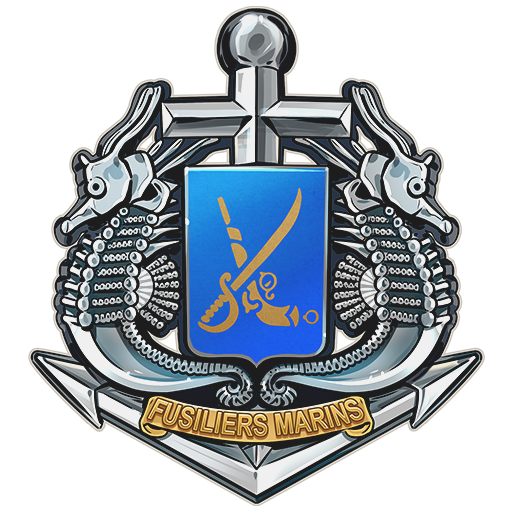
Get the “Emblem of the Fusiliers marins” decal!


A themed decal for this day!


“Emblem of the Fusiliers marins” decal

When: From May 22nd (11:00 GMT) until May 26th (11:00 GMT).
Task: Play 3 battles using French naval vessels at rank III or higher to receive the “Emblem of the Fusiliers marins” decal!

Additional details:


  • Your activity must not be below 70%.
  • You can complete the task in random battles, except for Enduring Confrontation missions, [Assault] mode and Helicopter PVE battles.
  • Track your progress in the hangar by clicking Nickname → Achievements → Holidays → National Sailor’s Day in France.
  • You can find the decal in the “France → Navy” tab in the Customization menu.