Powering the kings of the sky - get to know the aircraft GPU!
Powering the kings of the sky - get to know the aircraft GPU!
Pretty much everything in our world needs power, from machines to humans (but please don’t drink energy drinks, those are bad, m’kay?). And aircraft is no exception. So how do you power up something so large and demanding? The answer is short: a GPU!
So what exactly is a “GPU”?
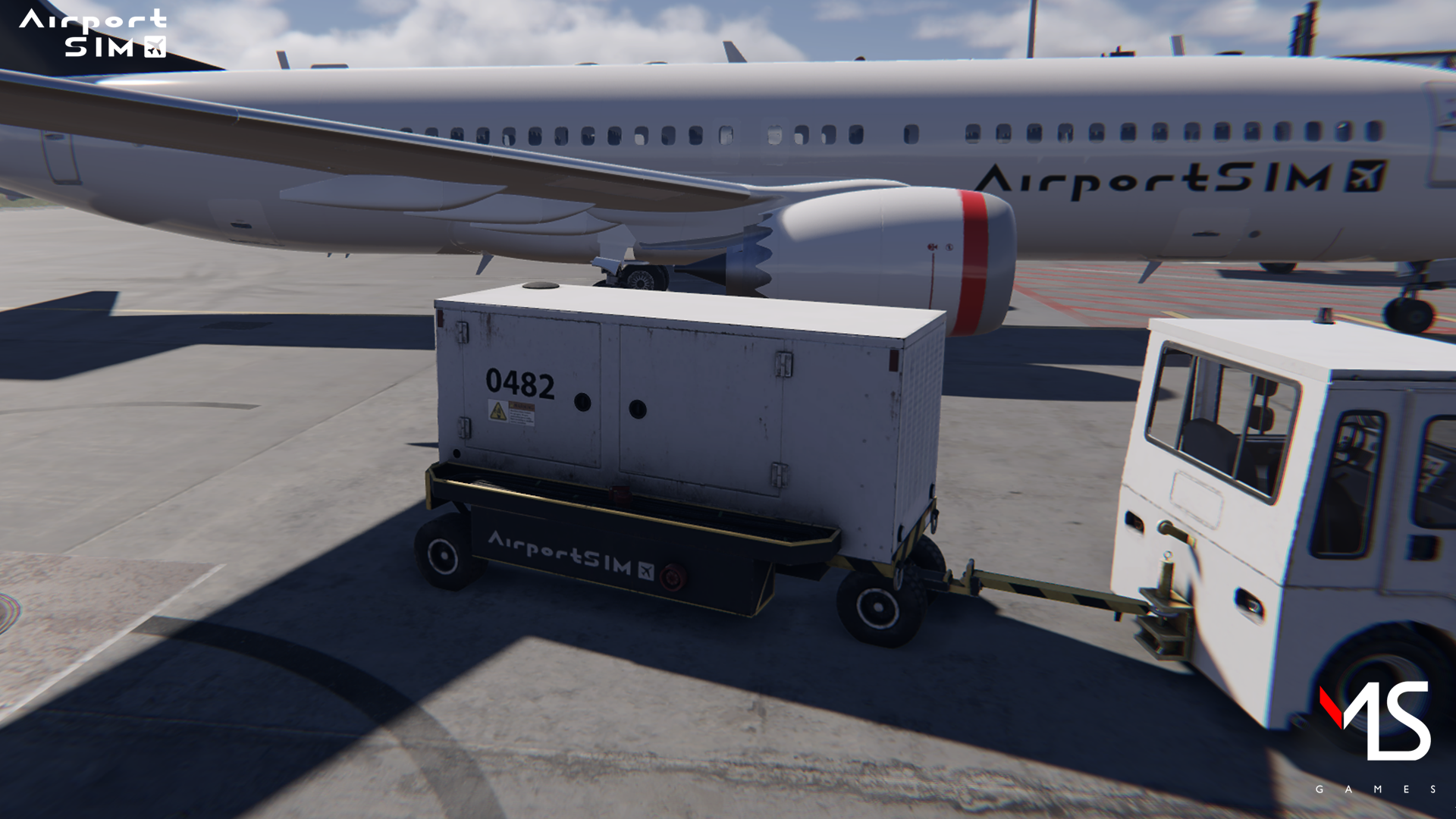
A “Ground Power Unit”, or in short, “GPU”, is an electrical device which powers an aircraft while on the ground. Most aircraft use a fixed (in the ground, or even to jetways, we wrote about this in a previous post!) or a portable ground power unit. The latter type allows greater flexibility for the airport operations team to tow the unit wherever required and serve different aircraft parking on different stands as needed. And exactly this type of GPU will be yours to operate in AirportSim.
Electrifying facts about GPUs
Normally, electrical power is supplied to an aircraft's systems by generators installed in the engines during flight, or on the ground via the “Auxiliary Power Unit”, (APU) carried by most. All this hardware consumes jet fuel and the aircraft must be manned during its operation. Therefore the GPU is very useful when airplanes are parked for a long time, usually overnight or between rotations to save fuel on APU use.
A GPU, much unlike your average household power supply, is unique in that it provides a very specific “ripple free” or “clean” voltage, this ensures sensitive avionics and control systems within the aircraft are protected during powered maintenance and engine starting operations. To be more precise: planes do not require the standard 110/220 volt and 50/60Hz power supply used worldwide. Instead they require power at 115 Volt and 400Hz electrical frequency while smaller aircrafts like business and private jets generally require a much smaller 28 Volt DC power supply.
GPUs can be powered by engines (petrol or diesel), by batteries and can even work as a solid state converter that does not generate electricity of its own. It takes the airport’s utility power supply as an input and converts frequency and volts to those needed by the aircraft.
Buzzing with complexity!
Our flying inventions that transport us through the skies are complex machines that require no less complex ground handling. The GPU you've had a chance to learn about today is just one of the many pieces of equipment you'll be able to operate in AirportSim! We can’t wait to share what else will await you on the airport's apron.
Our team worked hard! It was a year full of ups and... okay, only ups - we promise!😄
Guess what? During that time we worked 252 days on developing a game (that's over 2000+ hours!). Our team designed and implemented 12 incredibly detailed vehicles and in that time consumed 56 pizzas! In addition, AirportSim gained 8 licensed partners promising amazing in-game content and features.
MS Games is ready to take off and soar into 2023. We can't wait for what's to come.
A word (or two) about passengers' favourite - jetway!
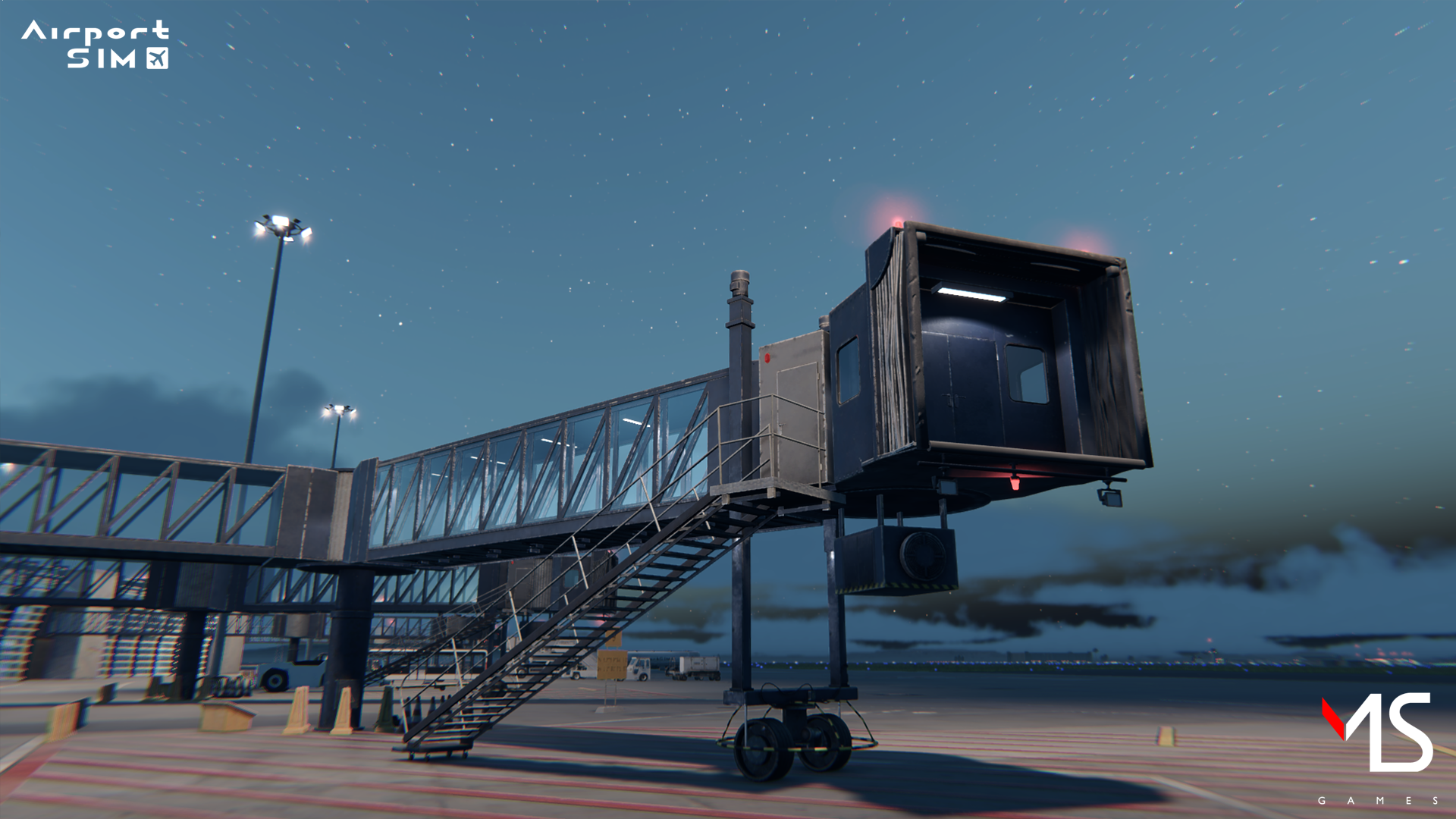
Ahh, the jetway – it's the gateway to your final destination. Whether you're hopping on a domestic flight or jetting off to some exotic locale, the jetway is the last stop before you get to your seat and buckle up for takeoff.
What is jetway?
For those who've never been on a plane before, the jetway is a long, enclosed bridge that connects the airport terminal to the aircraft. It's usually made up of two or more sections that can move independently and extend out over the tarmac to reach the plane's door. Once the plane is parked at the gate, the jetway rolls up to the door and passengers enter the plane through the jetway.
Airbridge comes in a variety of sizes and configurations. Some are equipped with stairs and elevators, while others are just open-air bridges with no additional features. The size and type of jetway depend on the size of the plane, the type of airport, and the number of passengers.
Many benefits of skybridges
They make getting on and off planes faster and more efficient, as passengers can move directly from the terminal to the plane. Furthermore, the need for passengers to walk on the tarmac or wait in line to board the plane is reduced, hastening the boarding process. Jetways also make boarding more comfortable and increase safety. They are designed to prevent passengers from falling off the bridge and can be equipped with handrails and seatbelts for added safety.
Despite the obvious safety benefits, jetways also come with a few interesting facts. For example, did you know that the world's longest jetway stretches 152 feet? It is located at the Dubai International Airport and links the main terminal to the A380 aircraft. Also, did you know they are designed to hold up to 10,000 pounds, equal to four fully-loaded buses? Impressive, isn't it?
Jetbridge - gateway to the world
So the next time you're at the airport and you find yourself on a jetway, take a moment to appreciate it for the incredible invention that it is – a bridge between the airport and the plane, and a gateway to your destination! So walk that jetway walk, fly and explore the world. From unique artwork to hidden bars and restaurants, you never know what you might discover!
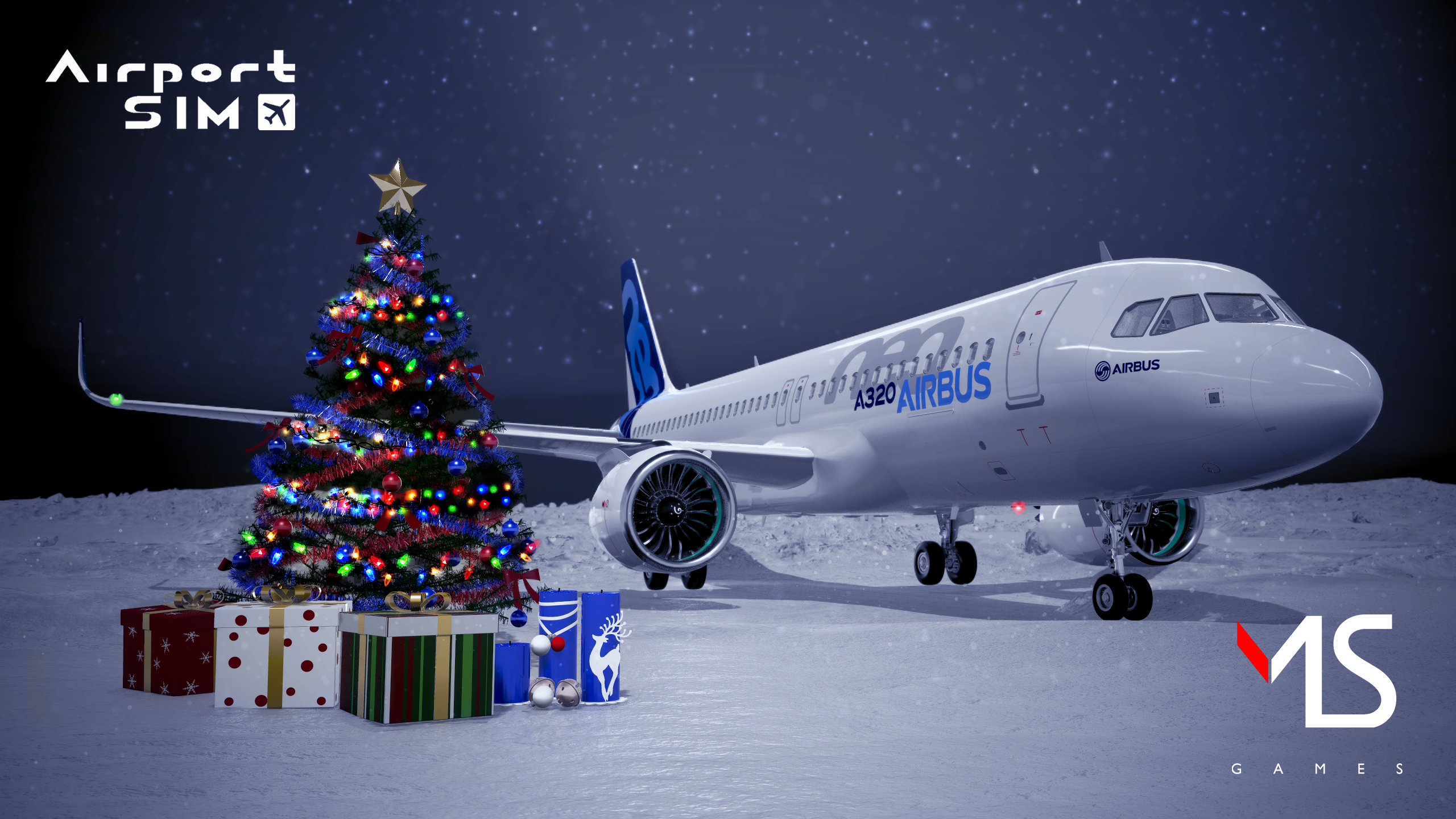
Christmas is almost here, so our MS Games team wants to wish you all a wonderful time, filled with happiness, joy, your loved ones... and of course presents. 🎁
And when you are done celebrating, we will see each other very soon on the airport apron! 🛬
International Civil Aviation Day
On 7th of December we celebrate the International Civil Aviation Day, which generates awareness about the importance of international civil aviation. This annual observance also recognizes the unique role civil aviation plays in creating a global rapid transit network.
The importance of international civil aviation cannot be understated. To have a bigger picture, check out the following statistics:
The International Civil Aviation network carries over 4 billion passengers a year.
The global Air Transport sector supports 65.5 million jobs.
It creates a global economic activity worth 2.7 trillion dollars.
Each day 120,000 flights carry 12 million passengers safely to their destination.
3.6 percent of the global economic activity is supported by this industry.
We admire and respect pilots, flight attendants, traffic controllers, ground handling crews, engineers, mechanics, computer technicians and all of the people who work in the aviation industry. You’re doing a wonderful job every day! Thank you!
TruckStopRadio will help You relax in AirportSim
Ground crew, attention❗Good news incoming❗️
If you play simulation games then most likely you’ve heard about TruckStopRadio - a fully community-ran, online radio station 📻 for the simulation community that launched on the 12th May 2020. Guess what? TSR will now also be available for you to listen to it live in the AirportSim!
And before you tell us about work security… let’s agree that you will only listen to the radio on your coffee ☕️ break (uh oh, it takes time to refuel this A320 ✈️…).
So while you wait for the release of AirportSim… go visit TruckStopRadio website, hit play and enjoy ➡ https://truckstopradio.co.uk/
Also, don’t forget to tell us on Discord what you think about this newest addition to our game ➡ https://discord.gg/airportsim
How to prepare for winter?
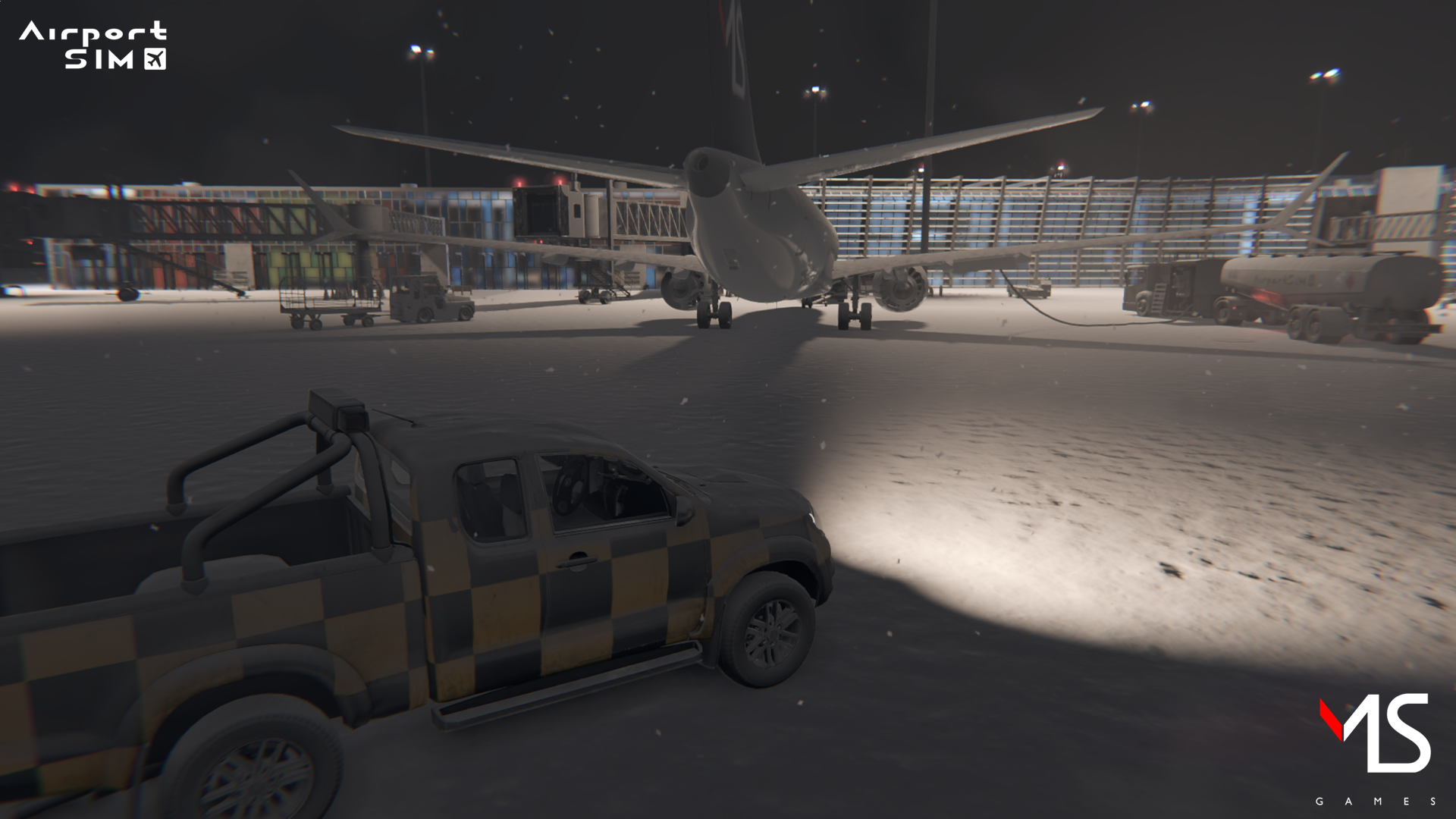
These days winters are not associated in many places (especially in the northern hemisphere) with incessant snow and ice, but the colder season still means difficulties for airports - they have to be prepared for anything, especially the harshest weather conditions.
What is the biggest problem in aviation when winter comes? Those who think about temperature and fuel problems are wrong. Aviation fuel only freezes at -40 degrees Celsius, and importantly: we are talking about the temperature on the ground, not in the air. What does this mean?
During flight, the temperature outside the aircraft is as low as -56 degrees Celsius. How come fuel is not freezing? To put it simply: because it passes through the engine and is heated there. The cool air itself also has a higher density and so the plane can reach its destination using less fuel, meaning the flight is more efficient. To be honest, it's the warm air that poses more of a problem for planes - already at around 50 degrees Celsius on the plus side, plane can have trouble taking off from an airport.
OK... so if not low temperatures, then what hinders the operation of airports in winter? The answer: atmospheric phenomena associated with low temperatures, namely snowfall and ice deposition. In addition, there can be fog or even snow blizzards - although this problem is reduced with the help from ILS system, about which you can read more here.
The key is to properly secure the airport for adverse conditions. So what are the procedures?
Snow removal
This is the most important operation to be carried out at the airport: various types of machinery will be used to remove snow from the runway, such as plows, vehicles equipped with special brushes to thoroughly remove the layers that the plows have not been able to remove or even large blowers that are designed to remove even the smallest snow accumulation with the use of warm air.
So how much equipment are we talking about? Well, let's check the 2021 season list from small polish airport "Zielona Góra-Babimost":
4x sets of snowblowers, 2x sprinklers, 1x tractors, 1x rotor 1x deicing machine resources consumed annually: +/- 12-15 Tons of urea +/- 5-6 tons of formate +/- 1000l of deicing fluid
Now you can imagine what kind of forces are needed to carry out similar operations at the worlds largest airports.
AIRCRAFT DEICING
fot. Welcome Airport Service
Airplanes also need to be handled in terms of snow removal and deicing. While desnowing an airplane is not a big problem, protecting it from ice is more important. Frozen water not only puts a strain on the structure, but also affects its load-bearing capacity. That's why machines are sprayed with a special agent before takeoff to prevent freezing. In turn, during the flight itself, the wings of the aircraft are protected from snow and ice deposition by a heating system that warms the wings from the inside.
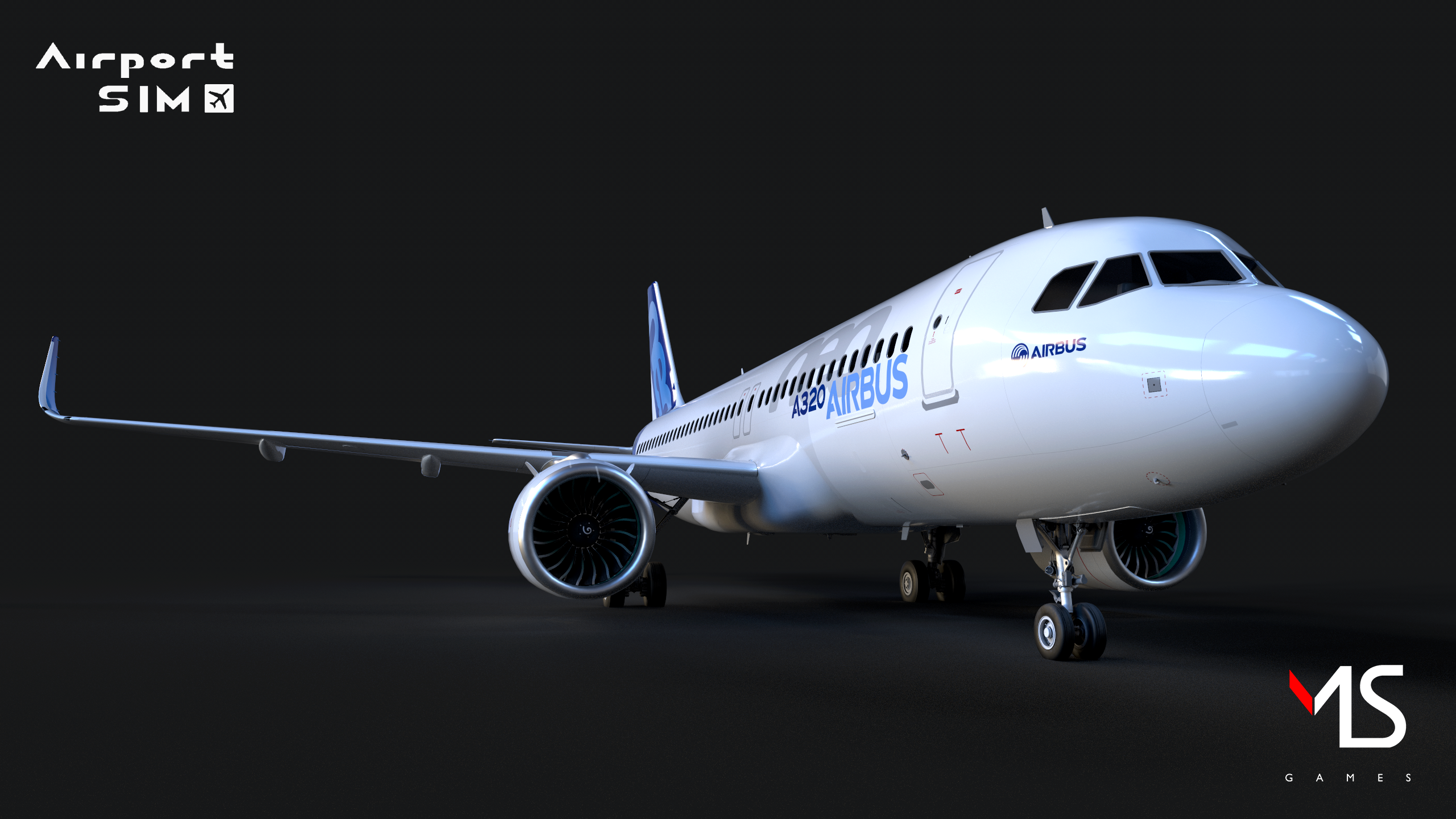
We have just established cooperation with one of the largest aircraft manufacturers in the world - Airbus. That aerospace corporation, thanks to the sharing of the license, will give us the opportunity to put 3D models of its most recognizable machines in AirportSim!
- “Enthusiasts of simulation games, mostly those who are also fans of aviation, pay great attention to realism. It is important for them to maintain the impression that the action they perform in the game is as close as possible to the one undertaken by specialists in the real world. The sense of realism in this type of game is also achieved by the implementation of licensed equipment. That's why we are convinced that one of the most popular aircraft brands in the world is exactly what our audience is looking for" - says MS Games CEO Mateusz Stabryła.
The planes will be recreated with extreme precision. When creating models of machines, we rely not only on photos and technical drawings, but also regularly visit airports, production facilities and other aviation-related sites. Thanks to this, our team is able to get to know every detail of the airplanes, which are later recreated in AirportSim.
Airbus is one of the world's leading airplane manufacturers. Their machines travel around the world every day transporting hundreds of thousands of people. Airbus planes are also incredibly popular among aviation enthusiasts. They have their own fan clubs, online forums, social media groups… even convents where enthusiasts can exchange observations and feelings they have about these sky giants. Thanks to the AirportSim game, there will be another opportunity to interact with these machines, this time in the virtual world. Players will be able to see various models of Airbus aircraft from all sides, and additionally take care of their servicing like baggage loading or refueling, among other things.
Some interesting information about Airbus:
- The Airbus Industry Consortium was officially founded in 1970
- Airbus' product line began with the A300, the world's first twin-engine wide-body aircraft. Its shorter version is known as the A310.
- The flight of Airbus' first production aircraft, the A300, took place on October 28, 1972, in Toulouse.
- Airbus provided spare parts and servicing for Concorde aircraft until they ceased flying in 2003
- The electricity generated by the two A320 engines is enough to power 30 apartments.
- The first A320 model was flown in 1987
- A320 accelerates from 0 to 200 km/h in 20 seconds
- The maximum speed of the Airbus A320 is about 871km/h.
The release of AirportSim is approaching fast, so it is a good time to introduce the next task you will undertake in the game scenarios.
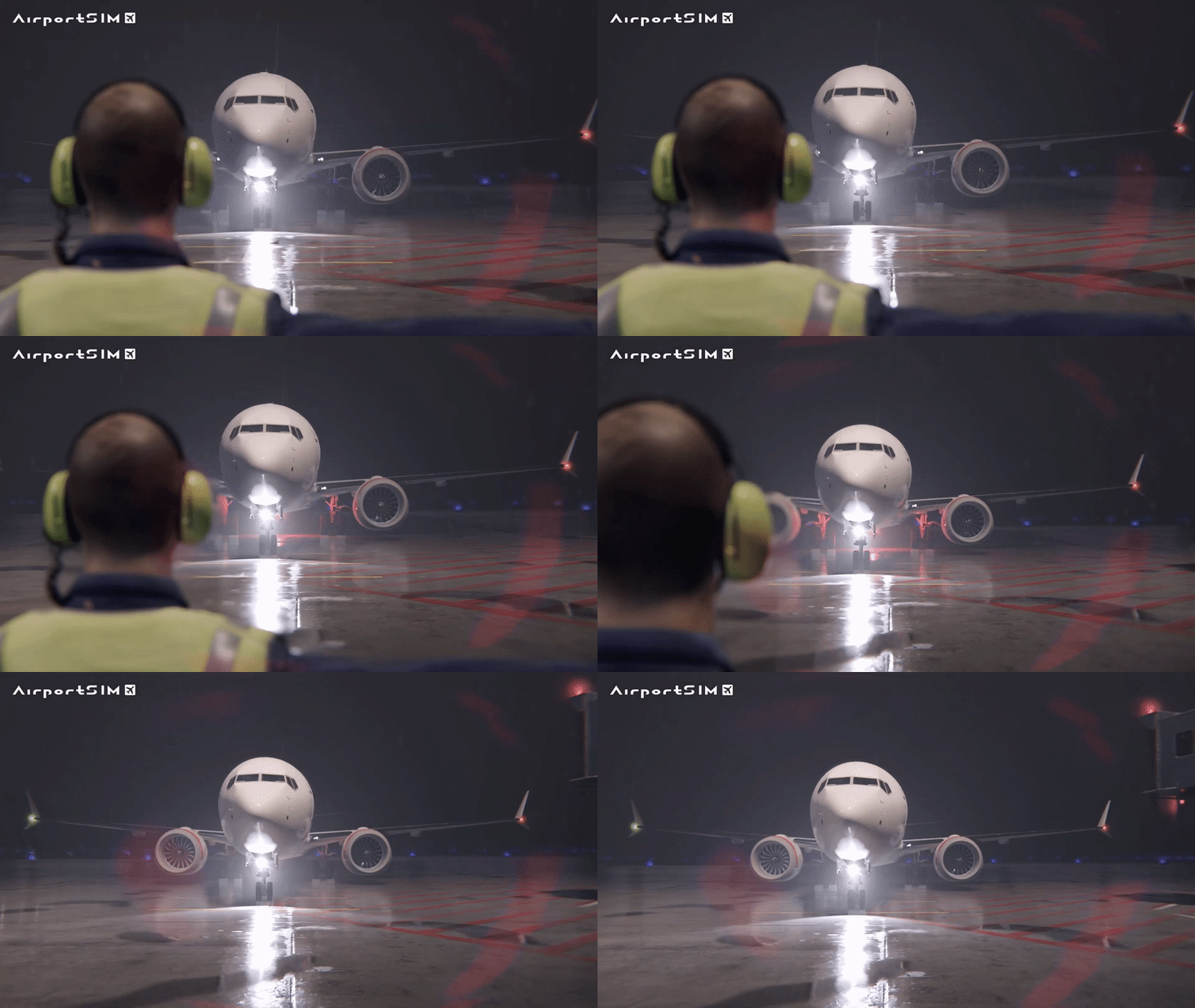
Generally speaking, a Marshall at an airport performs many different functions. What he is most associated with is guiding aircraft to their parking place. You will surely associate from various photos or movies the image of a man with special luminous objects in his hands, who makes different gestures to guide the pilot of an aircraft to the correct destination - this is our "Marshall." What you'll find interesting is that at many airports, the word "marshall" is also used to describe a man or woman who is also responsible for other activities, such as conducting runway inspections, dealing with technical assistance subcontractors in terms of adhering to operational safety standards at the airport, ensuring the proper operation of facilities and terminal, ending with supervision of terminal access along with parking areas. In other words, a "Marshall" is often a person who assumes the responsibility for the proper technical operation of the airport. In AirportSim terms, however, the task defined as "Marshall" is fully defined to one specific role - ensuring the safety of an aircraft that is pulling up to it's parking space.
Meaning of gestures
To celebrate the upcoming release of our game, we have a short guide for you on what the Marshall gestures mean. Study it carefully - it will certainly come in handy during the game!
Turn off the engine Drive forward Turn right Turn left Slow down! Stop!
What is ILS and how does it work?
Imagine that there is a really thick fog over the airport - visibility is maybe a few meters. In such a situation, if pilots could only be guided by what they see in front of them, planes would not be able to land. They would have to be sent back to another airport with better conditions. Chaos that would be difficult to control would ensue. The solution to this problem is called ILS.
What is ILS?
The ILS, or instrument landing system, was invented specifically to conduct flight operations in conditions of limited visibility - the “fog example” comes to mind first, but after all, pilots can also land when a snowstorm or sandstorm is raging around. We've been using this system for a long time, since about eighty years ago. And here you will probably think: "hasn't anything better been invented in all that time?". The short answer is: why reinvent something that works well? A longer answer would require a separate article on history, mentioning Soviet systems, or the Lorenz system that was the precursor to ILS, or the newer MLS or GNSS systems... but suffice it to say that ILS is the most widespread system, which is the most versatile and, above all, very simple.
How does ILS work?
The basic question we want to ask when an aircraft lands in bad weather conditions is: where is the aircraft? If the airport knows this, the pilots will also get this information (especially they should know for proper approach). So how do you make them know which way to approach the runway to avoid crashing the machine? You can visualize it this way: we send a beam of light from the ground, just like a flashlight. The beam expands and hits the plane - now we know where we are and where we are supposed to go (to the flashlight of course) . The problem is that we can't very well determine the right landing path - are we flying too low or too high to touch down at the right moment? So we attach a second beam of light of a different color so that it half overlaps the other. We place both reflectors at such an angle that the area in which they overlap marks the correct approach path. All right, but we were talking about low visibility conditions, so the beam lights won't work. But - what is light exactly? Well, it is, after all, a stream of photons, which has a wave nature - or more precisely, an electromagnetic wave. Short question: What else is an electromagnetic wave?
Radio waves
And that's the principle on which ILS operates. Now, having antennas transmitting signals at different frequencies, we can determine the path of the aircraft. By adding two more transmitters diagonally, so that together they form a "cross," we can determine the correct path of the aircraft in three-dimensional space without having to see the landing strip. Adding more sensors, so-called "markers" set at appropriate locations along the aircraft's approach path, sends the pilots an accurate signal of where they are and whether they are flying at the correct approach altitude. Each ILS consists of three sets of equipment that operate independently of each other: a direction finder, a device that determines the distance from the touchdown point (markers), and a glide path finder. Does that system have any limitations? Sure - first of all, the terrain in front of the airport must be properly leveled to cancel out possible reflections of radar signals, there is mainly only one ILS-assisted approach direction per runway direction, the system itself is also subject to interference from radio stations that broadcast on similar frequencies, and is the reason why usually airports are not built one next to the other - because interference could seriously disrupt the systems. Nonetheless, ILS is the standard that works today, and - aside from upgrading receivers and transmitters - not much can really be designed better into it.