A new, fascinating Monthly coffee appreciation post is here for your relish. Today we’ll be sharing some curious facts about the rarest coffee varieties in the world. Some of these exclusive coffee varieties have a very peculiar scatological origin you may have never imagined, so despite it being a pretty interesting topic we strongly recommend not to read the full article on a full stomach — you’ve been warned!
Let’s get down to business with a proven fact: if the “scatological origin” you’re thinking about consists of animals eating fresh coffee beans and defecating the seeds that will be later washed, dried, and roasted… your thoughts are accurate. This kind of coffee is pretty popular because the digestive process of some mammals and birds alters the chemistry of the seeds, which also changes the taste of this fine variety. that just a few privileged people can afford to taste. We just hope the washing is really, really thorough.
Among these varieties of defecated coffee, the most popular one is the kopi luwak made in Sumatra and Indonesia with the help of palm civets. These animals are not particularly selective about the type of cherries they eat, but those who feed them to produce kopi luwak usually provide them with Arabica coffee cherries because they are perceived to be of higher quality.
The same goes for the variety produced by elephants in the Thai province of Surin, named Black Ivory. The community of Ban Ta Klang village feeds these amazing pachyderms as they take profit from them as tourist attractions and coffee makers. It is surprising that it is still being produced today, given that, in the words of its creator Blake Dinkin, “it takes 33 kilograms of raw coffee cherries to produce 1 kilo of Black Ivory Coffee".
The resulting beverage has a smooth and less acidic taste than other coffee varieties, so it rarely needs any sweetener. Regarding the price, a cup of Black Ivory coffee usually costs more than $60, so it’s only served in luxury hotels and expensive gourmet restaurants. In the case of kopi luwak, you may expect a similar price.
Now, we have to talk about Kona Coffee grown on the volcanic slopes of Hawaii. Kona cherries are grown in very special weather with light winds, sunny mornings, and rainy or cloudy afternoons. They’re picked, dried, and roasted by hand, so it all gives the final product a sweet, fruity, and mildly acid flavor you can’t find anywhere else. Depending on where you order it, a cup of Kona Coffee may cost between $1 and $15.
Last but not least, there’s the famous Jamaica Blue Mountain, which is both a designation of its origin and bean variety. Its coffee tree is grown in the Blue Mountain region between Kingston and Port Antonio. The low acidity and sweet taste of the resulting drink, which might be compared to dark chocolate, make it very popular in Japan. Interestingly, 75% of its worldwide production ends up in the Japanese market, something that is visible even in other well-known games such as the Yakuza series and Persona 5. This variety is available in many coffee shops around the world, but prepare yourself to pay around $10 per cup.
That’s all for today! In our next Monthly appreciation coffee post, we’ll have an interesting conversation about 5 lessons we learned about the coffee shop industry that were pretty useful to creating Coffee Shop Tycoon. In the meantime, we invite you to keep enjoying your business adventures in the game, share your ideas in the comment section and join our Discord server to chat with us from time to time.
See you next week, enjoy your coffee! The Riff Studios team
The definitive guide to seasonal drinks
Hello there, coffee entrepreneurs!
Welcome to this new article in the #Tips&Tricks series, in which today we will cover the seasonal drinks system, its relationship to market trends and consumer expectations, and the consequences that a good or bad choice of ingredients will have on the reputation of your business. Soon you'll realize that, despite its complexity, this feature is quite easy to understand!
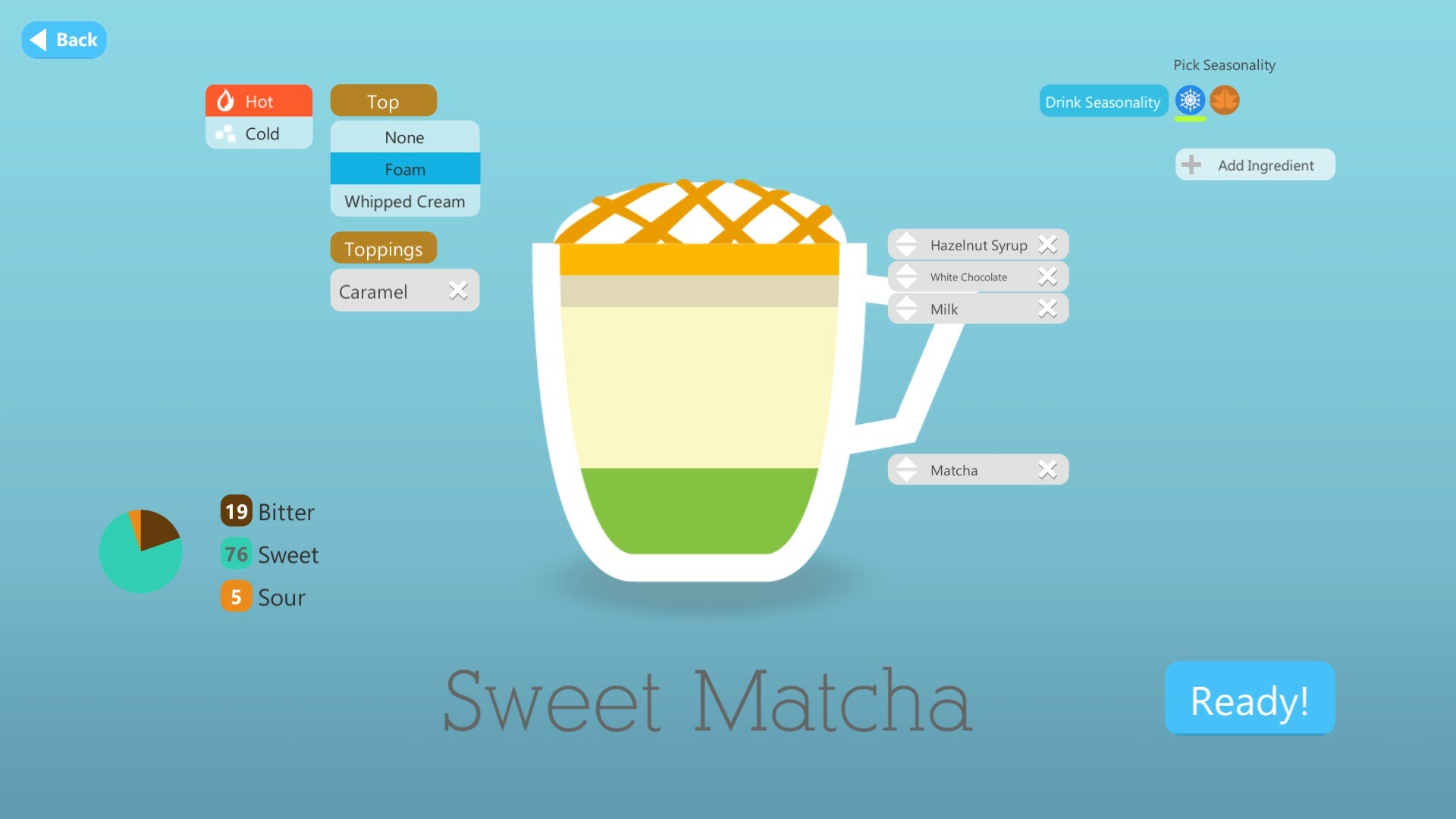
Seasonal drinks include products that people believe to be appropriate for each season of the year, like eggnog in Winter or flowers in Spring. Once the lab at your headquarters is unlocked, you’ll be able to create lots of them by mixing several types of base drinks, syrups, and toppings. Some ingredients of these categories will be suitable for all the year, but others will turn your creation into a seasonal drink. You’ll realize that after seeing the icon that will appear on the top right corner of the screen.
You'll notice up to four different icons there depending on the seasonal ingredients you've added to your drink, but keep in mind that you'll have to choose a prevailing season before finishing the process. Any seasonal effect the other ingredients may have will disappear. This is a feature of the game that you will have to master since customers may request the craziest combinations ever seen. And this is where trends come into play!
From a certain point in the game, you will be presented with challenges associated with ingredients that have become fashionable. You can let the opportunity go, but if your competitors get ahead of you, a reputation debuff will be applied and you will be visited by fewer consumers for a certain period of time. But if you take the chance to feature a new special beverage, there might come a day when a lot of people decide to visit your shop. It all depends on your capacity to hit the nail on the head!
Another factor to consider is the temperature expected for each drink. In both spring and summer, customers will prefer colder beverages; and in fall and winter, you'd better serve them warm and smoking!
But it doesn't end there! We still have to tell you about the pre-market testing of the new beverages. When your drink is ready to go, you will test it with a representative sample of each target audience: that is, young people, casual consumers, and coffee experts. The rating of each group will tell you who has liked it, and which people would rather drink sewage water than take another sip of your new idea.
It’s pretty usual to prioritize one target audience or another according to the type of clients you expect to come to your business — this is one of the aspects of your empire you’ll have to manage shop by shop to obtain the best result possible! And remember that if you want to take advantage of this to modify your user base, a paid marketing campaign will be the ideal complement.
And… that’s all for today, folks! However, if you have any questions in this regard, we are available to answer them. It may take a while, as we are busy preparing the new major update for June, which will bring options to set the individual price of drinks. You can learn more about this topic in the announcement we dedicated to Coffee Shop Tycoon’s roadmap.
Welcome to this new installment of our Monthly Coffee Appreciation Post. A few weeks ago, we embarked on a short trip through space and time to investigate the origins of our favourite beverage. We’ll eventually unveil its history up to the present day, but today we are going to talk about the most common varieties of coffee beans around the world.
ARABICA
Let’s begin with an easy one — the “arabica” (coffea arabica). We bet you’ve heard the name a thousand times since it’s one of the two primary coffee varieties grown on Earth. It is believed to be discovered in Ethiopia and then brought to Yemen for widespread farming, trade, and consumption by humans.
To be cultivated in the best conditions, this coffee species must grow at high altitudes in well-shaded areas where rainfalls are common. The need for such specific conditions, together with its delicacy in face of adverse weather conditions makes it difficult and expensive to grow, so its beans are usually very expensive. But you know the fun part? Almost 60% of the worldwide production of coffee is arabica!
Despite its name, this variety is no longer limited to East Africa and Arabia. Now you can find the arabica beans in other areas characterised by a tropical climate. These ones are always close to the equator. I.e.: Colombia, Brazil, Guatemala, Vietnam, Indonesia, China, Java… If you want to learn more about the production by country of origin, we invite you to check this index out.
ROBUSTA
This is another powerful name among the most common varieties of coffee beans in the world since 30% or 40% of the world’s coffee beans production comes from coffea canephora. It was discovered in Uganda, where it was said to be a fundamental part of the Kwanjula marriage ceremony, where the bride’s father must serve dried beans in the hands of the groom for him to chew the fruits as a sign of acceptance.
Once again the colonisation process led by the Netherlands takes the centre stage: they learned about these exceptional seeds and exported them from Africa to Asian countries such as India, Sri Lanka (then known as Ceylon), and Java. They also can be found in countries like Vietnam, Brazil, Germany, Italy, and the US nowadays.
The robusta seeds could be farmed in lower heights and very humid places, and they’re very resistant to adverse weather conditions, which makes them easier to produce than arabica. It doesn’t necessarily mean it’s a low-quality coffee! If we attend to its caffeine content, which is the substance that activates us every morning, robusta beans are clearly superior. As arabica beans contain between 1.1% to 1.5% caffeine in their composition, robusta almost doubles these percentages to between 2% to 2.5%.
In terms of flavour, arabica offers a light, fruity taste that makes it more enjoyable to drink than a 100% robusta coffee, which flavour is less complex and harsh. That’s why you’ll usually find many varieties of arabica than varieties of robusta in the market.
We’re impatient to tell you about the less known varieties and how the bean varieties are mixed to create new flavours, but that will have to wait a bit more! For now, it would make us happy to know that you enjoyed this content, and which topics you expect us to cover in the future. Remember we have a Discord server for Coffee Shop Tycoon community members to chit-chat about our favourite drink, how to play the game and any other related topics that might be of our common interest.
The next cup of hot coffee is on us, have a great weekend! Riff Studios
Roasting Specialization update now available
Hello there, coffee lovers!
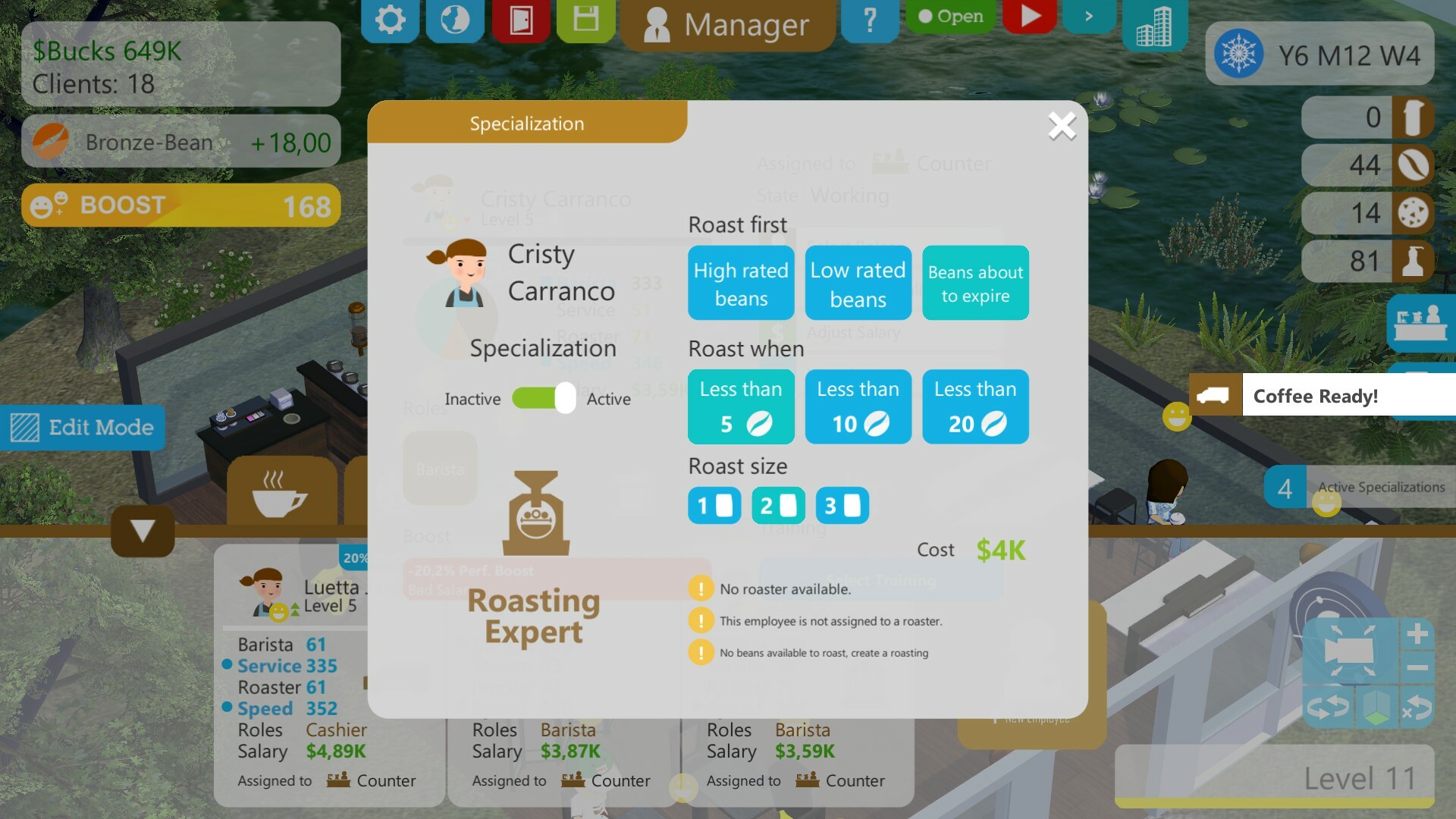
We're glad to announce the Roasting Specialization update has officially left the beta branch to be fully released on Steam. Although the roasting specialization is the main attraction of this new patch, there are also a new UI design and many optimization changes and bug fixes you may like to learn about. We recently shared the complete list of changes in several announcements, so we recommend you check the latest one.
Click the image below to watch the official teaser for v.0.8.2:
In the same vein, today we'll be hosting a new livestream to show what's new and allow other fans of tycoon games on Steam to discover what Coffee Shop Tycoon is all about. It will start at 19 PM (CEST) / 10 AM (PT) on our store page. We hope you can join us!
Have a wonderful day, The Riff Studios team
Roasting Specialization Beta is out
Hello there, coffee lovers!
As we previously shared in this very blog, a new update for Coffee Shop Tycoon is coming to Steam this month. Concretely, it will be fully available next Wednesday, and starting today you can give it a quick look by joining the open beta branch we just activated. Here’s the full list of changes you’ll find there:
Main changes in v.0.8.2
The UI has been revamped to meet the new style of the Roasting Update.
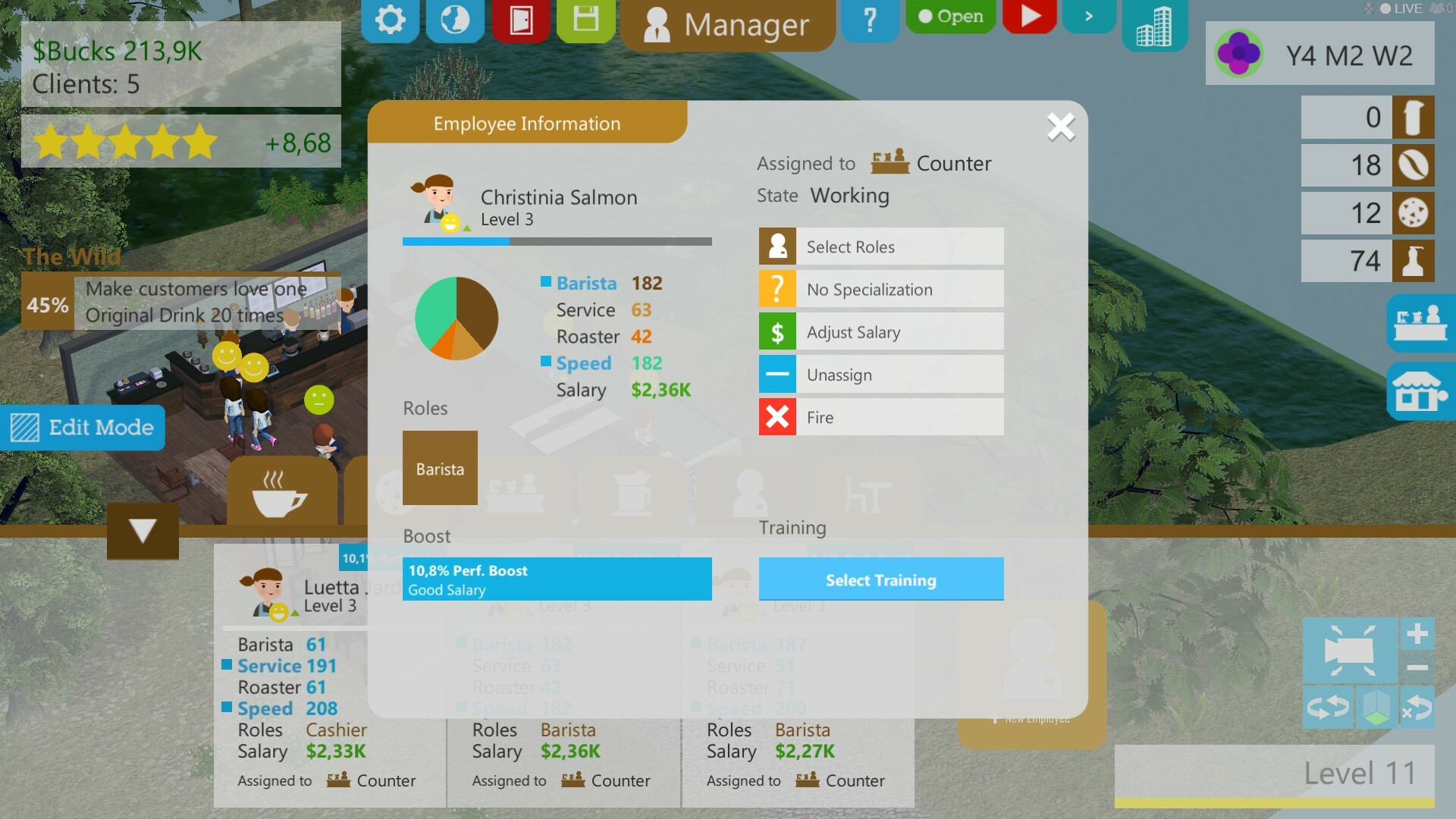
The roasting specialization is now available for all your workers over level 5.
There are several changes in the random bean generation system.
Those green beans required to complete roasting challenges will appear more frequently.
The random generation of green beans has been adjusted to make sure that there are always bean varieties that can be roasted without consuming roasting points.
The game is now ready to support the Spanish localization patch we’re preparing, and many more to come!
Bug fixing
Now trends should be always displayed on the manager console.
Clients will keep requesting special services even if your shop has the Diamond Bean.
All the roasting operations in your shop should cost money — sorry!
We fixed a bug that caused the Du Latte Awards presenter to stop obeying the laws of gravity.
Beans from locked varieties or regions will no longer be generated when switching between game saves.
How to play the beta
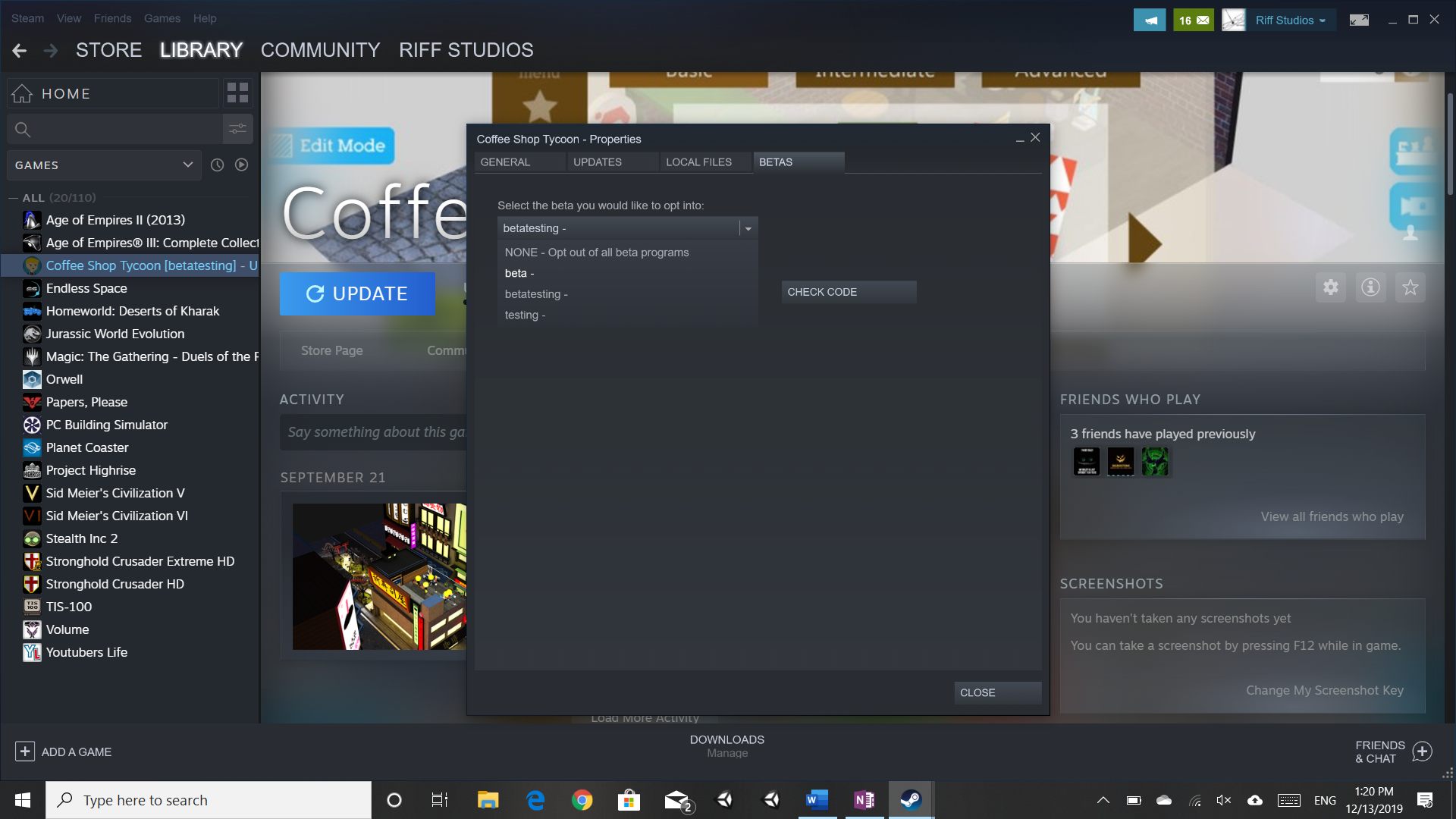
With that out of the way, let's go over some simple steps to enable the Beta. Go into your library, select Coffee Shop Tycoon, click on the settings icon, and select Properties.
From there, go to the beta tab and select Beta from the dropdown.
A warning about game saves
Your game save will work with the Beta, and your progress will not be lost once the full update is out. However, a save that has been upgraded to v0.8.2 can't be used in the old version of Coffee Shop Tycoon, trying to do so will reset the save without warning. We know that this is not ideal, and unfortunately, the old version works like this, but we will improve this going forward and warn players about unsupported game saves.
For now, if you play the Beta, please stay on the beta branch until the update is fully released, otherwise, you can potentially lose your progress. If you want to keep a copy of your game save, you can follow these steps. That way, if you want to go back to the non-beta build, you can use that backup to restore your old save. That save will not include any of your progress while playing the Beta.
On Windows, go to this path, and copy all the folder contents to a safe location. C:/Users//AppData/LocalLow/Riff Studios/Coffee Shop Tycoon/
On Mac, go to this path, and copy the folder contents to a safe location. ~/Library/Application Support/Riff Studios/Coffee Shop Tycoon/
We intend to take advantage of these days until the final release to make last-minute corrections, so if you find a bug that makes it difficult for you to play, don’t hesitate to let us know on our Discord server.
Have a great weekend enjoying your coffee!
Best regards, Riff Studios
Laying the groundwork for the best coffee shop
Hello everyone!
Thanks for stopping by one more time. Today we introduce you to the new section Tips & Tricks. Here we’ll share a list of good practices to transform your little business into the ultimate coffee shop multinational empire. Since this is a guide for new entrepreneurs, we'll start on the lowest step of this long stairway towards success. Let's talk about how to make your first cafe irresistible to your potential customers.
Your top priorities from the very start will be to buy some furnishing and machinery, hire new staff, and guarantee a stable supply line so you never run out of coffee beans. After Mr. Danger helps you kick off the shop, you’ll be completely in charge of it with the only help of your bare hands and half of your capital, so you better think twice before sparing that money on the wrong things!
Staff management
The employee you hired as a roaster, barista, and cashier will get overwhelmed by the long queue of clients that will crowd the shop as soon as your reputation grows, so the first thing to do is recruit a new member for your team. If you previously hired a barista or a roaster, look for someone to take care of the till now — this person will allow you to automatize the supply chain in level 4, so it’s in your best interest to hire one from the beginning.
These roles can be improved by spending money on your staff’s training. Also, remember that a highly qualified employee will demand a higher salary to stay in the same company. In such a situation you can always ignore their demands, but the employees will eventually show a bad performance and leave their jobs. In other words, you’ll have to spend time training new staff from zero.
A stable supply line
Customers will get upset if they can't get their coffee or you offer them stale pastries. That's why you will have to keep a close eye on the availability and freshness of these products in your store — at least until you’re able to automate the supply chain.
Coffee Shop Tycoon also allows you to close in case you need more time to order fresh beans or refill the airpots. You can do this when the shop is open, but take into account the remaining stock and the time it will take for your goods to arrive and be ready to serve. Otherwise, you may have to deal with a lot of angry customers and a reputational crisis for a considerable period of time.
Last but not least, avoid spending lots of money on big orders out of those moments where you activate a marketing campaign. In Coffee Shop Tycoon, products may end up going rancid in your warehouse if you don’t sell them. If you decide to sell them anyway, customers will notice that something is wrong and your business reputation will also go down.
The latest machinery
Mr. Danger will help you choose your first machines in Coffee Shop Tycoon’s tutorial, so you’ll start the game with a basic grinder, a brewer and a little airpot to store hot coffee. Since the basic counter has a space for an extra airpot, invest some money to get a new one and make sure that you never run out of your flagship product. Of course, you’ll unlock new machines and counters that will help you produce a better quality coffee and offer the service that every customer deserves. Try, as far as possible, to always keep yourself up to date.
A welcoming environment
When it comes to your shop’s furniture and styling, you'll be able to get really creative. In addition to customizing the arrangement of the tables and chairs as you wish, you can also change the design of the walls and floors, use seasonal decorations, and much more. The more you work on the look of your shop, the better your reputation will be!
About the tables and chairs, many of you have asked us if these make sales grow by making it easier for customers to stay inside the store. And the answer is yes! There’s a 60% chance that customers who were very happy with their order and sat down to drink it, go back to the counter for another coffee to go. Also, this probability can be modified by employees thanks to a special trait that appears when they’re inspired.
And that’s all for today! We hope this short guide to the customers’ hearts helps you build the successful coffee shop business you always dreamed of. If you have any questions, please feel free to leave them in the comments section, or ask us via Discord.
Enjoy your next coffee, The Riff Studios team
Riff Studios plays: Join us for a hot coffee!
Hello there, coffee lovers!
We have chosen today to bring you an extended live gameplay of Coffee Shop Tycoon. This time we will focus on the mid-game, so we'll visit our headquarters together, see how to buy stocks from other companies, learn to create the craziest beverages in our superlab, and so on.
Don't miss it!
Get Coffee Shop Tycoon with a 60% off
Good morning, coffee lovers!
In a dramatic turn of events, we realized a few days ago that we hadn't signed up for the Simfest taking place on Steam from March 28th to April 4th. Fortunately, we're very stubborn people when it comes to the things we love and decided to launch our own discount to celebrate this wonderful event — so, ladies and gentlemen, now you can save 60% on Coffee Shop Tycoon until April 7th!
Coffee Shop Tycoon will be your best partner for a relaxing weekend in the comfort of your home. And the best part is this discount allows you to play it for less than what a complete breakfast costs at your favorite cafe. So, you know, maybe it's time to add it to your Steam library and raid the supermarket in search of munchies and drinks. The best ideas come to you with a full belly :)
Happy Simfest!
Sketching the roadmap
Hello there, coffee lovers:
It's time for a new update post, so thanks for coming by one more week to discover what's next in Coffee Shop Tycoon! In this entry, we'll glance at the main content and milestones ahead for the remainder of 2022. As many of you know, this year will mark a new beginning for our project since the full release will be coming this Fall. Until then, the game will receive several updates. The first of them is coming in April, as we shared a few weeks ago in this very dev blog.
To avoid beating around the bush, here's the provisional list of changes you can expect between now and the end of 2022 — or, in other words, our short/mid-term roadmap! Please note that it's still too early for us to reveal specific dates. Be patient; we will provide you with new information as soon as possible.
April
The UI will be revamped to meet the new style of the Roasting Update.
Roasting specialization.
There will be several changes in the aleatory system for beans generation.
The game will be ready to support new languages.
Summer
Players will have new options at their choice to set prices.
Prices will affect the customers' expectations.
Economy balancing.
Improvements in the item rotation feature.
There will be a search box on the Help section.
End of Summer
Customers require you to meet certain expectations to become fans of your coffee shop. The more famous you become, the harder it will be to meet everyone's expectations.
We'll be fixing bugs with customers' thoughts and turning them into "review tags" that can be aggregated for a summary screen.
You'll see important notifications in tiny bubbles above customers' heads.
The number of active marketing campaigns will be limited.
Staff members can be renamed.
The AI of the clients will be modified to include the use of sugar tables.
FULL RELEASE: Fall
Employees will have a more diverse appearance. Currently, there are only two skins available and they look very similar to each other.
New Du Latte Awards design.
End game screen and credits.
Please contact us if you have further questions regarding these points; we're always happy to listen to your feedback and learn more about what you expect from a game like Coffee Shop Tycoon. Leave your comments here, ask us on Twitter or join our fantastic community server on Discord by clicking the button below!
Thanks for your time. We hope you can enjoy a delicious hot coffee this weekend! The Riff Studios team
Ethiopia: A land of legends and… coffee!
Greetings, coffee lovers!
Let’s begin this new entry with an easy question: when you think of the origins of your favorite drink, what country comes to your mind?
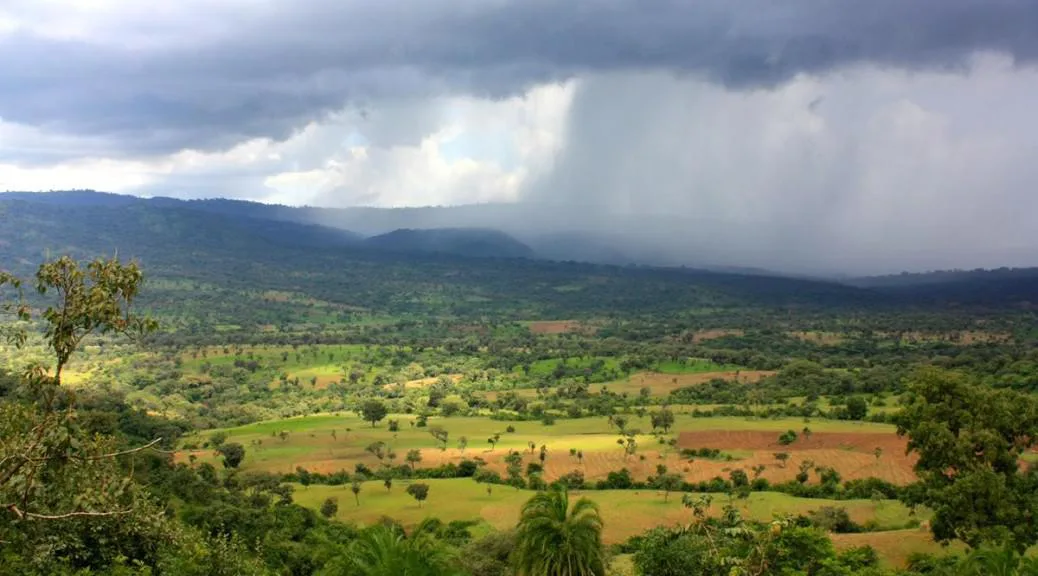
We're 90% sure you've always thought of Colombia. It’s a pretty common answer since the bean varieties this country has produced since 1835 are very popular all over the world. Also, mass media have been reminding us of its relevance in the world coffee production scheme forever. But the truth is this delicious beverage, brewed from the roasted seeds of the coffee tree, comes from a very different place and time. Let’s take a closer look at Ethiopia in the 9th Century.
(Original photo by Tracks4Africa.)
Not a single scientific evidence or primary historical source has corroborated this legend, but the most popular story we know about the discovery of coffee seems to come from the Ethiopian region of Kaffa, which is characterized by its endless mountains and fertile soil. It is said that a shepherd named Kaldi found his goats (or sheeps, it depends on who you ask) eating a never-seen type of red seed that changed their behavior: his animals, always gentle and peaceful, suddenly started to get nervous and fight each other.
The tale of Kaldi was first mentioned by Antoine Faustus Nairon, a Roman professor of Oriental languages, in De saluberrima potione cahue seu cafe nuncupata discursus (Discourse on the very healthy coffee beverage and description of its virtues, published in 1671). However, it wasn’t the earliest essay focused on the understanding of coffee: in 1587, the poet Sheik Abd-al-Qadir wrote In Praise of Coffee, a piece of work jealously preserved at the National Library of Paris.
Leaving aside the story of Kaldi, we know that in the 15th Century coffee cultivation, trade and consumption were already widespread in Yemen. Commerce between Yemen and Arabia was flourishing, so it helped lead to the birth of the “kaveh kanes” at Mecca. “Kaveh” or “qahwa” (قَهْوَة) means “coffee” in Arab. This is the original name of the coffee shops, where men gathered to talk about politics and social matters with a hot cup of coffee between their hands.
Due to some conservative beliefs around stimulant substances that were prevalent during those times, “Kaveh kanes” were closed down and forbidden by law over and over. Their growing popularity forced the authorities to legalize them again, but it happened in exchange for their owners paying elevated taxes.
For at least 200 years, Arabs kept control of the coffee exportation business by making sure the beans they sell were already roasted and ready for consumption. But in 1616, the Netherlands managed to introduce fertile seeds in Europe and, through colonization, the expansion of the coffee tree around the world became unstoppable. They called it “koffie”, and that’s much closer to the way we say it nowadays!
(This is how an Egyptian coffee shop was like in the 19th Century!)
We hope you enjoyed this brief introduction into the amazing world of coffee! We’ll be back next month with a new story to share with you. In the meantime, you can join our small and homely community on Discord to discuss the origins of this magical beverage we all love — and even Coffee Shop Tycoon, haha.
See you very soon, enjoy your coffee! The Riff Studios team