On Sunday morning, March 18, 1945, under an unusually clear sky, the U.S. Eighth Air Force mounted one of its largest air raids against Adolf Hitler’s Third Reich. The target was Berlin, capital of the Nazi regime. More than 1,300 heavy bombers from the Eighth Air Force, escorted by more than 600 fighter planes, departed their bases in East Anglia and flew eastward over the English Channel toward Germany. The payload that morning was more than 650 tons of 1,000-pound bombs.
As a radio operator, Archie sat just behind the B-17’s bomb bay and in front of the waist section of the Flying Fortress. He was primarily responsible for assisting the navigator and communicating with other planes in the formation.
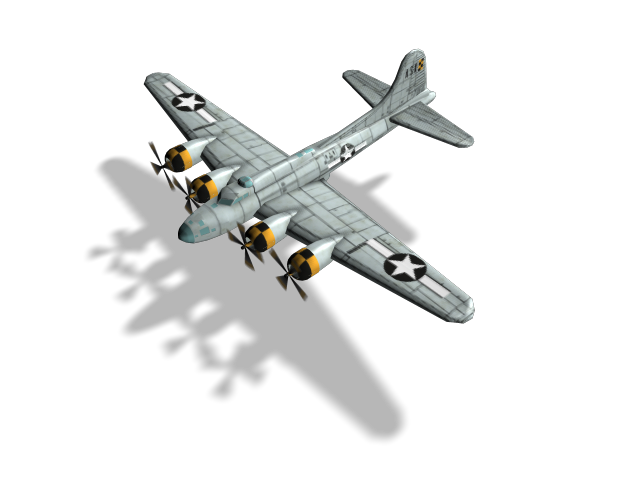
From RAF Thorpe Abbotts, Archie and the rest of the crew flew 13 to 17 missions without an incident, mostly in a B-17 named Heavenly Days. During their last fateful mission on March 18, 1945, they were manning a B-17G named Skyway Chariot (aircraft number 43-37521) because Heavenly Dayshad been damaged and was under repair.
The crew of Skyway Chariot that day had been together for many months and were “old hands” at the aerial warfare game. In addition to Archie, the crew consisted of pilot 1st Lt. Rollie C. King; co-pilot Lieutenant John S. “Jack” Williams; navigator Lieutenant John Spencer; nose gunner and bombardier Frank Gordon; flight engineer Ray E. Wilding; ball turret gunner Robert G. Mitchell; waist gunner Meyer Gitlin; and tail gunner James D. Baker. (A B-17 normally had two waist gunners, but on the March 18 mission, only one was assigned to Skyway Chariot.)
When on the offensive, the purpose of the combat box was simply the massed release of bombs over a target.
Bombing runs deep into Germany’s heartland could last eight hours or more and were typically met by heavy resistance from fighter planes and flak. Germany’s military pilots flew against the invading force in Messerschmitt Bf-109s, Focke-Wulf FW-190s and the new jet-powered Messerschmitt Me-262s.
As one would expect, the Me-262 was highly regarded by Germany’s Luftwaffe aces because it outclassed all other fighters of the period. It had a speed advantage, an excellent climb rate, and firepower consisting of four 30mm cannons in the nose.
By March 1945, almost all Allied air raids included at least 1,000 heavy bombers. During the March 18 bombing raid, a fierce defense was exhibited to protect Berlin, where Adolf Hitler and other Nazi elite were hunkered down.
Before the bombers reached Berlin, Me-262s were scrambled to attack the B-17s and North American P-51 Mustang fighters escorting the Flying Fortresses. This would be the largest attack by Me-262 jets and piston-engine fighter planes against Allied bombers during the entire war.
Entering service near the end of the war, the faster and more powerful Me-262 Schwalbe(“Swallow”), was the most advanced fighter plane of World War II. It has been suggested that if the Me-262 had been introduced in greater numbers earlier in the war, it may have decisively impacted the outcome of many air battles in favor of Germany.
Just before reaching Berlin, the B-17s of the 100th BG encountered heavy bursts of flak from German 88mm and 105mm antiaircraft guns.
Then the antiaircraft guns went silent to allow swarms of deadly Luftwaffe fighter planes to do their work from close range. Thirty-seven fighter planes, including Me-262s, engaged the massive force of Flying Fortresses and escorting fighters. Luftwaffe pilots were determined to protect their capital from the enemy bombers. Tragically for the B-17s that day, this was also the first time in aerial combat that the Messerschmitts were also armed with the deadly R4M air-to-air missiles. According to eyewitnesses, the effect of the R4M rockets was devastating. Massive amounts of broken B-17 aircraft parts filled the crowded, smoky sky that day, creating havoc for the B-17s, as well as for the attacking German planes.
A second attack was fought off “halfway down the bomb run with no damage done. Since being hit, we were gradually trailing the formation and by the time we were over the target area, the rest of the formation was approximately one-half mile away.”
“As soon as we were hit––since there was no communication––I looked through the astrodome into the cockpit and I handed my toggalier his chute and then put on my own but still wasn’t sure to bail out, so I looked through the astrodome again and saw both the pilot and co-pilot preparing to abandon ship. Then looking at the right wing, which was burning pretty badly, I decided it was time to leave. I bailed out, floated to the ground, and was picked up [captured] immediately.”
Research reveals that Skyway Chariot was likely shot down by Oberleutnant (1st Lt.) Günther Wegmann flying an Me-262 from Jagdgeschwader 7 (JG7) Nowotny. Wegmann was an experienced Luftwaffe pilot credited with many aerial victories, including eight while flying his Me-262. Some of those kills included B-17s and P-51 Mustangs.They fired nearly 100 rockets into the midst of the bomber formation. Wegmann and Schnorrer each claimed two B-17s, and Seeler claimed one.
After the attack on Skyway Chariot, Oberleutnant Wegmann observed bits of aircraft, smoke, and flames. He started heading for home when he saw another bomber formation in his path, so he opened fire on it with his Mk 108 cannon. He was just over Glowen, Germany, when his jet fighter was hit by defensive fire from a B-17. His windshield and dashboard were badly smashed and after feeling a hard blow to his right leg he realized he had been shot; the wound was large enough for him to put his whole fist in. Oddly, he felt no pain.
His jet was still airworthy despite the damage, but soon flames erupted from one of his turbine engines, and he decided to bail out. He guided his Me-262 toward the town of Wittenberge, northwest of Berlin, which he recognized from the air, having flown over it many times. When the time felt right, he bailed out and engaged his parachute. He drifted past the town and landed in a meadow near a stand of pine trees.
An elderly German woman was the first to spot him, and he quickly identified himself as a German pilot. He was nervous because he was wearing a leather flight jacket obtained from a downed American flyer. If the villagers thought he was an American pilot, he might have been beaten or possibly killed. Instead, Wegmann was rushed away for medical treatment, and about four hours later his right leg was amputated.
After parachuting to earth, Archie and the five other surviving airmen were captured and imprisoned. He and the other crew members were transported to Stalag Luft I, a POW camp for American and British airmen at Barth in northeastern Germany.
The air war over Germany was incredibly costly. Casualties for the 100th Bomb Group are a perfect example. The “Bloody 100th,” so nicknamed because of the large number of losses it suffered, flew 306 missions during the war and lost 177 B-17 bombers to antiaircraft guns and Luftwaffe fighters; 765 airmen were killed while 903 were captured and interned at POW camps behind enemy lines or in neutral countries.
Figures differ, but one authoritative source says that the Eighth and Ninth U.S. Air Forces in Europe had a combined death toll of 24,963, including 510 who died of wounds and 537 declared dead. Inscribed on the Wall of the Missing at the American Military Cemetery, Cambridge, UK, are 5,127 names. More than 500 Eighth Air Force bombers and fighters were lost to antiaircraft fire, enemy aircraft, and “other causes.” It was a heavy price to pay for victory.
https://warfarehistorynetwork.com/daily/deadly-duel-above-berlin/
HISTORY BLOG #16 First dramatic glimpse of what it meant for the country to be at war
The Battle of Midway and Torpedo Squadron 8
– one of the first time when camera was in the war –
The Battle of Midway
On June 4, 1942, the Japanese Imperial Navy attacked United States forces on the island of Midway. With four Japanese aircraft carriers sunk by the conclusion of the conflict, the battle was the first major victory for the US in the Pacific. But victory did not come without cost. More than 300 Americans lost their lives during the Battle of Midway, including all but one member of the bomber group Torpedo Squadron 8. Two films made by Oscar-winning director John Ford, now preserved at the National Archives, tell the story of triumph and sacrifice at Midway.
Two years into John Ford’s war service, the Hollywood director had produced Sex Hygiene, the military’s frontline weapon against venereal disease—a threat to military readiness—and established the Navy’s Field Photo Unit. When Ford was asked to find a few cameramen for an assignment in the Pacific, he put his own name forward and headed to Midway, a strategically important island halfway between mainland America and Japan.
As the United States’ codebreakers deciphered messages that alerted the US military to both the time and place of the impending conflict, the attack on Midway was not unexpected. When the battle began, Ford, along with cameramen Kenneth Pier and Jack McKenzie Jr., was ready to record the action on 16mm Kodachrome.
The men were not unscathed by the fighting; John Ford was knocked out by the force of an explosion and was awarded a Purple Heart for shrapnel wounds received during the battle. The Battle of Midway famously shows how the film itself was jarred inside the camera as a result of the blasts occurring around Ford and McKenzie. While some of the film effects appear to have been created after the fact, Ford used them to communicate the confusion and chaos of battle to American audiences.
With the fighting over, John Ford returned to the mainland and fashioned the footage into a film that would be released to theaters across the United States. To tell the story, Ford added four narrators who would have been familiar to movie-going audiences of the time. Henry Fonda and Jane Darwell had starred as Tom and Ma Joad in 1940’s The Grapes of Wrath, and Donald Crisp and Irving Pichel were in 1941’s How Green Was My Valley, with Pichel serving as an unseen narrator. Ford won Best Director Oscars for both of those films and would not have been unaware of how those voices would connect with viewers. The device may seem heavy-handed today, but one cannot deny that it is effective. The narrators helped Americans relate to the unimaginable horror of a battle happening thousands of miles away.
The Battle of Midway is perhaps only nominally a documentary, with several sequences featuring fictitious families back home framing five minutes of battle footage, but audiences who saw the film may have had their first dramatic glimpse of what it meant for the country to be at war. The Battle of Midway was released to theaters by September of 1942 and was screened in most of the nation’s theaters at a time when Americans had a regular movie-going habit. It is likely that The Battle of Midway was seen by nearly everyone who had access to a movie theater.
https://www.youtube.com/watch?v=vvzM6LiA-sA
Torpedo Squadron 8
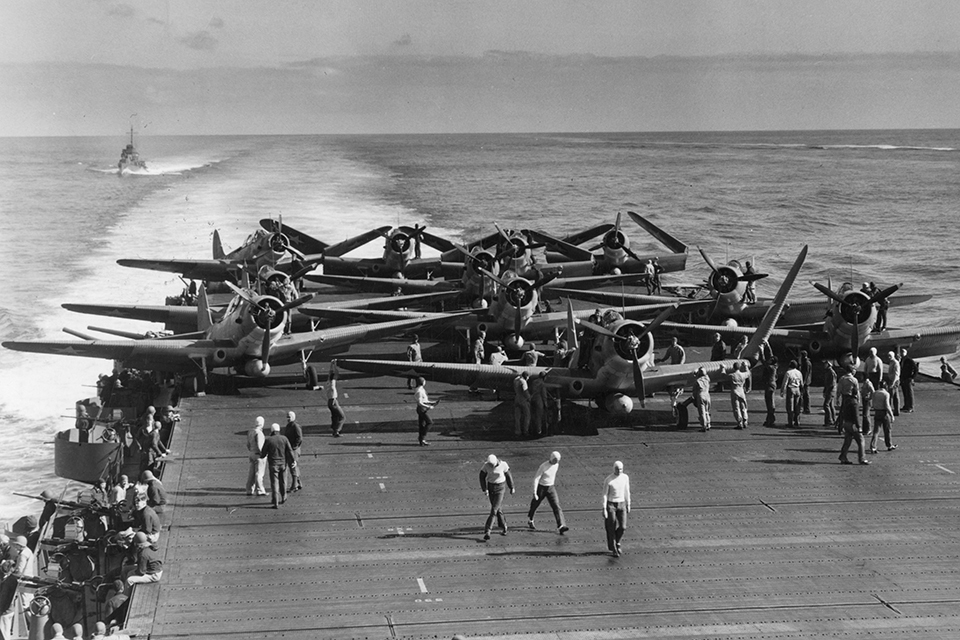
While The Battle of Midway was seen by nearly everyone on the home front, Torpedo Squadron 8 was made solely for the families of the lost Squadron members. On the day the attack began, Kenneth Pier was shooting footage on the deck of USS Hornet. Soon after, the men of Torpedo Squadron 8 (VT-8) were the first to fight the enemy, flying unaccompanied toward Japanese forces. When it became clear that twenty-nine of the thirty men of VT- 8 died during the battle, Ford identified and assembled footage of the airmen into a simple but poignant film. Torpedo Squadron 8 is a film memorial that shows the men mugging for the camera and posing beside their planes, unaware that they had only hours left to live.
The film, shot on 16mm, was reduced to 8mm and presented to all of the families of VT-8. We can imagine that the film served both as a painful reminder of what was lost and as a gift as family members could see their loved ones one last time. Today, we all can view this film and remember the men who gave their lives.
https://www.youtube.com/watch?v=Pa6O5GjUonQ
Behind the screen #3 Meet Aleksandar - late night software developer
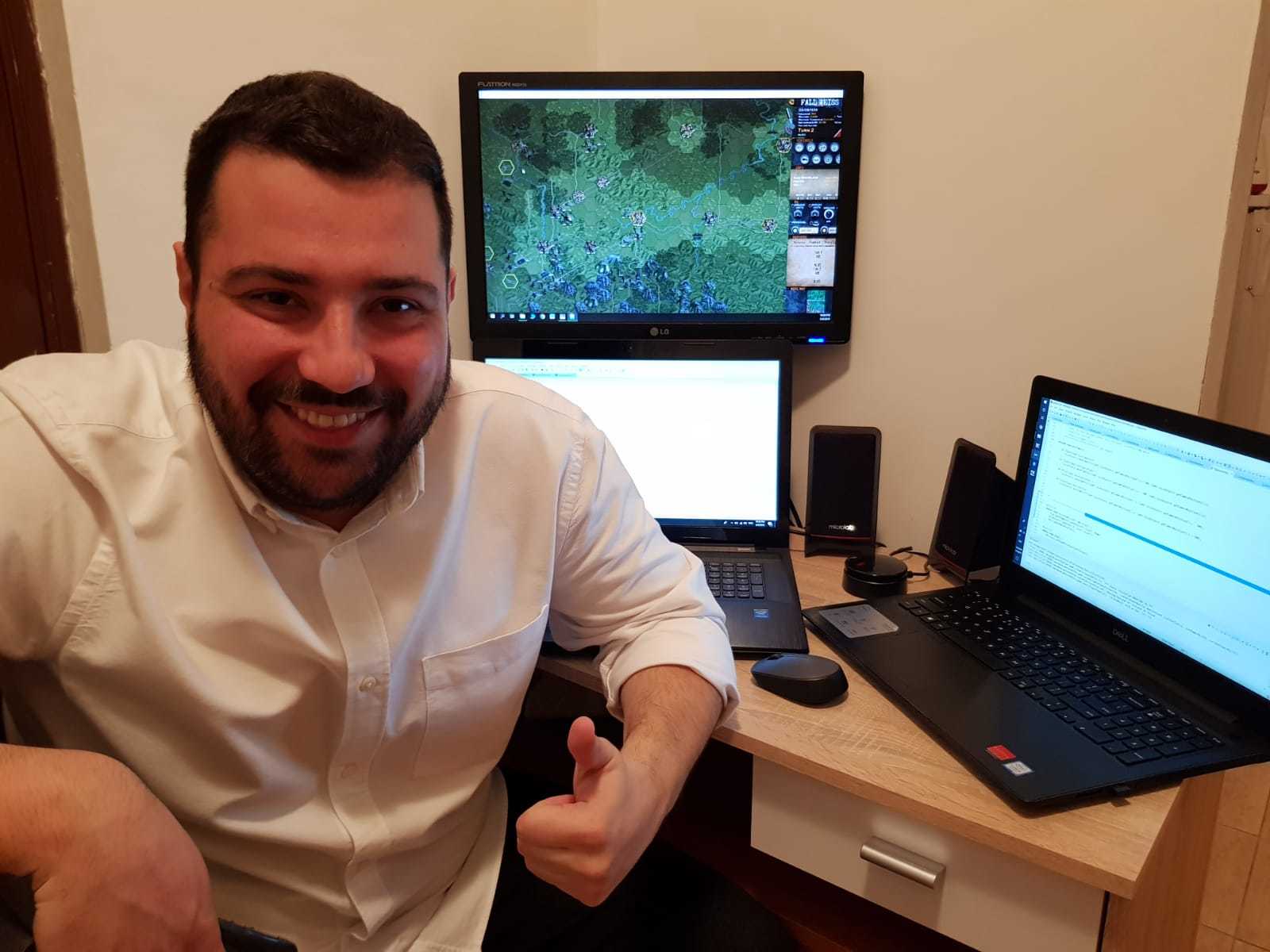
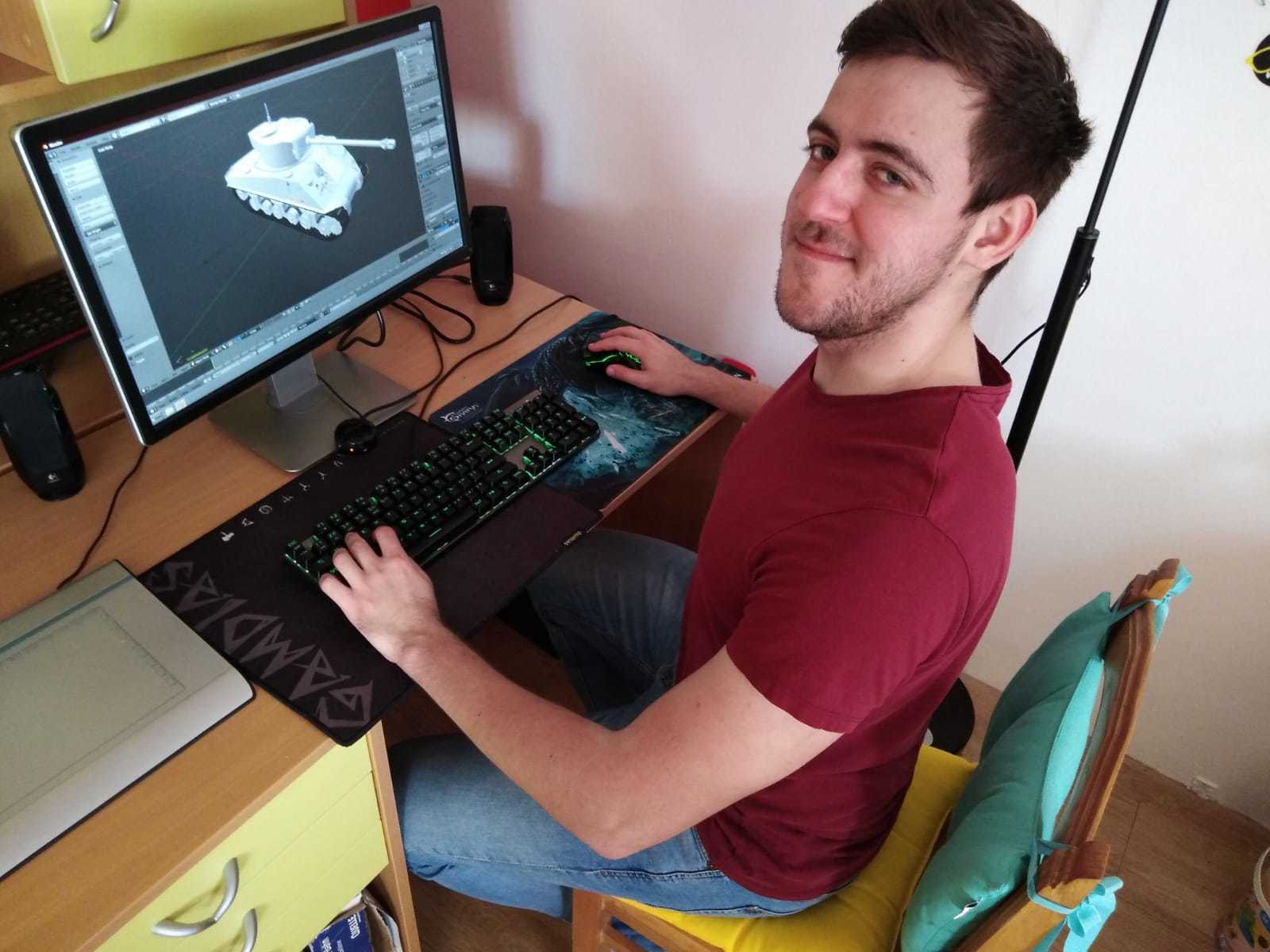
I am Aleksandar Jovanovic, software developer from Belgrade, Serbia. I've been working in the Klotzen development team for the last two years.
Working on Klotzen has been an interesting experience. What I like the most is that you often encounter problems where some creativity is required to resolve them.
It's a work from home job and it frequently required staying up late at night to completely finish this or that part of the game. But then the mornings were very rewarding, knowing that a complex game system that took lot of time and effort is finally implemented. Of course, sometimes you stay up due to bugs, but it's all part of the job.
I think staying close to the historical accuracy is a great advantage of this game. Also, I like how logistics/supply are large part of the game and working on that was extremely interesting. You could say that supply gives a game an interesting new dimension.
We are working hard to implement as many interesting mechanics into the game to keep the game interesting to dedicated players. There are so many different mechanics.
It's hard to win, it really forces you to think carefully and it's one of the main reasons I enjoy playing it.
I am fascinated by the technological advancements made during the WW2. A great example are the advances in rocketry that directly influenced the space exploration and satellite networks we have today. And of course, the advances and improvements in the air industry are amazing.
HISTORY BLOG #16 GOLIATH OF WORLD’S OCEANS – BISMARCK
How most powerful German ship was sunk
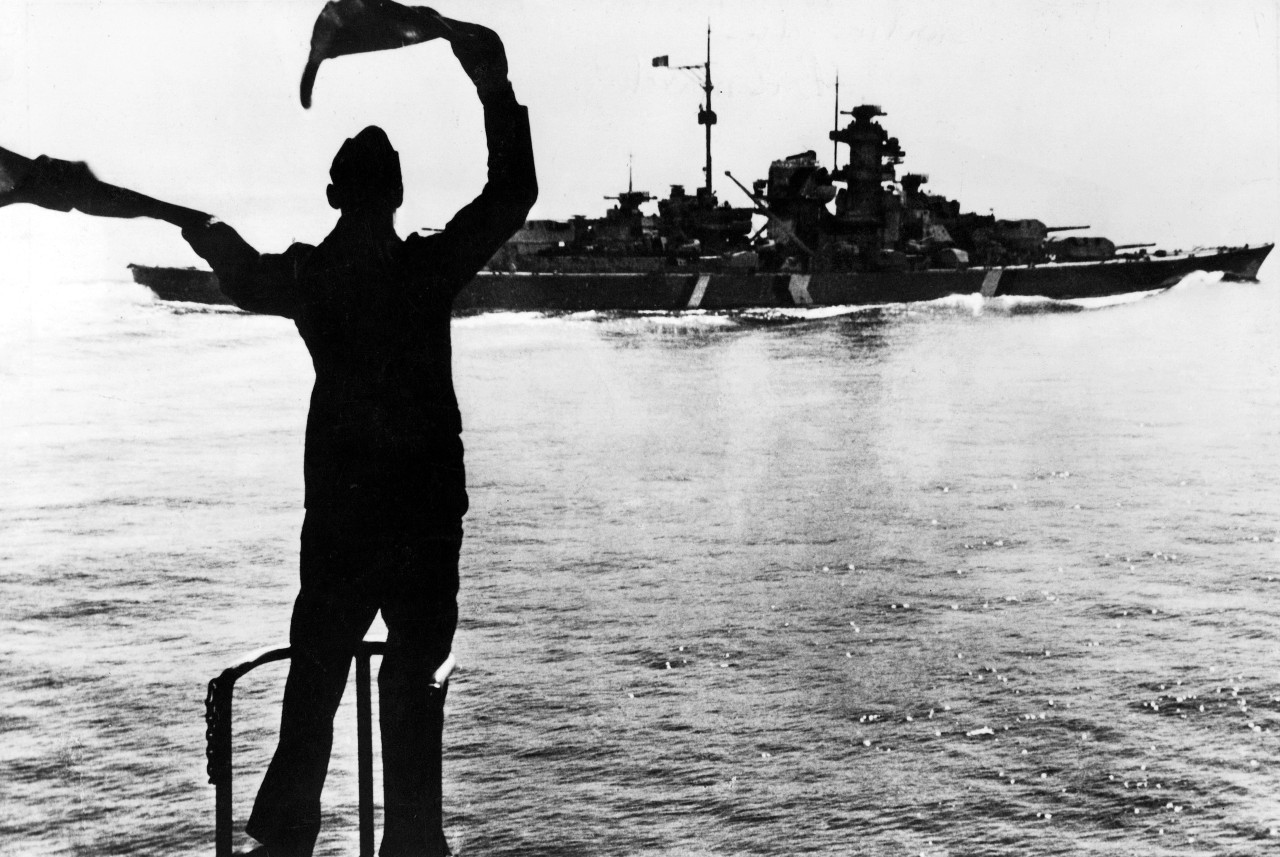
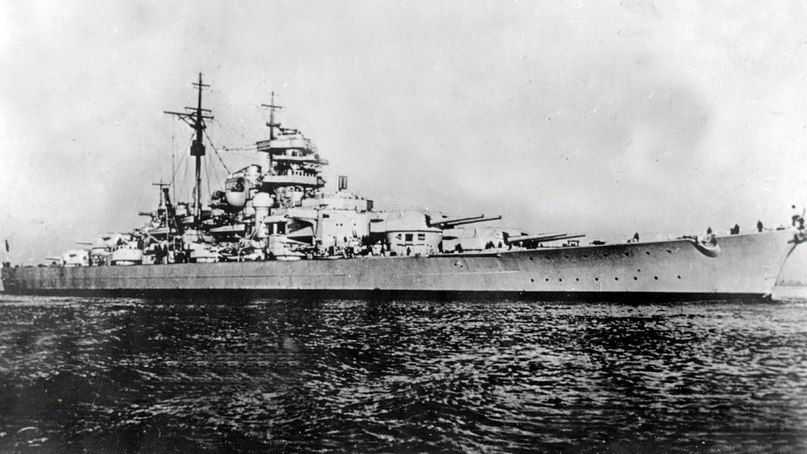
The Bismarck, probably Germany’s most famous battleship in World War Two, was sunk on May 27th 1941. The Bismarck had already sunk HMS Hood before being sunk herself. For many, the end of the Hood and Bismarck symbolised the end of the time when battleships were the dominant force in naval warfare, to be replaced by submarines and aircraft carriers and the advantages these ships gave to naval commanders.
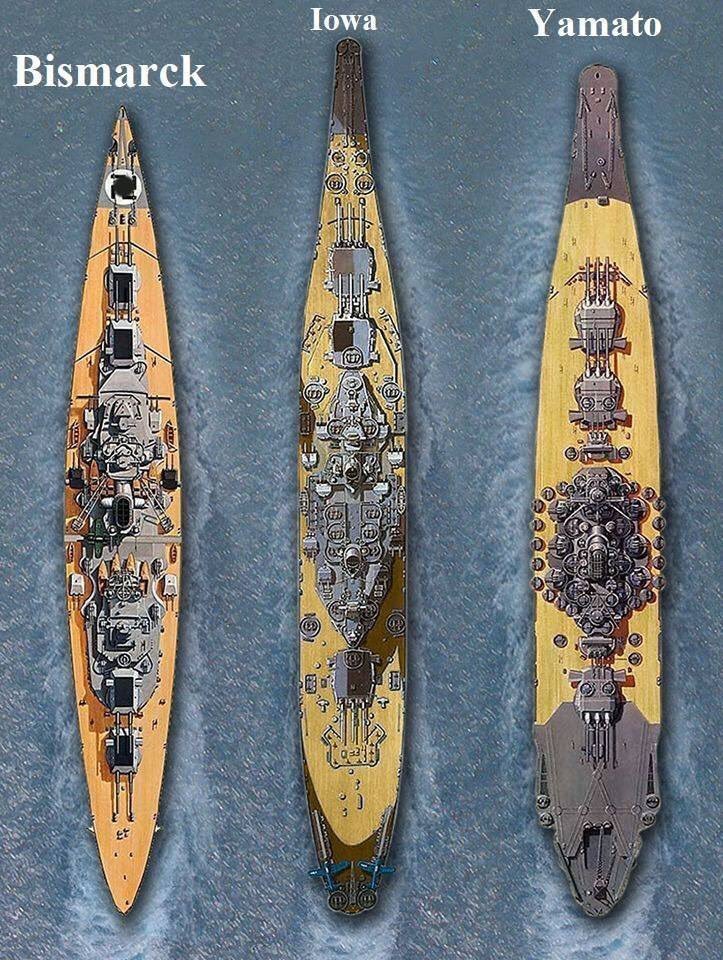
The Bismarck displaced over 50,000 tons and 40% of this displacement was armour. Such armour gave the Bismarck many advantages in protection but it did not inhibit her speed – she was capable of 29 knots. Launched in 1939, the Bismarck carried a formidable array of weaponry – 8 x 15 inch guns, 12 x 5.9 inch guns, 16 x 4.1 inch AA guns, 16 x 20mm AA guns and 2 x Arado 96 aircraft. The Bismarck had a crew of 2,200.
In comparison, HMS Hood (built 20 years before Bismarck) was 44,600 tons, had a crew of 1,419 and was faster than the Bismarck with a maximum speed of 32 knots. The Hood had been launched in 1918 and was armed with 8 x 15 inch guns, 12 x 5.5 inch guns, 8 x 4 inch AA guns, 24 x 2 pounder guns and 4 x 21 inch torpedoes. However, the Hood suffered from one major flaw – she did not have the same amount of armour as the Bismarck. The fact that the Hood was faster than the Bismarck by 3 knots was as a result of her lack of sufficient armour. Within two minutes of being hit by the Bismarck, the Hood had broken her back and sunk.
On May 18th, 1941, the Bismarck and the heavy cruiser Prinz Eugen slipped out of the Baltic port of Gdynia to attack Allied convoys in the Atlantic. Grand Admiral Raeder had already had experience of large warships attacking convoys at sea. Ships such as the Graf Spee, Admiral Scheer (both pocket battleships), Hipper (a cruiser) and Scharnhorst (a battle cruiser) had already been at sea but had found that their power was limited by the fact that they were so far from a dock/port that could carry out repairs if they were needed. Such a difficulty meant that mighty ships such as the Scharnhorst and Gneisenau were loathed to take on a convoy if that convoy was protected by any naval ship. In 1940, both the Scharnhorst and Gneisenau came across a convoy returning from the UK to Halifax, Canada. However, the convoy was protected by HMS Ramillies and neither German ship could risk being hit by a ship that in other circumstances would easily be outgunned by both German ships.
To overcome the fear of damage at sea, Raeder’s plan was for the German Navy to concentrate a powerful naval force in the Atlantic so that there would not be a concern about convoys and their protection. He intended for the Bismarck, the Prinz Eugen, the Scharnhorst and the Gneisenau to operate in the Atlantic fully supported with supply and reconnaissance ships – with such a force, no convoy would be safe regardless of how many naval protection ships they had. However, Raeder’s plan, code-named “Exercise Rhine”, was severely hampered from the start when the Gneisenau was hit by bombs while in Brest and the repairs needed for the Scharnhorst would take much longer than Raeder had anticipated. Regardless of this, Raeder ordered the Bismarck and the Prinz Eugen to sail as planned. The ships sailed on May 18th – but on May 20th, they were spotted by the Swedish cruiser ‘Gotland’ off the Swedish coast and the admiral in command of both ships – Lütjens – knew that such information would be received in London before the 20th was out. He was right.
On May 21st, both ships docked at Kors Fjord, near Bergen. The Prinz Eugen needed to refuel. At night both ships left, and not long after this the area around Kors Fjord was bombed by the British.
To get into the Atlantic, both ships had to pass north of Scapa Flow – one of Britain’s largest naval bases. At this base was the battleship ‘King George V’, the newly commissioned (but not battle ready) battleship ‘Prince of Wales’, the battle-cruiser ‘HMS Hood’ and the aircraft carrier ‘HMS Victorious’. With these ships were nine destroyers and four cruisers of the 2nd Cruiser Squadron. At sea in the vicinity were the cruisers ‘Norfolk’, ‘Suffolk’ ‘Manchester’ and ‘Birmingham’. The battleship ‘Rodney’ was also on convoy duty in the Atlantic.
When the new reached the Admiralty that the Bismarck and Prinz Eugen had left Bergen, Admiral Sir John Tovey, Commander-in-Chief Home Fleet, ordered the ‘Hood’ and the ‘Prince of Wales’ to sail accompanied by six destroyers. The fleet left Scapa Flow on May 22nd. All other ships in Scapa Flow and some on the Clyde were put on short notice. On the same day, German reconnaissance for Lütjens, informed him that all the ships that should have been in Scapa Flow were still there.
This was incorrect as the Hood and Prince of Wales had already sailed – though Lütjens thought otherwise. He was also convinced that the weather was on his side as fog obscured many areas to the west of the Norwegian coast and Lütjens became satisfied that he could get into the Atlantic unseen. Such was his confidence that he failed to keep an appointment with a tanker, preferring to steam ahead to the Atlantic. To boost his fleet, Tovey ordered the ‘Victorious’ to sail on the 22nd May and on the following day the battle cruiser HMS Repulse sailed.
At noon on May 23rd, the Bismarck and the Prinz Eugen entered the Denmark Strait, between Iceland and Greenland. Here, Lütjens met problems. The fog he had expected to cover his fleet did not materialise and his ships were squeezed between the Greenland ice field that extended 80 miles out from south-east Greenland to the north-west tip of Iceland itself. Lütjens was well aware that this whole area had been mined by the British and he had to select his course well. The Royal Navy also knew that the Germans would be forced to sail through a small area of sea and at 19.22 on May 23rd, the cruiser ‘Suffolk’ spotted both the Bismarck and the Prinz Eugen. The ‘Suffolk’ reported her sighting and HMS Norfolk picked this report up. At 20.22, the Norfolk spotted both German ships.
The ‘Suffolk’s report had reached the ‘Hood’ and Admiral Holland, on the ‘Hood’ concluded that there were 300 miles between his ship and the Bismarck. Holland ordered that the ‘Hood’ should steer a course to the exit of the Denmark Strait and the battle cruiser steamed off at 27 knots. At this speed, the ‘Hood’ should have come into contact with the ‘Bismarck’ at 06.00 on May 24th. The ‘King George V’ and ‘Victorious’ also picked up the message but were both 600 miles away and would have been unable to support the ‘Hood’ on the following day at 06.00. The Admiralty remained concerned for the safety of the convoys in the Atlantic as there was always the danger the ‘Bismarck’ might slip away. Therefore the ‘Renown’, ‘Ark Royal’ and ‘Sheffield’ were ordered to sea from Gibraltar to give further protection to the convoys.
The ‘Bismarck’ had darkness on her side and for a couple of hours, the ‘Suffolk’ and ‘Norfolk’ lost touch with the Bismarck. Without their positioning information, the ‘Hood’ could easily have lost contact with the Bismarck. However, by 02.47 on May 24th, the Suffolk had regained contact with the Bismarck. The information sent back by the ‘Suffolk’ led the Hood to believe that she would be just 20 miles from the Bismarck at 05.30 on May 24th. At 05.35, the lookout from the Hood made out the Prinz Eugen and the Bismarck at a distance of 17 miles.
Holland ordered the Hood to turn to the German ships and at 05.45 they were only 22,000 metres apart. At 05.52, the ‘Hood’ opened fire and shortly afterwards was joined by the ‘Prince of Wales’. At 05.54, both the Prinz Eugen and the Bismarck fired their guns primarily against the ‘Hood’.
The Prinz Eugen hit the Hood and set alight some anti-aircraft shells kept on deck. The fire this caused was not particularly dangerous for the ‘Hood’ even though it produced a great deal of smoke. At 06.00 a salvo from the Bismarck hit the Hood. The Bismarck had fired from 17,000 metres and the elevation of her guns meant that the shells that hit the ‘Hood’ had a high trajectory and a steep angle of descent. The Hood had minimal horizontal armour and one of the shells from the Bismarck penetrated the Hood’s deck and exploded in one of her magazines. A massive explosion tore the ‘Hood’ in half. Those who saw the explosion said that the bows of the ‘Hood’ were raised out of the sea before they sank. The ship sank extremely quickly and only three men out of a total crew of 1,419 survived.
After the destruction of the ‘Hood, the Germans turned their fire onto the ‘Prince of Wales’. Her captain, Leach, decided that the best course of action was to turn away under the cover of smoke and, along with the ‘Suffolk’ and ‘Norfolk’ continue to tail the Bismarck and Prinz Eugen.
However, the Bismarck had not escaped untouched by the battle. One shell had pierced two oil tanks. The damage it did to the ship was minimal but it did mean that 1000 tons of fuel was no longer available to the Bismarck as the shell had cut off this supply. Other senior officers on the Bismarck advised Lütjens to return to Germany buoyed by the success against the ‘Hood’. This advice was not listened to.
Lütjens decided to split up the Bismarck and Prinz Eugen. He had hoped to split up the Royal Navy that was doggedly pursuing him alone. In this he failed. As the Prinz Eugen steamed away, the pursuers targeted only the Bismarck. At this point the battleship King George V was only 200 miles away and closing fast. Accompanying the ‘King George V’ was the carrier ‘Victorious’. At 22.10 on May 24th, nine Swordfishtorpedo-bombers left the ‘Victorious’ to attack the Bismarck. Using directions from the ‘Norfolk’, the planes attacked through the cloud and found themselves attacking an American coast guard ship. By midnight the planes had found the Bismarck and attacked. Eight torpedoes were fired at the Bismarck and one hit home amidships. It did no damage to the ship but it may well have undermined Lütjens’ self-confidence as he announced to the ship’ crew that 27 aircraft had been shot down. He also informed Berlin that it was impossible for him to shake off the Royal Navy and that he was abandoning the task in hand to sail to St Nazaire as his ship was short of fuel.
As the Bismarck sailed, she was tailed by the Suffolk, Norfolk and Prince of Wales. Just after 03.06 on May 25th, the Suffolk lost contact with the Bismarck and it was assumed that she was steaming west into the Atlantic. In fact, the Bismarck was doing the opposite – sailing east for a port in Biscay. At 08.00, Swordfish from the Victorious were sent up to look for the Bismarck but found nothing. The Norfolk and Suffolk also drew a blank. What gave away the Bismarck was the Bismarck itself.
For reasons not known, Lütjens sent Hitler a message about his contact with the Hood which took 30 minutes to send by radio. This message was picked up by the Royal Navy. However, the information sent to Tovey was misleading as he was not in a position to interpret the bearing given to him by the Admiralty. The Admiralty also made another error. It failed to use gnomonic charts for its bearings and the King George V was given the position of the Bismarck but it was 200 miles out. This led Tovey to believe that the Bismarck was trying to return to Germany through the Iceland-Faeroes Gap. Through no fault of his own, Tovey was wrong.
The Admiralty did realise its mistake and informed Tovey that the Bismarck was, in fact, making for the Biscay ports. At 18.10 the King George V and other ships turned to the Biscay ports. Finally, the Royal Navy was given the correct course to follow but the Bismarck had a lead on them of 110 miles. The weather also favoured the Bismarck as it was deteriorating and visibility was reduced as the cloud as low. The Admiralty used Catalina flying boats to search for the Bismarck. On May 27th, the Catalina’s finally spotted the Bismarck. This information was given to the Swordfish crews from the Ark Royal which was steaming up from Gibraltar. They took off at 14.30 in rapidly deteriorating weather.
The lead Swordfish spotted a large ship on its radar and fourteen planes dived through cloud for an attack. Unfortunately, they attacked the ‘Sheffield’ as no-one had told them that the ‘Sheffield’ was in the same area as the Bismarck shadowing the giant German battleship. Luckily no damage was done to the ‘Sheffield’.
The Swordfish returned to the ‘Victorious’ to be re-fuelled and re-armed. By 19.10, they were airborne once again. At 19.40 they spotted the ‘Sheffield’, which gave the crews the direction of the ‘Bismarck’ -12 miles to the south-east. Fifteen planes attacked the ‘Bismarck’ and there were two definite torpedo hits and one probable. One of the torpedoes did considerable damage to the battleship by damaging her starboard propeller, wrecking her steering gear and jamming her rudders. Two observation planes saw the ‘Bismarck’ literally sailing in circles in the immediate aftermath of the attack and at less than 8 knots. The attack had crippled the ‘Bismarck’. The only saving grace for Lütjens was that the night had come and the darkness gave him some hint of cover. However, throughout the night the stricken battleship was harassed by destroyers under the command of Captain Vian.
The destroyers shadowed the ‘Bismarck’ and fed her position back to the ‘Norfolk’. The ‘Norfolk’ was joined by the battleships ‘Rodney’ and the ‘King George V’. On May 27th at 08.47, the ‘Rodney’ opened fire on the ‘Bismarck’. At 08.48, the ‘King George V’ did the same. The ‘Bismarck’ fired back but a salvo from the ‘Rodney’ took out the two forward gun turrets of the ‘Bismarck’. By 10.00 all her main guns had been silenced and her mast had been blown away. By 10.10, all her secondary armaments had been destroyed and the giant ship simply wallowed in the water. At 10.15, Tovey called off his battleships and ordered the ‘Dorsetshire’ to sink the ‘Bismarck’ with torpedoes. Three torpedoes were fired at the ‘Bismarck’ and she sank at 10.40. Out of her crew of 2,200, there were only 115 survivors. Only 2 officers out of 100 survived.
The ‘Prinz Eugen’ returned to Brest on June 1st and all but one of the supply ships sent out with the ‘Bismarck’ and ‘Prinz Eugen’ were sunk. ‘Exercise Rhine’ had been a dismal failure for the Germans as no convoy was attacked and her most feared battleship had been lost. For the British, there was much propaganda to make out of the episode even though the ‘Hood’ had been lost.
HISTORY BLOG #15 DESERT FOX, FIELD MARSHAL THAT HAD NEAR-MYTHICAL STATUS
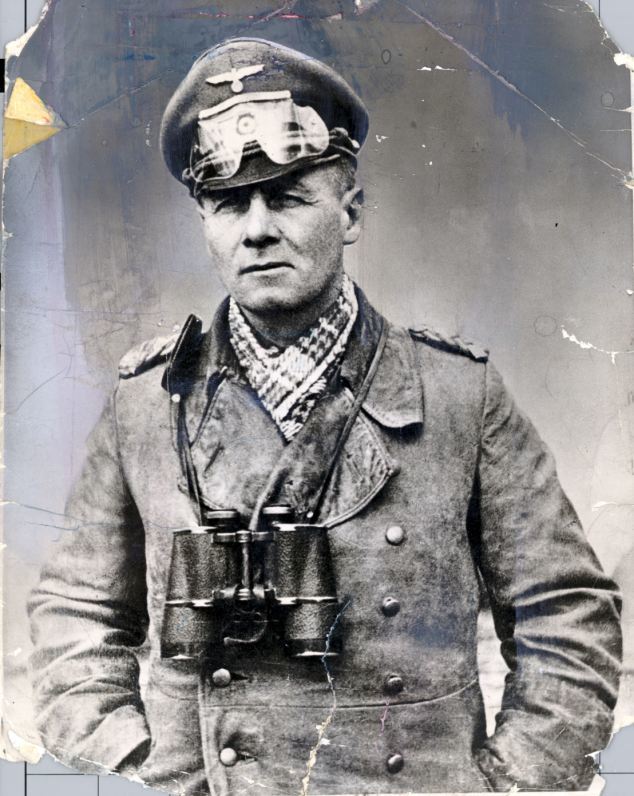
Field Marshal Erwin led the vaunted German Afrika Korps in the desert during World War II and committed suicide after being implicated in a plot to kill Adolf Hitler.
Born on November 15, 1891, in Heidenheim, Germany, Erwin Rommel was a hero of World War I, receiving the Pour le Mérite, or Blue Max, for his actions on the Italian Front. In World War II, Rommel led the German 7th Panzer Division during the lightning conquest of France and the Low Countries in May and June 1940. When Italian forces foundered in North Africa, Adolf Hitler ordered Rommel and the nucleus of what would become the vaunted Afrika Korps to the continent in February 1941.
In North Africa Rommel proved to be a superb tactician, repeatedly outflanking his British and Commonwealth opponents and pushing them across hundreds of miles of desert to the Egyptian frontier. Rommel seemed to anticipate his enemy’s actions, and his reputation soared to near-mythical status. In the process, Rommel earned the nickname of the Desert Fox.
As Rommel’s Axis forces advanced, his overextended supply lines, continually harassed by Allied air and naval assets, proved to be his Achilles heel. At the Battle of El Alamein in October 1942, his depleted forces faced a replenished and well equipped British Eighth Army under General Bernard Montgomery. The Axis defeat at El Alamein was a turning point of World War II.
A fighting retreat to Tunisia ensued, and by the time the remaining Axis forces surrendered in the spring of 1943, Rommel had been recalled to Germany and assigned command of the Atlantic Wall defenses in France and along the coast of Western Europe. The defenses were under construction, and an Allied invasion of France was expected in 1944. Rommel energetically supervised the construction and quickened the pace. However, when D-Day came on June 6, 1944, he was away from his headquarters, visiting his wife in Ulm, Germany, for her birthday.
During the Normandy Campaign, Rommel was seriously injured when his staff car was strafed by an Allied fighter. While he recuperated, he was implicated in the July 20, 1944, plot to assassinate Adolf Hitler. Rommel was give the choice of a show trial, conviction, and certain death as a traitor or suicide, a state funeral, and the assurance that his family would be safe. He chose suicide and died at Herrlingen, Germany, on October 14, 1944.
To date, Erwin Rommel’s legacy is that of an audacious battlefield commander who gained the grudging respect of his adversaries.
BEHIND THE SCREEN #2 MEET DARIO, OUR LEAD 3D DESIGNER !
Hi, my name is Dario, and I am the lead 3D designer on Klotzen.
I did most of the vehicles, planes, artillery and naval units, as well as menu backgrounds.
Klotzen is trying to maintain the historical accuracy regarding the details of WW2 units and events, and I like how much effort the whole team is putting into this.
There are fewer strategy games on the market and even fewer are the ones that have the accurate look and feel of the WW2.
I believe that Klotzen! will be a refreshing addition to the video games market.
HISTORY BLOG #14 A WOMAN, A DRIVER, A VETERAN…
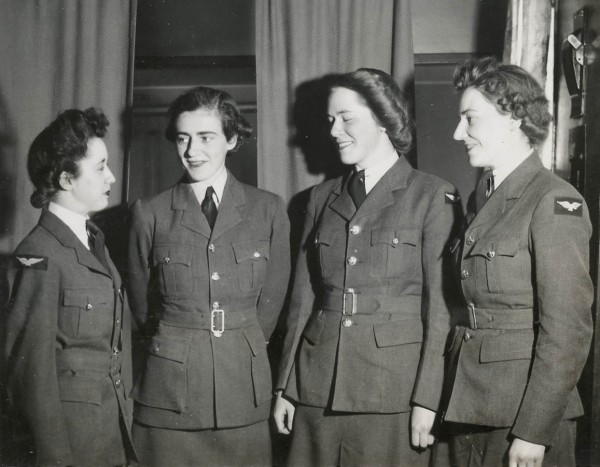
Joan M. “Barc” Barclay-Drummond, speaks about bravery and determination to help Royal Canadian Air Force (RCAF)
Women had massive impact and role in determination of WWII…
Testimony of Joan M. Barclay can be found on “The project memory” which represents collection of veteran stories and much more.
“And I wanted to do my best, I didn’t want to stay home and do nothing. My brother was in the navy and I was a flying nut and so the Royal Canadian Air Force was just natural for me to join. And we were being trained by what they called women’s air force (WAAF – Women’s Auxiliary Air Force) personnel from England. She was a sergeant major in the true variety of sergeant major, complete with a strident English accent and buckteeth. And she, for some reason or other, I don’t know why, she took an instant dislike to me and I instantly disliked her. And she was, I think she knew that I was too young (she was 17 at the time) and I think she was trying to break me. And of course, the more she tried, the more stubborn I got and any horrible duties – the day we all had our inoculations, a lot of the girls passed out and a lot of them were very sick to their stomachs and she had me on latrine duty on purpose, to clean up. And it just went on and on and on like that for, I never got over it until 1988, they had a reunion in Calgary. And I was walking out of, we were staying at the University of Alberta, and I walked down the corridor and I spotted her. I couldn’t have missed her if a cow flew by. And she spotted me too. And we ended up, we told each other how we had disliked each other and we became quite good friends after that.
Went into the motor division and I had my training in Toronto. Old Havergal school. And I ended up in a room my mother told me that her sister had been in at boarding school in Old Havergal. And it was on Jarvis Street; Jarvis Street was renowned for the ladies of the evening and we weren’t very welcome on Jarvis Street, I can tell you. And we learnt to drive everything from oil tenders to ambulances to trucks to ordinary cars.
My very first posting was at No. 3 SFTS [Service Flying Training School] in Currie, Alberta. And my first words of greeting on that station is what the F— are you doing here?! So I learnt that in a big hurry. And I discovered that I was only the fourth lady transport driver in the whole station. And we weren’t particularly welcome because they realized that, A, I was a mechanic, B, I was a darned good driver, if I do say so myself. And my sergeant realized that and he became very friendly and he gave me all the heavy stuff to do because he knew I could do it. Most of all, the activity or all the action and drama and stuff was at No. 3, usually. I was on crash ambulance duty for about four months and that was not a very pleasant experience because we did lose three or four planes during that tenure of time. And I witnessed a lot of horror, I must say.
Well, I think I was chosen to do it because I didn’t seem to be ruffled by too much and I was so busy trying to keep quiet and keep my age, sort of not get caught, let’s put it that way, that I never showed any reaction or anything. So they thought I would be pretty steady on the crash scene and not panic or do anything, which I didn’t do. So actually, it was very, it was a fascinating job if you didn’t mind the kind of horror that went with it.”
Behind the screen #1 Damir al-Kattan, a programmer who discovered gaming
Meet Damir…
My name is Damir al-Kattan and I`ve been part of the Klotzen development team for almost a year now. It has been a tremendous experience for me, coming from a more traditional programming environment into the gaming industry.
Right from the start, I was inspired by the amount of the creativity our team puts daily into resolving all the challenges, to provide the best possible experience to the gamers.
I have very solid gaming experience since ZX Spectrum and Commodore 64, and naturally, I was always interested in making a game people would be passionate about, challenge and make them come back and back again. Every gamer has a selected few of those games, games they go back and replay repeatedly, games they can talk about until deep to the night, games which made them inspired. The idea of being a part of the team which is delivering a gaming experience of that sort to the players is what drives me to provide the best and most creative solutions in my daily work.
Klotzen game is pretty much modern age-old school game, influenced by classics such as Panzer General but with its own personality. We allow the player to relive WW II but also to have a real impact on the history and storyline, as the events and mission outcomes are directly impacting the campaign, allowing the player to finish the WW II in several different directions.
The game is very realistic, and it will have a steep learning curve. Our team made sure that only the seasoned war generals, who know every trick in the book, are able to finish the campaign. There are so many strategic aspects and details to keep in mind, from supply chains, rails & roads, weather impact to the experience your general and commanders, minefields, objectives, etc. The game might look simple on the first glance, but don`t get fooled!
Good luck on the battlefield!
HISTORY BLOG #13 KURSK. ONE WORD THAT CHILLS THE BONES…
Biggest tank battle in the history
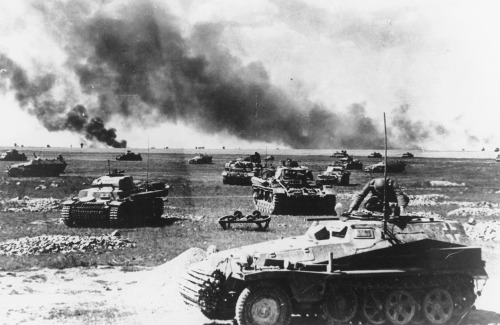
In the morning, 5. July 1943, explosions lit up the Russian sky and the earth shook to a huge bombardment. As the sun rose, waves of hundreds German panzers began rolling across fields of sunflowers and wheat. The greatest tank battle in history was underway.
The Battle of Kursk pitted almost 3,000 German tanks against more than double that quantity of Soviet heavy armour. Hitler delayed the offensive - codenamed Operation Citadel - to wait for the arrival of the new Panther tank. It gave the Russians plenty of time to dig formidable defenses and concentrate their own armoured units.
The German tanks were fewer in number but far superior in armour and firepower. Tigers and the "monster" Ferdinand tank destroyer went in first, attempting to blast their way through. One SS tank commander destroyed 22 Soviet tanks in under an hour. But the Russians defended with "suicidal bravery", getting in close to throw mines under the caterpillar tracks.
After eight days the German attack had run out of steam. Stalin launched counteroffensives that over the following six weeks inflicted a crushing defeat on the Wehrmacht. Kursk was a tipping point for the panzers. For the first time the Russian air force had "got its act together". Air power was emerging as a dominant factor, as became clear in Normandy the following year.
Allied air superiority meant that the German panzers had to hide in the forests during daylight hours. The tank, like the battleship, was suddenly a sitting duck without control of the skies. But unlike the battleship, the tank remains a key part of most militaries.
Germany committed over 1,720,000 men, 5000 tanks and assault guns and the USSR threw over 4 million men and 12,000 tanks into what is probably the greatest offensive battle in history.
Kursk from the air
The stalwart Stuka dive bomber was another tool in Germany’s arsenal that participated at the Battle of Kursk. This variant, the JU-87G, was armed with a pair of 37mm Bordkanone mounted under the wings.
Hans-Ulrich Rudel was the impetus for this idea. He piloted the only “official” JU-87G variant at Kursk, knocking out many Soviet tanks. Several D variant Stukas were converted to the G model and participated at the battle as well.
Many decades later, the JU-87G and its powerful tank busting weaponry influenced the design of the A-10 Warthog.
Zorans statement about release date, AI and developing Klotzen! Panzer Battles
We are getting quite a few questions on the status of Klotzen and to be honest we were a bit quiet on the game progress in the last few months.
So, I figured I could lay down where we are at.
First, the thing asked the most – release date. The reason we haven't set the date is I can only tell you when it WON'T be released – in the next two months. We need at least a month till beta and at least a month of testing. As we've seen it can easily be more than that. Sorry for the wait. It's not easy on this side either, but – game dev. Bugs appear. People leave and replacements need to catch up. Actually? It's mostly feature creep 😊. But at least it will – hopefully - be a complex game, with lots or realism and interesting approaches to winning.
So, what has been happening behind scenes? We've killed A LOT of bugs. Few months ago, you couldn't play the game for 10 minutes without having 10 bugs. All that is fixed, with some minor issues and enhancements we are working on which will be done soon. We are finally working on inserting leftover graphics, so there should be some new visuals in a week or two. Campaign is also set and in the process of being tested.
What is currently holding back the entire game is the AI. It is already working nicely, but it's missing some parts so we can't move on with the testing of maps since difficulty depends on how good the AI is in handling the units. AI development is proceeding in parallel to the rest of the game but it could prolong the release date if testing show improvements are necessary.
We’ve made a list of enhancements needed before we can start beta testing. The list is… long. So today we had a discussion on the chances of us hitting beta in May. I think it’s possible, so everybody else agreed this best describes me…
… fun times. I will be the only one laughing in May 😊.