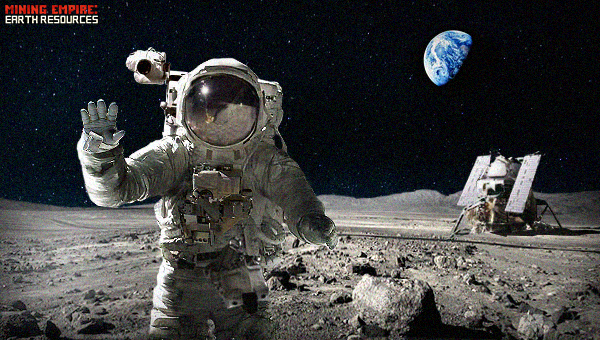
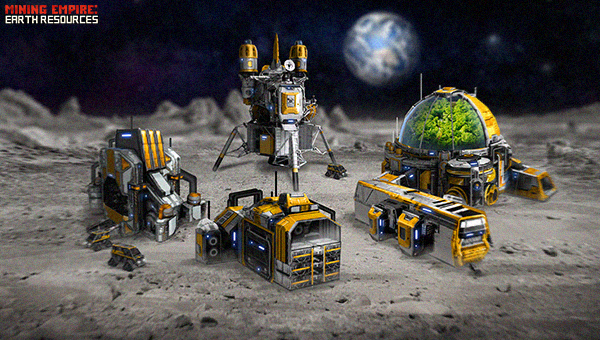
We're glad to announce the release date of our game Mining Empire: Earth Resources! This mining simulator will be available on Steam this Friday. Thank you all for waiting! We promise that it wasn't the vain expectation and you really enjoy the game.
And now let's remind you the main aspects of our game:
Money literally lies beneath our feet, but only few are willing to make an effort to get it. You are one of those enthusiasts who are not afraid of hard work and possible risks. Run a big corporation whose task is to extract minerals to build a lunar station!
Remember that here you are to take many aspects into account! Think about licenses to make your mining legal. Follow the statistics of extracted resources and take care of your reputation.
If you'll find any bugs or issues, let us know, so we can do our best to fix them as soon as possible. And, of course, don't forget to write a review!
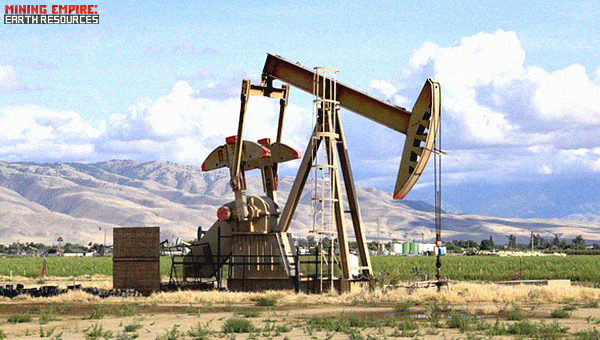
Sneak Peek #23 - Oil products refining stages
Refining of oil products is a very complex process. After being delivered to the refineries, they go through several stages before turning into ready-to-use products.
primary distillation preparation;
primary oil refining (production of oil distillation products);
oil and gas recycling (oil distillation product quality improvement);
The oil wells products, extracted during drilling, contain impurities, which include water, salt, clay, soil particles, sand and APG (associated petroleum gas). The longer a mine is exploited, the more water and other impurities does the extracted raw material includes.
To avoid this, raw materials are subjected to the complex processing of oil and gas (purification) process, mechanical in the first stage, and after that - fine. In addition, mining products are split in oil and gas separators at the preparatory stage. In order to increase the efficiency of further processing, the crude oil is dehydrated and desalted using special electrical desalting plants.
Primary oil refining
The purpose of primary refining is the split of oil and gases into separate hydrocarbon fractions. Such distillation allows to obtain a whole range of oil products and semi-finished products. The product of the crude oil distillation is called straight-run.
This process is based on the difference in boiling points of various hydrocarbons groups. As a result, crude oil is divided into various light and dark fractions, which are straight-run oil products.
Oil recycling
Secondary refining is a thermal and catalytic effect on a straight-run oil refining product, which changes the hydrocarbons nature, contained in it.
The main technologies of oil refining:
Fuel. With the help of this technology, various highest-quality fuels are received;
Fuel and lube. With this technology it is possible to get not only fuel, but also lubricating oils and, asphalt;
Petrochemical. The technology that includes the greatest variety of end products: fuels, oils, synthetic rubber, detergents, alcohol and many other chemicals.
Purification of the resulting oil products
Removal of undesirable components (distillates and residues from the oil distillation) that adversely affect the performance properties of fuels and oils from the oil products. Such components include sulfur and nitrogen compounds, asphalt-resinous substances, etc.
Sneak Peek #22 - Exposing of organic and biological materials in open space.
The EXPOSE-R is an European Space Agency experiment that was held on the outside of the Russian ISS segment for the 22 months. Its main aim was undertaking exobiological studies on the effects of the space environment (ultraviolet radiation, vacuum and ionizing radiation) on organic and biological materials. This would allow to explore the likelihood and limitations of the spread of life beyond the Earth on other planets in the Solar System, as well as provide a better understanding of the processes governing the interaction of life with the environment on Earth.
During the experiment, the selective effect of hard cosmic ultraviolet radiation (with a wavelength of 200 nm) on the resting forms of various biological objects was first established.
Spores of microorganisms, seeds of higher plants, dry crustacean embryos that survived in the absence of ultraviolet, exhibited in outer space, died influenced by it, but the spores of microscopic fungi (Aspergillus sydowii, Aspergillus versicolor) and the mosquito larvae (Polypedilum vanderplankii) partially maintained their vitality under these conditions.
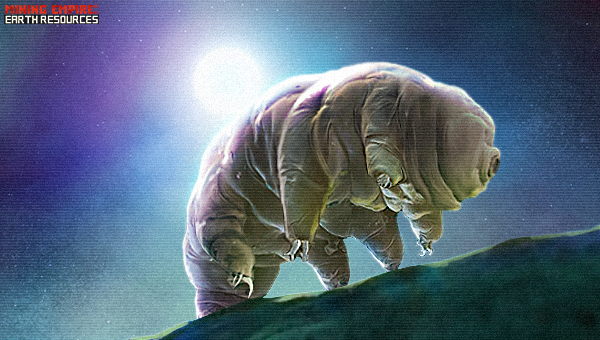
In 2007, a little-known creature called the Tardigrade became the first terrestrial organism that survived in open space. This research was conducted aboard the Foton-M3 satellite, the launch of which was sponsored by the European Space Agency. The purpose of the experiment was to find out how terrestrial organisms endure the extreme conditions of cosmic radiation at the molecular level. The result exceeded all expectations: the Tardigrade endured the short-term effects of extremely low temperatures, cosmic radiation and an almost complete vacuum.
Tardigrades (lat. Tardigrada) are widespread throughout the Earth, they could be found in the sea, freshwater ponds and on land. Their body is less than 1 mm long and they look like bears, although biologically they are very primitive organisms.
Over millions of years of evolution, the Tardigrades have learned to hibernate in adverse conditions, when almost all the functions of their vital activity are suspended. This condition is called cryptobiosis. It is believed that this ability allows Tardigrades to survive in outer space.
X-ray resistance is a side effect of the Tardigrades adaptation to dehydration. According to scientists, severe dehydration causes damage to living organisms at the molecular level, it can even break the DNA chain, as X-rays do. Scientists began exploring the capabilities of the Tardigrade using the genome sequencing of the Ramazzottius varieornatus Tardigrades species, whose cells are particularly resistant to external influences. As a result, it was found that a protein known as Dsup prevents the destruction of the DNA. It allows the Tardigrade to get through dehydration and radiation. Scientists have also found that human cells with the Tardigrade DNA elements can reduce the damage from x-rays by about 40%. Thus, on the basis of research, it is possible to develop mechanisms for protecting people from X-rays while undergoing treatment or under extreme conditions, including a long space flight.
The study of Tardigrades is actively continues. Scientists believe that the Tardigrade is the key to understanding of how earth life in general adapts to the conditions of a long stay in outer space.
Sneak Peek #20 - Space radiation and ways of protecting from it
Radiation is one of the main negative biological factors of outer space. There are two types of radiation that poses potential threats: solar flares cosmic rays. Solar flares are rather powerful radioactive impulses capable of killing in a very short time. Cosmic rays are a set of various particles that have a high linear energy transfer, because of what they are called densely ionizing radiation.
In today's strategy for improving human radioresistance, there are the following areas:
Radioprotective transgenes
Such transgenes can be obtained from many organisms with a high degree of radioresistance. If we identify the genes and molecular mechanisms responsible for increased radioresistance, they can be transferred to people with the help of gene therapy.
Radioprotectors
These are medical supplies that increase the body's radiation protection. They inhibit the body's radiochemical reactions, as well as increase the reactivity of the body's protective mechanisms.
Hibernation
Hibernation causes all slowing down of processes in the human body. In the course of the experiments, it was proved that in this state resistance to extreme factors increases: temperature decrease, fatal doses of radiation, overloads, and so on.
The problem of the radiation safety of space missions' participants belongs to the class of very complex problems that impede the conquest of space and solutions are sought immediately.
Sneak Peek #19 - Earth observation from space
It is well known that usage of the global space-based information helps to monitor either fast-moving (fires, flooding) or slow-moving processes (deforestation and burnings overgrowing, desertification), covering vast areas. Monitoring can be described as a complex system of observation for keeping the state of the environment under review, making estimates and projections of changes in its state under the influence of natural and anthropogenic factors. The use of space materials for monitoring is reduced to the comparison of multi-temporal data for identifying both short-period and multi-year changes. The effectiveness of the monitoring system depends on the equipment measuring parameters and data processing algorithms.
Satellite monitoring allows controlling the state of the atmosphere, detecting technogenic emissions, hazardous processes and natural phenomena that are sources of emergency situations in order to meet the challenges of warning and organizing disaster response.
Sneak Peek #18 - The "Biohazard" complex of studies
The "Biohazard" complex of studies has been developed due to the problem of the space hardware environmental safety. It studies influence of outer space to the "bacterium-substrates" systems and their work under conditions of the planet quarantine. These microbiology industry systems contain different micro-organism cultures and substrates, intended for the more efficient mining. However, under constant influence of such factors as: energetic electrons and ions flows, cold and hot space plasma, solar electromagnetic radiation, particulate matter of synthetic origin and others, the systems are prone to wear and tear.
With the help of these studies, carried out within the "Biohazard" complex, it is possible to access the "bacterium-substrates" system's work stability and its maximum resilience under the most extreme environments, without extensive support. On the basis of these studies, it is also possible to identify the most preferable micro-organisms and substrates, suitable for mining under different conditions.
Sneak Peek #17 - Subsoil Use License
Subsoil Use License is a document certifying the right to use a potion of subsoil issued by the licensing body. Since subsoil and the resources therein are state property, they can not be bought or inherited. Therefore, an interested person can be given the right to use subsoil only for a certain period of time. The conditions under which an interested person is granted a license are determined by the type of operation, for expample, geological studies, the extraction of commonly occurring mineral resources, the construction and operation of underground facilities not related to mining.
Research test sites, nature reserves and recreational areas also need a permission to use the subsoil. The license is not required if only the natural resources located within the site are to be extracted for non-commercial use.
Happy Cosmonautics Day!
Dear earthlings!
Happy International Aviation and Cosmonautics Day! This is a special day - the day of the triumph of science and all those who work in the space industry. We are enjoying the beauty of the Moon and waiting for you to come! And today, on April 12, to celebrate the holiday, we will organize all kinds of events on the moon - conferences, scientific and educational lectures and seminars, film screenings and much more. After all, this is a common holiday, connecting the past, present and future of the people of Earth and the Moon. Let's remember the the most remarkable events in cosmonautics history of the last century:
On April 12, 1961, the USSR pilot-cosmonaut Yury Alekseevich Gagarin made the world's first flight into space.
On July 20, 1969, American astronauts landed on the Moon. Three American astronauts participated in that famous expedition: Neil Armstrong, Edward Aldrin and Michael Collins.
The first internationally crewed space mission in the history of cosmonautics took place on July 15, 1975. It involved a Soviet Soyuz-19 and an American Apollo spacecrafts.
And we are determined to continue! We will keep exploring the space!.
Today, our Constellation lunar rover will take an honorary lap across the Moon's surface. Hooray!
Sneak Peek #16 - The colonization of the Moon
The colonization of the Moon is one of the main strategic goals of astronautics.
The lunar base is a unique place for maintaining scientific experiments in the field of planetology, astronomy, cosmology, space biology, and other disciplines. The study of the lunar crust is vital for tracing both the evolutionary history of the solar system and the emergence of life. The absence of the atmosphere allows building optical and radio telescopes on the lunar surface, which are able to get much more detailed images than with using terrestrial telescopes.
An important reason for the colonization of the Moon is also the presence of minerals on it, the reserves of which are coming to an end on the Earth (helium-3) or the delivery of which to the orbit is too expensive (iron, aluminum, titanium). On the Moon there are deposits of water ice - a source of water, oxygen, hydrogen. In some cases, it is easier to use lunar material than to deliver it from Earth.
According to the experts' assessments, the Moon contains at least 1 million tons of helium-3, which will fully provide the thermonuclear energy of mankind for a period of more than 1000 years. Today it takes approximately 30 tons of helium-3 to supply the entire population of the Earth for a year. The extraction of helium-3 and the change-over to thermonuclear energy is especially important, given the fact that the hydrocarbons reserves on Earth will dry up in about 50-90 years.
The deep vacuum and the availability of cheap solar energy open up new horizons for electronics, metallurgy, metalworking and materials science. In fact, the conditions for the processing of metals and the creation of microelectronic devices on Earth are less favorable because of the large amount of free oxygen in the atmosphere, which deteriorates the quality of casting and welding, making it impossible to produce ultra-pure alloys and chip substrates at huge volumes.
Due to its impressive landscapes and exoticism, the Moon will most likely be a viable space tourist destinations, which can attract a significant amount of funds for its development, contribute to the popularization of space travelling, encourage many people to study the lunar surface. Space tourism will require certain infrastructure solutions. Infrastructure development, in turn, will contribute to a more extensive lunar penetration.