Placer mining, ancient method of using water to excavate, transport, concentrate, and recover heavy minerals from alluvial or placer deposits. Examples of deposits mined by means of this technique are the gold-bearing sands and gravel that settle out from rapidly moving streams and rivers at points where the current slows down. Placer mining takes advantage of gold’s high density, which causes it to sink more rapidly from moving water than the lighter siliceous materials with which it is found. Though the basic principles of placer mining have not altered since early times, methods have improved considerably.
Specific placer mining equipment is needed for each of the methods which can be classified according to the several methods of excavating and transporting the gravel, or they may be designated to correspond with the various ways of saving the gold. The actual moving of the gravel from place is always the principal concern of the miner, and often the gold-saving is entirely incidental to the working of the deposit. The following classification, therefore, seems the most logical and is the one generally used by placer miners:
hand-shoveling;
ground-sluicing;
hydraulicking;
excavating by teams or power equipment;
dredging;
drift-mining.
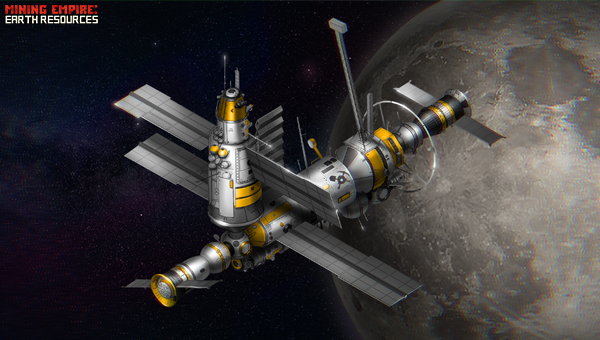
Sneak Peek #14 - Lunar-orbit space station
The biggest step of the Moon as well as near-lunar space exploration program is the construction of a moon-orbiting space station, brought within a few thousand kilometers of the lunar surface. It is intended to serve as a solar-powered communications hub, science laboratory, short-term habitation module, and holding area for rovers and other robots. With its help, mankind will be able to colonize the Moon and launch flights to other planets, such as Mars.
The station will have four main modules: habitat module, the module to generate electricity, modules that'll help to control the whole station and conduct experiments, and also docking and spacewalks modules. The technologies needed to develop not only the Moon, but also deep space, will be tested on board the station. In particular, it will provide an opportunity to explore the lunar surface using the lunar rovers and landing stations.
Preliminary investigation a survey of the subsoil conducted by an engineering geologist in conjunction with a civil engineer. Typically, the footprint of the structure is established on the proposed building site and trenches up to fourteen feet deep are dug both outside, and more importantly, inside, the proposed footprint using the bucket-end of a backhoe. In extreme cases, a larger, more powerful tracked excavator is used.
The geologist is looking for potential failure planes, expansive clays, excessive moisture, potential for proper compaction, and other variables that go into the construction of a solid foundation. Materials are also gathered to determine the maximum compaction value of the subsurface. Preliminary investigations should always be conducted prior to the construction of any permanent structure.
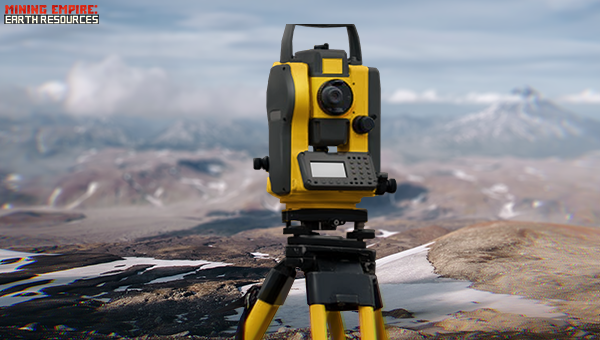
The general principle of investigation is the integrated works, which means that along with the investigation and exploration of the main types of minerals, all accompanying mineral components and the possibilities for their utilization are also being examined, as well as hydrogeological, mining, geotechnical and other issues. Climatic, geoeconomic, socioeconomic and economic-geological perspectives and risks are also being studied.
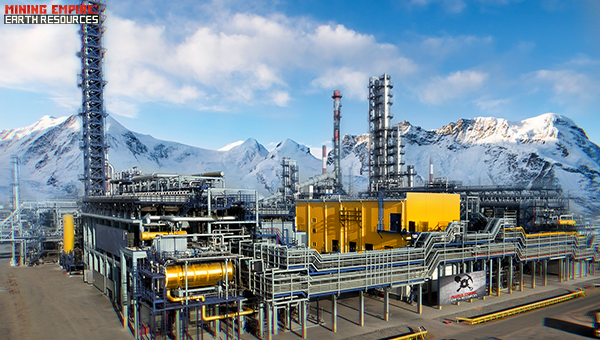
Sneak Peek #12 - Oil refinery
Oil refinery is an industrial enterprise whose main function is the processing of oil into gasoline, jet fuel, fuel oil, diesel fuel, lubricating oils, lubricants, bitumens, petroleum coke, raw materials for petrochemistry. The refinery's production cycle usually consists of the preparation of raw materials, the primary distillation of crude oil and the secondary processing of petroleum fractions: catalytic cracking, catalytic reforming, coking, visbreaking, hydrocracking, hydrotreating and mixing of the components of finished petroleum products.
Refinery Profiles
Fuel profile
At the refinery of the fuel profile, the main products are various types of fuel and carbon materials: motor fuel, fuel oil, combustible gases, bitumen, petroleum coke, etc. A set of installations includes: mandatory - oil distillation, reforming, hydrotreating; supplementary - vacuum distillation, catalytic cracking, isomerization, hydrocracking, coking, etc.
Fuel and oil profile
In addition to various types of fuel and carbon materials, the refinery of the fuel and oil profile produces lubricants: petroleum oils, lubricants, and solid paraffins. A set of installations includes: installations for the production of fuel and installations for the production of oils and lubricants.
Fuel and petrochemical profile
In addition to various types of fuel and carbon materials, petrochemical products are fabricated at the refinery of the fuel and petrochemical profile: polymers and reagents. A set of installations includes: installations for the production of fuel and installations for the production of petrochemical products (pyrolysis, the production of polyethylene, polypropylene, polystyrene, reforming, aimed at the production of individual aromatic hydrocarbons).
Sneak Peek #11 - THE SHEARER
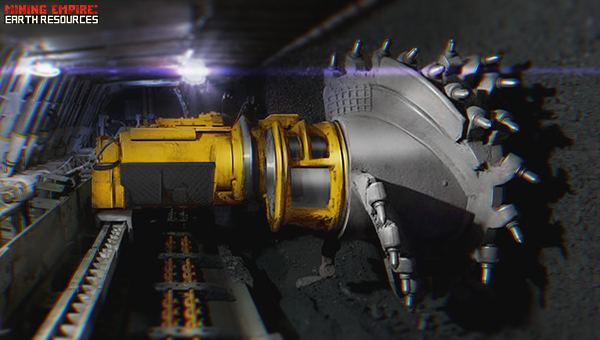
The shearer is a combined mining machine that mechanizes technological operations in the longwall, separating the mineral from the reservoir mass and loading it onto a transport machine.
The main functional elements of modern shearers are: the executive body, which destroys (separates the mineral from the reservoir mass) and loads it on the bottomhole conveyor; hydro insert and one or two feeders to move the combine along the face room; drive consisting of one or two electric motors, main (right and left) and rotary gearboxes that transmit a torque from the engines to the shafts of the executive bodies.
On the rotary gearboxes and augers there is a nozzle irrigation system. The main gearboxes are connected to the motor housing by bolts and studs.
The shearers are classified by: the power and angles of incidence of removable reservoirs; the width of the executive body; the design of the executive body and the supply system - by type of energy to drive combines.
The executive bodies of the shearers in design can be: auger, drum, crown, disk, chain and combined.
The following basic requirements are imposed on executive bodies:
ensuring the highest possible performance under given mining-geological and mining conditions;
destruction of minerals with minimal energy intensity and degree of grinding;
implementation of the unloading of minerals from the work area of the executive body and loading it onto the haul truck (when the shearer is working on flat and inclined surfaces);
the possibility of infinitely variable height adjustment (according to the thickness of the extracted mineral reservoir);
high mechanical efficiency, reliability and durability.
Sneak Peek #10 - OVERBURDEN MINING
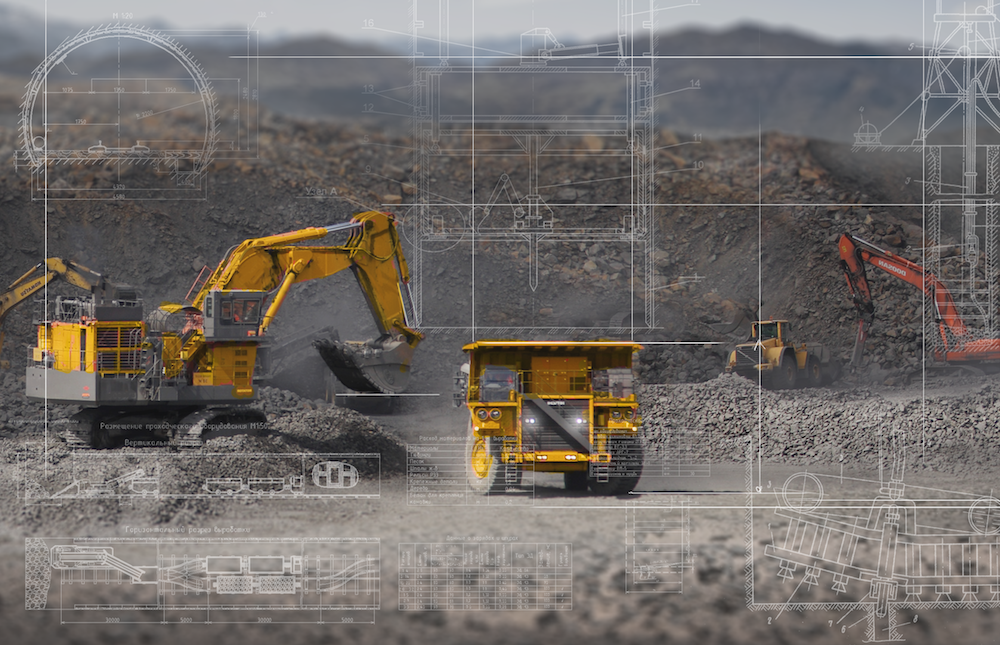
OVERBURDEN MINING - the removal of rocks that cover minerals during open pit mining. Overburden mining includeы the preparation of rocks for excavation and loading, transportation and dumping. Overburden mining is to create the initial mining front during the construction of quarries and during the operation to preserve and develop this front. Overburden rocks that do not contain useful components are removed to external or internal dumps. If overburden rocks are suitable for use as building mineral raw materials (for example, clays, sands, limestone, chalk, etc.), then they are exposed to further processing (crushing, sorting, etc.)
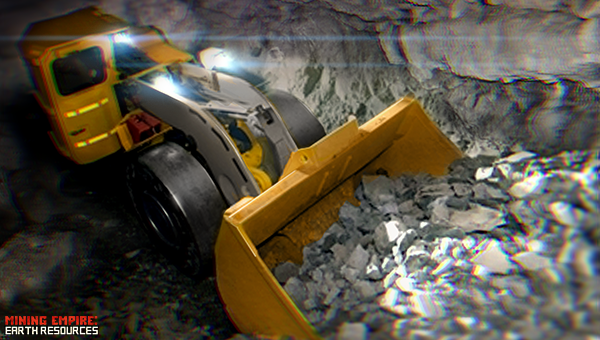
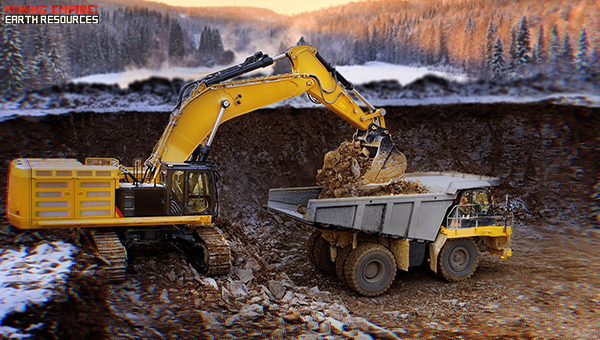
The excavation and loading of loosened overburden rocks from the bottom-hole are performed, as a rule, by excavators, earth moving and transporting (wheeled scrapers, bulldozers) and loading and transporting (single-bucket loaders, etc.) machines.
Excavators of cyclical action, or single-bucket excavators, perform work on the excavation and movement of the soil cyclically: fill the bucket with soil, turn it over, unload it into the dump or other transport, return the bucket to its original position. This type of model is widely distributed due to its versatility. With the help of interchangeable equipment, the single-bucket excavator can perform not only earthworks, but also loading and unloading operations.
Sneak Peek #9 Drilling machine
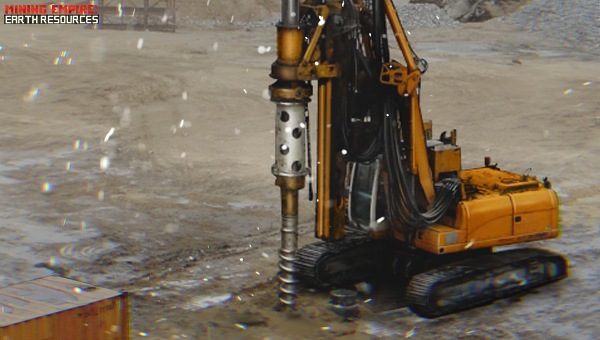
A drilling machine is a stationary or self-propelled unit for drilling wells in rocks of various strengths for underground and open-pit mining of mineral resources. There are machines for different purposes: for drilling exploration, mining, including explosive, as well as special wells (degassing, for descent materials, etc.). According to the method of rock destruction, there are percussion rotary and rotary drilling machines. These machines drill wells with a diameter from 100mm to 1000mm to a depth of 200m. Diamond drilling machines used for drilling wells during clearing and exploration in solid and very solid rocks, they have a high frequency of rotation of the drill rod (from 2000 rotations/min and more).
In medium-heavy and heavy self-propelled machines, all working mechanisms and equipment are installed on the platform. Self-propelled drilling machine includes a caterpillar platform, a pneumatic engine or a car, a mast, a rotational-feed mechanism with a drill rod, a compressor, an oil tower, various drive motors with starting equipment, instrumentation and drilling process control equipment, pneumatic transport systems and dust absorption, jacks for machine installation. Mobile (portable) drilling machines have a working body with a drive, brace columns for its installation in the underground workings, a frame on which all parts of the machine are mounted, and a control panel.
Sneak Peek #8 - Pumpjack
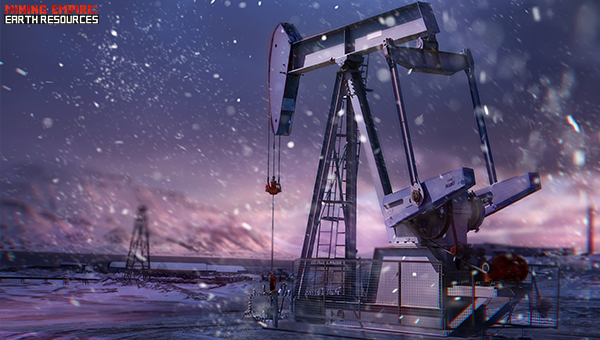
A pumpjack is the overground drive for a reciprocating piston pump in an oil well. It's used in the oil-producing industry to drill wells up to 4,000 meters deep.
A typical installation may have a length of 7 m, and a width of about 2-2.5 m. The mass usually exceeds 10 tons. The general principle of the operation of the equipment is similar to the function of a syringe, which in this case is provided by sucker-rod pumps. Also, as an indispensable element, the pumpjack is equipped with columns of compression tubes. Through these channels the lifting and transmission of oil is realized.
The pumpjacks operate in a circular-based way, allowing the oil to concentrate around the well to ensure efficient pumping. In addition, this principle of maintenance minimises deterioration of the parts of a drive.
Operators control the lifting of oil, and technical staff also monitor the operating performance of the mechanisms in terms of maintaining their function within peak-load tolerances. The most common pumpjack in the pump-drive operations is designed for pile-supported mining. With the help of this unit, wells can be drilled in permafrost environments.
Release date delay of Mining Empire: Earth Resources
Hello, dear friends!
We are in a hurry to announce that the release date of our new game Mining Empire: Earth Resources was postponed to the end of April!
We apologize for the inconveniences. Thank you for being with us.
Sneak Peek #7 - OPEN-PIT MINING
OPEN-PIT MINING is a surface mining technique of extracting rock or minerals from the earth by their removal from an open pit or borrow. This method is characterized by a high degree of minerals extraction from the depths.
Open-pit mining is divided into several periods:
• Preparatory period: the territory preparing (deforestation, stumping, rivers diversion, field drainage, highways transfer, construction of warehouses and structures);
• Mining and construction period: the construction of capital and split trenches, drainage works, the installation of the main mining, transport and technological equipment;
• Field exploitation period is the longest one. Systematic excavation and movement of rocks are provided with a mountain transport and auxiliary equipment complex. The mechanization ensures the continuity of transport communications from bottoms to offloading points;
• The final period is a disturbed land restoration and returning it for beneficial use.