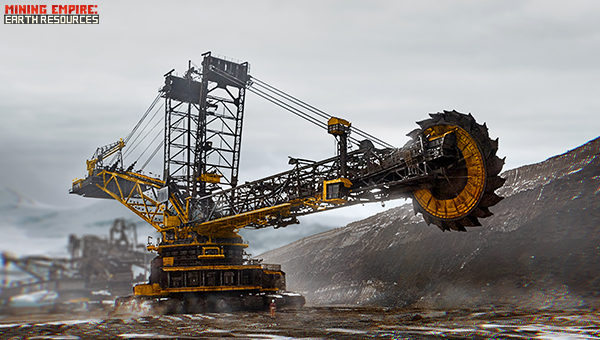
BUCKET-WHEEL EXCAVATOR is a heavy equipment used in surface mining. The primary function of BWEs is to act as a continuous digging machine in large-scale open-pit mining operations, removing thousands of tons of overburden a day. What sets BWEs apart from other large-scale mining equipment, such as bucket chain excavators, is their use of a large wheel consisting of a continuous pattern of buckets used to scoop material as the wheel turns. They rank among the largest vehicles (land or sea) ever produced, and the largest of the bucket-wheel excavators (the 14,200 ton Bagger 293) still holds the Guinness World Record for the heaviest land-based vehicle ever constructed by man.
Bucket-wheel excavators have been used in mining for the past century, with some of the first being manufactured in the 1920s. They are used in conjunction with many other pieces of mining machinery (conveyor belts, spreaders, crushing stations, heap-leach systems, etc.) to move and mine massive amounts of overburden (waste).
The principal components of a BWE are the bucket-wheel with its buckets, the bucket-wheel drive at the head of the wheel boom, the slewable superstructure with counterweight boom, the substructure with crawler undercarriage and a transfer boom or loading unit (crawler-mounted loading bridge) for transfer of material to the bench conveyor.
In the 1950s two German mining firms ordered the world's first extremely large BWEs, and had three BWEs built for mining lignite near Cologne, Germany. The German BWEs had a wheel of over 16 m (52 ft) in diameter, weighed 5,500 short tons (5,000 t) and was over 180 m (600 ft) long, with eighteen crawler units for movement and could cut a swath of over 180 m (600 ft) at one time
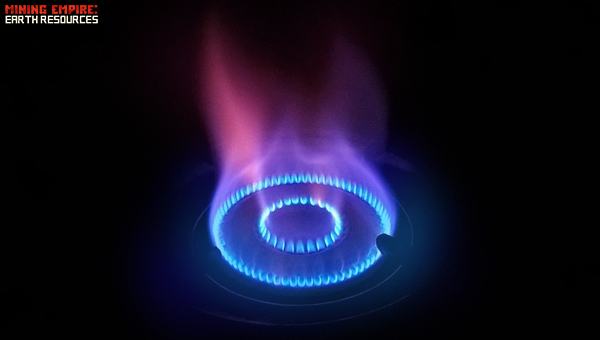
Sneak Peek #5 - COMBUSTIBLE NATURAL GASES
COMBUSTIBLE NATURAL GASES - mixtures of hydrocarbons of the methane series and non-hydrocarbon components found in the sedimentary cover of the earth's crust in the form of free accumulations, as well as in dissolved (in oil and stratal waters), diffused (sorbed by rocks) and solid (in gas hydrate deposits) compounds.
Combustible natural gases in gas reservoirs are under reservoir pressure, which is created by the pressure of overlying rocks and the pressure of reservoir waters. In most cases, the reservoir pressure corresponds to hydrostatic, i.e. the pressure of the water column height equal to the depth of the reservoir. There are also gas deposits where the reservoir pressure is higher or lower than hydrostatic. The deposits with abnormally high reservoir pressures are most often confined to deep horizons, as well as to strata composed of plastic clays.
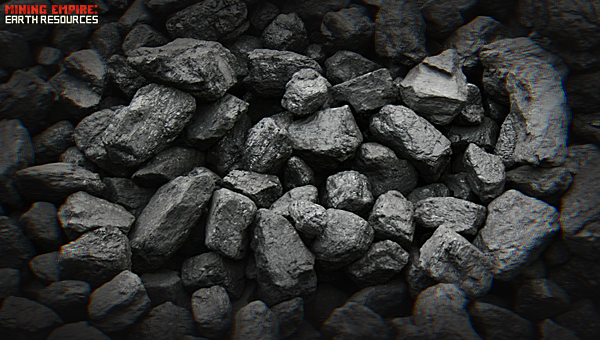
Sneak Peek #4 - STONE COAL
STONE COAL - solid fuel mineral from plant origin - a kind of fossil coal, intermixture of brown coal and anthracite. Coal is a dense rock of black or gray-black color, making a black line on a porcelain plate. Organic matter contains 75-92% carbon, 2.5-5.7% hydrogen, 1.5-15% oxygen. The highest calorific value in terms of dry ash-free state is 30.5-36.8 MJ / kg. Most hard coal belongs to the humolites; sapropelites and humitosapropelites are present in the form of lenses or small layers.
Coals are in the form of layers and lenticular deposits of various thickness (from fractions of meters to several tens and hundreds of meters) at different depths (from surface outlets up to 2500m and deeper). Coals are formed from decomposition products of organic residues of higher plants that have undergone changes (metamorphism) under the pressure of the surrounding rocks of the earth's crust and relatively high temperatures.
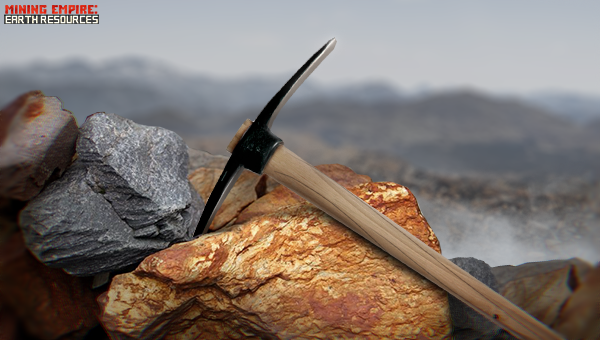
Sneak Peek #3 - IRON ORES
IRON ORES - natural mineral formations containing iron in such quantities and compounds from which industrial extraction of metal is economically feasible. Iron ores are varied in mineral composition, iron content, useful and harmful impurities, conditions of formation and industrial properties. The main ore minerals are iron oxides — magnetite, hematite, martite, hydroxides — goethite and hydrogoethite, carbonates — siderite and sideroplesite, silicates — chamosite and thuringite. The iron content in industrial ores is from 16 to 72%. Among the useful impurities of Ni, Co, Mn, W, Mo, Cr, V, etc., among the harmful - S, R, Zn, Pb, As, Cu. According to genesis, iron ore deposits are subdivided into endogenous, exogenous and metamorphogenous.
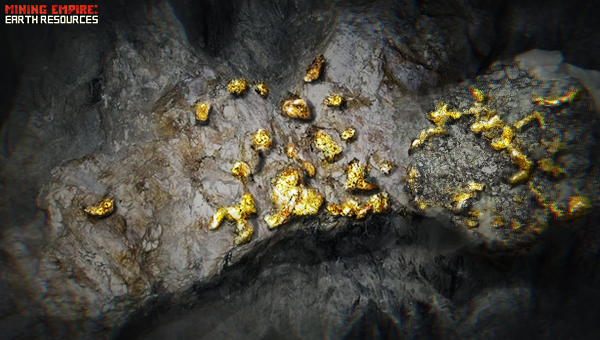
Sneak Peek #2 - GOLD ORES
GOLD ORES - natural mineral formations containing gold in quantities for which it is profitable to extract it using modern production methods. In addition to gold ores, there are gold-bearing ores of copper, nickel, lead and zinc, silver, iron (ferruginous quartzites), manganese, in which gold is a by-product component. More than 30 gold minerals have been discovered. The main industrial importance is native gold, the minor - kustelite (Au about 10-20%) and tellurides: calaverite - AuTe2 (40-43% Au), krennerite - (Au, Ag) Te2 (about 40% Au), silvanite - ( Au, Ag) Te4 (25-27% Au), petzite Ag3AuTe2 (25% Au). Associated components of gold ores are Ag, Cu, Pb, Zn, Bi, As, Sb, Te, Hg, W, Sn, Co, Ni.
There are endogenous, exogenous and metamorphosed gold ores. All endogenous gold ores are from hydrothermal origin. They contain Au from 2-3 to several hundred g / t. They form massive slab-shaped veins, saddle-shaped veins, deposits, and tubular bodies of vein and stockwork ores. The main vein mineral is quartz. In varying amounts, there are calcium and iron carbonates, barite, chlorite, sericite, tourmaline. Among the ore minerals, more often prevails pyrite, less often - arsenopyrite.
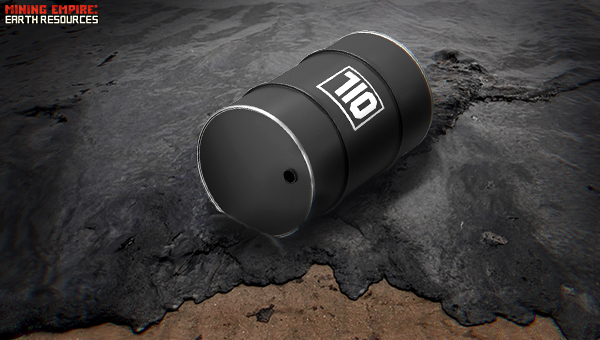
Sneak Peek #1 - OIL
OIL is a flammable oily liquid with a specific odor, spread in the sedimentary layer of the Earth, which is the most important mineral resource. Formed together with gaseous hydrocarbons, usually at a depth of more than 1.2-2 km. Near the earth's surface, oil is transformed into dense malthite, semi-solid asphalt. Oil in the reservoirs is saturated with gas, mainly wih light hydrocarbons.
Oil is a complex natural formation consisting of hydrocarbons (methane, naphthenic and aromatic) and non-hydrocarbon components (mainly oxygen, sulfur and nitrogen compounds).
Mining Empire: Earth Resources - Out Soon!
Prepare to meet Mining Empire: Earth Resources!
Money literally lies beneath our feet, but only few are willing to make an effort to get it. You are one of those enthusiasts who are not afraid of hard work and possible risks. Run a big corporation whose task is to extract minerals to build a lunar station!
Please subscribe and add the game to your wishlist. See you soon!