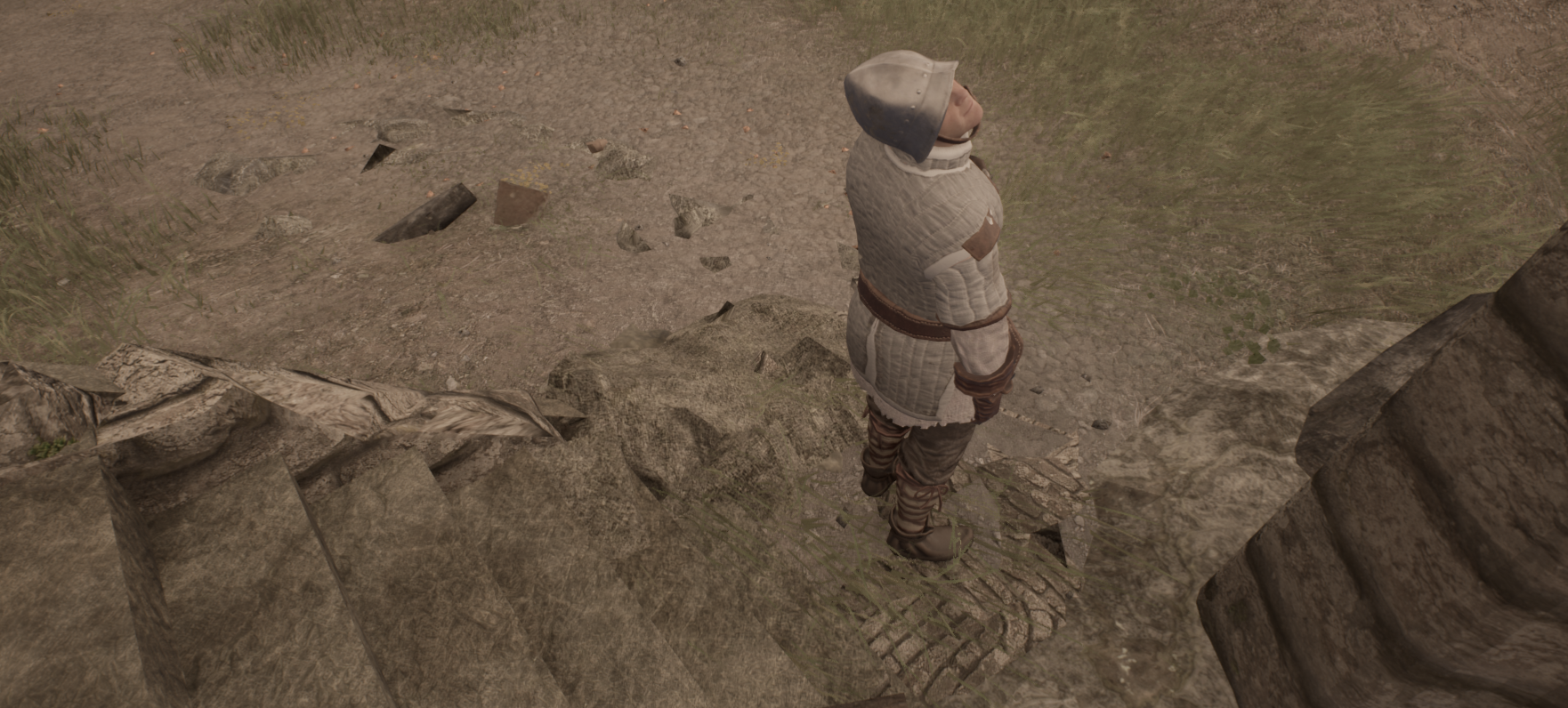
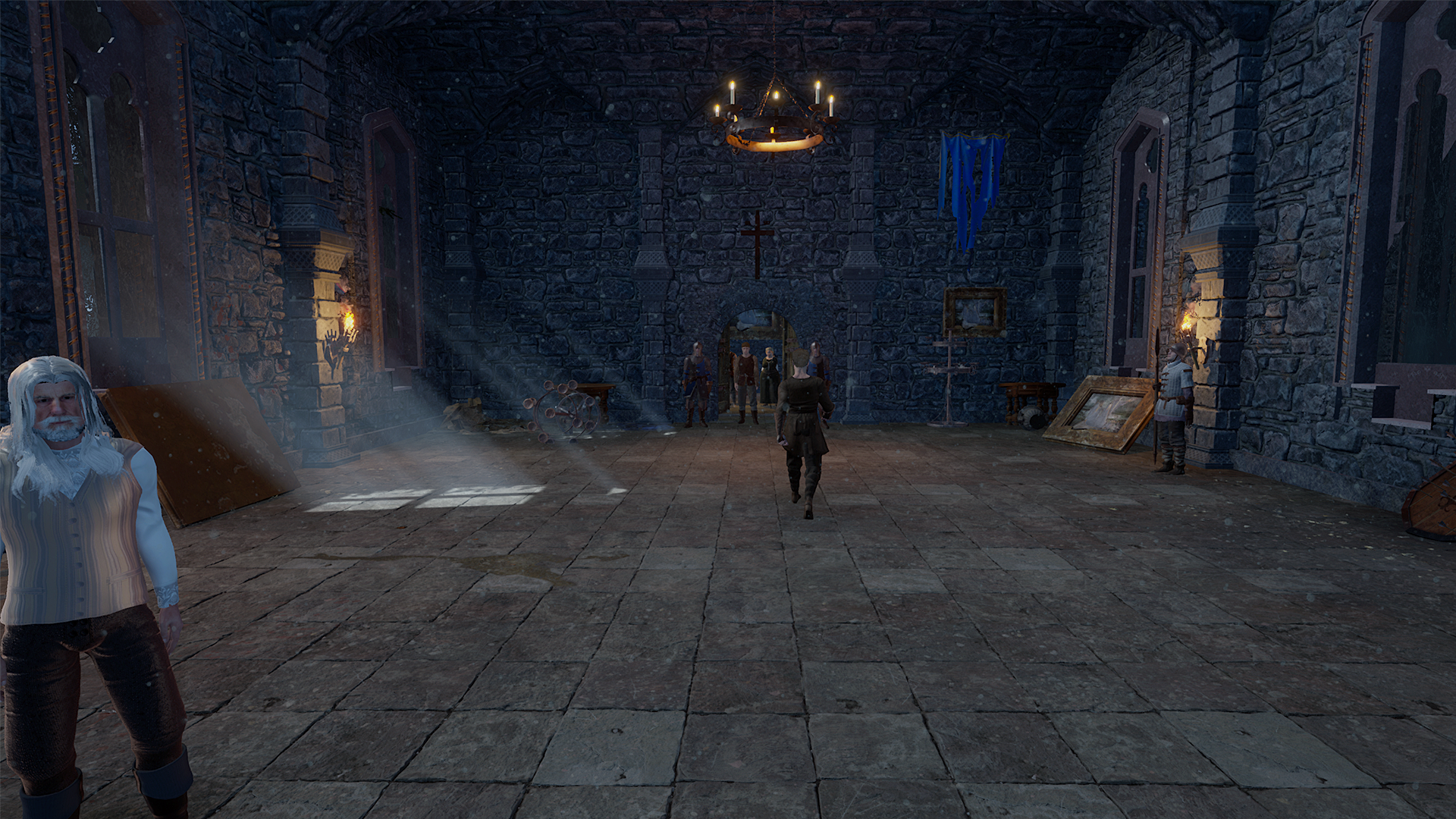
Alpha version 1.0.1.8d of Noble's Life: Kingdom Reborn Playtest has just been released!
# Audience
Blocker/infinity loop dialogue at François when the player offers help should no longer happen.
Blocker/infinity loop dialog at Nicolas when player decides to reduce village tributes for 3 months should no longer happen.
Fixed a bug that prevented some special choices from being available during the audience for the Overseer, Ecclesiastic and Student.
# Estate map
The limit of 15 coins a player can collectively spread across villages should work correctly.
The box should be properly depleting coins.
It is possible to put the grabbed coin back into the box.
# Other
Minor fixes for typos and graphics.
Roland, instead of saluting, bows to greet the Baron during the audience (court protocol saved!).
Known major bugs we are working on:
Players locking up in the castle courtyard or when first talking to Guiscard (infinity loop). We have made some fixes that may minimally reduce the problem, but the error may still exist. We are looking for the causes.
Sometimes interacting with the estate map causes you to fall under it. We are looking for causes.
If Pierre returns in the second round (in the second month) it can block audiences. We know the cause, the fix will probably appear later this week.
Playtests will be starting soon!
Dear nobles,
briefly. We are launching playtests containing the opening part of the Noble's Life alpha version!
Within a maximum of an hour you should get access to the build. If it does not appear after this time, we strongly recommend restarting Steam. If this doesn't help, write to us, e.g. as a comment on this message.
We would also like to take this opportunity to invite you to read more about the content of the playtest in the Playtest content and, above all, to fill in the survey after playing the available fragment.
And... we hope you enjoy the game!
Playtests start this week!
Dear nobles,
we are back in the New Year and we are starting with playtests. Unless something unpredictable happens, they will start this week. Currently, we are at the stage of final, rather minor, polishing and internal testing.
Unfortunately, we won't be able to improve everything we'd like, there may be performance issues, and some NPCs may behave strangely. Nevertheless, we felt it was necessary to finally show our game to those who are waiting for it.
NPCs should pay attention to the player's character, after all, he is a noble! Unfortunately, sometimes they don't do it as they should and it can look quite bad.
We would also like to remind you that Noble's Life is still in an early version and calling it alpha is not an overstatement. Unfortunately, this means the lack of numerous functionalities and presence of bugs. If you want to learn more about the former then the still up-to-date information is in the Playtest content news.
In addition, in the main menu and at the end of the released fragment of the game there will be a survey, which we ask you to fill out. Its results will have a significant impact on further work on the game.
As for further Dev Diaries, we will get back to them after the start of the playtests, which is probably in the second half of February.
Dev Diary #13 - Christmas special
Dear nobles,
Merry Christmas and Happy New Year!
Thank you for this entire year. Your interest in Noble's Life continues to impress us.
There wasn't supposed to be any more Dev Diaries this year, but we decided that we would prepare one more post. However, first we have to pass on sad information. Unfortunately, we will not be able to start playtests this year. We did as much as we could, up until the last minute, but some things just don't work very well. We've also come across some nasty blockers and we would feel bad sending the game with such big bugs that we are aware of.
We immediately inform you that this does not mean that you will have to wait long. Playtests will probably start in January 2023, rather in the second half of it.
We will recuperate over Christmas, fix the last major problems and share the beginning of the game.
We know it's been taking a while, but we're a small team that wants to make the best possible impression, so we're asking for a little bit more patience.
Christmas in the Middle Ages
On the occasion of Christmas, we would also like to write something about how this special time was experienced in the Middle Ages. There were so many differences that we have had materials for years.
It was widely accepted for men to dress up as women and wear animal masks in order to tell jokes for money, children-bishops or huge football matches, with several dozen to as much as several hundred people, where even deaths occurred. And to top it off a several-day feast and fortune-telling. From more modern customs, the relative novelty (being roughly 100 years old) were Christmas nativity scenes.
Today, however, we will write about the first two, i.e. mummings. The name is probably associated with the Middle English word mum (silence), German mumme (mask) or Greek mommo (frightening mask). The word mummer (disguised person) from the Early New High German language also had to influence the creation or spread of the term.
Mummers
Putting aside the term in itself. It is not certain how and when the custom began. Some historians suggest that this form of entertainment is the result of these huge feasts in which hectoliters of alcohol were drunk. Many others perceive in this play, which seems quite correct, the remnants of the pagan customs associated with the winter solstice.
The history of mummers in Europe dates back at least to Ireland in 1172. Already then it connects them with Christmas. We also have confirmations of the existence of the custom from England of the thirteenth century. More recent sources mention this game also in continental Europe, so we recognize that mumming could probably have been cultivated also in France, and especially as close to Gascony as the place of action of Noble’s Life. Yes, this is also our inspiration for in-game events.
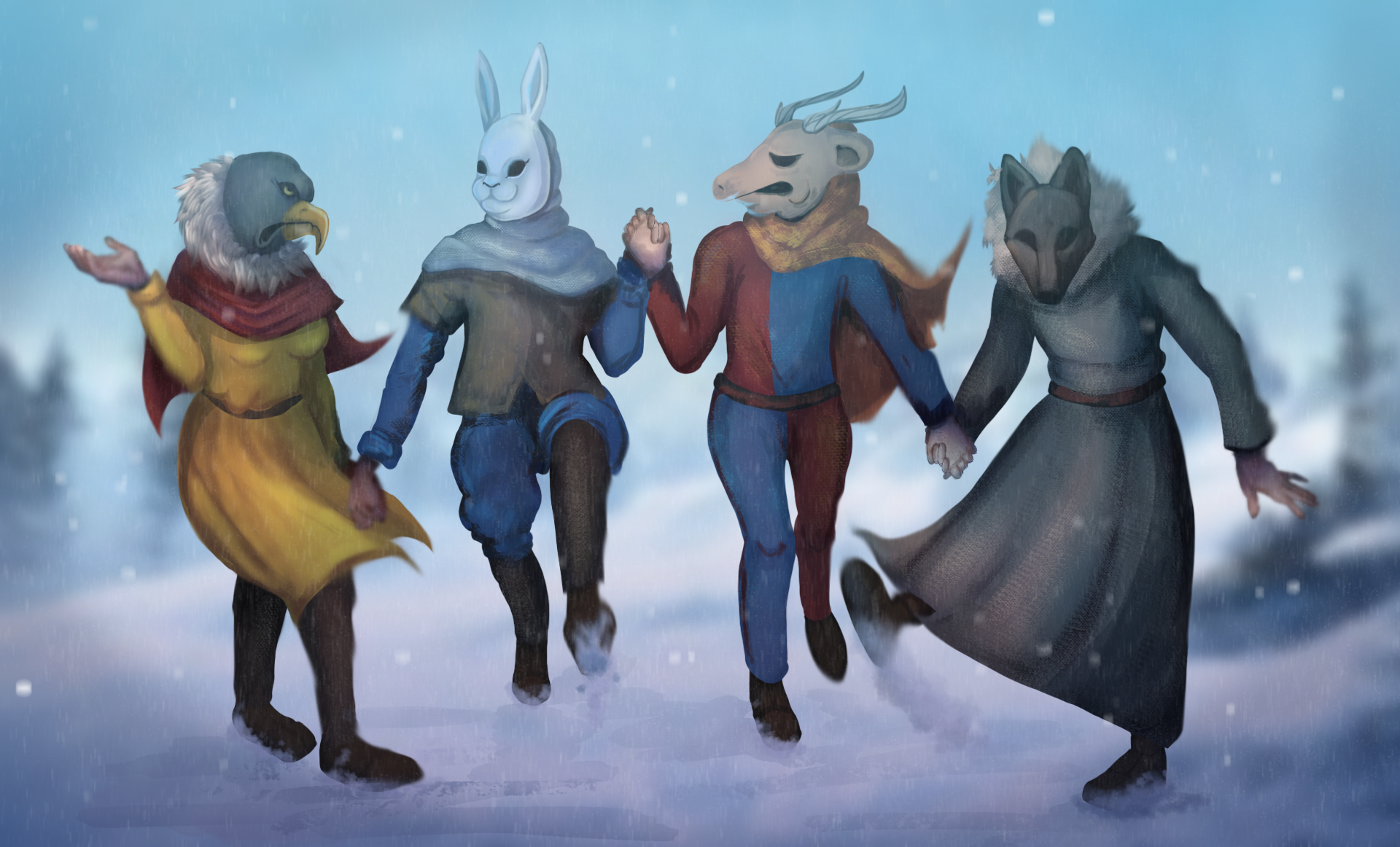
There are not many representations of mummers from the era, but based on those from illustrated manuscripts, we have prepared a graphic showing how it could look like.
What exactly was that?
As we wrote earlier, the basis was disguise. It was popular for medieval men to either cross-dress as women or wear various animal masks such as: rabbit, donkey, wolf, bird, deer, in one word, of those animals that the locals knew. At the same time, different regions could have their own unique ideas for disguises.
Once the peasants had dressed properly, the games began, of which there was also some variety. Common dances in silence or singing folk songs are most often mentioned, but also going door to door. The mummers then sang in front of the household or told jokes. Some did it for pure fun, others expected some coins or other gifts. Those who know the custom of Koledari practiced today may have certain associations.
Mummers also organized amateur performances. Unfortunately, we do not have too many medieval sources here (although the tradition continues to this day). It was very likely that they would play, above all, the story of Saint George and his battle with the dragon.
It also happened that games of dice were played with the host of the house, after which he got to join the rest in a group dance. Although it was folk entertainment, there are indications that crowned heads were also involved.
Mummers survived in many traditions, it was also the basis for more famous Italian Masquerade balls.
It seems that it was great fun, but also a form of letting out some steam and fooling around in order to forget about the painful parts of life. Or were we really just dealing with antics after a lot of alcohol? Our ancestors were not so different from us after all.
So, ending once again - Merry Christmas and Happy New Year to all! Peace for those who need it, or crazy fun similar to the one had by our ancestors described today.
Dev Diary #12 - Power and faith
Dear nobles,
as announced, we are back with a new Dev Diary, this time describing internal affairs, i.e. explaining which people and organizations have a significant impact on the power of a small landowner such as the player's character.
We will describe such things as an honor so great that not accepting it can cost the burgher dearly, and a large religious conflict that will be the background for many events in the game.
City council
This thread will be shown very early and its beginning will appear in the part made available during the playtests.
The player’s main city, like most of the cities existing in France at that time, was governed by a city council. In the south, where the game takes place (more on this in Dev Diary #8), it was led by the first consul (premier consul), which was a clear reference to ancient Rome. At the same time, the aforementioned consul usually did not have competences comparable to contemporary or even eighteenth-century mayors, and decisions were made by the council collegially. However, during this period, this is the moment when some urban centers strengthened the role of this primus inter pares.
The same was true of the competences of the council, which in some regions gained greater administrative, judicial and even military powers (development of the number and duties of the city guard).
The acquisition and composition of the council itself is also an issue that is not fully specified, as are the methods of appointing new consuls. Certainly, it was an honor that the burger could not easily refuse, literally. During this period, sometimes fines were imposed on people who did not want to accept such a function after being elected by the council. There were also cases that after the election a new member was pressured to, for example, close his business (like an inn) because it is not appropriate for them to be ran by someone who is in the city council.
As you can see, it all is not so simple, but in our opinion very interesting. Hence, the player's character's interactions with the council will be quite diverse.
Due to the specific beginning, the player will have a lot of freedom in creating the council. Subordinating it to your authority can be attractive and will actually allow for greater exploitation of your small capital. On the other hand, an independent council can accelerate the development of the city, help avoid many problems, and it will be possible to even shift some of the costs to it (which historically has often been the reason for the increase in their competences).
Another issue is whether the council should represent the will of the first consul or should it really be a collegial body. Again, both have their advantages and disadvantages.
To be succinct, we are surprised that something so interesting has never been used in a video game before and we will try to change it.
Conflict of archbishoprics
The second force that every nobleman must pay attention to is the Catholic Church. Although in the fourteenth century it was in a considerable crisis (Avignon Papacy) that does not mean that its influence weakened. In France, especially in southern France, the opposite was true.
This plotline in the game will be presented in many ways, but it will start with the issue of choosing a parish priest, who on a small scale can show a much larger conflict in the region, which, as we wrote in earlier Dev Diary, is our goal.
Specifically, it is about the rivalry of the two Archbishoprics in Bordeaux and Bourges, which, at the beginning of the game, had already lasted for almost two hundred years, that is, it began even before the separation of Aquitaine from France. However, after this event, the conflict only intensified, it became very political, and both clergy and aristocrats were involved in it. This is not surprising, because high-ranking God's servants usually came from wealthy noble families.
The kings of France themselves, often out of necessity, upheld the claims of Bourges. On the other hand, the clergy gathered around the Archbishopric of Bordeaux were sometimes agents of English politics. This, however, did not prevent some pro-French popes from supporting the claims of this center of ecclesiastical power. Clement V is a good example, although his position may have been due to the fact that he himself had previously been Archbishop of Bordeaux...
During this period, Church was the most important organization for charity. Since the 12th century, there has even been a charitable revolution in its teaching (associated, for example, with the work of St. Francis of Assisi). Hence, a good relationship with the Church can increase the chance that someone will take care of the poor in a player's estate.
We could write about it for a very long time, but it is important that such a conflict is a great background for events in the game. And well, who will take care of the souls of the subjects, how he will be oriented to the player character and how much he will be involved in the development of the parish will have a significant impact on the development of the estate. It concerns both the education of subjects (parish schools) and the loyalty and satisfaction of the burghers or peasants.
We will return to the subject of faith, more mechanically, later on.
Third force
There is a third force that has an enormous impact on the player's estate. These are merchants who largely affect the profits of the noble, directly and indirectly, but this issue is so extensive that we will devote a separate Dev Diary to it (although we wrote a bit about it in Dev Diary #5).
Merchants selling their goods in the player character's main town and, just as importantly, buying up locally produced goods is one of the best ways to increase the wealth of the entire estate.
In conclusion, we hope that we have been able to indicate how many options can be associated with the internal situation of even such a small barony. In the next Dev Diary, which will probably appear in the new year, we will return to the mechanics again. As a standard, we will announce them earlier on Twitter ( https://twitter.com/Nobles_Life ) or Discord.
When it comes to playtests, unfortunately we still do not have anything specific to announce yet. Every day we fight to finish the process of fixing bugs enough to present Noble's Life properly. A large number of people registered for playtests only motivates us more for playtests to be decent.
However, we still do not give up trying to release playtests this year and we will keep you informed about the whole situation. This is the last Dev Diary this year, but not necessarily the last news.
Playtest content
Dear nobles,
we're back after a long break.
In order not to repeat ourselves that a lot was happening again, although it is true, we will explain in more detail that after announcing the registration for playtests, we worked hard on all improvements. We are aware that at the present, still quite early stage, the game is not perfect. Nevertheless, we wanted to improve visuals, technicalities and narrative enough to properly present our concept.
We corrected hundreds of smaller and larger things, but we deliberately omitted some of them. Among those who suffered are polishes of many visual elements and unfortunately, optimizations to some degree. We hope that this will not be a major hindrance.
What will be available
As the title of the news itself indicates, we would first of all like to write about what you can count on during the playtests. As we described in the previous announcements, we will show the starting part of the game.
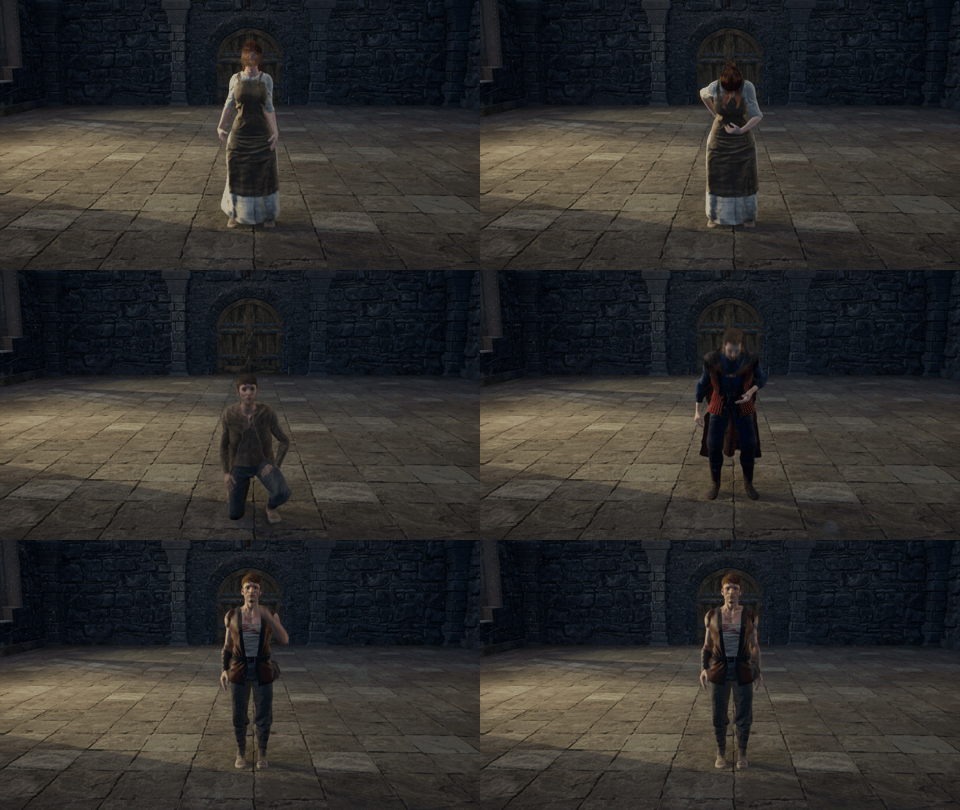
Our character is a noble, so we wanted the player to be able to feel it. Hence, we already have over a dozen different greeting animations (some of them shown above).
This does not mean that the start of the final version of the game will look exactly like this (we plan to add some additional activities/plot threads), but you will be able to see the prologue of the main campaign.
The entirety will begin with a simple character creation system, described in Dev Diary #7, and then, as part of the interactive intro, present the initial state of their lands.
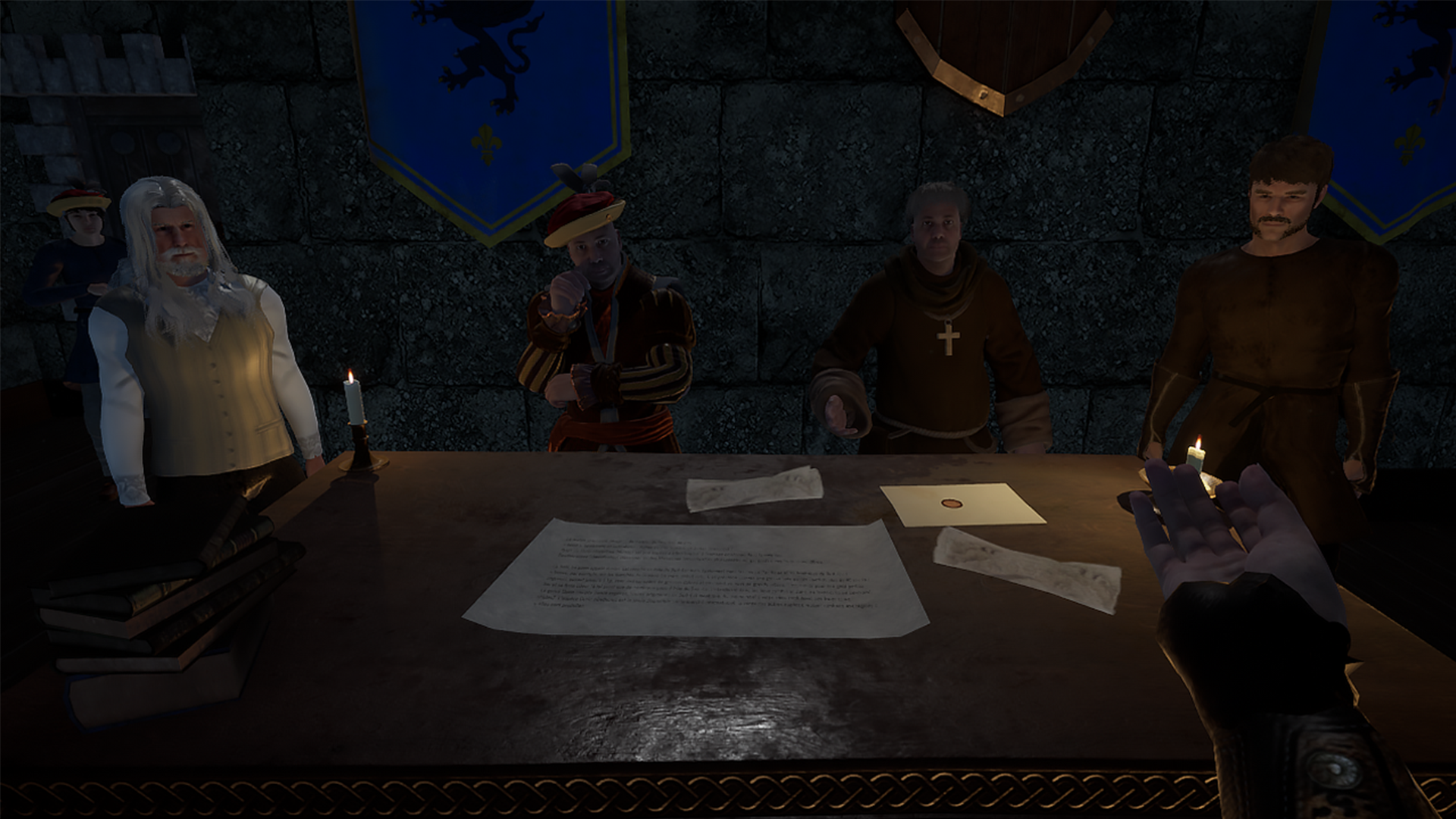
Then there will be an opportunity to interact with numerous characters and try the core mechanics of the game - audiences (described in Dev Diary #11). There we combine human drama with purely economic decisions about the development of lands.
There will also be a more mechanical management of the villages using the estate map, which has really changed a lot since Dev Diary #4!
The whole section of the game is about an hour long and will include two turns - two months of time in the game world. This will allow you to see the consequences of some of your decisions, something that is supposed to be the essence of Noble’s Life.
The game has a lot of different options. Sometimes they are connected with each other, sometimes they are secret to be found, e.g. they become available only for a specific character origin, appear when the player has the right amount of supplies or discovered some information. Even the interlocutor's attitude towards the character can change the outcome. Here we will allow ourselves to give you a little advice for the future - even small decisions may result in some cumulative greater effect later on.
This is a diagram of a single interaction within one of the aforementioned numerous characters. Since we really wanted to give a lot of options, but also to make the game realistic, we had to put a lot of work into it. Hence, the final scenario for the content of only these playtests is 116 pages long, precisely due to the multitude of different decisions available to the players.
And to be fair we point out that a huge number of solutions is Work in Progress, so if something doesn't meet your expectations, don't hesitate to point it out, because there is a good chance that we will be able to improve it.
What won't be there
There will also be no part of combat mechanics within the playtests. We do not hide that this is a very difficult and large functionality and it is not yet time to show it. I know a lot of people would like to see it, and I'm sure there will be time for that next year.
As the start of the game will be shown, many of the advanced features mentioned in Dev Diaries such as letter writing and court management will not be unlocked yet.
Unfortunately, there will also be no free exploration of the player's capital city. This function is almost ready, and if it had not been for the last month and a half that we devoted to fixes, it would probably be finished. However, we do not want to unduly prolong the start of playtests. We plan to present the version with this functionality sometime after February 2023.
When does it happen
Speaking of dates, when will the playtests start?
Unfortunately, we are still unable to provide an exact date. We would very much like them to start before Christmas, but we are withholding such promises.
We also plan that they will last a minimum of two weeks.
In addition, next week (We swear it's almost ready!) we return with a Dev Diary and then we may be able to describe something more specific.
Besides, if you have any questions, we always invite you to our Discord, where we answered all doubts so far. On Twitter, however, we announce various things such as this news.
We also thank you for your support and words of encouragement, which all the more motivate us to show the game from the best side.
Join Noble's Life playtests!
Dear nobles,
we invite you to sign up for the first closed playtests of the game Noble's Life. As part of them, we will show an initial excerpt from the early version of the game, which is expected to show the dramatic beginning of the whole story.
At the same time, we don't hide the fact that our most important goal is to get your opinions on our game. What you like, what you don't, what you would improve, what you missed, in short, what you think. The game will also come with a survey with our questions to you.
Since Noble's Life will be developed for more than a year and a huge number of things are still Work In Progress we will have plenty of opportunities to incorporate comments into the project.
To join the PlayTests you must be logged into your Steam account. Go to the Steam Noble's Life page, scroll down a bit and click Request Access.
Important note - Playtests will start later this year, but not before next month. The exact date will be announced at a later date. Anyone who signs up by the time they are completed will be able to check out an early build of the Noble's Life game.
In addition, within the next two weeks we will write more about what to expect from them.
If you have questions - go ahead and ask them here or on our Discord ( https://discord.gg/tpnzmQSXNh ).
Oh, and a little teaser at the end.
Dev Diary #11 - Audiences
Dear nobles,
today we return to the topic that we initially introduced in Dev Diary #4 - Peasants and villages almost a year ago (how the time flies!) i.e. the audience system.
So this time we will talk about what we want to achieve, how it connects with other systems, and even what we would prefer to avoid in the game.
Vox populi
The very idea of this mechanic crucial to the game is simple. Various people visit the player's character in his audience room, and he listens to what they have to say, talks to them and makes decisions.
The status of the visitor will affect the available options, but as we strive to reflect the reality of being a lesser noble, most visitors will be peasants or burghers - the subjects of the protagonist. Only from time to time high-born guests will appear, or even other, more exotic ones (like those described in Dev Diary #5 - Foreigners).
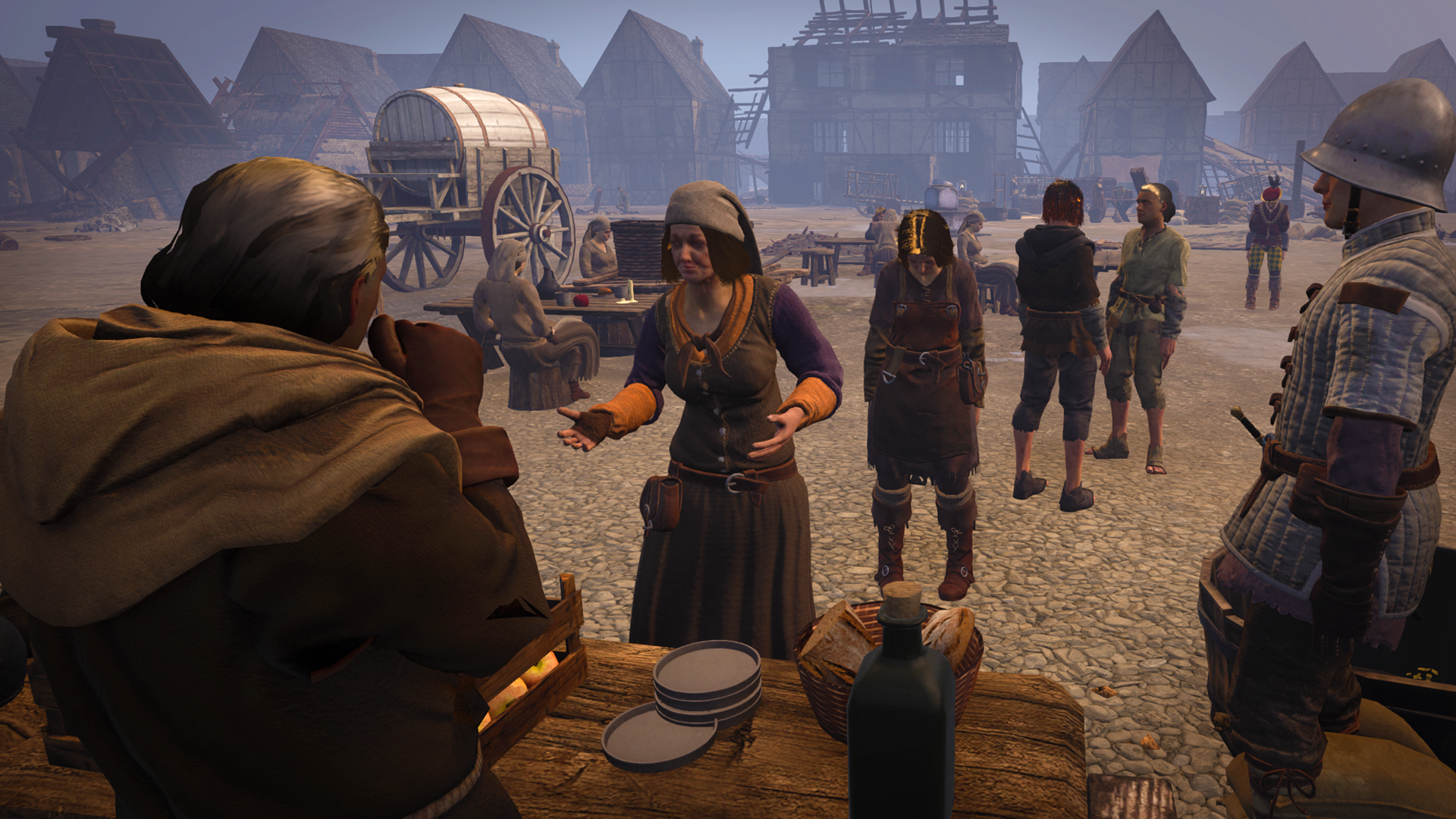
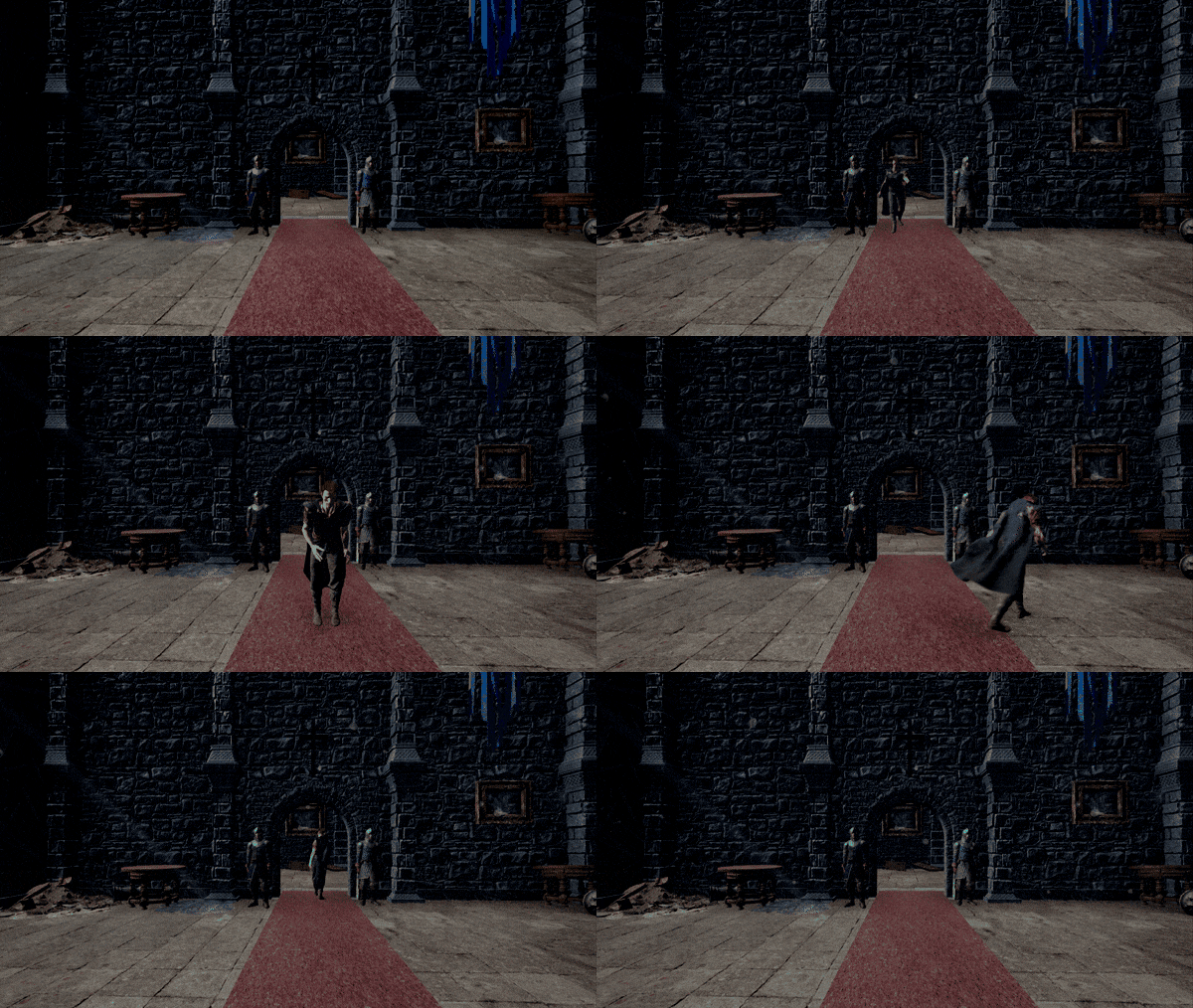
Screenshots from the current build, which of course is Work In Progress. People wait for an audience with their ruler usually in order (another petitioner crossed the threshold from the hall) related to their status. At the same time, more significant guests, and certainly nobles, will not stand with the masses in the queue, but will usually enter first.
Visitors will usually ask for something. It can be about money, various accumulated resources (which are discussed a bit in Dev Diary #2 - Economy (Resources)) or all sorts of privileges from simplest tax reduction to supporting some undertaking with an advisor (more in Dev Diary #9 - Noble court) or even the army. Sometimes they can be messengers from other magnates, because not all communication with aristocrats will be dealt with by letter (more about that in Dev Diary #6 - Diplomacy). There will also be people who, for a change from numerous requests for money and resources, will want to give the nobleman a gift. At the same time, it will rarely be 100% selfless.
As we pointed out in Dev Diary #8 - Kingdom Reborn the gameplay begins when the player's character's lands are devastated. Hence, the amount of money and supplies is limited, and the chances of quickly replenishing them are slim. You can't help everyone, so the question is who deserves the protagonist's mercy, and to what extent? Even when the player's character lands are reborn, there will almost never be enough resources to do everything perfectly.
Heavy is the head...
Audiences are therefore economic decisions. Will we give our money to crippled veterans, because this can potentially improve the morale of soldiers? Or will we support the blacksmith to rebuild his forge, which will increase the economic potential of the city? Maybe both? But will our treasury cover it? In addition, if we are interested in the first situation, will we take care to reward them with interest for their fight for their master or maybe let them vegetate on starving rations?
The guard, at the behest of the player's character, leads out the petitioner, who allowed himself too much during the conversation.
We also want some decisions to be dramas of individual people whose fate the player holds in their hands. Hence, it is equally possible to sentence a wayward peasant woman to pillory for insulting majesty as well as to bend over her problems. Importantly, and not so frequently in games, characters coming to audiences can simply lie, so it's not worth believing every tearful fairy tale.
…that wears the crown
So how can the player deal with it? Well, first of all, the main advisor usually has some information about each newcomer, secondly, you can question the interested person yourself, thirdly, we do not always have to make decisions immediately. In many cases, you can either hold off on the decision or order someone to investigate the matter. After all, how do we know if this peasant talking about irregularities in a neighboring village is not caused by envy? On the other hand, is it reasonable to devote resources to investigating every peasant quarrel? Maybe it's better to throw a farmhand into the dungeon, let him think about his life decisions. But after something like this, will someone from his village come to the player's character when something serious happens in the near future? Going even further, if we will help in every case, will we not start being exploited? Sometimes hard or even morally reprehensible options can have a better effect than wasting resources on a lost cause.
Phew... It sounds like a lot of options and we actually want it to be like that. However, not all of them can be used at once. Moreover, the player may as well treat matters with neglect, which was not so rare among the nobility. We want each player to find their own ruling style.
How is it made?
But how will it work in gameplay? Simply in the form of a classic role-playing dialogue with choices.
At the same time, this mechanic is not so simple, e.g. it takes into account the knowledge that the player has. That is, if we have not asked about an issue, then we do not have a dialogue option that requires this knowledge. Another thing is that the chief advisor will protest if we try to promise something that we do not have.
Finally, the decisions we make will have consequences, but not all of them will be immediately visible. We also do not want to inform about them mechanically in the style of: I will help you [+1 to loyalty] or: Jean will remember that.
We believe that such measures are not very immersive. On the other hand, we don’t exclude some kind of launch option more simply presenting mechanical changes dedicated to those attached to such solutions.
Of course, every increase in taxes to the village will always lead to dissatisfaction and we will communicate it in the game, and extremely cruel or unfair treatment of the advisor can make them leave the court right away. However, not all situations will be so simple and in many cases the player will have to assess for themselves, for example, whether they conduct a firm but honest policy or become the bane of all noble neighbors who are already secretly preparing a gloomy surprise for us.
We'll stop right here. Next Dev Diary, this time about the historical realities, will appear at the end of September or the beginning of October. We will reveal the topic of the next one earlier again on Twitter ( https://twitter.com/Nobles_Life ) and Discord.
Dev Diary #10 - Family
Dear nobles,
today we will talk about family, and as we all know family comes first.
We will reveal the initial marital status of the player's character, describe the closest relatives and mention the matrimonial challenges and whether it is worth sending your daughter to the order, and by the way we will answer a few questions that we have received from you.
Noble’s Life
Being part of a noble family at the beginning of the 14th century was something very exclusive, especially being a male heir of an old family long possessing their lands. Player character is just such a person, who reaps benefits from his status.
However, most often such an aristocrat since their childhood would be entangled in a complex network of connections that would limit his ability to choose, and that is what we want to partly avoid. Hence, we deliberately put the player's character in a rather unique situation. His parents are long dead, there are no living full brothers or sisters, and the extended family does not live in the immediate vicinity for various reasons.
This allows for a start with a fairly blank slate (besides the steps we described in Dev Diary #8 - Kingdom Reborn which also serve this purpose). On the other hand, he's not entirely alone. His other relatives will enter the stage later on future, but at the beginning of the game there will be two important characters: the extremely problematic half-brother Hennequin and daughter from previous marriage Marie.
The player's half-brother comes to him heavily drunk just after the recent invasion of the English forces and becomes one of many issues at the beginning of the game. Well, you don't really choose your family. P.S. Quality is as if we were recording with a potato, but Steam heavily limits the size of files, and we wanted to show off animations.
What do we mean by "from a previous marriage"? Well, the character is the ruler of a demesne in his 30s, so the chances of him being single by then are small enough that we put our bets on him being a widower.
Marriage
Previously mentioned immediate family will also allow the player to face relatively quickly the huge and complicated logistical, diplomatic and emotional challenge of marrying off his daughter. Finding the right bachelor (of course there will be at least a few available), engagement, preparing a dowry, and finally the entire wedding ceremony. In short, it's a costly undertaking requiring a lot of additional decisions. It depends on the player whether granting the hand of his daughter will serve to simply bolster an alliance between the families, cement the political agreement (a little more on this subject can be found in Dev Diary #6 - Diplomacy) or maybe her opinions and well-being are worth considering.
The dowry will also have a mechanical function. The player will be able to influence how much money or even their own land they are willing to give to Marie, and the amount of resources used will affect the pool of candidates. Another alternative is to send your daughter to the order which was a method of saving money. Although, what is worth mentioning, also the orders often required a dowry from women.
At the beginning of the game, Marie is only 10 years old and is still a child. But at that time noblewomen could have been married from as early as the age of 12, and get engaged much earlier.
Another issue is the player's own marriage, which is a case as extensive as the previous one. Here, too, the choice will have far-reaching political consequences and there will be a number of options. At the same time, we do not hide that the main candidates will be the daughters of the local landowners. This is also due to mechanical reasons. A wife's dowry can increase the size of the player character's demesne.
At the same time, we aspire for the wife of the noble led by the player to be a full-fledged character affecting the entire further gameplay and we will try to do it this way. We will certainly mention these ladies in the future along with the families important from the game perspective.
And of course, a couple can have children whose upbringing can also be a complicated matter. Because there were questions about further gameplay in the shoes of our descendant and more elaborate dynastic politics, we will explain straight away. We would love to do something like this, but we don't want to promise a game longer than we can deliver. The basis is the life of the character created at the beginning (if you are interested in character creation check out Dev Diary #7 - Character creation) and the game will focus on that.
That's it for today. I hope we've clarified things a little. Due to the holiday season, the next Dev Diary will be in late August or early September. We are still considering what to reveal in it, but we will tell you before its publication on our Twitter ( twitter.com/Nobles_Life ), to which we invite you. There, among other things, we regularly post historical information about the Hundred Years' War, which may interest you.
Dev Diary #9 - Noble court
Dear nobles,
Thank you for your patience. We're back with Dev Diary.
In fact, we didn’t write it for a bit, but once again we threw ourselves into work, creating content, fixing bugs and suddenly three months have passed. With this we want to calm you down - work on the game is still ongoing.
Some of you have asked why the premiere date was changed to 2024. From the beginning, we planned to end the production of the game in 2023. However, the more we work on Noble’s Life the more likely it seems that it will be the fourth quarter of 2023. This, on the other hand, is simply a bad time to release an independent game. Hence, we decided that a much better date would be the first quarter of 2024. Of course, this is not the final date, and we may be able to finish it sooner.
To conclude the introduction, today, as we announced before, we will talk about the noble court and the characters associated with it. We mentioned it a little in Dev Diary #4 - Peasants and villages, so if someone has not read it, we invite you to get caught up.
In this post, however, we will tell you what splendor is, how to get it, and explain with practical examples how various advisors can be useful to the player.
Rough beginnings
At first, the player's court doesn't really exist. If you want to know why, check out - Dev Diary #8 - Kingdom Reborn.
Hence, the game begins with only two other nobles, the main adviser, Guiscard Abreo, who is also a character introducing us to the game (i.e. a tutorial guy) and Roland Bedeau, a military adviser. These chevaliers are important characters to the plot and will still get their Dev Diaries, but what about the others?
All other characters the player will have to acquire. The most common method is to hire them when they appear in front of a noble during the audience and offering their services. After all, wandering specialists looking for a rich protector is something that took place.
Another option is to spread the message that we are looking for a particular specialist. Although this option is usually the more expensive one, sometimes the player doesn’t have time to wait for someone to come along.
Splendor
At this point, it is worth mentioning a certain implicit value influencing how many talented guests can appear in the player character's castle.
Splendor, because that's what we are talking about, is a marker of a reputation of a noble led by the player and the wealth of their demesne. Investing in art, financing impressive buildings, helping other aristocrats, being generous towards their subjects, organizing sumptuous balls are all examples of methods that increase it.
The quality of specialists/advisers that visit us depends on its level. There is no reason to expect that a very famous artist would want a poor noble as his patron. Similarly, the best engineers or medics will not even come near an estate, certain that there is no one there who can afford their services.
In emergencies, player's character will be able to gather their advisers to work out a solution to a complicated problem with their help.
Noble court in practice
Most often, such an advisor, a member of the court, must be paid regularly or they will leave the property of the player. Sometimes, however, there will be other options for rewarding their stay such as a lucrative position or even concede a part of your land to them.
But what are they used for? In a nutshell, they can:
Give the player's character additional options during audiences and special events. Is a merchant complaining about the bad condition of the roads? Let the engineer do something about it. Shady people have been seen in the woods? Before we send in the troops, why don't we have a spy investigate it? Any suspicious preachers in the village? The inquisitor will solve this problem. Hmm… Or should a priest be sent first?
Enable special actions. For example, creating new villages by the Lokator (see Dev Diary #4 - Peasants and villages), improving the satisfaction of the city with minstrel’s spectacles , concluding commercial contracts by the merchant.
Grant passive bonuses. Such as a courtier generating splendor, an accountant increasing tax profits or a monk bringing a bonus to religiousness.
Examples of special actions of a member of the court - minstrel. By the way, it is worth noting that the advisers will have specific classes (minstrel, merchant, engineer, etc.) and within them there will be many different characters with various skills, looks or personalities.
Next time, already in July, we will reveal something about the topic that some people have already asked about, i.e. we will write about the family. In a simulator of a noble, this topic can't be missed. We will also raise issues such as marriage or children of the player's character.