
- Fixed a crash in the tutorial (thanks, @gruuut).
- Fixed "Send request" button alignment (thanks @TheMonsterInside).
- Fixed several potential softlocks (thanks @Oneiric).
- Fixed visual issues with the new Seeker Missiles visual effect.
- Fixed problems with the store.
- Fixed visual issues with rendering of dropdown lists.

ScreenPlay
Version 24.1
Dev Diary
In early versions of the game, players represented actors playing the role of the protagonists of their respective movies. Each player started the game with a set number of life points, and in the very first iteration of the game’s rules the goal of the game was very straight-forward: bring your opponent’s life total to zero. Achieving this meant that you, as a lead character in your movie, have defeated the antagonist and got a happy ending in your film.
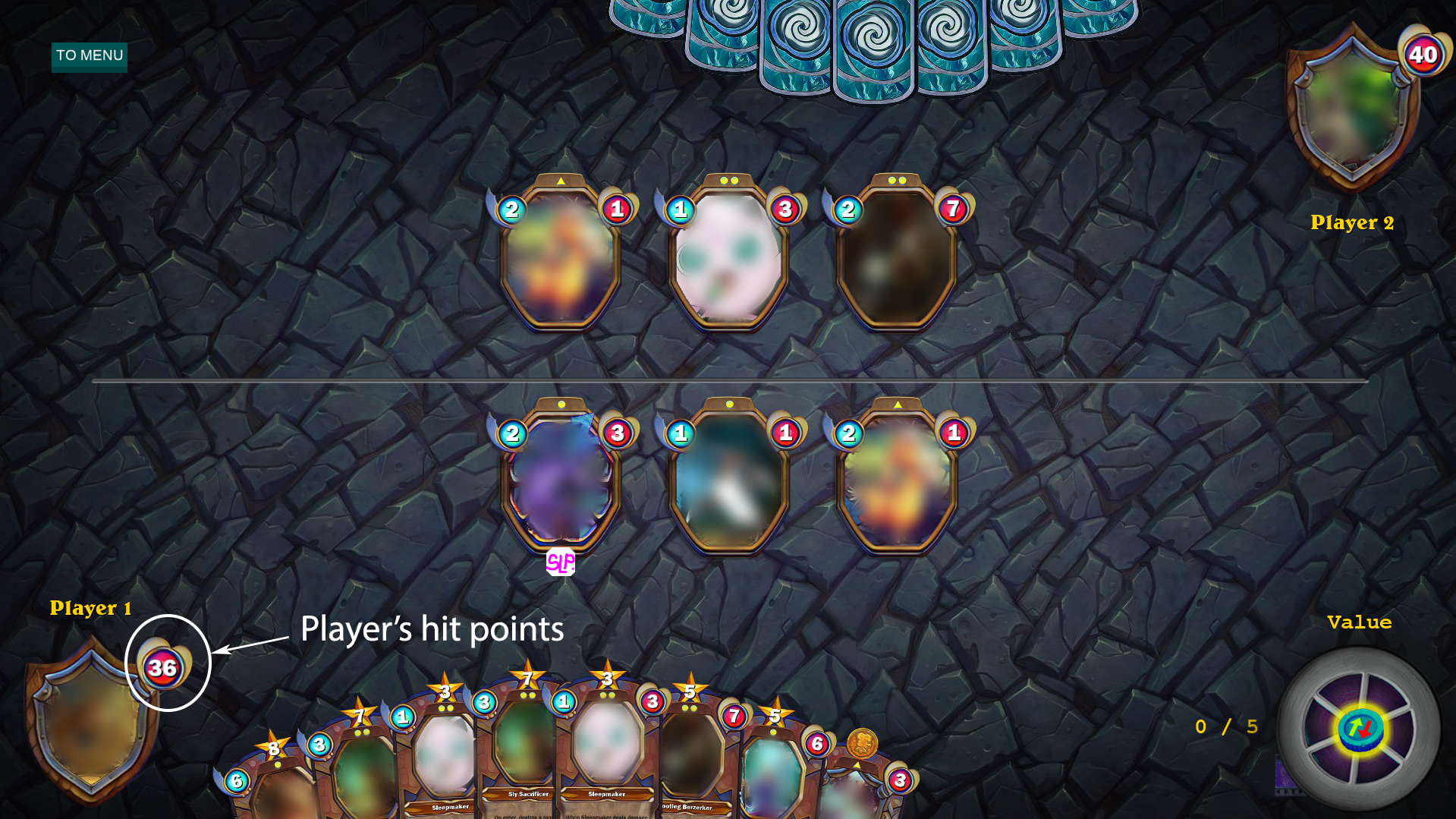
This, while functional, didn’t take advantage of the film-making flavor of the game, and felt more like a one-on-one battle to the death between two opposing forces. It made the movie-making theme feel secondary, almost incidental to the mechanics. We had to design something more fitting than this!
We quickly decided to move away from the life points idea in favor of what later became called “Narrative points”. Instead of bringing down your opponent’s HP, the point of the game would be to try and create a more compelling narrative than your opponent. Soon after figuring this out, we added the concept of “lead roles”, later to be called “lead characters” which had conditions that, when triggered, gained you narrative points. Each lead was required to reach a certain amount of narrative points for their narrative arc to be considered complete. The goal of the game became to complete two of your three leads’ arcs.
This already felt like a huge flavor win: for one thing, it refocused the attention of the players from trying to murder each other (figuratively, of course) to create an interesting story. Having different leads with different requirements allowed us to tie them to gameplay archetypes, pushing the players towards more interesting behaviors. It started to feel like you, as a player, were shaping the story of your movie and turning it in different directions, according to what your leads' needs in their story.
One of the repercussions of this design solution was that leads became way too important for the game, with everything revolving around them at all times. If you didn’t have a lead in the play, you had to get it into play as soon as possible, and if a lead of yours died it was a huge setback to your game-plan. We wanted to give players a generic way of gaining narrative to go along with the leads’ abilities, so that not everything in the game revolved around such a small number of cards.
We opted to keep the ability for characters to attack the opponent directly, which now gained you 1 narrative point instead of damaging the opponent. It worked mechanically, gave players a choice in how they wanted to gain narrative, and made other characters more useful again. As another measure to defocus attention from the leads, we added a “free narrative” counter which allowed you to gain and keep narrative points even when you don't have a lead in play.

The opponent is about to attack you as the actor Adventure Ash
While a large step in the right direction, there were still some things in the design that we didn’t like. For one thing, players still represented actors, but now with them playing all of the lead roles in their movie the flavor began to break down.
Luckily, we had a solution to this problem that worked perfectly. We just needed to change players from “actors” to “directors”. It made perfect sense with everything else going on in the game: when building your deck you cast your leads, characters, choose your tropes and crew to use in your movie – as a director would; when playing the game you choose what to frame, when, and how – like a director would – it all fit together perfectly.
One thing that did not fit, however, was the generic way of gaining narrative points. Now that players represented directors filming movies, attacking the opponent directly felt even more out-of-place. We needed a movie-making solution.
At this point in development, we were also working on the existing fighting game mechanics and their relationship with each other. We wanted an action that lost to attacks and beat dodges so that we had a functioning rock-paper-scissors relationship between all the combat mechanics. After much brainstorming, we came out with a mechanic that solved both issues – “performance”.
As a movie director, you could take up a few frames in your scene to film your characters perform, and if left undisturbed this performance would gain you narrative points. Attacking a performing character would disrupt the performance, and dodging against a performance would be a waste of frames.
It was a flavorful solution that fit nicely into the existing mechanics, and cemented the film-making flavor as an integral part of the game. As a result of all these design decisions we arrived at a player’s win-condition to be completely unrelated to killing your opponent, while still keeping the battle elements of the game intact.
Meet the Directors
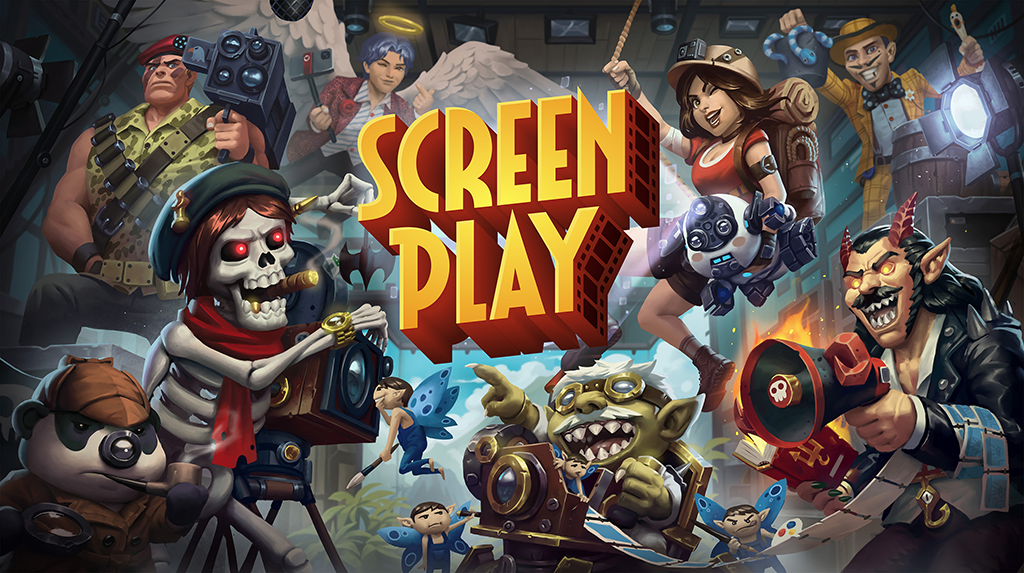
In every multiplayer match of ScreenPlay, you represent a movie director and compete with another director while making the same movie. However, both players have their own unique vision for the movie’s story, lead characters, tropes, and the type of crew required to produce the movie. The goal of each player is to regain complete control of that vision from the other player.
This can be achieved in a variety of ways: For instance, different genres have their own way of storytelling, with different playstyles and archetypes that appeal to different kinds of players - so we wanted to provide players with visually different avatars exuding distinct personalities to represent their own unique style.
Now, let’s be clear, real-life directors are quite boring to look at. As an experiment, we tried incorporating horror elements into the design of a horror-themed movie director character. This is how Ben Bones was born, or perhaps un-born.

“An undead skeleton, known primarily for creating commercials for the undead (whether it is an advertisement for possession by spirits, a hotline for summoning demons or cigarettes). However, he desperately tries to break free from being type-casted and prove himself as a horror movie-making virtuoso.”
Once our artist Kevin brought this idea to life, we were 100% sold on the direction for player avatars.
Another issue we encountered was that each director should be holding a movie camera and in a pose that portrays the character filming a movie. However, using the same camera for each director would be repetitive and boring. So, we decided to switch up the design of the cameras and make them fit the genre.

This approach led to some very funny ideas. For example, Goblin Del Falso is a goblin mechanic and a clever tinkerer with a neurotic passion for cinema representing the Fantasy genre. So, his camera is self-designed, more steampunk, and operated by overworked magical fairies. Though his inventions may sometimes break or explode, his obsession for making movie magic never falters.

While Sly, a plush panda toy, is a mystery director so has a spy camera hidden in his nose, perfect for hidden spy camera footage. A former spy now rehabilitated, he now capitalizes on his former investigative and espionage skills to make the best films in the mystery and noir genre.
In terms of art direction, it is easy to find common archetypes for most genres. However, we did have to burn a lot of neurons to find the best representation for the drama genre. Luckily, we found our savior in the highly-dramatic world of telenovelas.

Meet Lord Telenovela - A demon who makes the most dramatic telenovelas (soap opera tv shows) that make hell look reasonable. With a megaphone in his hand and an overdramatic and overemotional script in his hand, Lord Telenovela bosses his cast around to create the most convoluted plot twists and scenes ever seen on a screen. Not to mention, he makes them work overtime under harsh conditions.
Seriously, if you have never heard of telenovelas, we have just opened Pandora’s Box for you.
Lastly, to bring your director truly to life, you can unlock animations for the avatars and use them to emote during a match.


Alice Alea (aka Adventure Alice or DangerDame) is a wildlife filmmaker, zookeeper, and archaeological documentarian. Her films are mostly about her real-life adventures. There are nine director avatars to choose from in the game so far. Here are some other ones from the list:

Sergeant Ares
Action Ares is a military veteran who became a movie director and is known for creating successful action movies, primarily war movies. Despite his cinematic accolades, he is notoriously famous for being the most intimidating movie maker.

Syph-I
Syph-I is a Sci-Fi movie director. An extremely curious futuristic robot that can capture an event and generate movies in all forms of format (holographic, virtual, augmented, etc.).

Rémi Trixville
A goofy stunt performer and comedian known for his whacky funniest home videos and over-the-top pranks all recorded with simple handheld pocket camcorders.

Q-Pid
Q-Pid, aka the modern god of love, likes to channel his passion for match-making by creating romantic movies. He is a charming, vulnerable, witty romantic lead both on and off-screen. If that’s not enough, he is also a rapper, singer, songwriter, record producer, creator of the famous Q-Pid dating app, and an international phenomenon in the K-Pop scene.
However, we fully intend to provide additional avatars that players can unlock and customize to better represent themselves in ScreenPlay.
Which is your favourite director? Let us know in the comments!
Dev Diary
In ScreenPlay, players don’t take turns like in regular card games, where one player gets to play while the other waits. Instead, players frame a scene at the same time: they decide what they want to happen during the next turn and once both are ready - filming starts and all the actions play out in sequence. This method cuts a lot of the idle time and allows for gameplay that makes more sense in a game about filming movies.
Birth of the Reel
When designing ScreenPlay we knew we wanted simultaneous turns. Turn-based combat made little sense for a game based on movie-making, in which players are trying to mess up each other’s story while filming their own.
With so many different types of actions a player could take in a scene, how do you figure out their order in a turn? This part of the game’s design went through a lot of vastly different iterations. An early solution was to give each type of action a different speed and priority. Playing a trope, playing a character, attacking, dodging, activating an ability, etc. all had differing levels of priority, which would determine the time at which the effect would resolve.
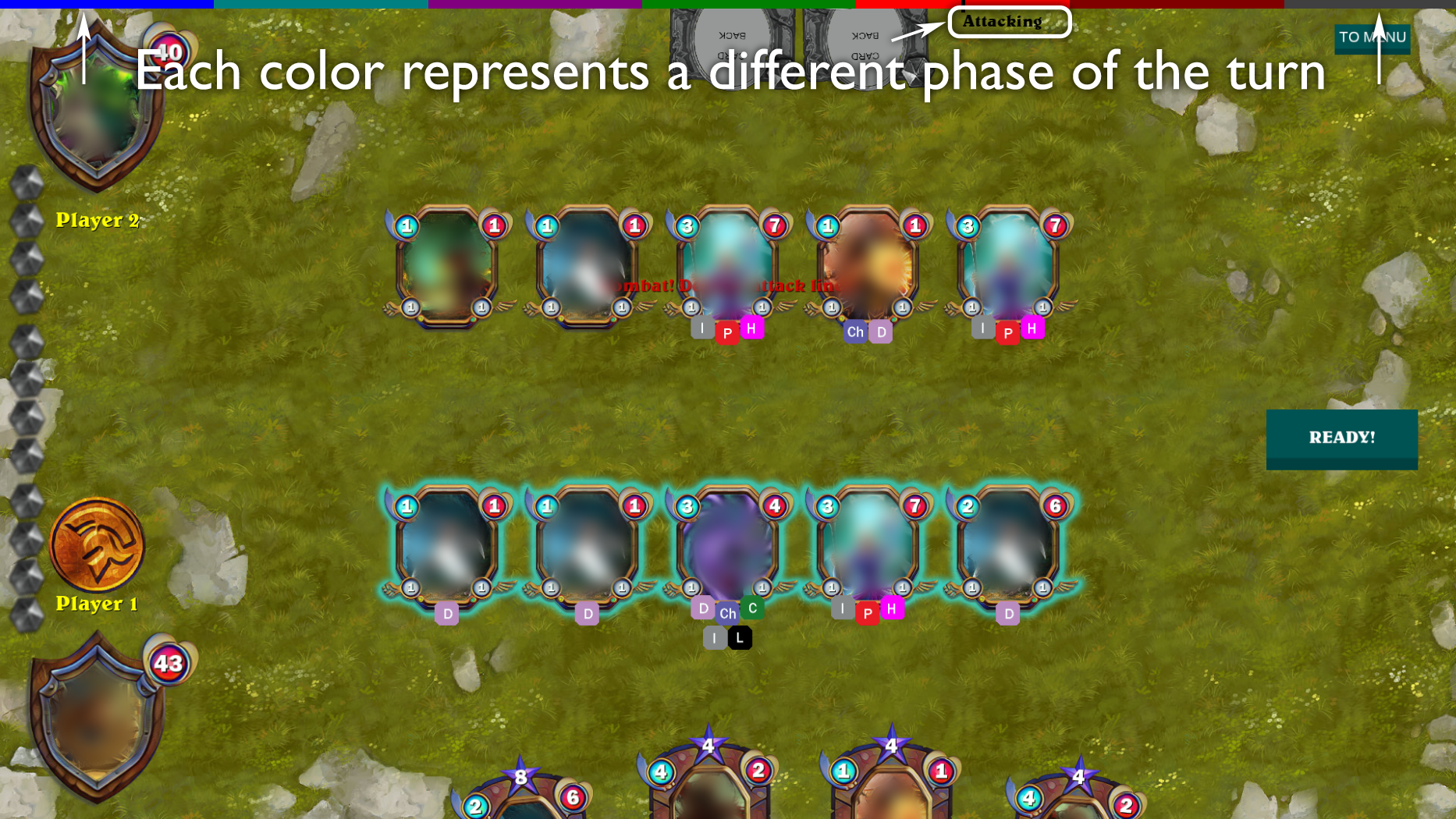
an early game build with placeholder art from some random game or other
didn’t take long for this system to become overly convoluted with just how many different types of effects and abilities we had in the game. Not to mention, it was hard for players to remember the precise rules on ordering because of how arbitrary they felt, and it made turns play out predictably, working against the theme of creative movie-making. We wanted to give players the ability to choose their own order of actions scene by scene, so some other solution had to be found.
This is how the reel was born. The idea was simple – you would have a set number of ‘frames’ available each scene, and each frame could house one action (for the most part). Frame 1 would happen first, then frame 2, etc. After some testing we figured out that we needed each scene to contain 2 to 3 actions, so that each one would be relatively short but still have room for outplays and unpredictable outcomes. You would start the game with 2 frames in act 1, which increased to 3 frames in act 2 and 3, to increase the pace of the game.
This new system cleared up the ordering of actions nicely, and it added an element of timing – would you attack in the first frame or the second? Could you catch your opponent before they attacked? This new design helped out the competitive fighting game combat mechanics out massively, but not all problems were solved just yet.
One thing we need to mention is how speed ties are resolved in games with simultaneous turns. With all effects now having the same speed, we now had a speed tie in every frame of the game. The way speed ties were and still are resolved in ScreenPlay is with the Spotlight. The player with the spotlight’s actions happens first, and the spotlight moves back and forth from player to player each scene. While this worked fine for solving speed ties in previous iterations of the game, now it made scenes too predictable. With all actions having the same speed, it meant that if you had the spotlight, you knew that your first action was “safe” and couldn’t be messed with by your opponent. Your first attack couldn’t be dodged, for instance. This didn’t work for us at all. We had to keep different speeds into the game. The predictability messed with the game’s competitive fighting game mechanics too much.
Perfecting the Reel
A quick fix to the problem was to introduce a stat to all cards, called Speed, harkening back to pre-reel designs. The higher the speed, the faster the card or effect would happen within the limits of the frame it’s in.

Suddenly, frame 1 wasn’t safe anymore. Turning the old rule into a variable stat gave us more flexibility in terms of designing various effects and abilities. We could now have slow trope cards, or fast crew abilities! Furthermore, you could now see how fast all the cards were by just looking at them, instead of having to remember an arbitrary rule. But again, complications arose.
For one thing, ordering became confusing again. The priority system now took into account first the number of the frame, then the speed of the cards, and then who had the spotlight. It was just too much for an average player to keep track of, and people got confused.
- “Is an attack with 2 speed in frame one faster or slower than an attack with speed 5 in frame 2? Why did you dodge my attack, if your character is slower?”
We had to find a way to streamline the timing system.
Luckily, the solution was staring us in the face. We knew that the Spotlight was necessary to break speed ties, so the only thing that could be done to simplify the priority system was to merge the frames idea with the speed idea. This is how the final iteration of the reel came into existence. By giving you more frames per scene, and making different actions cost different amounts of frames, slower and more powerful actions would take up more time on the reel, while faster and weaker actions would take up less time. We managed to create a simple, easy to follow timeline, which clearly shows you what is going on and in which order. By visually offsetting the two reels (yours and your opponent’s) horizontally, you would now be able to follow the order of all the actions left-to-right, like you would on any timeline of an online video, or in an editing software. It made sense and worked great!

As it usually happens in game design, it takes many iterations to come up with a clean, effective, and intuitive system, and rarely do you get to see the steps that it took to get there.
Stay tuned for more dev diary updates and other posts every Thursday!