"Oh God, you're late! What happened? Was the train robbed?" "They tried and put a cow and turkeys on the track. But the engineer was fearless and put more coals in the engine!" "Oh no! Poor animals!" "Nothing happened to them, the cow ran over the bandits and the turkeys pecked them!"
Hello cowboys and cowgirls!
After a two-week break, we're back with your favourite feature, each time bringing the tension to boiling point and yet no date. That will change soon.
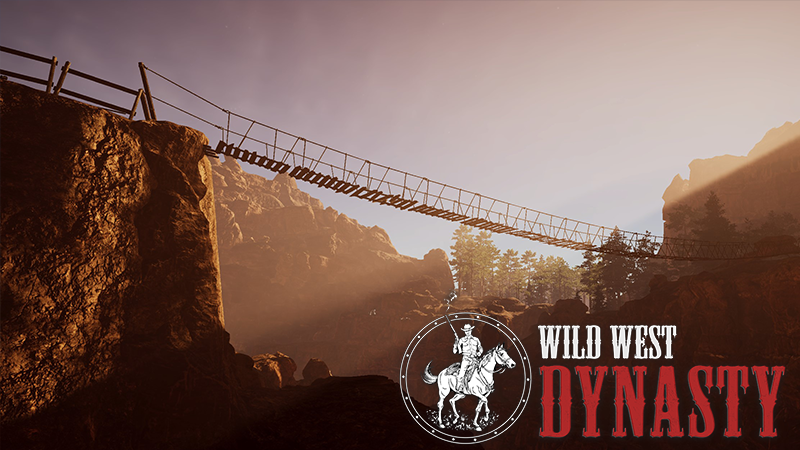
Let's talk about two men who discovered the bridge from East to West for the Europeans. A considerable part of the United States was still terra incognita for the colonists from Europe. The East had already spawned the first big cities, and the cities of San Francisco and Los Angeles had also sprung up in the West, but the route from East to West was one big Unknown.
Thus in 1803, preparations began for an expedition across the country, led by Meriwether Lewis and William Clark. The two of them, with a large group of men, set out from 14 May 1804 up the Missouri towards its source. They met the Sioux on their way, a tense encounter. Later, a French trapper and his wife from the Shoshone tribe joined the group and served as their guides.
A little over a year later, the expedition reached Great Falls, then Three Forks in Montana in the summer. The group traded horses to cross the Rocky Mountains, which were more arduous for them to conquer than they had thought. With great difficulty they reached Clearwater River, then Snake River and finally the Columbia River. But a second winter was approaching and the whole group decided to camp together at Fort Clatsop on the Pacific Ocean. In 1805, it was hardly commonplace that a slave and an indigenous woman, as members of the group, were democratically involved in such a decision, which made this vote quintessentially All-American.
The return journey took place in 1806 and Lewis and Clark each sought new ways to cross the mountains before meeting again at the Missouri in August of the same year.
The big question which you can answer is: Why were Lewis & Clark so much faster on the way back than on the way there? Did they forget to turn off the cooker? Did they try to get home before Thanksgiving? As always, feel free to leave feedback here or on our social media channels!
Wild West Wednesday - Gold Rush
"Woohoo, I found a gold nugget!"
Hello cowboys and cowgirls!
For today we have picked digging for immense riches as our subject. One which probably also seems desirable in the game since the living can be costly while the cowboys need to be paid. And when we talk about riches, we are talking about gold.
The Old West of the United States was hit by several major gold rushes in the 19th century, including one in California, one in Colorado and one in Montana. The gold finds in each of these states resulted in a migration of gold diggers. However, the pursuit of wealth had also brought every imaginable evil of capitalism upon the population. In California, the situation was particularly worrying. The city of San Francisco was in flames six times in two years. Cholera raged in 1849 and the blood toll was particularly high among the indigenous population. In addition, the mercury used in gold mining poisoned many lakes and rivers.
Only a few gold miners became rich in the rushes; instead, wealth accumulated among those who sold goods and commodities to the gold miners. Each digger secretly hoped to find one of the four Lost Dutchman's Gold Mines.
But they also searched for slightly less noble metals: silver, copper and, above all, iron. Today, platinum metals are still being mined in the USA, and they have now surpassed the value of gold: Osmium, Rhodium or Iridium are among them.
Now that you know the boon and bane of gold... would you look for gold if it were available or would you rather try to squeeze gold out of the pockets of the gold hoarders? Drop us a line in the comments!
Wild West Wednesday - The OK Corral shooting - What really happened!
"Hey, Wyatt, your mother can't cook and smells like onions!" BAM, BAM, BAM, BAM....
Hello cowboys and cowgirls!
Today marks the 141st anniversary of the OK Corral shootout, a key event in Wild West history. This shooting is emblematic of the lawlessness of the Wild West.
The Earp brothers were a family where the saying "blood is thicker than water" could have been a family motto. They worked as lawmen as well as saloon keepers in several towns on the frontier before coming to Tombstone, Arizona, in 1879.
The brothers, who had never worked as cowboys or ranchers in their lives, soon came into conflict with a loose gang, which made a living as cowboys as well as cattle smugglers and horse thieves. This conflict escalated until it culminated on 26 October 1881. The attempt to arrest the brothers Frank and Tom McLaury, Billy and Ike Clanton, and Billy Claiborne and Wes Fuller ended in a wild shootout as the cowboys on one side and Wyatt, Morgan and Virgil Earp, and Doc Holliday, on the other, fired 30 shots at each other in 30 seconds.
In the end, two of the three Earp brothers were wounded, Doc Holliday had been grazed, the McLaurys were dead, and Billy Claiborne was also no longer among the living.
However, the conflict did not end with the shooting, but dragged on for some time.
This shooting has been featured in numerous films and books and is considered one of the most important events to survive the Wild West era. Now for the all-important question: who shot first? Tell us in the comments here and on our social media channels!
Wild West Wednesday - Thou shalt not pass!
"Graham, what are we going to do if McCluskey doesn't pay us that much money again this time?" "I dunno, Eric!" "We could go west, hunt bears and become fur traders." "Eric, that sounds dangerous, don't they mangle yer?!" "Hey, lads, you'd better chase the cows back together before THEY decide to mangle you." "John, you're a fool!"
Hello cowboys and cowgirls!
In the early 19th century, there was a great unknown - a seemingly insurmountable obstacle - for Americans heading west: The Rocky Mountains.
The explorers Lewis and Clark found a passage through the mountain range between 1804 and 1806, but their route did not allow for heavy loads.
Although the southern foothills were known to the Viceroyalty of Spain, now Mexico, and the Canadian north to the British, nothing was known about the central parts. Only the Cheyenne tribes, who had been driven out of their former homeland, the Great Lakes, and the Absaroka tribes knew about the South Pass, which was to become extremely important during the 19th century. Even after the South Pass became known, the trappers and fur traders to whom the trail was revealed, formulated its existence so vaguely as not to attract competitors.
In 1824, the Rocky Mountain Fur Company sent trapper Jedediah Smith west. He immediately recognised the value of the South Pass, and the Company expanded its operations. In the following years, the first covered wagons crossed the pass and three routes through the mountains were established: the California Trail, the Oregon Trail, and the Mormon Trail, which, however, ends in the area of the Great Salt Lake.
The Bozeman Trail also branches off from the Oregon Trail at its beginning, leading north over Bozeman Pass to the gold fields in Montana.
As you can see, trails are important, and in Wild West Dynasty you will metaphorically tread one of them. But also importantly, how will you fare against a bear if you encounter one on your way? Tell us about it in the comments!
Wild West Wednesday – The man that shaped the West
“John, boy, you could be a hero!”
Hello cowboys and cowgirls!
Last week we were writing about inspiration in the Western genre, and we got quite a bit of feedback on the inspirations. Thank you for your comments, you are true lovers of Westerns!
We have seen the occasional film by John Ford in your posts as well, therefore we would like to give the famous filmmaker a spot in today's news, especially because his work has influenced numerous equally famous directors: Ingmar Bergman, Jean-Luc Godard, Alfred Hitchcock, Stanley Kubrick, Akira Kurosawa, Sergio Leone, George Lucas, Sam Peckinpah, Martin Scorsese, Steven Spielberg, François Truffaut, Orson Welles and many more.
Consequently, it should dawn on you that even though the Western genre has never had much direct contact with gaming as an art form, there is likely to be an ounce of John Ford in Wild West Dynasty.
John Ford, a commander in the US Navy as a serviceman, made several classic westerns in his time, but none of them won one of his six Academy Awards, the Oscar. He shot most westerns up to 1950, apolitical and romanticising the time of the Old West. After that, his output diminished, and his films became more pessimistic than in his early years. The westerns, however, were significant.
He directed only The Searchers in the 1950s and only a few more films in the 1960s, including the noteworthy The Man Who Shot Liberty Valance.
Wild West Wednesday – Western: American National Epic
“Sheriff? What’s a cliché?” “Edward, did you pick that from your father or from Felipe?” “Felipe.” “Well, my boy, get one of those dime novels from the general store. They’re cliché!”
Hello cowboys and cowgirls
While our dev team is working very diligently towards the day X, today we would like to look at inspirations for the Western genre.
In 2023, the Western genre will celebrate its 120th anniversary. A few years after silent film was invented the first Western film was shown: "The Great Train Robbery" was an epic movie with a length of 12 minutes. Since then, the classic western, with its equally classic elements and motifs, shaped film history for a solid 50 years before other genres took over the movie theatres.
John Ford was the leading figure in this genre at the time. His films "Ringo" or "The Man Who Shot Liberty Valance" are still very much worth watching today.
While genres like Science-Fiction, Horror and Thriller were taking over the cinema, the era of the Italo-Western began, whose outstanding figure was Sergio Leone with his two trilogies. These Westerns turned away from the classically romanticised vision of the world, but initially remained true to their narrative roots: the struggle between good and evil, until more ambivalent characters appeared here as well.
In the 1980s, due to one of the biggest cinema flops of all time ("Heaven's Gate"), the Western disappeared from the silver screen, but re-emerges every few years with very successful neo-Western productions such as "Pale Rider", "Dances with Wolves" or "Django Unchained".
In literature, the Western has been around since the times of the Old West. James Fenimore Cooper provided the blueprint with the "Leatherstocking Tales", which were taken up above all by German authors. Karl May deserves special mention here, because he wrote his imaginative tales before he set foot in the country for the first time.
What's your favourite Western story or film? Tell us in the comments!
Wild West Wednesday – On the horns!
"Eric, get John and Graham to come over here for a minute!" "Has Polly escaped again?" "Damn right she did!" "Did Graham tell Terry some stupid story he picked up in the saloon and then forgot to look after the cattle again? "Yeah, Eric!" "Sometimes I ask myself, who's the real bovine? Graham or Polly?!"
About four weeks ago we shared with you a little bit about the cowboys, today we're talking about their antagonists. No, not the minions of some random villain found in a saloon, but rather: Cattle.
Since the early 19th century, the cuddly four-legged creatures that kept the cowboys in work had to be driven from their grazing grounds in the West to the railway terminus or to the cattle markets, sometimes over considerable distances.
In the beginning, these cattle drives were small, but over the decades they grew into large herds that had to be moved from point A to point B. The era of the 'cattle drive' began in the middle of the 19th century. The most famous route at the time was the Chisholm Trail, a 520-mile-long journey between Fort Worth in Texas and Abilene in Kansas, the railway terminus.
A drive consisted of about 1500 and 2500 cattle and covered about 10 to 12 miles a day. A few years after the trails were established, the previous trailheads lost their relevance and moved further and further west. After Abilene, Dodge City was now the new hub. Eventually, railway expansion made the drives obsolete; today, smaller cattle drive events are still held occasionally.
What will your favourite cow in Wild West Dynasty be called? Tell us about it in the comments or write to us on our social media channels!
Wild West Wednesday - I am the law!
"That's not your horse!" "Um...I found it, now it's mine!" "The saddlebag has my initials on it!" "I..." BAM!
Howdy cowboys and cowgirls!
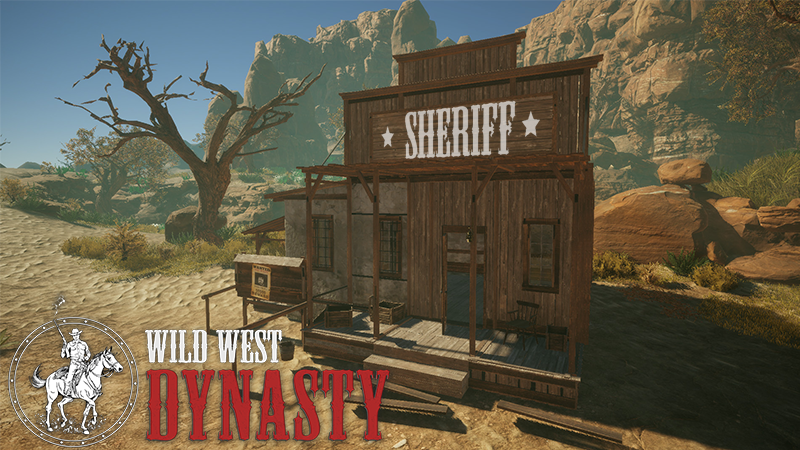
In a not-so-distant future, things are going to get serious. When it gets serious, a sheriff won't be far behind. And when there's a sheriff, there's a law.
Well, this statement only applied to the old west to a certain extent, there were indeed a slew of laws in the USA at that time; law and order were administered and enforced by marshals and sheriffs. These law enforcers were usually poorly paid or not paid at all. Moreover, they were entrusted with tasks that were beneath their dignity. The combination of these factors ensured that many lawmen did not carry out this work over a long period of time. Well-known names among the lawmen are the brothers Virgil and Wyatt Earp, Pat Garrett or "Wild Bill" Hickok.
In many places, moreover, there were no written laws, but an unwritten "code" that sometimes gave bizarre advice. A few of these " words of wisdom" are:
"Never steal another man's horse. A horse thief pays with his life." "Never wave at a mounted man. It might spook the horse. A nod is the proper greeting." "Never shoot a woman, no matter what." "Never try on another man's hat."
What unwritten advice from the old west do you know? Drop us a line in the comments here and on our social media channels.
Wild West Wednesday - Splendid perspectives
"Hey Joe!" "What's up, kid?" "You know your way around these parts, don't you?" "You could say that." "Is it actually true that if you climb out there on the scaffolding that you can see the whole world from there?" "Edward, have you ever thought about the fact that your dad is just pulling your leg?" "My dad doesn't lie!" "Yes, well then. Of course you can see the whole world from there! You should be well equipped for the climb though. I happen to have a few things in my shop .... do you have any coins?"
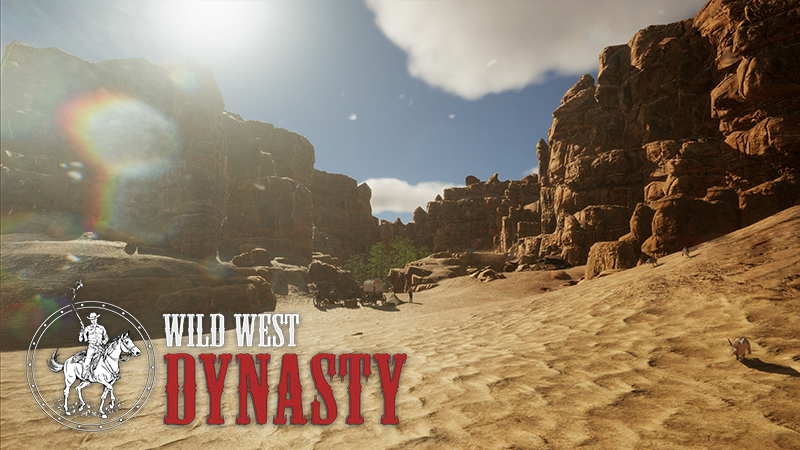
When selecting the regions that absolutely fit into a western setting, we have chosen a few areas in the United States that are associated with it and that immediately evoke associations with their striking appearance. Most notable are the five large and well-known national parks: Arches National Park, Bryce Canyon National Park, Canyonlands National Park, Capitol Reef National Park and Zion National Park. But we do not want to withhold smaller parks like the Dixie National Forest. Perhaps you will recognise some of the rock formations in the game 😉
Which regions do you think are essential to a Wild West setting? Tell us about them in the comments or write to us on our social media channels.
See you soon and keep your eyes open!
Wild West Dynasty – Building your future
"Hey, Mister..." " Please take a look at these wonderful coffins, good man. Real pine, very sturdy. Or this one: Spruce, with oak veneer, looks classy. And there's the top of the range, made of real oak, imported from Europe, solid, nobly glazed and painted." "Hmmm, I'll stick with the simple model." " Very much so." "I need five of them!"
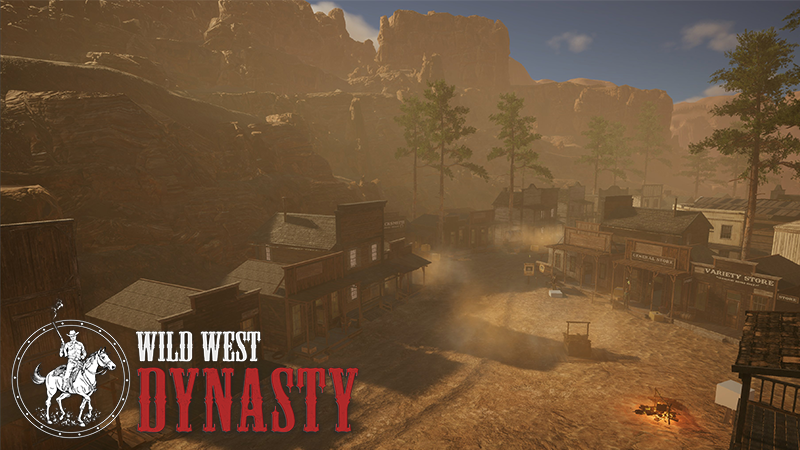
Another interesting topic: Where did people get building materials in the Old West? The settlers brought it with them, or had it delivered by wagons, thus ensuring that the rather rare raw materials were brought to the respective ecologic regions. In the hot south, people tended to work with stone and clay, while in the tree-rich north they relied on wood.
But that does not mean that there was no wood in the South. In Utah, one of our archetypes for the first biome, the Fremont Cottonwood is found in the desert-like regions, but like most poplar species, it yields rather inferior wood. Juniper can be found at higher altitudes but is only of limited use as timber, too. However, pines can be used very effectively and are also found in Utah.
And don't worry: There will be plenty of wood in the game!
What will you build first? Let us know in the comments here or on our social media channels.
See you soon!
PS: Search the internet for Pando in Utah and be surprised! PPS: Expect a behind-the-scenes look as we answer the first of your questions in our video blog soon!