
WolfQuest
Why Why Why? (Devblog)
Here we are at the end of another year, still working on WolfQuest 3! Why, you may wonder? The short answer is that we are making a much bigger game than we had thought. We’re tremendously excited about how the game is coming together, but each one of these new, better features requires a lot of time to develop, tune, tweak, and bugfix. Today’s video shows a few of the latter — though truthfully, almost all of these are from a few months ago and have since been fixed. Of course, our playtesters are finding new bugs and quirky things that require our attention now. Glancing at our bug reporting board, these include “sometimes rains and snows at the same time,” “Player wolf does too much damage” (is that possible?!), “Wolves fall through map,” “Elk calf can get stuck running in place,” and my current favorite, “After courtship, my ‘mate’ just leaves with the dispersal group” — now that’s harsh!
In addition to these bugs, our amazing team of Unity developers is making progress on all fronts. Andrei is setting up more UI, music, and innumerable small features that make the difference between crudeness and polished. Zach has multiplayer almost done, and recently took a break from that to set up the new accounts system, including migrating your wolves from the old game to the new one. Since joining the team in August, Nick has become our ombudsman for tricky technical challenges, from save/loading all the essential data for our complex eco-simulation to special shader solutions to performance optimizations. And Tommi has actually been playing the full game to find bugs to fix and refine and polish the gameplay.
So, sit back and enjoy the humorous bugs…but don’t worry! We are getting closer to releasing the first episode, Amethyst Mountain for PC/Mac on Steam and itch.io, as Early Access. That will be followed by Slough Creek some months later, then followed by the mobile versions.
Running Through the Woods on a Snowy Evening (Devblog)
Wolves are well equipped for snowy evenings, and we’ve been putting a lot of effort into creating game environments to suit them. In this video, many different graphics techniques that we’ve been working on finally.come together. Dynamic weather system means it can snow at any time (even in early fall!). As it snows, the ground is gradually covered with a white blanket, and now the trees are too. And of course, the snow also accumulates on the animals themselves.
It’s a short video this week because much of our time this week was absorbed with technical issues following a software upgrade, and of course the holidays themselves. We’re still making progress toward release, but perhaps we’ve finally learned our lesson and have not announced a release date yet.
Happy howlidays!
Stranger Danger (Devblog)
As the game comes together, there is one thing after another that requires close attention and setup. Today’s video looks at stranger wolves, which populate persistent packs in each game map, either in established packs defending their territory or as dispersals who are looking for a mate. The pack membership will be hard-coded in Amethyst, so you can get get to know them over the course of many games, while dispersals will be randomized each time you start the game, so there will always be someone new to meet.
The video gets a rather in depth, but if you stick with it (or skip ahead to 9:56, you’ll see some in-game action with a member of the Lamar Pack. That wolf happens to be rather hostile, but others will be open to the idea of joining forces as your mate and starting a new pack.
We’re still cranking away on game development, and although we won’t have it ready to release before the end of this year, we are making great progress. We recently got our core group of playtesters to start banging on it, finding bugs and making great suggestions to improve and refine the gameplay.
NOTE: WolfQuest 3 will be a free update to players who own WolfQuest 2.7. If you are buying WQ 3 for the first time, the cost will likely be more than than the current game 2.7 (so it's cheaper to purchase it now and get WQ 3 as a free update). If you want to support the game and help get us to the end zone, consider buying WolfQuest for a friend or send us some love at: https://fundly.com/wolfquest
Beary Bad News (Devblog)
The bad news bears finally make an appearance in today’s video, defending a carcass. It’s a sow (female) and two cubs — though now that the cubs are six months old, they’re not as frightened as younger cubs would be, and they don’t just hide behind their mother. That’s bad news for hungry wolves! As with everything we show in our devblog, this is a work in progress, so don’t worry about quirky things you may notice.
They also bring tidings of other bad news: despite our best efforts, we will not have Amethyst Mountain ready to release by the end of this year. Everything is coming together in exciting ways, but there are still simply too many bits and pieces that need to be built, tweaked, and polished. So now we’re looking at early 2019, though we have not set a release date. We are terribly sorry for making predictions that don’t come true — but we are getting close, and the game is looking even better than we’d hoped. We think the extended wait really will be worth it!
We are so gratified by our patient and supportive community. Your enthusiasm, knowledge, and humor get us through the day – even when the server goes down, cougars turn into pink panthers, the ravens fall from the sky (so perplexing…). Thanks for sticking with us!
Into the Woods
The new forests of Amethyst Mountain are coming together quite nicely now, as you saw in last week’s “Peaceable Kingdom” video. This week we look at the technical side of vegetation: How we set up the trees and other vegetation objects in the game scene so they “grow” where they should, and not where they shouldn’t. We’re using an amazing plugin for Unity called Vegetation Studio Pro, which lets you set spawning rules (e.g. tree #1 should spawn in low elevations, tree #2 in high elevations, etc.), and then uses cutting-edge rendering techniques that allow us to have hundreds of thousands of trees in the scene without killing game performance. Like many game development tools, it’s quick and easy (and fun) to create a rough version of what you want….and then lots and lots of tweaking and testing to get it just how you want it. (For example: did anyone spot the tree without a trunk in the video?)
____________
We know everyone wants to know when when when! We are still hoping to release the first episode, Amethyst Mountain, by the end of 2018 for PC/Mac on Steam and itch.io, as Early Access — but we aren’t quite as far along as I had hoped to be by now, so that’s a goal, not a guarantee. At any rate, that’ll be followed by Slough Creek some months later in 2019, then followed by the mobile versions. We’ll then resume development of the next episode, Tower Fall.
Peaceable Kingdom (for a Day) (Devblog)
Thanksgiving has rolled around again, and we’re still working on WolfQuest 3. But at least we’ve persuaded the animals to put aside their differences and gather together peaceably* for a day. (Well, except for the bull elk, who drew the short straw…)
At its very best, Thanksgiving is a time to pause to think about what we are thankful. We know a lot of WolfQuest players don’t have Thanksgiving as a holiday in their countries, but we would still like to share our thanks with you this week.
We are thankful for:
* Eleven years of WolfQuest! It is remarkable that the game has persisted and we are able to keep improving and expanding it. Thank you to everyone for supporting WolfQuest!
* Our dedicated and enthusiastic players! Without you, WolfQuest would not be possible. We especially appreciate all the supportive and constructive comments we hear. Your thoughtful input is always considered and helps shape the game. Also, someone makes us smile every day, which is essential to our perseverance.
* Our talented WolfQuest team: Tommi, Andrei, Zach, Nick, Steve, Duncan, Paul, Omar, Tom and the amazing artists at GIM, and many others who are contributing their talents to the game. We are thankful to work with such creative and dedicated folks.
* Yellowstone National Park and all the conservation efforts that help ensure wolves continue to thrive in the real world too. We are thankful for parks and wild places. We hope all of you get to experience the call of the wild!
* And most of all, those incredible gray wolves and all the wild creatures out there. We can’t imagine living in a world without them.
We continue to make progress on WolfQuest 3: Anniversary Edition, albeit with some interruptions like last week’s server troubles (which have continued some into this week), and some other glitches that have slowed things down a bit more this month than we hoped. Tommi has been building out more animals, finishing Mule Deer and Moose and now turning to ravens and other birds. Zach has been slogging away on multiplayer for longer than any of us would like to admit, and is finally getting close to having it all working (more from him in a blog post soon). Andrei has been expanding secondary systems like music and weather. Nick, the latest Unity developer to join our team, has been improving various things like save-games and scent rendering, and is now diving into optimization to make the game run better on a variety of hardware. Susan has been researching animal behaviors and answering questions on social media, while George handles game reports and player support. Steve has been creating more animal animations for the wolf and now moose as well, and remaking more of the original wolf coats. The GIM artists have been working on more grizzly and fox animations, and some other animals we’ll show off soon. And I’ve gotten back into the environment work, focusing on the forests of Amethyst Mountain with more beautiful models by our vegetation artist Kerry.
We know everyone wants to know when when when! We are still hoping to release the first episode, Amethyst Mountain, by the end of 2018 for PC/Mac on Steam and itch.io, as Early Access — but we aren’t quite as far along as I had hoped to be by now, so that’s a goal, not a guarantee. At any rate, that’ll be followed by Slough Creek some months later in 2019, then followed by the mobile versions. We’ll then resume development of the next episode, Tower Fall.
* Inspired of course by “The Peaceable Kingdom” series of paintings by Edward Hicks, depicting humans and animals working and living together in peace.
Stot If You Got It (Devblog)
We’re now setting up the mule deer in the game. Many of their behaviors are similar to elk, but because they live alone or in small family groups, they don’t have the protection of the herd, so hunting them is somewhat different. As usual, this involved a lot of tweaking and iteration. Some of those tweaks happened just before I made this video, so I didn’t get the mother-defending-the-fawn behaviors as I’d intended…but there’s still enough to look and and talk about for a nine-minute video.
Correction: In the video I say that 10% of elk hunts end in failure; of course I meant to say that 10% succeed, and 90% end in failure.
Mule deer (Odocoileus hemionus) are named for their large ears. They are most common in the summer throughout Yellowstone in brushy areas, grasslands and coniferous forests. Mule deer may sometimes gather in small groups but do not form large herds like elk. Mule deer are smaller than elk weighing on average 286 kg (130 lbs).
Wolves prey on mule deer, especially fawns, but wolves do prefer hunting larger, slower elk or bison. Fawns will start out hiding, scentless and motionless in early summer. Once they are mobile, fawns stay close to their mothers and can also run fast. Mule deer can run as fast as 72 kph (45 mph) and can change their running direction with a single bound by stotting (or pronking) which allows them to cover uneven terrain efficiently. This makes them challenging prey to catch. They also have sharp hooves that smart wolves avoid. Males grow and shed their antlers each year.
WolfQuest server is back online!
We're very sorry that the game server was offline for over 24 hours.
On Sunday we discovered that the server hard drives were failing, so had to do an emergency migration to new drives Monday morning, and somehow during that process, much data in the database got corrupted. We tried to repair it Monday afternoon and into the night, but the damage was too great. So we rolled back to our most recent backup, from 2am Monday morning EDT. After a few more glitches, things were finally back up and running. It was basically a very unlucky sequence of events.
Because of this:
1) We lost any data synced to the server after that backup early Monday morning. We hope that this affects very few players (since the game was then functioning only for a few hours before shutting down for the migration, followed by the repair and restore process), and we apologize to those who did lose data.
2) If you created a game account on Monday, November 12, it was most likely lost when we rolled back. Please contact us about creating another account.
WolfQuest server is currently offline
We're having some issues on the WolfQuest server, so it's currently offline for repairs. We hope to have it back up and running soon (hopefully by 5pm 6pm EDT Monday). In the meantime, you cannot create or log into game accounts. Very sorry for the inconvenience. We're working on it!
Spawning Food and Foe (Devblog)
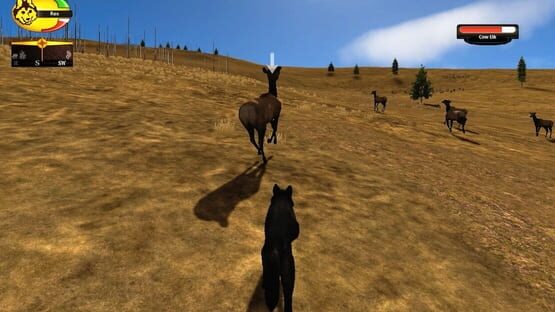
Yellowstone is called “The Serengeti of North America” because it’s home to so many big animals, at remarkably high densities. Watching videos from Yellowstone, it looks like you can’t hardly turn around without seeing a wild animal. Of course, reality is not quite like that. Last year we hiked into the areas depicted in WolfQuest and weren’t exactly tripping over wildlife. We’re big noisy mammals, certainly scaring off many animals — but so might wolves.
So in designing the game, we need to strike a balance between accuracy and gameplay. How frequently should you see other animals? How hard should it be to find an elk herd? Making the world dense with animals would boost the excitement in the game — at least initially — but would not represent the environment accurately, and perhaps over time would make animal sightings too mundane. But making animals (especially prey animals) too scarce and difficult to find would of course make the game too frustrating for all but the most determined players. Striking the right balance is a major focus of beta testing, and we’ll undoubtedly continue to tune that once the game is in Early Access for PC/Mac. (And yes, we’re still aiming to get it out in Early Access by the end of the year.)
We’re taking a first crack at this now, as we configure the animal spawning systems. We’ve created two types of spawning systems:
* Persistent animals: We create permanent elk herds and packs of stranger wolves, which persist as long as you’re on that game map. Typically we have three stranger packs in Amethyst Mountain, each of which has staked out a fairly large territory, leaving a small no-wolf’s-land in the middle of the map. Only in that area are you truly safe, but you’ll usually have to venture into stranger pack territory to hunt and find a mate. These stranger wolves persist, which means if you manage to kill one (unlikely as that may be as a lone wolf), you won’t see it again, while you will continue to see the surviving members of that (and other) packs. And same thing with elk herds: We’re creating a number of herds, and these will slowly shrink in size as you prey on them. (But what happens if you kill a lot of them? Well, nature abhors a vacuum….)
* Non-Persistent animals: These use a rule-based spawning method, so we can determine how frequently they appear in the game. We set the minimum and maximum distance that flock (a group of animals, from one to many individuals) can spawn from the player. Naturally, small animals like snowshoe hares would spawn closer to the player than big animals like moose. (Why? You can’t see snowshoe hares at long distances, but you can see moose, so this ensures that we don’t spawn animals at greater distances than they’re visible at.) Furthermore, to ensure that there's always a certain distance between flocks of a particular species, we have another pair of variables that control the minimum and maximum distance between spawns.
All this gives us great control over the density of animals in the game, as we test and tune the game to answer the question “how densely populated *should* the game-world be?” What do you think the answer should be?