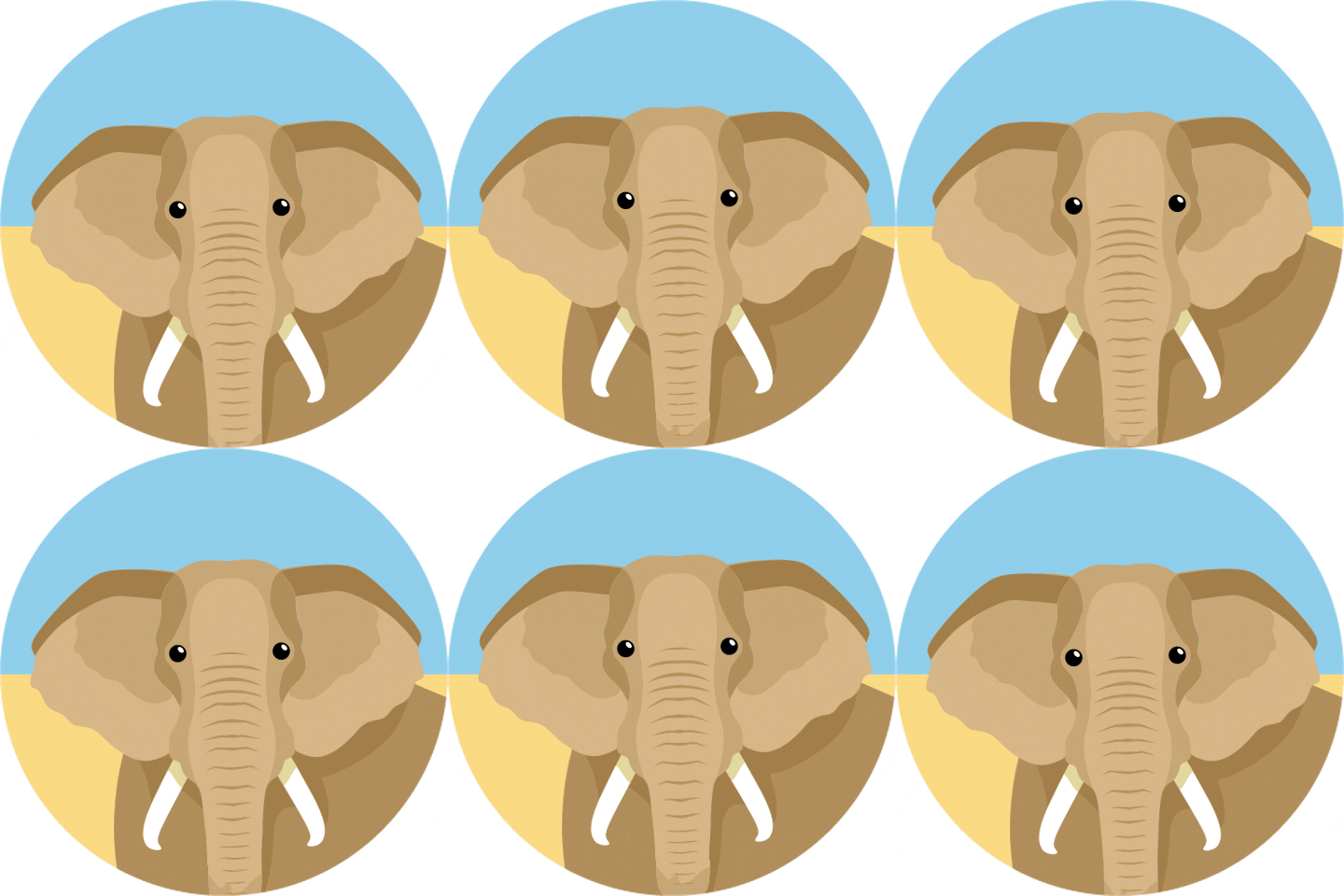
Let's meet the smallest but still big african animal - African Forest Elephant.
African Forest Elephant
The African forest elephant has grey skin, which looks yellow to reddish after wallowing. It is sparsely covered with black coarse hair, which is 20–200 mm (0.8–8 in) long around the tip of the tail. The length of the tail varies between individuals from half the height of the rump to almost touching ground. It has five toenails on the fore foot and four on the hind foot. Its oval-shaped ears have small elliptical-shaped tips. Its large ears help to reduce body heat; flapping them creates air currents and exposes the ears' inner sides where large blood vessels increase heat loss during hot weather. Its back is nearly straight. Its tusks are straight and point downwards.
Bulls reach a shoulder height of 2.4–3.0 m (7 ft 10 in – 9 ft 10 in). Females are smaller at about 1.8–2.4 m (5 ft 11 in – 7 ft 10 in) tall at the shoulder. They reach a weight of 2–4 t (2.2–4.4 short tons). Foot print size ranges from 12.5 to 35.3 cm (4.9 to 13.9 in). The tip of the trunk of African elephants has two finger-like processes. The trunk is a prehensile elongation of its upper lip and nose. This highly sensitive organ is innervated primarily by the trigeminal nerve, and thought to be manipulated by about 40–60,000 muscles. Because of this muscular structure, the trunk is so strong that elephants can use it for lifting about 3% of their own body weight. They use it for smelling, touching, feeding, drinking, dusting, producing sounds, loading, defending and attacking.
The African forest elephant's tusks are straight and point downwards. Both male and female African elephants have tusks that grow from deciduous teeth called tushes, which are replaced by tusks when calves are about one year old. Tusks are composed of dentin, which forms small diamond-shaped structures in the tusk's center that become larger at its periphery. A conical layer on their tips consisting of tooth enamel is usually worn off when the elephant is five years old.
The African forest elephant has pink tusks, which are thinner and harder than the tusks of the African bush elephant. The length and diameter vary between individuals. Tusks of bulls grow throughout life, tusks of cows cease growing when they are sexually mature. They use their tusks for marking and debarking trees, digging for roots, minerals and water, to rest and protect the trunk, and also for defense and attack. The tusks are used to push through the dense undergrowth of their habitat. Their tusks can grow to about 1.5 m (4 ft 11 in) long and can weigh between 23 and 45 kg (50 and 100 lb).
The African forest elephant lives in family groups. Groups observed in the rain forest of Gabon's Lopé National Park between 1984 and 1991 comprised between three and eight individuals. Groups of up to 20 individuals were observed in the Dzanga-Sangha Complex of Protected Areas, comprising adult cows, their daughters and subadult sons. Family members look after calves together, called allomothering. Once young bulls reach sexual maturity, they separate from the family group and form loose bachelor groups for a few days, but usually stay alone. Adult bulls associate with family groups only during the mating season. Family groups travel about 7.8 km (4.8 mi) per day and move in a home range of up to 2,000 km2 (770 sq mi). Their seasonal movement is related to the availability of ripe fruits in Primary Rainforests. They use a complex network of permanent trails that pass through stands of fruit trees and connect forest clearings with mineral licks. These trails are reused by humans and other animals.
The African forest elephant is an herbivore. Elephants observed in Lopé National Park fed mostly tree bark and leaves, and at least 72 different fruits. To supplement their diet with minerals, they congregate at mineral-rich waterholes and mineral licks.
Elephant dung piles collected in Kahuzi-Biéga National Park contained seeds and fruit remains of Omphalocarpum mortehanii, junglesop, Antrocaryon nannanii, Klainedoxa gabonensis, Treculia africana, Tetrapleura tetraptera, Uapaca guineensis, Autranella congolensis, Gambeya africana and G. lacourtiana, Mammea africana, Cissus dinklagei, and Grewia midlbrandii. Dung piles collected in a lowland rain forest in the northern Republic of Congo contained seeds of at least 96 plant species, with a minimum of 30 intact seeds and up to 1102 large seeds of more than 1 cm (0.39 in) in a single pile. Based on the analysis of 855 dung piles, it has been estimated that African forest elephants disperse a daily mean of 346 large seeds per 1 km2 (0.39 sq mi) of at least 73 tree species; they transport about a third of the large seeds for more than 5 km (3.1 mi).
Seeds passed by elephant gut germinate faster. The African forest elephant is one of the most effective seed dispersers in the tropics and has been referred to as the "megagardener of the forest" due to its significant role in maintaining plant diversity. In the Cuvette Centrale, 14 of 18 megafaunal tree species depend on seed dissemination by African forest elephants, including wild mango, Parinari excelsa and Tridesmostemon omphalocarpoides. These 14 species are not able to survive without elephants. African forest elephants provide ecological services that maintain the composition and structure of Central African forests.
Distribution
Populations of the African forest elephant in Central Africa range in large contiguous rainforest tracts from Cameroon to the Democratic Republic of the Congo, with the largest stable population in Gabon, where suitable habitat covers 90% of the country.
However, it is estimated that the population of African forest elephants in central Africa declined by around 86% in the 31 years preceding 2021 owing to poaching and loss of habitat. In addition, Cameroon, Congo and the Central African Republic have suffered from high levels of conflict. The first survey in 30 years in 2021, by the Wildlife Conservation Society and the National Parks of Gabon, reported an estimated 95,000 forest elephants in Gabon. Prior to this the population had been estimated at 50,000 to 60,000 individuals.
They are also distributed in the evergreen moist deciduous Upper Guinean forests in Ivory Coast and Ghana, in West Africa.
Conservation
In 1986, the African Elephant Database was initiated with the aim to monitor the status of African elephant populations. This database includes results from aerial surveys, dung counts, interviews with local people, and data on poaching.
Both African elephant species have been listed by the Convention on International Trade in Endangered Species of Wild Fauna and Flora on CITES Appendix I since 1989. This listing banned commercial international trade of wild African elephants and their parts and derivatives by countries that signed the CITES agreement. Populations of Botswana, Namibia and Zimbabwe were listed in CITES Appendix II in 1997 as was the population of South Africa in 2000. Hunting elephants is banned in the Central African Republic, Democratic Republic of Congo, Gabon, Côte d'Ivoire, and Senegal.
African forest elephants are estimated to constitute up to one-third of the continent's elephant population but have been poorly studied because of the difficulty in observing them through the dense vegetation that makes up their habitat. Thermal imaging has facilitated observation of the species, leading to more information on their ecology, numbers, and behavior, including their interactions with elephants and other species. Scientists have learned more about how the elephants, who have poor night vision, negotiate their environment using only their hearing and olfactory senses. They also appeared to be much more active sexually during the night compared to the day, which was unexpected.
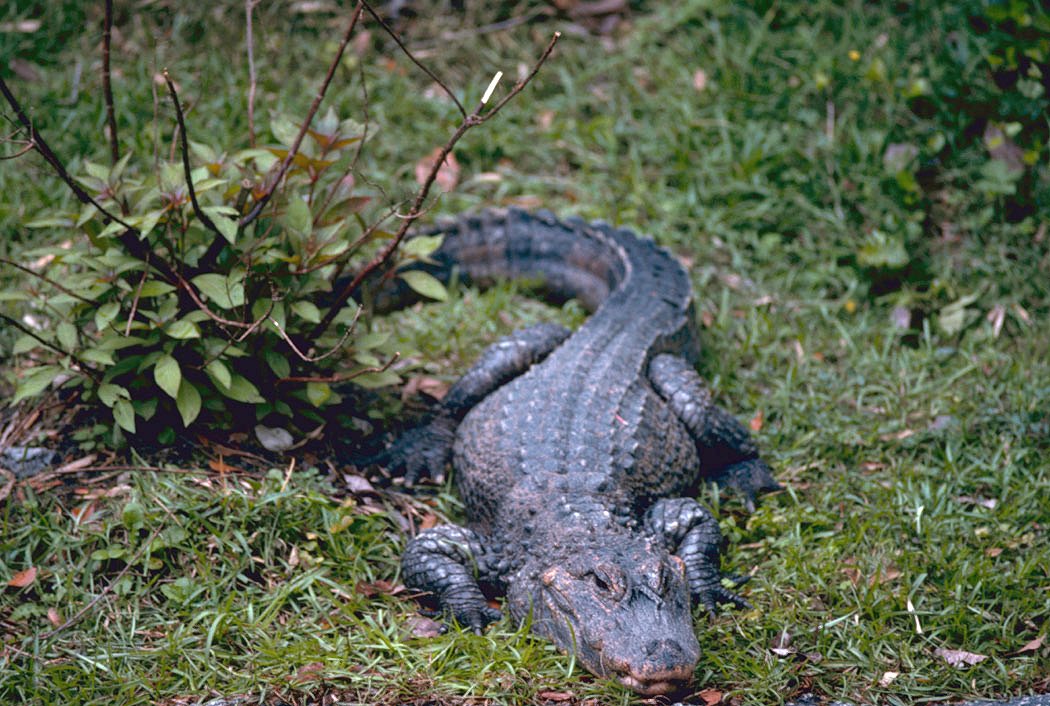
Let's get acquainted today with one of the most calm representatives of the crocodiles - the Chinese alligator.
Chinese Alligator
One of the smallest species of crocodilians, the Chinese alligator attains a length of 1.5–2.1 metres (5–7 ft) and weight of 36–45 kilograms (80–100 lb) as an adult. Females are roughly three-quarters the length of males. It is less than half the size of the American alligator, which typically grows to a length of 3.4 metres (11.2 ft) for males and 2.5 metres (8.2 ft) for females. Reports are known of alligators in China reaching 3.0 metres (10 ft) in past centuries, but these are no longer thought to be accurate.
The Chinese alligator is almost completely black or dark gray in color as an adult. It has a short and broad snout, which points slightly upwards and narrows at the end. Its head is robust, more so than that of the American alligator, with a bony septum dividing its nostrils. It has 72–76 teeth, of which 13–14 are maxillary, five premaxillary, and 18–19 mandibular. Unlike the American alligator, the Chinese alligator is fully armored, including its belly. It contains up to 17 rows of scales across its body, which are soft on its belly and side and rougher on its back. Its upper eyelids have bony plates on them, a feature usually not present in the American alligator. Its tail is wider than that of the American alligator. It does not have webbed feet, in contrast to the American alligator, which has extensive webbing on its toes.
The habitat of the Chinese alligator is bodies of fresh water, particularly wetlands and ponds, in areas transitioning between subtropical and temperate climates. It lives at the base of mountains, in areas where grass and shrubs are common. Habitat loss has also forced it to live at higher elevations than it prefers, where the weather is colder and the soil is unfit for burrow digging.
The Chinese alligator is an opportunistic feeder, meaning that it can prey on a variety of different animals depending on what is available. It is a carnivore, mostly eating fish and invertebrates, such as crustaceans, insects, mussels, and snails. When possible, it eats rodents and aquatic birds as well. It has dull teeth, which allow it to eat prey with shells more easily. A study of the alligator in 1985 showed that snails were the most common animal in its diet at 63%, with 65% of that being river snails and 35% spiral-shelled snails. According to the survey, its diet also contained 16% rabbits, 8.3% mollusks, and 4.1% shrimp, with the remaining 6.8% being frogs, fish, and insects.
The Chinese alligator is a vocal species, making many different sounds in multiple situations. When communicating with nearby alligators, it produces sounds such as head slapping, hissing, and whining, which have a low sound pressure level (SPL). To communicate long-distance, it produces bellows, which have a high SPL. All of these sounds have a low frequency of less than 500 hertz, due to the alligator's densely vegetated habitat, which allow the sounds to spread across a greater area.
Both sexes participate in bellowing choruses during the mating season as adults. Lasting an average of 10 minutes, the alligators remain still for the entirety of the chorus, with both sexes responding equally in rough unison. The main purpose of these bellows is to call out to alligator specimens to collect at a specific pond, where individuals choose mates and engage in copulation. Alligators may also bellow to publicize their size, a behavior which occurs in multiple other vertebrates. The size of a specimen is a significant factor for mating; females only mate with males larger than themselves. Bellowing is most common at 6:00–7:00 am and 11:00–12:00 am CST. Although these bellows occur most frequently during the mating season, adults also bellow throughout the rest of the year.
Young Chinese alligators often communicate with each other and their parents using vocal signals to "maintain group cohesion". Young also make sounds when in danger, which alert adults to help and caution nearby young of the threat. Embryos produce distinctive sounds inside their eggs, which alert the adult female that the nest is ready to be opened. These vocalizations are high-pitched, while their danger calls are louder.
Distribution
The range of the Chinese alligator is extremely restricted; as of 2015, the only places it is confirmed to live in the wild are Xuancheng, Nanling County, Jing County, Wuhu, Langxi County, and Guangde County – six counties and cities in the province of Anhui, occupying a total area of about 5 square kilometres (1.9 sq mi). It has been reported to rarely occur in the provinces of Jiangsu and Zhejiang, but it is unknown whether it still lives there. It is the only species in the family Alligatoridae that lives on a continent other than North or South America.
Conservation
The population of the Chinese alligator began to decline in 5000 BC, when human civilization started to grow in China, after having been very abundant in the lower Yangtze area. This area was one of the first places in the world to farm rice, causing much of the alligator's habitat to be destroyed in favor of rice farms. In the 1700s, much of the Chinese alligator's habitat was replaced with farming fields after a large number of people had moved into the area. By the 20th century, its range was reduced to a few small areas around the Yangtze. In the 1950s, the alligator was in three distinct areas: the southern area of the Yangtze (Chang Jiang) from Pengze to the western shore of Lake Tai (Tai Hu), the mountainous regions of southern Anhui, and the provinces of Jiangsu and Zhejiang, primarily in lakes, streams, and marshes. By the 1970s, it was restricted to small parts of southern Anhui and Zhejiang, at which time the population was about 1,000.
In 1998, the population of the Chinese alligator was the lowest it had ever been; the largest area it lived in was a small pond along the Yangtze surrounded by farmland, which held 11 alligators. In 1999, the Wildlife Conservation Society estimated that 130–150 individuals were left in the wild. According to The New York Times, the population was less than 130 in 2001; at this time, alligators sometimes wandered around to look for a suitable habitat, but were unsuccessful due to their habitat having been turned into rice fields. In 2003, the population began to gradually increase after having been roughly stable between 1998 and 2003. A survey of the population by the Anhui National Nature Reserve for Chinese Alligator (ANNRCA) in 2005 deduced that between 92 and 114 adults and 66 young remained in the wild. The survey reasoned that the species' population was growing in four sites, but stable in the rest of the alligator's range. A 2012 journal article estimated the population at the time to be 120–150. A 2015 survey observed 64 individuals, of which 32 were adults, estimating that the total number of adults was 68–86 and the total population 136–173. Wang Renping, the head of the ANNRCA, stated in 2017 that about 300 specimens existed in the wild, some of which had been born captive and reintroduced to the wild. As of 2018 the population is not considered to be further declining.
In its native country, the Chinese alligator has been listed as a Class I endangered species since 1972, which gives it the highest possible degree of legal protection and makes killing or capturing the species in the wild forbidden. It is listed as a CITES Appendix I species and an endangered species by the U.S. Fish & Wildlife Service. Following six assessments as endangered from 1982 to 1994, it is classified as critically endangered on the IUCN Red List as of 2017.
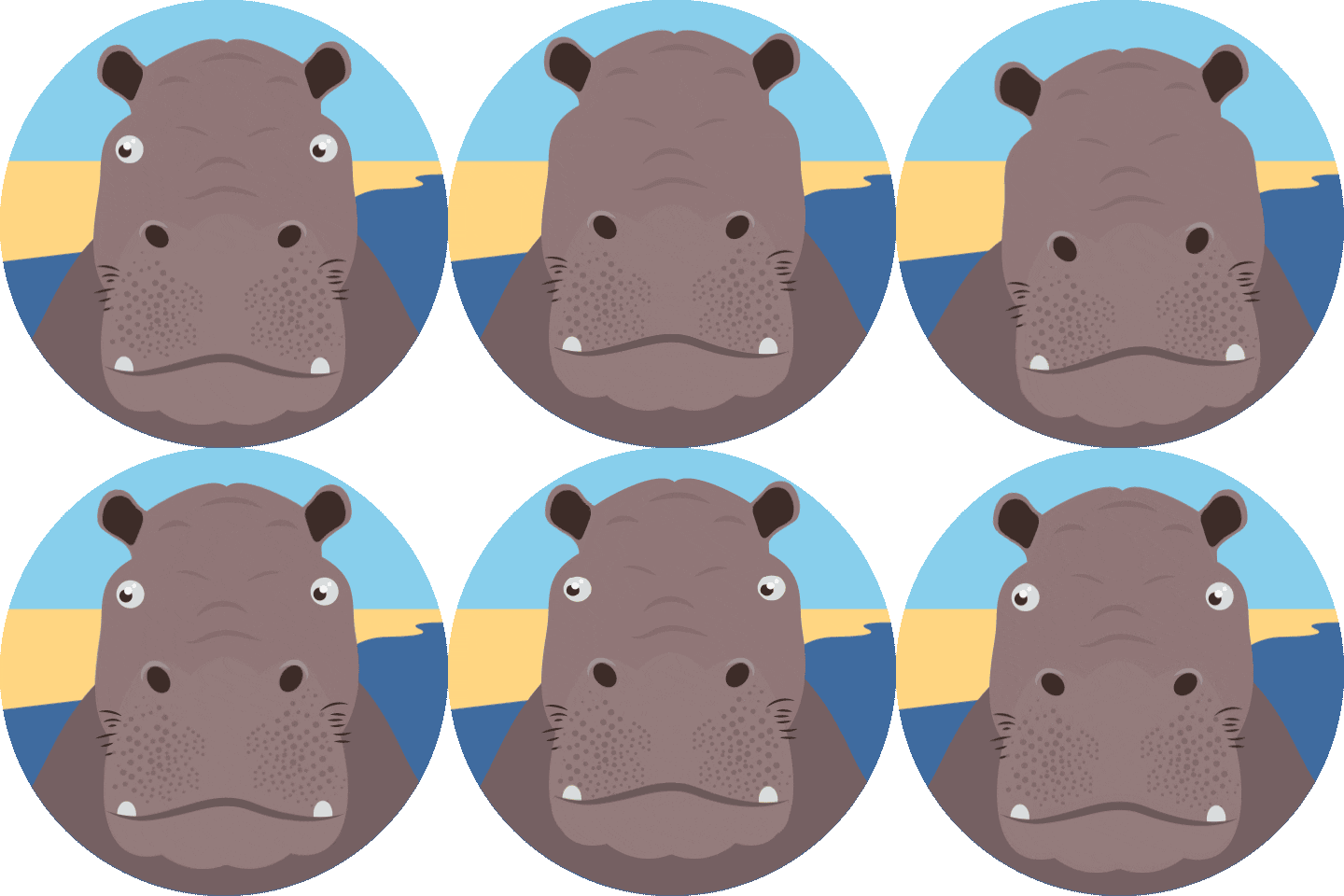
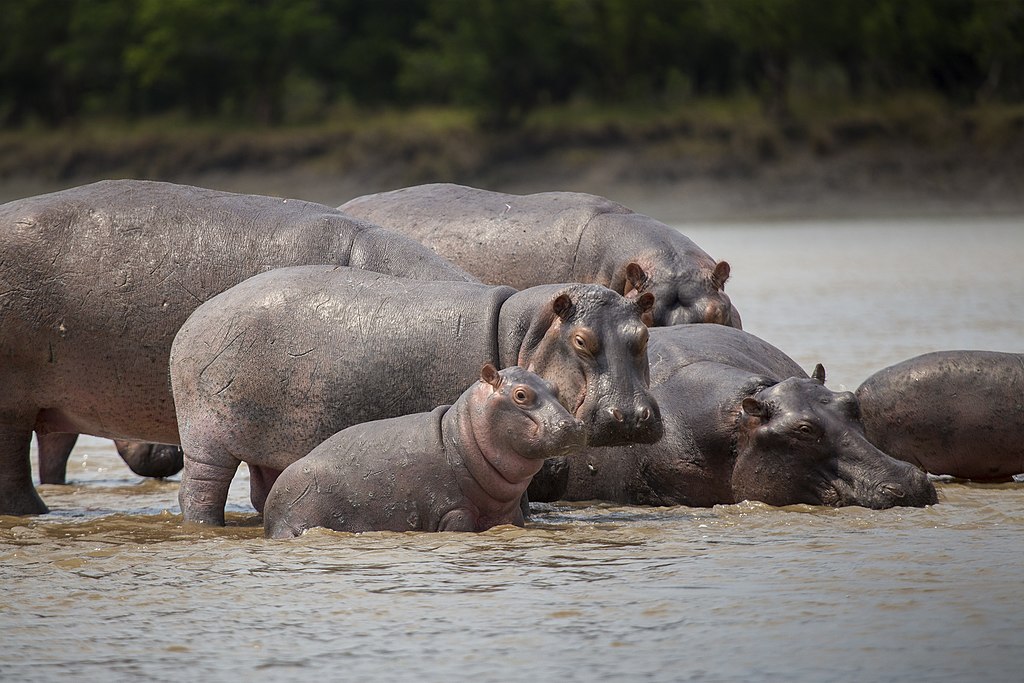
Today something barrel-shaped and big - meet Hippopotamus.
Hippopotamus
The hippopotamus is a megaherbivore and is exceeded in size among land animals only by elephants and some rhinoceros species. The mean adult weight is around 1,480 kg (3,260 lb) for bulls and 1,365 kg (3,010 lb) for cows. Exceptionally large males have been recorded reaching 2,660 kg (5,860 lb). Male hippos appear to continue growing throughout their lives, while females reach maximum weight at around age 25. Hippos measure 2.90 to 5.05 m (9.5 to 16.6 ft) long, including a tail of about 35 to 56 cm (1.15 to 1.84 ft) in length and 1.30 to 1.65 m (4.3 to 5.4 ft) tall at the shoulder, with males and females ranging 1.40 to 1.65 m (4.6 to 5.4 ft) and 1.30 to 1.45 m (4.3 to 4.8 ft) tall at the shoulder respectively. The species has a typical head-body length of 3.3–3.45 m (10.8–11.3 ft) and an average standing height of 1.4 m (4.6 ft) at the shoulder.
Hippos have barrel-shaped bodies with short tails and legs, and an hourglass-shaped skull with a long muzzle. Their skeletal structures are graviportal, adapted to carrying their enormous weight, and their dense bones and low centre of gravity allows them to sink and move along the bottom of the water. Hippopotamuses have small legs (relative to other megafauna) because the water in which they live reduces the weight burden. The pelvis rests at an angle of 45 degrees. Though they are bulky animals, hippos can gallop at 30 km/h (19 mph) on land, but they normally trot. They are incapable of jumping but do climb up steep banks.
The eyes, ears, and nostrils of hippos are placed high on the roof of their skulls. This allows these organs to remain above the surface while the rest of the body is submerged. Muscular closing valves exist in the nostrils while nictitating membranes cover the eyes. Despite being semiaquatic and having webbed feet, an adult hippo is not a particularly good swimmer, nor can it float. It is rarely found in deep water; when it is, the animal moves by porpoise-like leaps off the bottom. Adult hippos move at speeds of up to 8 km/h (5 mph) in water, typically resurfacing to breathe every three to five minutes. The young have to breathe every two to three minutes. The hippopotamus sleeps with both hemispheres of the brain resting, as in all land mammals. Despite this, it is able to sleep while submerged, intermittently surfacing to breathe seemingly without waking. They may be able to transition between different phases of sleep more quickly than other mammals.
Hippos differ from all other large land mammals in being semiaquatic, spending their days in lakes and rivers. They require habitat with enough water to submerge themselves in and which has plenty of grass nearby. When bodies of water feature firm, smooth, sloping beaches, larger numbers of hippos may congregate. Male hippos may also be found in very small numbers in rapid waters in rocky gorges. Hippos mostly live in freshwater habitats; however, populations in West Africa mostly inhabit estuarine waters and may even be found out at sea.
Hippos spend most the day in water to stay cool and hydrated. Just before night begins, they leave the water to feed on land. Like most herbivores, hippos will consume a variety of plants if presented with them in captivity, but their diet in nature consists almost entirely of grass, with only minimal consumption of aquatic plants. A hippo will eat around 40 kg (88 lb) of grass in a night while traveling 3–5 km (1.9–3.1 mi). They typically return to the water before dawn. On occasion, hippos have been filmed eating carrion, usually near the water. There are other reports of meat-eating and even cannibalism and predation. The stomach anatomy of a hippo is not suited to carnivory, and meat-eating is likely caused by aberrant behaviour or nutritional stress.
Because of their size and their habit of taking the same paths to feed, hippos can have a significant impact on the land across which they walk, keeping the land clear of vegetation and depressing the ground. Over prolonged periods, hippos can divert the paths of swamps and channels. By defecating in the water, the animals also appear to pass on microbes from their gut, affecting the biogeochemical cycle.
Distribution
Hippopotamus was widespread in North Africa and Europe during the Eemian (130–115,000 years ago), with remains found as far north as England. Archaeological evidence exists of its presence in the Levant, dating to less than 3,000 years ago. The species was common in Egypt's Nile region during antiquity, but it has since been driven out. According to Pliny the Elder, in his time, the best location in Egypt for capturing this animal was in the Saite nome; the animal could still be found along the Damietta branch of the Nile after the Arab Conquest in 639. Reports of the slaughter of the last hippo in Natal Province were made at the end of the 19th century. Hippos are still found in the rivers and lakes of the northern Democratic Republic of the Congo, Uganda, Tanzania, and Kenya, north through to Ethiopia, Somalia, and Sudan, west to The Gambia, and south to South Africa.
Conservation
Genetic evidence suggests common hippos in Africa experienced a marked population expansion during or after the Pleistocene, attributed to an increase in water bodies at the end of the era. These findings have important conservation implications, as hippo populations across the continent are currently threatened by loss of access to fresh water. Hippos are also subject to unregulated hunting and poaching. The species is included in Appendix II of the Convention on International Trade in Endangered Species (CITES) meaning international export/import (including in parts and derivatives) requires CITES documentation to be obtained and presented to border authorities.
As of 2017, the IUCN Red List drawn up by the International Union for Conservation of Nature (IUCN) lists the species as vulnerable, with a stable population estimated between 115,000 and 130,000 animals. Zambia (40,000) and Tanzania (20,000–30,000) possess the largest populations. The hippo population has declined most dramatically in the Democratic Republic of the Congo. By 2005, the population in Virunga National Park had dropped to 800 or 900 from around 29,000 in the mid-1970s. This decline is attributed to the disruptions caused by the Second Congo War. The poachers are believed to be Mai-Mai rebels, poorly paid Congolese soldiers, and local militia groups. Reasons for poaching include the belief hippos are harmful to society, as well as financial gain. As of 2016, the Virunga hippo population appears to have increased again, possibly due to greater enforcement and cooperation between fishermen and park authorities. The sale of hippo meat is illegal, but black-market sales are difficult for Virunga National Park officers to track. Hippo meat is considered a delicacy in some areas of central Africa and the teeth have become a valued substitute for elephant ivory.
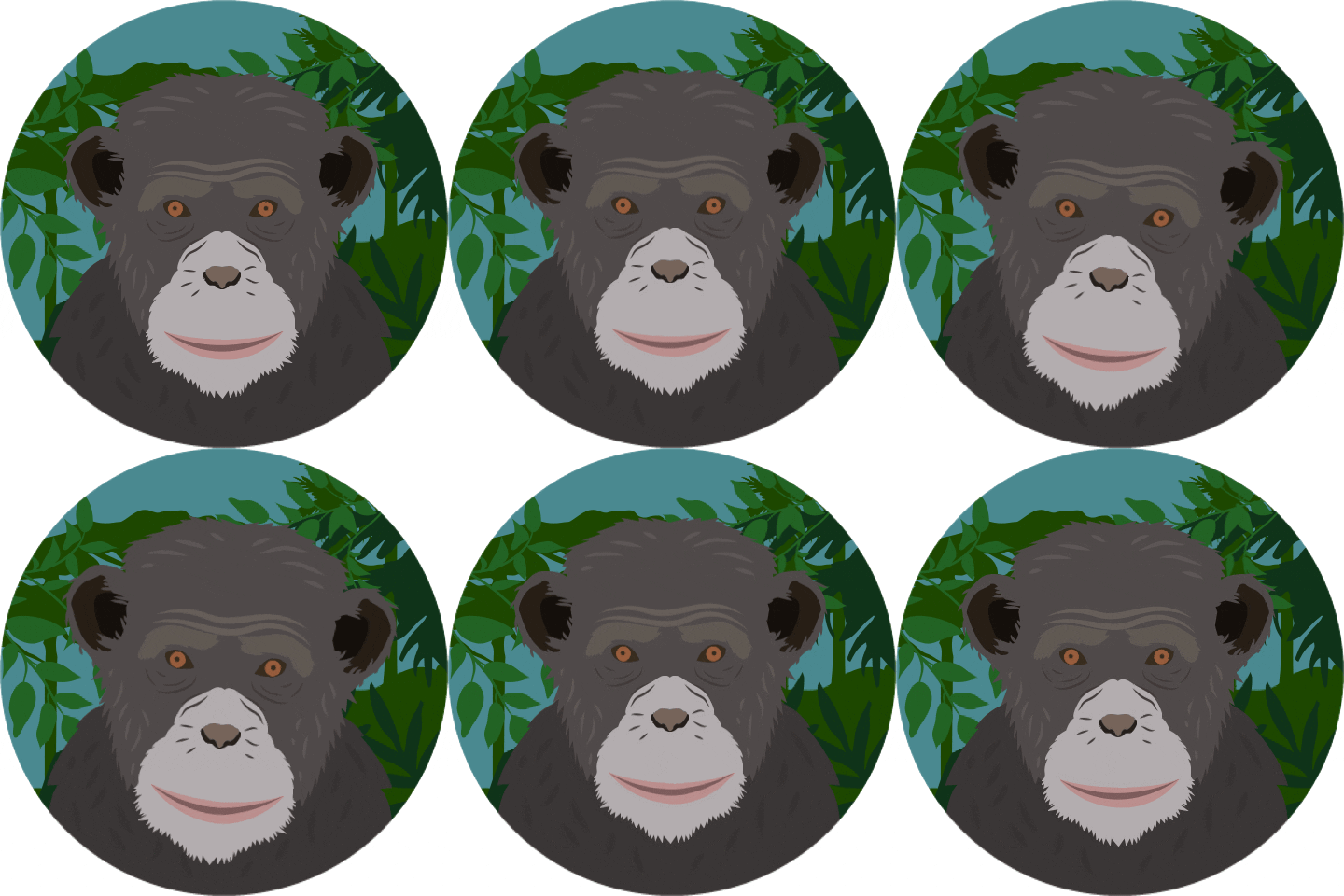
In today's edition we will meet one of the most intelligent animals - Chimpanzee.
Chimpanzee
Adult chimpanzees have an average standing height of 150 cm (4 ft 11 in). Wild adult males weigh between 40 and 70 kg (88 and 154 lb) with females weighing between 27 and 50 kg (60 and 110 lb). In exceptional cases, certain individuals may considerably exceed these measurements, standing over 168 cm (5 ft 6 in) on two legs and weighing up to 136 kg (300 lb) in captivity.
The chimpanzee is more robustly built than the bonobo but less than the gorilla. The arms of a chimpanzee are longer than its legs and can reach below the knees. The hands have long fingers with short thumbs and flat fingernails. The feet are adapted for grasping, and the big toe is opposable. The pelvis is long with an extended ilium. A chimpanzee's head is rounded with a prominent and prognathous face and a pronounced brow ridge. It has forward-facing eyes, a small nose, rounded non-lobed ears, a long mobile upper lip. Additionally, adult males have sharp canine teeth. Chimpanzees lack the prominent sagittal crest and associated head and neck musculature of gorillas.
Chimpanzee bodies are covered by coarse hair, except for the face, fingers, toes, palms of the hands, and soles of the feet. Chimpanzees lose more hair as they age and develop bald spots. The hair of a chimpanzee is typically black but can be brown or ginger. As they get older, white or grey patches may appear, particularly on the chin and lower region. The skin may range from pale to dark, though females develop swelling pink skin when in oestrus.
The chimpanzee is an omnivorous frugivore. It prefers fruit above all other food items but also eats leaves, leaf buds, seeds, blossoms, stems, pith, bark, and resin. A study in Budongo Forest, Uganda found that 64.5% of their feeding time concentrated on fruits (84.6% of which being ripe). In addition, 19% of feeding time was spent on arboreal leaves, mostly Broussonetia papyrifera and Celtis mildbraedii. While the chimpanzee is mostly herbivorous, it does eat honey, soil, insects, birds and their eggs, and small to medium-sized mammals, including other primates. Insect species consumed include the weaver ant Oecophylla longinoda, Macrotermes termites, and honey bees. The red colobus ranks at the top of preferred mammal prey. Other mammalian prey include red-tailed monkeys, infant and juvenile yellow baboons, bush babies, blue duikers, bushbucks, and common warthogs.
Chimpanzees live in communities that typically range from around 20 to more than 150 members but spend most of their time traveling in small, temporary groups consisting of a few individuals. These groups may consist of any combination of age and sexes. Both males and females sometimes travel alone. This fission-fusion society may include groups of four types: all-male, adult females and offspring, adults of both sexes, or one female and her offspring. These smaller groups emerge in a variety of types, for a variety of purposes. For example, an all-male troop may be organised to hunt for meat, while a group consisting of lactating females serves to act as a "nursery group" for the young.
At the core of social structures are males, which patrol the territory, protect group members, and search for food. Males remain in their natal communities, while females generally emigrate at adolescence. Males in a community are more likely to be related to one another than females are to each other. Among males, there is generally a dominance hierarchy, and males are dominant over females. However, this unusual fission-fusion social structure, "in which portions of the parent group may on a regular basis separate from and then rejoin the rest," is highly variable in terms of which particular individual chimpanzees congregate at a given time. This is caused mainly by the large measure of individual autonomy that individuals have within their fission-fusion social groups. As a result, individual chimpanzees often forage for food alone, or in smaller groups, as opposed to the much larger "parent" group, which encompasses all the chimpanzees which regularly come into contact with each other and congregate into parties in a particular area.
Chimpanzees display numerous signs of intelligence, from the ability to remember symbols to cooperation, tool use, and perhaps language. They are among species that have passed the mirror test, suggesting self-awareness. In one study, two young chimpanzees showed retention of mirror self-recognition after one year without access to mirrors. Chimpanzees have been observed to use insects to treat their own wounds and those of others. They catch them and apply them directly to the injury. Chimpanzees also display signs of culture among groups, with the learning and transmission of variations in grooming, tool use and foraging techniques leading to localized traditions.
Distribution
Chimpanzees inhabit tropical forests in central Africa and are found from Uganda in the east to Gambia in the west, except for the area bordered by the Lualaba and Congo rivers in central Zaire (Congo). These primates inhabit a range of different areas, from tropical, humid rainforests to dryer and more arid savanna and open woodland areas.
Conservation
The chimpanzee is on the IUCN Red List as an endangered species. Chimpanzees are legally protected in most of their range and are found both in and outside national parks. Between 172,700 and 299,700 individuals are thought to be living in the wild, a decrease from about a million chimpanzees in the early 1900s. Chimpanzees are listed in Appendix I of the Convention on International Trade in Endangered Species (CITES), meaning that commercial international trade in wild-sourced specimens is prohibited and all other international trade (including in parts and derivatives) is regulated by the CITES permitting system.
The biggest threats to the chimpanzee are habitat destruction, poaching, and disease. Chimpanzee habitats have been limited by deforestation in both West and Central Africa. Road building has caused habitat degradation and fragmentation of chimpanzee populations and may allow poachers more access to areas that had not been seriously affected by humans. Although deforestation rates are low in western Central Africa, selective logging may take place outside national parks.
Chimpanzees are a common target for poachers. In Ivory Coast, chimpanzees make up 1–3% of bushmeat sold in urban markets. They are also taken, often illegally, for the pet trade and are hunted for medicinal purposes in some areas. Farmers sometimes kill chimpanzees that threaten their crops; others are unintentionally maimed or killed by snares meant for other animals.
Infectious diseases are a main cause of death for chimpanzees. They succumb to many diseases that afflict humans because the two species are so similar. As human populations grow, so does the risk of disease transmission between humans and chimpanzees.
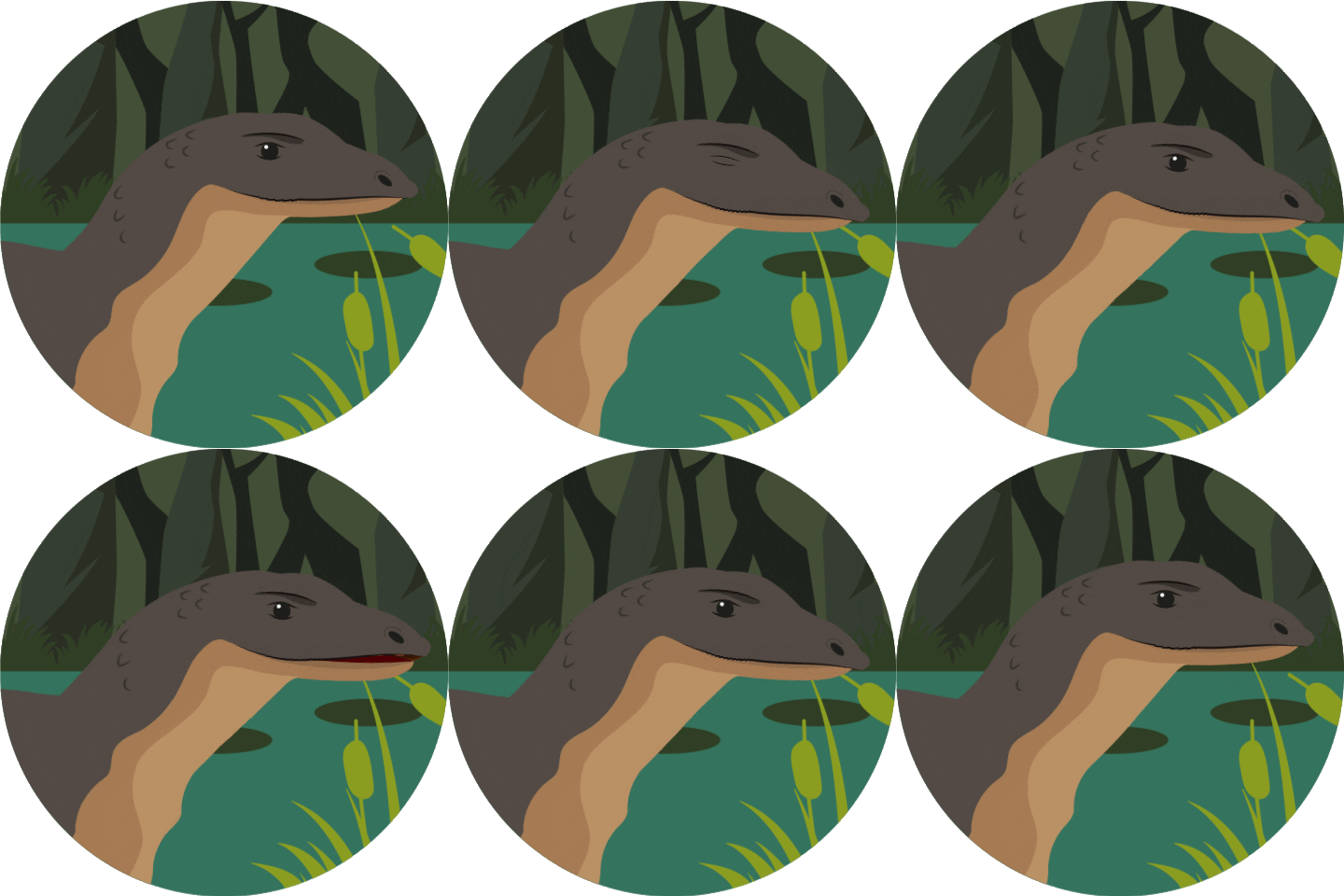
Let's meet one of the most common monitor lizards in Asia with a long blue forked tongue - Asian water monitor.
Asian water monitor
The water monitor is a large species of monitor lizard. Breeding maturity is attained for males when they are a relatively modest 40 cm (16 in) long and weigh 1 kg (2.2 lb), and for females at 50 cm (20 in). However, they grow much larger throughout life, with males being larger than females. Adults rarely exceed 1.5–2 m (4 ft 11 in – 6 ft 7 in) in length, but the largest specimen on record, from Sri Lanka, measured 3.21 m (10.5 ft). A common mature weight of V. salvator can be 19.5 kg (43 lb). However, 80 males killed for the leather trade in Sumatra averaged only 3.42 kg (7.5 lb) and 56.6 cm (22.3 in) snout-to-vent and 142 cm (56 in) in total length; 42 females averaged only 3.52 kg (7.8 lb) and 59 cm (23 in) snout-to-vent and 149.6 cm (58.9 in) in total length, although unskinned outsized specimens weighed 16 to 20 kg (35 to 44 lb). Another study from the same area by the same authors similarly estimated mean body mass for mature specimens at 20 kg (44 lb) while yet another study found a series of adults to weigh 7.6 kg (17 lb). The maximum weight of the species is over 50 kg (110 lb). In exceptional cases, the species has been reported to reach 75 to 90 kg (165 to 198 lb), though most such reports are unverified and may be unreliable. They are the world's second-heaviest lizard, after the Komodo dragon. Their bodies are muscular, with long, powerful, laterally compressed tails. The scales in this species are keeled; scales found on top of the head have been noted to be larger than those located on the back. Water monitors are often defined by their dark brown or blackish coloration with yellow spots found on their underside- these yellow markings have a tendency to disappear gradually with age. This species is also denoted by the blackish band with yellow edges extending back from each eye. These monitors have very long necks and an elongated snout. They use their powerful jaws, serrated teeth and sharp claws for both predation and defense. In captivity, Asian water monitors' life expectancy has been determined to be anywhere between 11–25 years depending on conditions, in the wild it is considerably shorter.
Water monitors defend themselves using their tails, claws, and jaws. They are excellent swimmers, using the raised fin on their tails to steer through water. When encountering smaller prey items, the water monitor will subdue it in its jaws and proceed to violently thrash its neck, destroying the prey’s organs and spine which leaves it dead or incapacitated. The lizard will then proceed to swallow it whole.
In dominantly aquatic habitats their semiaquatic behavior is considered to provide a measure of safety from predators. Paired with their generalist diet, this is thought to contribute to their ecological plasticity. When hunted by predators such as the king cobra they will climb trees using their powerful legs and claws. If this evasion is not enough to escape danger, they have also been known to jump from trees into streams for safety, a tactic similar to that of the green iguana.
Like the Komodo dragon, the water monitor will often eat carrion. They have a keen sense of smell and can smell a carcass from far away. They are known to feed on dead human bodies. While on the one hand their presence can be helpful in locating a missing person in forensic investigations, on the other hand they can inflict further injuries to the corpse, complicating ascertainment of the cause of death.
The first description of the water monitor and its behaviour in English literature was made in 1681 by Robert Knox, who observed it during his long confinement in the Kingdom of Kandy: “There is a Creature here called Kobberaguion, resembling an Alligator. The biggest may be five or six feet long, speckled black and white. He lives most upon the Land, but will take the water and dive under it: hath a long blue forked tongue like a sting, which he puts forth and hisseth and gapeth, but doth not bite nor sting, tho the appearance of him would scare those that knew not what he was. He is not afraid of people, but will lie gaping and hissing at them in the way, and will scarce stir out of it. He will come and eat Carrion with the Dogs and Jackals, and will not be scared away by them, but if they come near to bark or snap at him, with his tail, which is long like a whip, he will so slash them, that they will run away and howl.”
Water monitors are prone to attacking humans when threatened, and should be handled with caution. The bite of a water monitor can inflict a severe injury.
They are carnivores, and consume a wide range of prey. They are known to eat fish, frogs, rodents, birds, crabs, and snakes. They have also been known to eat turtles, as well as young crocodiles and crocodile eggs. Water monitors have been observed eating catfish in a fashion similar to a mammalian carnivore, tearing off chunks of meat with their sharp teeth while holding it with their front legs and then separating different parts of the fish for sequential consumption.
The diet of the Asian water monitor in an urban area in central Thailand includes fish, crabs, Malayan snail-eating turtles, Chinese edible frogs, birds, small rodents, domestic cats and dogs, chickens, food scraps and carcass. The stomachs of 20 adult Asian water monitors caught on Redang Island contained mostly human food waste, followed by turtle eggs and hatchlings, crabs and lizard eggs. Adult water monitors have few natural predators, and are only known to be preyed on by saltwater crocodiles.
Distribution
The Asian water monitor is widely distributed from India, Bangladesh, Sri Lanka, Myanmar and Thailand, Cambodia, Laos, Vietnam, the Chinese Guangxi and Hainan provinces, Malaysia, Singapore to the Sunda islands Sumatra, Java, Bali, Borneo and Sulawesi. It inhabits primarily lowland freshwater and brackish wetlands. It has been recorded up to an elevation of 1,800 m (5,900 ft).
The Asian water monitor is semiaquatic and opportunistic; it inhabits a variety of natural habitats though predominantly resides in primary forests and mangrove swamps. It has been noted that it is not deterred from living in areas of human disturbance. In fact, it has been known to adapt and thrive in agricultural areas as well as cities with canal systems, such as in Sri Lanka, where they are not hunted or persecuted. Habitats that are considered to be most important are mangrove vegetation, swamps, wetlands, and elevations below 1,000 m (3,300 ft). It does not thrive in habitats with extensive loss of natural vegetation and aquatic resources.
Conservation
In Nepal, it is a protected species under the Wild Animals Protection Act of 2002. In Hong Kong, it is a protected species under Wild Animals Protection Ordinance Cap 170. In Malaysia, this species is one of the most common wild animals, with numbers comparable to the population of macaques there. Although many fall victim to humans via roadkill and animal cruelty, they still thrive in most states of Malaysia, especially in the shrubs of the east coast states such as Pahang and Terengganu. In Thailand, all monitor lizards are protected species. It is still common in large urban areas in Thailand and is frequently seen in Bangkok's canals and parks. Because of this, it is currently listed as Least Concern in the IUCN Red List and in CITES Appendix 2. These classifications have been made on the basis that this species maintains a geographically wide distribution, can be found in a variety of habitats, adapts to habitats disturbed by humans, and is abundant in portions of its range despite large levels of harvesting.
Loss of habitat and hunting has exterminated water monitors from most of mainland India. In other areas they survive despite being hunted, due in part to the fact that larger ones, including large females that breed large numbers of eggs, have tough skins that are not desirable.
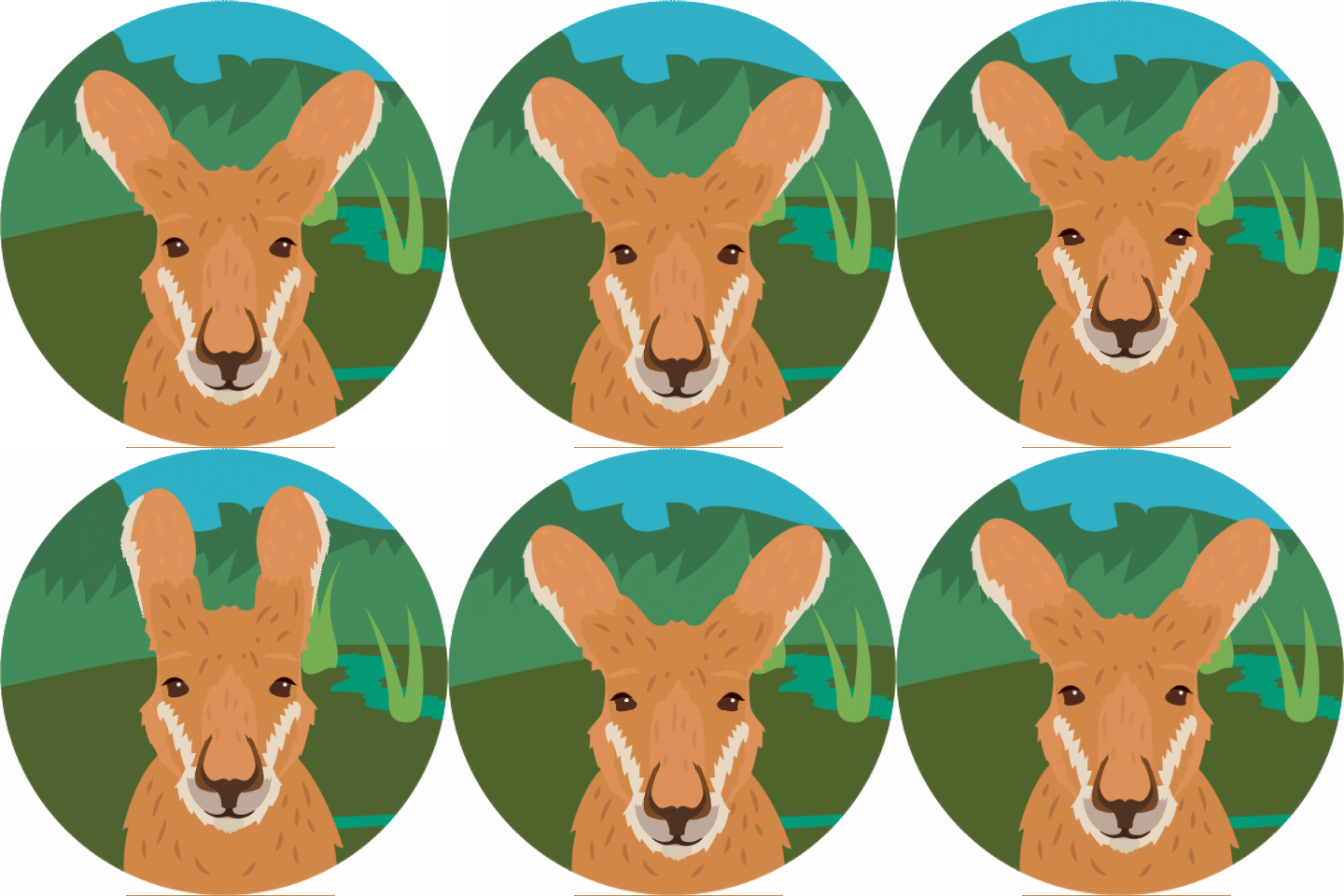
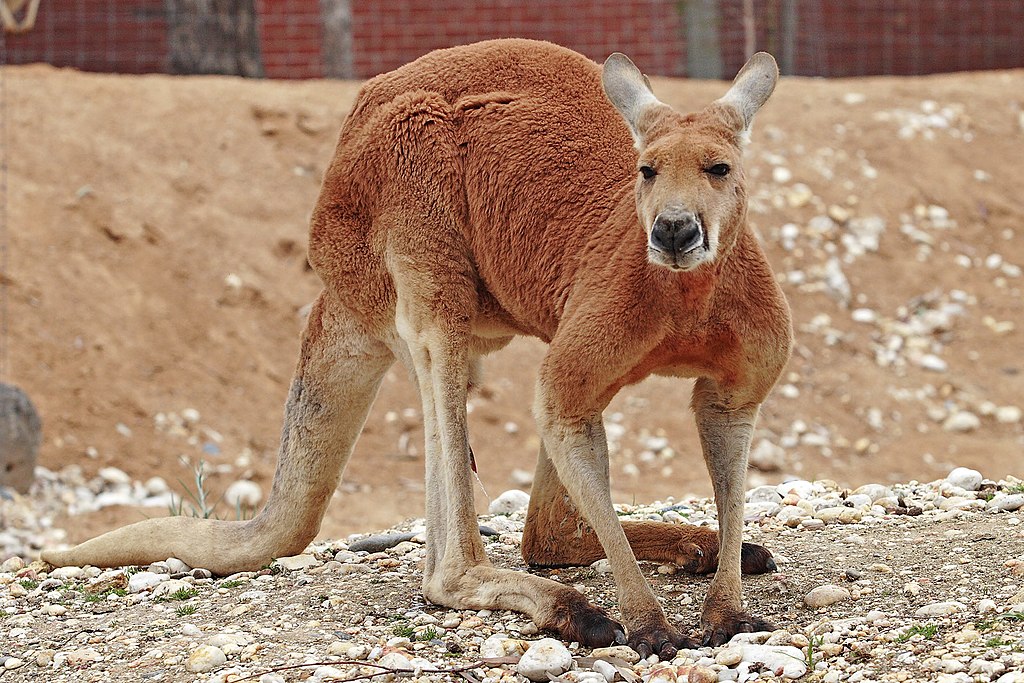
Today's animal don't need an introduction. It's native to Australia and is basically a symbol of it - Red Kangaroo.
Red Kangaroo
This species is a very large kangaroo with long, pointed ears and a square shaped muzzle [snout/nose]. They are sexually dimorphic as the males have short, red-brown fur, fading to pale buff below and on the limbs. Females are smaller than males and are blue-grey with a brown tinge, pale grey below, although arid zone females are coloured more like males. It has two forelimbs with small claws, two muscular hind-limbs, which are used for jumping, and a strong tail which is often used to create a tripod when standing upright. The red kangaroo's legs work much like a rubber band, with the Achilles tendon stretching as the animal comes down, then releasing its energy to propel the animal up and forward, enabling the characteristic bouncing locomotion.
The red kangaroo maintains its internal temperature at a point of homeostasis about 36 °C (97 °F) using a variety of physical, physiological, and behavioural adaptations. These include having an insulating layer of fur, being less active and staying in the shade when temperatures are high, panting, sweating, and licking its forelimbs. The red kangaroo's range of vision is approximately 300° (324° with about 25° overlap), due to the position of its eyes.
At times, red kangaroos congregate in large numbers; in areas with much forage, these groups can number as much as 1,500 individuals. Red kangaroos are mostly crepuscular and nocturnal, resting in the shade during the day. However, they sometimes move about during the day. Red kangaroos rely on small saltbushes or mulga bushes for shelter in extreme heat rather than rocky outcrops or caves. Grazing takes up most of their daily activities. Like most kangaroo species, they are mostly sedentary, staying within a relatively well-defined home range. However, great environmental changes can cause them to travel great distances. Kangaroos in New South Wales have weekly home ranges of 258–560 ha, with the larger areas belonging to adult males. When forage is poor and rainfall patchy, kangaroos will travel 25–30 km to more favourable feeding grounds. Another study of kangaroos in central Australia found that most of them stay close to remaining vegetation but disperse to find fresh plants after it rains. The red kangaroo is too big to be subject to significant non-human predation. They can use their robust legs and clawed feet to defend themselves from attackers with kicks and blows. However, dingoes and eagles can kill and eat joeys. Joeys are thus protected in their mother's pouch. The red kangaroo does have some major predators, like crocodiles. Extinct predators include the marsupial lion, the thylacine, Megalania, and the wonambi. Kangaroos are adept swimmers, and often flee into waterways if threatened by a predator. If pursued into the water, a kangaroo may use its forepaws to hold the predator underwater so as to drown it.
Red kangaroos live in groups of 2–4 members. The most common groups are females and their young. Larger groups can be found in densely populated areas and females are usually with a male. Membership of these groups is very flexible, and males (boomers) are not territorial, fighting only over females (flyers) that come into heat. Males develop proportionately much larger shoulders and arms than females. Most agonistic interactions occur between young males, which engage in ritualised fighting known as boxing. They usually stand up on their hind limbs and attempt to push their opponent off balance by jabbing him or locking forearms. If the fight escalates, they will begin to kick each other. Using their tail to support their weight, they deliver kicks with their powerful hind legs. Compared to other kangaroo species, fights between red kangaroo males tend to involve more wrestling. Fights establish dominance relationships among males, and determine who gets access to estrous females. Alpha males make agonistic behaviours and more sexual behaviours until they are overthrown. Displaced males live alone and avoid close contact with others.
The red kangaroo breeds all year round. The females have the unusual ability to delay the birth of their baby until their previous joey has left the pouch. This is known as embryonic diapause. Copulation may last 25 minutes. The red kangaroo has the typical reproductive system of a kangaroo. The neonate emerges after only 33 days. Usually only one young is born at a time. It is blind, hairless, and only a few centimetres long. Its hind legs are mere stumps; it instead uses its more developed forelegs to climb its way through the thick fur on its mother's abdomen into the pouch, which takes about three to five minutes. Once in the pouch, it fastens onto one of the two teats and starts to feed. Almost immediately, the mother's sexual cycle starts again. Another egg descends into the uterus and she becomes sexually receptive. Then, if she mates and a second egg is fertilised, its development is temporarily halted. Meanwhile, the neonate in the pouch grows rapidly. After approximately 190 days, the baby (called a joey) is sufficiently large and developed to make its full emergence out of the pouch, after sticking its head out for a few weeks until it eventually feels safe enough to fully emerge. From then on, it spends increasing time in the outside world and eventually, after around 235 days, it leaves the pouch for the last time. While the young joey will permanently leave the pouch at around 235 days old, it will continue to suckle until it reaches about 12 months of age. A doe may first reproduce as early as 18 months of age and as late as five years during drought, but normally she is two and a half years old before she begins to breed.
Distribution
The red kangaroo ranges throughout western and central Australia. Its range encompasses scrubland, grassland, and desert habitats. It typically inhabits open habitats with some trees for shade. Red kangaroos are capable of conserving enough water and selecting enough fresh vegetation to survive in an arid environment. The kangaroo's kidneys efficiently concentrate urine, particularly during summer. Red kangaroo primarily eat green vegetation, particularly fresh grasses and forbs, and can get enough even when most plants look brown and dry. One study of kangaroos in Central Australia found that green grass makes up 75–95% of the diet, with Eragrostis setifolia dominating at 54%. This grass continues to be green into the dry season. Kangaroos also primarily consumed this species, along with Enneapogon avanaceus, in western New South Wales where they comprised much as 21–69% of its diet according to a study. During dry times, kangaroos search for green plants by staying on open grassland and near watercourses.
Conservation
The Red kangaroo is faced with no major threats, and it continues to be an abundant and widely distributed species. Intensive agriculture would affect this species, but, as yet, not much of its habitat has been affected. Some argue, however, that competition with introduced rabbits and livestock, particularly during periods of drought, could be a threat. This kangaroo is in some areas so numerous that it is commercially harvested for its hide and meat, and sometimes also is shot as a pest.
According to the Australian Government Department of the Environment, the total number of Red kangaroo is 11,514,298 individuals. This species numbers' are stable today and it is classified as least concern (LC) on the IUCN Red List.
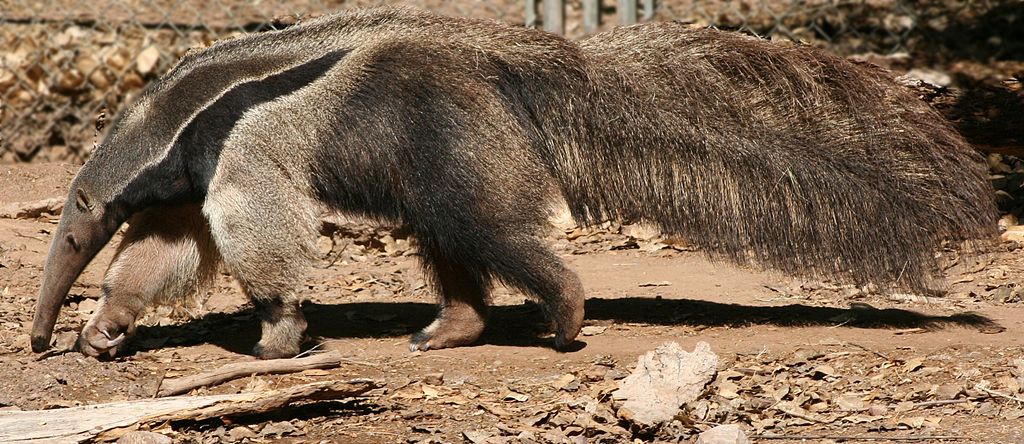
Let's meet someone 'giant' with long tongue and specific diet - Giant anteater.
Giant anteater
The giant anteater can be identified by its large size, elongated muzzle, and long bushy tail. It has a total body length of 182 to 217 cm (5 ft 11+1⁄2 in to 7 ft 1+1⁄2 in). Males weigh 33 to 50 kg (73 to 110 lb) and females weigh 27 to 47 kg (60 to 104 lb), making the giant anteater the biggest extant species in its suborder. The head of the giant anteater, at 30 cm (12 in) long, is particularly elongated, even when compared to other anteaters. Its tubular snout, which ends in its tiny mouth opening and nostrils, takes up most of its head. Its eyes and ears are relatively small. It has poor eyesight, but its sense of smell is 40 times more sensitive than that of humans.
Even for an anteater, the neck is especially thick compared to the back of the head, and a small hump is found at the back of the neck. The coat is mostly greyish, brown or black and salted with white. The forelimbs are white, with black bands around the wrists, while the hindlimbs are dark. Thick black bands with white outlines stretch from throat to shoulder, ending in triangular points. The body ends in a brown tail. The coat hairs are long, especially on the tail, which makes the tail look larger than it actually is. A stiff mane stretches along the back. The bold pattern was thought to be disruptive camouflage, but a 2009 study suggests it is warning coloration. While adult males are slightly larger and more muscular than females, with wider heads and necks, visual sex determination can be difficult. The penis and testes are located internally between the rectum and urinary bladder in males, and females have a single pair of mammary glands near the armpits.
The giant anteater has broad ribs. Despite its specific name, tridactyla, meaning three fingers, it has five toes on each foot. Four toes on the front feet have claws, which are particularly elongated on the second and third digits. It walks on its front knuckles similar to gorillas and chimpanzees. Doing this allows the giant anteater to keep its claws out of the way while walking. The middle digits, which support most of its weight, are extended at the metacarpophalangeal joints and bent at the interphalangeal joints. Unlike the front feet, the hind feet have short claws on all five toes and walk plantigrade. As a "hook-and-pull" digger, the giant anteater's enlarged supraspinous fossa gives the teres major more leverage—increasing the front limbs' pulling power—and the triceps muscle helps power the flexion of the thickened third digit of the front feet.
This animal is an insectivore, feeding mostly on ants or termites. In areas that experience seasonal flooding, like the grassy plains of the Venezuelan-Colombian Llanos, anteaters mainly feed on ants, because termites are less available. Conversely, anteaters at Emas National Park eat mainly termites, which occur in high density on the grasslands. At Serra da Canastra, anteaters switch between eating mainly ants during the wet season (October to March) and termites during the dry season (May to September).
Anteaters track prey by their scent. After finding a nest, the animal tears it open with its long fore claws and inserts its long, sticky tongue to collect its prey. An anteater spends one minute on average feeding at a nest, visiting up to 200 nests in one day and consuming as many as 30,000 insects. The anteater may be driven away from a nest by the chemical or biting attacks of soldiers. Some termite species rely on their fortified mounds for protection and many individuals escape while the predator digs. These modes of defense prevent the entire colony from being eaten in one anteater attack.
Giant anteaters typically rest in dense brush, but may use tall grass on cooler days. They carve a shallow cavity in the ground for resting. The animal sleeps curled up with its bushy tail folded over its body. The tail serves both to conserve body heat and as camouflage. One anteater was recorded sleeping with its tail stretched out on a sunny morning with an ambient temperature of 17 °C (63 °F); possibly it was positioned this way to allow its body to absorb the sun's rays for warmth.
Giant anteaters are good swimmers and are capable of moving through wide rivers. They have been observed to bathe. They are also able to climb and have been recorded ascending both termite mounds and trees while foraging. One individual was observed holding onto a branch with its feet just touching the ground.
Distribution
The giant anteater is native to Central and South America. Its known range stretches from Honduras to the Gran Chaco region, and fossil remains have been found as far north as northwestern Sonora, Mexico. It is largely absent from the Andes and has been fully extirpated in Uruguay, Belize, El Salvador, and Guatemala, as well as in parts of Costa Rica, Brazil, Argentina, and Paraguay. The species is found in a number of habitats including both tropical rainforest and xeric shrubland, provided enough prey is present to sustain it.
Conservation
The species is listed as vulnerable by the International Union for Conservation of Nature, due to the number of regional extirpations, and under Appendix II by CITES, tightly restricting international trade in specimens of the animal and its parts and derivatives. Between 2000 and 2010, the total population declined by 30%. In 1994, some 340 giant anteaters died due to wildfires at Emas National Park in Brazil. The animal is particularly vulnerable to fires due to its slow movement and flammable coat.
Human-induced threats include collision with vehicles, attacks by dogs, and destruction of habitat. One study of anteater mortality along roads found that they are likely to become roadkill on straight roads with native vegetation along the side. A 2018 study in Brazil found that: (1) fragmentation of habitat could be more detrimental than road mortality, (2) 18–21% of suitable anteater habitat was below minimum patch size, (3) 0.1–1% of its distribution was maximum road density, (4) 32–36% of the anteater's range represented critical areas for its survival and (5) more conservation opportunities existed in the north of the country.
The giant anteater is commonly hunted in Bolivia, both for sport and sustenance. The animal's thick, leathery hide is used to make equestrian equipment in the Chaco. In Venezuela, it is hunted for its claws. Giant anteaters are killed for safety reasons, due to their reputation as dangerous animals. The giant anteater remains widespread. Some populations are stable and the animal is found in various protected areas in the Amazon, Pantanal and the Cerrado. It is officially protected in some Argentine provinces as a national heritage species.
This week we will take a short trip to the India to meet local antelope - Blackbuck.
Blackbuck
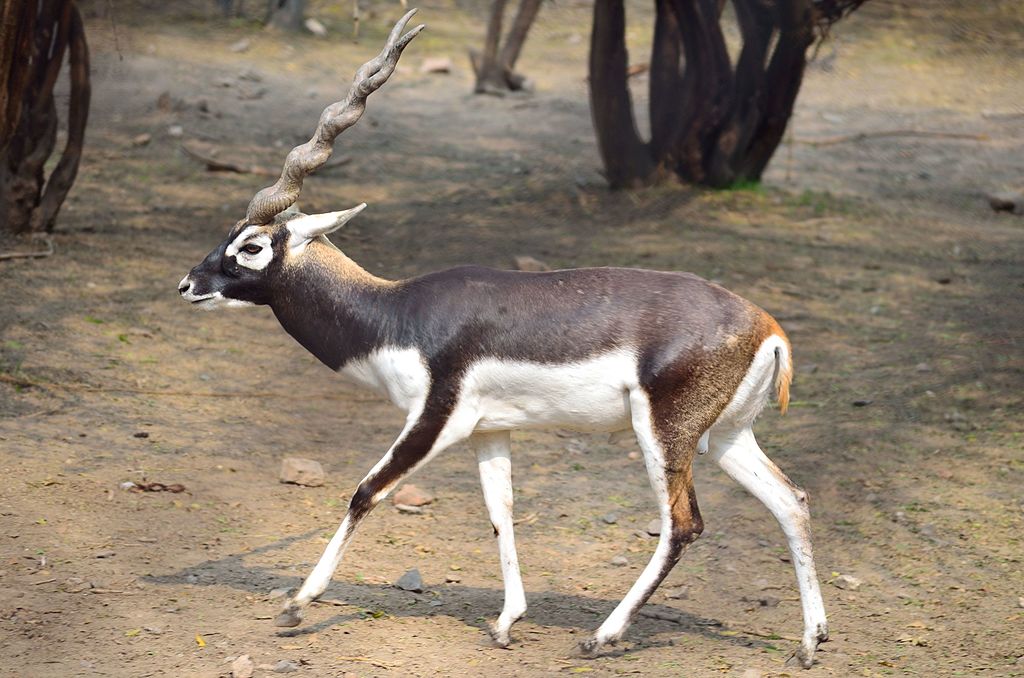
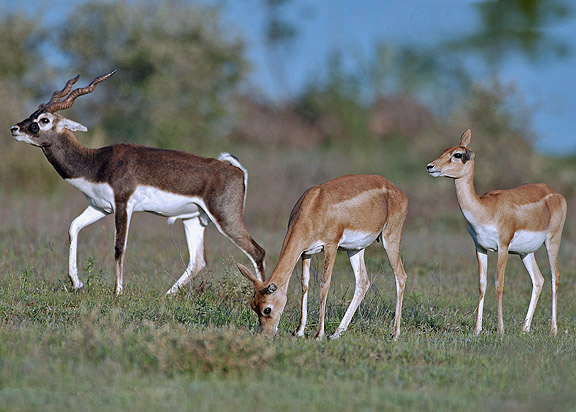
The blackbuck is a moderately sized antelope. It stands up to 74 to 84 cm (29 to 33 in) high at the shoulder; the head-to-body length is nearly 120 cm (47 in). In the population introduced to Texas, males weigh 20–57 kg (44–126 lb), an average of 38 kg (84 lb). Females are lighter, weighing 20–33 kg (44–73 lb) or 27 kg (60 lb) on average. Sexual dimorphism is prominent, as males are heavier and darker than the females. The long, ringed horns, that resemble corkscrews, are generally present only on males, though females may develop horns, as well. They measure 35–75 cm (14–30 in), though the maximum horn length recorded in Texas has not exceeded 58 cm (23 in). The horns diverge forming a "V"-like shape. In India, horns are longer and more divergent in specimens from the northern and western parts of the country.
The white fur on the chin and around the eyes is in sharp contrast with the black stripes on the face. The coats of males show two-tone colouration; while the upper parts and outsides of the legs are dark brown to black, the underparts and the insides of the legs are all white. Darkness typically increases as the male ages. On the other hand, females and juveniles are yellowish fawn to tan. In Texas, blackbuck moult in spring, following which the males look notably lighter, though darkness persists on the face and the legs. On the contrary, males grow darker as the breeding season approaches. Both melanism and albinism have been observed in wild blackbuck. Albino blackbuck are often zoo attractions as in the Indira Gandhi Zoological Park (Andhra Pradesh, India).
Blackbuck bear a close resemblance to gazelles, and are distinguished mainly by the fact that while gazelles are brown in the dorsal parts, blackbuck develop a dark brown or black colour in these parts. The blackbuck is a diurnal antelope, though is less active at noon when summer temperatures rise. It can run at a speed of 80 kilometres per hour (50 mph).
Group size fluctuates and seems to depend on the availability of forage and the nature of the habitat. Large herds have an edge over smaller ones in that danger can be detected faster, though individual vigilance is lower in the former. Large herds spend more time feeding than small herds. A disadvantage for large herds, however, is that traveling requires more resources. Herd size reduces in summer.
Males often adopt lekking as a strategy on the part of males to garner females for mating. Territories are established by males on the basis of the local distribution of female groups, which in turn is determined by the habitat, so as to ensure greater access to females. The males actively defend resources in their territories, nearly 1.2 to 12 hectares (3.0 to 29.7 acres; 0.0046 to 0.0463 sq mi) in size; territories are marked with scent using preorbital gland and interdigital gland secretions, faeces and urine. While other males are not allowed into these territories, females are allowed to visit these places to forage. The male can attempt mating with visiting females. Lekking is a demanding strategy, as the males often have to bear injuries – thus it is a tactic typically adopted by strong, dominant males. Males may either defend their mates or try to forcibly copulate with them. Weaker males, who may not be dominant, might choose the second method.
The blackbuck is severely affected by natural calamities such as floods and droughts, from which it can take as long as five years to recover. The wolf is a major predator. Old rutting bulls might be especially vulnerable prey. The golden jackal hunts juveniles. Village dogs are reported to kill fawns, but are unlikely to successfully hunt and kill adults.
Blackbucks in Great Indian Bustard Sanctuary show flexible habitat use as the resources and risks change seasonally in the landscape. They use small patches in the area of about 3 km2 (1.2 sq mi). Human activities strongly influenced the movement of herds, but the presence of small refuges allowed them to persist in the landscape.
The blackbuck is a herbivore and grazes on low grasses, occasionally browsing as well. It prefers sedges, fall witchgrass, mesquite, and live oak and was occasionally observed browsing on acacia trees in the Cholistan Desert. Oats and berseem were found to be palatable and nutritious to captive populations. In Velavadar Black Buck Sanctuary, Dichanthium annulatum comprised 35% of the diet. Digestion of nutrients, especially crude proteins, was poor in summer, but more efficient in the rainy and winter seasons. Crude protein intake in summer was very low, even below the recommended value. Blackbuck consumed less food in summer than in winter, and often foraged on the fruits of Prosopis juliflora. Prosopis becomes a significant food item if grasses are scarce. Water is a daily requirement of the blackbuck.
Distribution
The blackbuck is native to the Indian subcontinent, but locally extinct in Pakistan and Bangladesh. In Nepal, the last surviving blackbuck population inhabits the Blackbuck Conservation Area south of Bardia National Park. In 2008, the population was estimated to comprise 184 individuals. In Pakistan, blackbuck occasionally occur along the border with India. A few blackbucks are present in the Indian Institute of Technology Madras campus.
The blackbuck inhabits grassy plains and thinly forested areas where perennial water sources are available for its daily need to drink. Herds travel long distances to obtain water. Today, only small, scattered herds are seen that are largely confined to protected areas.
The antelope was introduced in Texas in the Edwards Plateau in 1932. By 1988, the population had increased and the antelope was the most populous exotic animal in Texas after the chital. As of early 2000s, the population in the United States was estimated at 35,000. The blackbuck was introduced into Argentina, numbering about 8,600 individuals as of the early 2000s.
Conservation
The blackbuck is listed under Appendix III of CITES. In India, hunting of blackbuck is prohibited under Schedule I of the Wildlife Protection Act of 1972. It inhabits several protected areas of India, including
in Gujarat: Velavadar National Park, Gir Forest National Park;
in Bihar: Kaimur Wildlife Sanctuary;
in Maharashtra: Great Indian Bustard Sanctuary;
in Madhya Pradesh: Kanha National Park
in Rajasthan: Tal Chhapar Sanctuary, National Chambal Sanctuary, Ranthambhore National Park
in Karnataka: Ranibennur Blackbuck Sanctuary;
in Tamil Nadu: Point Calimere Wildlife and Bird Sanctuary,[1] Vallanadu Wildlife Sanctuary, Guindy National Park.
A captive population is maintained in Pakistan's Lal Suhanra National Park.
During the 20th century, blackbuck numbers declined sharply due to excessive hunting, deforestation and habitat degradation. Some blackbucks are killed illegally especially where the species is sympatric with nilgai.
Until India's independence in 1947, blackbuck and chinkara were hunted in many princely states with specially trained captive Asiatic cheetahs. By the 1970s, blackbuck was locally extinct in several areas.
We continue our trip to the Oceania and we are ready to meet another native Australian animal - Common wombat.
Common wombat
Common wombats are sturdy and built close to the ground. When fully grown, they can reach between 80 and 130 cm, and weigh between 17 and 40 kg. The wombats found on Tasmania and Flinders Island are often smaller than their mainland counterparts. It is distinguished from both hairy-nosed wombats by its bald nose.
Common wombats are a solitary, territorial species, with each wombat having an established range in which it lives and feeds. In this area, they dig a tunnel system, with tunnels ranging from 2 to 20 m in length, along with many side tunnels. Usually, only one entrance to the burrow exists, although they may create a smaller one with which to escape.
Recent bushfires in Australia's Eastern and South Eastern areas showed that burrows are frequently much longer than originally thought, with some having over 20 entrances and that many wombat burrows were used by other species including the rock wallaby and the swamp wallaby, to shelter from the bushfires. It was not clear whether this was with the approval of the "owner" or whether sheltering species had found an unpopulated burrow.
Many wombats can live in the same burrow, and wombats normally live in the same burrow for their whole lifespan unless the wombat is forced out of the burrow by farmers or other animal species, or unless the burrow is destroyed. Often nocturnal, the common wombat does come out during the day in cooler weather, such as in early morning or late afternoon. Common wombats are herbivorous, subsisting on grass, snow tussocks, and other plant materials. Foraging is usually done during the night. They are the only marsupial in the world whose teeth constantly grow which allows them to maintain a diet consisting of mainly native grasses.
Wombats have an extraordinarily slow metabolism, taking around 8 to 14 days to complete digestion, which aids their survival in arid conditions. They generally move slowly. When threatened, however, they can reach up to 40 km/h (25 mph) and maintain that speed for 150 metres (490 ft). Wombats defend home territories centred on their burrows, and they react aggressively to intruders. The common wombat occupies a range of up to 23 ha (57 acres).
Dingos and Tasmanian devils prey on wombats. Extinct predators were likely to have included Thylacoleo and possibly the thylacine. Their primary defence is their toughened rear hide, with most of the posterior made of cartilage. This, combined with its lack of a meaningful tail, makes it difficult for any predator that follows the wombat into its tunnel to bite and injure its target. When attacked, wombats dive into a nearby tunnel, using their rumps to block a pursuing attacker. A wombat may allow an intruder to force its head over the wombat's back, and then use its powerful legs to crush the skull of the predator against the roof of the tunnel, or drive it off with two-legged kicks, like those of a donkey.
Wombats are generally quiet animals. Bare-nosed wombats can make a number of different sounds, more than the hairy-nosed wombats. Wombats tend to be more vocal during mating season. When angered, they can make hissing sounds. Their call sounds somewhat like a pig's squeal. They can also make grunting noises, a low growl, a hoarse cough, and a clicking noise.
Distribution
Common wombats are widespread in the cooler and better-watered parts of southern and eastern Australia, including Tasmania, and in mountain districts as far north as the south of Queensland, but is declining in western Victoria and South Australia.
Common wombats can be found at any elevation in the south of their range, but in the north of their range are only found in higher, more mountainous areas. They may be found in a variety of habitats including rainforest, eucalyptus forest, woodland, alpine grassland, and coastal areas. In some regions, they have adapted to farmland and can even be seen grazing in open fields with cattle and sheep.
Conservation
Despite its name, the common wombat is no longer common, and it has been officially a protected animal in New South Wales since 1970. However, in eastern Victoria, they are not protected, and they are considered by some to be pests, especially due to the damage they cause to rabbit-proof fences.
WomSAT, a citizen science project, was established in 2016 to record sightings of wombats across the country. The website and mobile phone app can be used to log sightings of live or deceased wombats and wombat burrows. Since its establishment the project has recorded over 7,000 sightings across New South Wales, Victoria, Tasmania and South Australia.
Moving to the Oceania and it's nocturnal and and the second-largest of the possums - Common brushtail possum.
Common brushtail possum
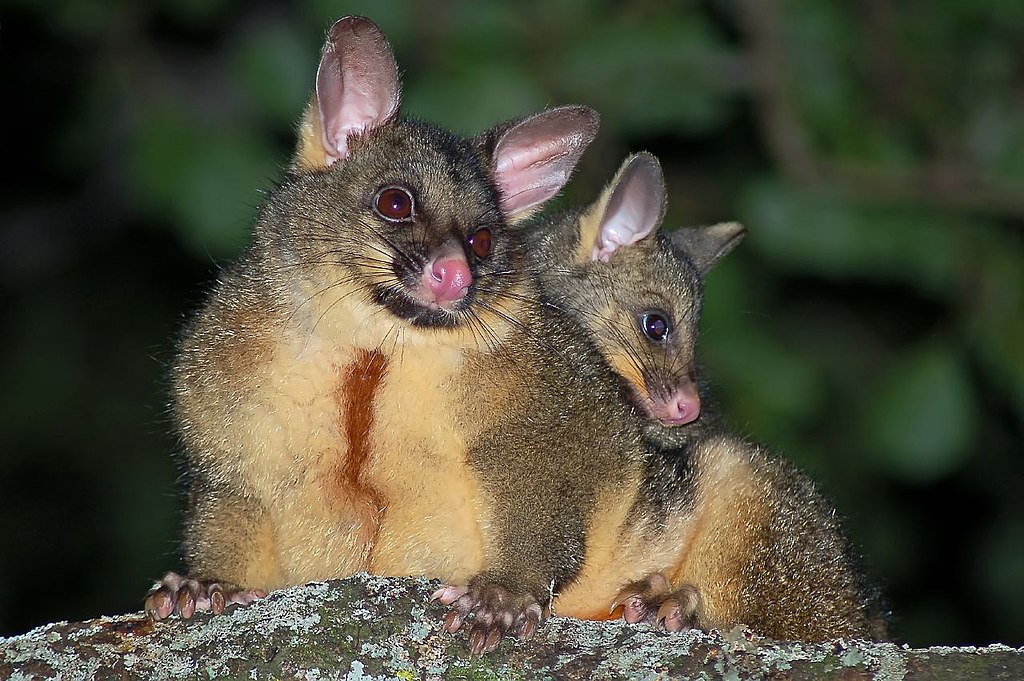
The common brushtail possum has large and pointed ears. Its bushy tail (hence its name) is adapted to grasping branches, prehensile at the end with a hairless ventral patch. Its fore feet have sharp claws and the first toe of each hind foot is clawless, but has a strong grasp. The possum grooms itself with the third and fourth toes which are fused together. It has a thick and woolly pelage that varies in colour depending on the subspecies. Colour patterns tend to be silver-grey, brown, black, red, or cream. The ventral areas are typically lighter and the tail is usually brown or black. The muzzle is marked with dark patches.
The common brushtail possum has a head and body length of 32–58 cm with a tail length of 24–40 cm. It weighs 1.2-4.5 kg. Males are generally larger than females. In addition, the coat of the male tends to be reddish at the shoulders. As with most marsupials, the female brushtail possum has a forward-opening, well-developed pouch. The chest of both sexes has a scent gland that emits a reddish secretion which stains that fur around it. It marks its territory with these secretions.
The common brushtail possum can adapt to numerous kinds of vegetation. It prefers Eucalyptus leaves, but also eats flowers, shoots, fruits, and seeds. It may also consume animal matter such as insects, birds' eggs and chicks, and other small vertebrates. Brushtail possums may eat three or four different plant species during a foraging trip, unlike some other arboreal marsupials, such as the koala and the greater glider, which focus on single species. The brushtail possum's rounded molars cannot cut Eucalyptus leaves as finely as more specialised feeders. They are more adapted to crushing their food, which enables them to chew fruit or herbs more effectively. The brushtail possums' caecum lacks internal ridges and cannot separate coarse and fine particles as efficiently as some other arboreal marsupials. The brushtail possum cannot rely on Eucalyptus alone to provide sufficient protein. Its more generalised and mixed diet, however, does provide adequate nitrogen.
The common brushtail possum is largely arboreal and nocturnal. It has a mostly solitary lifestyle, and individuals keep their distance with scent markings (urinating) and vocalisations. They usually make their dens in natural places such as tree hollows and caves, but also use spaces in the roofs of houses. While they sometimes share dens, brushtails normally sleep in separate dens. Individuals from New Zealand use many more den sites than those from Australia. Brushtail possums compete with each other and other animals for den spaces, and this contributes to their mortality. This is likely another reason why brushtail possum population densities are smaller in Australia than in New Zealand. Brushtail possums are usually not aggressive towards each other and usually just stare with erect ears. They vocalise with clicks, grunts, hisses, alarm chatters, guttural coughs, and screeching.
The common brushtail possum can breed at any time of the year, but breeding tends to peak in spring, from September to November, and in autumn, from March to May, in some areas. Mating is promiscuous and random; some males can sire several young in a season, while over half sire none. In one Queensland population, males apparently need a month of consorting with females before they can mate with them. Females have a gestation period of 16–18 days, after which they give birth to single young. A newborn brushtail possum is only 1.5 cm long and weighs only 2 g. As usual for marsupials, the newborn may climb, unaided, through the female's fur and into the pouch and attach to a teat. The young develops and remains inside the mother's pouch for another 4–5 months. When older, the young is left in the den or rides on its mother's back until it is 7–9 months old.
Female young have a higher survival rate than their male counterparts due to establishing their home ranges closer to their mothers, while males travel farther in search of new nesting sites, encountering established territories from which they may be forcibly ejected. In New Zealand's Ōrongorongo population, female young have been found to continue to associate with their mothers after weaning, and some inherit the prime den sites. A possible competition exists between mothers and daughters for dens, and daughters may be excluded from a den occupied by the mother. In forests with shortages of den sites, females apparently produce more sons, which do not compete directly for den sites, while in forests with plentiful den sites, female young are greater in number.
Distribution
The common brushtail possum is perhaps the most widespread marsupial of Australia. It is found throughout the eastern and northern parts of the continent, as well as some western regions, Tasmania and a number of offshore islands, such as Kangaroo Island and Barrow Island. It is also widespread in New Zealand since its introduction in 1850. The common brushtail possum can be found in a variety of habitats, such as forests, semi-arid areas and even cultivated or urban areas. It is mostly a forest inhabiting species, however it is also found in treeless areas. In New Zealand, possums favour broadleaf-podocarp near farmland pastures. In southern beech forests and pine plantations, possums are less common. Overall, brushtail possums are more densely populated in New Zealand than in their native Australia. This may be because Australia has more fragmented eucalypt forests and more predators. In Australia, brushtail possums are threatened by humans, tiger quolls, dogs, foxes, cats, goannas, carpet snakes, and powerful owls. In New Zealand, brushtail possums are threatened only by humans and cats.
Conservation
The common brushtail possum is considered a pest in some areas, as it is known to cause damage to pine plantations, regenerative forest, flowers, fruit trees, and buildings. Like other possums, it is rather tolerant of humans and can sometimes be hand fed, although it is not encouraged, as their claws are quite sharp and can cause infection or disease to humans if scratched. It is a traditional food source for some indigenous Australians.
While its populations are declining in some regions due to habitat loss, urban populations indicate an adaptation to the presence of humans. In some mainland states, possum trapping is legal to catch when attempting to evict possums from human residences (e.g. roofs), but possums must be released after dusk within 24 hours of capture, no more than 50 m from the trapping site. In some states, e.g. Victoria, trapped possums may be taken to registered veterinarians for euthanasia. In South Australia, they are fully protected and permits are required for trapping possums in human residences or for keeping or rescuing sick or injured wild possums and other native animals. In Queensland, they can only be trapped by licensed commercial relocators who must release possums within 25 metres of the point of capture to ensure that an animal is not released into another possum’s home range (possums are less likely to survive if they are released into a new area where they do not have access to a den or must compete with a neighbouring possum for den space). The IUCN highlight the population trend in Australia as decreasing.