Recently we have taken part in an interview with RPG Watch - one of the biggest RPG forums! Thank you for inviting us! It was a blast to participate in it, and we're happy about the interest in Zoria: Age of Shattering ❤️
The conversation has touched on multiple topics, starting with Zoria, through the story of our studio, cooperation with Anshar Publishing, and ending with the Kickstarter campaign we launched in September.
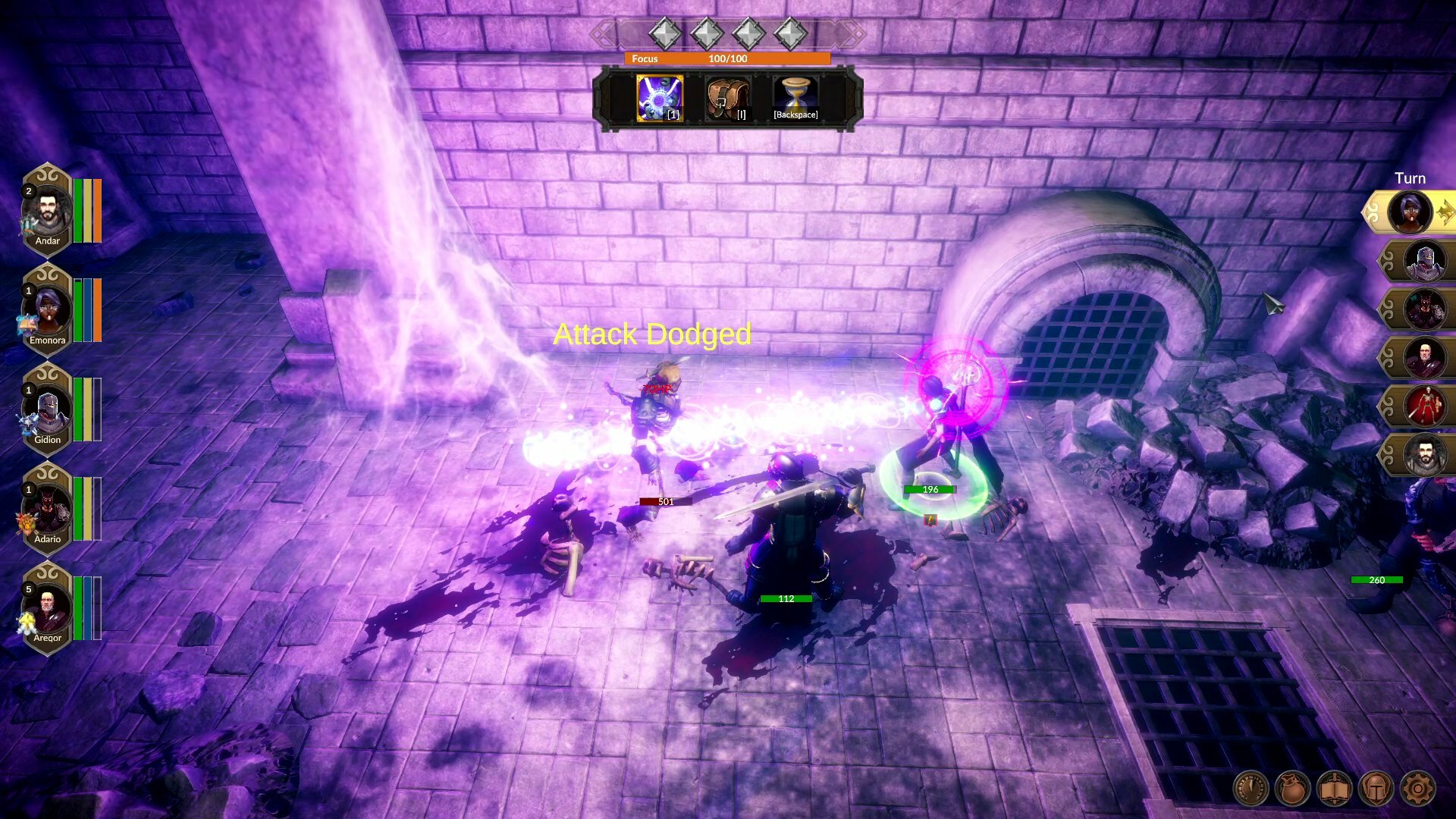
In today's Dev Diary, we'll cover what many tactical RPG fans like best: combat. We designed it to be dynamic, fluid, and inviting to engage. But how did we achieve that? Enjoy the read below!
Classes
In your team, you will have characters of different classes, each of which will have a tree of 16 skills, from which you will choose 9, giving you the chance to try other builds and tactics. For example, the Wizard class can pick all the water-based spells, fire-based spells, or a mix of them. The same Wizard class can follow the route of AoE or single target damage or favor a more protection-oriented build.
Abilities vary from single target to effect over time and area of effect. Some include summoning, spawning area-of-effect items on the battlefield, or using line-of-sight and blocking enemies' paths.
Your protagonist, the Commander, Andar Witherell, is a special class on its own and can either go the route of damage dealer, shield buffer, or healer, with a lot of flexibility in its skills.
When completing a team, the critical thing to pay attention to is class synergy. Classes can protect, heal, or empower other characters, and creative use of special abilities (taunts and control) can provide exciting encounters.
Resources
There are several combat-specific resources: Action Points, Focus, and Mana/Energy.
Action Points: Each character or enemy character has two Action Points. You can use these points for moving (both APs), moving and abilities use (1AP + 1AP), or if in a favorable position, abilities only (2APs). Remember that some high-impact abilities cost more than others and have a 2AP cost.
Focus: Each class generates Focus by using other abilities or by the use of a potion. Focus is always 0 at the beginning of combat and can reach a maximum of 100.
Mana/Energy: This set of resources is directly connected to the Intellect and Agility stats and can be replenished by resting or using potions.
Battlefield
Zoria is not using a traditional grid-based system, thus making the combat a bit more fluid. You will still have battlefield obstacles that can hinder you or your enemy.
When observing the environment during the battle, you need to pay attention to using line-of-sight - your character cannot fire while another party member or enemy is in front of him. The same is true for the enemies - they will move into position to attack a character if they are out of sight. Also, initiating combat near an environment trap can lead to the creative use of such traps to aid in battle.
But, even if the scales of victory start tipping to you, you can't be sure of your success. The combat is turn-based, but the world around continues to work on the real-time system. Enemies patrolling nearby can join the action if they get within range, so it can turn simple situations into really complicated fights, depending on the area.
After this description, we hope you fancy a little skirmish. That's why we invite you to test our free demo and share any feedback you have.
Until the next one!
Dev Diary #4 - Let's talk a bit more about The Outpost
👋Hello adventurers!
Let's talk more about one of the crucial mechanics in Zoria: Age of Shattering; The Outpost.
As we already know, The Outpost is a place where you rest, craft, recruit or rid of de-buffs, to name just a few. But let's get into the details!
Relevant to this article are two aspects of exploration and combat:
Fatigue: is a stat that increases with time spent out in the wilds and is also affected by how many encounters a follower has fought through. The more fatigue a character accumulates, the less effective that character gets, with stats decreasing a little at first and significantly as fatigue gets too high levels. Supplies: The resting mechanic is the best way to recover followers' health and clear certain effects.
Supplies: Resting out in the field takes time and requires supplies, as followers can’t go around hungry. Supplies can be found during exploration but can also be obtained through cooking. It is advised to take enough supplies from the Outpost when leaving for an adventure.
One aspect of the game we haven’t talked a lot about is the base and base management: The Outpost and all the outpost systems. Because exploration, questing, and combat are just a part of the game, what truly differentiates Zoria: Age of Shattering from other CRPG titles is how base and character management is integrated into the game.
Characters:
The player is not limited to a set of companions that will follow throughout the game, as it is usually the case, but is free to recruit many, either from the world, through quests, or from different locations within the game. The only limit to the player is the party size, but the Barracks inside the outpost act as a home to all the followers that are not in the current party.
Every time the player leaves the Outpost, he is free to choose whatever party composition he wants, limited only to what followers are available at that point. This means players can have a party suited to their playstyle or to the places they want to visit – dark dungeons full of traps where Thieves can come in handy or long-forgotten ruins where Mages or Lancers can make exploration easier.
The only constant in the party is the Captain; all the other characters can be switched in or out of the party every time the player returns to the Outpost.
The Barracks:
The heart of the Follower Management system is the place where you can equip your troops with the newest weapons you crafted, the most powerful potions, and special items found in the dungeons they conquered. You can also see on this screen your Follower’s level, stats, status, and the abilities they have unlocked.
The Burrow:
All that adventuring and fighting will increase troops' fatigue, and with fatigue increasing, everything else goes down, including Follower stats and combat efficiency. The best way to recover your troops is to send them to the “Moon Flower” BURROW for some rest… actually it’s the only way. This means not all your followers will be available all the time; some will need a longer stay than others, depending on their Fatigue level and wounds received during their time adventuring. Besides its strictly functional role, the Moon Flower Burrow’s manager, Madame Sybilla is an… exotic character with some interesting stories and quests.
The Inn:
The Lucky Dog Inn serves many purposes in the Outpost, being as much a utility building as it is a quest hub and a place to meet interesting characters. The utility aspect of the Inn refers to cooking, as the Inn is the place where all the cooking takes place in the Outpost. Sure, cooking can also be done on the road, but sometimes it’s preferable to do that in the Outpost where all the materials gathered are stored. Another very important factor related to the Inn is recruiting. Since recruiting is done in more than one way, and some quests, depending on the outcome, can offer the option to recruit a character, the Inn is not the only way to expand a player’s roster of followers, but it can still be quite an effective one.
The Black Cauldron:
As is the case with cooking, alchemy can also be performed on the road for a quick healing potion to get out of trouble but having access to all the materials gathered is, most of the time, the better option.
The Blacksmith:
Crafting can only be performed in the Outpost, and the Blacksmith is the place to do that. Being part of the Outpost facilities, crafting is accessible through the Blacksmith and uses the Outpost inventory, where all the materials accumulated during the player’s adventures are located. As with most of the buildings in the Outpost, the Blacksmith can be upgraded, providing access to more recipes or other bonuses.
Storage:
The game has two inventories: the party’s inventory and the Outpost’s inventory. As is usually the case, the party’s inventory is limited. On the other hand, the Outpost's inventory is not limited, allowing for the accumulation of large quantities of materials necessary to craft, equip and supply a large roster of followers. Because of this, most crafting will take place at the Outpost, with alchemy and cooking being accessible in the field but relying only on the materials gathered in that sortie.
Building Upgrades:
Many of the buildings in the Outpost can be upgraded, bringing all sorts of bonuses to the player, from faster healing to better weapons and armor available for crafting. Each building has its specific upgrade levels and requirements that can be related to either resources or specific quests.
Missions:
With a large roster of characters comes the unavoidable problem of favorite characters. When unavailable or unsuitable for a certain dungeon, they have to rely on lower-level or badly geared followers. Also, with many followers crafting and the availability of materials are vital. To answer both of these issues is the task of the Missions system. The player can send followers that are idle in the Outpost on certain Missions, missions that, if successful, award the player with materials, recipes, items, gold, and experience for the followers. Some followers can also return wounded or fatigued from the missions, requiring recovery time in the Burrow, so it’s wise to choose wisely the missions and the characters.
This is just a brief description of the systems that make up the base and follower management aspect of the game.
We will be back with more dev diaries soon!
Cheers, Team Zoria
Zoria: Age of Shattering & RPG Stories!
Hey everyone!
We're excited to announce our collaboration with RPG STORIES!
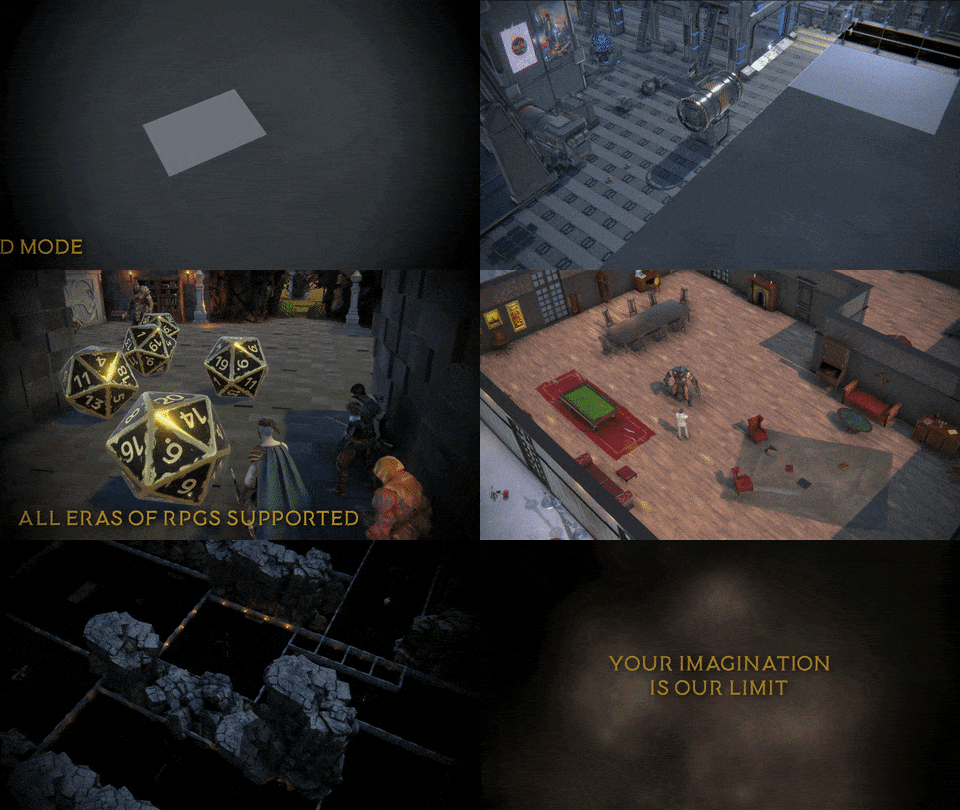
RPG Stories is a 3D Virtual Tabletop featuring a massive World Builder that provides you with 3D Assets, Heroes, and Monsters for all kinds of RPGs; Fantasy, Modern, and Sci-fi, to create your quests AND play online with your party. Everything you need, all-in-one software!
As a part of our collaboration, models from Zoria will be available in RPG Stories, so you will be able to create your own tabletop RPG game in Zorias setting!
As we released a new demo a couple of days ago, we want to introduce you to a few locations you will visit while exploring the Kingdom of Nulbarak.
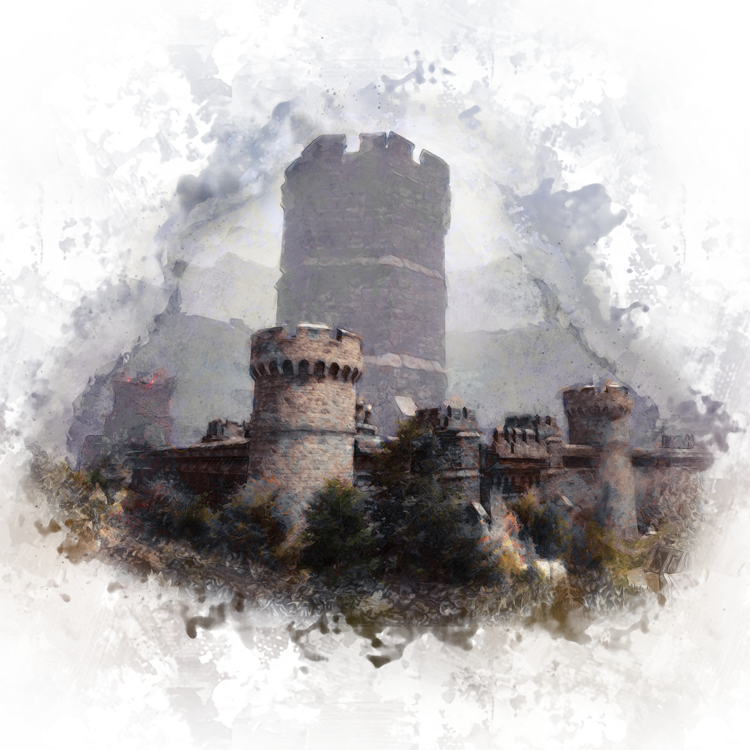
The garrison at the Lonely Tower is beheld as a tyrant in these lands, and the villagers wish to be rid of them. This will work greatly in our favor, should we be able to exploit this.
However, be prepared; the path to the garrison is not easy; some sort of magical barrier protects it! The soldiers guard the secret closely, and nobody outside the barrier’s borders seems to know anything about it.
The turmoil in the lands of Nulbarak grows, aided in some measure by us. That is not to say we caused any new degree of conflict but merely helped the villagers stand up to the tyrannical regime of the Elionian soldiers. We have stood on the side of the common folk of Nulbarak, helping them cut off the supplies going to the soldiers and culminating with an assault of the garrison on the fledgling militia of Nulbarak.
Here you can prepare for the journey on the paths of Nulbarak. Recruit your followers, and prepare the necessary potions in the Wizard Tent using your crafting skills. Remember to spend your ability points! Each of your followers has a separate amount.
Through sweat and blood we have recovered a strange badge from the soldiers of the garrison. It appears to protect them from the harmful effects of the barrier surrounding the Lonely Tower, granting them safe passage. Our leading scientist, Reija, has managed to replicate the workings of the strange device and create similar items for our men. Though the technology is something way beyond our times, we now possess the means to get closer to our goal.
We want to leave this one as a mystery. Find your way to the Lonely Tower and discover what mysteries it contains!
Of course, there is more, but we don't want to show you everything! But as a hint, we can say there are places you can visit only with specific characters in your team!
Play the demo, and learn what secrets the Kingdom of Nulbarak protects!
Until the next time!
Team Zoria
Dev Diary #3 - The Kingdom of Nulbarak
Hey adventurers!
As we released a new demo a couple of days ago, we want to introduce you to a few locations you will visit while exploring the Kingdom of Nulbarak.
The garrison at the Lonely Tower is beheld as a tyrant in these lands, and the villagers wish to be rid of them. This will work greatly in our favor, should we be able to exploit this.
However, be prepared; the path to the garrison is not easy; some sort of magical barrier protects it! The soldiers guard the secret closely, and nobody outside the barrier’s borders seems to know anything about it.
The turmoil in the lands of Nulbarak grows, aided in some measure by us. That is not to say we caused any new degree of conflict but merely helped the villagers stand up to the tyrannical regime of the Elionian soldiers. We have stood on the side of the common folk of Nulbarak, helping them cut off the supplies going to the soldiers and culminating with an assault of the garrison on the fledgling militia of Nulbarak.
Here you can prepare for the journey on the paths of Nulbarak. Recruit your followers, and prepare the necessary potions in the Wizard Tent using your crafting skills. Remember to spend your ability points! Each of your followers has a separate amount.
Through sweat and blood we have recovered a strange badge from the soldiers of the garrison. It appears to protect them from the harmful effects of the barrier surrounding the Lonely Tower, granting them safe passage. Our leading scientist, Reija, has managed to replicate the workings of the strange device and create similar items for our men. Though the technology is something way beyond our times, we now possess the means to get closer to our goal.
We want to leave this one as a mystery. Find your way to the Lonely Tower and discover what mysteries it contains!
Of course, there is more, but we don't want to show you everything! But as a hint, we can say there are places you can visit only with specific characters in your team!
Play the demo, and learn what secrets the Kingdom of Nulbarak protects!
Until the next time!
Team Zoria
TACTICON 2022 is LIVE!
Hello adventurers! 👋
We're happy to inform you that Zoria: Age of Shattering is participating in TactiCon 2022!
The event started yesterday, and ends on the 26th of September!
TactiCon is a digital convention hosted on Steam celebrating strategy video games, it highlights the brilliant and creative minds who develop strategy games and gathers the players who love them.
This event is not only about sales, but you can participate in many live panels on exciting topics and check on new demos of upcoming games! 🔥
Check them out on the TactiCon's main page (click on the above graphic)!
We're honored to be able to be a part of this fantastic convention ❤️
Cheers,
Team Zoria
Dev Diary #2 - Let's talk about the Stats!
Hello adventurers!👋
Today we want to talk about some stats, armor, and attack types in Zoria. There are a lot of mechanics in the game that we believe we should cover, so you get the idea of what to expect when you jump into the world of Zoria. It's going to be a pretty long diary today, so grab your favorite beverage, snacks and enjoy the guide!
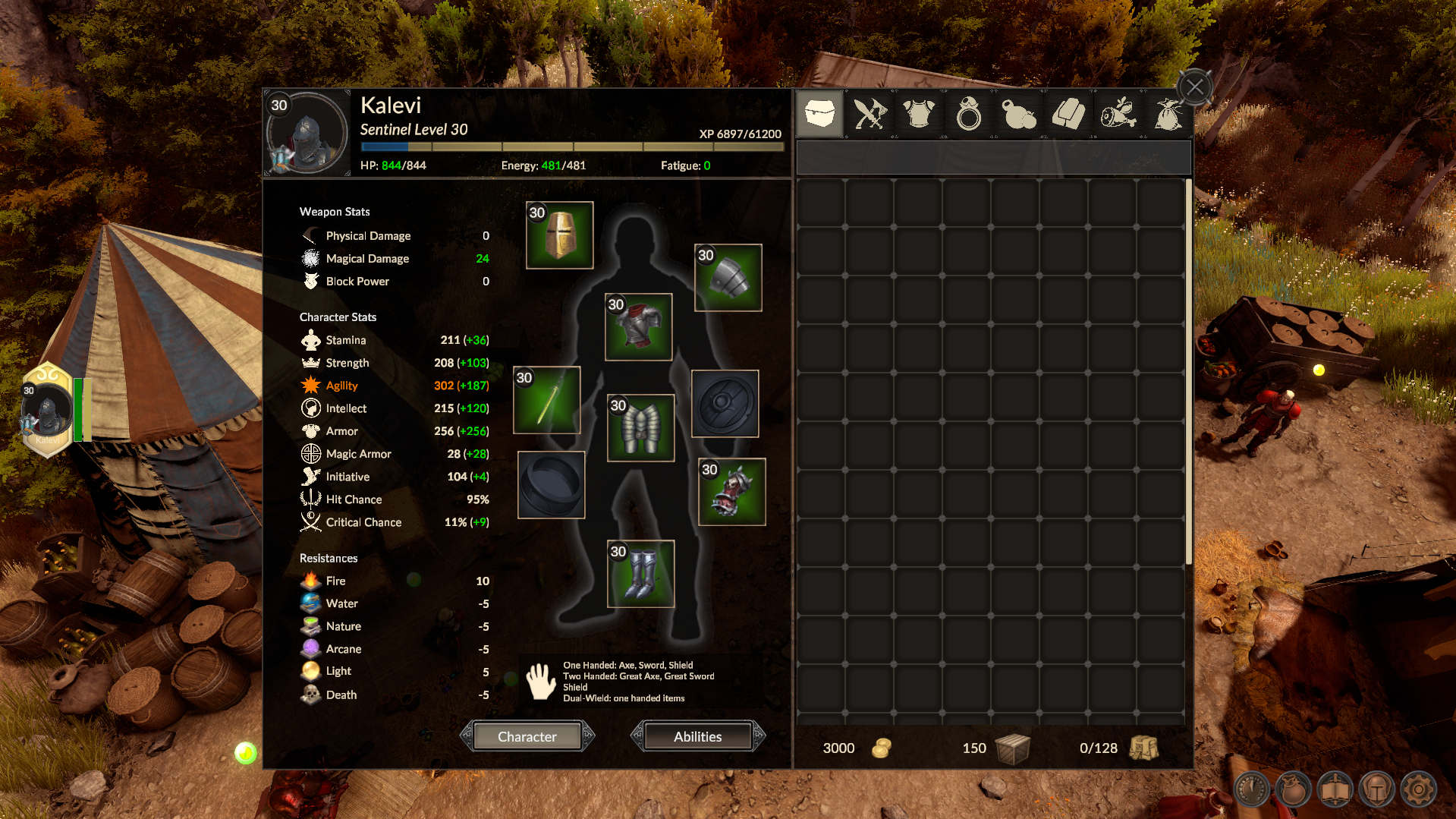
Main Stats These stats directly influence the character’s various attributes (health, damage) and the power of a character’s abilities.
Stamina: directly affects the character’s health. Especially important early game and the single greatest contributor to player survivability.
Strength: especially important for melee characters, directly affects Melee Attack Power and increases the Energy pool for Lancer class and Captain. It also increases block power for characters wearing a Shield.
Agility: increases Ranged Attack Power for Ranger. Increases Melee Attack Power for Thief. Increases Melee Attack Power for Lancer, Kingsman, Battle Cleric, and Captain to a smaller degree. Increases Energy pool for Ranger, Thief, and Kingsman. Increases Crit Chance with values depending on the class. Increases Armor.
Intellect: Increases Spell Power. Increases Magic Armor. Increases Crit Chance for magic abilities. Increases Mana pool for Wizard, Necromancer, Priest, Battle Cleric, Bard.
Armor: reduces the amount of damage received from physical abilities and effects.
Magic Armor: reduces the amount of damage received from magic abilities and effects.
Secondary Stats:
Initiative: it influences the character’s place in the combat queue at the start and where it will be placed in the queue once that character’s turn is finished. A character with a high Initiative value will be placed higher in the combat queue once its turn is completed than a character with a low Initiative value.
Hit Chance: chance to hit with an ability. It is directly influenced by the level difference between the character and the enemy. The higher the level of an enemy compared to the character, the lower the Hit Chance.
Crit Chance: Critical chance is influenced by the dominant stat for that class – Agility or Intellect.
Elemental Resistances: All magic effects belong to a type of elemental magic.
Fire Magic
Water Magic
Nature Magic
Arcane Magic
Death Magic
Light Magic
Light and Death Magic are in direct opposition, with Death Magic wielders being especially weak to Light Magic and Light Magic wielders especially weak to Death Magic abilities. Enemies weak to Fire Magic are equally weak to physical Fire effects, like the Fire Arrow Ranger ability. Elemental resistances mitigate a percent of the incoming damage from that specific element. Gear pieces with elemental resistance have values representing their elemental resistance. Depending on the level, these values translate to different percentages of elemental resistance, making a low-level gear piece more effective in elemental protection for the appropriate level character.
Effects: These effects are placed on the character by various abilities and can be temporary (only during combat) or permanent (must be removed by resting, using a potion, or in the Outpost). Each effect influences the player’s stats differently:
Sunder: can be applied by physical abilities. Decreases the player Armor and can stack multiple effects.
Wound: can be applied by physical abilities. Decreases the player Initiative while active.
Bleed: can be applied by physical abilities. Deals damage over time to the character until removed.
Stun: can be applied by any kind of ability. Locks the character in the current position in the combat queue for its duration.
Poison: can be applied by Nature abilities. Decreases Hit Chance.
Disease: can be applied by Nature abilities. DecreasesAgilityandIntellect.
Curse: can be applied by Death abilities. Decreases Strength and Magic Armor.
These effects do not show on the Character Stat sheet but in the abilities description for each ability that places a certain effect. Some enemies can be immune to certain types of effects, making the abilities that place those effects less effective. This immunity will be shown in the Compendium entry for each enemy.
Stats influence on abilities: The power of each ability of a certain class is affected by the main stat. Because of this, different builds for a class can benefit from a different main stat.
As an example, below are some of the Kingsman’s abilities and the stats affecting their power:
Agility: Shield Wall, King's Resolve, Deflect, Hold the Line, Avatar of Protection.
Intellect: Magic Absorption, King's Fire.
Fatigue: is a special stat central to the Fatigue and Outpost recovery mechanic. We will introduce more details on this mechanic in a dedicated post later.
Together with the Stats update, we are also introducing new stats to armor and weapons.
Durability: all weapons and armor now have certain durability that decreases with each combat. Once a gear item’s durability reaches 0, that item is no longer usable and does not contribute to the character’s stats.
Armor Types:
Light Armor: worn by Wizard, Necromancer, and Priest classes.
Medium Armor: worn by Ranger, Thief, Bard classes, and the Captain.
Hardened Armor: worn by the Ranger, Kingsman, Lancer, Battle Cleric classes, and the Captain.
Heavy Armor: worn by the Kingsman and Lancer classes.
Weapon Damage and Spell Damage:
All weapons now have a weapon damage stat. This damage is added to the base attack of the character using that weapon.
Specific caster weapons, like the staff, have a Spell Damage stat instead of Weapon Damage.
Stay tuned for future updates, as there is much more we want to present to you!
Cheers, Team Zoria
Dev Diary #2 - Let's talk about the Stats!
Hello adventurers!👋
Today we want to talk about some stats, armor, and attack types in Zoria. There are a lot of mechanics in the game that we believe we should cover, so you get the idea of what to expect when you jump into the world of Zoria. It's going to be a pretty long diary today, so grab your favorite beverage, snacks and enjoy the guide!
Main Stats These stats directly influence the character’s various attributes (health, damage) and the power of a character’s abilities.
Stamina: directly affects the character’s health. Especially important early game and the single greatest contributor to player survivability.
Strength: especially important for melee characters, directly affects Melee Attack Power and increases the Energy pool for Lancer class and Captain. It also increases block power for characters wearing a Shield.
Agility: increases Ranged Attack Power for Ranger. Increases Melee Attack Power for Thief. Increases Melee Attack Power for Lancer, Kingsman, Battle Cleric, and Captain to a smaller degree. Increases Energy pool for Ranger, Thief, and Kingsman. Increases Crit Chance with values depending on the class. Increases Armor.
Intellect: Increases Spell Power. Increases Magic Armor. Increases Crit Chance for magic abilities. Increases Mana pool for Wizard, Necromancer, Priest, Battle Cleric, Bard.
Armor: reduces the amount of damage received from physical abilities and effects.
Magic Armor: reduces the amount of damage received from magic abilities and effects.
Secondary Stats:
Initiative: it influences the character’s place in the combat queue at the start and where it will be placed in the queue once that character’s turn is finished. A character with a high Initiative value will be placed higher in the combat queue once its turn is completed than a character with a low Initiative value.
Hit Chance: chance to hit with an ability. It is directly influenced by the level difference between the character and the enemy. The higher the level of an enemy compared to the character, the lower the Hit Chance.
Crit Chance: Critical chance is influenced by the dominant stat for that class – Agility or Intellect.
Elemental Resistances: All magic effects belong to a type of elemental magic.
Fire Magic
Water Magic
Nature Magic
Arcane Magic
Death Magic
Light Magic
Light and Death Magic are in direct opposition, with Death Magic wielders being especially weak to Light Magic and Light Magic wielders especially weak to Death Magic abilities. Enemies weak to Fire Magic are equally weak to physical Fire effects, like the Fire Arrow Ranger ability. Elemental resistances mitigate a percent of the incoming damage from that specific element. Gear pieces with elemental resistance have values representing their elemental resistance. Depending on the level, these values translate to different percentages of elemental resistance, making a low-level gear piece more effective in elemental protection for the appropriate level character.
Effects: These effects are placed on the character by various abilities and can be temporary (only during combat) or permanent (must be removed by resting, using a potion, or in the Outpost). Each effect influences the player’s stats differently:
Sunder: can be applied by physical abilities. Decreases the player Armor and can stack multiple effects.
Wound: can be applied by physical abilities. Decreases the player Initiative while active.
Bleed: can be applied by physical abilities. Deals damage over time to the character until removed.
Stun: can be applied by any kind of ability. Locks the character in the current position in the combat queue for its duration.
Poison: can be applied by Nature abilities. Decreases Hit Chance.
Disease: can be applied by Nature abilities. DecreasesAgilityandIntellect.
Curse: can be applied by Death abilities. Decreases Strength and Magic Armor.
These effects do not show on the Character Stat sheet but in the abilities description for each ability that places a certain effect. Some enemies can be immune to certain types of effects, making the abilities that place those effects less effective. This immunity will be shown in the Compendium entry for each enemy.
Stats influence on abilities: The power of each ability of a certain class is affected by the main stat. Because of this, different builds for a class can benefit from a different main stat.
As an example, below are some of the Kingsman’s abilities and the stats affecting their power:
Agility: Shield Wall, King's Resolve, Deflect, Hold the Line, Avatar of Protection.
Intellect: Magic Absorption, King's Fire.
Fatigue: is a special stat central to the Fatigue and Outpost recovery mechanic. We will introduce more details on this mechanic in a dedicated post later.
Together with the Stats update, we are also introducing new stats to armor and weapons.
Durability: all weapons and armor now have certain durability that decreases with each combat. Once a gear item’s durability reaches 0, that item is no longer usable and does not contribute to the character’s stats.
Armor Types:
Light Armor: worn by Wizard, Necromancer, and Priest classes.
Medium Armor: worn by Ranger, Thief, Bard classes, and the Captain.
Hardened Armor: worn by the Ranger, Kingsman, Lancer, Battle Cleric classes, and the Captain.
Heavy Armor: worn by the Kingsman and Lancer classes.
Weapon Damage and Spell Damage:
All weapons now have a weapon damage stat. This damage is added to the base attack of the character using that weapon.
Specific caster weapons, like the staff, have a Spell Damage stat instead of Weapon Damage.
Stay tuned for future updates, as there is much more we want to present to you!
Cheers, Team Zoria
Dev Diary - Let's introduce ourselves!
Hey everyone! 👋
We are super excited about the Kickstarter campaign, and we want to thank every single one of you who decided and will decide to support Zoria: Age of Shattering!
Many of you may not know the story behind the Tiny Trinket Games. We think that for the first Dev Diary, it will be perfect to introduce ourselves and give you a little backstory on our first steps in the gaming industry.
Ladies and gentlemen, meet our team!
Stefan Nicolescu (Fane)
I have worked in the gaming industry since 2004, in several roles, from QA tester to QA Manager, to PM, Level Designer, and Game Designer. I have been working on mobile games in my spare time, but my mind was always set on a full-fledged PC RPG game. As time passed, my dream came true, and now I am in charge of all creative aspects for Zoria AoS - from mechanics to level design and environment design, UI, SFX, and animations. I love games, but most of all, I love making them. Nowadays, I enjoy the day-to-day process, as I am doing the thing that defines me.
Stefan Nitescu (Neles)
Passionate about games since childhood, especially RPGs and story-driven games, my background is not what you would call a classic game developer background, with studies in architecture and business.
Working on a game like Zoria was something I always wanted to do - to participate in the creation of a big, detailed, magical world that you can lose yourself into.
Apart from the day-to-day administrative activities of Tiny Trinket Games, I'm in charge of the implementation of quests, actions, interactions, triggers, in short, Quests, Events, and Dialogues (QED). Together with Fane, I have written the lore of the world of Zoria and created the story's overall narrative structure, a part of the quests you will be playing throughout the game.
I hope you will have as much fun playing Zoria: Age of Shattering as we had creating/working on it.
Gabriel Ivanica (Gabi)
I've always been fond of video games and computers, but the road from playing them to making them was long. While studying, I discovered my passion for graphics programming and game engines since they are the perfect combination between complex technical sciences and the visual output of my work. I’m a software engineer with a master’s degree in Advanced Techniques for Computer Graphics. I worked on various University Research Projects to expand my knowledge of real-time graphics computing and general application software architecture. I also love sharing the things I learn, so I started teaching computer graphics and game programming at university or in the game industry in collaboration with Ubisoft Bucharest Studio.
Working on Zoria has been the part that I enjoyed the most in the last five years. My dream is not only to launch this game but to continue to work on feature versions and expand the realm of possibilities of what gamers can do in Zoria through new features, mechanics, and visual feedback. What motivates me is the opportunity to work on a personal project that I love and grow it into something that others may experience and find enjoyable.
Tiny Trinket Games took its current form in 2017, and our purpose was to develop games for PC. The first game under the name Tiny Trinket Games, Azuran Tales: Trials, was launched for PC in 2018, about the same time we started working on the concept that would later become Zoria: Age of Shattering. In 2019 we managed to port Azuran Tales to the Nintendo Switch and have been working on Zoria since. We launched the Prologue in 2020 and the updated Demo in 2021, iterating and improving the systems and the game's overall quality.
One downside of working on a large game as a small indie team is the time involved in taking the game to where we wanted it, especially since we had to support ourselves in the meantime and could often only work on it in our spare time.
Origin story and how we started project Zoria.
We (Fane and Neles) have been friends for years, and we've spent lots of hours playing together at Lan parties back in the day.
Years ago, we’ve been talking about making games and were both very excited about the idea. One thing led to another, and we decided to try to make it work. After many prototypes and a long search for a third partner to complete our team, we met Gabi at a gathering at TechHub Bucharest.
We set up a meeting, we met, Fane (Stefan Nicolescu) showcased what he did in Unity, and Gabi liked what he saw. From there, it is history, and we are here, now, all three of us, after many, many, many sleepless nights, iterations, meetings, calls, and lots of coffee and green tea (for Gabi).
The idea for Zoria evolved, and Fane’s and Gabi's skills progressed. Originally the game was supposed to be a Mobile game, but Fane wanted something a bit more and later discovered that the rest of the guys also did. One thing led to another, and from 2D mobile, we moved to 2D + 3D characters and Heroes 3 style combat to the free-roaming combat we now have in Zoria.
We started in March or April 2017 when we presented Gabi with the mobile game design document. Many years and a lot of free time spent on nothing else but this. For Stefan Nicolescu, it was a learning curve in terms of level and environment design; with each iteration each year, the levels would improve. It took him around three years and thousands of hours to reach consistent levels. The same goes for Gabi to understand more the mechanics Fane needed and for Neles (Stefan Nitescu) as well for understanding and requesting features in the Quest Editor. Gabi and Neles did an excellent job with the Quest Editor, something that was built from scratch to fit our needs. It is still being upgraded as we discover we need it for a thing not tough possible.
WHAT WAS THE BIGGEST CHALLANGE FOR US?
Keeping the team together for so long without seeing a financial gain, fueled only by grit and hope. Then came things like: as the design expanded - keeping track of all the mechanics, skills, triggers, and progress for creating a quest or a new enemy. There is a lot of information overload at some point. Another challenge for us is trying to keep things small; we are kinda failing at this as the Demos we released so far are like small games in terms of gameplay hours.
The game changed a lot- an unrecognizable - from 2D mobile game to a 3D party-based, free-roaming, open-world CRPG.
WHAT IS THE BEST FOR YOU ABOUT ZORIA, WHAT ARE YOU MOST PROUD OF?
Subjectively here: it's made by three guys in a "living room," as we don't have basements. We're also proud that we landed a good balance between too easy (Heroes 3) and too complex (Divinity: Original Sin combinations), so you can easily get into the game.
That sums up our story; there is nothing more to say. We’re a group of friends with the privilege to do what they love!