

Astra Exodus
Join the Astra Exodus Discord channel
You can join here. We’ll see you there!
https://store.steampowered.com/app/880750/Astra_Exodus/
Astra Exodus Dev Diary #06 - Research Grid
Also, don’t forget: you can currently sign-up for the Beta. If you’d like to help us with giving your honest feedback on the current version of the game, you can apply here.
Research Grid
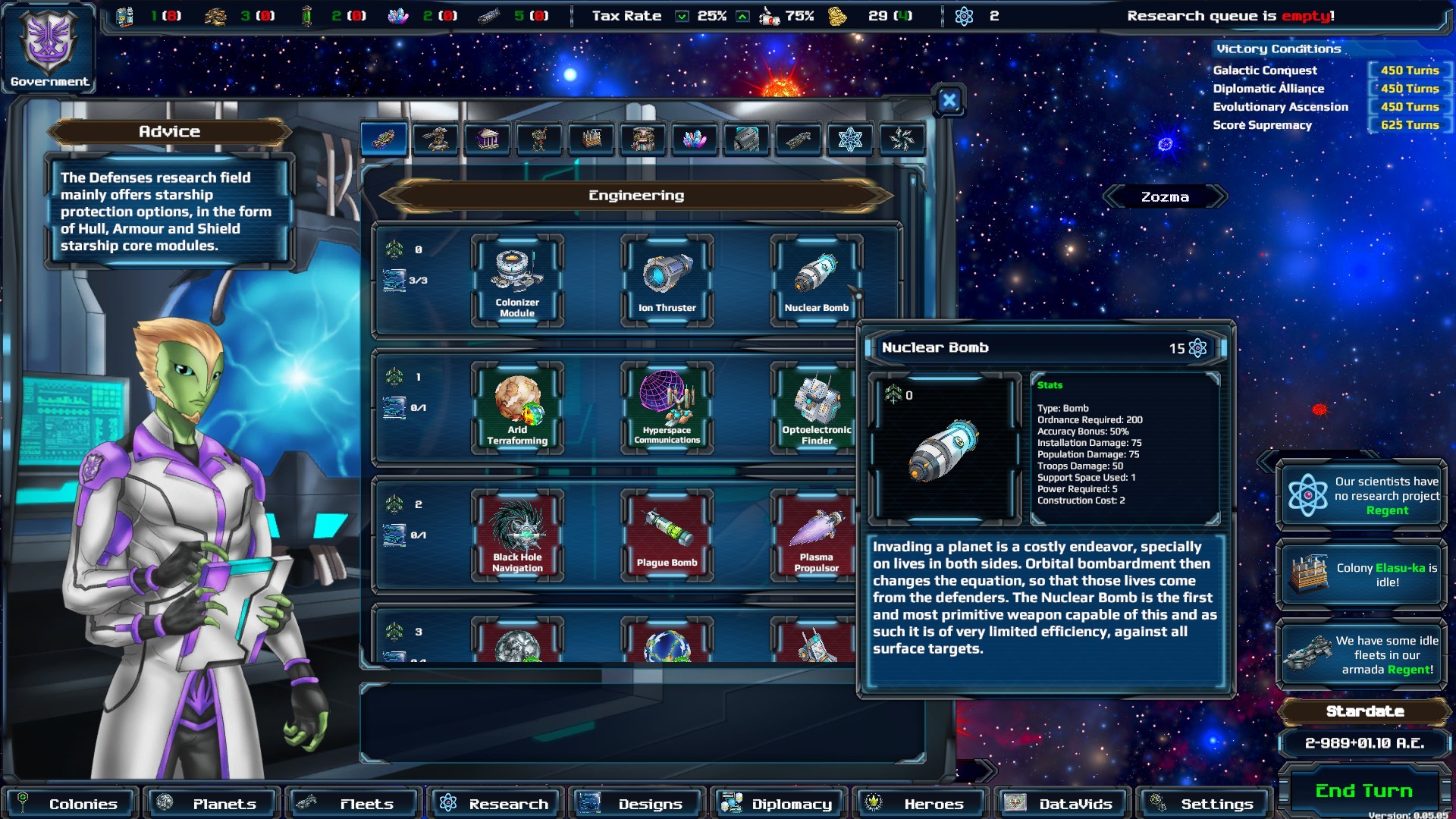
The Research Grid can seem quite complex when first encountered, but it is simpler than it looks. You have 9 Research Fields, which are large classifications of technologies with several levels of depth, plus two other categories called Specializations and Special techs.
The 9 basic Research Fields on the game are called:
- Construction
- Defenses
- Engineering
- Government
- Power
- Production
- Resources
- Troops
- Weapons
Without going into specifics: the Construction, Production and Resources fields focus on improving Colonies, while Defenses, Weapons, Engineering and Power allow for the research of new corresponding modules for your starships. Finally, the Troops field, as the name indicates, serves to unlock new troop types and improve the existing ones.
In turn, each Research Field has 7 different progressive levels in which you must research at least one tech from each level before progressing to the next one. Through traditional research, you will only be able to discover one tech per level. However, you can trade for other techs of the same level if the AI is willing and actually researched a different one from that level.
All the levels are randomized, with the exception of the first and last levels, meaning that in a regular game, out of a possible set of five different techs, you will only get three at random to pick only one from. There are faction traits, however, that either increase or decrease this number of available techs. This system is designed to make player choices more meaningful, while also enhancing the game’s replayability.
Finally, almost all of the late-game techs, which belong to level seven of each Research Field, are repeatable, giving an increased, cumulative effect each time they are researched. This guarantees that you will never run out of techs to research.
Specializations
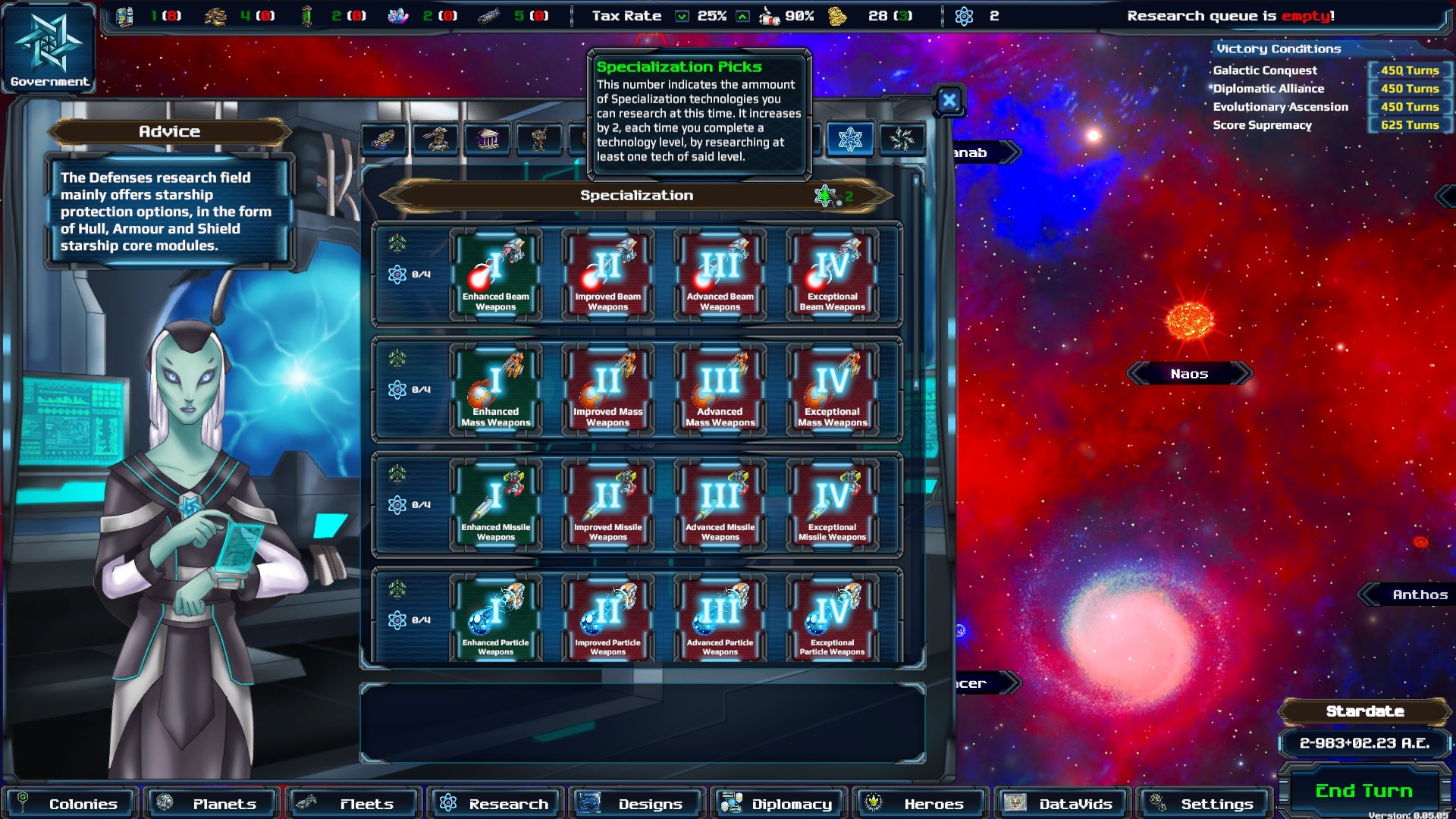
As previously mentioned, one category of techs is called Specializations. This one is focused on improving starship modules by enabling Modifiers for them. These modifiers can greatly enhance the effects of a module, while also increasing its cost and power requirements. For example, in a weapon module, a modifier might increase its fire rate or in the case of an armor core system, another can even reduce its tactical speed penalty.
Specialization techs are not distributed in levels but in groups, these groups correspond to the major module types. They are then:
- Armour
- Beam Weapons
- Engines
- Hull
- Mass Weapons
- Missile Weapons
- Particle Weapons
- Shields
- Support Modules
Each of these groups has 4 techs available to research in a specific progressive order.
The number of specialization techs that can be researched at any time is determined by the Specialization Picks value, which increases by 2 each time you complete a level in the 9 research fields by researching at least one tech of said level. As the name indicates, this system is designed for the specialization of starships and thus completing a group to enable all modifiers of a said module category, is generally the best strategy.
Special Techs
Last but not least, the game has a category called Special Techs. This system works differently depending on whether or not you are playing the Campaign or in Skirmish mode. In the Campaign, it is here where you will find the techs unlocked as rewards for completing Optional and Secondary mission objectives at certain difficulties.
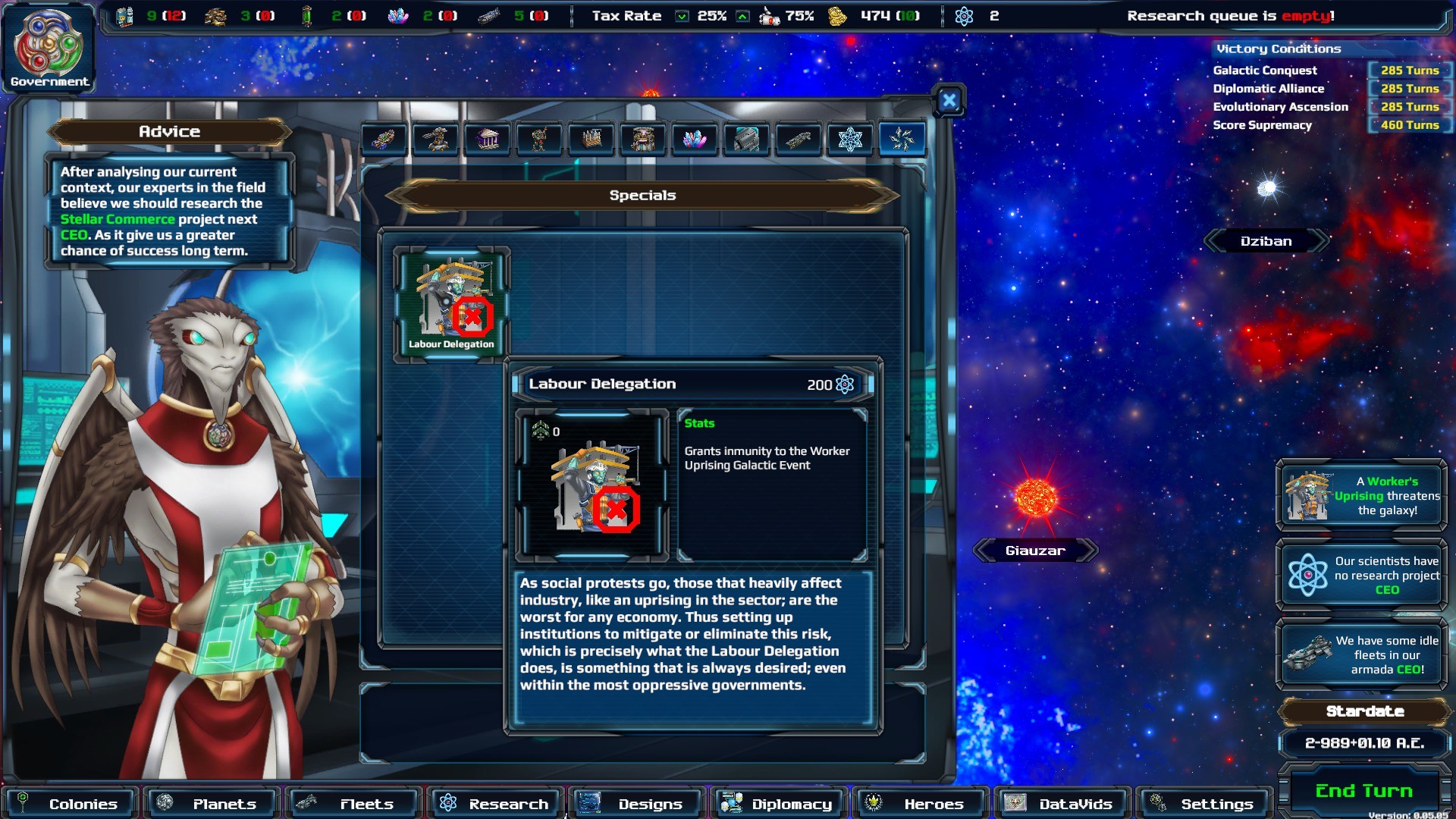
In Skirmish mode, you will find the techs that serve to negate the adverse effects of Galactic Events in the Special Techs category. These events are in general pretty bad for all players, for example, Lithovore Microbes can attack the galaxy and greatly reduce the materials production galaxy-wide. Thus by researching the counter technology available in the Special Techs category you can avoid the effects of this galactic event whenever it happens. Special Techs are enabled only when you first encounter the event they are designed to prevent.
We’ll talk more about Events in general, including Galactic level ones, in a future dev diary.
https://store.steampowered.com/app/880750/Astra_Exodus/
Astra Exodus Dev Diary #05 - Construction and Resources
Before we move on to the subject of the dev diary, let me remind you that we are currently looking for Beta testers, so if you’d like to have early access to the game and help us with providing feedback, you’re more than welcome! You can join here.
And now, on to the dev diary!
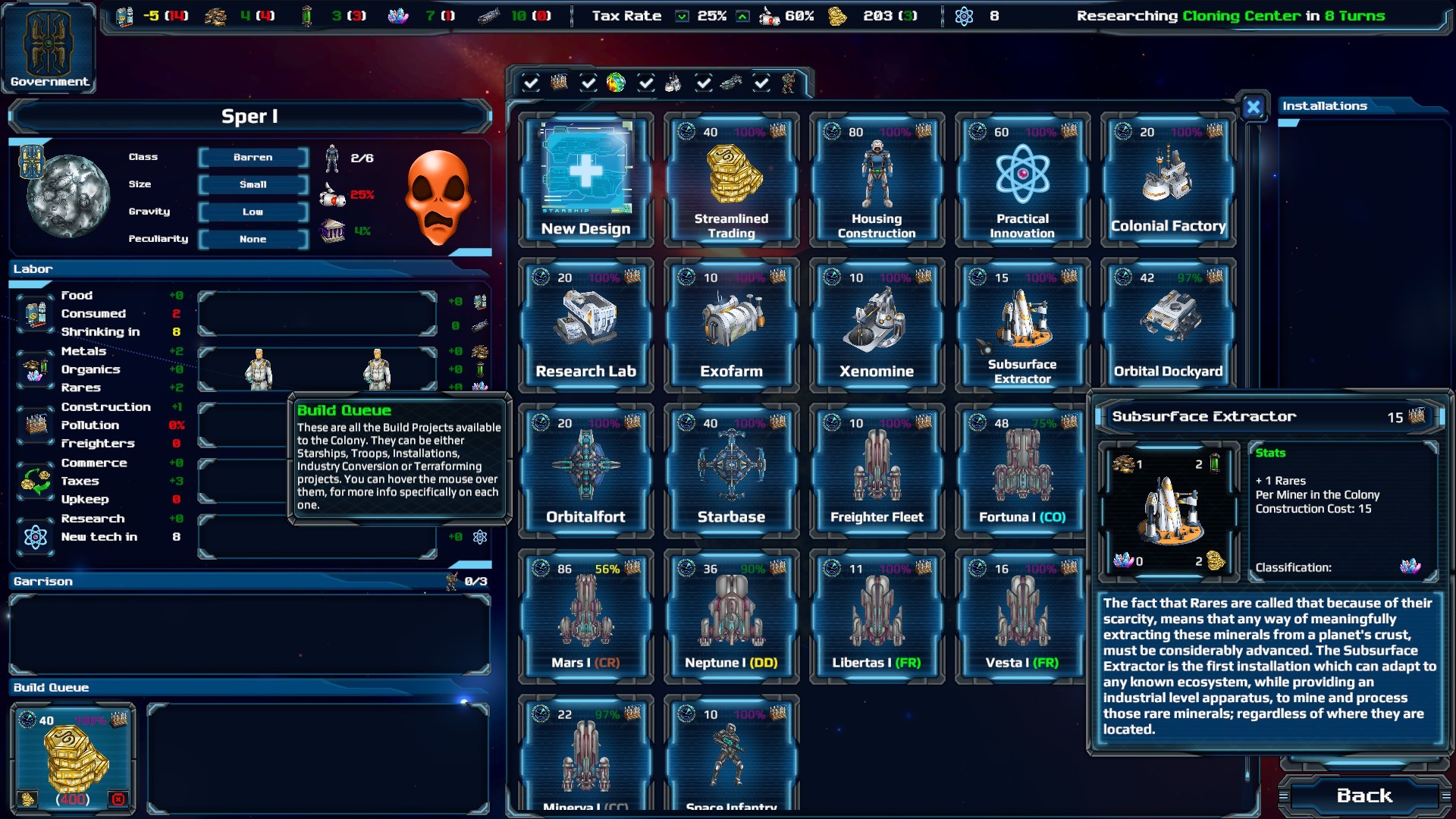
This time we’ll look into the resources and construction system, and have a passing look at how colonies work.
Resources
The game has 4 main resources related to construction. These are Food, Metals, Organics and Rares.
Food
 is obviously required to feed your colonists, without it there won’t be any growth and given enough turns it could even lead you losing laborers, severely affecting the Colony and potentially its ability to construct projects.
Metals
 , Organics
  and Rares
  are classified as Materials
  in the game. They are used in the construction of starships, installations and troops. They can also be employed in terraforming or even converted into credits or research, thanks to special projects available from the start.
The availability of each resource depends on the planet the Colony was settled on and any Peculiarities it might have. The main factor here is the class of the Planet, as well as things like size and gravity rating which might greatly affect its potential for construction. For example, Swamp planets are rich in Organics but lack Rares and Metals, however one with a large enough size and normal gravity can still be used to construct efficiently if materials are mined from other planets.
Mining is the process from which you extract the Materials for construction. For this you need to assign laborers as Miners, which use any installations on the Colony and tech/trait effects you might have to multiply the amount extracted. However, any resources extracted from outside of your home star system has to be freighted across your civilization, so you’re going to need Freighters for this.
Colonies
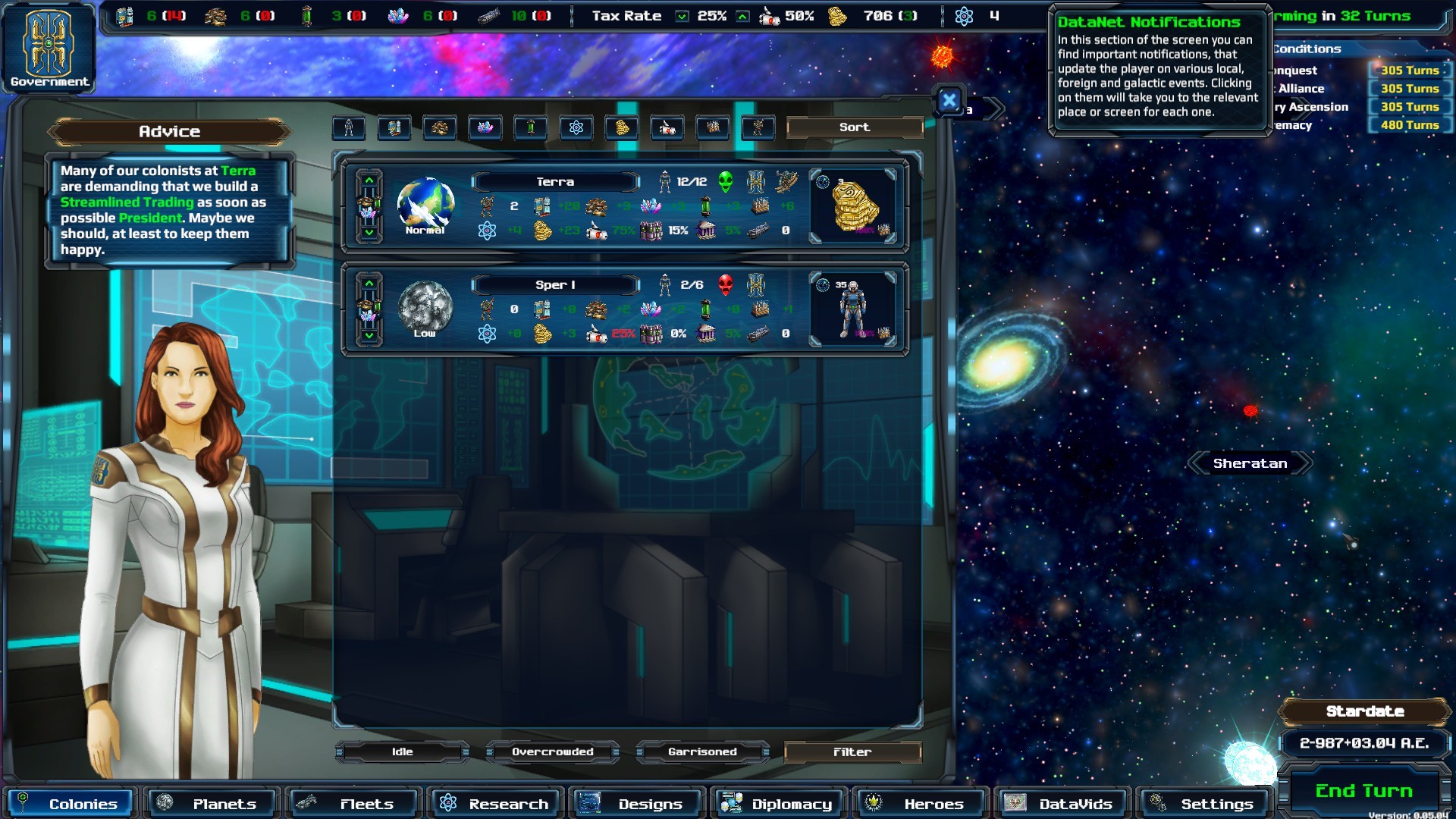
Through the use of Colonizer class starships you can create Colonies on different worlds. They host your people and thus expand your reach across the galaxy. The population of a Colony is classified in 5 different professions. These are: Farmer, Miner, Worker, Trader and Scientist.
As their name suggests, Farmers produce Food and Miners materials. Workers are used to generate Construction and thus build colony projects. Traders can increase the colony’s credit income by generating commerce on top of the existing tax revenue. Finally Scientists produce Research which is used to discover technologies. As explained previously, all these base values depend on the planet and can be increased by constructing installations on the Colony and researching new technologies.
Finally, Food and Materials are shared between all colonies and they required for their growth and construction of projects; a priority must then be set to decide which of them fulfils its needs. The player must do this through the Colonies screen, where he or she can set the order in which they receive resources from the pool.
Construction
Construction is generated by your Workers and used to advance and complete any current project being built in the colony. As all other resources, it can be improved through colony installations and technologies researched. Any project being built requires materials, which depending on the availability of them on the Colony will determine the Materials Efficiency the project has.
This percentage effectively affects the number of turns a project will take to complete. For instance, if you generate 5 Construction per turn in the Colony and you have a colony project with an industrial cost of 20 and 50% materials efficiency, the project will take 6 turns to be completed. If you had more resources and/or prioritized that Colony, with a 100% materials efficiency that very same project would take instead 4 turns.
Finally there is Pollution to take into consideration. The higher your Construction output is, the more of it you will lose thanks to pollution. You can however build installations and research technologies to mitigate this effect. Materials efficiency is not affected by it, so it can often be a better alternative to get more resources for a project than adding more workers to the project.
We will be back next week for new dev diary with a thorough look at the research system. Stay tuned!
https://store.steampowered.com/app/880750/Astra_Exodus/
Astra Exodus Dev Diary #04 - The Galactic Map
But first I wanted to mention that we are now running the Beta for Astra Exodus, so if you're willing to lend a hand and give your honest feedback, please feel free to apply! We'd love to have you on board. You can apply here.
Star Systems
The main feature of the map are the star systems, which host the planets you’ll want to expand to. There are multiple types of stars, depending on which they can host different types of planets. This of course can be tweaked to your liking in the galaxy settings in Skirmish mode.
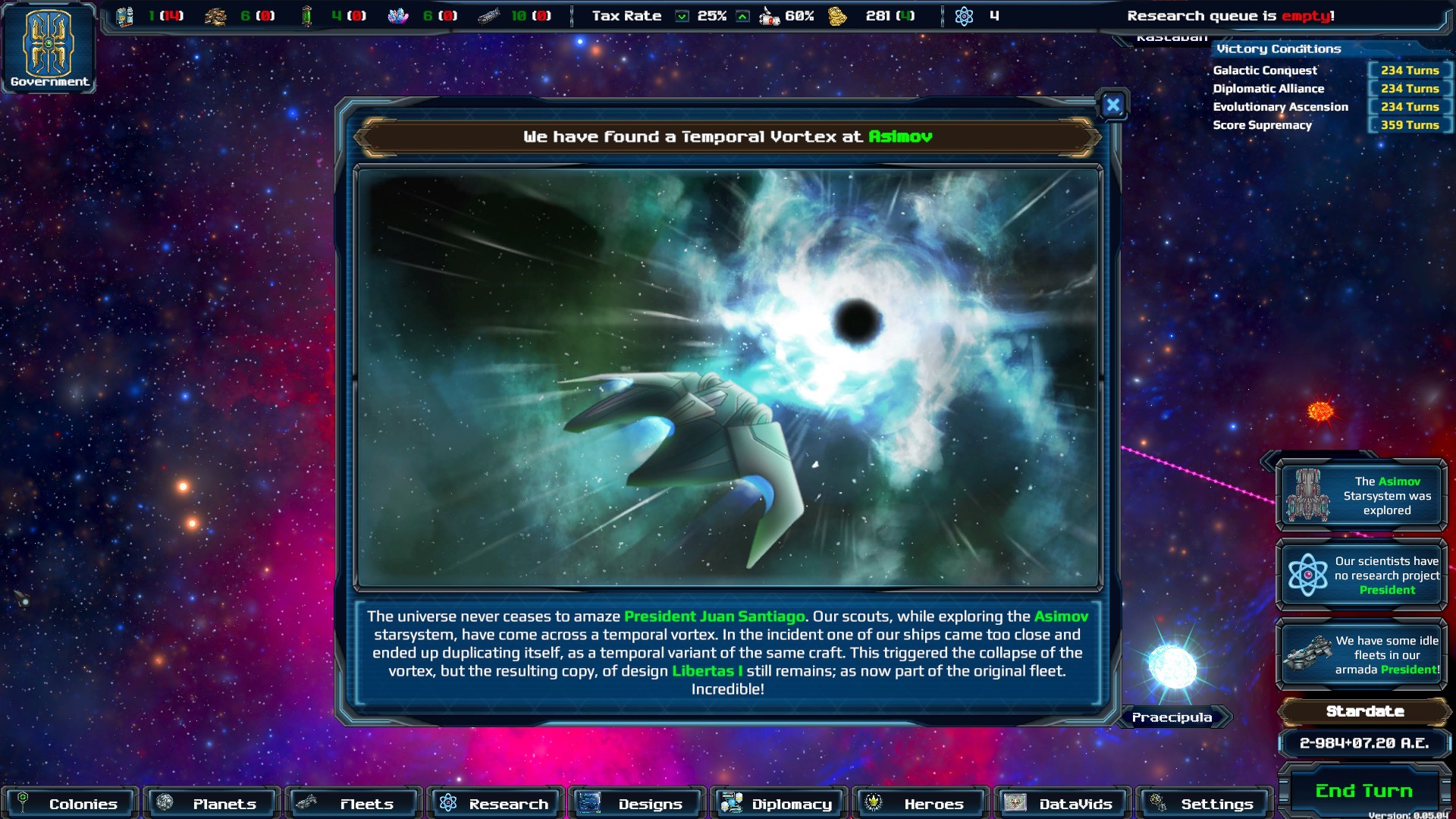
When a Star system is scouted, an Exploration Event might fire, with different effects for the first player that does so. For example you can come across an orbital terraformer, which when fired will terraform a nearby planet for you. However, we’ll talk more and in depth about these on a following dev diary.
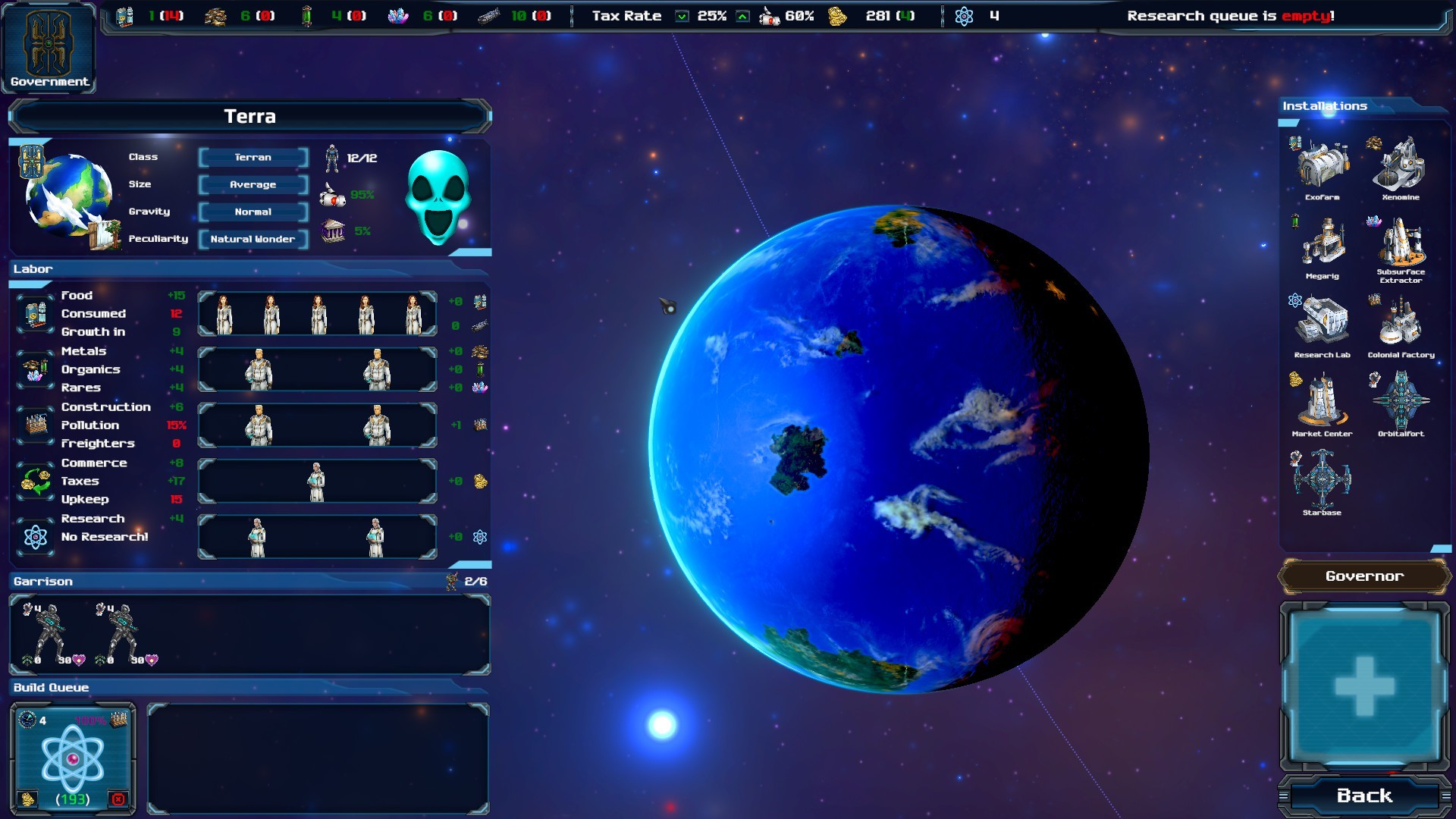
Star systems can have up to 5 colonizable planets, out of which there are many types, each with different characteristics, like how much food or metals they produce. They also have a size and gravity rating, which will affect the Habitability of the Planet and thus the base Morale of any future colonists. We’ll cover planet types in more detail in a future entry.
Last but not least, planets can have a Peculiarity, something that differentiates it from all others of its class. One example would be the presence of Ancient Robots which automatically work for any colony settled there, giving it extra production. Another example is a Natural Wonder, which increases the default morale of any colonists on the planet.
Menaces
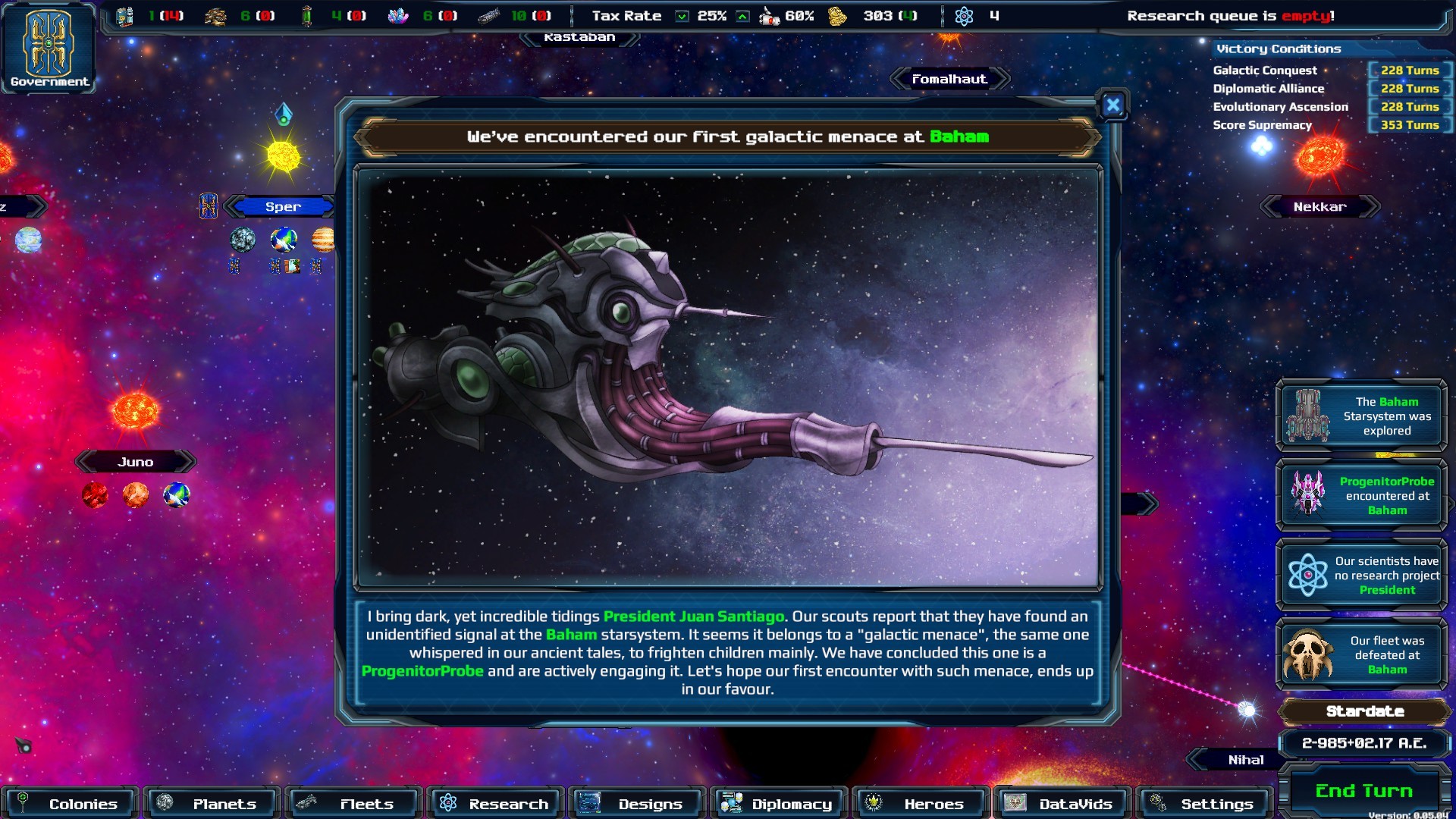
As you explore the galaxy you will eventually run into other non player factions in the form of hostile fleets that have taken over entire star systems. These are usually the most attractive systems for the player, as they might be mineral-rich and be abundant in resources, possibly even having a Peculiarity on a planet. This serves as a way to engage the player in space combat without entering a large-scale war against a major faction.
The threat these menaces represent and the form they take varies: it might be pirates, which focus on small strike-craft to harass your capital starships, or maybe highly shielded ancient probes, with powerful beam weaponry. It’s worth mentioning that the AI will face the same menaces as you do, so in that sense all players face the same challenge, when exploring and expanding across the galaxy.
Anomalies
We know that space is a vast and strange place in general, but sometimes it is even worse than we thought. In Astra Exodus you can find Anomalies, which show up on the map and alter the game rules in some way. There are several types of Anomalies you can find.
One of these types of anomalies are Wormholes, which connect distant star systems, allowing fleets to travel between them almost instantaneously (in only one turn).
Other more complex types of anomaly are Black Holes and Supernovas.
Black Holes greatly reduce the Hyperspace Rating, meaning the rate at which starships travel between star systems, of your fleets; when they come within a 10 sector range of them. This represents the immense gravity pull of these anomalies, which in the game extends beyond regular space into hyperspace.
Supernovas in turn hide all moving fleets from enemy sensors, making them both an asset and a liability when waging war. All of these adverse effects can be negated by researching the corresponding technology, if available on the Research Grid. We’ll talk more about researching and the grid on a future entry.
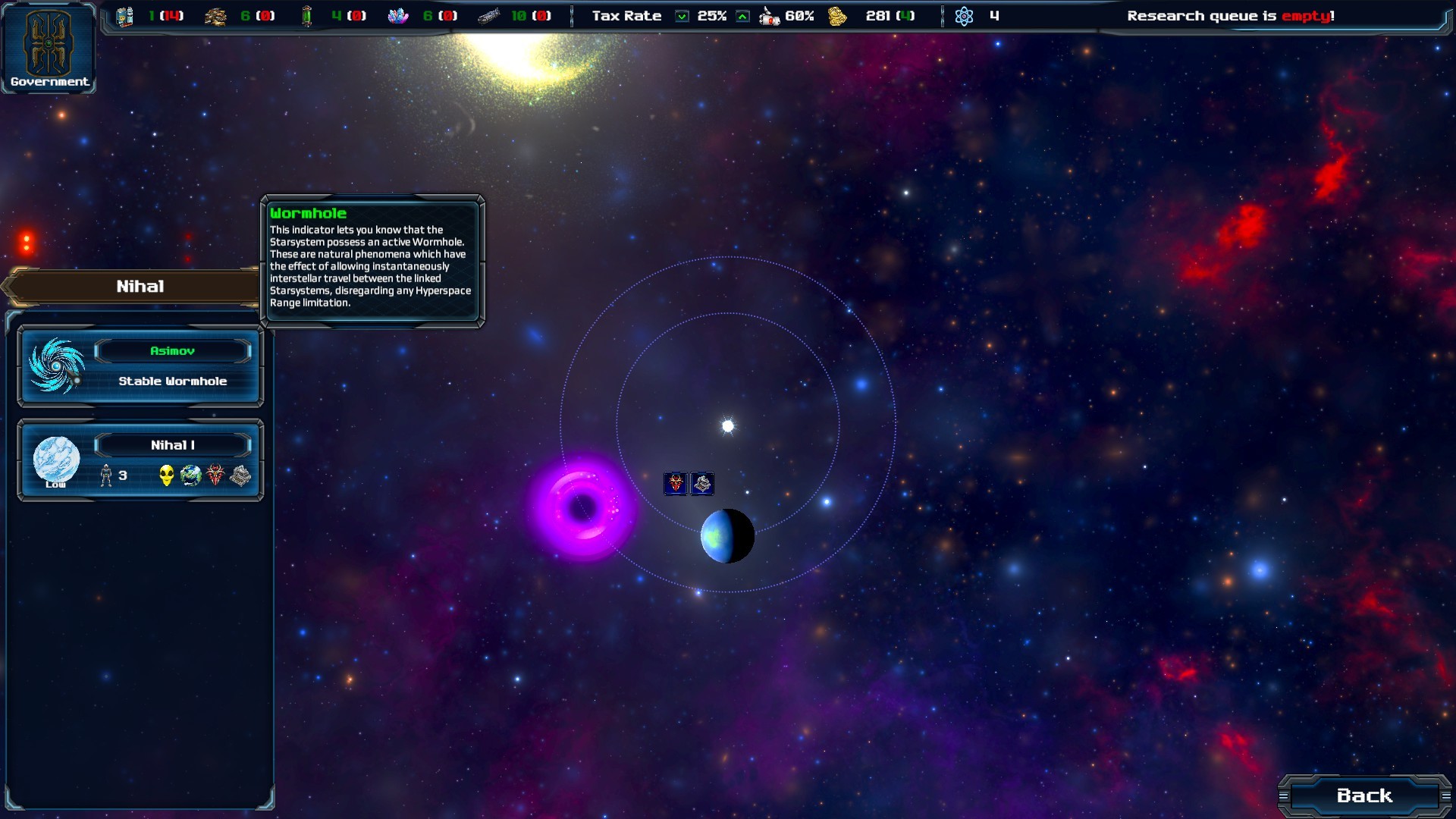
We will be back next week with a new Dev Diary on Construction and Resources! Let us know what you think, or if you have any questions, by posting on the forum.
https://store.steampowered.com/app/880750/Astra_Exodus/
Astra Exodus Dev Diary #03 - Game modes
Fernando aka Atomic Kaiser here again to ramble about this little crazy thing called Astra Exodus. This time we are going to talk about the two gameplay modes: Campaign and Skirmish.
Before we start, I just wanted to say that we are looking for Beta testers. Your feedback is important to us, so if you’d like to have early access to the game, which is already fully playable, and offer your honest opinion about it, we’d be very thankful! You can apply here.
CAMPAIGN
It is not that often that you find a full fledged campaign in a 4X game, even less so one that is dynamic, which means that it reacts to player choices. You will affect the story in significant ways, depending on how you play each of the campaign missions. In the story you are a Commander tasked with finding out what happened during the Exodus and you’ll need to discover the location of Earth. That goal will be always present during the whole story arc, but how you get there and why will change depending on your decisions.
Each mission in the game has a set of objectives and some will be exclusive with each other, in the sense that you can only complete one of them. This presents you with choices you need to take and will inevitably impact which mission you get next on the campaign. In other words, you can never play all the missions of the campaign in one playthrough, since many missions can be accessed only by making certain choices.
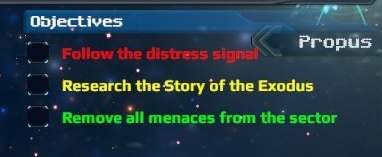
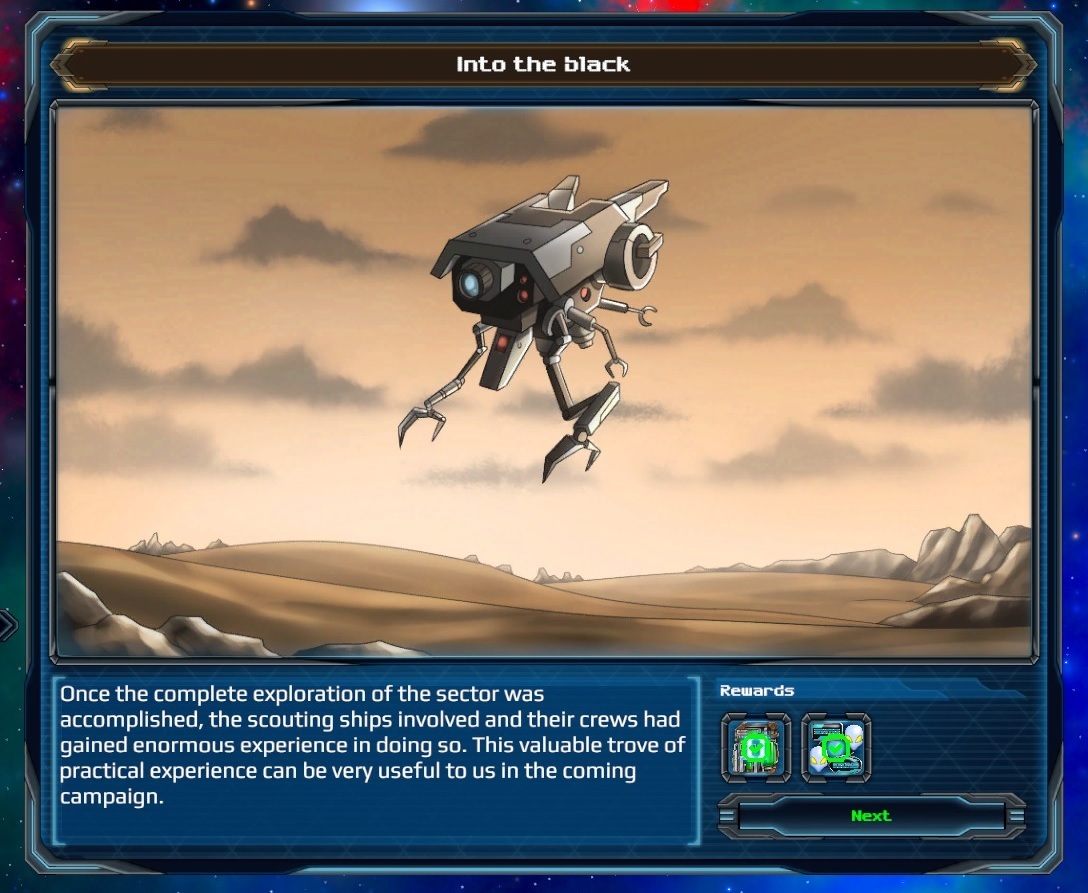
Additionally, there are secondary and optional objectives to complete which grant rewards to those willing to tackle them. These can include special technologies and even additional debriefings with exclusive art, which expand the story behind the campaign and the game. The availability of these though depends on difficulty, meaning you will only get rewards from the Captain difficulty onwards. There might be an additional surprise as well, to those willing to beat the game on its highest difficulty...
SKIRMISH
So. You have reunited humanity in the campaign (or not) and you are ready for a different challenge? Then why not try playing as the Guardians of the Seed, expanding your roots across the galaxy, until you can achieve an Ascension Victory; evolving your population from vegetable bags to pure energy beings. This is just one of many possibilities in Skirmish.
Skirmish mode in Astra Exodus is all about giving the player options, from the galaxy map, to the game rules (including victory conditions) and factions involved; everything can be tweaked to your liking. You can set the galaxy size, shape, planets and their richness. There are also options to speed up or slow down research, adjust events frequency and even to start with a more primitive/advanced situation. You can also tweak the difficulty, frequency of galactic menaces and enable the Starmarine Mode - which is our name for the infamous Iron Man mode, in which you’re not allowed to save.
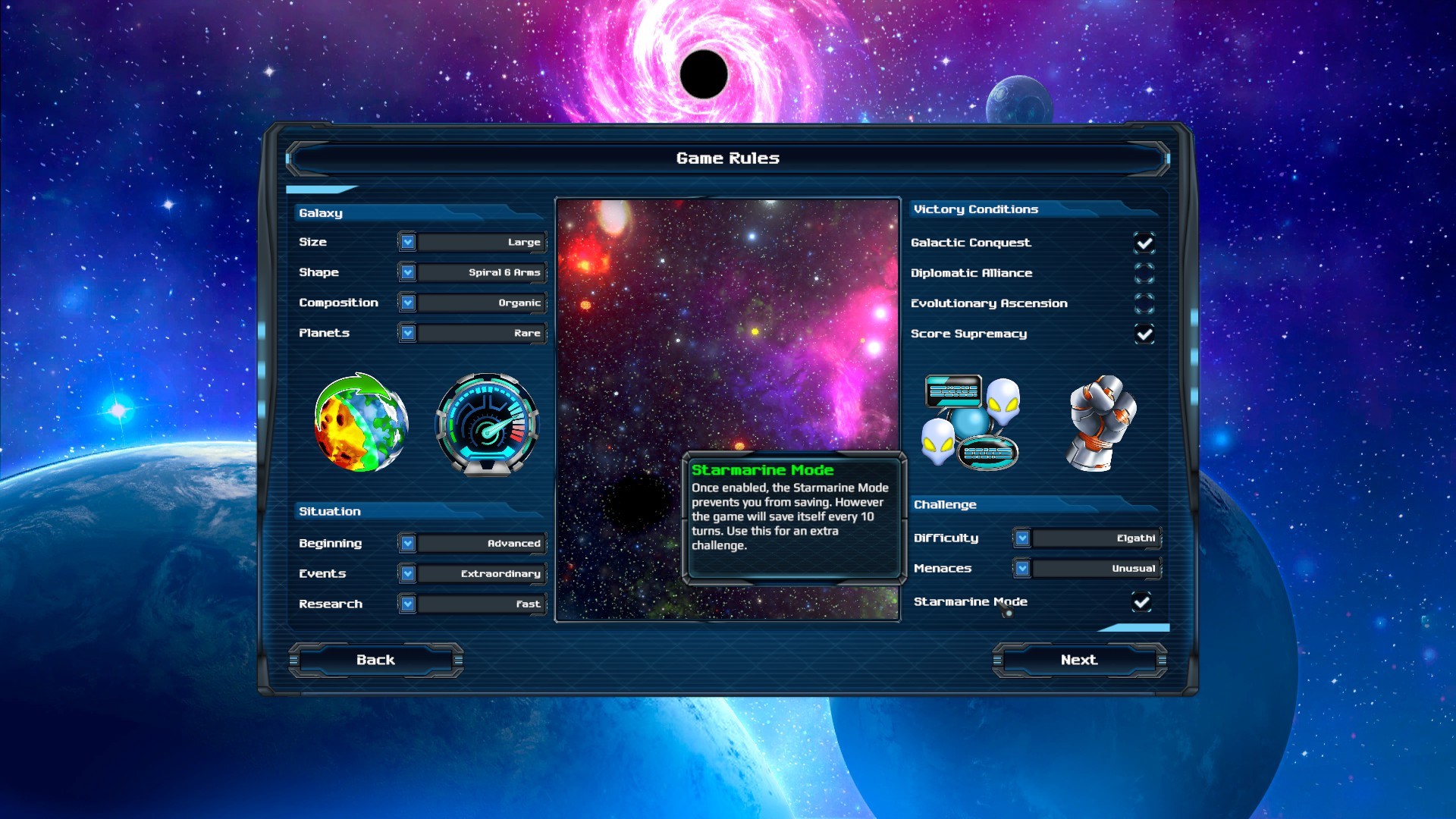
You can also set the Victory Conditions, which are probably the most important setting you can pick here. Astra Exodus has four: Galactic Conquest, Diplomatic Alliance, Evolutionary Ascension and Score Supremacy.
Beyond the obvious conquest and score based conditions, an alliance victory requires you to ally with most (all but one) of the factions in the galaxy at the same time. Finally the Ascension victory condition in turn requires you to research and build Ascension Chambers in your colonies, a very costly late game colony installation, which serves to transition your colonists to their next stage of evolution as energy beings.
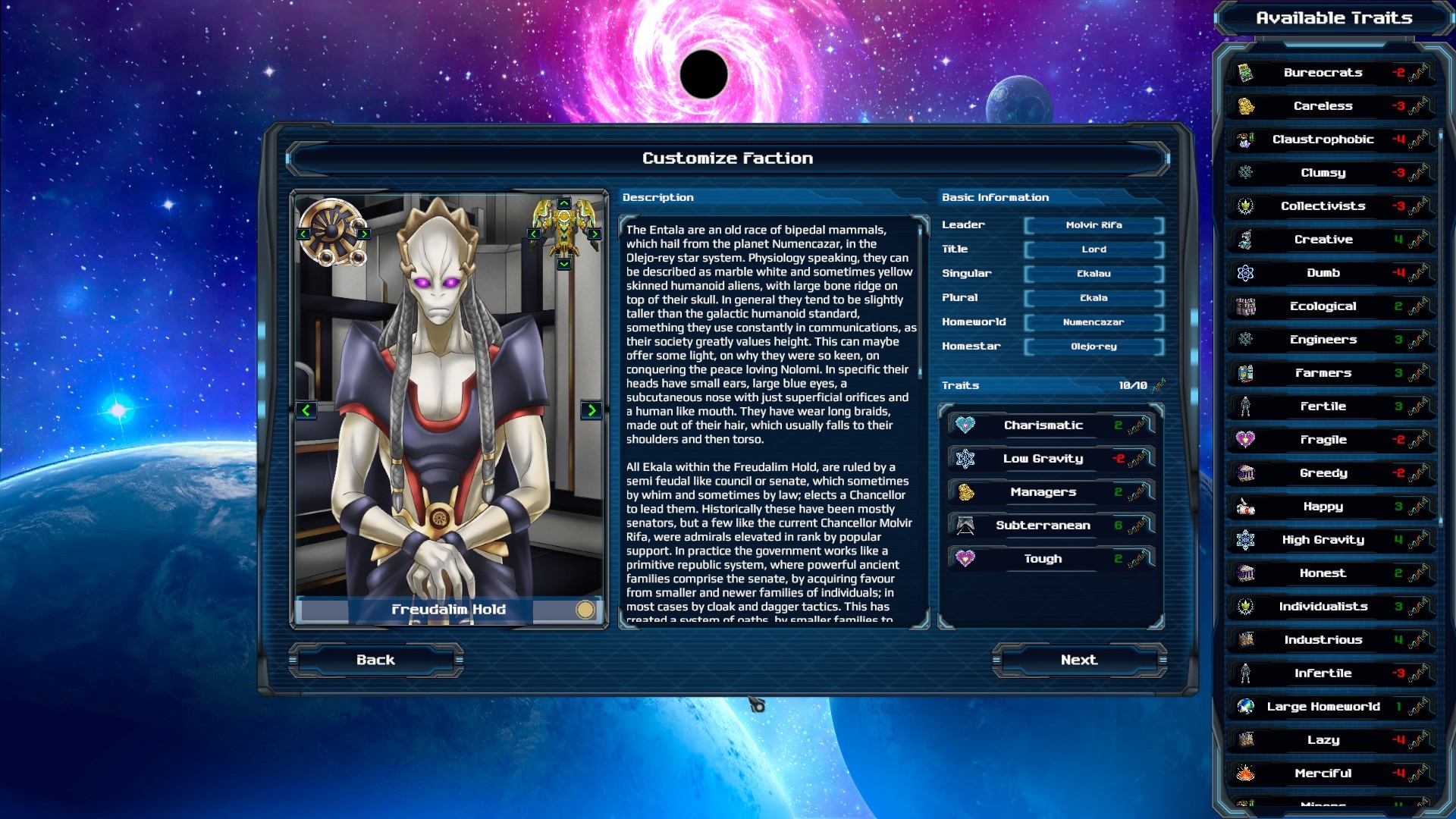
Besides picking the faction you want to play as as well as those of your opponents, you can also customize whichever you choose; to be exactly to your liking. This includes changing the graphics, lore and traits that embody the faction. This can be done from within the game interface, without any external modding (which the game also supports). In any case you will get to pick how your ships look, the emblem / logo of your faction, name, etc. The most important system to mention here probably are the traits, which can greatly affect how the game is played. They vary from modifying how many resources per labourer you get, to the ability to start the game with the whole map explored or even for your colonists to be immune to pollution.
What do you think about this week’s dev diary? Let us know how you feel, and if you have any questions please feel free to shoot them.
We will be back next week on Tuesday with a new dev diary. This time we will talk about the Galactic map!
Astra Exodus - Dev Diary #02 - Artistic Direction
Atomic Kaiser is here again for another dev diary, this time speaking of the game’s visual direction.
THE AESTHETICS
Following that sense of 90s reverence behind the gameplay, the game goes for a visual aesthetic inspired by the 90s, with a heavy emphasis on bright colouring, from how characters look to the universe itself. We feel this not only captures the decade well, but also makes the game stand out against other titles.
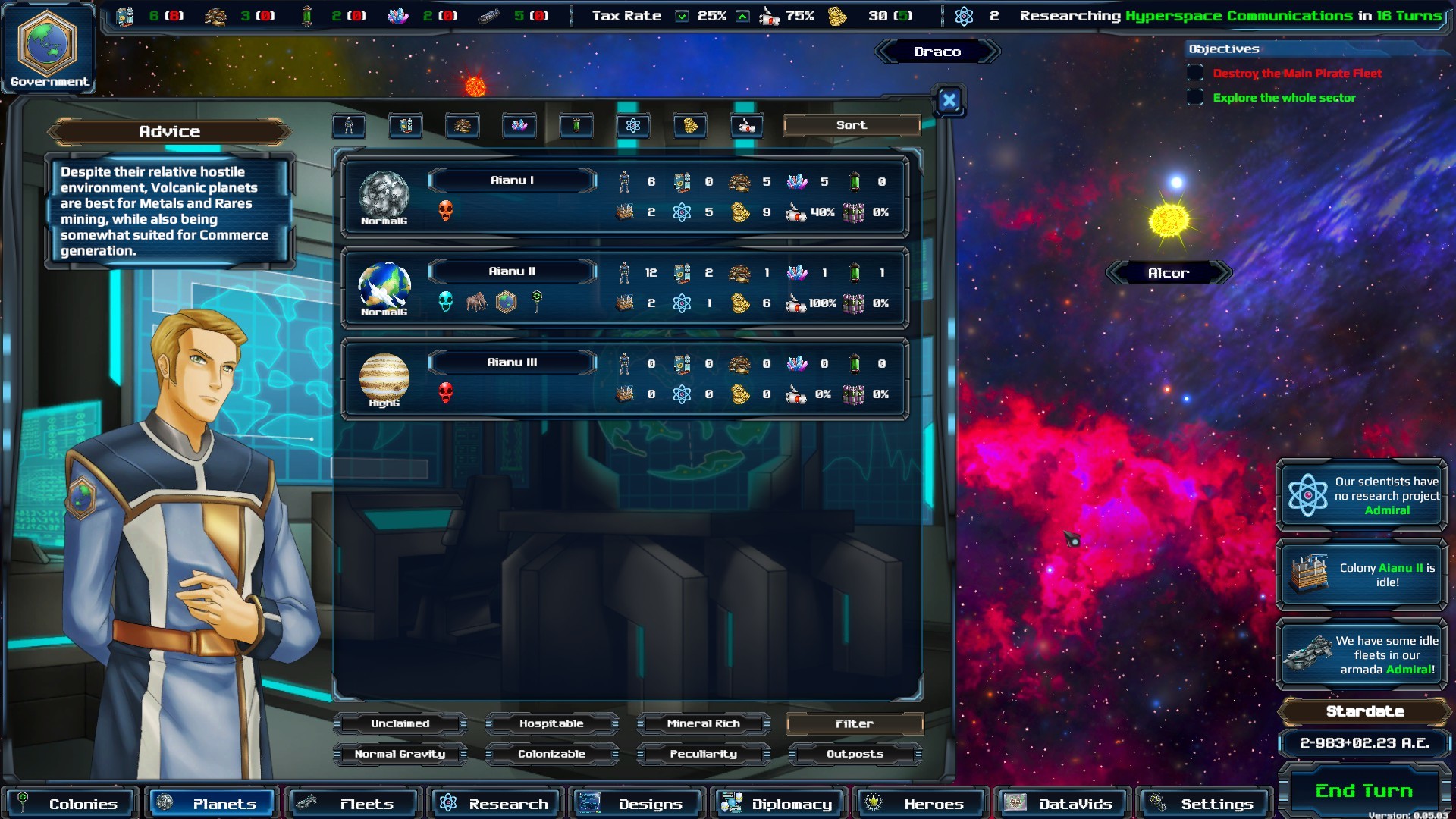
All of this of course reflects heavily on the user interface, which is designed to have large immersive panels and controls, which hopefully keep selling the theme we are aiming for. We also feel that the presence of advisors on all main panels, which are characters that give you tips on how to manage the many aspects of the game, will help players immersing themselves in a 4X playing style typical of the 90s.
THE CHARACTERS
Regarding characters themselves, the game adheres to a more Star Trek-like paradigm, where the humanoid type is the most common in the universe. So this is the case for most of the species represented in the main factions of the game.
This helps one to imagine all these different species interacting with each other in believable ways, like hanging out in a bar for example, instead of avoiding contact or outright exterminating each other. This is also based on some actual scientific theories.

THE STARSHIPS
There are multiple classes of starships in the game and each faction gets their own unique design style. In general my intention was for all ships to show at a first look (both in terms of shape and colouring) what faction they belong to. From the bulky irregular asymmetrical designs of the Veloran Horde, to the utilitarian almost freighter-like look of the Okli-to Consortium vessels, all designs aim to be iconic.

THE MUSIC
From a personal taste point of view (very partial towards classic science-fiction shows like Star Trek) I always prefer classical music with my space adventures. Thus in Astra Exodus, instead of going with the obvious space techno / electronic feel often offered by other sci-.fi games, you will find orchestral music more often than anything else. The music always tries to convey a sense of epicness and scale, even if only of the emptiness of space. It varies with how the game is proceeding, depending on whether or not you are peacefully exploring, you’re at war or even mid-battle.
Join us next week to find out more about the Skirmish and Campaign modes on the game.
If you're interested, we’re looking for Beta testers to help us refine the game and get feedback on it. If you feel like giving a hand, why not apply here. Thank you!
Astra Exodus - Dev Diary #1 "Design and Story"
I am Fernando, from Atomic Kaiser studio, the Game Designer behind Astra Exodus. This entry will serve as the first of a series of dev diaries. Our goal is to show & tell you about some of the qualities of the game, design decisions taken for it and many more (hopefully) interesting tidbits of information regarding its development.
In the first dev diary we are going to talk about the main design philosophy behind the game and a bit about its story or lore, highlighted on the game’s campaign.
THE DESIGN
The game was first designed as a sort of love letter to the classics of the 4X genre, such as Pax Imperia and Masters of Orion, by trying to take the best elements out of those games and extrapolating them in the same direction a game designed in the 90s maybe would have. That means that if you played any of the classics from the 90s you will find many of the systems of Astra Exodus familiar. But of course Astra Exodus introduces many new features, like a large dynamic campaign, semi-randomized research grids, tactical ground battles, and much more!
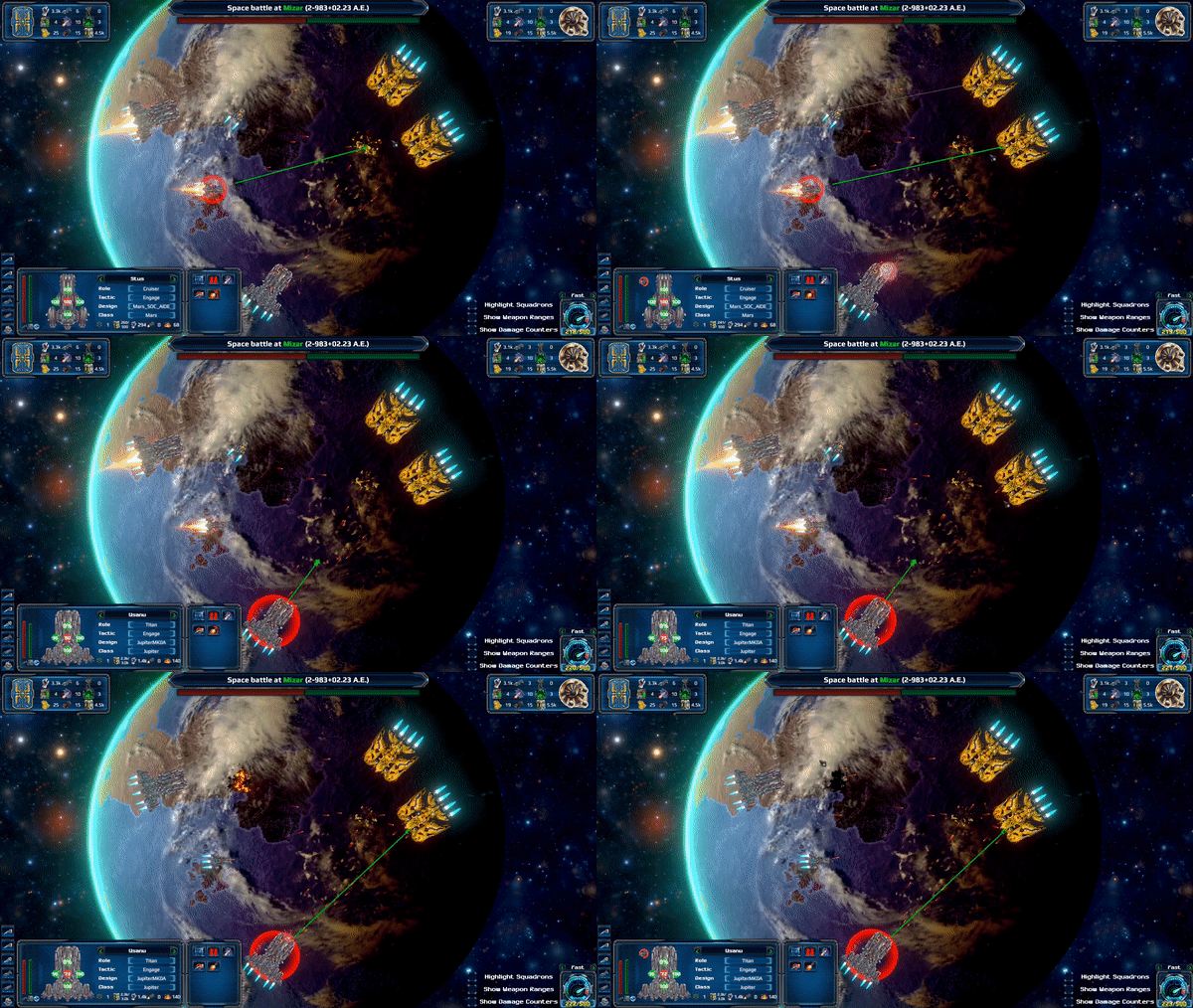
A feature I’d like to highlight here, before moving on to the story, is real-time tactical space battles. Astra Exodus is not the first game to have them, but normally in other games they either devolve into intense high APM RTS systems or they sacrifice the tactical part. Astra Exodus aims to avoid these pitfalls, mainly thanks to two systems: A) a highly usable time dilation system and B) directional damage to defenses.
All battles start in slow mode, which is almost like a pause, here you can give your orders and speed up the battle only when ready. You can of course do this to your liking, speeding up or slowing down the game as you wish. With directional damage to defenses, position and angle of attack are paramount, as only by hitting unarmoured and unshielded ship sections can you damage the target’s hull and eventually destroy the enemy ship. In combination, these systems guarantee that you’ll have the time to make tactically important choices while in battle.
THE STORY
The story behind the game starts with a mysterious catastrophe on Earth, which forces humanity to embark on a massive exodus to survive. This is of course the reason behind the game’s title. Millenia after this event, the player takes the role of Commander in the Terran Republic, which is a government formed by the descendants of humanity, with the aim of rediscovering their history and most of all, their original home. You will be under the command of Marissa Garibaldi, a tough by-the-book High Admiral on the TRN, who is also an awakened: an Earth-born who was cryogenically preserved until awakened on Terra, millenia later.

I could write for hours on the story and the campaign, but in order not to spoil anything and since there will be another dev diary focused on the story, I will just close this first entry with the introduction to the game’s main campaign:
"They came out of the darkness, to the light of our progress, unstoppable and relentless; they crashed against our bravery. Then only thanks to the Keepers, the Exodus began and through the Great Eye, we found salvation from the Dark Ones.
However the curse followed us, as strife, conflict and fratricide plagued our ancestors, among the cold void. Then in a blink of an eye, lost to the stars, somewhere between the Great Eye and final salvation; our brothers were.
In the end, as our hope was almost extinguished, final salvation was found; when we set foot in what we know call Terra. Such is the tale of the Exodus, of the burning of our home, the tragedy of our brothers and rebirth of our people."
-
Leopold Garibaldi, First President of the Terran Republic
Extract from Terra's Exodus Legacy Archives
Come back next week, when we’ll be talking about the game’s Artistic Vision.
Published new closed Beta version 0.04.09
Version Beta 0.04.09 Changes
+ Increased all Special, event related techs, research costs to 200
+ Disable adding multiple industry conversion projects to a build queue
+ Made sure the Housing Construction build project is disabled on colonies that are almost full
+ Fixed a bug in which finishing a Housing Construction project didn't adjust colony values
+ Fixed a bug in which blackholes were not being taken into account when calculating ETA
+ The Colony shrinking notification now takes the player directly to the colony panel
+ Made sure production efficiency is clearly seen current build sub panel, plus improved the button sprites there
+ Added base growth and hunger rates to globals.lua file, plus industrial projects cost.
+ Fixed a bug in which the custom stardate was not being loaded correctly from the globals file
+ Added to the colony UI the amount of food imported and added/updated tooltips accordingly
+ Fixed a bug in which changing the labour food distribution, was not being updated between colonies, when one of them was hungry
+ Fixed a bug in which the Farmers trait caused some food values to show up incorrectly on the colony screen
+ Added a shrink in tag to the colony screen, when the colony is actually shrinking
+ Fixed a bug in which the estimated turns for the colony growing/shrinking were incorrectly calculated
+ Now it is shown how much food/materials are lacking for growing/production, when they are negative due to consumption
Published new closed Beta version 0.04.08
Version Beta 0.04.08 Changes
+ Added the game version id to saves
+ Fixed a bug in which the AI was getting non valid updated designs for free
+ Fixed a bug related to AI only ship designs, which were not valid, when loading a game save
+ Improved game load performance
+ Fixed a bug related to the loading of game saves, from the new persistence path, on non windows builds
+ Adjusted the logo and related animations, on the main menu screen
+ Fixed the order of the colony build projects list, according to its new filter control
Published new closed Beta version 0.04.07
Version Beta 0.04.07 Changes
+ Improved the Starmarine mode save file and made sure to save at turn 1 just in case as well
+ Fixed the tooltip for the Supernova and Blackhole fleet indicators, which were not showing up
+ Fixed a bug in which the selected fleet panel was not showing the affected by blackhole/supernova indicators
+ Fixed a bug in which ships sometimes shooted off when retreating from battle
+ The Main menu base overlay was redone to include new branding images
+ Fixed a bug related to AI custom starship designs, which were being kept after restarting a game
+ Added a Helptip for the new colony build projects panel filter control
+ Added a control for filtering out construction projects on the colony build projects panel
+ Fixed a bug on firing Alien Device exploration event for a modded game
+ Adjusted game persistence path to follow publisher guidelines
+ Adjusted game versioning to follow publisher guidelines
+ Modified the Load Game panel in game, to have a back button like all others
+ Changed old branding images for new ones, on the the main game screen and panels
+ Improved space battle scene loading by removing unnecessary objects
+ Fixed a bug that was preventing player placement on Large Barrel Spiral galaxies
+ Fixed a bug that was preventing the effect of installations/traits in the removal of pollution
+ Decreased the per worker pollution in a colony
+ Increased the minimum possible Morale level of a colony
+ Increased the resulting value of the corruption formula, as to reduce the research rate of colonies
+ Rebalanced tech costs, so research is slower by default and the player has more time to use new modules